

Re-Examining Rafael Nadal's French Open Chances After Monte Carlo Masters Win
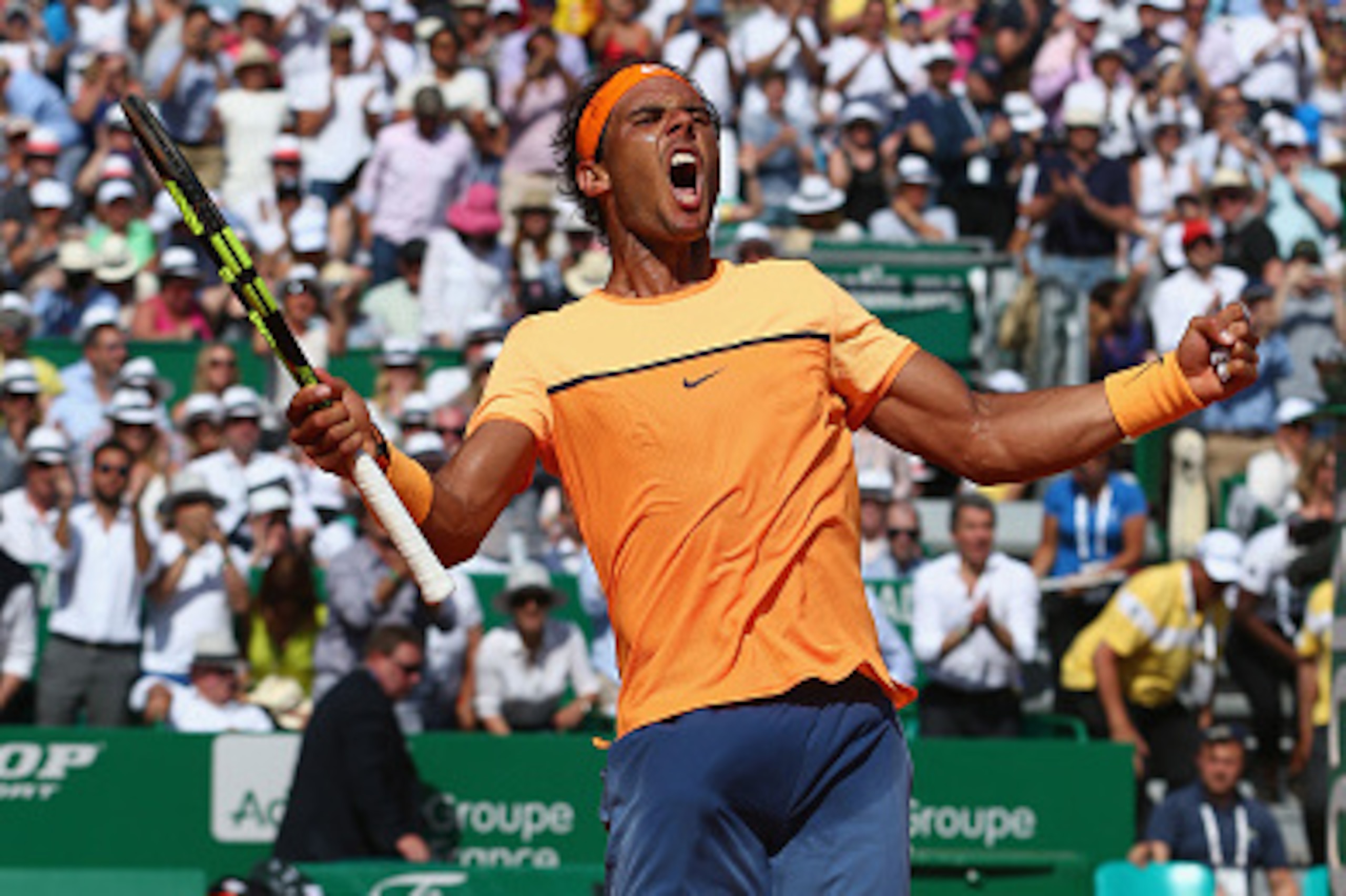
Now that Rafael Nadal has recaptured his Monte Carlo crown for the first time since 2012, his prospects for the French Open are on the rise.
If Nadal were a stock, the time to purchase would have been a few weeks ago in the Miami Masters after he withdrew due to illness, heat exhaustion and a loss to Damir Dzumhur, an exit all but inconceivable a few years ago.
Was the king of clay no longer a contender?
.jpg?w=2560 "Vikings Bears Football")

.jpg?w=2560 "Rio NFL Football")
Even loyal Rafaholics could have been excused for doubting his chances on clay. After all, the 2014 French Open was from a bygone era, and Nadal hasn’t since been the same.
What a difference a week makes. Nadal’s title was more than a journey down memory lane. The road to Paris is still navigable, and the nine-time French Open champion is trudging along with fellow hiker Opportunity. Nadal fans chirped on Twitter with more optimism. Comments sections on media articles thickened with ranges of predictions.
Is the king of clay back? The tennis gods love French drama, and Nadal has thickened the plot. Will Nadal return as the conquering comeback story at Roland Garros with Djokovic as the tortured victim?
Glass Half Full
By slow degrees, Nadal has shaken off his 2015 malaise. Last year, he flopped in the majors and got shut out from the European clay-court swing before damage control with a July title against a weak field at Hamburg.
He made gradual improvements on fast surfaces in the fall, peaking with his three round-robin victories at the World Tour Finals but struggling to defeat top-10 opponents. He won only four of those 14 top-10 matches before the WTF.
In 2016, Nadal has improved with a 3-2 record against top-10 opponents—losing twice to Djokovic but defeating Kei Nishikori at Indian Wells and beating Stan Wawrinka and Andy Murray at Monte Carlo.
He also avenged a tough defeat to Dominic Thiem in February at Argentina, returning the favor with a gritty, adrenaline-soaked slugfest against the rising Austrian star.
The good news for Nadal is he is fighting hard. He has not forgot how to move and react on clay, even if it’s more difficult these days to track down high-octane shots from bold, young opponents on his well-worn knees.
He dodged all but two of 17 break-point bullets from Thiem, came back a set down against Murray and fended off huge forehand blasts from Gael Monfils. Monte Carlo was more a test of attrition than a work of art, but his heart and mind never forgot how to win a big championship.
Nadal earned Monte Carlo, even if he did not pass the ultimate test in proving he could defeat Djokovic. He did prove that if his Serbian rival is somehow upended, he will be in the thick of the fray, perhaps holding the all-important mental edge in winning big French Open matches.
Glass Half Empty
Winning Monte Carlo does not change the reality that this is an older Nadal trying to claw his way back to glory, but hope is rising over the dawn of what could be a run at a 10th French Open title. Confidence is a powerful ally for any tennis player, particularly for the decorated Spanish superstar whose mental strength had been a thin veneer stripped away with his recent physical decline.
Monte Carlo is only one important step to a French Open title, and it showed Nadal must sharpen his axe if he is to hew his way through the thicket of contenders. In Monte Carlo, he was less a dominator and more of an escape artist.
Last October, we crunched the numbers on what was happening during Nadal’s decline. (Click this link for the methodology to our numbers.) His volume of break points against his serve had increased. It was especially troubling that he faced more “break-point trouble” in 2015, that is each service game was 44 percent likely to produce a break point.
So far in 2016, Nadal has had 279 service games and faced 166 break points. That’s a whopping 59 percent chance a service game will produce a break point, and it’s a lot more break-point trouble than it was six months ago.
A couple of factors have saved him.
- He has saved 65 percent of his break points, up from the 62 percent for 2015.
- Most importantly, Nadal has created more break-point opportunities with his return game and more aggressive offense. He has created 200 break points against 272 return games, meaning a 74 percent chance he will create a break-point opportunity in a given service game.
- Furthermore, Nadal is converting 46 percent of his break points, up from 42 percent in 2015. He is winning with more break points created and a higher conversion rate.
On slow clay, this kind of statistic can blow up. It’s tougher to win easy points with a strong serve, and there are more opportunities for break points. For instance, Nadal lost his serve five times to Gael Monfils in the first two sets of the Monte Carlo final but was able to match with five breaks.
In the third set, Nadal cashed in on three more breaks. His 8/21 break points/opportunities was a decisive advantage over Monfils converting 5/13.
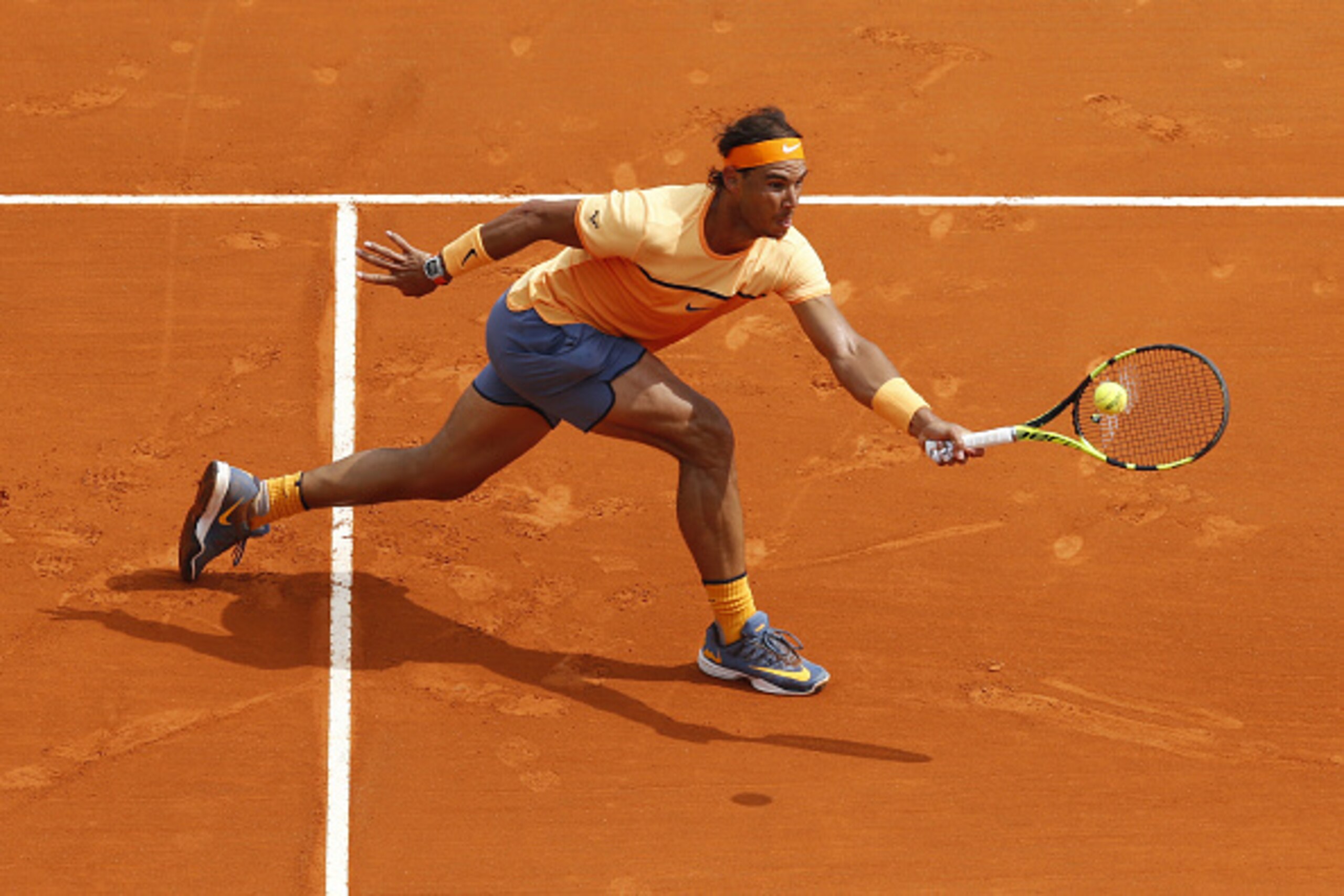
Nadal’s stubborn defense was good enough to track down shots even if he is not the retriever he was a few years ago. The difference is he is stepping closer to the baseline when he can, resulting in better offensive opportunities. It’s a small incline that has shortened a few more rallies and put more pressure on his opponents. It’s also helped cover for his very good, but no longer great, scampering defense.
Stops Before Roland Garros
Watch closely for how Nadal does at Barcelona, Madrid and Rome. Will he be able to continue creating a healthy percentage of break-point opportunities and conversions? Will he limit some of those opportunities from his opponents?
Without a dominating serve, the Spaniard must produce as many forehand opportunities as he can on that third stroke. He will need to seize the early initiative and finish off most rallies with his offense rather than relying on defensive scrambles.
There’s also a good chance Nadal is no longer capable of shouldering his old European ambitions to sweep Monte Carlo, Barcelona, Madrid, Rome and the French Open. Hercules would pass rather than add that to his labors.
It would be tough for Nadal to skip Madrid or Rome, but it might be in the cards. It’s a particular dilemma to forgo a Spanish tournament to play Rome, but Madrid has less ideal conditions in high altitude and faster balls, while Rome’s slower clay produces a higher bounce that more approximates what he needs thereafter at Roland Garros.
Nadal is in the mix with a huge tile and jolt of confidence, but the road ahead promises to be more grueling, especially with King Novak looming to guard the way.
.jpg?w=2560 "Giants Rams Football")
.jpg?w=2560 "Texas vs. Tennessee Live Updates 🏈")
.jpg?w=2560 "Daniels Could Return for London Game")