The Biggest Factor in Rafael Nadal's 2015 Struggles
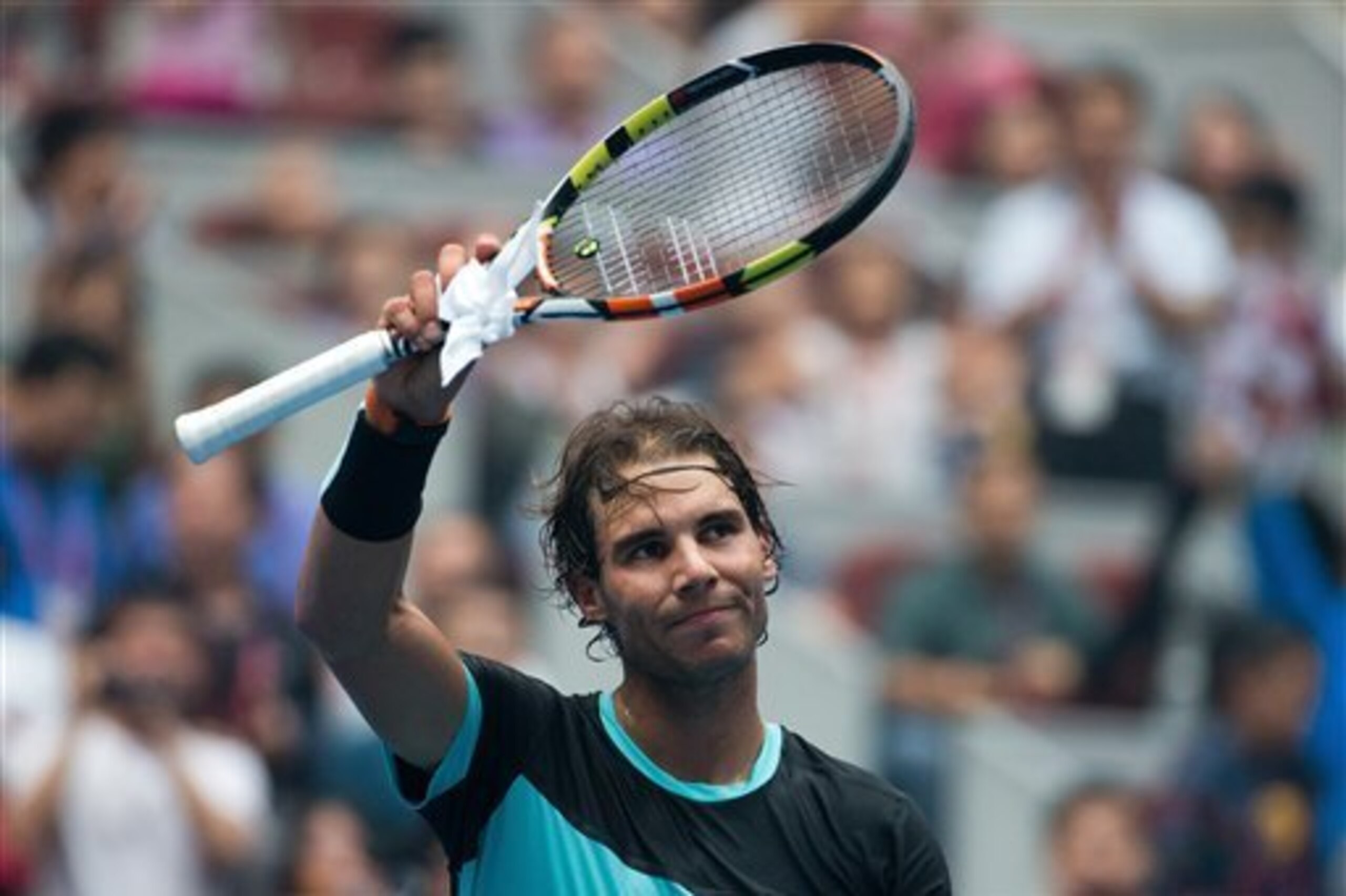
Superstar Rafael Nadal’s opening-match win over Di Wu in Beijing was indicative of the struggles the former No. 1 has had on the 2015 ATP World Tour. Although he won 6-4, 6-4, the Spaniard had to persevere through what is rapidly becoming his Achilles' heel.
Is it his serve that is most holding him back? Has his return game been the primary culprit? Do we just chalk this up holistically as a package of age and diminishing footwork?
What is this most troublesome factor in Nadal’s game, and how has it prevented him from dominating his opponents the way he had in the previous decade?


By the Numbers
Nadal is sporting a very respectable 46-15 match record for the year, but he has slipped in big matches and has not appeared in a majors semifinal.
We are going to send you to the Rafael Nadal “player stats page” that ATP World Tour has organized for tennis fans who follow the tour. Users may examine his important career statistics and select individual seasons for comparison.
What part of Nadal’s serving or returns was hurting him most? We charted his career results and selected three past outstanding seasons to compare with 2015. All numbers below are percentages, unless noted:
Service Record 2008 2010 2013 2015 career
1st serve points won 72 75 73 72 72
2nd serve points won 60 60 57 55 57
break points saved 67 69 69 62 66
service games won 88 90 88 83 85
service points won 68 70 68 66 67
It’s noteworthy that Nadal’s first serve is equal to 2008 and his career average. This does not appear to be the difference in dropping to No. 7 in the world. His second-serve percentage dips a full 2 percent below his career average, but even this is not enough to fully explain his relative struggles in 2015.
How about break points saved? Now we are getting closer. Nadal is saving only 62 percent, which is a more significant 4 percent drop from his career average and much lower than 2010 and 2013.
But that’s only part of the story.
Return Record 2008 2010 2013 2015 career
1st serve return points won 34 31 35 34 34
2nd serve return points won 55 55 54 54 55
break points converted 45 44 47 43 45
return games won 33 29 34 33 33
return points won 43 40 42 42 42
total points won 55 55 55 54 54
OK, the problem is definitely not service returns. Both categories mirror his career average and 2008. It’s actually a better combination than 2010, his fabled three-Slam year.
But once again, there is a noteworthy glitch that indicates his problem: He is only 43 percent with break points converted, which is significant given that his return points and total points won are also in line with his career averages.
So, we have established that Nadal’s two most important struggles are saving break points and converting break points, the former behind his offensive game and the latter from his defensive game. Is failing to deliver at the most crucial points an indication that he is not delivering under pressure?
That leads us to the most important point of all.

Break-Point Volume
I’m going to call this next stat “break-point volume.” This is found by calculating how often Nadal is facing (or trying to save) break points with his serve. Divide break points faced by service games played to find out how often Nadal is trying to prevent a break. The lower the percentage, the less often he is being put under pressure by his opponents.
We will also calculate how often Nadal has created break points with his return. Again, divide break-point opportunities by return games played. The higher this percentage, the more break-point chances Nadal is creating.
Is his volume of break points lower, equal or higher than the aforementioned years?
(Raw numbers are used in the four columns denoted with the *)
Service Record 2008 2010 2013 2015 career
service games played * 1,054 1,001 913 712 10,456
break points faced * 395 322 356 317 4,476
break points trouble 37 32 39 45 43
Return Record 2008 2010 2013 2015 career
return games played * 1,045 1,002 916 712 10,446
break-points opportunities * 786 674 662 544 7,649
break points created 75 67 72 76 73
What stands out most is that Nadal is giving up break points against his serve far more often than in his best years. In 2010, he gave up slightly less than one break point every three games. In 2015, he is at 45 percent, or closing in on giving up one break point every two games.
Nadal’s return break-point volume in 2015 turns out surprisingly different. He is creating break points more often than in any of his three best years. He is creating about three break-point chances every four games, which is better than 2010, when he created two break-point chances for every three games.

Pressure Points
There are several other conditions that explain much of how and why Nadal is different in 2015. For instance, 2010 was a different kind of ATP Tour when players held serve easier and had a harder time obtaining breaks. Nadal’s statistics above back this up.
Furthermore, we could surmise that Nadal has been forced to create more break points in 2015 because he has to come back more often if he is giving up more looks to his opponents. Are court conditions speeding up, or is Nadal slowing down? There are more variables yet to study.
Above all, it’s clear that Nadal’s battle in facing more break points is causing him to deal with more pressure. These break points are pressure points that can best explain who wins matches, especially big matches. There’s no question that Nadal was more in control and more dominant in 2010.
Perhaps dealing with more break points in 2015, with both serves and returns, is part of what has made his confidence more tenuous. Even his match against Wu saw him face seven break points in only 10 service games, and that (70 percent) against a weak opponent. He only saved three of those seven points. It’s a good thing for Nadal that he won six of eight break points that he created.
Keep your eye on how often Nadal is put under pressure with his serve. If he is to win another major, he will either have to give fewer looks to his opponents or continue to create even more offense with his return game. He’s doing well with the latter, but once again the old tennis adage might be the answer to everything: “A player is only as good as his second serve.”

.jpg?w=2560 "Lions Clear $35.6M Cap Space")
.jpg?w=2560 "Report: Tucker Kraft Earns $75M Deal")
.jpg?w=2560 "Most Important 2027 NFL Free Agents")