


More than 21.4 million tickets were sold for the 1,228 indoor games of the 2014-15 NHL regular season, up about 250,000 from a year ago.
The slight increase was sparked by strong increases in attendance by the Dallas Stars, New York Islanders and St. Louis Blues, all of which jumped more than eight percent from 2013-14 to 2014-15.
Florida and Carolina were the big losers, as both dropped more than 18 percent in the opposite direction.


-(1).jpg?w=2560 "Bleacher Report")
Total ticket sales actually declined slightly due to the NHL's decision to play just two outdoor games in Washington and San Jose, drawing a combined 111,000. Six teams hosted outdoor games the season before, with crowds of more than 50,000 attending all six.
The final 2014-15 attendance average and the change from 2013-14 for all 30 NHL clubs is below. Outdoor games are excluded from the numbers.
| Chicago Blackhawks | 21,769 | +0.7% | 110.4% |
| Montreal Canadiens | 21,286 | +0.1% | 100.1% |
| Detroit Red Wings | 20,027 | -0.9% | 100.0% |
| Philadelphia Flyers | 19,270 | -2.9% | 98.6% |
| Calgary Flames | 19,097 | -1.1% | 99.0% |
| Toronto Maple Leafs | 19,062 | -2.0% | 101.3% |
| Minnesota Wild | 19,023 | +2.8% | 106.0% |
| Tampa Bay Lightning | 18,823 | +1.1% | 98.0% |
| Vancouver Canucks | 18,710 | -1.1% | 98.9% |
| Pittsburgh Penguins | 16,617 | Even | 101.3% |
| Buffalo Sabres | 18,580 | Even | 97.4% |
| St. Louis Blues | 18,545 | +8.9% | 96.8% |
| Washington Capitals | 18,506 | +2.5% | 100.0% |
| Los Angeles Kings | 18,265 | +0.7% | 100.2% |
| Ottawa Senators | 18,246 | +0.8% | 95.3% |
| New York Rangers | 18,006 | Even | 100.0% |
| Boston Bruins | 17,565 | Even | 100.0% |
| San Jose Sharks | 17,420 | +1.7% | 99.6% |
| Dallas Stars | 17,350 | +18.4% | 93.6% |
| Anaheim Ducks | 16,874 | +2.5% | 98.3% |
| Nashville Predators | 16,854 | +1.5% | 98.5% |
| Edmonton Oilers | 16,839 | +0.1% | 100.0% |
| Colorado Avalanche | 16,176 | -0.7% | 89.8% |
| Columbus Blue Jackets | 15,511 | +5.5% | 85.5% |
| New York Islanders | 15,334 | +10.7% | 94.8% |
| New Jersey Devils | 15,189 | +5.6% | 86.2% |
| Winnipeg Jets | 15,037 | +0.2% | 100.2% |
| Arizona Coyotes | 13,345 | -3.1% | 77.9% |
| Carolina Hurricanes | 12,594 | -18.7% | 67.4% |
| Florida Panthers | 11,265 | -20.5% | 66.1% |
The 'Canes and Panthers far surpass any other team in attendance decline over the two-year time span and also finished second-to-last and last, respectively, in pure average attendance.
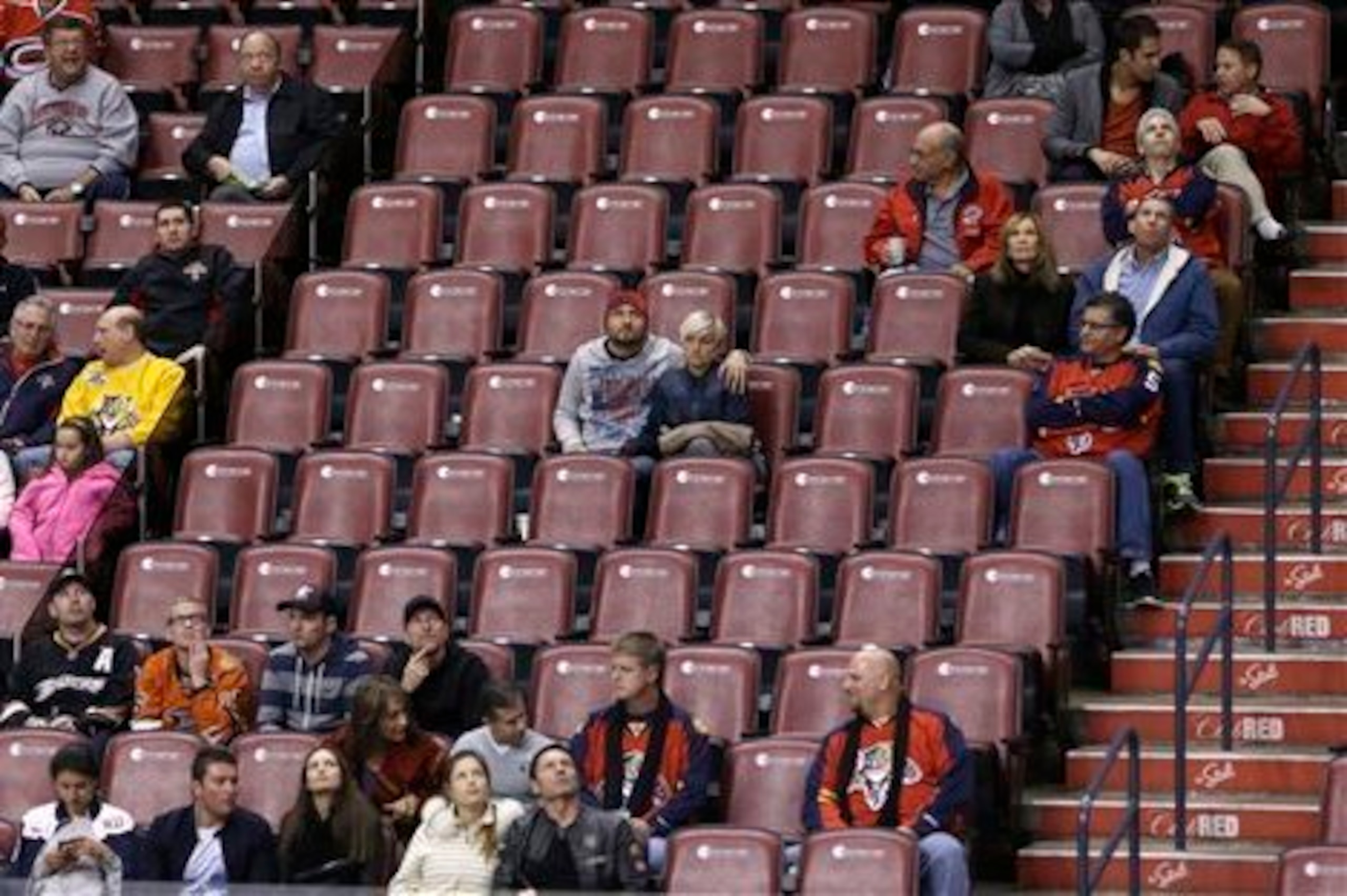
Both teams made the tough decision to reduce the availability of free and reduced tickets this season, causing (along with a lack of on-ice success) the decline.
Those two teams accounted for all 23 games this season that were attended by fewer than 10,000 people, with Florida recording 19 such games and all of 10 attended by fewer than 9,000. The Panthers' low of 7,311 on Oct. 13 vs. Ottawa was the smallest attendance at an NHL game anywhere since Nov. 2011.
Two big-market Canadian teams also experienced unusual attendance issues.
Vancouver's 474-game sellout streak ended on Oct. 18 when the team fell 223 tickets short of a sellout for the first time since 2002. Meanwhile, Toronto's second-half collapse led to the smallest attendance in Air Canada Centre history when just 18,366 people (1,434 short of a sellout) watched the Leafs lose on Mar. 23.
Playoff berths last spring in Dallas and Columbus boosted crowd sizes this season in both small markets. Neither team managed to qualify for this postseason again this year, however, raising questions about whether the increase will last into 2015-16.
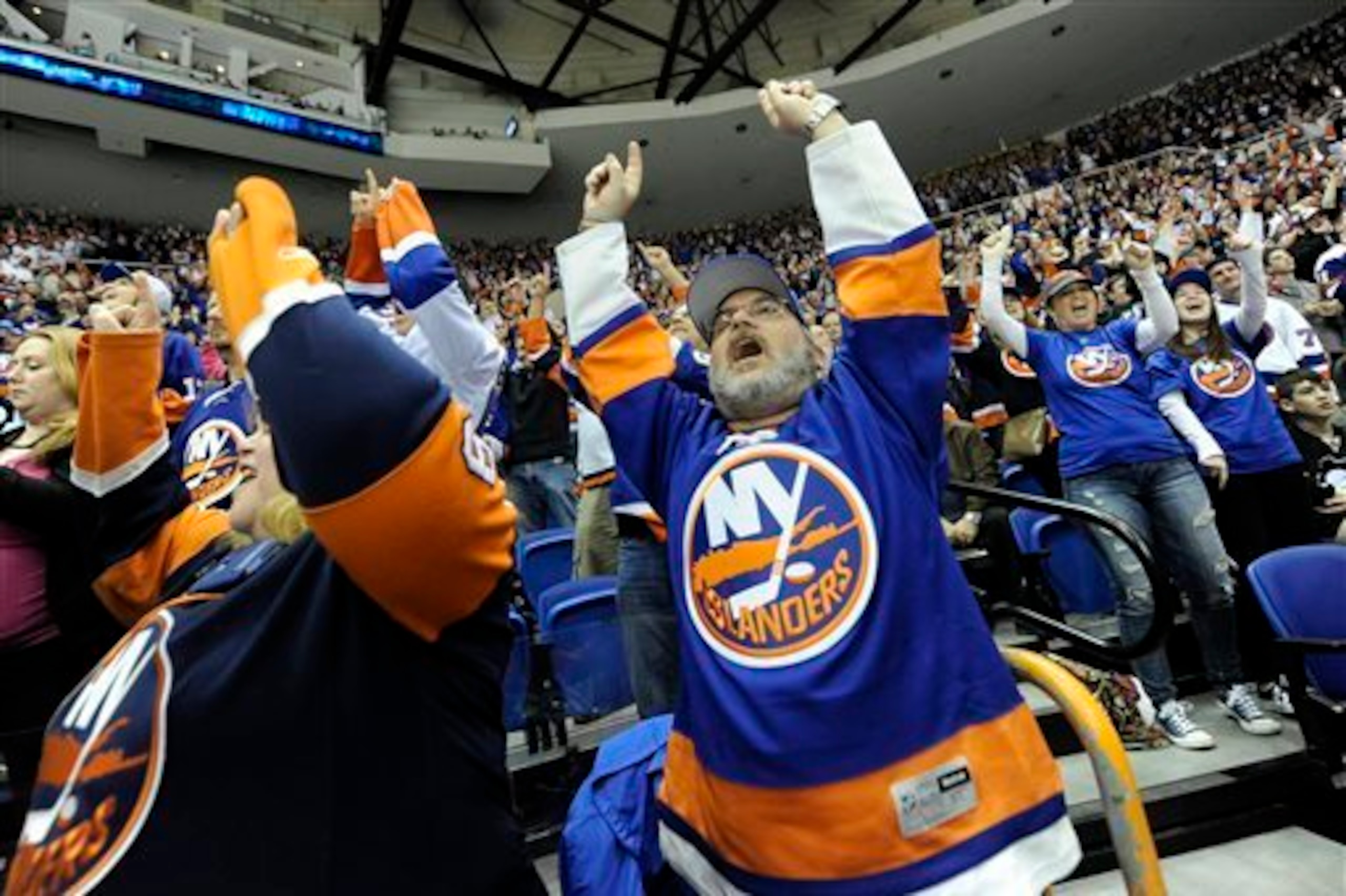
The Islanders also experienced an attendance jump of more than 10 percent in their final season at Nassau Veterans Coliseum, likely due to their best regular-season performance (in terms of points) since 1983-84.
The Coyotes, meanwhile, recorded their worst record since relocating to their present home but still saw only a minor decline in the stands—perhaps a good sign for the still-shaky future of hockey in the desert, or perhaps a confirmation that the fanbase contained no casual bandwagon fans to be lost.
All in all, 12 teams averaged at or above 100 percent of capacity, and an additional seven clubs averaged at or above 98 percent. Only three filled less than 85 percent of their home arena on the average night.
Lastly, it's worth noting that attendance statistics, especially for a single season, correlate little to the likelihood of relocation.
Mark Jones has been a Carolina Hurricanes featured columnist for Bleacher Report since 2009. Visit his profile to read more or follow him on Twitter.




.jpg?w=2560 "B/R's Expert Week 7 NFL Picks 🔮")




.jpg?w=2560 "LaMelo Claps Back at Lonzo 🤣")