Serena Williams Closes in on Cathartic Title at Indian Wells
The likelihood of Serena Williams playing again at Indian Wells once seemed like an impossibility.
Time, however, helps ease the pain of many wounds. Not only has Williams finally returned to the event for the first time in 14 years, she's thriving and nearing one of the most meaningful titles of her legendary career.
Reaching this point required immense personal strength on her part.
Williams has grown into one of the all-time great players and a tennis icon in the last decade, but in 2001, she was a teenager just starting to put the pieces together. Those were her transformative years on the WTA Tour, when the rivalry with her sister, Venus, took the sport by storm.
As Williams came into her own that year, she was set to face Venus in the semifinals at Indian Wells. It was supposed to be an early season blockbuster match. Instead, Venus had to pull out beforehand because of tendinitis in her knee. That decision was a buzzkill for tennis fans, but no one could predict the deeper ramifications that would follow.
The problems started earlier that week when former Top 10 player Elena Dementieva suggested in a press conference that matches between the Williams sisters were fixed and decided by their father, Richard. As Joel Drucker detailed for ESPN, those comments set off a firestorm and wore heavily on the sisters, who now had to answer questions about their integrity.
The withdrawal minutes before their semifinal match gave the skeptics more ammo. That vitriol would boil over in the final.
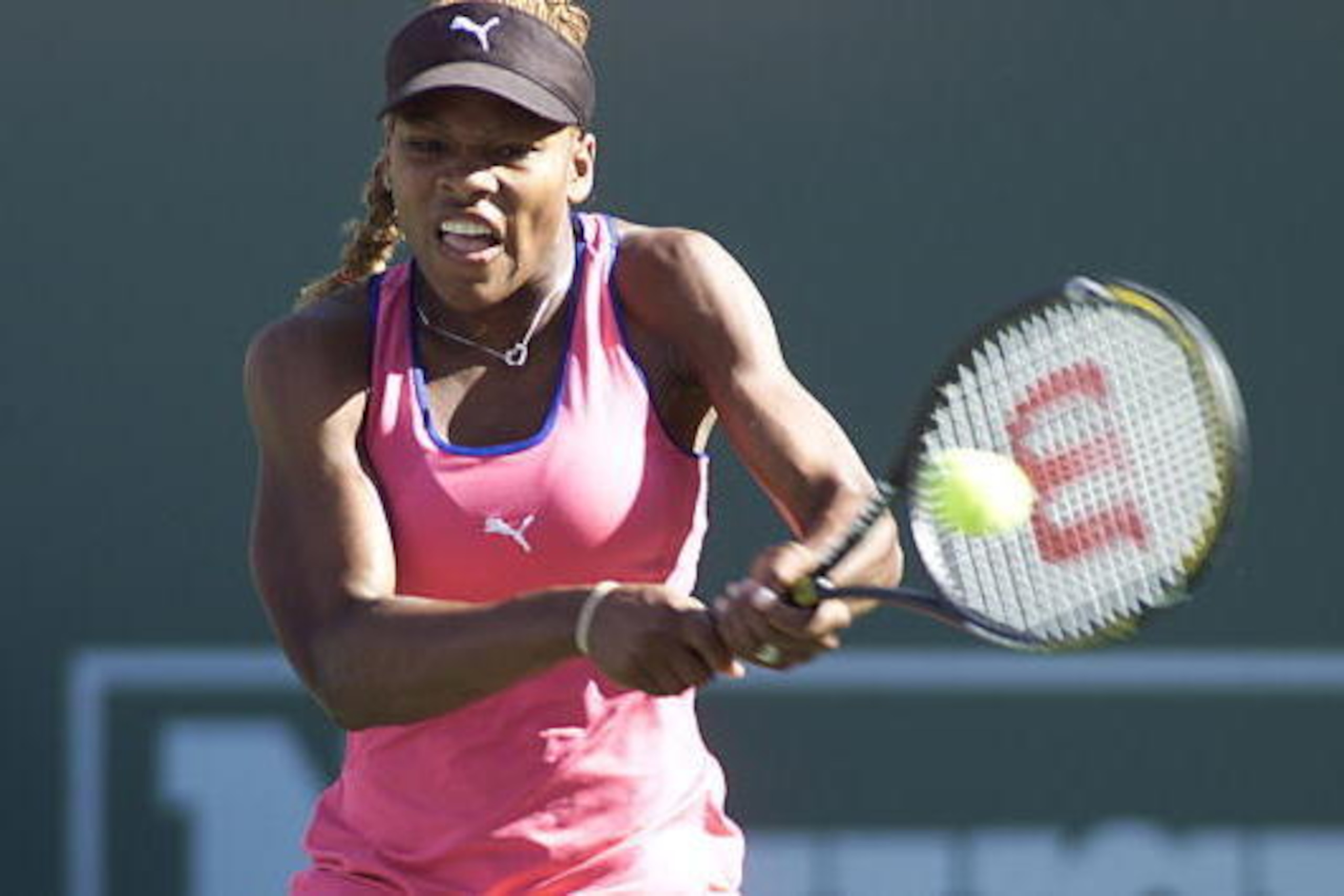
While Williams took the court for a showdown with Kim Clijsters, her father and sister arrived in the stands for support. As they walked to their seats, angry spectators began booing and shouting at them, with the recent controversy serving as fuel. Their remarks, her father said, turned increasingly hate-filled and racist and were soon directed at Williams, as well.
She was horrified by what had transpired. Dealing with that level of prejudice in a public forum is something no one should have to face, and it must have been especially hard for Williams, who was all of 19 at the time.
The match itself became somewhat of a footnote compared to everything else that was going on, but she showed enough poise to claim her second title at the tournament with a grueling 4-6, 6-4, 6-2 win over Clijsters.
A trophy was little consolation for Williams. The atmosphere of bigotry in the crowd that day sickened her, and she vowed to never return. As she recently reflected to Time:
"It has been difficult for me to forget spending hours crying in the Indian Wells locker room after winning in 2001, driving back to Los Angeles feeling as if I had lost the biggest game ever—not a mere tennis game but a bigger fight for equality. ...
This haunted me for a long time. It haunted Venus and our family, as well. But most of all, it angered and saddened my father. He dedicated his whole life to prepping us for this incredible journey, and there he had to sit and watch his daughter being taunted, sparking cold memories of his experiences growing up in the South.
"
After everything her family had been through, no one expected the sisters to ever return to Indian Wells. It had become a place of tragedy and horror for them. As the years wore on and the sisters went on their own paths, their boycott of the tournament never wavered.
For Williams, her career took off later in 2001, and she transformed from mega talent into mega star. The titles poured in and the young American took command of the sport, which she still hasn't relinquished. During that long span, however, the memories of Indian Wells still lingered and brought her pain.
By any metric, 14 years is a significant period of time. In tennis terms, it's an eternity. As the Internet boomed and social media took off, there was a significant technological and cultural change in the world since her last appearance at Indian Wells.
And every year, a blank space remained on her calendar in March.
Going back to the tournament was never going to be an easy decision for Williams. Like many top athletes, what makes her great is that she's stubborn and committed to her beliefs. But like her peers, she's not one to back down from a challenge. Eventually, enough time had passed that she began entertaining the idea of a triumphant comeback at the event.
In her essay for Time, Williams used words like "love," "understanding" and "forgiveness." Powerfully, she had turned the page on 2001 and chosen to give the tournament another chance. She felt confident enough that fans would treat her with more respect and grace this time.
When she finally made her way onto the court and officially ended her 14-year hiatus, the crowd rewarded her with a chorus of cheers and support.
The enormity of the situation took hold of a visibly emotional Williams.
According to USA Today's David Leon Moore, she said after the match: "I'm glad I was able to do this. It definitely feels like one of the biggest moments and one of the proudest moments of my career. ... Today was a wonderful day for me, for women's tennis, for tennis in general, for everyone."
The match itself against Monica Niculescu tested Williams, but the champion exerted her will in a forceful 7-5, 7-5 win. Though she stopped short of saying the victory exorcised the demons of 2001, it was an important step for Williams.
Now that she had crossed the biggest hurdle in her career, there was no looking back. She crushed an overpowered Zarina Diyas 6-2, 6-0 in her following match and set up a fourth-round encounter with a fellow American, Sloane Stephens.
Against Stephens, Williams faced a different kind of test from a resurgent opponent. Their duel stretched to three sets, but Williams prevailed 6-7 (3), 6-2, 6-2 to book a spot in the quarterfinals. Her inspiring run was far from over, and she then took out rising star Timea Bacsinszky 7-5, 6-3.
Emboldened by her return to Indian Wells, Williams seems to be gaining more confidence and comfort in the California desert with every ball she strikes.
The finish line is in sight, but first she'll have to deal with Simona Halep in the semifinals before potentially playing the winner of the Jelena Jankovic vs. Sabine Lisicki match in the final.

Those women will have to contend with a supremely focused and driven opponent over the next few days. With her third crown at the event in sight, expect Williams to reach deep within and bring her best form.
But a title here would mean more than just a trophy, prize money and rankings points.
At this stage in her career, Williams has accomplished almost everything imaginable. There's little that could be done to enhance her already sparkling resume. Instead, she searches for catharsis and amends with the past.
Returning to the place that caused so much pain for her family is already a testament to her courage and strength. By winning the tournament, Williams would not only achieve a great personal victory, she'd serve as hope for anyone who's had to face their own struggles with equality and acceptance.
If the true measure of character is how you respond to being knocked down, a victory this week would be the ultimate form of triumph.
All statistics courtesy of WTATennis.com unless otherwise noted.
Joe Kennard is a Featured Columnist for Bleacher Report.
.jpg?w=2560 "Eagles Bears Football")