How a Healthy Andy Murray's Game Has Changed Since Disappointing 2014 Season
November seems like a lifetime ago as Andy Murray continues his astonishing comeback to the 2015 Australian Open final. Then, the Scot was worn out, tired from mid-major tournaments and completely humiliated (6-0, 6-1) by his longtime senior rival, Roger Federer, at the WTF in London.
It was easy to wonder if Murray’s ship had sailed after debilitating back pains in 2013, surgery and the long and winding road to recovery. In 2014, his patience often took a back seat to frustration. He was still an ATP Top 10 player but hardly the UK’s 2013 Wimbledon hero.
Even the past week has been a cautionary tale of Murray’s march to the final, ignored as if this were still 2014 Murray waiting for the other shoe to drop. Besides, there were always bigger stories like Federer’s crash against Andreas Seppi and Rafael Nadal’s sputtering against Tomas Berdych.

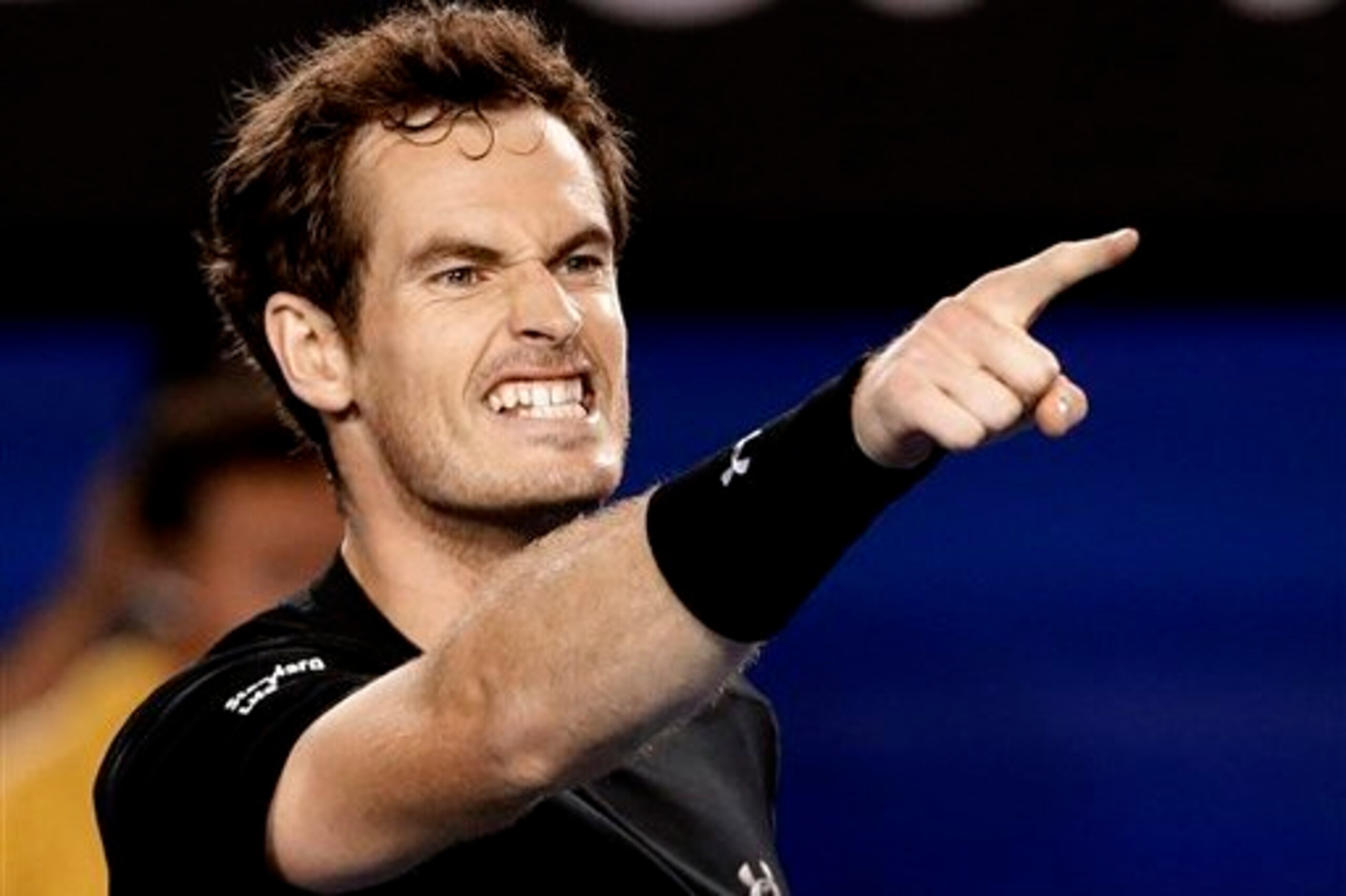
Meanwhile, 2015 Murray is back in black, edgy and playing with his nasty, get-under-your-skin resolve that once put him in the conversation with tennis history’s living legends. But it’s not just resilience and fight. A healthy Murray’s game has burst through the bottom of the bracket, and his technical approach has all but mitigated the spiritual need for former coach Ivan Lendl.
Fitness and Health
Today’s ATP tour is a series of physical tests that would rival Hercules’ labors. Nadal set the standard for brutal, baseline punches, and Djokovic proved three years ago that it might require six hours of grueling tennis to lift a major trophy.
Murray’s insidious theme in 2014 was his lack of strength and endurance. Sky Sports' Razwan Mirza reviewed Murray’s trying year, including the following three comments from Murray that lamented his lack of proper conditioning:
“I was tired when I got up, but I felt okay once I got out there. I did okay physically in the match,” he remarked in April after losing to Fabio Fognini on clay for his country’s deciding tie.
Even by September, he still struggled with his conditioning, and he said as much after fading badly in his U.S. Open defeat to Novak Djokovic:
"He was definitely physically fresher, the pace of my serve slowed down towards the end. My back towards the end stiffened up, it is physically extremely demanding to play him. I tried to hang in at the end but was a little bit disappointed how my body reacted, I have trained hard.
"
By the end of the year, and chasing points to qualify for London’s WTF, Murray was running on fumes. He survived a title-winning match in Valencia but said: “I played well at the right moments. I don't know how I managed to come through it—I was very tired, Tommy [Robredo] was very tired as well.”
Against almost anyone outside the top 10, Murray could win with intermittent splashes of his best tennis, or he could survive inconsistent bouts of poor play and fatigue. Against the very best, he often ran out of fire and his confidence sagged accordingly.
Extra rest. Greater training. Wide-awake tennis. Murray’s body is responding, and the back issues might be ancient history.

Technically Speaking
Murray’s languid comeback has looked up at the standard of Nadal’s meteoric blast into February 2013. It might seem trivial that something was amiss for the Scot, but playing through unoiled mechanics produces clunkers now and then. (Ask Nadal about that following his fourth-round exit to Tomas Berdych.)
Now, Murray’s conditioning is allowing him to execute his technical variety and strategy. He can bend down to pick up skidding underspin and deliver it back with more agility. It’s often the difference in being there for the next shot.
His reflexes and speed are sharper. He has produced more opportunities as a returner, and he virtually broke Berdych’s will in the second set of the semifinals, dealing him a bagel and finishing the match with a crisp six breaks in 10 opportunities.
Murray’s variety was on display with his patient approach to mix in more spin with speed. It destroyed Berdych’s monotonous pace, and it allowed Murray to pick his spots for winners. Berdych hits harder, but it was Murray who produced more winners (40-37).
This bodes well for Murray in the final. He has the capacity to stretch his opponent from corner to corner, like a sheepdog corralling its clients, wearing them down and frazzling their nerves. He can’t match the pace of Djokovic or Stanislas Wawrinka, but he can force them to misfire from a little too far out and without the precision they would prefer.
The rejuvenated Murray is stepping into more of his shots, taking chances when there are opportunities and protecting his stonewall defense with the footwork and desire that had often been missing in the last two years.
He’s coming back to the Australian Open final for the fourth time in six years. He’s sitting on an extra day of rest and ready to lay it all out on the line at Rod Laver Arena. There’s the sense that he can get it done this time, especially because there is spring in his step and purpose to his game.
.jpg?w=2560 "Colts Football")
.jpg?w=2560 "Donald Works Out For Rams 🫨")