
BJ Penn: A Closer Look At The Former Two-Division UFC Champion
When talking about B.J. Penn, the UFC’s former lightweight and welterweight champion and one of the most popular fighters in the promotion’s history, I always start at square one.
I used to dislike B.J. Penn.
He came across as cocky. As a bully. Someone who didn’t respect the sport, his opponents or his own prodigious talents. In short, I didn’t see him as being worthy of the devotion that seemed to follow him everywhere.
That all changed with UFC 101.
I was lucky enough to attend the event, which in retrospect is probably best known for Anderson Silva’s flashy knockout of Forrest Griffin but was headlined by a showdown between then-lightweight champion Penn and an opponent who appeared to be his stiffest in some time, Kenny Florian.
As soon as the fight was announced, Florian called Penn “the master,” adding in the same breath that it was “time to kill that master.”
By about the middle of round two, we could see from our seats that Florian was beaten. But that’s not what converted me; after all, I had seen Penn whip up on people before.
No, my conversion took place about 15 minutes before the fight even began. It happened when Penn and his camp slowly made their way to the cage, Hawaiian music lilting in the background. There was not so much a thunderous ovation for the clear crowd favorite as there was a sustained “oooooooooooooh.”
But there was a sense of community. Here was the reverence and the respect for sport, fans and self that hadn’t come through in interviews.
And not to get all “Wonder Years” on you, but that’s when it all snapped into place.
Penn was a fighter, through and through. Sure, he wasn’t and isn’t perfect, but inside and outside of the cage, fighting was what Penn was born to do, and he loves and relishes every moment that he has a chance to do it. That understanding puts the rest of his antics in a context that makes them, if not admirable, at least understandable.
Penn will have another chance to do what he was born to do when he faces a very dangerous Carlos Condit at UFC 137. In the meantime, for the unconverted looking for an intro or longtime fans in need of a refresher, here’s a condensed bio of the life and times of one of the most decorated athletes in martial arts history.
5. Upbringing
1 of 5Penn was born in 1978 in Hilo, Hawaii—a place he lives in and proudly represents to this day. His real name is Jay Dee Penn, but in a downright Foremanesque moment, his parents named all their sons “Jay,” and Jay Dee became “Baby Jay,” or B.J. for short.
Growing up in a wealthy part of town, it was a neighbor, Tom Callos, who introduced Baby Jay to something called jiu-jitsu.
4. The Prodigy: More Than A Nickname
2 of 5There was more than alliteration motivating that moniker. Penn earned his black belt in Brazilian jiu-jitsu in a mere three years. And this wasn’t one of those mail-order deals, either; he studied with the Gracie family and then with Nova Uniao.
The martial arts world really stood up and took notice in 2000, though, when Penn became the first non-Brazilian to win the World Jiu-Jitsu Championships.
The Prodigy was born. Not long after his championship run, Penn was enticed into a young promotion called the UFC. His first opponent was someone named Joey Gilbert; Penn knocked him out in the first round.
3. A Boxer’s Hands
3 of 5MMA is littered with jiu-jitsu black belts, and it contains more than a few world champions. So what sets Penn apart?
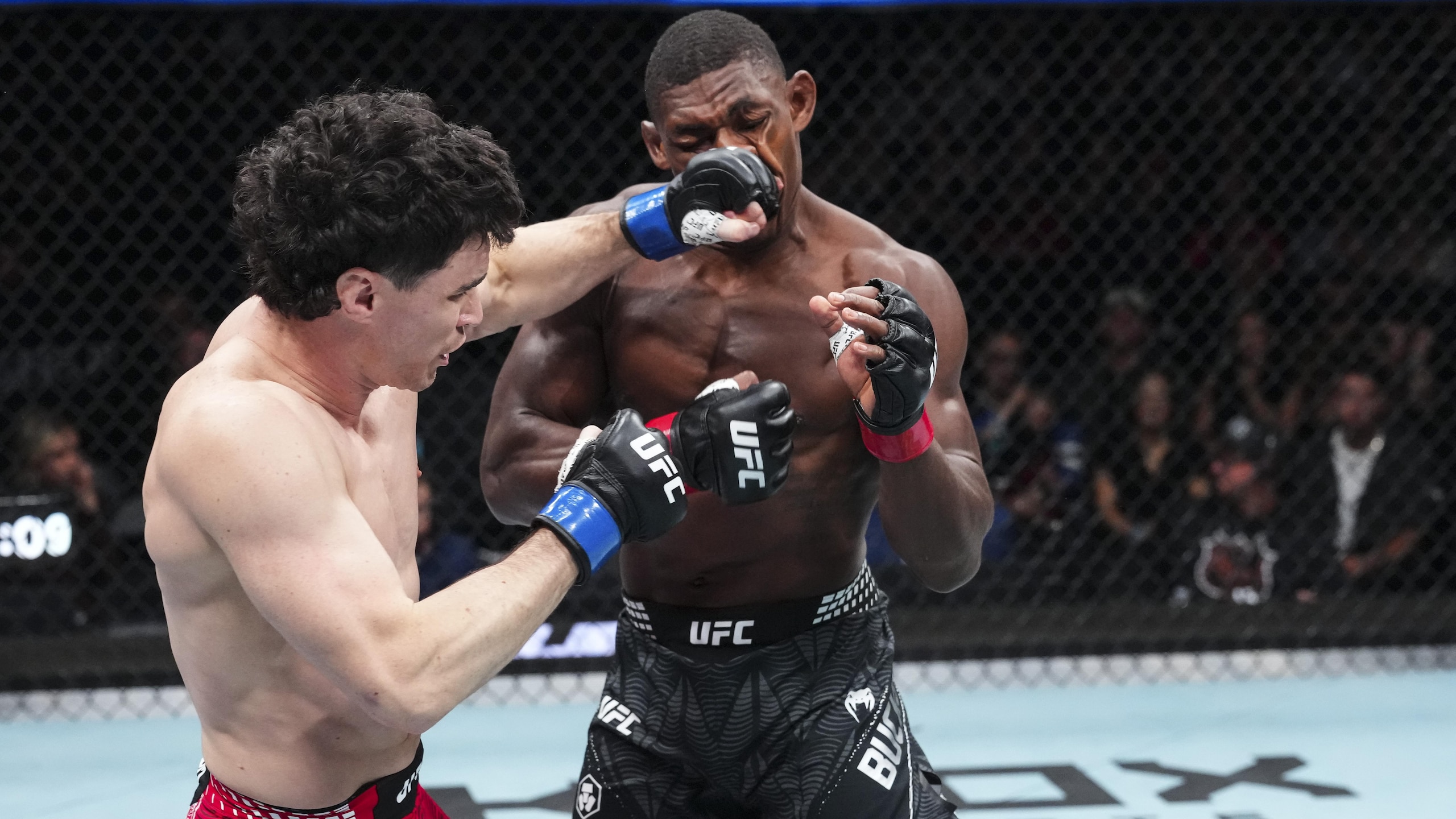
His balance is great. His flexibility is phenomenal. But what makes him so physically dangerous are his lightning-quick hands and deadly accurate strikes. It’s not flexibility that routinely leaves his opponents in a bloody mess on the canvas.
When renowned boxing trainer Freddie Roach says you are “by far the best striker” in MMA, that’s saying something.
It’s also saying something when such a decorated grappler has one more KO/TKO stoppage on his resume (seven) than he does submission wins (six).

2. He Really Will Fight Anyone
4 of 5For some fighters, it’s a mere platitude, the MMA equivalent of taking it one game at a time.
But B.J. is one of the few who walks his talk in this department.
In 2004, Penn jumped up a weight class for a welterweight title shot against Matt Hughes, who was not exactly a sitting duck at the time given that he had successfully defended the strap five times. No matter. Penn submitted Hughes in the first round.
Penn promptly followed up his win by declaring the UFC welterweight division bereft of suitable challenges. His stint in K-1 soon followed.
During said stint, Penn fought Lyoto Machida despite being outweighed by 30 pounds (and that's according to the weigh-in stats). He fought, and beat, Rodrigo and Renzo Gracie at middleweight. He has fought in three different weight classes and on four different continents.
It’s all part of that fighter’s soul that attracts so many of the sport’s fans.
All in all, he hasn’t kept the most frenetic of schedules in his career (25 fights over 10 years is not a lot, by any measurement), but his willingness not only to seek out new challenges but to sacrifice his own well-being in the effort sets him apart.
1. Never Go in Against B.J. When Gold Is on the Line
5 of 5Two title runs in different weight classes. Nearly holding two belts at once. When the stakes are highest, Penn is at his best.
And he has done it over the course of his career. The first title came in 2004. The lightweight title finally came in '08. When he faces Condit this October, another shot at the welterweight strap could hang in the balance.
A record of 5-5-1 in title matches is not overly impressive at a glance, but it is also misleading. In the past four years, only current welterweight champion Georges St-Pierre and current lightweight champion Frankie Edgar have stopped him. He has successfully won or defended his title against four different competitors.
And, of course, there is the little fact that B.J. Penn is one of only two fighters to hold UFC belts in two different weight classes. (Randy Couture is the other.)
Others may be better champions on paper, and his restlessness may be self-defeating in this regard. After all, he could have stayed at lightweight and calmly dispatched 10 challengers in a row. Who knows?
As such, that eagerness to test himself could be both the best and worst characteristic of his fighting self.
But there’s no question Penn fights hardest when it matters most. The fact that he does so while shuttling between weight classes is a testament to his sense of adventure and his desire to defeat what seems unbeatable.
To me, that’s a champion.
.jpg?w=2560 "Patriots Bears Football")


.jpg?w=2560 "Reported Details of Seahawks-K9 Split")




.jpg?w=2560 "Hellebuyck Trade Grades 🔠")