
Stanley Cup Finals 2011: What Boston Bruins Cup Win Means to NHL Now and Later
 The Boston Bruins defeated the Vancouver Canucks 4-0 Wednesday night to claim their first Stanley Cup championship since 1972.
It's somewhat remarkable how this victory happened also, given the nature of the team. The 1972 Bruins were led by a strong core that included four Hall of Fame players—winger John Bucyk, center Phil Esposito, goaltender Gerry Cheevers and arguably the best defenseman in hockey's history in Bobby Orr. The 2011 Bruins were also led by a star goaltender and strong defensive play, but these Bruins lack the star talent of the former team.
Tim Thomas was a sure shot to win the Vezina Trophy for best goaltender before the playoffs, and his top-notch playoff performance (1.98 GAA, .940 SV percent) will only bolster his candidacy. Thomas, though, despite being the most important player to the 2011 championship team, is far from being a Hall of Fame player along with the likes of Cheevers.

.jpg?w=2560 "Golden Knights Blues Hockey")
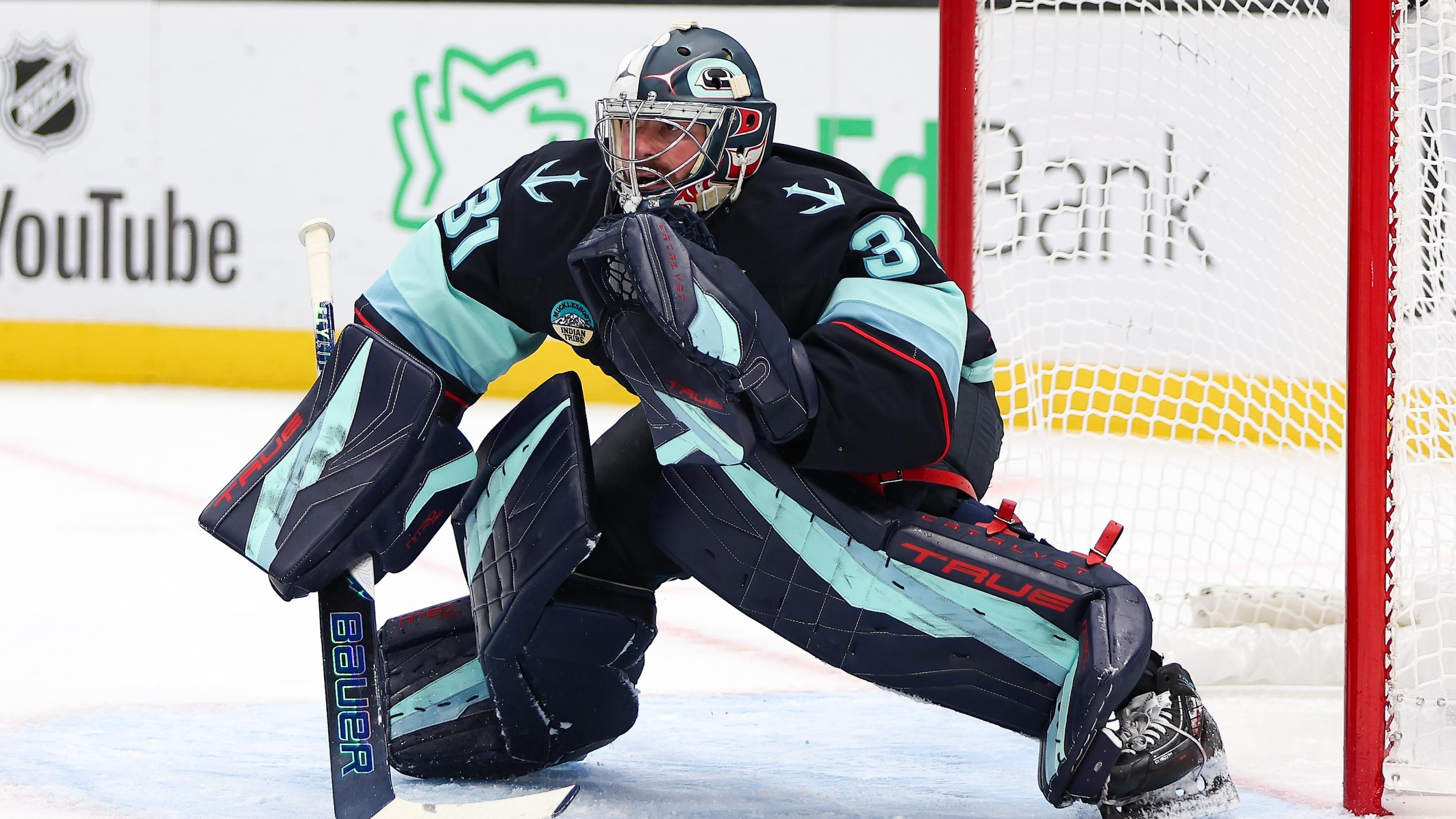
Thomas, as good as he may have been throughout the 2010-11 season and the 2011 playoffs, has truly had only one other great season, in 2008-09. Thomas was not a regular starter in the NHL until the 2006-07 season, when he was 32 years old, and in the 2009-10 season, he was demoted to backing up young phenom Tuukka Rask.
A second-string goaltender one year, a Conn Smythe winner the next.
And just as Tim Thomas' career falls short of that of Cheevers, David Krejci is no Phil Esposito, an aging Mark Recchi is no John Bucyk and Zdeno Chara is no Bobby Orr.
Krejci, despite being this year's league-leader in postseason points, scored only 62 (13 goals, 49 assists) in the regular season, a somewhat low number for a team leader.
The 42-year-old Recchi is possibly the only Hall of Fame player this team will have, but age limited him to 48 points (14 goals, 34 assists) in the regular season and 14 (five goals, nine assists) in the playoffs, all of which are solid numbers, but far from spectacular.
Chara, the other possible Hall of Fame player on this team, is still a great defenseman, but (as all others do) falters when compared to the great Orr.
And despite those qualifiers and light barbs, I genuinely mean those to be complimentary to the 2010-11 Boston Bruins.
I do not think it is too far of a stretch to say that winning a championship is extremely difficult in any sport, and it is even more elusive to a team without a superstar. The Bruins have none. Tim Thomas might be back on the bench in two more years. David Krejci might not score 50 points next year. Zdeno Chara, at any given moment, might garner the longest suspension in NHL history. Mark Recchi has already announced his retirement.
None of those are things one would say about players of Orr, Esposito or Cheevers' quality in 1972.
But like I said, I consider this to be a good thing. The Bruins have all but proven that strong team play, good on-ice chemistry and an outstanding defense are just as important to winning championships in today's NHL as a few superstars.
So what does this mean to the NHL?
For one, it means that they are separating themselves from the NBA's superstar-first state. I think that this championship is the start of an emerging trend and that hockey, already a team-centric sport, will embrace this dynamic. Maybe we will see fewer trade requests, holdouts and selfish, arrogant activities from NHL players (that is not to say that this has been a major problem in the NHL—however, I don't think we would see an hour-long free-agency decision TV special from Steven Stamkos on VS or CBC anytime soon).
Maybe teams will build around on-ice chemistry and team cohesiveness rather than trying to find the next superstar and hoping for the best. Are these likely to happen? Maybe not, but the foundation is there for these trends to emerge.
For another thing, the Bruins' Stanley Cup championship means that teams built like the Capitals might as well start over.
For a few years running, no NHL team has been more intriguing than the Washington Capitals. They have one of the two best players in hockey in Alexander Ovechkin, a center that complements him perfectly in Nicklas Backstrom and two very talented young goaltenders. Despite these assets, they seem incapable of producing a deep playoff run.
The Capitals' problem? A complete and total lack of depth. The Capitals' fourth line is in constant rotation and their third line can hardly be counted upon to score.
The Bruins, on the other hand, receive production from their third line and adequacy from their fourth line. Boston's forwards who ranked seventh through ninth in average time on ice during the playoffs (roughly averaging to the third line) ranked fourth, sixth and seventh in total points during the playoffs.
While few, if any, coaches expect scoring or many defensive stops from the fourth line, whoever coach Claude Julien put together (usually Shawn Thornton, Daniel Paille and Gregory Campbell) were capable of holding their own, no matter who the opponent had on the ice—exactly what a coach would want from the fourth line.
The 2011 Stanley Cup playoffs resulted in a victory for the star-less Boston Bruins, but if things line up correctly, it may lead to a victory for hockey and the NHL as well. If the NHL stems away from the superstar-centric model, it may one day become the perfect (and welcome) juxtaposition to the NBA.


.jpg?w=2560 "Chiefs, Steelers Eye WR Trades")

.jpg?w=2560 "WWE Raw Live Grades 🔠")
.jpg?w=2560 "Multiple NFL Trades Predicted")


