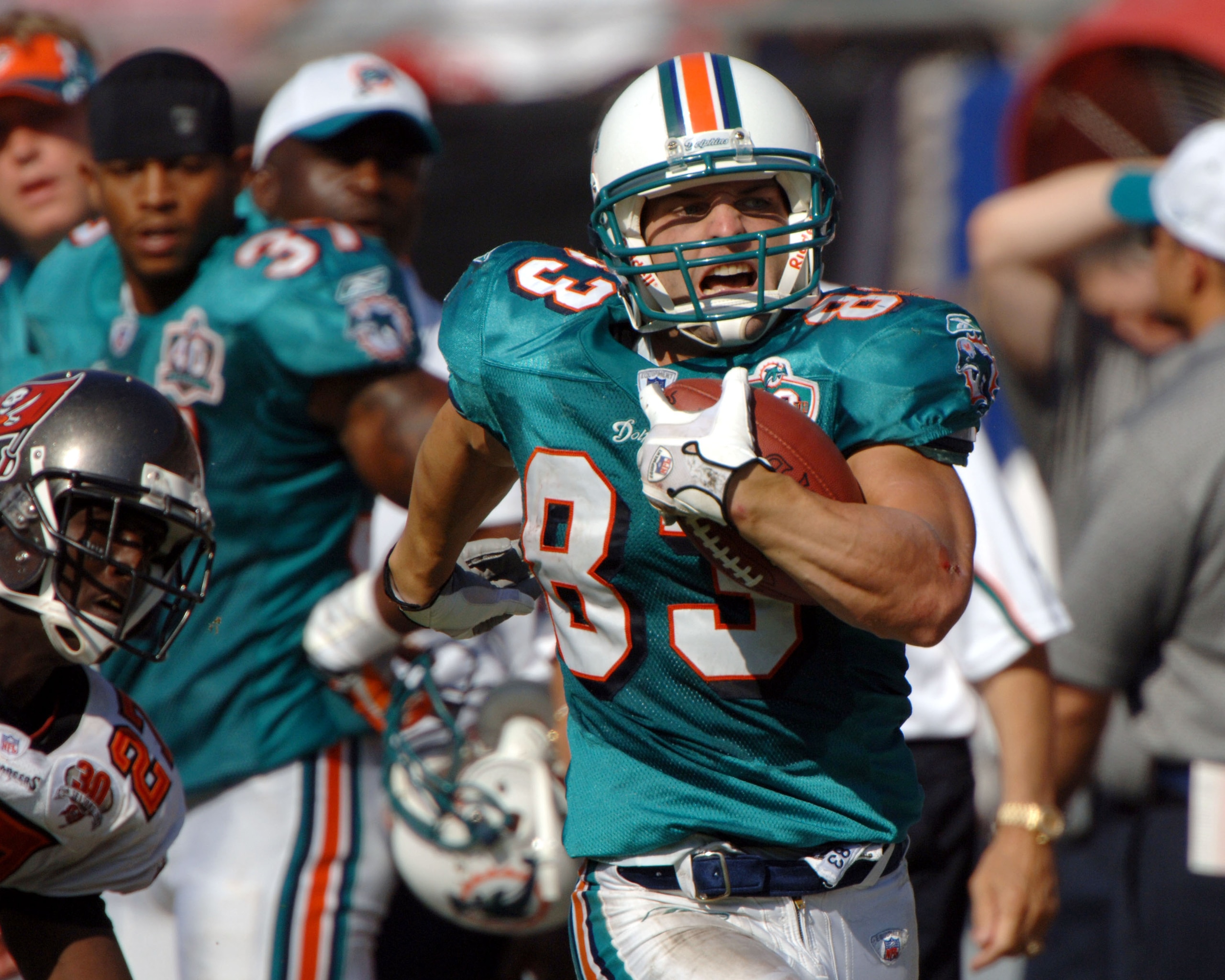

Miami Dolphins: The 15 Worst Decisions in Franchise History
Any NFL team with a long and rich NFL history boasts a humiliating collection of lopsided trades, horrendous free agent signings and cringe-worthy draft mistakes. But for one reason or another, the Miami Dolphins just seem to have more.
Once the team's dynastic 1970s run concluded, a new era of depression and gaffes slowly set in. The team still managed to thrive throughout the 80s and even parts of the 90s, but once the Millennium turned, so did Miami's fortunes.
The worst decisions in franchise history hover mostly around that time, which explains the team's recent run as bottom feeders and mediocrity. However, history is our greatest teacher, so hopefully, the 'Fins can reflect on these mishaps and use them as guidelines on what not to do.
No. 15: Miami Drafts Jason Allen, Holds onto Him for Five Years
1 of 15
During his pseudo-debut as head coach of the Miami Dolphins, Nick Saban drafted Tennessee safety Jason Allen with the 16th overall pick in the 2006 draft.
The pick made plenty of sense at the time. Miami's secondary ranked 20th in the league in 2005 and was still ushering in a new wave of defensive backs after the Surtain-Madison era concluded. However, Allen's career got off to a rocky start. He became entrenched in a holdout that lasted into the 2006 regular season, and he never caught on once he signed.
Yet, despite his large scale struggles, Allen managed to hang on through three different regimes until he was released midway through the 2010 season.
Allen's career is sort of the symbol of Nick Saban's infamous stint. He was annually torched week in and week out, but is no longer the subject of fans' frustration. He can't hurt us anymore.
No. 14: Don Shula Drafts Joe Theismann, Lets Him Go to the CFL
2 of 15
Technically, this wasn't a bad decision; rather, a little known anecdote that should be told.
In 1971, the Miami Dolphins drafted Joe Theismann with a fourth round selection. Nobody remembers this because Don Shula failed to successfully negotiate a contract with the future Redskins legend. Theismann proceeded to play in the CFL for a few years before joining the 'Skins in 1974, and the rest is history.
The transpiration of those negotiations is unknown, and it's certainly possible Theismann did not want to sit behind Bob Griese. However, had Shula been able to get Theismann under contract, Miami could have possessed invaluable trade bait that could have potentially elongated their dynastic run in the 1970s.
No. 13: Bill Parcells Gives Gibril Wilson a $28 Million Contract
3 of 15
The Trifecta has dished out their fair share of bad contracts since their arrival in Miami. But all pale in comparison to the five-year, $27 million ($8 million guaranteed) contract they handed safety Gibril Wilson.
Miami ignored the red flags that surfaced after Wilson's lone, disappointing season with the Oakland Raiders in 2008. Instead, they looked at Wilson as a player just two years removed from a starting role on the 2007 Super Bowl champion New York Giants.
Wilson lasted just one season in Miami, and this photo is pretty indicative of his Dolphins career.
.jpg?w=2560 "Commanders 49ers Football")
.jpg?w=2560 "Colts Football")
.jpg?w=2560 "DOLPHINS-AIKMAN")
No. 12: With the First Pick in Franchise History, Miami Selects Jim Grabowski
4 of 15
Timing hasn't always been the Dolphins' strong suit, but it never hurt the team more than in 1966. Miami's inaugural season with the AFL came in 1966, right in the midst of a heated battle between the league and its bully, the NFL.
Each league had its own respective draft, and teams picked from the same crop of college players. Of course, the NFL almost always lured the prospects in with promises of more money, fame and better competition. The Dolphins fell victim to this trap when they decided to gamble and draft Illinois star Jim Grabowski.
Grabowski was also drafted by the Packers and promptly chose to join the NFL's most storied franchise. Miami lost out on countless greats by rolling the dice on Grabowski.
No. 11: Miami's Trash Becomes the New England Patriots' Gold
5 of 15
Some former Miami Dolphins who were swooped up by Bill Belichick and the New England Patriots over the past decade: Sammy Morris, Wes Welker, Larry Izzo, Rob Ninkovich, Terrell Buckely, Heath Evans and Damon Huard.
All, with the exception of backup quarterback Damon Huard, have seemingly managed to extract revenge on the Dolphins with great performances and collectively boast handful of Super Bowl rings.
They say one man's trash is another man's gold, and that rings completely true for the Dolphins and Bill Belichick.
No. 10: The Trifecta Drafts Pat White and Patrick Turner in Back to Back Rounds
6 of 15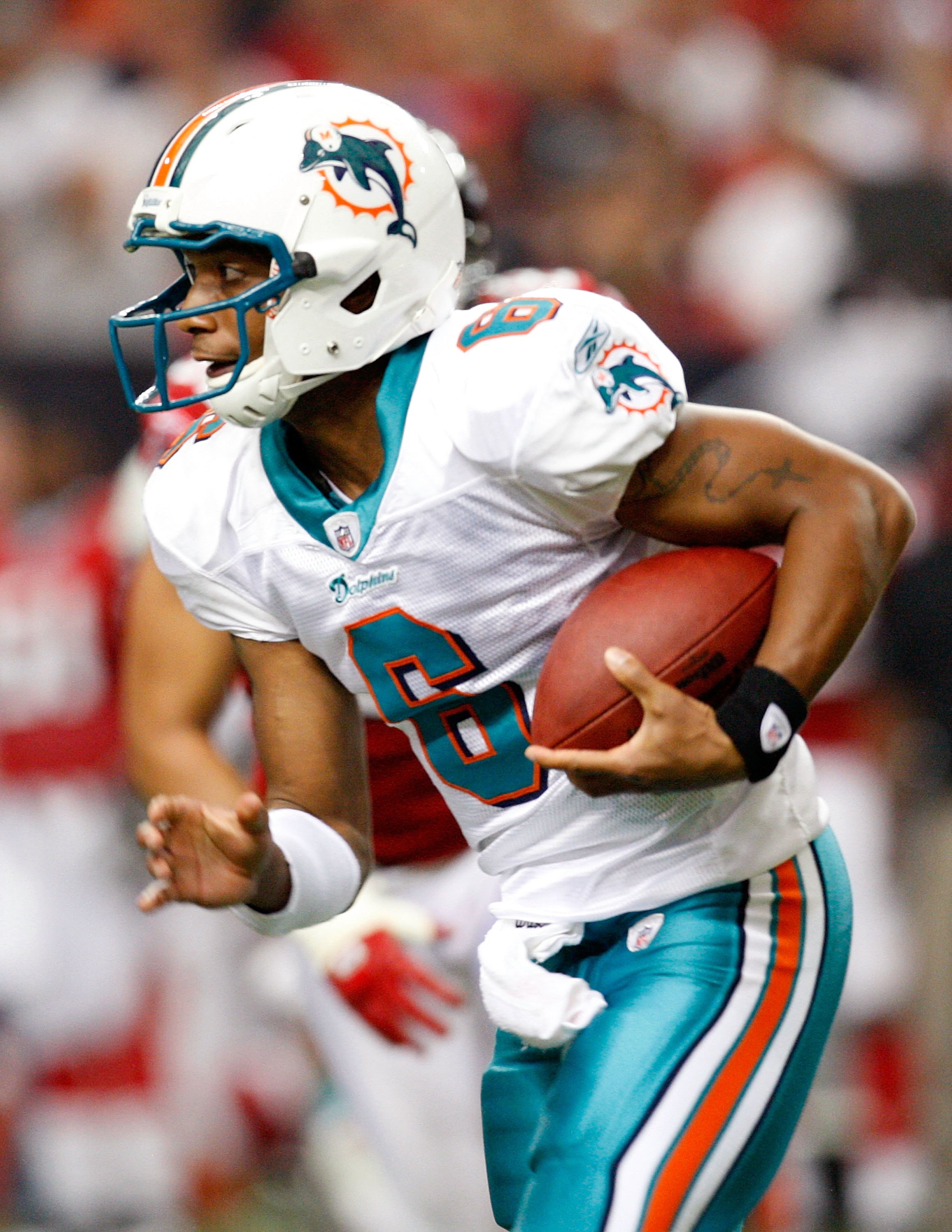
Throughout Jeff Ireland and Tony Sparano's short tenures with the Dolphins, they surely have not garnered a reputation for being risk takers. Miami plays an extremely conservative style of football and expends much of their energy towards creating a smash-mouth team, rather than a pass happy one.
However, Dolphins' brass briefly changed course during the 2009 draft, taking wild reaches for Pat White and Patrick Turner. The team absorbed mounds of criticism, but most assumed Bill Parcells knew exactly what he was doing. We were wrong.
Turner was an absolute stud coming out of high school, but only seemed to scratch the surface of his potential at USC, where he was largely considered a disappointment. Still, whatever Bill Parcells and Co. saw in Turner did not translate to the NFL. He was plagued by back injuries, slowed by attitude problems and dressed for only a handful of games in 2009. He was cut before the 2010 season.
The Dolphins shocked the league when they drafted White early in the second round with Chad Henne and Pennington already on their roster. Nobody knew how White would integrate in Miami's offense, and quite frankly, the Dolphins never figured it out either. He is now in the Kansas City Royals' farm system, right?
No. 9: Wayne Huizenga Gives Dave Wannstedt a Contract Extension
7 of 15
After the 2003 season concluded, Wayne Huizenga and the Miami Dolphins arrived at a crossroads. The team, despite boasting arguably the league's best defense as well as a passable offensive nucleus, had missed the playoffs for a second straight season.
A public debate ensued, with a majority seemingly calling for Wannstedt to be fired. However, Wayne Huizenga decided to give Wanny one last chance to prove his worth and extended his coach's contract into 2004.
The results were disastrous. Miami fell to a 1-8 start, and Wannstedt was promptly fired.
No. 8: Dolphins Trade Wes Welker to the Patriots for a Second Round Pick
8 of 15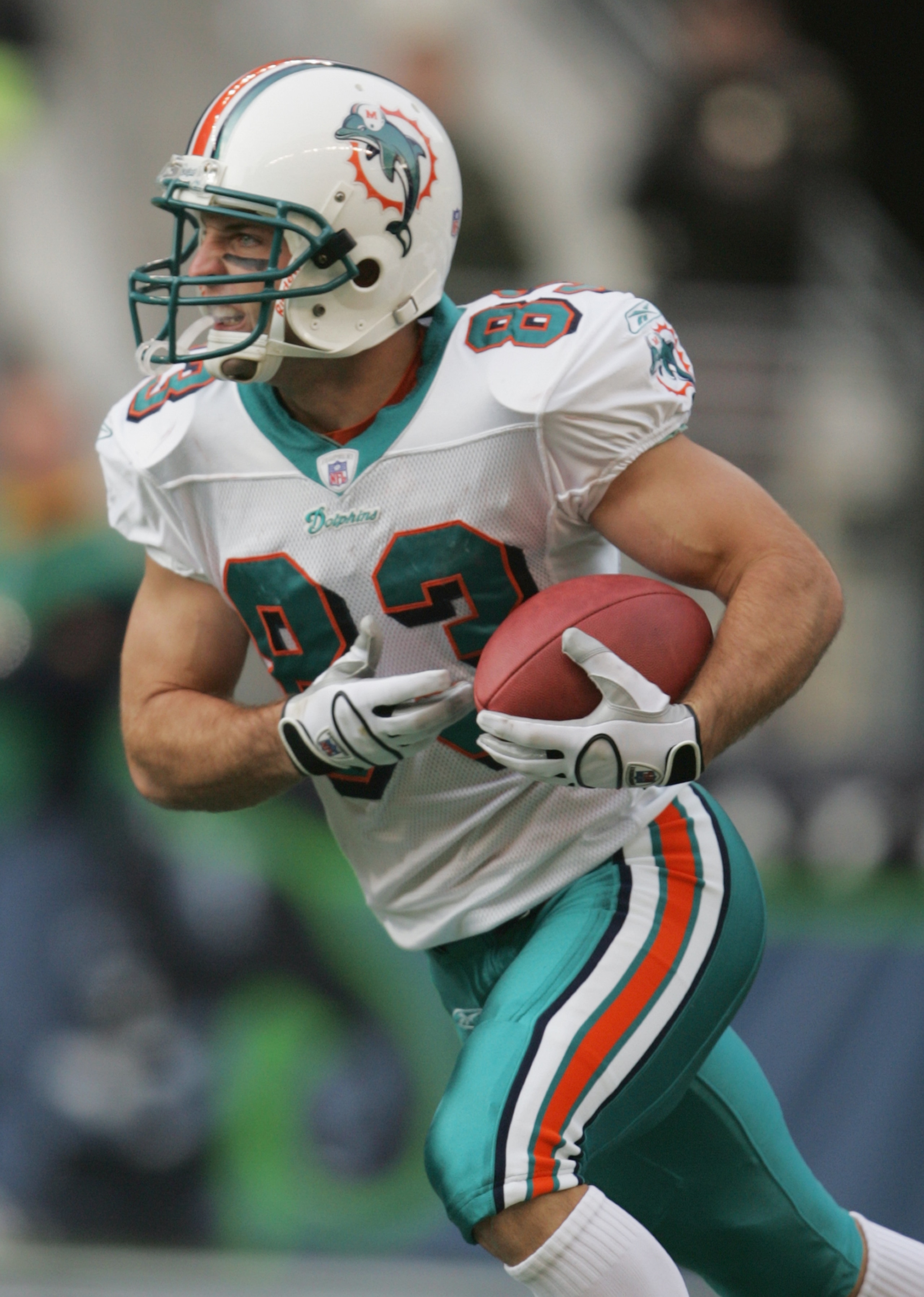
Despite registering only one touchdown in two seasons as a Dolphin, Wes Welker was coveted by in Miami for his consistency, tenacity and grittiness. The New England Patriots apparently cherished those same values.
Understandably, Miami jumped at the chance to deal the 5'9" receiver for a second round pick. His lack of statistical production wasn't particularly promising, and the team clearly didn't see much potential in Welker considering their willingness to trade him within the division.
Almost five years later, Welker is a star, and the deal has descended upon the worst in team history.
No. 7: Dave Wannstedt Passes on Reggie Wayne for Jamar Fletcher
9 of 15
Dave Wannstedt made his fair share of awful decisions during his tenure as Miami Dolphins head coach—that much we know. But one of his worst decisions has gone entirely overlooked, and it completely altered the path of two franchises.
Miami entered the 2001 NFL Draft with a desperate need for a young, explosive wide receiver to aid Jay Fiedler. With the 26th overall selection, Wannstedt passed on Miami Hurricanes stud Reggie Wayne for cornerback Jamar Fletcher. The pick made almost no sense considering Sam Madison and Patrick Surtain were at their peaks, and the Dolphins' secondary ranked in the top five the season before.
Maybe he was trying to take a talent-over-need approach, but Fletcher was a total bust and spent only three years with the 'Fins.
No. 6: Wayne Huizenga Hires Cam Cameron over Mike Tomlin
10 of 15
Hoping to rapidly fill the void left by Nick Saban's untimely departure, Wayne Huizenga embarked on a nationwide search for his next head coach. In order to comply with the Rooney Rule, Huizenga was legally binded to interview an African American candidate.
His choice? Mike Tomlin.
Tomlin has led the Steelers to two Super Bowl appearances (1-1 record) since '07.
Cam Cameron's claim to fame is 1-15.
Huizeng's intentions were good—after all, Cameron was the hottest commodity on the market. But it's safe to say this was one of the biggest gaffes, and in retrospect, worst decisions in team history.
No. 5: Miami Whiffs on Running Backs from 1976 to 2002
11 of 15
While everybody fusses over the Dolphins' quarterback quagmire, take a gander at the the team's history From 1976 until Dave Wannstedt traded for Ricky Williams in 2002, the Dolphins basically shuffled an endless roulette of running backs.
No back led the team in rushing for more than three consecutive seasons over that 26 year span, and even Williams only led it for two before he retired. Moreover, only two players surpassed 1,000 yards rushing in a season: Delvin Williams and Karim Abdul-Jabbar. Don Shula and Jimmy Johnson both passed on countless players who could have filled the void, so this is kind of summation of countless bad decisions.
It was a historic struggle that has gone entirely overlooked. But next time you start working yourself up about the current quarterback situation, just remember things could be much worse.
No. 4: Dolphins Pass on Thurman Thomas for Eric Kumerow
12 of 15
Rather than attempt to cure the Dolphins' running back spell with the 16th overall pick in the 1988 NFL Draft, Don Shula deemed Ohio State defensive end Eric Kumerow the ideal player to help get the team over the hump and back into playoffs for the first since 1985.
Kumerow played three seasons with Miami (his only in league) and never started a game.
Meanwhile, Oklahoma State stud Thurman Thomas would remain on the board until the second round. He is now a Hall of Famer, and Kumerow doesn't even have a photo on Google Images.
No. 3: Wayne Huizenga Hires Dave Wannstedt to Replace Jimmy Johnson
13 of 15
Jimmy Johnson's tenure as Dolphins head coach ended a bit tumultuously; allegedly, Dan Marino was prepared to either retire or leave Miami if Johnson returned as head coach in 2000.
Johnson took Marino's threats as his cue, and upon announcing his intentions to retire, conspired with Wayne Huizenga to lure in Bears defensive coordinator Dave Wannstedt as his replacement.
Wannstedt's Dolphins career, while studded with a pair of playoff appearances, was marred by frustration and odd decisions. He drafted terribly, ran Ricky Williams into retirement and was often criticized for his questionable coaching methods. You have to imagine that a coach of greater caliber could have led those talented teams deep into the playoffs.
No. 2: Cam Cameron Drafts Ted Ginn, Jr. and His Family
14 of 15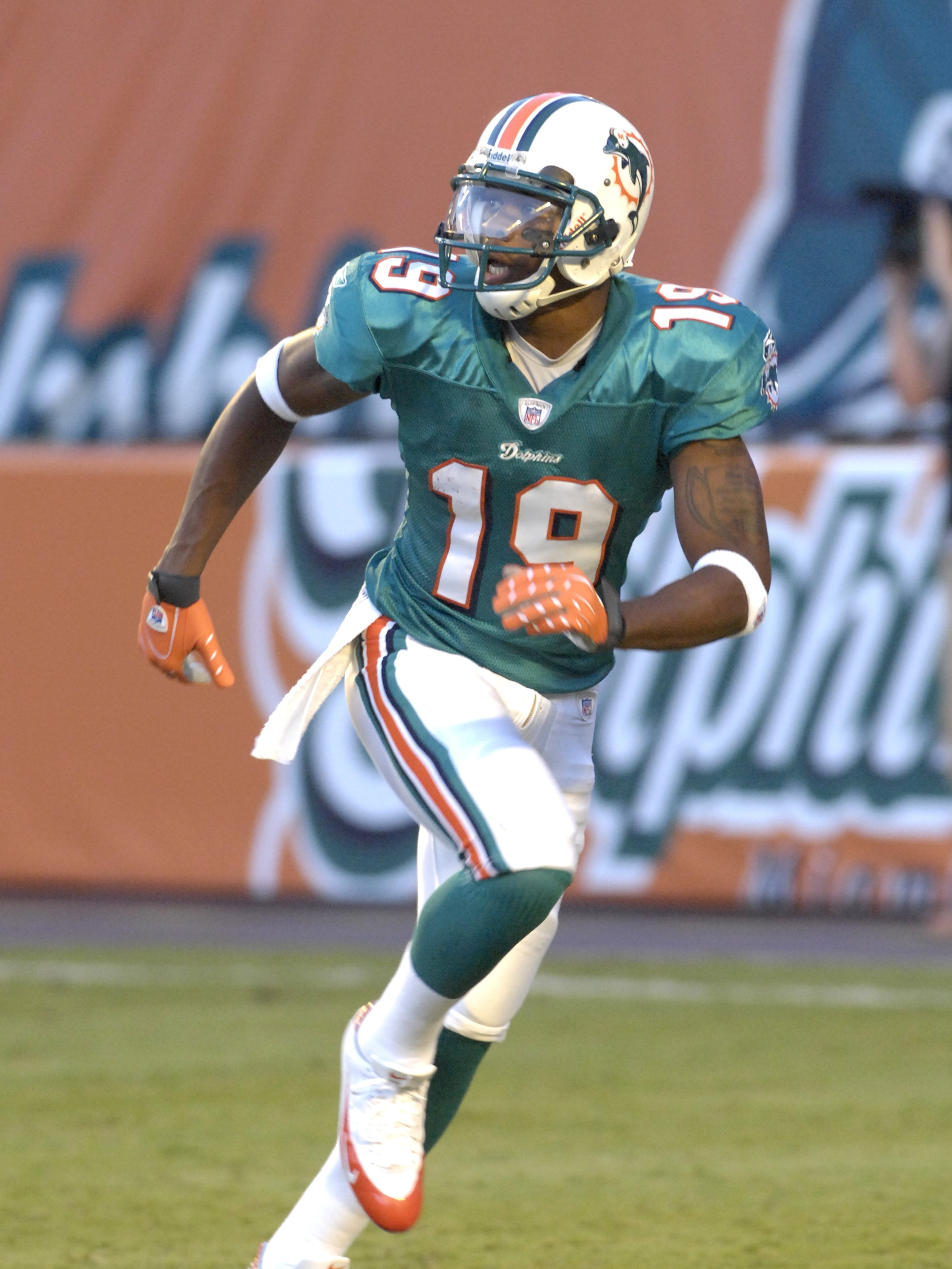
It literally made too much sense to draft Brady Quinn with the ninth overall pick of the 2007 NFL Draft. Notre Dame's golden child had slipped past his hometown team into Miami's quarterback-hungry lap, and once the Dolphins were on the clock, few doubted whom Cam Cameron would select with his first pick as the team's head coach.
But then, the unthinkable ensued.
In retrospect, we should thank Cameron for selecting Ginn and saving us the frustration of watching another quarterback fail to replace Dan Marino. Of course, Ginn has become a pariah in Miami, and the fact that Cameron passed on the likes of Patrick Willis and Darrelle Revis makes this even more difficult to stomach.
No. 1: Miami Dolphins Choose Daunte Culpepper over Drew Brees
15 of 15
Drew Brees or Daunte Culpepper? One of these two quarterbacks would surely descend from the free agency heavens and solve the Dolphins' agonizing, post-Dan Marino depression.
Sophomore head coach Nick Saban essentially had first dibs on the pair, but his medical staff was left to decide which severely-injured quarterback would return to top form. The Dolphins' staff deemed Culpepper's recently torn ACL favorable to Drew Brees' surgically repaired throwing shoulder, and the rest is history.
Miami sent a second-round pick to the Vikings in exchange for Culpepper's services. The team promptly signed him to a huge, undisclosed contract, which probably payed Culpepper upward $6 million per year.
After one season, the former Pro Bowler was ousted from South Beach.
.jpg?w=2560)



.jpg?w=2560 "Malik Beasley Negotiating Plea Deal (AP)")