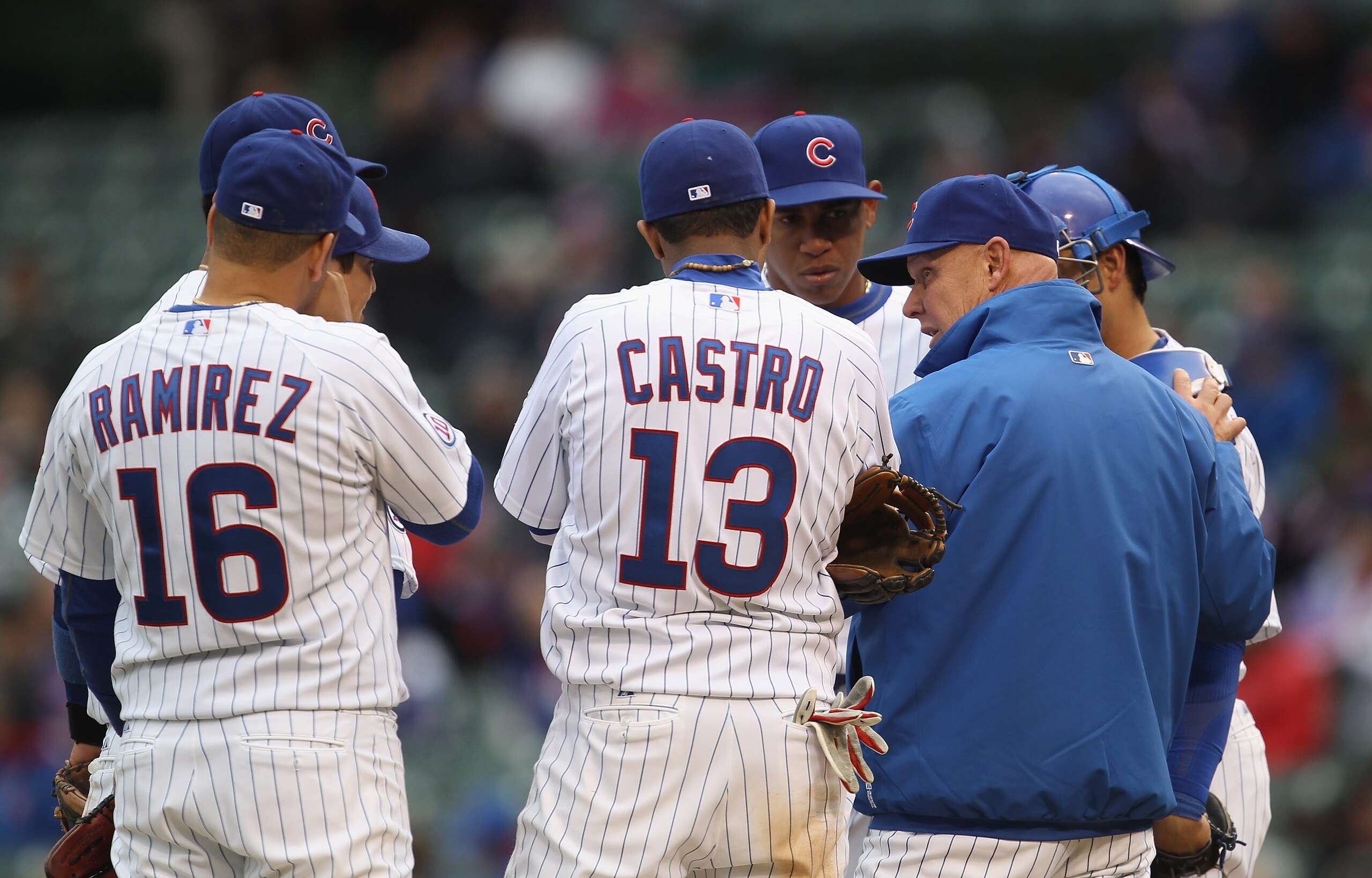

MLB: The Chicago Cubs' 2011 Report Card so Far
With about a third of the baseball season over and fans calling for general manager Jim Hendry's job, the Chicago Cubs are battling the Houston Astros for the fewest wins in the National League.
Cubs brass will claim injuries have caused the poor play. It's more likely that poor planning, managing and abysmal fundamentals are the real issues though. The Cubs have the worst fielding percentage in all of baseball, are last in walks and last in quality starts.
Fielding—not swinging at bad pitches—and starters going deep enough in games to keep the team in it are pretty basic rules to winning baseball games that the Cubs fail to routinely accomplish. If this continues, the only thing the Cubs will be winning is the first pick in the amateur draft next season.
Catcher
1 of 9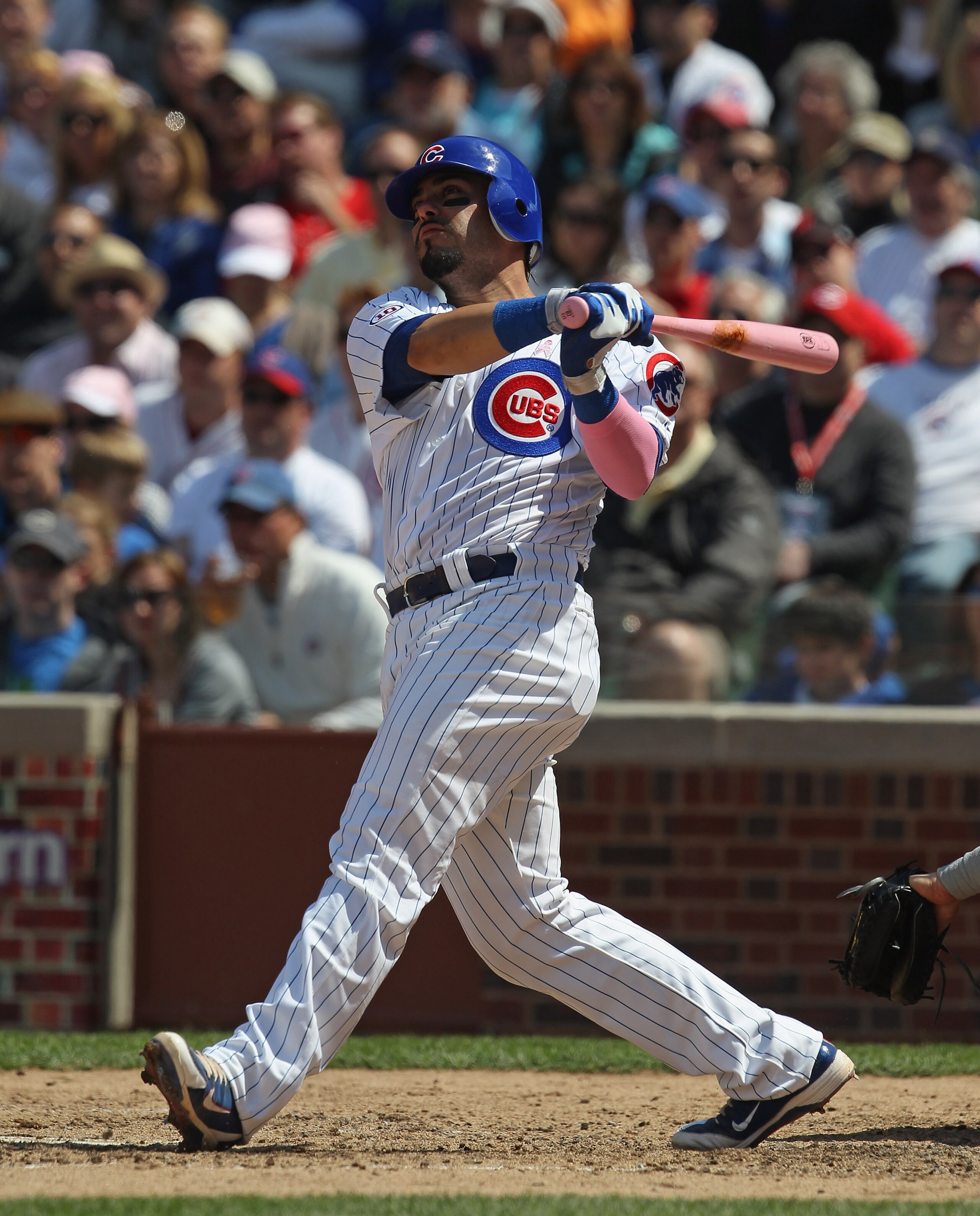
Catcher: Geovany Soto, .220-3-12 in 36 games
Soto has missed nearly 20 games with days off and injury, but the Cubs have hardly missed him. If he's not hitting well, he can't rely on his subpar defensive skills to make up for it. He throws out 26 percent of base stealers and has already committed four errors, matching his total for last season.
Backup Koyie Hill has never been an offensive threat, but is suitable as a purely defensive catcher. If Soto doesn't pick up the bat soon, Hill will be the better option going forward.
Future Outlook
With the Cubs having young Welington Castillo in the minors, Soto needs to prove he's worth re-signing after taking his $3 million contract last year. Castillo needs refinement at the plate, but is far superior defensively than Soto, not to mention younger and much cheaper.
Grade: D-
First Base
2 of 9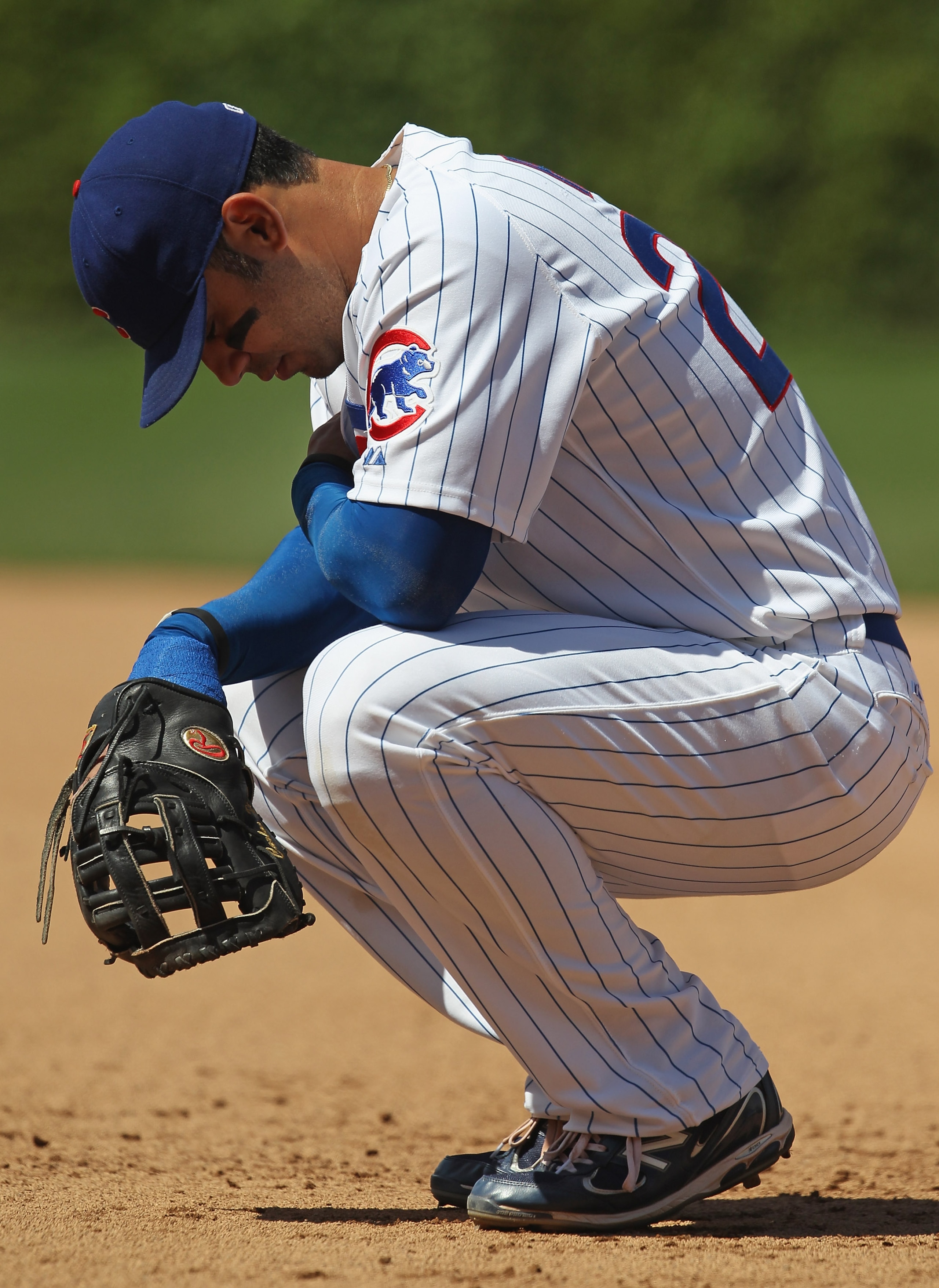
First Base: Carlos Pena, .217-8-27 in 55 games
Pena started out completely worthless at the plate, but has come on as of late. He's on pace to hit about 30 home runs and leads the team in walks—and strikeouts. He has been very solid on the defensive end, and there's no doubt the Cubs would be first in errors without him at first.
But the Cubs signed him to hit 40-plus home runs in fly ball-friendly Wrigley Field, and he has failed to provide that power and much needed fear in an altogether weak Cubs lineup.
Future Outlook
Regardless of what happens this season, Pena will most likely find another home—one much cheaper than his $10 million, one-year contract—next season.
The Cubs figure to be huge players in the Albert Pujols extravaganza, but this fan personally hopes to steal Prince Fielder from the Milwaukee Brewers. Fielder has a similar skill set, is younger and will command far less than the expected $300 million over 10 years that Pujols has been rumored to seek.
Grade: C-
Second Base
3 of 9
Second Base: Darwin Barney, .295-1-25 in 56 games
Barney came out of nowhere to beat out Blake DeWitt (hardly much competition) for the starter job at second base. He's just 25 years old and plays much like previous fan favorite Ryan Theriot.
Barney's defense still needs some work, but his effort is there, and he seems to genuinely enjoy playing baseball for a living—extremely refreshing after years of watching Soriano and Ramirez collect huge checks whether they have bothered to play or not.
Future Outlook
Barney has played beyond his age after winning the College World Series twice at Oregon State. He may not have the power or speed to be a big-name player, but he will be solid all around and provide a positive influence in the locker room, something the Cubs have lacked for years.
Grade: B



Shortstop
4 of 9
Shortstop: Starlin Castro, .306-1-25 in 57 games
Castro came out of the gate this season completely on fire. He was batting close to .400 for the first month and looked to have every pitcher figured out. He has since come back to Earth and shown he still has a lot of growing up to do; at the ripe age of 21, Castro has committed 10 errors after botching 27 plays last season.
Future Outlook
Castro doesn't have the greatest range/arm and seems to project better at second base than shortstop.
At the plate though, Castro looks an awful lots like a right-handed Mark Grace.
He routinely hits line drives and rarely swings for the fences. Although he doesn't have the amazing contact rate Grace had, he's still a tough punch out, on pace to fan roughly 70 times this season. If Castro can keep his average around .300 and learn how to field, the Cubs will have a two-hitter for many years to come.
Grade: B
Third Base
5 of 9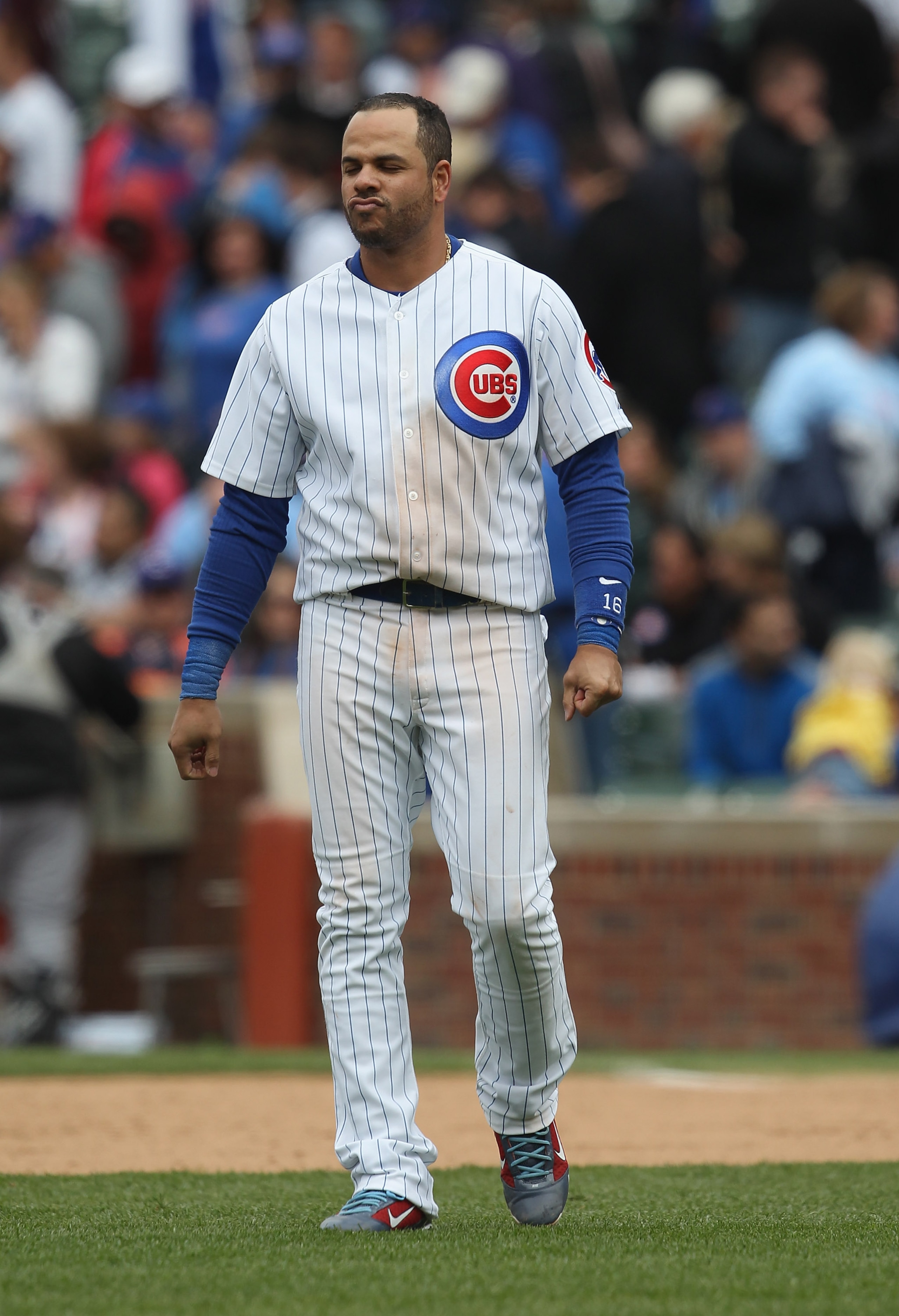
Third Base: Aramis Ramirez, .294-2-21 in 50 games
Ramirez has been a huge disappointment the last few years.
Not only is he considered one of the worst defensive third basemen in the league, but he is also one of the most injury prone. Ramirez has only played two full seasons since 2004, and when he has stayed healthy for the most part (so far), his production has been terrible. He is on pace for less than 10 home runs and just 50 RBI.
Future Outlook
Ramirez is as good as gone. One way or another, the Cubs will part ways with him. His production is too low to support his $16 million option next season.
The Cubs have prospect Josh Vitters toiling in the minors and need to find out if he's going to take the next step as a major league third baseman. Expect the Cubs to trade Ramirez if they can, otherwise he will join the free agent pool at year's end.
Grade: D
Outfield
6 of 9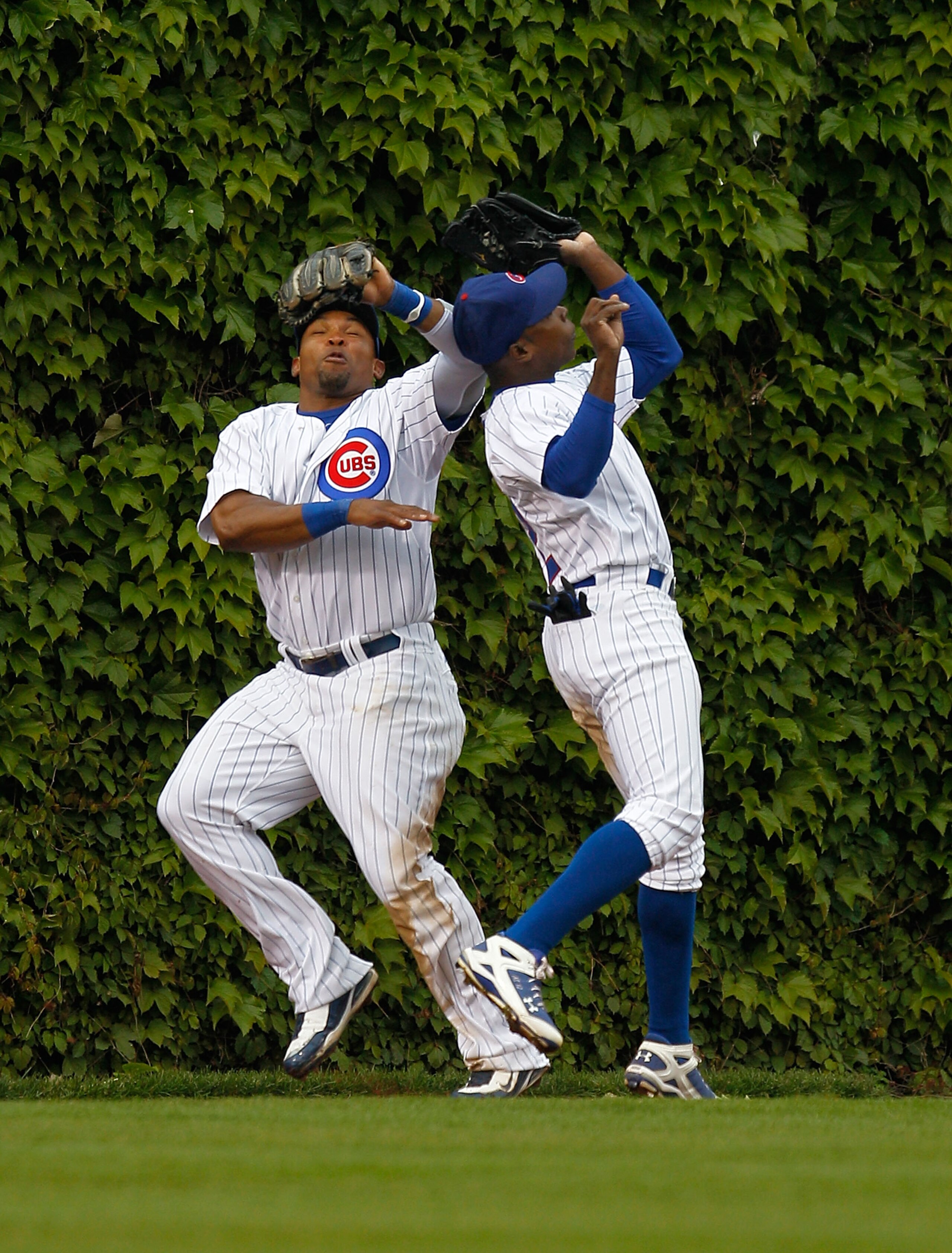
Outfield: Marlon Byrd, .308-3-11 in 44 games; Alfonso Soriano, .271-12-29 in 49 games; Kosuke Fukudome, .300-2-6 in 46 games
I decided to group all of the outfielders together since they have been interchangeable and have regularly rotated for backups such as Reed Johnson, Tyler Colvin, Tony Campana, Blake DeWitt and Jeff Baker.
Soriano is quite possibly the worst defensive outfielder in the majors. He has drawn the ire of fans, teammates and coaches for his "hop" and his inability to take proper routes to balls; he has replaced "the hop" with a defensive effort devoid of hustle.
In his defense, the Cubs knew they were signing a player who couldn't play defense at any position when they agreed to pay him $136 million over eight years.
Byrd is not a natural center fielder and lacks the appropriate range, but he has a decent arm and instincts. Fukudome has played pretty solidly in right field over the last couple years and has gained notoriety for his strong, accurate arm.
At the plate, this outfield has not been able to produce much of anything.
With 46 RBI between the three starters, there will be individual players who have more than the Cubs' whole outfield.
Soriano does have 12 home runs, but never seems to be able to hit them when it matters. Nine of 12 have come with bases empty, and he's hitting just .208 with runners in scoring position. Byrd, for as large as he is, and Fukudome have minimal power and are just singles hitters.
Future Outlook
Soriano and Fukudome are not going to be here much longer, as the Cubs will surely trade them or let them go when the opportunity arises.
Soriano has just three years left at $18 million a year and can be traded if the Cubs agree to pay some of his contract. Fukudome's contract is up at the end of this year, and he will not be able to command the $13.5 million he's making this year. Byrd was a much more sensible signing and will make $6.5 million next year, his last as a Cub.
The Cubs will look to move all of them before the trade deadline to open up room for young players such as Tyler Colvin who hit 20 home runs as a rookie last year, the blazing fast Tony Campana and current minor leaguer/Cubs top 2009 pick Brett Jackson who is tearing through the minors.
Grades: Left, C; Center, B-; Right, B
Relief Pitching
7 of 9
Relief Pitching
The Cubs' relief pitching hasn't been needed much, but when it has, it's been awful.
The Cubs are last in ERA and nearly a full run above the NL average. The bullpen is converting just 55 percent of save opportunities, and manager Mike Quade really has only three options.
Lefty setup man Sean Marshall has been nothing short of spectacular, Kerry Wood has been solid and closer Carlos Marmol has been hit or miss. Marshall has allowed just three runs in 26 appearances for an ERA of 1.07. Wood has an ERA of 2.35, and Marmol is at a respectable 3.33 with four blown saves.
When your third-best pitcher (statistically) has just 10 saves to go with four blown saves and you only have two other guys to give the ball to, it puts a lot of pressure on the starters to keep the game close. The only good thing about this bullpen is they haven't had many pressure situations since the starters have been poor and the offense stagnant.
Future Outlook
To put it simply, not good.
There is very little help on the way, and Wood and Marmol don't seem to be getting any younger. Marshall should be moved to starter, which is what he wants, and why not? He's done everything the Cubs have asked with a smile on his face, so let's see what the kid can do for more than an inning at a time.
Unfortunately this will probably be the last thing the Cubs address with so many other holes on the team. The lone long-term hope they have is that other young players such as James Russell (25), Jeff Samardzija (26), Justin Berg (26) and Marcos Mateo (27) turn out to be capable big league pitchers.
Grade: D+
Starting Pitching
8 of 9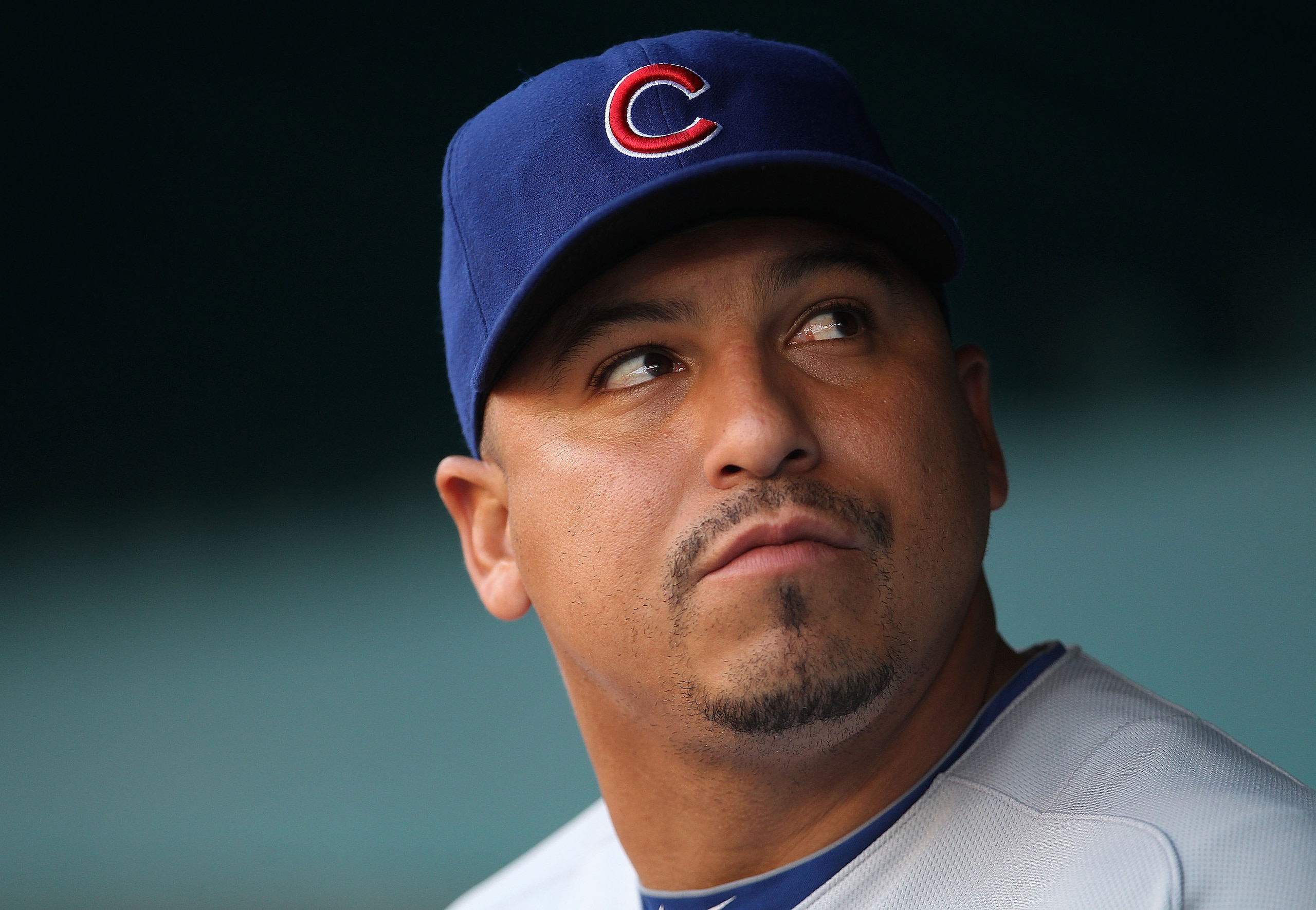
Starting Pitching
The Cubs have used a number of starters this year due to injuries.
Ryan Dempster, Carlos Zambrano, Matt Garza, Andrew Cashner and Randy Wells were the projected top five; since then the Cubs have trotted out Casey Coleman, James Russell, Doug Davis and even Rodrigo Lopez.
Needless to say, the Cubs aren't winning, and Zambrano is the only starter with a winning record. Dempster has been terrible, Garza proved he wasn't worth the price the Cubs paid for him, and Cashner and Wells got hurt on the same day.
The Cubs obviously lacked depth both at a major and minor league level, so they brought in nearly-retired veterans Davis and Lopez, who both have yet to record a quality start. There really isn't much more I can do to shed light on how terrible a job the Cubs have done to address these issues.
Future Outlook
Cashner is still very young and looked to be on his way to being a front line (at least for the Cubs) starter. Wells had a great rookie season, but suffered from the dreaded sophomore slump.
With the jury still out on Wells, the Cubs are stuck paying Zambrano through next season at $18 million and Dempster $14 million. Garza will command a raise as well, probably near the $10 million range. So with roughly $42 million committed in just three starters for next season, the Cubs don't have much wiggle room.
Expect this disaster to continue for another year, probably more since the Cubs have limited prospects at starter.
Grade: F
Manager
9 of 9
Manager: Mike Quade
Mike Quade replaced Lou Piniella at the end of last season and finished with a quality record of 24-13. Hendry must have felt that was good enough and gave him the full-time gig during the offseason.
While I might have felt good for the baseball lifer making good after many years in the minors, I couldn't believe he was really the guy for the Cubs. He didn't seem to be a coach. He's the coach's buddy, the player's friend, the coach who calms the player who just screwed up by doing something stupid.
All the offseason worries became fact once the season started. Quade continuously made—and still makes—bonehead calls and rarely seems to understand the situation.
Why is James Russell, a reliever, starting baseball games when he can't last more than a couple innings? Why does your major league team have no idea how to properly field a ground ball or back up a play? If as a coach you can't get your team to execute the fundamentals, what are you coaching them on?
Quade doesn't have control of his clubhouse—not that it's an easy one to have control of.
Dempster spoke for the hiring of Quade before the season, claiming, "He's one of us." That right there should have been an issue. You aren't hiring a player to coach, you are hiring a coach to coach!
Earlier in the month Zambrano broke a bat in frustration, and Quade spoke out against it. When alerted of his coach's disdain for his actions, Zambrano replied, "What coach?"
Not to mention the Zambrano blow up this past week after six straight losses. As much as I hate showing up a teammate (or a whole team in this case), Zambrano is completely right. The Cubs stink, and they are playing like a Triple A club. When it gets as bad as this, you have to look from the top down, and Quade isn't doing anything to help the situation.
Finally, PLEASE TELL ME WHY with two outs in extra innings, bases empty in a tied game, you pitch to Albert Pujols, who has already hit two home runs in two games against you. Quade doesn't seem to understand—nor care—that he needs to coach and tell the players what they need to do—and if they can't do it they won't play.
Future Outlook
The Cubs had manager of the future Ryne Sandberg in the minors, and he did and said everything he was supposed to. In the end the Cubs (Hendry) decided Sandberg wasn't ready and went with Quade. Sandberg had enough toiling for his former team and went to work for his original team, the Philadelphia Phillies.
Why the Cubs allowed this, I'll never know.
Sandberg was supremely respected around the franchise and its players, he was successful on all levels and had deep roots within the organization. This all goes without adding in the fan frenzy it would have created by bringing back one of the most popular players in Chicago sports.
But the Cubs squandered that opportunity as well and will be looking for a replacement at the end of the season.
Grade: F

.jpg?w=2560 "Grading WWE Raw 🔠")

.jpg?w=2560 "Viral Rams Coach Vid 🖕")

.jpg?w=2560 "Injury-stricken Seahawks signing veteran RB")

.jpg?w=2560 "Bijan's INSANE 1st Half 🤩")
