
Roger Federer and Rafael Nadal Crown the French Open Semifinals
 There is an air of dread about the men's semifinals tomorrow, a certain itchy sense of destiny and frightful fatefulness. It's that big match feel, that aspect of the historic, ever so eager to burst out on the court in a glorious, effusive display of tennis. Why would there not be? Roger Federer stands with only Novak Djokovic between him and the final and Rafael Nadal and Andy Murray.
Perhaps one has actually come to a time in men's tennis when the order of these names should be reversed—rather, it is Djokovic who has Federer, and Murray-Nadal, between them and the final. After all, that reality very almost manifested itself earlier this year at Melbourne, when Nadal failed to complete this dream quartet.

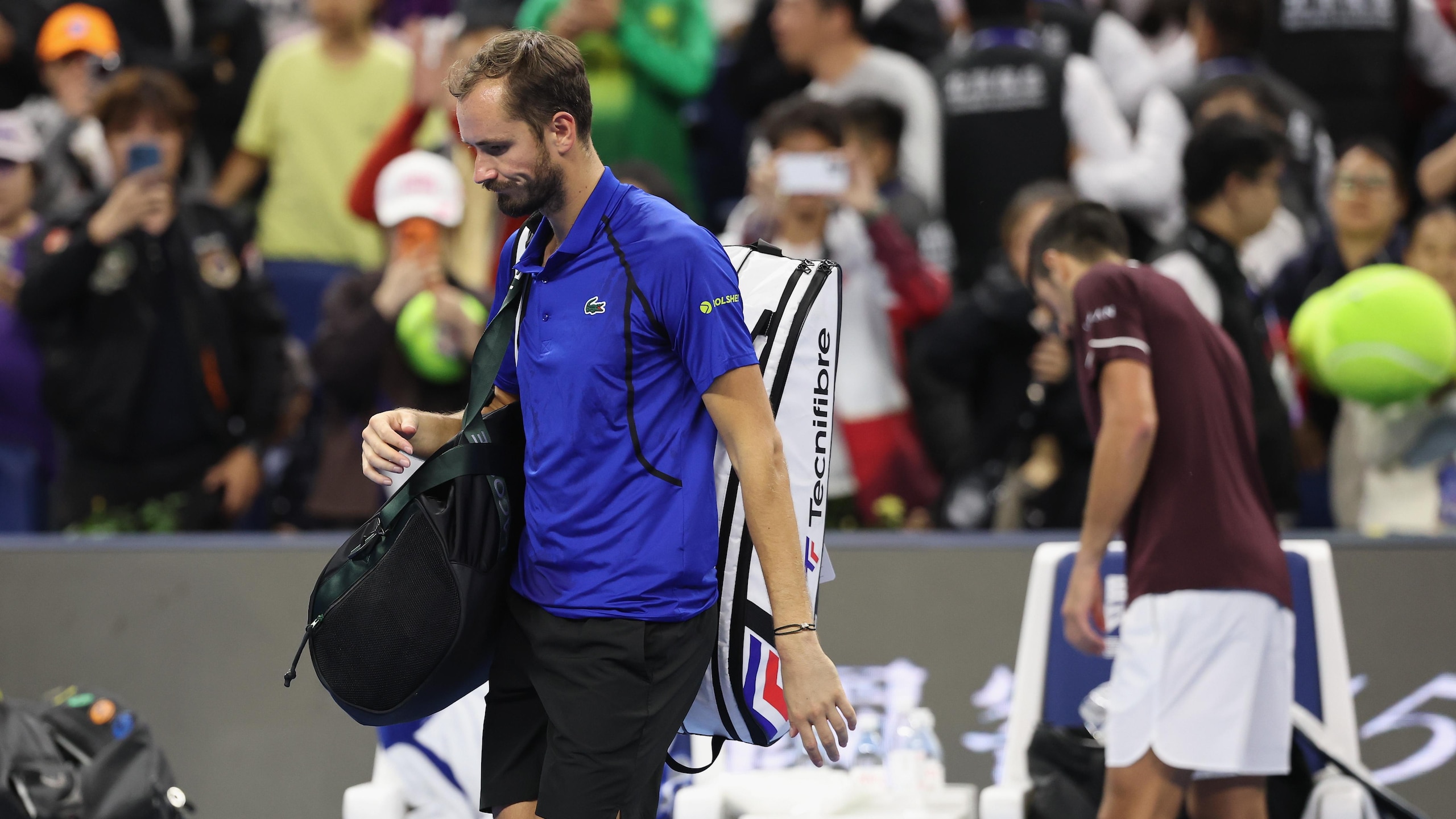

It is a semantic detail, but one which has far-reaching implications for our tennis landscape. Are Djokovic and Murray finally ready to claim their semantic prominence in any sentence involving them and Fedal?
Tomorrow will be the day for such a decision. Murray and Nadal, by far, would look the weaker pairing, with the two between them having played the most and lost the most sets, than Federer and Djokovic. But there is magic in the Top Four, a certain mystical alignment of the stars, that promises the finest tennis of this pearl-laden era. Forget the statistics; we will have the tennis of the heavens.
There is something slightly disconcerting about the semifinals lineup, the sense that all four are, for the first time since the last (at the US Open 2008), seemingly equals. Federer and Nadal's dominance has been challenged for some years now, but it is hard to conceive of them ever having to bow before any others.
But here we are. Djokovic actually a favourite against Federer, and indeed with the one more to lose; and Murray, actually having a legitimate chance against our long-time lord of clay, Rafael Nadal.
Firstly, Nadal and Murray. What are we to expect? Perhaps some lingering rump of that uncertainty and rare discomfort we all saw in many portions of this same matchup in Monte Carlo a few weeks ago. Then, of course, Nadal started playing second fiddle to Novak Djokovic on this, his beloved surface. Are the mental wounds all the greater for it?
The short answer would likely be yes. For such has been the discomfort with which he seems to have been playing. But the long answer would probably be no - Nadal has been through worse than this, and to judge from his last performance against Soderling, has seemingly made some giant steps over the last 48 hours.
There is no doubt, however, even with Nadal at the Olympian heights from whence he came, that there are no more certainties in moments like this. This is the law of the Top Four—no one is truly safe.
Sure, Nadal is the favourite. He will nonetheless will have to contend with that completeness of player, that tightness of game and skill that Murray possesses in full measure. Are Murray's ankle woes more than just a pleasant distraction for the media to play down his chances?
Perhaps, but the Scot tomorrow faces the greatest challenge there is in tennis, and he would be right to hope for such distractions where he can find them. He is too good to be impeded by the anxieties of the mind. Should we find him in such a mood tomorrow, it would be fair to say that Nadal will be facing some stern opposition.
What of our other semifinal? Is Federer-Djokovic really, by as much a margin as it seems, the superior matchup? Well, yes—if ever there were a law in tennis that one semifinal had to be more engrossing than the other. But there are legitimate reasons that make this match quite something more than even a Djokovic-Nadal final might be.
It implies a sacred function of Glorious Tennis—that irresistible force meeting an immovable object paradox. With Djokovic-Nadal one suspects a dominant-subservient narrative, with Djokovic having dominated his last four matches against Nadal.
Against Federer tomorrow, however, Djokovic faces some tougher opposition. On the one hand, there is a matchup problem Federer poses that Nadal doesn't quite—that mixture of spins and slices, which combine potentially to become a winning strategy against the pace-loving Djokovic.
It will come down to the master of the rally; the aggressor will set the rules. On the other hand, there are other unseen burdens on Djokovic—the intangible but ever so real sense of history surrounding this match, descending like a Grace to, well, grace Court Philippe Chartrier. We all know what is at stake—a rise to No. 1, a first French final, a match to tie McEnroe's 42 wins.
Not to mention, though, a fourth consecutive victory over Roger Federer. Matchup aside, let us not play down Federer's chances just yet. One suspects that Federer would like that, however, although there were some very real reasons in his victory over Monfils to think he needn't.
We have in 2011 a combination of the old, and older, Federer; the older is the one missing break points and extending the challenge of his opponents far beyond the natural talent disparity between them and him. But so far, this French Open the old has reigned over the older—there is again that tightness of focus, that dogged determination to end his opponents. It is that old killer instinct, more murderous than so many.
He is making that unreturnable serve at 30-30, he has that old, masterful, pensive hold on his service motion as he prepares to toss the ball—so much a mark of his triumphs in 2007, one recalls.
A fusion is always best, and Federer promises this, in a lineup that seems to imply the coming of the new, and more of the new. He is the last remnant of a bygone era, while Nadal, Djokovic and Murray seem set to seize the future (whatever Nadal's recent woes might mean).
No one, not even Djokovic, should feel totally comfortable against someone who has made 28 consecutive grand slam quarterfinals.
So, we will to be witnesses tomorrow to two stellar matches. If ever there were a merit in having so large a draw as a 128 man grand slam, it would be in inciting that amount of anticipation reserved only for such moments as these, so rare as they are.
Nadal, Federer, Djokovic, Murray (or whatever semantic order one might have them). These are the kings of our age. Nadal-Murray may stand just that lower than Federer-Djokovic, but we ought not to miss the magic of the moment.
Tomorrow will be the day of the Top Four—nevermind who wins, just enjoy the tennis.
.jpg?w=2560)

.jpg?w=2560 "Viral Rams Coach Vid 🖕")

.jpg?w=2560 "Injury-stricken Seahawks signing veteran RB")
