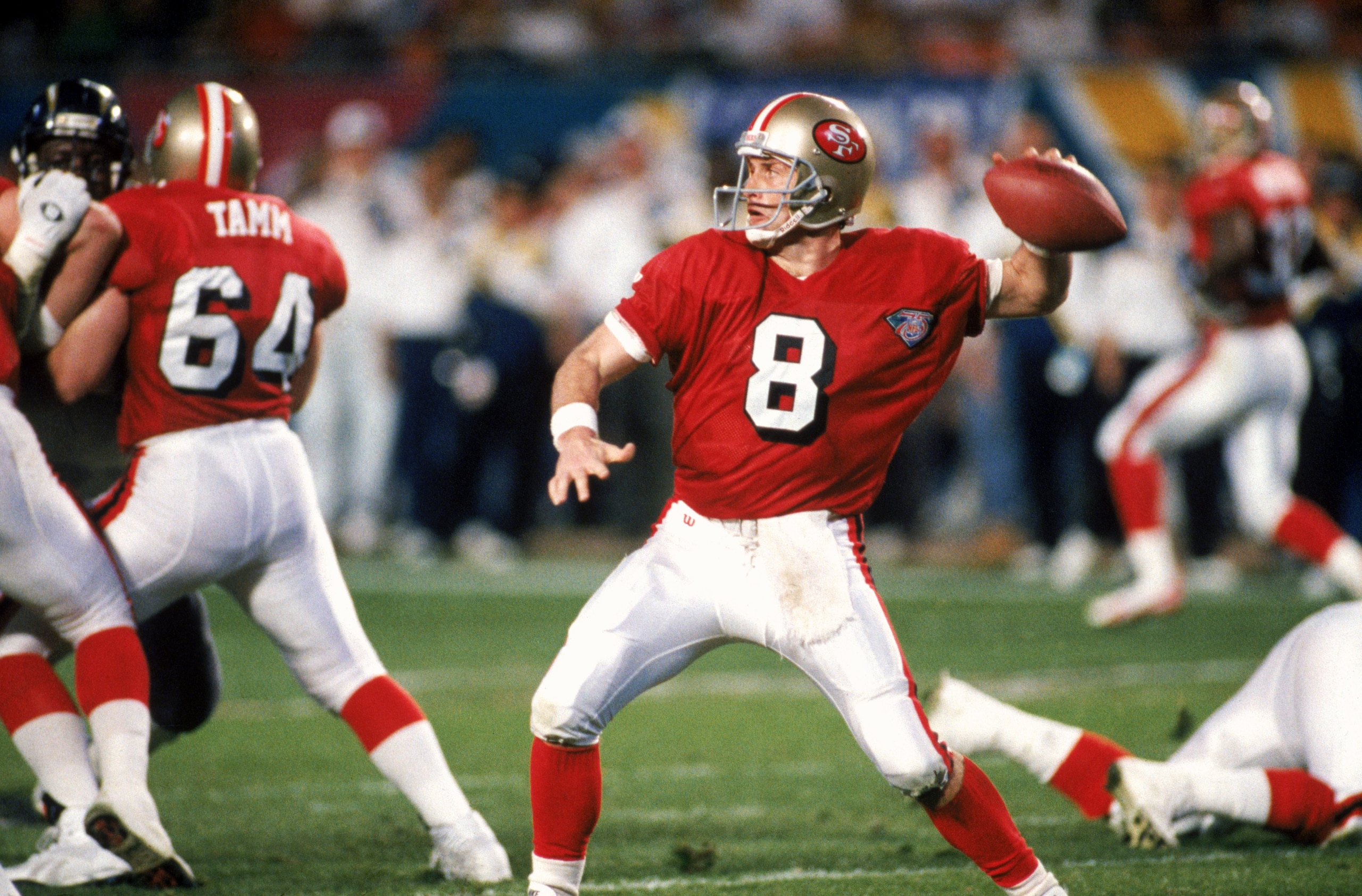

San Francisco 49ers: Learning from Key Players of Past Super Bowl Seasons
The San Francisco 49ers have such a storied past that the heroes get bronzed in our memory. The most iconic moments, such as Dwight Clark’s famous catch against the Dallas Cowboys in the 1981 NFC Championship game, continue to burn so bright that other key members of the team find themselves in the shadow of our memories.
The names of that stand out during the 49ers’ dominance from 1981-1995 include Joe Montana, Jerry Rice, Ronnie Lott, Roger Craig, John Taylor, Brent Jones, Steve Young and many others. A look back at those seasons brings up key plays and key players, many of which proved important into the team’s success.
In that vein, it can be said that the 2011 49ers might have the nucleus of talent that, if melded correctly, could become a major force in the NFL. Looking back, it’s easy to bring out some of the more unheralded players and give them their due. Taking it a step further, there’s a correlation to today’s players and what they might want to emulate in the upcoming season.
1981
1 of 5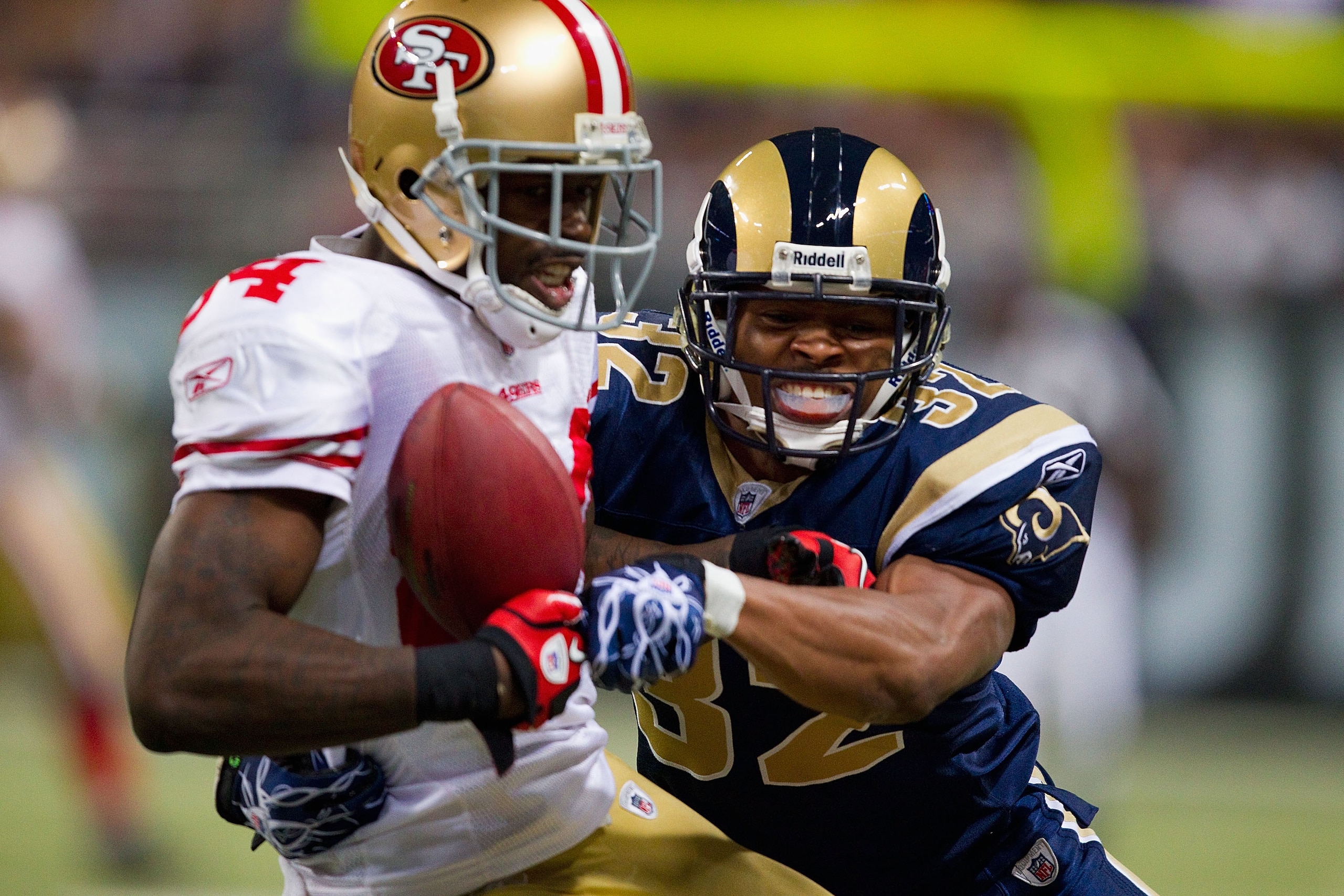
Third-year coach Bill Walsh survived 2-14 and 6-10 seasons, and 1981 the fruits of his design blossomed into a 13-3 record. Montana was gaining confidence by the game, and the Walsh’s West Coast offense consistently had the offense in high gear, churning out first downs like pennies at the U.S. Mint.
Of course, the culmination of that season was the famous play of Montana-to-Clark over Everson Walls of the Cowboys. Lost in that play was the fact that Freddie Soloman, who played flanker to Clark’s split end, was the primary receiver on the play. Soloman was a jack-of-all-trades, catching passes, running back punts, washing Walsh’s car (that last one was a joke.)
He wasn’t the fastest, nor the biggest but very effective – precise route-running, good hands, fast reads off the line.
The Freddie Soloman of Today’s 49ers: Josh Morgan
The Niners set the league abuzz earlier that spring by selecting three defensive backs in the first three rounds, and then inserted them all into the lineup. Of course, Ronnie Lott ended up in the Hall of Fame, and Eric Wright developed into one of the best cover corners in the league.
But Carlton Williamson, a 200-pounder out of Pittsburgh, brought the iron. In the third game of the season, on the road against Pittsburgh, the Steelers were driving late in the game. Near the goal line, Williamson made a crunching hit and the ball popped loose. The 49ers recovered and returned it for a touchdown.
Williamson’s play set the tone for the season. This wasn’t a lightweight, pass-first team but a defense not afraid to bring some wood to the party.
The Carlton Williamson of Today’s 49ers: Taylor Mays.
1984
2 of 5
Arguably, this ranks among the top five teams in the history of the league. It had everything, from a devastatingly effective offense to a defense that gave up yards only when it was junk time.
Proof? This team scored 475 points (just under 30 a game, second in the league) and gave up 14.2 per, which ranked first. The differential equates to a 15.5 margin, or more than two touchdowns.
It was Roger Craig’s second year in the league, and he filled in nicely at fullback. Yet hardly anyone remembers that Wendell Tyler, the former UCLA standout who had started his pro career with the Rams, led the team in rushing with 1,262 yards.
Tyler’s amazing quickness on straight-on “dive” plays negated the play-the-pass-first rush of opposing defensive lines. Soloman led the team with 11 TDs, and Tyler was second with nine.
The Wendell Tyler of Today’s 49ers: rookie Kendall Hunter.
1988
3 of 5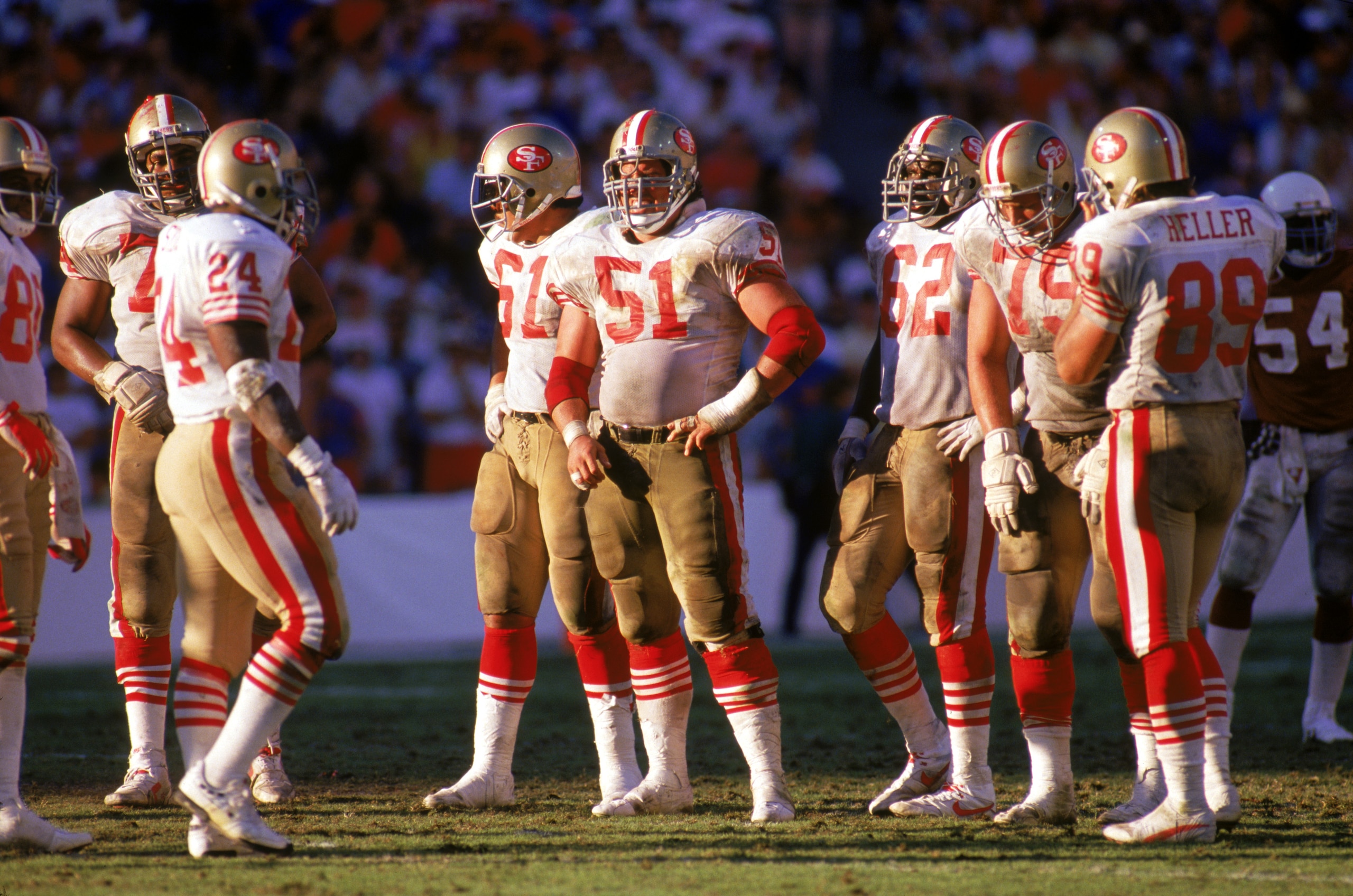
It was a tormented season in many ways. Montana battled injuries, and a quarterback controversy developed in mid-season as Walsh flipped back and forth between Montana and Steve Young.
By the end of the season, however, the Niners started clicking on offense. Credit has to go to the offensive line. It turned out to be Randy Cross’ last year. He had come into the league from UCLA as a slightly under-sized center, switched to right guard after a couple of years and made a reputation as one of the best at pulling out to lead sweeps.
He switched back to center in ’87, and with new players like Guy McIntyre and Steve Wallace the Niners front line developed into a cohesive, effective unit.
The Randy Cross of Today’s 49ers: David Baas
On defense, the Niners, behind pass-rush demon Charles Haley, began to employ its “Elephant” strategy, which basically was rush Haley like crazy and play zone behind him. And behind that was Tim McKyer, who led the team with seven interceptions.
But then, many of would have led the team in interceptions if they played behind what many consider the best outside rusher this side of Lawrence Taylor.
The Tim McKyer of Today’s 49ers: rookie Chris Culliver. (This selection then puts the onus on first-round draft pick Aldon Smith to become Charles Haley, fast.)

1989
4 of 5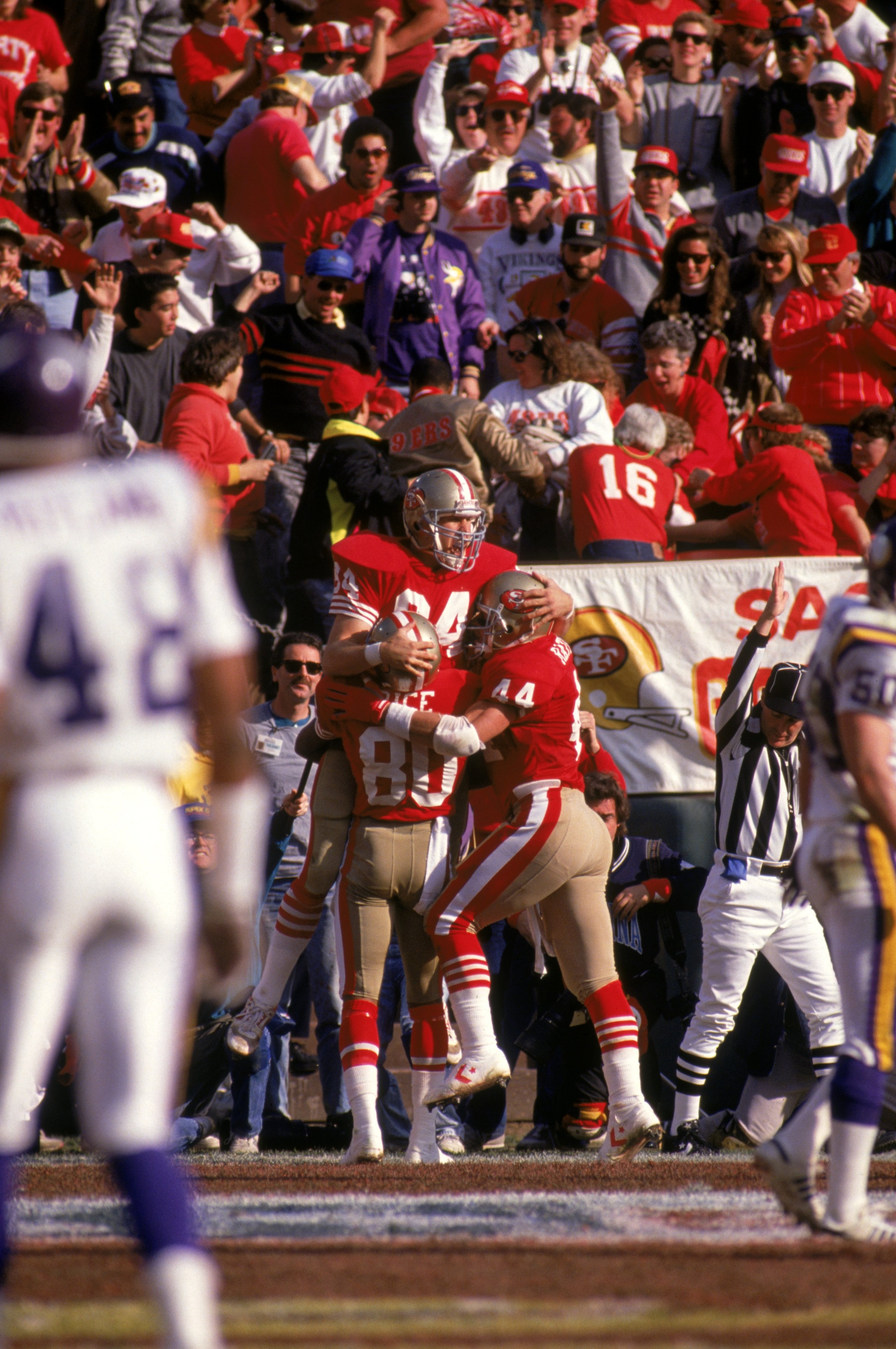
Again, this team ranks among the best of all time in the NFL. The 49ers ranked first in points (27.6), third in points allowed (15.8) and first in differential (11.8). A 55-10 pasting over Denver in the Super Bowl capped a three-game post-season run that had the Niners scoring 126 points, or 42 a game.
By this season, John Taylor became well known for providing the Niner offense with two deep threats. Along with Rice, they combined for 27 receiving TDs. Roger Craig remained the best in terms of combining rushing and pass receiving yards.
Yet behind all this was a new tight end, a training-camp cut from Pittsburgh named Brent Jones. The rap was that he was a poor blocker, which the Niner coaching staff thought secondary to his strong suit – that he could run like a deer and had hands dipped in Super-Glu.
Jones had 40 catches and four TDs that season. But along with all the other elements, there’s no wonder why Montana ended the season with a pass-efficiency rating of a 112 point infinity.
The Brent Jones of Today’s 49ers: Vernon Davis
Defensively, Haley was tearing up teams, but he had plenty of help in Pierce Holt. The rookie defensive tackle out of Angelo State (with one eye, mind you) played in all 16 games, started 11 and ended the season with 10.5 sacks. A real surprise, to say the least.
The Pierce Holt of Today’s 49ers: rookie Aldon Smith. (With defensive end Justin Smith providing strong pushes on one side of the defense, Smith might find himself with plenty of opportunities on the other side.)
1994
5 of 5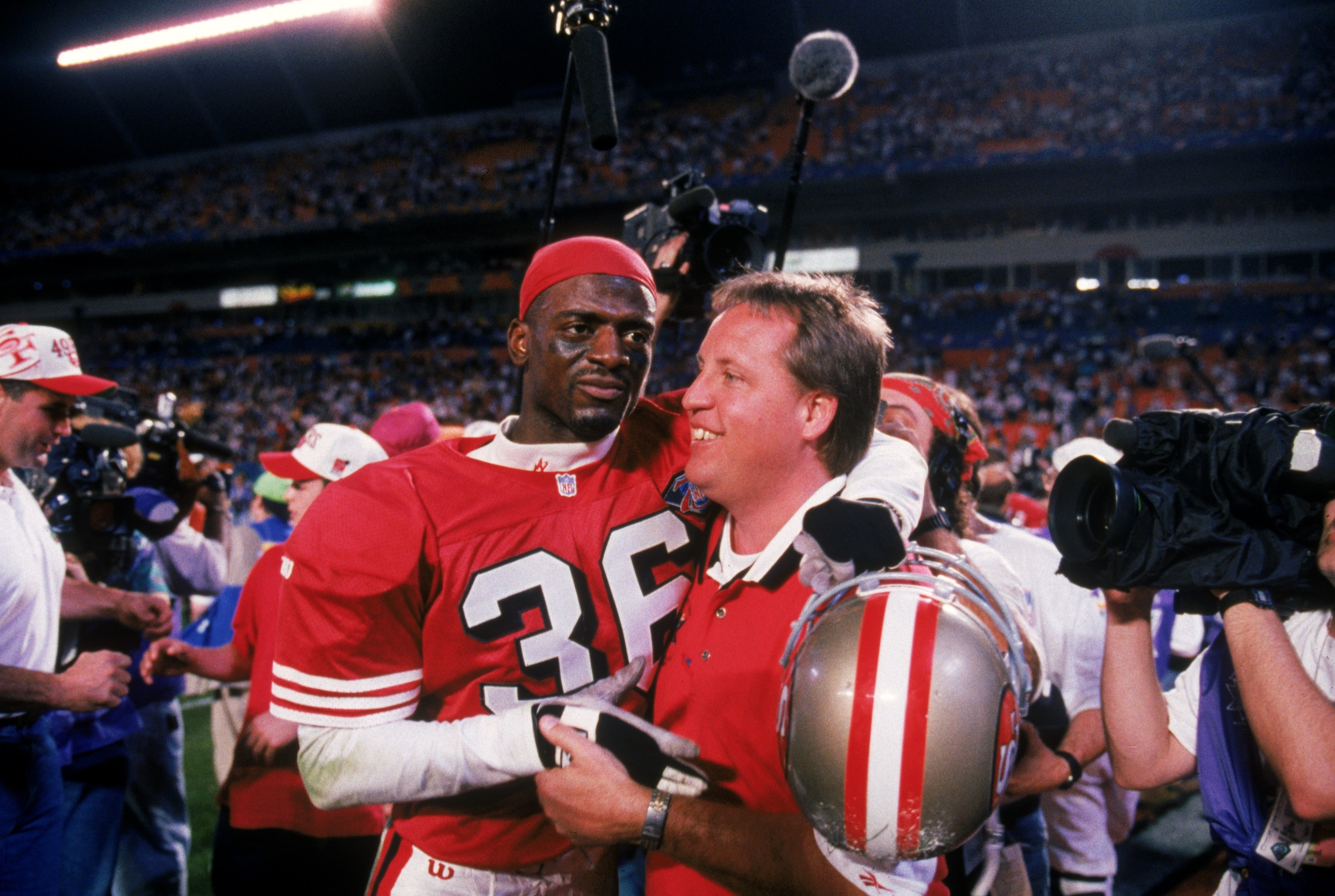
Again, it was another dominating team, perhaps the best offensive force during the 1990s: nearly 32 points a game on offense, 18.5 on defense with a 13.1 differential that ranked first in the league.
Steve Young’s 112.8 QB rating loomed like a skyscraper over the NFL, and Rice and Taylor and Jones were again a formidable trio. Yet Ricky Watters’ had a critical role as a receiver out of the backfield. He scored five TDs on receptions, averaging 11 yards per catch. Mercurial, hot-headed and emotional, Watters eventually burned out his welcome in San Francisco, but in ’94 he was the perfect fit.
The Ricky Watters of Today’s 49ers: TBD.
Defensively, this was Deion Sanders’ one-year stop in the league, and it brought him his first Super Bowl ring. He did well to corral Dallas Cowboy receiver Michael Irvin in two crucial games at Candlestick.
But it was Merton Hanks’ seven interceptions that provided the lid to the Niners defense. Opposing quarterbacks shied away from Sanders, and cornerback Eric Davis also played well, with strong safety Tim McDonald providing the hammering hits. But Hanks’ ball-hawking gave the Niners more chances to launch their vaunted offense.
The Merton Hanks of Today’s 49ers: Dashon Goldson (if he comes close to seven INTs, the Niner defense will have shown remarkable improvement.)

.jpg?w=2560 "LA Premiere of \"Chad Powers\"")


.jpg?w=2560 "Chiefs, Steelers Eye WR Trades")

