
NFL Draft 2011: The 10 Most Puzzling Picks of the Draft
At the end of every NFL draft, there are always picks that stand out as being head scratchers. Obviously, each franchise has a certain logic for making their decisions, but often the logic is not understood by the masses.
The 2011 NFL draft is no different in this regard. Just as some selections seem like no brainers, other picks do not seem logical. Ten picks in particular stood out as being particularly puzzling.
There is a method behind the franchise madness, but it is not seen or understood by everyone watching.
San Francisco: Aldon Smith (Pick No. 7)
1 of 10
San Francisco eventually got their quarterback of the future in Colin Kaepernick; nevertheless, it was strange that the 49ers did not take a signal caller in the first round. Only Cam Newton was off the board, and San Francisco would have had their pick amongst the remaining quarterbacks. My only guess is that the franchise felt content to wait for Colin Kaepernick or whoever else might have been available at pick No. 36.
San Francisco also sorely needed help at the cornerback position. Obviously, Patrick Peterson was already off the board, but it would not have been unreasonable to think that the 49ers might take Prince Amukamara. Apparently, San Francisco did not like Amukamara enough to invest in him at pick No. 7.
Aldon Smith has a great combination of speed and strength. Smith projects to be a great pass rusher for the 49ers, but there were a number of other directions that San Francisco could have gone with this pick.
Tennessee: Jake Locker (Pick No. 8)
2 of 10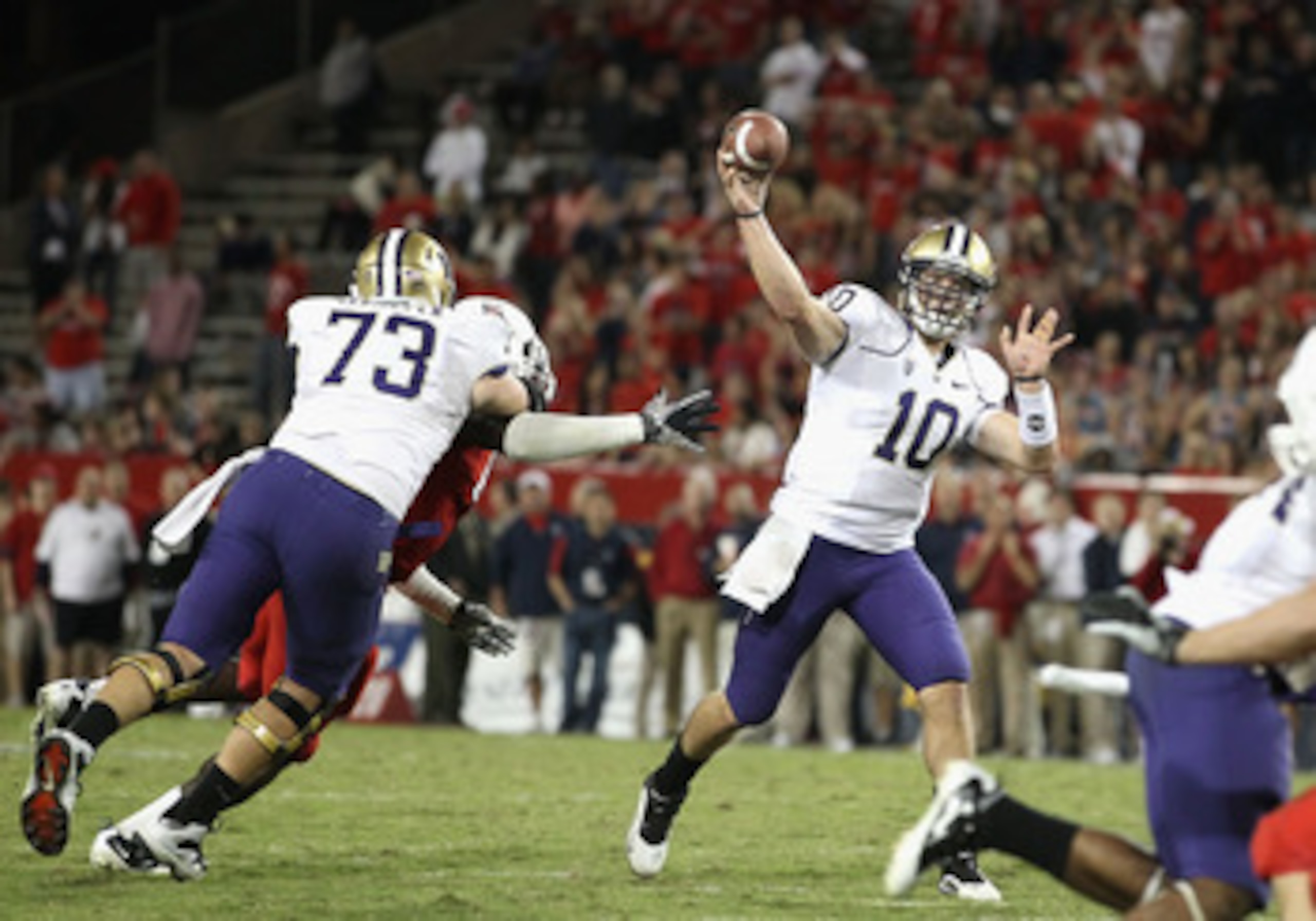
Jake Locker is an incredible athlete, and is a solid quarterback prospect. To say that Locker was a reach at pick eight though would be an understatement.
Locker struggles with accuracy issues and was never a big-time winner on the college level (to be fair though, Jake did not have top tier talent surrounding him at Washington).
Tennessee obviously preferred Jake Locker over Blaine Gabbert. This was not the most common train of thought; nevertheless, Locker will be Tennessee’s quarterback of the future.
The Washington product should start for the Titans almost immediately. Vince Young is out, and veteran Kerry Collins is a free agent.
Obviously, Tennessee felt that Locker was their man at quarterback. However, they most likely could have traded back in the first round and still got him. Pick No 8 felt too high for Locker, no matter which way you look at it.
The one advantage Locker will enjoy over other first-round signal callers is that he has a somewhat talented running back named Chris Johnson in the backfield with him.
Philadelphia: Danny Watkins (Pick No. 23)
3 of 10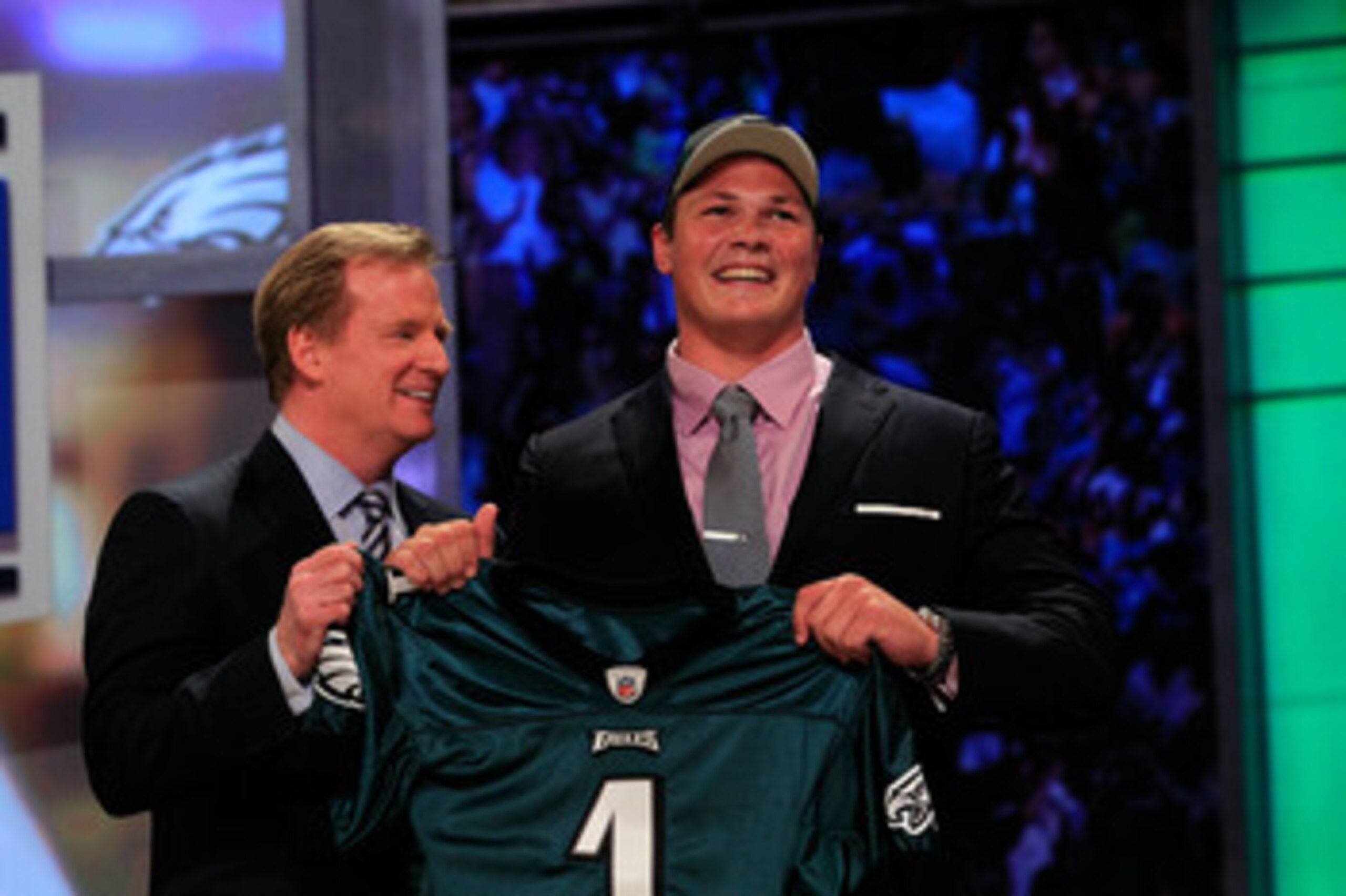
Philadelphia allowed 49 sacks last season which ranked fourth worst amongst all NFL teams. The Eagles definitely needed help on the offensive line, but Danny Watkins was far from the correct play at pick No. 23.
Watkins was projected as a second-round prospect. I understand that the guard position is sorely lacking, but there were more talented prospects at this spot that would have also filled Philadelphia’s needs.
This seemed like the perfect landing spot for Colorado cornerback Jimmy Smith. Smith’s off-the-field missteps have been well documented, but he is an immensely talented corner. Only Patrick Peterson and possibly Prince Amukamara are better cornerbacks in this draft class. Obviously, Jimmy Smith’s baggage was more than the Eagles wanted to accept, but head coach Andy Reid has taken chances on these types of prospects in the past.
Gabe Carimi also could have been the play here. Carimi is an all-around better prospect than Watkins. He also showed his versatility by working out at guard at the Senior Bowl. Carimi would have definitely been more comfortable at tackle coming in, but the transition to guard does not seem unmanageable.
Danny Watkins is a pure guard which was a major area of concern for Philadelphia, but the franchise reached on his skill set at pick No. 23.


Seattle: James Carpenter (Pick No. 25)
4 of 10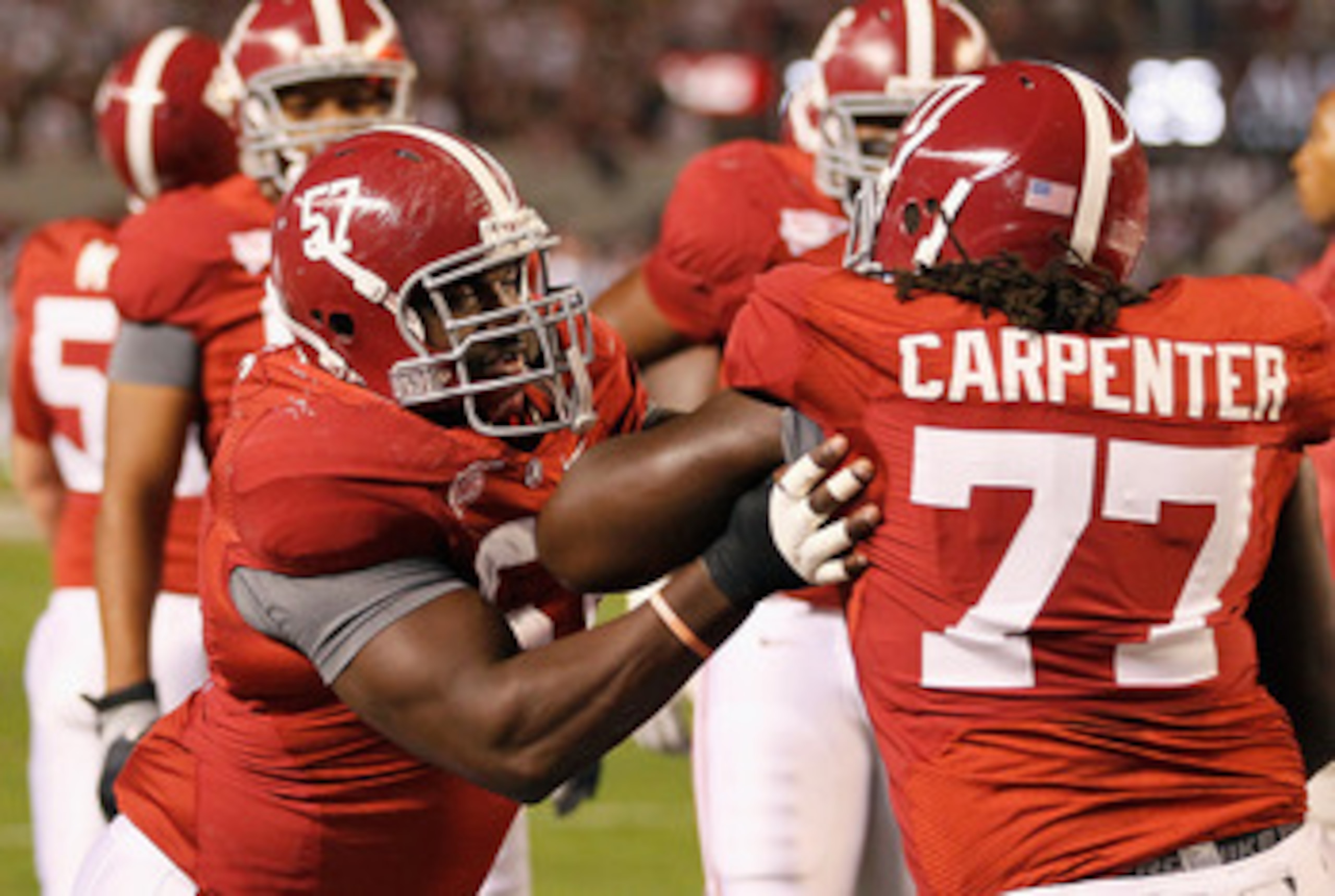
I understand that James Carpenter fills a major need for Seattle as an offensive guard.
With that being said, Seattle also had strong needs at offensive tackle and defensive end. Both Derek Sherrod and Gabe Carimi were still on the board at pick No. 25, and would have been a great match opposite Russell Okung at the other tackle position.
Muhammad Wilkerson would have also been a strong acquisition for Seattle at this spot in the draft. The Temple product is unheralded, but has a tremendous amount of upside going forward at 6'4", 315 lbs. Kentwan Balmer did not record a single sack last season at the defensive end position. Wilkerson has great value long-term, and he would have provided an immediate upgrade to Seattle’s pass rush.
James Carpenter meanwhile was viewed as a second-round prospect. Carpenter was a mainstay on Alabama’s offensive line during his two seasons in Tuscaloosa. The fact that he has shown the versatility to play either tackle or guard on the line is appealing.
At pick No. 25 though, Carimi and Sherrod were better available prospects for the Seahawks on the offensive line. Muhammad Wilkerson and Cameron Hayward would have also been more logical plays as defensive pass rushers.
Kansas City: Jon Baldwin (Pick No. 26)
5 of 10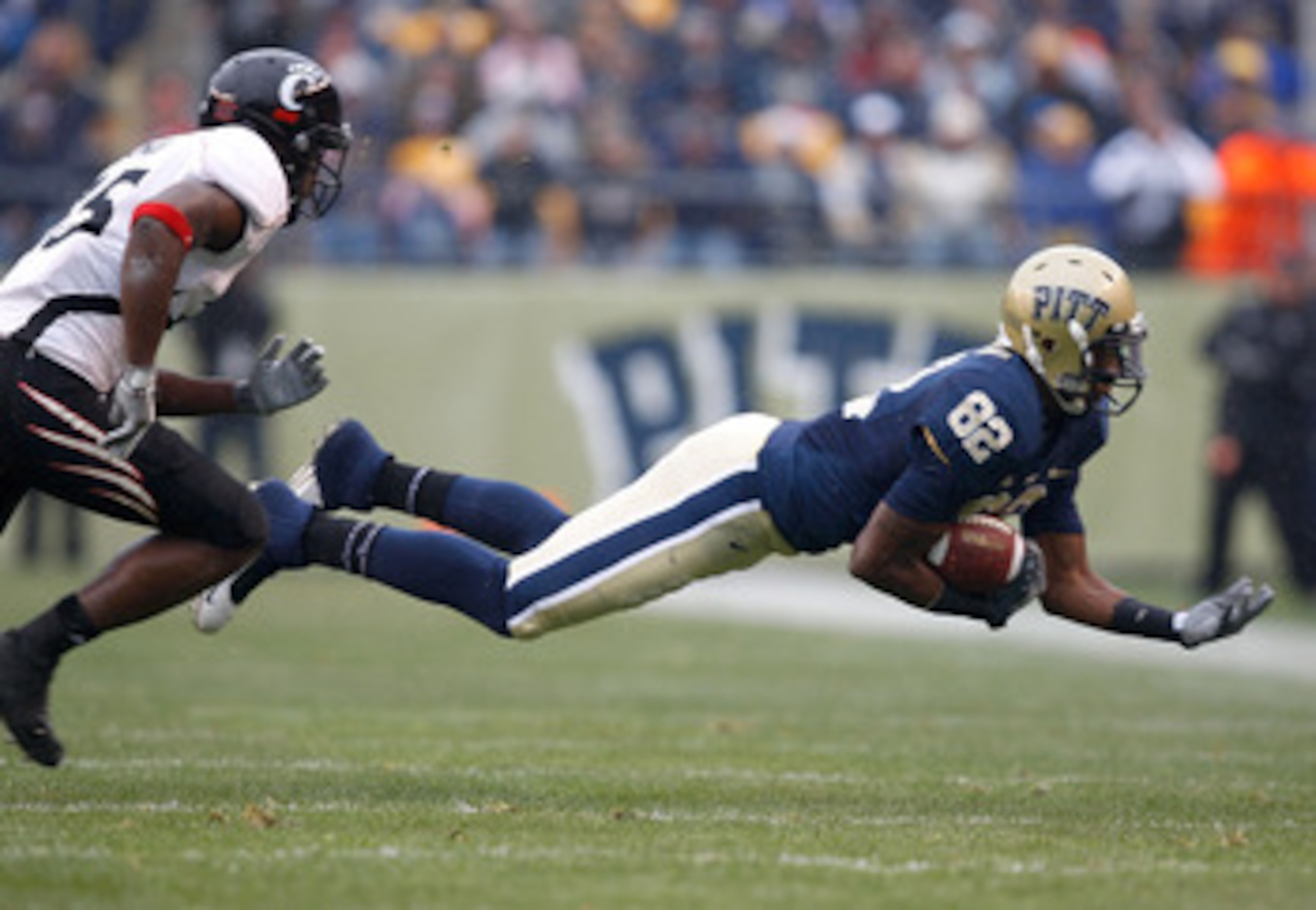
Jon Baldwin has tremendous physical ability as well as great size for a wide receiver at 6'4", 228 lbs. Baldwin did not have the benefit of playing with a high-level quarterback during his time at Pittsburgh. I understand that the thought of pairing Baldwin with Dwayne Bowe was tempting. Giving Matt Cassel a talented wide receiver to throw to only added to Baldwin’s appeal for Kansas City.
At the end of the day though, Jon Baldwin was still a reach at pick No. 26 for the Chiefs.
Baldwin only eclipsed 1,000 receiving yards once during his three seasons at Pittsburgh. There are also character issues surrounding Baldwin stemming from a 2009 incident in which the wide receiver faced multiple charges that were later dropped. Julio Jones and A.J. Green were obviously the two top prospects in the wide receiver class, but there was a major drop off after that.
Akeem Ayers would have been a great play for Kansas City at the end of the first round as a rush outside linebacker.
My main dispute with this pick is that Baldwin was a definite second-round prospect that fell into a group with players such as Leonard Hankerson and Torrey Smith.
Kansas City obviously saw something in Baldwin, though, that convinced them that he was worth the selection at the end of the first round.
Buffalo: Aaron Williams (Pick No. 34)
6 of 10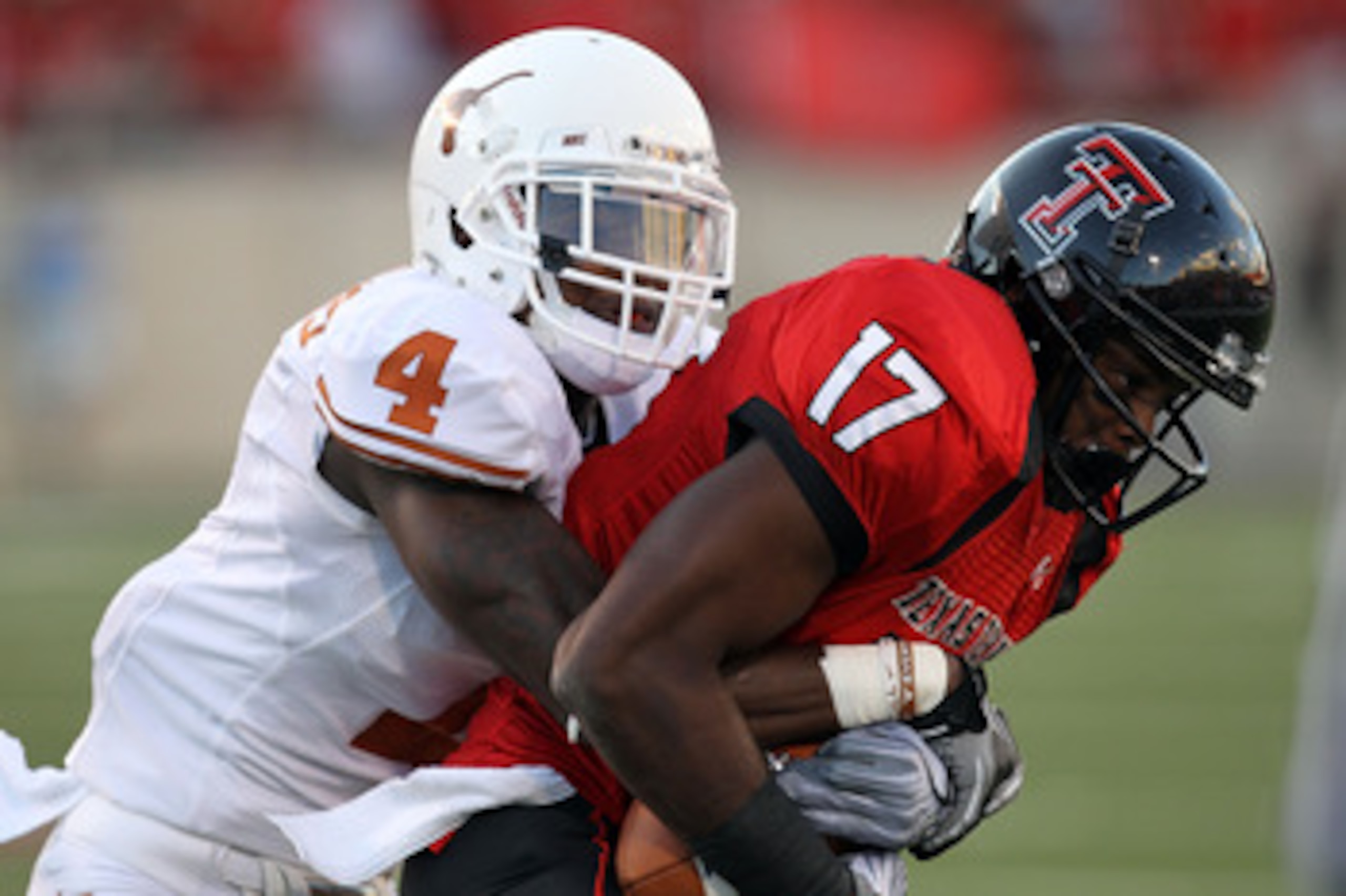
I had no problem with Buffalo selecting Marcell Dareus in the first round. Dareus is the top defensive lineman in the draft, and he fills a glaring hole on Buffalo’s defensive line.
At pick No. 34, though, Buffalo needed to acquire their quarterback of the future. The fact that Andy Dalton and Colin Kaepernick were still on the board makes their choice of a free safety that much more questionable.
Ryan Fitzpatrick is a serviceable starting quarterback at best for the Bills. Fitzpatrick also has limited upside for the future. Backups Brian Brohm and Levi Brown do not inspire confidence either.
Aaron Williams’s versatility is definitely a valued quality. Williams can play either cornerback or free safety in the Bills secondary. That would be nice, but the problem is that there was nothing that horrible about Buffalo’s secondary in the first place. The Bills ranked third in the NFL last season defending the pass, giving up only 192 passing yards per game.
If Buffalo was truly that intent on helping their defense, they should have added another defensive lineman to match with Marcell Dareus. The Bills ranked dead last in the league last season against the run, surrendering 169.6 rushing yards per game.
Williams is a fine prospect individually, but Buffalo had more pressing matters that they needed to address here.
Detroit: Titus Young (Pick No. 44)
7 of 10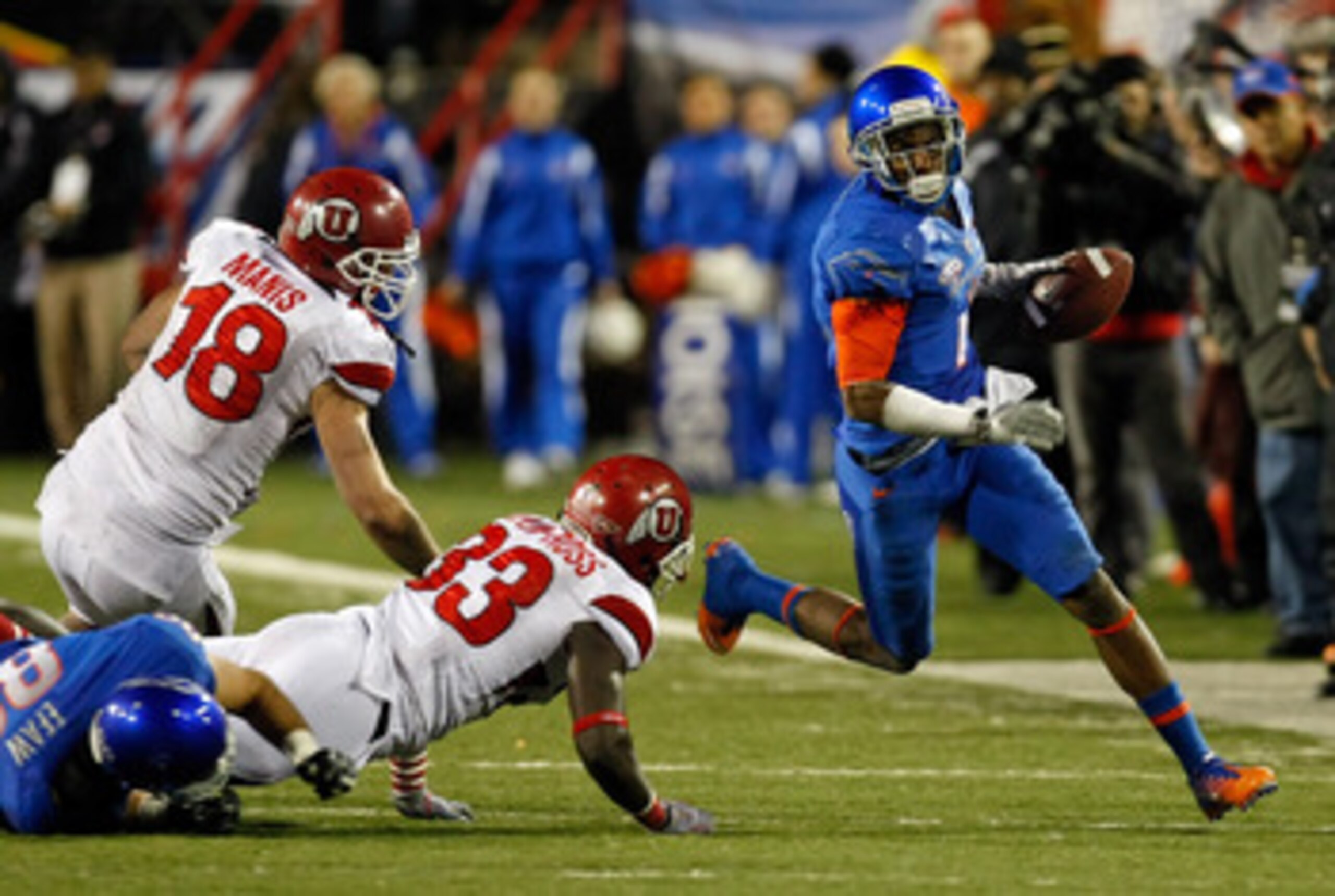
Titus Young’s 4.4 40-yard dash time allowed him to move up into the top 50 of the draft. Young’s speed is an invaluable asset in the NFL, but there are considerable risks that make Titus Young’s selection at pick No. 44 a reach.
Young put up great numbers during his collegiate career at Boise State, but the Broncos' pass happy system is conducive to a large amount of receiving yards. Also, Young’s small 5'11", 174 lb frame is concerning. It remains to be seen if he can hold his own with the NFL cornerbacks that he will go up against.
Cornerback Brandon Harris was available here at pick No. 44. Harris would have offered immediate help to a Lions secondary that is lacking.
Young provides another receiving option for Mathew Stafford. He will also be a great third wide receiving option behind Nate Burleson and Calvin Johnson. If Detroit was set on adding another wide receiver here, I would have chosen Torrey Smith or Greg Little.
Titus Young has considerable question marks attached to him, and his selection was puzzling with prospects such as Harris, Smith and Little still on the board.
St. Louis: Lance Kendricks (Pick No. 47)
8 of 10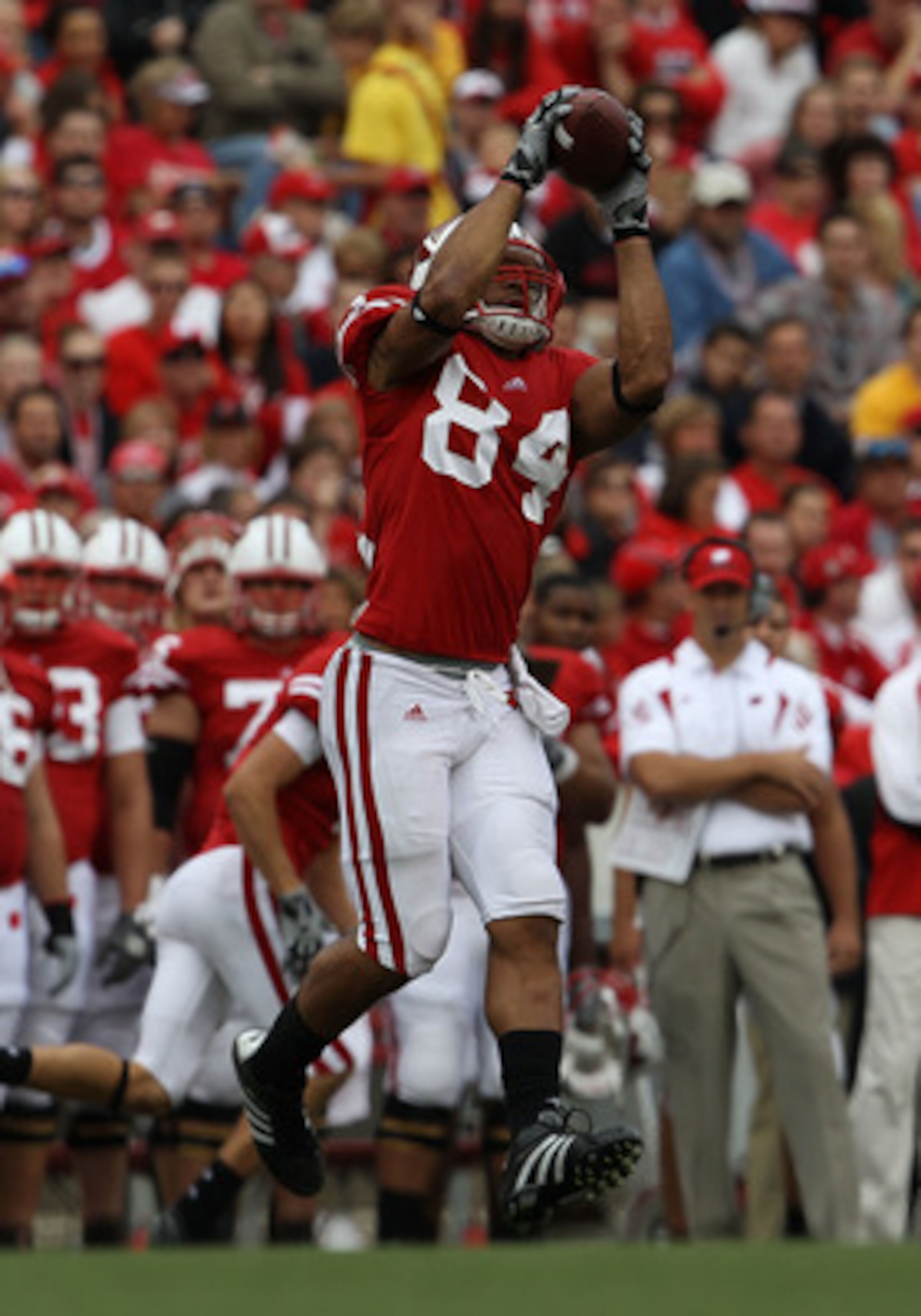
St. Louis uses their second-round pick to give franchise quarterback Sam Bradford a young receiving option at tight end. The pick is good from a standpoint that at 6'4", 241 lbs, Kendricks has good size and athleticism. He has also shown the ability to make catches in traffic.
The one area in which Kendricks struggles is his blocking. Despite the emergence of Bradford, running back Steven Jackson is still the driving force behind the Rams offense. Jackson will rely on Lance Kendricks for good blocking off the edge. It is uncertain if Kendricks can consistently provide solid blocking both in the running and passing game.
The acquisition of Robert Quinn in the first round will do wonders to the Rams pass rush. Even with the addition of Quinn, though, St. Louis still needed to fill holes at safety and linebacker.
Kendricks was the second best tight end prospect in the draft behind Kyle Rudolph, but it remains to be seen if he will be a good fit for St. Louis.
Cincinnati: Dontay Moch (Pick No. 66)
9 of 10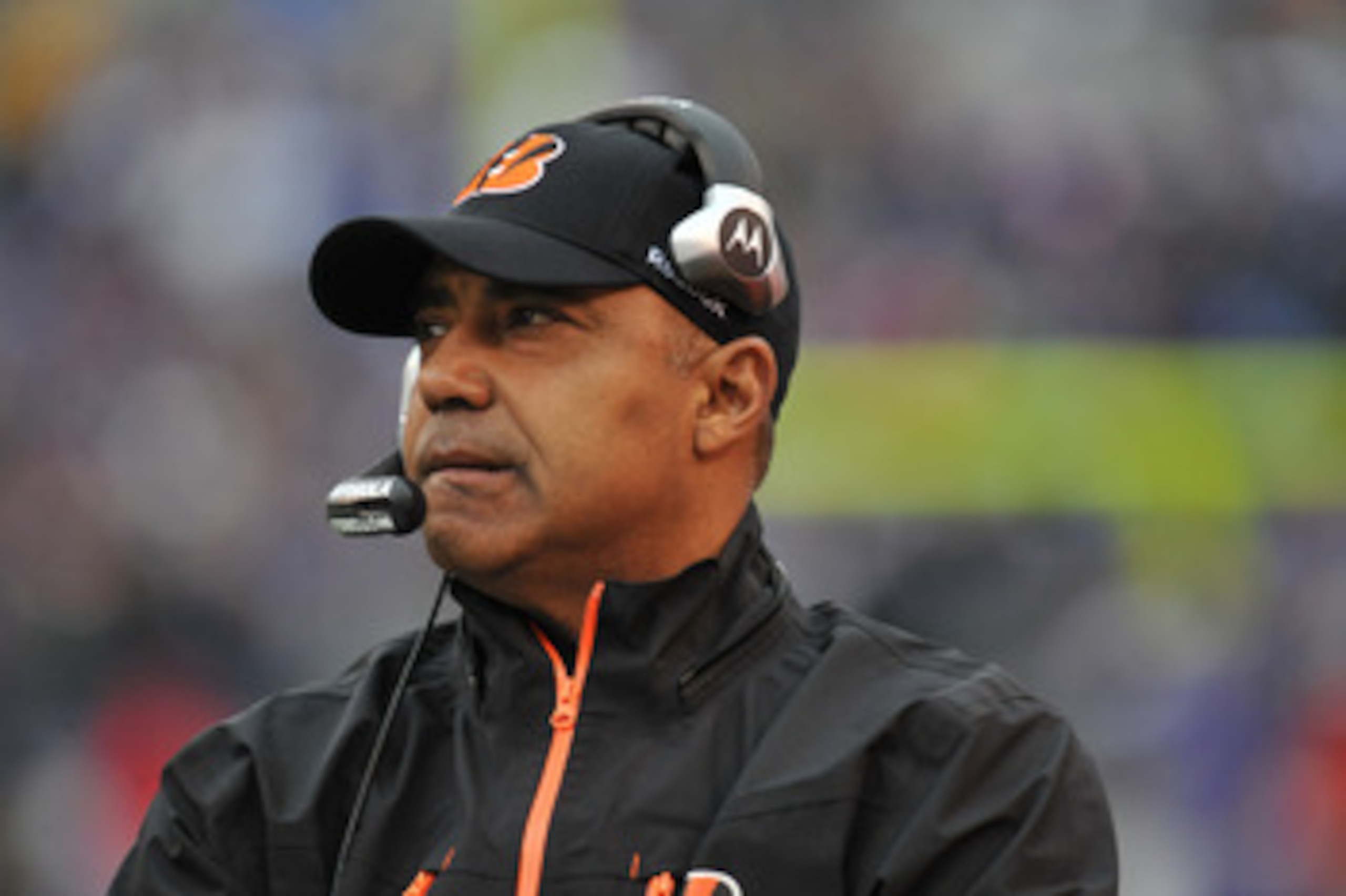
Cincinnati flipped the script in the third round, drafting a defensive talent rather than continuing to bolster the offense.
Moch was a defensive end at Nevada that recorded 29 sacks throughout his collegiate career with the Wolfpack. At 6'1", 245 lbs, Moch lacks the size to play defensive end at the NFL level. He will likely make the transition to linebacker with the Bengals.
Cincinnati already has two strong outside linebackers in Rey Maualuga and Keith Rivers, though.
There were plenty of good running backs still available at this point in the draft. Cedric Benson will be an unrestricted free agent this offseason. Unless the organization is supremely confident they can sign Benson, a new back will be needed. Stevan Ridley comes to mind as a player that would have been an ideal selection here. Ridley is an every down type of back who gained 1,147 rushing yards last season in the brutal SEC conference.
Dontay Moch may improve Cincinnati’s depth at outside linebacker giving the team another pass rusher. However, running back seemed like the position of need at this point in the draft.
Indianapolis: Delone Carter (Pick No. 118)
10 of 10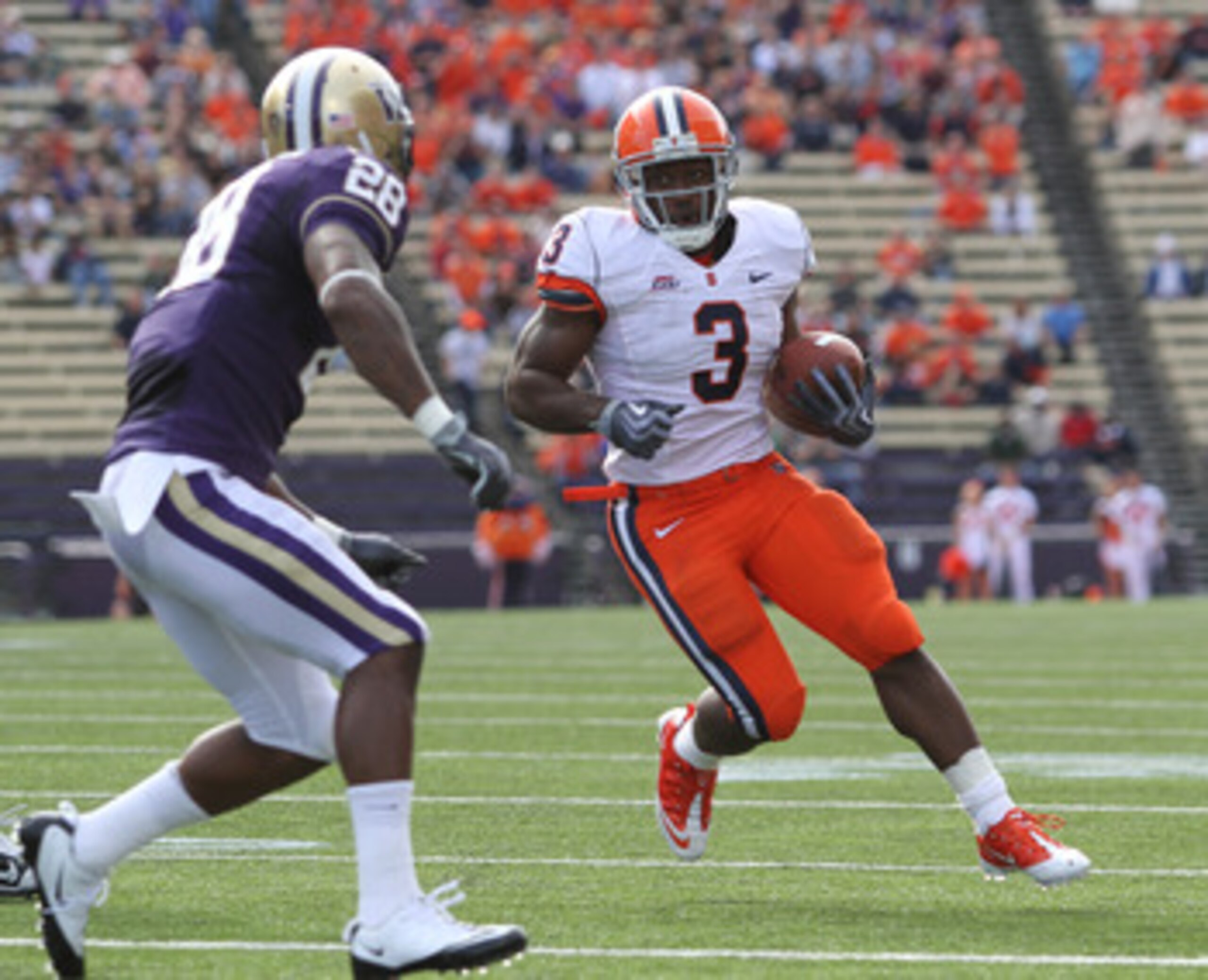
Donald Brown and Joseph Addai are still a solid one-two punch in the backfield for the Colts. Adding depth to a backfield is always good, but the running game did not seem to be an urgent priority at this point in the draft.
Delone Carter is a solid, blue collar running back, but he does not seem like a good fit for the Colts.
Carter only had 28 career receptions during his time at Syracuse. That is an alarmingly low amount of receptions from the backfield, especially for a running back that is about to play in a Peyton Manning run offense. Scouts also are wary of Carter’s ability in pass protection. It is curious that Indianapolis would draft a running back with questionable pass protection skills when keeping Manning upright is always such a high priority for them.
Delone Carter also brings character concerns with him. Carter was charged with misdemeanor assault last year. The running back hit and injured a fellow Syracuse student during an on-campus disturbance. Indianapolis has traditionally been very wary of taking on players with character concerns.
Either way, this pick by Indianapolis does not make sense. I will have to trust Vice Chairman Bill Polian’s judgment on this one.
.jpg?w=2560 "LA Premiere of \"Chad Powers\"")


.jpg?w=2560 "Landing Spots for Trade Candidates 📍")
.jpg?w=2560 "Ugly Jets Scoring Stat 😳")