
2011 NFL Draft Grades: Reviewing Picks 21-24 of 2011 Draft
Selections 21-24 of the 2011 NFL draft featured the Cleveland Browns, Indianapolis Colts, Philadelphia Eagles and New Orleans Saints drafting for top needs, and (mostly) drafting well.
At No. 21, the Browns, via a trade with the Kansas City Chiefs, selected Baylor defensive tackle Phil Taylor, a 334-pound wall against the rush. Good thing they did. They ranked 27th against the run in 2010.
At No. 22, the Colts grabbed the second-best offensive lineman in the draft with Boston College's Anthony Castonzo, and I'm pretty sure Colts QB Peyton Manning hugged the collective franchise after the selection.
Then, with the 23rd overall pick, the Eagles opted for Baylor offensive lineman Danny Watkins, who figures to be more of a guard than a tackle in the NFL. This was peculiar because it still leaves QB Michael Vick's blind side open to the point of attack.
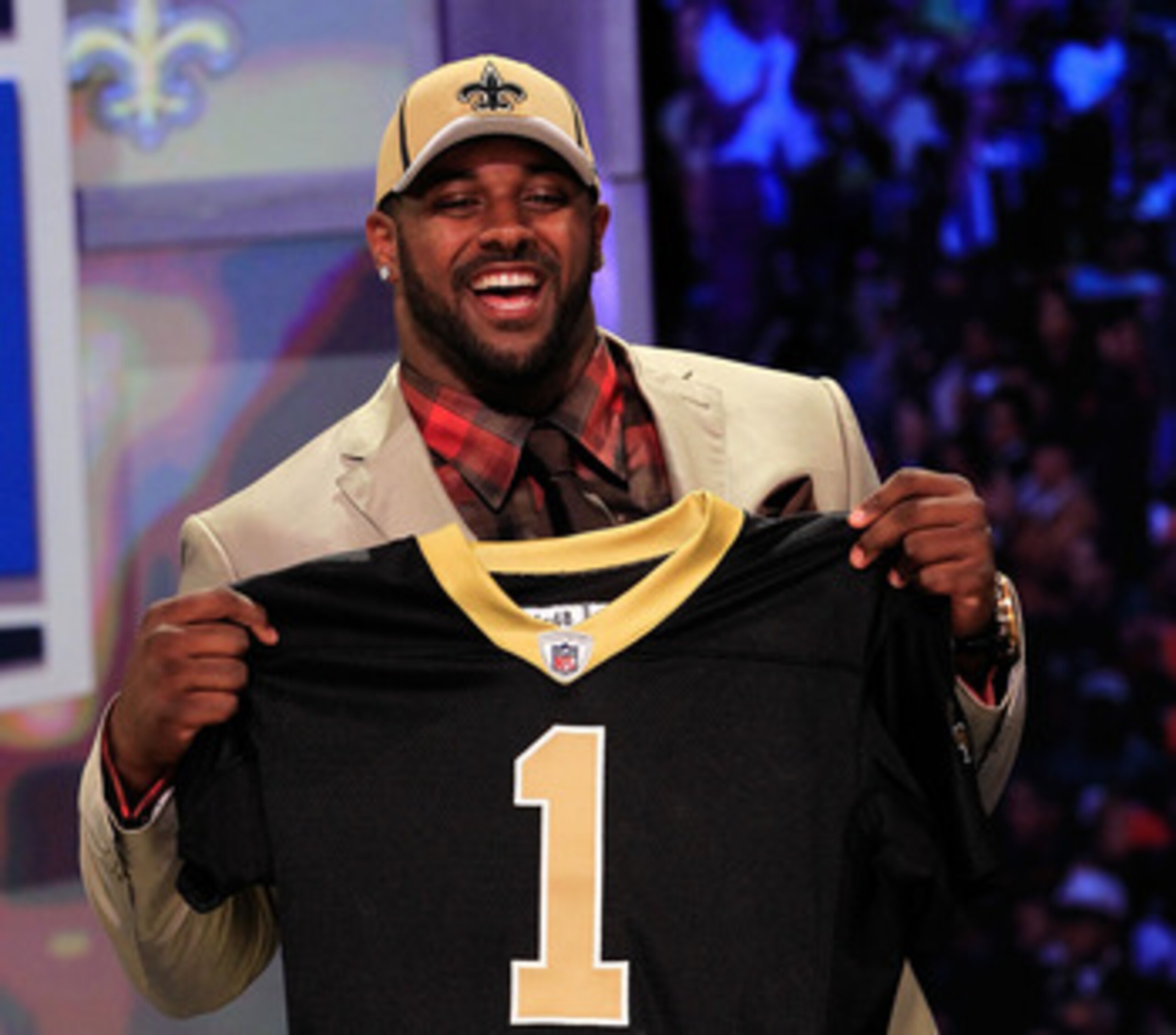
Speaking of attacking, at No. 24 the Saints got a steal, seeing Cal defensive end Cameron Jordan fall all the way to them. Given the defensive line was a primary concern for the Saints, Jordan may just fit in rather nicely.
For my grades on how each team selected, follow along, fellow football rowdies.
21. Cleveland Browns: Phil Taylor, DT, Baylor
1 of 4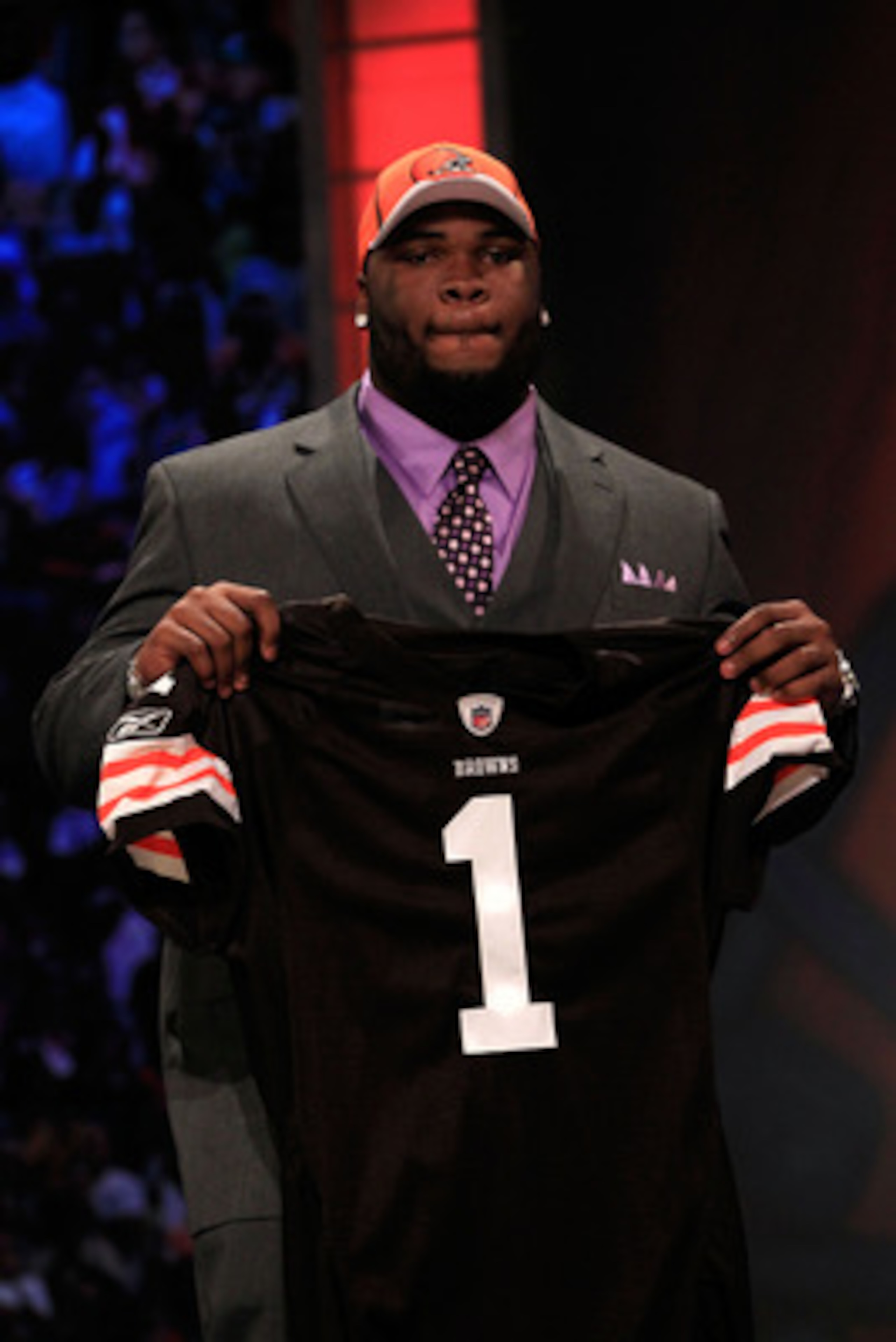
The Cleveland Browns made two trades in the first round of the 2011 NFL draft, and both were intriguing moves.
After receiving a litany of draft picks from the Atlanta Falcons to release their sixth overall spot, they traded up from No. 27, giving the Kansas City Chiefs their 27th pick and third-round selection for the 21st overall pick.
With the 21st overall selection, the Browns selected Baylor defensive tackle Phil Taylor, opting to shore up their rush defense instead of going with a coveted wide receiver for the offense.
If the Browns, ranked 27th against the run in 2010, are looking to stop the run, they may have found their man in Taylor, a 334-pound behemoth who is bound to give smaller guards and centers some serious trouble in the NFL.
He had 62 tackles and two sacks in 2010.
Taylor may say he can provide a substantial pass rush beyond helping with the run, but the Browns will simply be happy if he can shore up their run defense.
Grade: B
This grade is based on everything the Browns did to get to Pick No. 21. Some people may question them letting Alabama Julio Jones go at No. 6, but the fact of the matter is the Falcons gave them a load of draft picks that will set them up nicely in this year's draft and in 2012. If they hadn't made that trade, they would have been crazy.
Also, by cleverly maneuvering to No. 21, they were able to address another primary concern, stopping the run. And they got the man for the job in Taylor. Now they still have a chance to get a decent receiver, perhaps even Miami wideout Leonard Hankerson.
They probably won't find a star receiver now, but they should still be able to find someone better than what they currently have. And stuffing the run can go a long way in rebounding.
22. Indianapolis Colts: Anthony Castonzo, OT, Boston College
2 of 4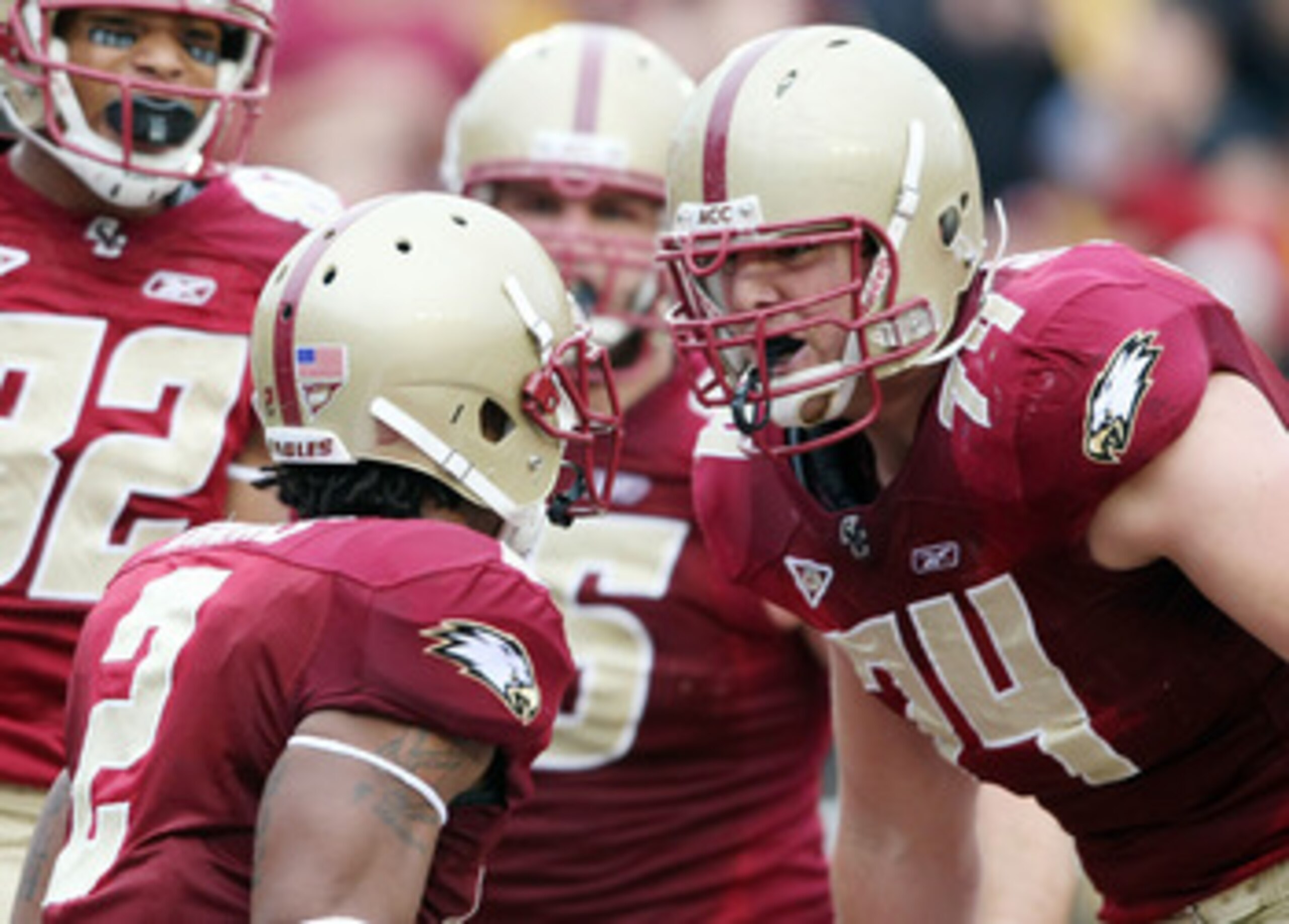
The Indianapolis Colts needed to protect franchise quarterback Peyton Manning after 2010—it was that simple.
Manning went through a stretch in 2010 that included 13 interceptions in five games, highly uncharacteristic of the future Hall of Famer.
That was largely because he had to hurry throws because the pocket closed in on him.
Enter Boston College offensive tackle Anthony Castonzo, the second-best offensive lineman in the draft in my opinion.
The Colts had to be thrilled to see his name up on the board at No. 22, given his consistency and prime focus on warding away pass rushers. Castonzo could use a little help run blocking, but not much, and it would have been a bad decision to let him slide.
Grade: A
The Colts could have drafted Temple defensive tackle Muhammad Wilkerson here, given his potential and their constant struggles to stop the run.
But letting Castonzo get away would have probably actually been taken personally by Manning, who obviously became frustrated with his protection in 2010. If you have a guy of Manning's caliber, you protect him at all costs, and this was basically a no-brainer.
You don't want to see Peyton Manning angry.
There are times when you think out of the box in the draft. This was not one of those times. Having the second-best offensive lineman in the draft slide to the Colts was like coming out of a fog and seeing, well, Anthony Castonzo just hanging out at the other end in the sun, waiting to greet you with a barbecue.
Good simile? No?
23. Philadelphia Eagles: Danny Watkins, G/OT, Baylor
3 of 4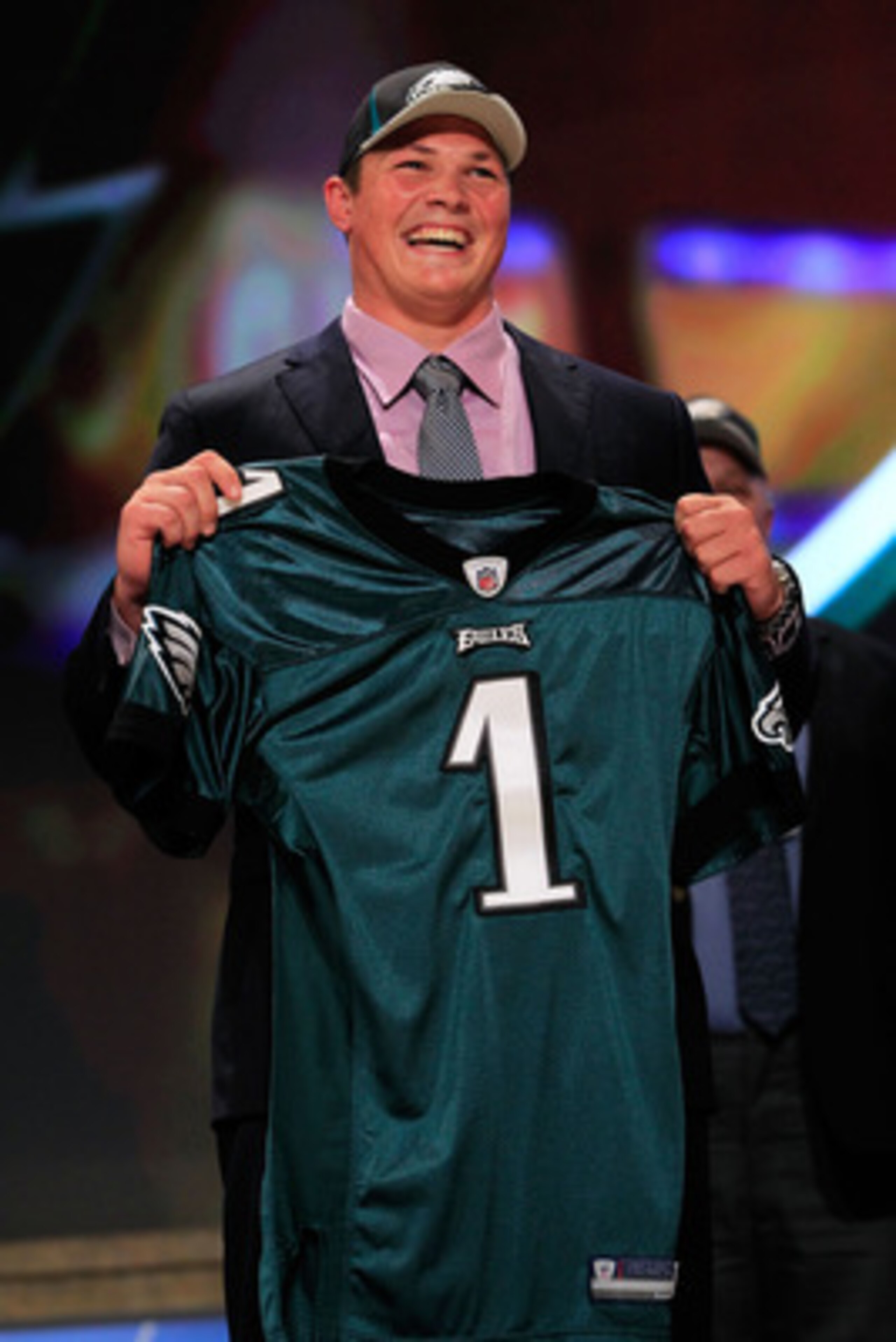
The Philadelphia Eagles came into the 2011 NFL draft with more areas of concern than you would think given they went 10-6 last season and won the NFC East behind the dazzling play of quarterback Michael Vick.
They obviously needed to protect Vick more, giving up 50 sacks in 2010, but they also needed a No. 2 cornerback, a defensive end beyond Trent Cole and a weak-side linebacker to replace the ineffective Ernie Sims.
With the selection of Baylor offensive lineman Danny Watkins, the Eagles opted to shore up their guard position. Sure, Watkins played tackle at Baylor, but he's projected more as a guard in the NFL, and coach Andy Reid echoed this sentiment.
If you look at it strictly in the sense of drafting the best guard, the Eagles did a good job with Florida's Mike Pouncey already off the table.
But should they have drafted a guard instead of an offensive tackle?
I think they should have, considering Michael Vick plus blind-side clobbering equals bad.
Grade: C+
Frankly, I don't like this pick. You can't exactly hate the pick given it fills a need at the guard position and it will make things a bit easier for Vick in the pocket, but they needed a tackle for Vick's blind side first and foremost, and they failed to draft one despite Wisconsin's Gabe Carimi being available, as well as Mississippi State's Derek Sherrod.
I'm guessing the Eagles questioned Carimi's ability to block speed rushers off the edge, something that drew concerns from some NFL teams. But to me it was just a matter of time. Sure, Carimi's not as athletic as you'd like, but the fact of the matter is he was a top offensive lineman prospect. He won the 2010 Outland Trophy, for crying out loud.
How you pass him up beats me.
.jpg?w=2560 "Colts Football")
.jpg?w=2560 "Commanders 49ers Football")
.jpg?w=2560)
24. New Orleans Saints: Cameron Jordan, DE, Cal
4 of 4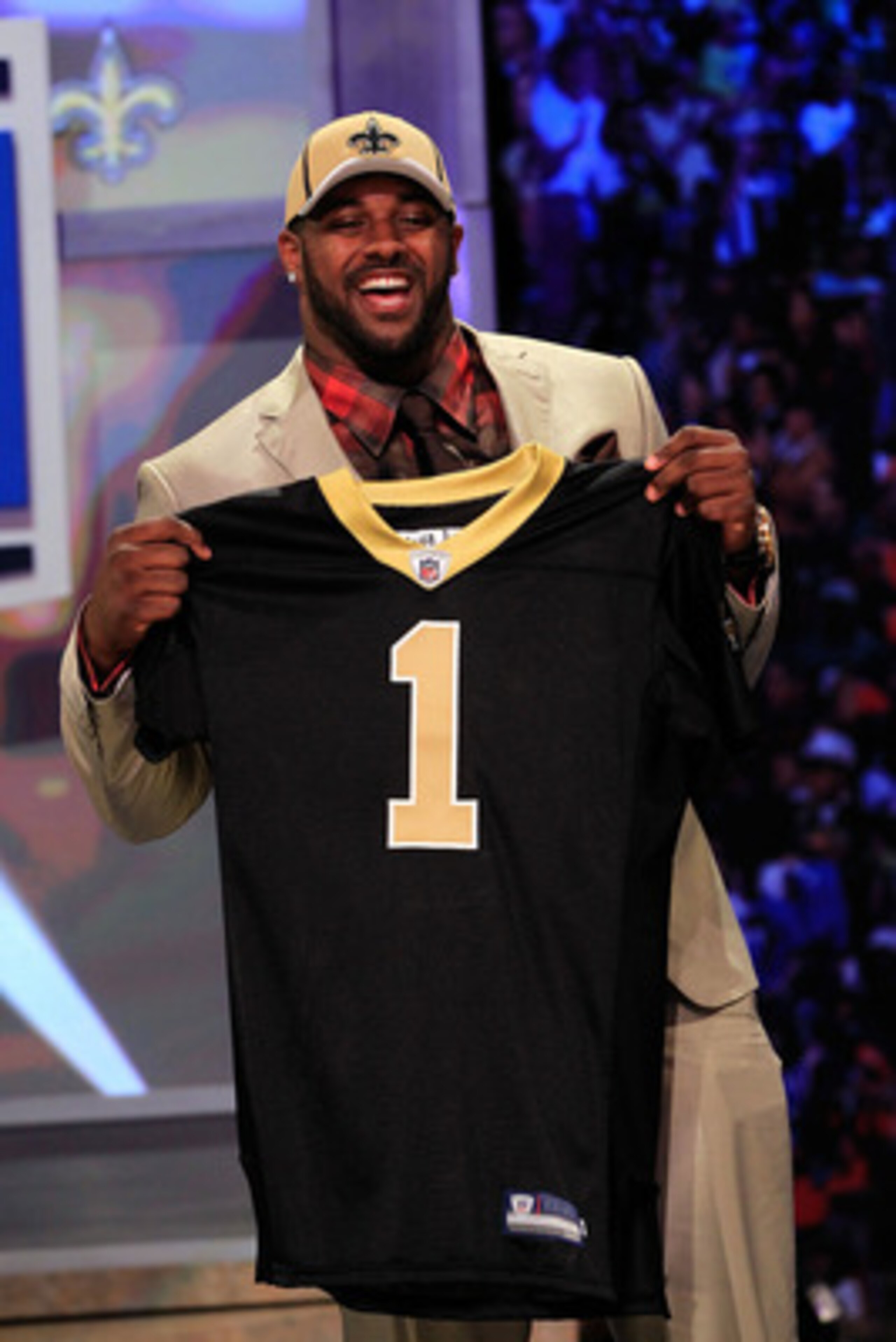
The New Orleans Saints entered the 2011 NFL draft with three primary positions of concern: defensive end, defensive tackle and running back.
The Saints had 33 sacks last season, but most of that came from their linebacking corps. Defensive ends Will Smith and Alex Brown, although effective overall, were certainly no stalwarts rushing the passer.
Also, evident by their NFC Wild Card Game matchup against Marshawn Lynch and the Seattle Seahawks, the Saints needed a run stuffer at defensive tackle.
And with injury-prone Pierre Thomas and Reggie Bush not appearing to be a full-fledged feature back, they needed to infuse their backfield with a possibly youthful incumbent.
The Saints opted for Cal defensive end Cameron Jordan at No. 24, an explosive, athletic pass rusher that figured to go much higher before the draft began.
Not only was Jordan an athletic pass rusher that translated nicely to the NFL, he was consistent, with six sacks in back-to-back years at Cal.
Grade: A
With Baylor DT Phil Taylor gone at this point, some people believe the Saints should have gone after Temple defensive tackle Muhammad Wilkerson. But I believe Wilkerson, although potentially a star in the NFL, is not a true run stopper. I see him as a pass-rushing defensive end in a 3-4 scheme, not a 4-3. I believe the Saints thought the same.
In that regard, the Saints hit a home run with this pick, grabbing a player in Jordan that has immense talent and potential, and was expected by some experts (myself included) to go as early as No. 12 to the Minnesota Vikings.
They filled a need with the best 4-3 defensive end in the draft at that point.
.jpg?w=2560 "DOLPHINS-AIKMAN")




.png?w=2560 "Week 8 Winners & Losers 📊")
.jpg?w=2560 "Malik Beasley Negotiating Plea Deal (AP)")