
UFC 129 Fight Card: John Makdessi: "I'm Going to Be Ready for War"
 While many mixed martial arts fans have only known about John Makdessi since his first bout in the UFC in late 2010, the truth is the man affectionately nicknamed “The Bull” has been practising martial arts for two decades.
Involved in a number of different disciplines before becoming a professional mixed martial artist in 2008, Makdessi is currently undefeated and widely regarded as one of Canada’s top lightweights.
Makdessi, who won his Octagon-debut against Pat Audinwood at UFC 124, is currently slated to take on Kyle Watson this Saturday at UFC 129 at the Rogers Centre in Toronto, Ontario.


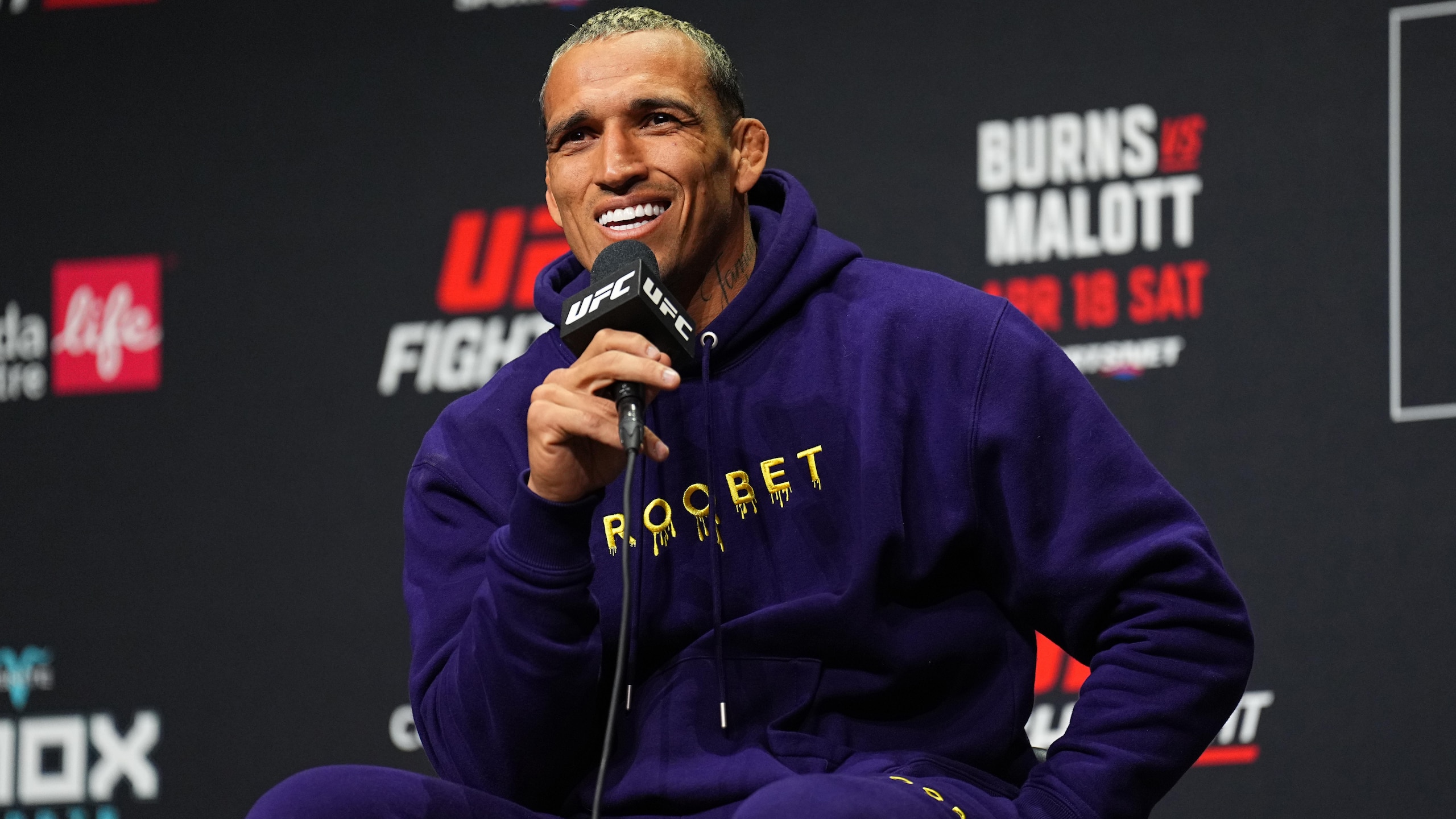
I recently had the opportunity to speak with Makdessi about his life as a mixed martial artist, his time training at TriStar—including his time spent with Watson last year—and the prospect of performing before 55,000 spectators at UFC 129 in Toronto.
You started Tae Kwon Do at a very young age. Do you remember your first day?
I was a very hot-headed kid. My older brother was doing Tae Kwon Do when I was around five years old. One day, basically, my mother said, “Your brother is driving me crazy. Take him to the gym with you.”
Were you passionate about the sport from the start?
I was still very young, but I knew that something about it made sense. I knew something about martial arts made sense from the beginning. Basically, my coaches saw something inside of me. I think that’s a very important thing; no matter how good you are, you need have the right people beside you.
I was very lucky, because I had great coaches in each discipline. My Take Kwon Do coach—he saw something right away—and the second week of training he gave me a yellow-belt and took me to a tournament and I won gold. In Tae Kwon Do, you have to fight two or three guys in your weight-category. I won my first trophy after two weeks of training and ever since then, I’ve just kept with it.
Unfortunately my Tae Kwon Do coach had some financial problems, so he had to close his gym, so for a few years I didn’t really have a gym to train at but I kept training on my own. At the age of 17, I found another gym and I trained with him for three years and I got my black-belt with him. He couldn’t teach me anything anymore, so I found a kick-boxing coach and I trained with him for two years and I won the USKBA World Champion Tournament and I won the Eastern Canadian Championship in Quebec.
After that, kick-boxing was dying out and MMA was the biggest thing; it was the biggest challenge for me.
Aside from running out of kick-boxing matches, why do you compete in mixed martial arts?
I think it’s in my blood. I love sports and I love the challenge. It’s in my heart. I always wanted to do something big in my life—I didn’t want to be the average guy—I wanted to do something big. I knew that it would be very hard, but I have great people around me.
My family is great and I have a great girlfriend who supports me, and I’ve got great coaches. Sometimes, I wake up and I ask myself, “Why am I doing this?” To be honest with you, I put myself through a lot of pain and misery, but hopefully it will all be worth it in the end.
Is it ever too much?
Of course. Especially when I’m cutting-weight; that’s when I’m my weakest. Don’t forget, I train twice a day, six days a week and I eat pretty healthy, so I’ve got to jump under my natural weight, and that’s through dehydration. There are good times and bad times, but at the end of the day, I just keep doing it because I think that there’s something bigger for me at the end of the road.
I love competition; it’s in my blood. I love to fight, I love to compete and I love to entertain the crowd, you know? I fight for the people.
How important have martial arts been to your life?
Martial arts saved my life, actually. It’s been a blessing. It gave me discipline. I’m not perfect, but martial arts, for me, are a blessing, you know? In many ways. With martial arts, every day you learn something new about yourself and I think that’s the ultimate test for anybody in the world; to truly understand yourself and be honest with yourself.
The only time that I can truly express myself is when I get in the cage. To be truly honest with yourself is the hardest thing in life, you know? It’s easy to lie, but to be honest is really difficult. For me, martial arts is the gateway to really, truly, being honest with yourself and really expressing yourself in ways that aren’t allowed in this society.
Do you ever think about how different your life would’ve been had you been taken to an art class or a piano lesson instead of a Tae Kwon Do class at such a young age?
I believe in destiny. I played other sports; when I was in high-school I played some soccer and I played handball. I played hockey, but something about martial arts kept sucking me back in. I love the challenge. For me, fighting is the ultimate challenge for someone, you know? You’re opening yourself up for a beating. Not only the fighting aspect, but it’s an art, you understand? It’s very beautiful to watch and see somebody execute perfect technique—it’s very nice to watch.
I hope to one day be able to execute my techniques very beautifully; I don’t want to be a sloppy fighter. Anybody can go out there and knock the guy out, but to be able to go out there and be able to out-strike and out-grapple—that’s the ultimate test for me.
Is perfection possible in your sport?
You know what? A true fighter is always striving for perfection, but unfortunately we’re not perfect and that’s why I’m never happy.
Is there anything impossible in your sport?
Anything impossible? You can’t kick the guy in the balls and you can’t headbutt your opponent, so there are some things you can’t do [laughs]. Anything else is possible.
[Laughs] Is that what motivates you to keep going—knowing that nothing is impossible in your sport?
For me, the most important thing is to keep learning and improving as a fighter and keep challenging myself. Hopefully the day that I’m not learning or not challenged never comes and I can have a good, healthy career and be a good role-model, you know what I mean?
This sport as helped me a lot—and I’ve got a long way to go—but if I do accomplish my goals, then I do one day want to give back to the sport and to be like how my coaches were to me. They taught me the secrets of the sport and they taught me a lot. As an individual martial artist, it’s not just about going into the ring and fighting; it’s also about how you live. It’s tough. I believe it’s the ultimate beauty of life—to be a mixed martial artist is the toughest thing you can do.
Can you compare it to anything else?
I’ve played other sports and, of course, the ultimate sacrifice—besides what we do—is to be a soldier. I always respect the soldiers. If I’m in a fight, I may break a bone or the referee may stop the fight. I may go to the hospital, but I believe the ultimate sacrifice is being a soldier.
Were you ever interested in joining the military?
To be honest, yeah. I was always interested in the military, especially with the training, the constant challenge—it’s very demanding. I don’t want to be political, but sometimes you’ve got to ask yourself, “Who are we fighting for? Are we actually fighting for a good cause or are we fighting for someone that doesn’t want to do their own dirty work?”
I know it’s complex—and I like to keep up with politics on the side—but there’s a lot of corruption out there. That’s why I like martial arts; you can corrupt some things in martial arts, but the end of the day, getting up and training everyday—you can’t really lie to yourself when you’re doing that. You wake up every day with bruises and you’re sore and you can’t even walk right or your dehydrated—whatever it is—and you keep pushing yourself.
For me, that’s being honest to yourself—you can’t really lie to yourself when you’re doing that. When you fight in the cage, there are no politics and there is no religion; it’s just me and him in the cage and that’s it.
When you started MMA, did you think you’d be able to make a living off of your passion for the sport?
I still have a long way to go, to be honest with you. Of course, the UFC is the biggest company and I know that this is my time. It’s time for me to work very hard, because there are a lot of great fighters out there and I need to catch up to their level.
How much of an impact has the crew at TriStar had on you?
TriStar is the toughest gym in Montreal, I believe. There is a lot of great talent, a lot of great fighters. It’s always a challenge for me there; I’m never the best guy there. There is never a "best" guy there; you’ve always got someone better than you at that gym.
How does it feel to train with such tough competition?
It feels good. I’m a fighter and it’s in my blood to compete, so it’s good to have training partners like that. It’s also good because, as a competitor, I always want to work harder than everybody else. That’s my ultimate goal; I need to train harder than everybody else. That’s the toughest part, because there are already so many great fighters that train so hard already, I need to train harder than them. It’s good because it gives you a sense of how you should be training.
Is it humbling?
Of course, it’s very humbling. It’s an honour to train beside these guys. I feel like I’m still young in the sport—I’ve only got eight fights—but I’m training with Yves Jabouin, Ivan Menjivar, Georges St-Pierre, David Loiseau, Miguel Torres, Kenny Florian. There are so many great fighters who are veterans of this sport and I’m trying to learn from them; those guys were here before me.
What were your goals when you started your mixed martial arts career?
Just to be a good fighter and to be the best that I can be.
Did you ever think that you would make it to the UFC?
Sometimes no and sometimes yes. I just kept believing that something was going to happen, you know?
To be honest, it depends. That’s a hard question to answer because there’s a lot of competition out there and the UFC is the biggest company, so many fighters want to go to that company. Sometimes I didn’t really know how long it would take me to get to the UFC or to a big organization, but I knew that fighting was in my heart.
What does being in the UFC mean to you?
It means the world to me. I’d do anything to stay in the UFC. These guys have given me a chance to take care of myself, and, hopefully, one day take care of my family.
How do you feel about your first performance in the Octagon?
Of course, I’m happy because I won—winning is the most important thing—but I feel that I can do better.
How much do you feel you’ve improved since then?
I’ve been working on a lot of my weaknesses; my ground-game and my wrestling are both better than they were before, that’s for sure. I’m always training with black-belts and Olympic wrestlers, I’m always training with guys who are better than me and that makes me a better fighter. I’m always pushing myself, challenging myself. My training is never easy; every day is hard.
How are you feeling going into your upcoming bout?
I have no feeling, you know? I’m a fighter and I have no emotions; I have a clear mind and I train very hard. Now it’s time for me to finish cutting my weight and get into fight-zone.
Have you always had this outlook?
When I was younger, not really. When I was an amateur fighter I would only train three or four times a week and I would go out with my friends. I trained, but never this hard. When I became a professional, I committed myself 100 percent.
What problems does Kyle pose to you?
I train very hard, because I respect every fighter I fight. Kyle Watson is an experienced fighter, you know? He’s patient and he uses his brain. He’s also an instructor, so he’s educated about the sport—he has knowledge. I’ve been competing since I was six years old and I don’t think he’ll be able to handle my rhythm.
Did you get a chance to train with Kyle when he was in Montreal?
He came down to Montreal to train with Georges. I trained with him and found him a bit awkward. It’s nothing personal—I respect him a lot and I’ve got nothing against the guy—he’s a little bit awkward. In MMA, you’re doing so many different things with all of the different disciplines; you’re going to have the type of fighters that are awkward when they fight. Very robotic type of fighters, you know?
Do you feel that your time spent training with him gives you an advantage in the fight?
I don’t really think about that. To be honest with you, I shook it off. I’m pretending that I never saw the guy and I never trained with him. I’m going out there expecting the worst and that’s it. Training and fighting are two different things.
Do you have a prediction for how it’s going to end?
No. Unfortunately, I don’t make predictions. I can’t predict myself and I don’t know what I’m going to do that night. All I know is that I’m going to be ready for war.
What would a win at UFC 129 mean to you?
Every fight means the world to me. This fight means a lot to me.
What are you expecting out of the crowd in Toronto?
I’m expecting a good energy. There’s going to be crazy energy in there—I can only imagine.
Do you think that will be overwhelming?
I don’t think so. Like I said, I’ve been fighting in front of crowds for the majority of my life, so I’m used to it. I think the bigger the crowd is, the more pumped I get.
Assuming you win, where do you see yourself in the UFC’s lightweight division?
Of course I’ll be very happy and be very honoured, but I’ve still got a lot to develop in this sport, you know? 155 isn’t an easy category. God willing, if my destiny is to be a world champion then it’s going to happen; if it’s not, then at least I tried.
How far do you feel you can go in this sport?
How far? It’s hard to tell right now. Right now I’m 25 and we’ll see. I can’t really predict the future.
Have you thought about what you might like to do when you’re done fighting?
Yeah, sometimes I think about it. Of course, I’m always going to be in the world of martial arts. Maybe one day I’ll teach or have a gym; I’ll keep helping the industry, you know what I mean? I’ll teach martial arts or be a good mentor, whatever the case may be.
Do you do any coaching now?
I do very little coaching; I help out some guys. Like I said, if you want to be the best, then you have to sacrifice certain things; you have to keep training. I don’t have time to coach because I’m constantly training myself, and improving in the game. I do help some amateur fighters.
What does it mean for you to be able to pass on your knowledge?
I feel like I’m doing a good deed, you know? My coaches passed it on to me and, in the end, that’s how it should be. You can’t be greedy; you have to respect the sport. I’m going to die one day and I’m honoured just to be a part of this sport; it’s a tough sport and I feel happy that I can showcase myself and all of the training that I do.
Is there anything that you’d like to say to your fans while you have this opportunity?
Of course, of course; like I said, I fight for my fans. I appreciate all of the support and I try my hardest to be a good fighter and entertain the crowd. Also, my sponsors help me every day—I want to thank them and my teammates. Of course, people like you, interviewing me—I appreciate it.

.jpg?w=2560 "NFL investigating 2 referees for separate viral exchanges")

.jpg?w=2560 "Report: Chiefs Contact Hill's Agent")
.jpg?w=2560 "OBJ Calls Out Giants 😳")
.jpg?w=2560 "Tyreek makes another cryptic post amid Chiefs rumors")



