
NBA Draft 2011: Power Ranking Enes Kanter and the Six Best European Prospects
The specter of the upcoming labor stoppage has hung over the NBA season, particularly the upcoming Draft.
Bucking the trend of the last decade, many of the top prospects in college basketball—from Baylor's Perry Jones to UNC's John Henson and Tyler Zeller and Ohio State's Jared Sullinger—are staying in school, figuring that if a good part of the upcoming season is lost, they won't be getting paychecks or developing their game.
The resulting talent exodus has many fearing that the 2011 Draft will be repeat of the 2000 debacle, which had Kenyon Martin as the No.1 pick, Mike Miller as the Rookie of the Year and didn't produce a single consistent All-Star.
But the difference from a decade ago is the increasingly global nature of basketball. Ten years ago, international players were still proving themselves in the NBA, now guys who never played in college have been an MVP (Dirk), an NBA Finals MVP (Tony Parker), a Sixth Man of the Year (Manu and Leandro Barbosa) and Rookie of the Year (Pau Gasol). The US finished sixth in the 2002 World Championships, and got bronze in the 2004 Olympics and the 2006 World Championships.
For years, it's been clear that the best non-NBA basketball in the world occurs in Europe, particularly in the Spanish ACB league and the Euroleague Tournament, which features the best club teams throughout the continent. If NCAA fans doubt this, they can just re-watch the ghastly offensive "showing" Butler and UConn put on in the Final Four a weeks ago.
** European professional sports are very similar to American colleges. Just as Texas and OU traditionally dominate Big 12 football, FC Barcelona and Real Madrid are the class of the ACB. The best schools from the biggest conference (the Big 12, the SEC and the Pac-10) then play in a post-season tournament (the BCS) to determine the best team in the US, a continent-sized country, while the best clubs from the best domestic leagues (the Spanish ACB, the Italian Serie A and the German Bundesliga) compete to see who the best club in Europe is.
And just as schools like Baylor don't seriously expect to win the BCS title but aim to compete in bowls, the mid-level teams in the Premier League try to win tournaments like the UEFA Cup. Many Americans would scoff at the lack of parity in these leagues, but you'd never see a European team black-mailing their city for a publicly-financed stadium, just as Texas football couldn't threaten Austin with a move to Dallas or Houston. **
The teams in the Euroleague's Final Four, set to tip off in Barcelona in early May, would easily defeat Butler, UConn, Kentucky and VCU. Not only are the players grown men in the prime of their athletic careers, but many are names familiar to American basketball fans.
Siena features former college standouts Bo McCalebb (UNO) and Malik Hairston (Oregon) and NBA player Marko Jaric. Panathinaikos has Nick Calathes (Florida), Drew Nicholas (Maryland) and Romain Sato (Xavier). Maccabi Tel-Aviv has Richard Hendrix (Alabama), Jeremy Pargo (Gonzaga) and Sofoklis "Baby Shaq" Schortsanitis. Real Madrid has former NBA player Sergio Rodriguez, Houston Rockets draft pick Sergio Llull as well as Nikola Mirotic, the 20-year-old break out star of European basketball.
Mirotic is one of the stand-outs of a new generation of international basketball players who've grown up in the post Dream Team world and don't have any real fear of their American counterparts. As many as six could go in the top half of the 2011 Draft. The lockout, while bad for college players, could be a huge boon for the internationals—a higher slot would give them more money to buy-out their contracts with their clubs, and they can always stay overseas if the NBA's season looks to be in jeopardy.
For more, check out the FanTake Blog: Get Buckets. Follow on Twitter at: GetBucketsFT. Follow on Facebook: Get Buckets
1. Jonas Valanciunas
1 of 6One of the youngest players in this draft class at only 18, Valanciunas is a 6’11", 240 pound- post player out of Lithuania. With surprising athleticism to go along with a 7’6" wingspan, he projects to be a stand-out defender at both interior positions in the NBA.
He’s a tough competitor, which has made him a key contributor for his club team, Lietuvos Rytas, putting up an impressive per-40 minute stat line of 21 points, 14 rebounds and 2 blocks in Euroleague competition. However, he rarely has offense run for him, scoring mostly off hustle plays—running the floor, grabbing rebounds and finishing at the rim off the plays of others.
And while he isn’t ready to be an NBA-level shot-creator, he’ll show glimpses of real talent, especially in the low post and on the free-throw line, where he shoots an eye-popping 91 percent. In international play for Lithuania, he’s displayed good touch on a jump-hook and a drop-step, the two building blocks of a post game. Most notably in the under-18 European championships in 2009, where he matched fellow prospect Enes Kanter point for point, averaging 19 points on 72 percent shooting.
The player with the highest upside in this international class is the biggest gamble too. He’d benefit from one more year in Europe and a bigger role in his club team’s offense, which will be a real dilemma for a lottery team needing help immediately.
Best case: Pau Gasol
Worst case: Andris Biedrins
Needs to work on: Offensive assertiveness
2. Bismack Biyombo
2 of 6With the coolest name in the Draft, Biyombo rocketed up mock drafts after a dominating performance in the Nike Hoop Summit, going from a virtual unknown to a possible lottery pick. He dominated the best American high school players in the country with the Summit’s first ever triple-double, getting 12 points, 11 boards and 10 blocks.
The blocks are what most excites NBA scouts, as Biyombo is an absolute physical specimen, at 6’9", 240 pounds with a 7’7" wingspan and a vertical well over 30 inches. With his combination of strength, length and quickness, he could be an All-Defensive type performer at both interior positions and the first international player to seriously challenge for the Defensive Player of the Year award.
It’s on the offensive side of the floor where the lack of polish in his game is obvious, as he only started playing basketball four years ago. He mainly tries to bully and dunk over his competition, a strategy which will have diminishing returns as his competition gets better.
The legacy of African shot-blockers in the NBA is mixed at best—from Manute Bol to DeSagana Diop and Mohammed Sene. But Biyombo, who has played well for Fuenlabrada in the ACB, has proven a lot more than Diop (a prep schooler) and Sene (a bench-warmer) did before they were lottery picks, and his defensive potential is too tantalizing to ignore.
Best case: Ben Wallace
Worst case: Chris Wilcox
Needs to work on: Scoring efficiently in the paint.
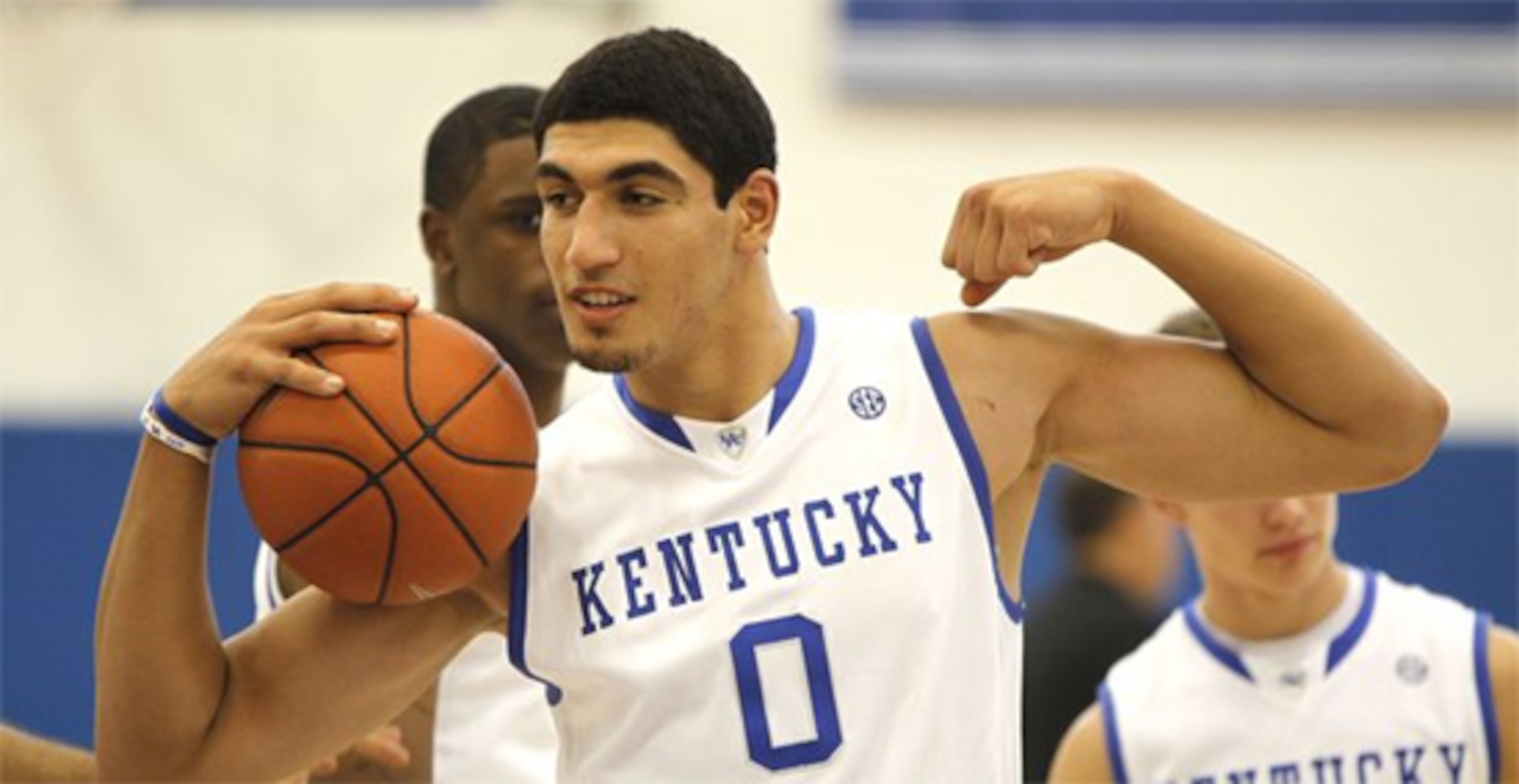
3. Enes Kanter
3 of 6Much like Biyombo, Kanter made a name for himself in the Nike Hoop Summit, breaking Dirk Nowitzki’s scoring record with 34 points in the 2010 game.
But as prospects, they are pretty much inverse mirrors of each other. Kanter has one of the best low-post games to come into the league in a while, with great touch, footwork and the ability to score from both blocks. He can also step out and hit a mid-range jumper, a crucial skill for the modern NBA big man.
The questions about his game are all defensive. He doesn’t have the foot-speed to guard perimeter-oriented big men, and at 6’10", 250 pounds with a 7’1" wingspan, he’s undersized to guard low-post centers.
Due to the eligibility circus surrounding his time at Kentucky, Kanter hasn’t played in a competitive game in nearly a year. Hopefully he’s gained strength while sitting on the bench, but it’s likely that whoever drafts him will have to surround him with defensive personnel in the front-court to be successful.
Best case: Al Jefferson
Worst case: Marreese Speights
Needs to work on: Defending the low post.



4. Nikola Mirotic
4 of 6After an impressive showing at the 2010 Hoop Summit, Mirotic took his game to the next level for Real Madrid this year, ranking third in PER in the ACB and sixth in the Euroleague.
At 6’10", 210 pounds, his main weapon is a devastating three-point shot, which he has knocked down at a 43 percent clip in Europe. The threat of the shot forces defenders to play tight on him, and he has the quickness and ball-handling ability to make them pay when they do.
He projects to be a “stretch 4″ in the NBA, with the perimeter skills to play on the perimeter and the size and toughness to defend power forwards. The big concern surrounding Mirotic is the size of his buyout from Real Madrid, one of the powerhouse clubs in the Euroleague. If he does slip to the middle of the round, he’s likely to be the steal of the Draft.
Best case: Rashard Lewis
Worst case: Al Harrington
Needs to work on: Creating shots for others.
5. Donatas Motiejunas
5 of 6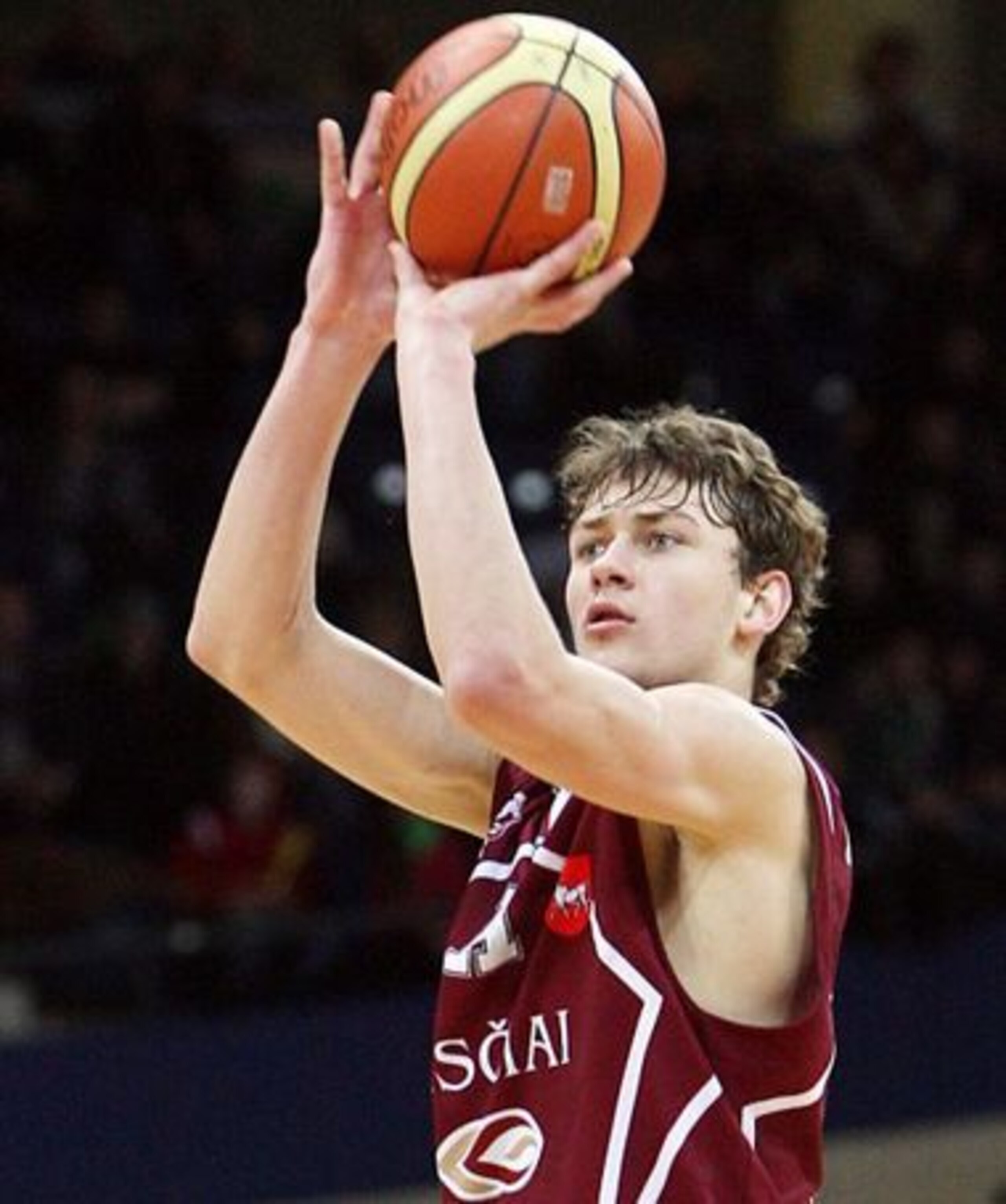
An extremely skilled seven-footer, Motiejunas fits the mold of the traditional European prospect. He’s got a great stroke for his size, and he can get it a good look from any part of the floor, shooting 44 percent from three and an absurd 57 FG percent inside the line.
He’s the complete package offensively, with the ability to score off a jump-hook from the low post as well as put the ball on the floor and find open men on the perimeter.
But like many of the more finesse-oriented European bigs, he will struggle with defending the more athletic big men in the NBA. Not only is he not the most intense defender, but he also makes very little effort to go after loose balls, with the worst defensive rebounding percentage among post players in the entire Italian League.
He might be most useful as an instant offense guy off the bench, as very few second-unit big men will be able to keep up with him and his defensive liabilities could be more easily hidden. If he’s going to start, he’ll need an extremely athletic front-court partner willing to do all the dirty work.
Best case: Andrea Bargnani
Worst case: Yi Jianlian
Needs to work on: Rebounding.
6. Jan Vesely
6 of 6One of the best athletes in Europe, Vesely is not your stereotypical international prospect. A 6’11", 240 pound- forward with great athleticism, Vesely makes his name running the floor and finishing in transition, and he could be the first European to compete in the Dunk Contest.
While his defensive versatility allows him to defend the perimeter for his club Partizan Belgrade, he doesn’t have much of a role offensively at the small forward position. He doesn’t look for his jumper, nor does he create off the dribble particularly well; most of his offense comes from crashing the boards and posting up much smaller defenders.
His defense will get him to the NBA, but he’ll need to settle on an offensive game once he’s there, either by fine-tuning his jumper or developing a more consistent low-post game.
Best case: Jonas Jerebko
Worst case: Hakim Warrick
Needs to work on: Perimeter jumper.
.jpg?w=2560 "NFL investigating 2 referees for separate viral exchanges")
.jpg?w=2560 "OBJ Calls Out Giants After Release")
.jpg?w=2560 "Tyreek makes another cryptic post amid Chiefs rumors")
.jpg?w=2560 "Report: Chiefs Contact Hill's Agent")