
2011 NFL Draft: Scouting the Top 20 Players on Our Big Board
With only two-and-a-half weeks left before the start of the 2011 NFL Draft, we are busy finalizing our top 500 players and taking one more look at film before publishing our scouting reports.
Just like every team in the NFL, we are working hard to learn all we can about every player before the draft kicks off on Thursday, April 28.
Want a sneak peek at the top 20 players in the 2011 draft? We have exclusive scouting reports on all 20 of our top players.
20. Mark Ingram, Running Back, Alabama
1 of 20
Height: 5’10″ | Weight: 215 lbs | Alabama
Acceleration/Burst/Quickness: Quick burst to attack the line of scrimmage. Good acceleration in five and 10-yard splits. Decent lateral agility, but excels at making one cut and squaring his shoulders to the line of scrimmage. Will not dance. Is a very patient runner who does a great job finding holes.
Ball Protection: Only two fumbles in three seasons at Alabama. Excellent ball security. Fumbles will not be an issue in the NFL. Has a strong grip and excellent placement when securing the ball.
Elusiveness/Feet/Agility: Does a great job of keeping his feet moving. Is not elusive in the open field. Will make one cut and lower his shoulders. Good enough agility, but is a classic power runner who does not try to shake defenders.
Pass Catching: Good hands. Used primarily in screen packages. Does a good job locating the ball and bringing it in to his body. Does not let the ball get inside him.
Pass Blocking: Is a willing blocker who has shown a good ability to protect the quarterback in passing situations. Will not be a weak link in terms of blocking for his NFL team.
Power: Strong and well built to handle tacklers. Is best used as an inside runner. Has thick legs that power his runs. Low center of gravity. Exceptional tackle breaker. Defenders will bounce off him if not hit low. Very good leg drive. Falls forward when hit.
Size/Length/Hand Size: Great size for a three-down running back. Ingram has the ideal build to absorb tackles and hold up over the course of an NFL season.
Speed: Ingram is not a phenomenal athlete, nor does he possess exceptional athletic ability. He will run a decent high-4.4 in the 40-yard dash and test in the middle on all agility drills. He does have the speed to do damage in the open field, but he will not be outrunning many people.
Vision/Balance/Instincts: Ingram is not fast enough to simply outrun defenders, but he has the vision and instincts to get to the edge. Does a very nice job finding holes and then exploding through them.
Final Word: A knee injury caused Ingram to miss the first two games of the 2010 season, but he looked good down the stretch despite sharing carries with Trent Richardson and the Alabama offense relying on the pass more.
The son of a former NFL wide receiver, Ingram has the pedigree and accolades that NFL scouts love. His lack of elite speed and limited upside will prevent Ingram from being a top 15 pick. He will likely land anywhere between 16 and 35 on draft day.
19. Ryan Kerrigan, Outside Linebacker/Defensive End, Purdue
2 of 20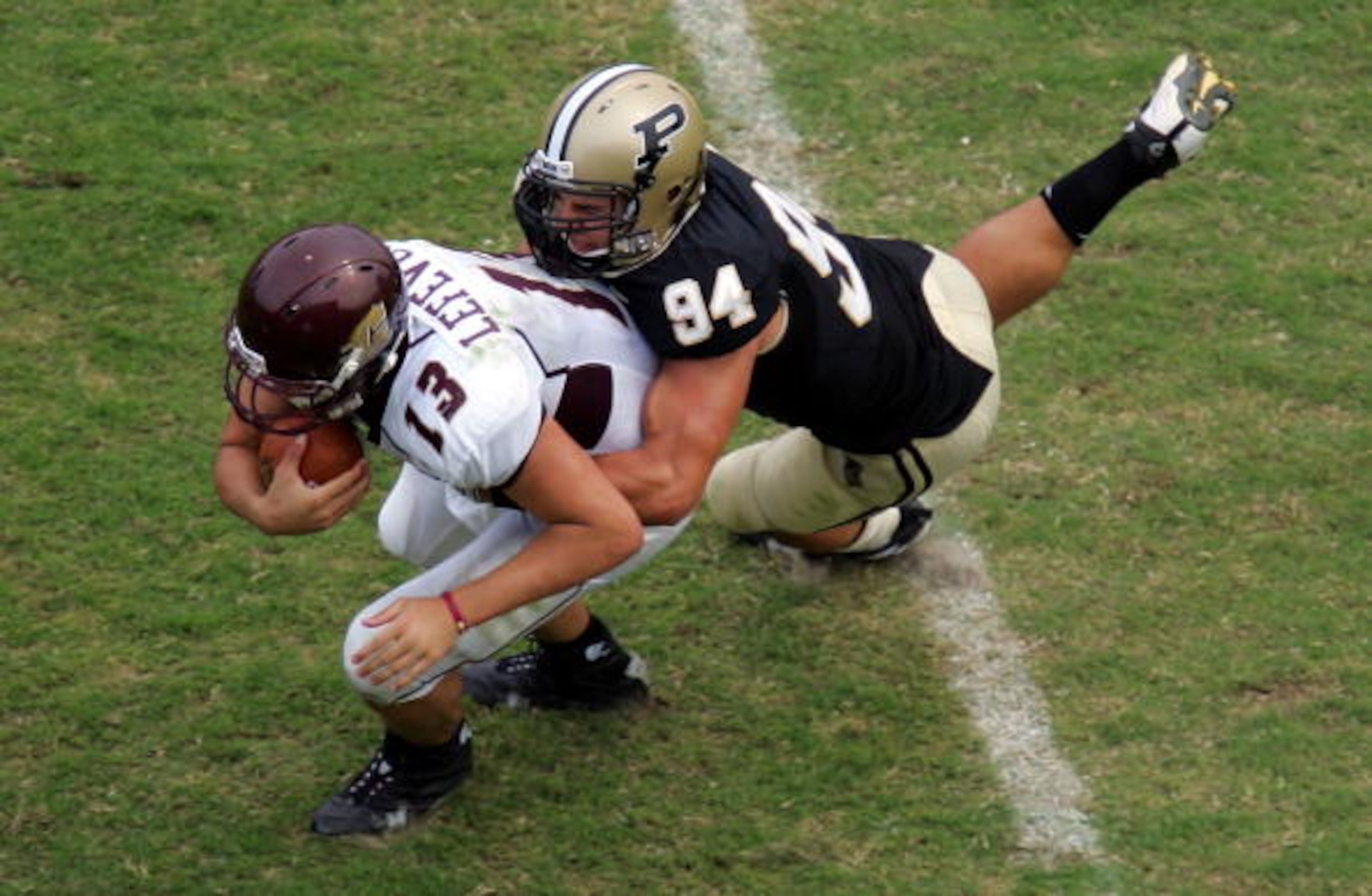
Height: 6’4" | Weight: 267 lbs | Purdue
Coverage: Playing defensive end in the Boilermakers 4-3 scheme, Kerrigan was not asked to drop back in to coverage. He did show the ability during Senior Bowl and NFL Scouting Combine practices and workouts. Kerrigan enters the NFL as a defensive end who will learn to play outside linebacker. As a rookie he should be asked to do nothing more than pin his ears back and rush the quarterback.
Instincts/recognition: Is a see-and-react player. Does a nice job anticipating what the offense will do. Routinely beats the snap.
Pass rush: Is a great athlete. Too many consider him a “high-motor” player, which downplays his athletic ability. Can be a bit stiff in the hips when turning the corner. Is too fast for offensive tackles and too strong for tight ends. Kerrigan has the tools to be a force on the edge in a stand-up position. Does a nice job using his hands to create separation. Has one “good” pass rush move and must develop counter moves to succeed in the NFL.
Pursuit/Lateral movement and agility: Has the agility to slide and work down the offensive line to get to the edge. Is not a quick-twitch guy and can be washed down if the blocker beats him to the corner. Is quick to recover when he takes a poor angle or is knocked off the ball.
Quickness: Kerrigan shocked the NFL community with his 4.67 in the 40-yard dash at the NFL Scouting Combine. He has the rare quickness and speed to dominate offensive tackles off the snap. Has the burst to pressure offensive tackles into mistakes off the ball.
Run defense: Kerrigan is by all accounts a smart, assignment-style football player. Is a sure-tackler and is able to step up to set the edge against the run. Will take on blockers due to his experience at defensive end. Will fight through double teams.
Strength/Ability to shed blocks: Has good overall build and strength. Is not timid. Will mix it up with blockers. Keeps outside arm free when working to the edge.
Final word: Nicknamed “Superman” by coaches and teammates for his rare abilities, Kerrigan is an exciting player.
Kerrigan’s stock is rising as the draft approaches. With so many NFL teams now running 3-4 defenses a player of his talents is in demand.
While some compare Kerrigan to Vernon Gholston or Aaron Maybin, others see Tamba Hali and Clay Matthews.
Either way, Kerrigan will see himself drafted in the first round.
18. Adrian Clayborn, Defensive End, Iowa
3 of 20
Height: 6’3" | Weight: 285 | Iowa
Pass Rush/Closing ability/Moves and counter moves: A good college pass rusher, Clayborn would struggle as a right defensive end in the NFL. He lacks the speed, secondary moves and agility to make it as a pass rusher. As a 3-4 defensive end, Clayborn will be asked to stop the run and, depending on the scheme, create pressure on the pocket. Does not show an ability to dip his shoulder or roll his hips to turn the corner—this must be learned. Has yet to develop a secondary move and relies purely on strength as a college player. As a college defensive end he is stronger than most tackles—this will not be the case in the NFL.
Pursuit/Lateral movement and agility: Is quick on his feet and can make plays in the backfield. Has the speed to chase down the line and to the second level. Will catch players from behind. Does a good job working down the line of scrimmage and keeping his eyes on the ball carrier. A very high-motor player.
Quickness/Explosion: Is very dominant playing at the line of scrimmage. Has the quickness and burst that NFL general managers covet. Can explode into the offensive line and generates tremendous push into the backfield. Lacks the speed to be a pass rusher in the NFL and must move to a 3-4 defense or play inside at tackle.
Run defend/Recognition: Clayborn’s play recognition can be slower than expected. He has improved as a senior in this area. Does a better job recognizing the pass than run. Can be fooled with play action. Is a strong player, but can be pushed around when trying to anchor against the run. Must add weight/strength to improve his ability to sit down in a hole and plug. Clayborn has shown good instincts and natural reactions. Has an almost uncanny ability to find the ball.
Size/Length/Hand size: Is tall and lean. Could add bulk to his lanky frame. Doesn’t have the big bubble that is expected of an interior lineman. Has the frame and look of a defensive end. Has the height to disrupt passing lanes. Can get in the way of quarterbacks vision and release. Has the length to reach into the backfield when engaged by a blocker. Has a powerful punch that can knock blockers off their stance.
Strength/Ability to shed blocks: Is a fighter when getting off blockers. Does a great job using his hands and lower-body strength to come off a block. Is strong enough to hold up blockers, but could struggle against NFL tackles.
Tackling: Does a very good job making the tackle when being engaged by the blocker. Keeps his outside arm free and locates the ball carrier. Will get careless and try to knock runners down instead of form tackling, which leads to missed tackle opportunities. Most impressive when making tackles in traffic. Does a great job in this area.
Technique/Hand use/Leverage: Has advanced hand use for a college player. Has a good slap move. Keeps his hands up and uses them to disengage blockers and create separation from blockers. Will fire out too high at times. Must do a better job staying low to assert his leverage. As a pass rusher he is not overly technical, using strength to over-power blockers. Does a nice job punching to create separation. Does not attempt to alter his body or position to gain leverage (shoulder dip, hip roll, etc). Must develop secondary moves or will be too predictable for NFL blockers.
Versatility: Able to play in the 3-4 or 4-3 defense as an end, tackle or left-end in the 4-3. Has potential as a Pro Bowl player at any of the three positions. Projects best as a 3-4 defensive end.
Final Word: Clayborn is highly regarded by scouts and NFL Draftniks alike. Other scouting services have had him ranked during the season as their No.1 overall player.
We like Clayborn, but to date we have doubts about his ability to stop the run. As a 3-4 defensive end Clayborn will be asked to anchor against the run first and foremost. While his pass rushing skills are impressive, they will not be a factor when playing in a 3-4. As a 4-3 left end or defensive tackle, Clayborn has more value as a pass rusher.
In the end, Clayborn will be best served as a 3-4 defensive end, but his talents coming out of Iowa are that of a defensive tackle. There will be a learning curve, ala Glenn Dorsey, for Clayborn.
.jpg?w=2560 "Colts Football")
.jpg?w=2560 "Commanders 49ers Football")
.jpg?w=2560)
17. Mikel Leshoure, Running Back, Illinois
4 of 20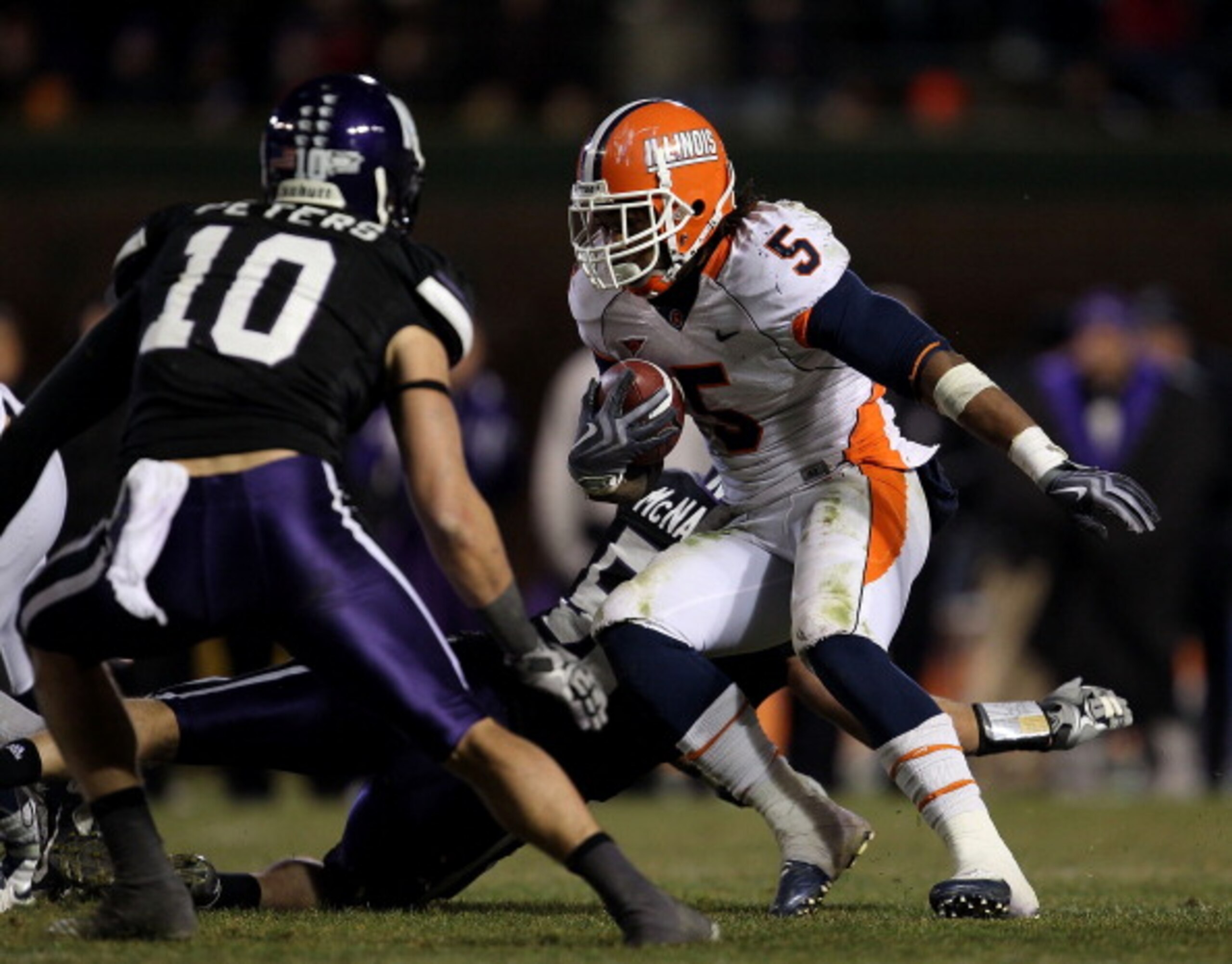
Height: 6'0" | Weight: 227lbs | Illinois
Acceleration/Burst/Quickness: Leshoure has the quickness to explode and run away from defenders, or the agility to simply jump over them. Perhaps better than any other runner in this draft class, Leshoure has the second-gear that NFL teams look for. Once he explodes through a hole he is almost impossible to catch.
Ball Protection: Mikel shows excellent ball security, keeping the ball high on his chest and tucked away nicely.
Elusiveness/Feet/Agility: Leshoure runs in a compact way that shields him from taking big hits. He has a smooth ability to cut and change direction without losing speed or slipping. Mikel is not a shifty back who will look to run by or “juke” out a defender. His game is to line up the tackler and run them over.
Pass Catching: Illinois has lined him up as an outside receiver and he has shown reliable hands when asked to catch. He has shown a good job running routes from out of the backfield, in motion and even in the slot. Does not make the best cuts and will round off routes. We have noticed him catching with his body too often. Due to his size and running type many find him to be a surprisingly good pass catcher out of the backfield.
Pass Blocking: The technique to be a great blocker is lacking, but he does show a ton of effort in blocking. Leshoure has the body type to be a good blitz protector once he learns the right technique.
Power: Leshoure is a powerful back who does a great job getting behind his pads on inside runs and also when confronted in the hole. For a power running back it is important to keep your feet moving after contact—Leshoure does an excellent job of churning his feet when hit. Leshoure has the power to run over tacklers, especially defensive backs, with ease. Has a good center of gravity which makes it hard for solo tacklers to get him down on their own if they don’t get leverage. He isn’t a shifty back and won’t make too many defenders miss in the back/open field unless he runs over them.
Size/Length/Hand Size: There are no questions about his size. Leshoure is the perfect build for a power runner with elite burst.
Speed: Leshoure has a great combination of vision, balance and acceleration to power his speed. Mikel isn’t a burner, but he shows explosion when he hits the hole and through contact.
Vision/Balance/Instincts: Leshoure runs with a natural forward-lean and does a good job cutting away from defenders. He shows very good vision in the open field to make changes and elude tacklers. Does a good job of running behind his blockers, but he can miss cutbacks.
Final Word: There are a few character concerns here. He was suspended for September 2009 matchup against Illinois State for violating unspecified team rules. Leshoure also suffered broken jaw in 2008, losing 17 pounds, reportedly during a fight with teammate Jeff Cumberland.
For all his early troubles Leshoure appears to have matured. His 2010 season was flawless, earning him second team All-American status by the Associated Press and a first-team All-Big Ten selection. He set the Illinois single-season record with 1,697 yards rushing and added on 17 touchdowns.
As a pro Leshoure has the skills to transition very well to the NFL. He is very similar to former Illinois runner Rashard Mendenhall in terms of body type, speed and running ability.
16. Cam Newton, Quarterback, Auburn
5 of 20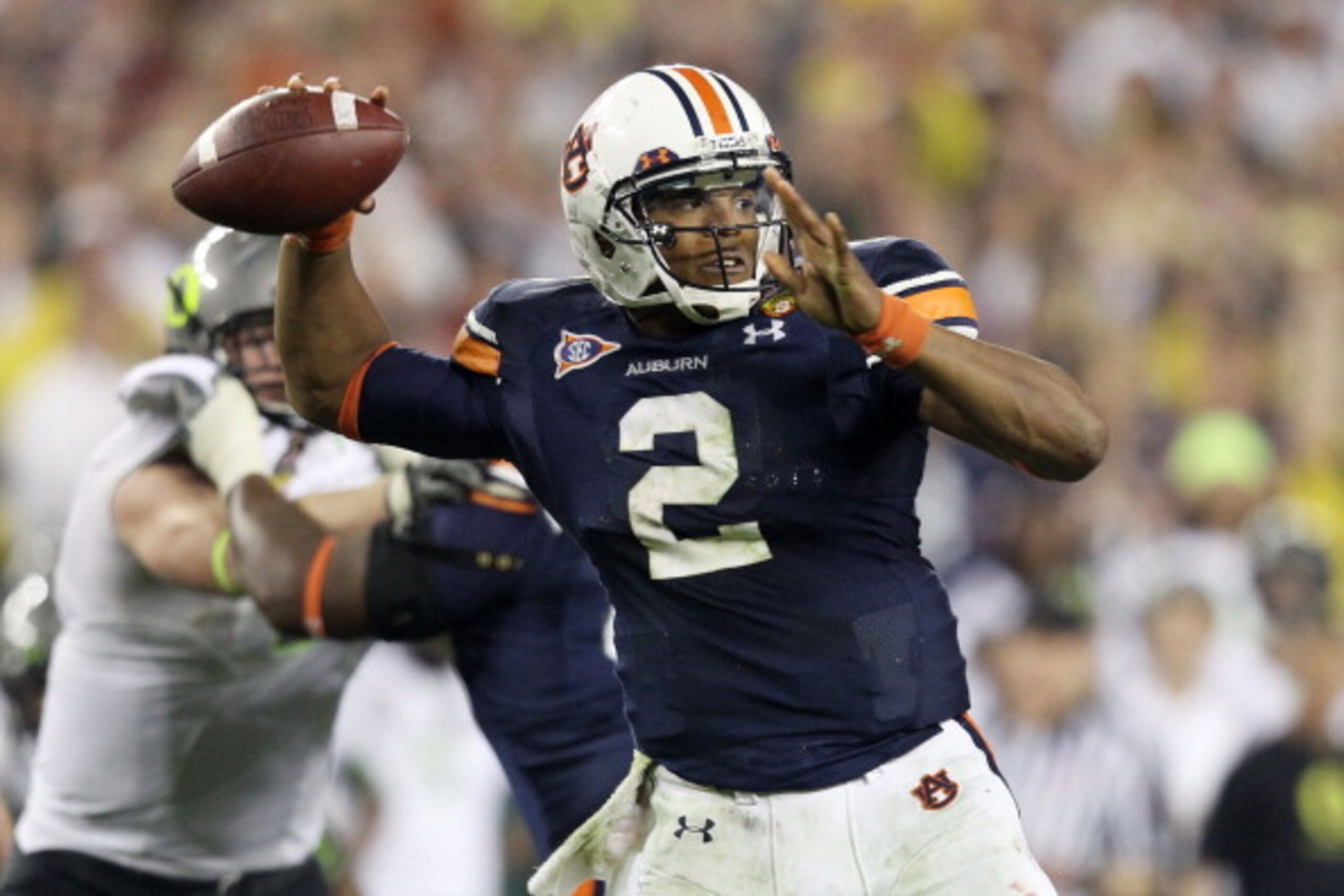
Height: 6'5" | Weight: 248 lbs | Auburn
Accuracy: Newton’s accuracy has taken criticism that he does not deserve. During the 2010 season he showed promising accuracy, but his inconsistency is what hurts his stock. Newton has the ability to hit any target, he just does not do it routinely right now. This points to a mechanics flaw, since he will sometimes miss on a pass that he made before under the same conditions. This is encouraging, as mechanics can be taught and refined.
Newton’s strengths right now are hitting backs out of the backfield on screens and his deep ball accuracy, which is actually among the best in the class. Has shown good touch on both long and short passes. Puts the ball in a catchable position on underneath routes and lets his receiver run to the ball.
Arm strength: Phenomenal arm strength. Has no trouble putting the ball over 50 yards in the air. Can make every throw you could ask of him. Unlike his accuracy, Newton shows great touch and understanding when throwing the long ball. Arm strength is top notch. Newton has thrown at least 70 yards in the air that we have seen—and that is during a game.
Athleticism/mobility: Has unquestioned athleticism. Was allowed to tuck and run at any time at Auburn. Can get outside the pocket and hurt a defense. Is not only fast, but has rare size for the quarterback position. Imagine Ben Roethlisberger with Vince Young’s speed. Does a nice job moving around in the pocket, freeing himself to throw.
Decision making: Has been asked to make at most two reads pre-snap at Auburn. Will need time to learn to read multiple fronts and coverages. He has the ability, but will need time and reps in practice to learn this. Some have questioned his Football IQ and ability to pick up reads, but Newton has never been taught these things. He’s a blank canvas in terms of IQ.
Field vision: Has enjoyed playing in a shotgun system that lets him stand back and read the field. Newton has little to no experience reading a defense, as he was fed his keys from the sideline. Must show better vision pre-snap. Keeps his eyes up and down field. It is hard to judge his field vision at this time, as he has only played in wide-open systems that have not asked him to make difficult reads or decisions. This will be determined in the NFL.
Mechanics: Does a nice job stepping up and through his throws. Needs to do a better job setting his feet when throwing short-to-intermediate throws. Has played in a shotgun-only system at Auburn, and also during his time as a backup at Florida. Has virtually no experience coming from under center. Will need his drop steps taught to him before any other work can begin.
Has a compact delivery and a good over-the-top motion. His delivery and release will not need work. He will fail to step in to passes at times, which results in an incomplete pass.
Pocket awareness/poise: His accuracy seems to drop off when forced to move in the pocket, which is somewhat surprising considering how athletic he is. Has good vision in-pocket while moving. Does not get scared or rattled by defenders flying around him. Great poise in the pocket.
Final word: A one-year starter for the National Champion Auburn Tigers, Newton comes by way of small Blinn College in Texas after leaving Florida instead of playing behind Tim Tebow for another year. At Blinn College, Newton led the team to the 2009 NJCAA championship game before signing with Auburn. Newton quickly asserted himself, rising to the position of starter and winning the Heisman Trophy in 2010.
All of this comes with controversy. As is well documented, there are allegations that Newton’s father Cecil offered a play-for-pay deal to Mississippi State, among other schools. Cameron was cleared of any wrongdoing by the NCAA, but the cloud continues to hang over his name.
It is undeniable that Newton is an electric athlete and leader at the position. Much like Michael Vick, Vince Young and Tim Tebow before him, there are questions not about his athleticism, but his ability to succeed long-term in the NFL as a pure passer. Newton’s production cannot be argued, he was simply fantastic during the 2010 season, but can he fulfill his potential? That is the question NFL teams will be left pondering this April.
Newton is, by all accounts, the likely top pick in the 2011 NFL Draft. While he is not ready to start at the NFL level as a rookie, the promise of his potential is too great to pass over.
15. J.J. Watt, Defensive End, Wisconsin
6 of 20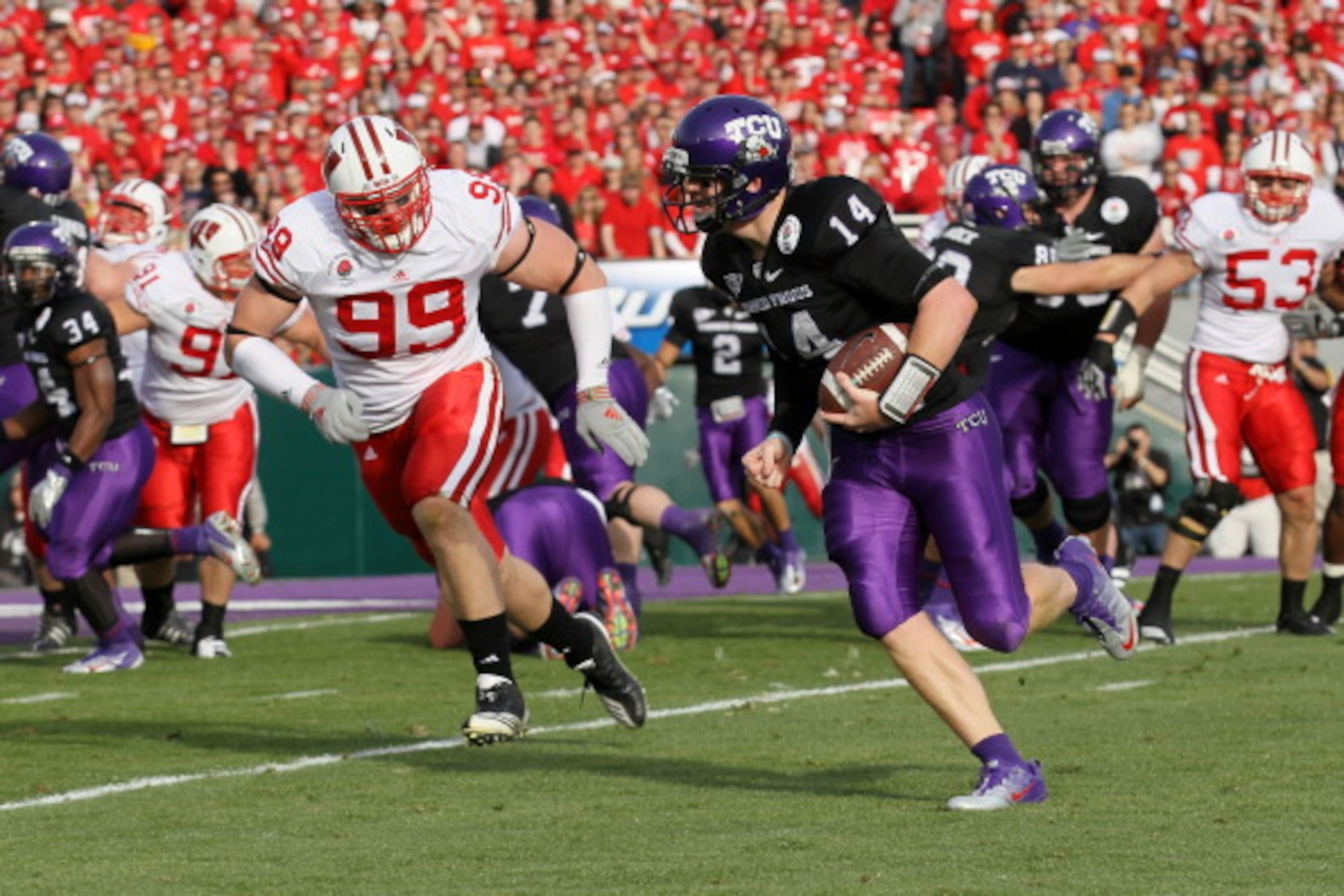
6’6, 285 pounds | Defensive end | Wisconsin
Pass rush: Watt is not a classically athletic player who will dominate the edge with blinding speed and flashy moves. He is a high-motor player with a relentless appetite for pressuring the quarterback. Watt was often double-teamed as a junior and saw his production drop because of it. Shows a nice swim move when working inside as a three-technique defensive tackle. As an outside defensive end, in a five or seven-technique, he is not a pass rushing threat. Watt excels at getting his hands up to defend the passing lanes and blocking the quarterback’s vision.
Pursuit: As mentioned above, Watt is a high-motor, high-intensity player who does a great job hustling through plays. He will attack and pursue. Has enough speed to chase from behind. His long arms allow him to catch runners from behind.
Quickness: Shows good initial burst and explosion off the snap. Does show a great first step that allows him to knock the offensive lineman off balance. In comparison to other defensive ends his quickness is not worth noting, but if you look at Watt as a defensive tackle or 3-4 defensive end he is impressive in this regard.
Run defend: It must be said that most consider Watt a five-technique end in the NFL. During his time at Wisconsin he did a great job against the run playing tackle and end. He is able to anchor against the outside run and can set the edge to force the run inside. Is very active and productive against the run. Has the agility to work down the line and get to the edge. Has the size to plug holes and force runners to pause. Will draw a double-team in run situations. Is ideal for the defensive end position in a 3-4 defense.
Strength: Watt has the strength required to handle double-teams and set the edge against the run. Could stand to gain muscle and overall strength. Has the frame to add 15-20lbs. Will get pushed off the line if a blocker gets in to his pads. Could improve strength with better understanding of leverage.
Technique: Overall, you have to be impressed when looking at J.J. Watt. He has the ideal size, speed and agility for the position. He does a nice job using his hands to break free of blocks. Has a nice inside swim move. Could benefit from adding 1-2 pass rushing moves. Has the size and strength to play inside on passing downs.
Final word: Watt began his journey to the NFL as a tight end at Central Michigan. After one season in which he caught eight balls for 77 yards, Watt transferred back to his home state of Wisconsin and walked-on to the Badgers football team.
Watt started all 13 games in his sophomore and junior seasons, progressing into one of the elite defensive ends in college football.
A junior entry to the 2011 draft, Watt is as NFL-ready as any defensive lineman in the class.
14. Anthony Castonzo, Offensive Tackle, Boston College
7 of 20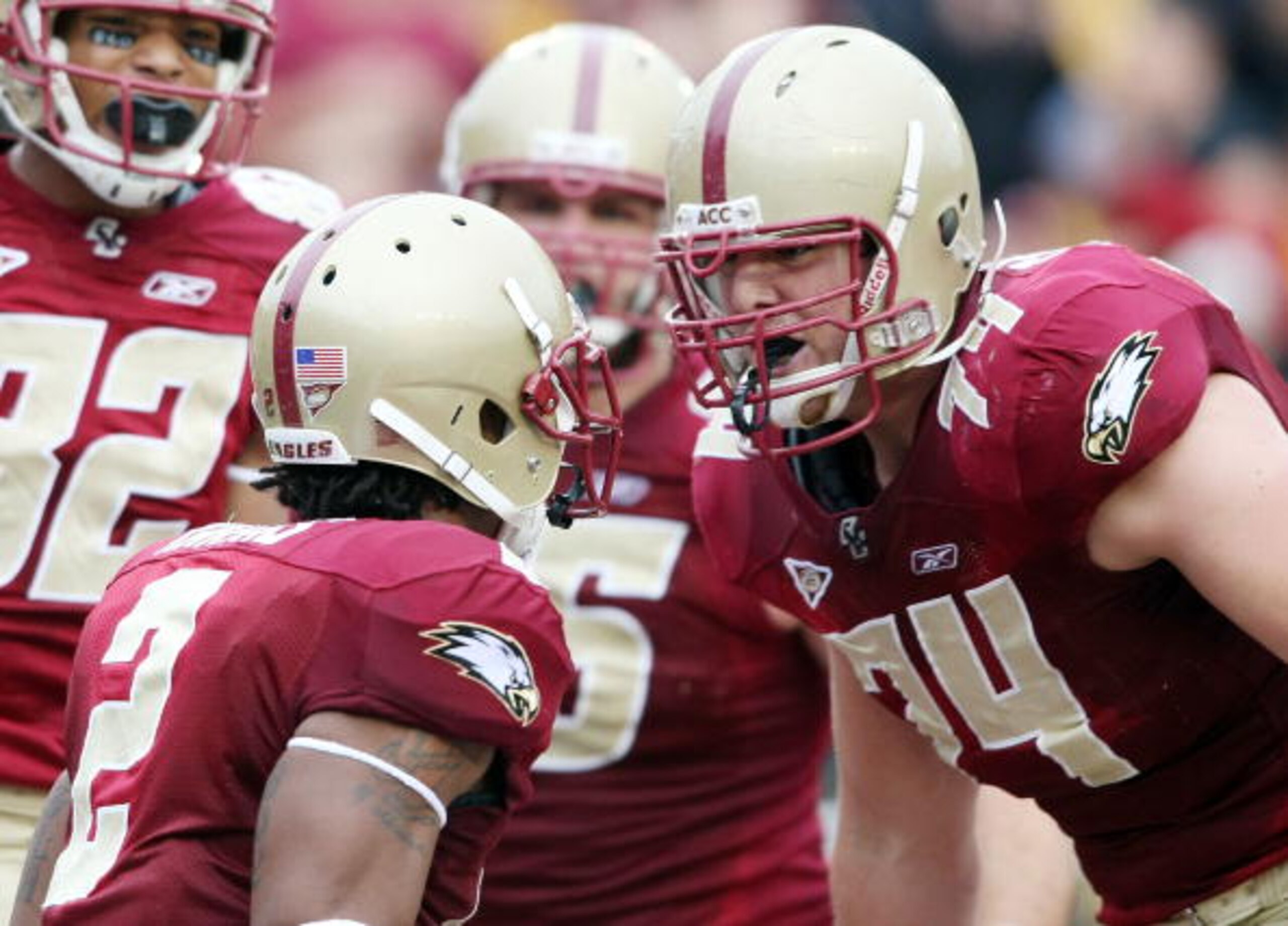
Height: 6’7" | Weight: 311 lbs | Boston College
Agility: Castonzo shows good initial quickness off the ball. Has fluid movement out of his stance. Does a nice job changing direction in drills and also on sweeps.
Movement: Shows very good speed, agility and balance to provide potential in space and when moving. Shows excellent effort in trying to get downfield or outside to execute a block. Castonzo has not been asked to move much at left tackle and could improve in this area with proper NFL coaching and strength training.
Pass blocking: Has good initial quickness out of a two or three-point stance. Does a nice job getting depth in his back-step and slides. Has pretty good balance and shows a nice shuffle from side-to-side in mirror drills. Has great length in arms and legs. Can show bad leverage at times. Needs to consistently bend at the knees instead of waist-bending when tired. May not be strong enough to hold up against bull rushes in the NFL.
Quickness: Has the quickness to jump out of his stance and set up against the edge rush. Can be turned by speed rushers and may see a move to right tackle because of this. Is very quick off the ball in run blocking.
Run blocking: Stuns defenders with his quickness off the ball and does a great job getting under the defender. Can lose leverage due to height. Does not sustain blocks for a long period of time. Can get too high and too wide in blocking. Could benefit from adding strength to his frame. Is a strong technician but needs to add physical strength to his game.
Strength: Here is one area where improvement is needed, but should come easily. Castonzo is simply not as strong as he should be. He has a frame that could carry another 20 lbs of muscle, easily. This will help in every facet of the game.
Technique: Will fire out of his stance a little high at times. Needs to become more flexible to better fire out and to maintain leverage. Has a nice punch and slide step. Shuffles his feet well and can mirror and slide well. He is quick enough to cut block or jump out to set the edge against a pass rush. Must do a better job using his long arms to keep pass rushers from getting in to his chest.
Final word: Castonzo holds the Boston College all-time record with 53 career starts—every game in his career. He also won the Scanlan Award, BC’s highest honor, after his senior season. Castonzo will be a high-class professional on and off the field. In him, an NFL team is drafting a high-character, hard-working player who may not have the high ceiling of other offensive tackles but also does not carry the risk either.
Castonzo should not see himself fall past the Colts with the 22nd pick in the first round.
13. Gabe Carimi, Offensive Tackle, Wisconsin
8 of 20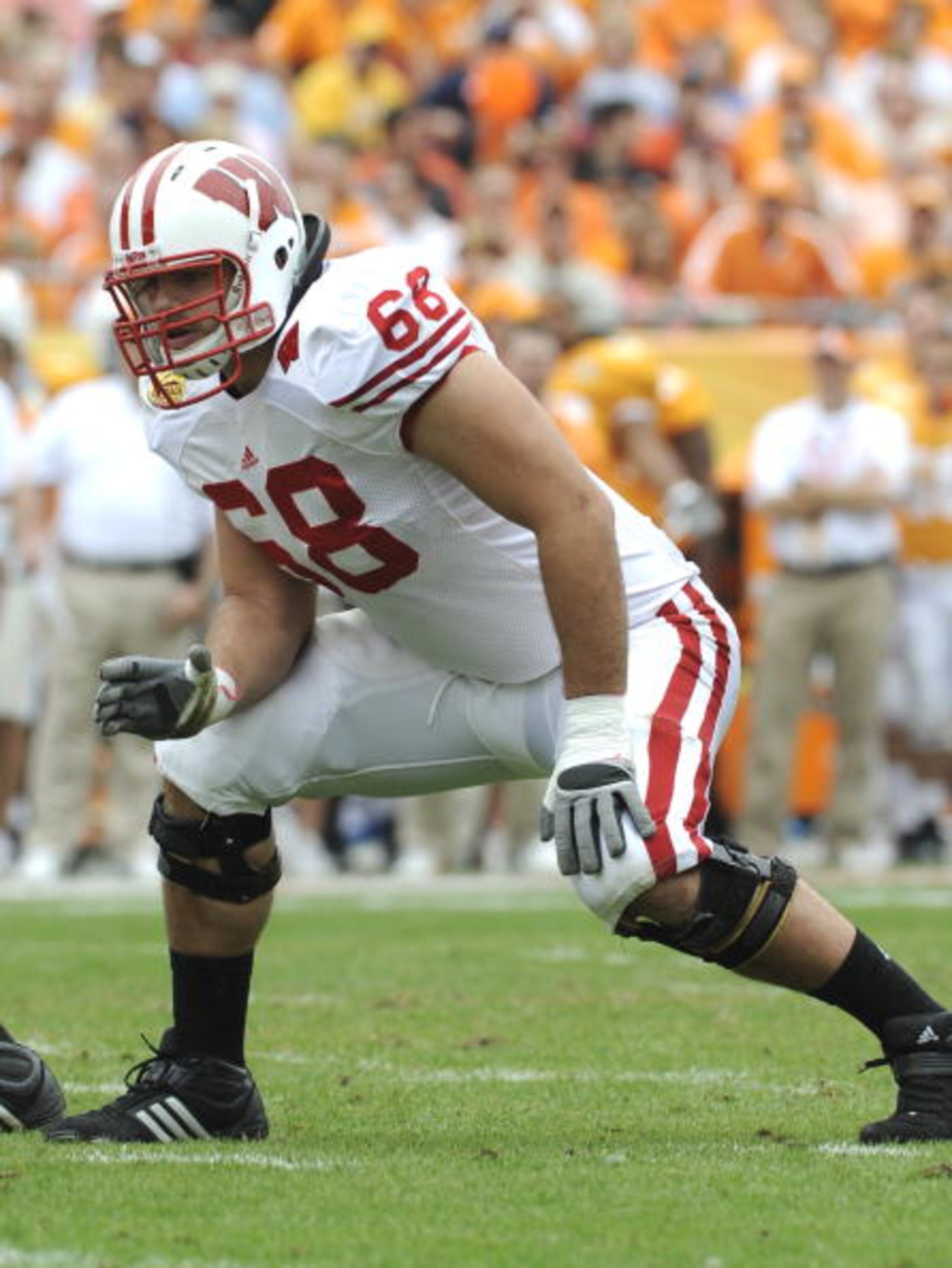
6’7, 315 pounds | Offensive tackle | Wisconsin
Agility: This is what makes Carimi more of a right tackle prospect. He’s fine on the left in Wisconsin’s power run offense, but has heavy feet and doesn’t move in space especially well. Can’t be relied on to get out and block on the move.
Movement: Tends to lose his balance too often. Must maintain a better base and get a more sound knee bend. When on the move, Carimi can lunge and miss a defender. Shows stiffness on his power step. Compensates for a lack of movement with power. Shouldn’t be used as a cut blocker.
Pass blocking: Needs to be more stout as a pass blocker. Typically strong against bull rushes, but was knocked around at times by Iowa’s Adrian Clayborn. The problem isn’t in power base, but he doesn’t always properly use it. Tends to let speed rushers get under his pads. Shows great instincts, due to his experience, to pick up counter moves.
Quickness: Is quick enough in the short area, but not long to the outside with his feet. Has quick hands to win hand placement. Doesn’t get his punch out quick to knock linemen around. Doesn’t recover especially quick.
Run blocking: Carimi’s strength is first contact with defenders in the run game. He gets off the ball pretty well and pops his opponents. Could do a better job finishing. He sustains fine but doesn’t always close out with power and aggression. Is more of a latch-on run blocker. Carimi doesn’t let go once he engages.
Strength: Carimi has NFL strength and should be able to be plugged into an offense immediately. Powerful throughout his frame. Has the strength to seal the edge.
Technique: Needs to maintain his base a little better. If Carimi can do that, he’ll do a better job against speed rushers. Gets good hand position.
Final word: Being the guy who had to follow Joe Thomas at Wisconsin was a daunting task. Carimi, while nowhere near as good as Thomas, has done well. He’s a power tackle best suited for the right side of the line. Carimi struggles some against speed rushers, but has good strength to anchor and seal.
Carimi is often viewed as a right tackle only, but we see him as a powerful left tackle prospect. Carimi has performed incredibly well against most of the top defensive ends from the 2011 draft class.
12. Da'Quan Bowers, Defensive End, Clemson
9 of 20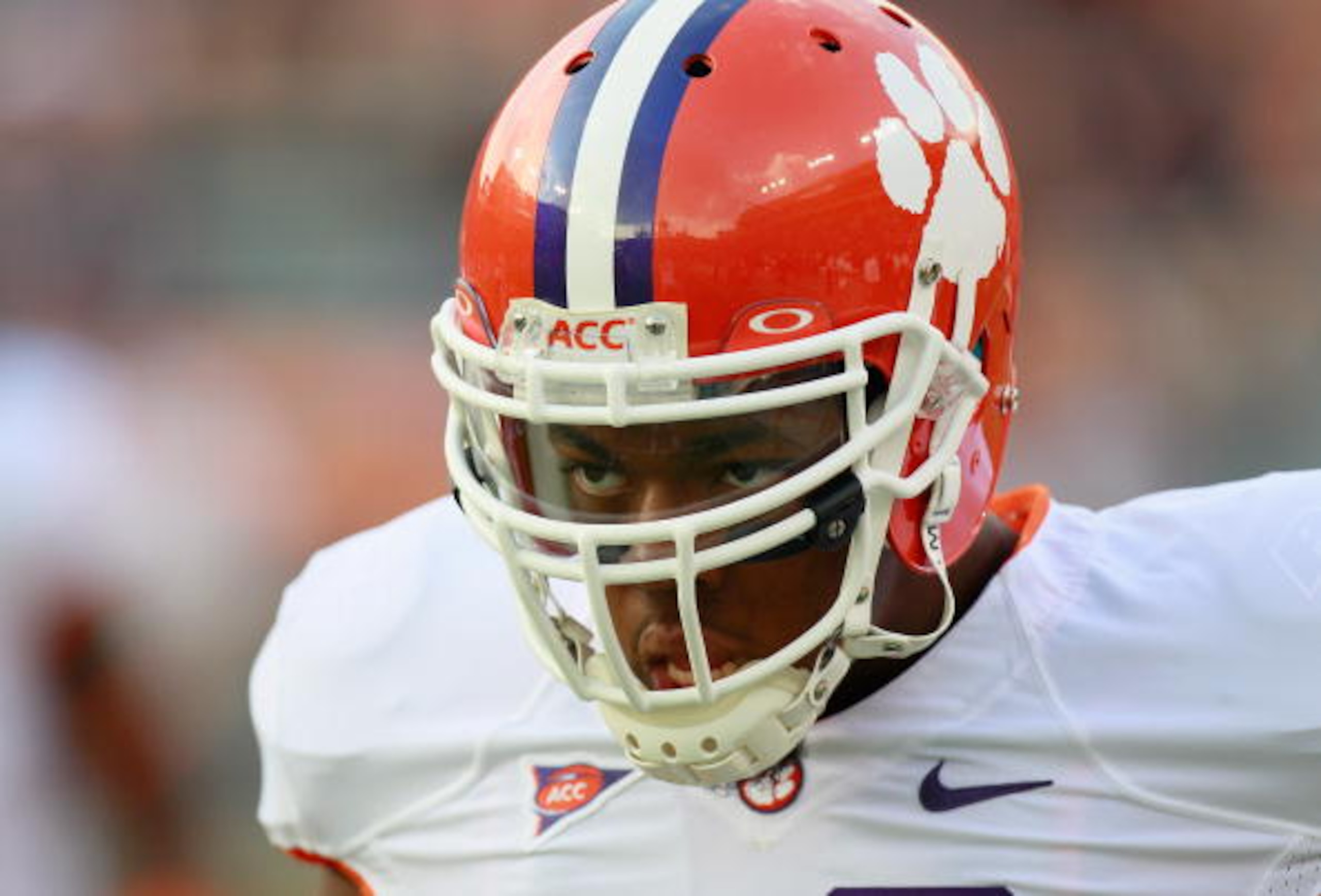
6’4, 280 pounds | Defensive end | Clemson
Pass rush: Bowers has a good burst off the line that he turns into power. Shows good snap anticipation. By far the best bull-rushing defensive end in this year’s draft. Has impressive power to move offensive linemen backwards. Effectively uses a swim to get past linemen. Doesn’t really use other pass rush moves other than the swim.
Pursuit: Is very good in pursuit, especially against the run. Shows good range to make plays on the backside. When Bowers gives full effort, he works hard to the ball. Had some lapses as a junior where he throttled his play down.
Run defense: Is a powerful defensive end who can get low to stop the run. Is better working the run to the inside than the outside. Still, Bowers mostly bull rushes and works to keep outside contain. Has lined up at tackle and has the power to beat guards when he stays low.
Strength: Here is one of the main areas that makes Bowers ready for the NFL right now. He shows the strength to bull rush offensive linemen backwards and at times demands double teams. Has some trouble against double teams, especially when he’s not low. Got to show off his power plenty as a junior when Clemson used him as a 3-technique to pass rush from the inside.
Tackling: Can be an explosive hitter when he reaches the ball carrier. Has the strength to knock the ball loose on tackles. Changes direction pretty fluidly to keep up with shifty runners.
Technique: For Bowers to succeed he has to get leverage. At times in 2010, though, he often came out of his stance too high, allowing linemen to get below him. While Bowers doesn’t get driven backwards, he does get held up. Has good hand usage to fight off linemen, though. Rarely gets in trouble against counter moves.
Final word: Not a lot of true defensive end prospects have Bowers’ blend of strength, size and quickness. Make no mistake, he’s the kind of 4-3 end that a team can plug in for years to get pressure on the quarterback. Bowers can also shift inside in nickel situations and is strong and instinctual enough to handle draws.
The most obvious comparison for Bowers is former New York Giants end Michael Strahan. Bowers isn’t quite as boisterous as Strahan, but he’s similar in playing style. Bowers has a good burst off the snap and turns that burst into power.
His main move is a straight forward bull rush with a swim, just like Strahan. You might not get a lot of double moves or spins out of Bowers, but he doesn’t need them.
Bowers was highly recruited out of high school but was considered an underachiever until 2010. A knee injury that essentially knocked him out of three games slowed his progress as a sophomore. But he finally delivered as a junior. He came into the year in much better shape and finished with 15.5 sacks and 26 tackles for loss.
Offseason knee surgery has hurt Bowers stock, but recent reports are that he will not require microfracture surgery and should not have any lasting effects.
11. Tyron Smith, Offensive Tackle, USC
10 of 20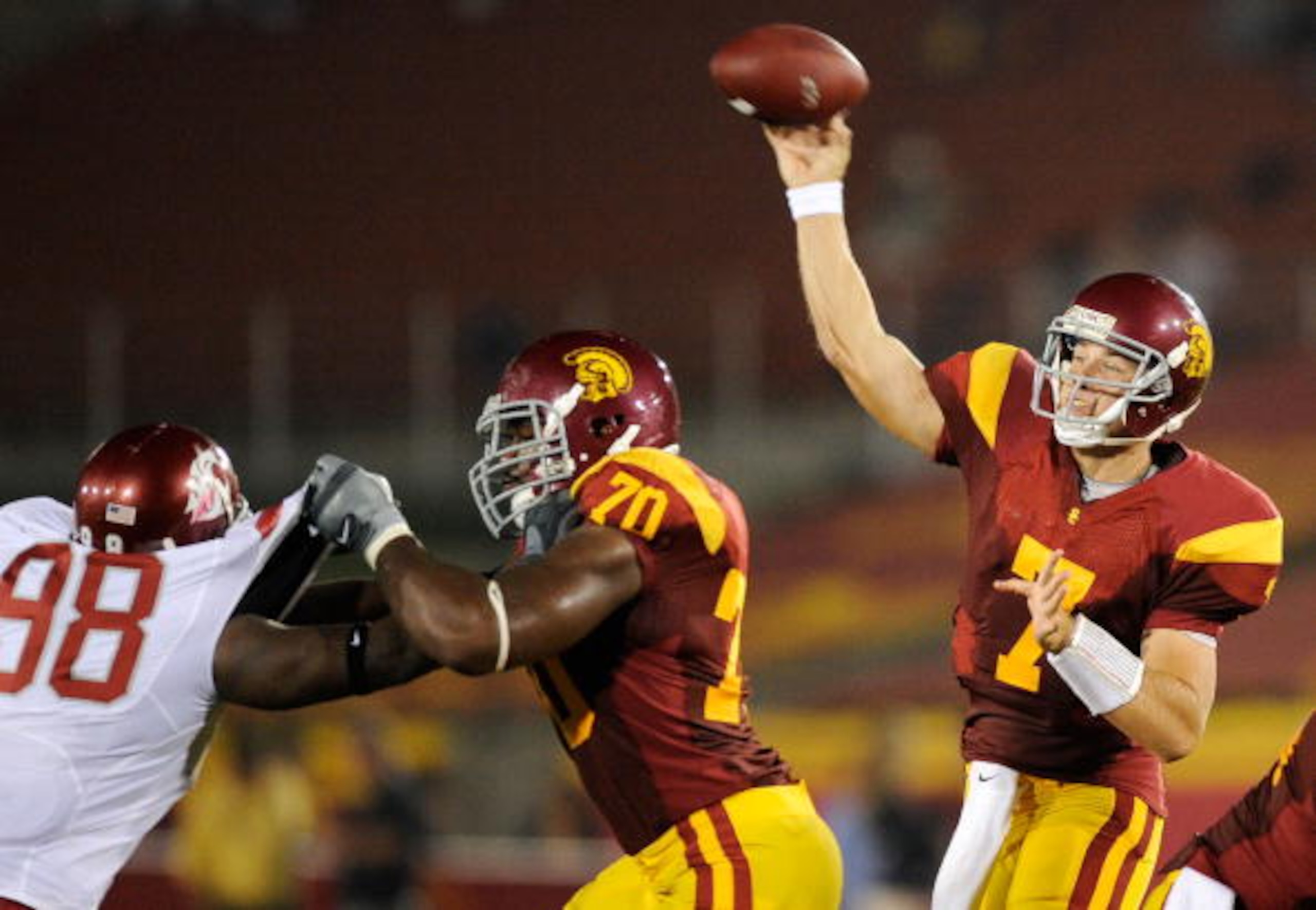
6’5, 280 pounds | Offensive tackle | Southern California
Agility: Because of his athleticism, Smith can slide his feet with ease. He appears very loose in the hips and has no problem changing direction. Knows how to use his agility to slide, adjust and reposition to stay in front of defenders. Shows good flexibility to absorb a defender’s power move and continue working.
Movement: Is a top athlete for an offensive tackle. Moves around with ease and doesn’t get ahead of his feet. Used in the second level blocking on screens. Gets to the second level fine but doesn’t locate defenders especially well. Will often whiff. Still, Smith has shown hustle and usually finds another way to help block down field.
Pass blocking: Gets a good base in pass protection. Has long arms but has an inconsistent extension. Has a very good kick slide to the right. Smith doesn’t get too wide but he maintains his area because he has quick feet. As Smith gets stronger, he’ll more easily handle power rushers. Against speed rushers, Smith does really well when he can continue riding them to the outside.
Quickness: Very good quickness off the snap. Plays out of a two-point stance. That combined with his quickness helps Smith get in position faster than defenders. Uses his foot speed to mirror defenders.
Run blocking: As a junior, has played in a zone blocking scheme at USC. Because of that, he’s not had to drive block much. But judging by his frame, Smith should get stronger in his lower body to anchor. Even though he comes out of his stance high, Smith typically keeps his pads low. Doesn’t have the best initial hand punch. Can be inconsistent where he drives into a defender.
Strength: This is where Smith needs to get better. He’s bulked up 20 pounds since entering college but needs to continue adding strength throughout his frame. When he’s asked to drive block in the run game, he’ll struggle moving defensive linemen around. Still, Smith gives very good effort and it takes a lot for a defender to beat him purely with a bull rush.
Technique: The biggest technical flaw on Smith is his hand placement. Smith’s hand speed is fine but he doesn’t always get proper placement. Where he needs to improve is extending his arms. Too often Smith lets defenders get into his frame and push him around. Footwork is technically correct and rarely makes a misstep.
Final word: Smith is starting to gain a lot of attention as an offensive tackle prospect. He’s an easy player to fall in love with. He has a long, lean frame and is athletic. Smith gets out on the move as well as any offensive tackle you’ll see and is loaded with potential.
However, Smith is only in his second year as a starter. He’s only been a reserve as a left tackle and spent more time on the right side. He’s up to about 280 pounds and came out of high school at 265. His power and weight gain has been impressive, but he’ll need to add at least 10 more pounds.
Smith would likely find himself in the first round of the 2011 NFL Draft and could be drafted as high as No. 9 overall to Dallas.
10. Cameron Jordan, Defensive End, California
11 of 20
Height: 6’4" | Weight: 282 lbs | California
Pass rush: Jordan has shown over his college career a full assortment of pass rushing moves- putting him ahead of his competition at defensive end. His best, and most used, move is a power slap to the blocker with a swim move over the top. Jordan has shown a nice spin move when baiting the offensive tackle outside. Despite his size Jordan is not a power rusher and should not be considered as much. He is a complete defensive end.
Pursuit: Jordan shows good quickness off the snap with good timing and anticipation. He is fairly strong in pursuit. While Jordan doesn’t move laterally as well as other ends, he does have the flexibility and balance to track down the line of scrimmage. He can be a little stiff in the hips on his movement. Jordan gives a good effort overall and is known as a hard-worker.
Run defense: Very stout against the run. Jordan is a big, strong end who keeps a good base against the run. Since he’s hard to move around, Jordan is a natural lane closer. Run defense isn’t always evident on the stat sheet. Often pushes the lineman back into the pocket to slow down the ball carrier, which allows teammates to make the tackle. Has the quickness to get outside to contain the edge.
Strength: Jordan is NFL-ready in the strength category. He’s powerful enough to hold the edge and consistently close rushing lanes. Strong enough to beat double teams, as long as the second blocker doesn’t go low. Will lose some of his strength advantage by getting high in his stance.
Tackling: Because Jordan is so strong, he’s a devastating tackler. When he can wrap up, the play is over. Where Jordan could do better here is keeping his knees bent and when closing in the short area. Is the kind of power tackler where you wonder if he’s hurt the ball carrier.
Technique: As good as Jordan is, he has some technique flaws. Most notably, he’ll let offensive linemen get inside him for contain. This allows linemen to work him inside into the trash, knocking him out of the play. Jordan will tend to engage only once on a blocker and not make a second move. Could do a better job of guarding his feet from blind side blocks.
Final word: Jordan has proven time and time again that he is among the elite players in the 2011 NFL draft class. Teams have worked him out at defensive end, defensive tackle and even outside linebacker. He is the type of rare athlete who will quickly find a home in an NFL starting line-up.
9. Blaine Gabbert, Quarterback, Missouri
12 of 20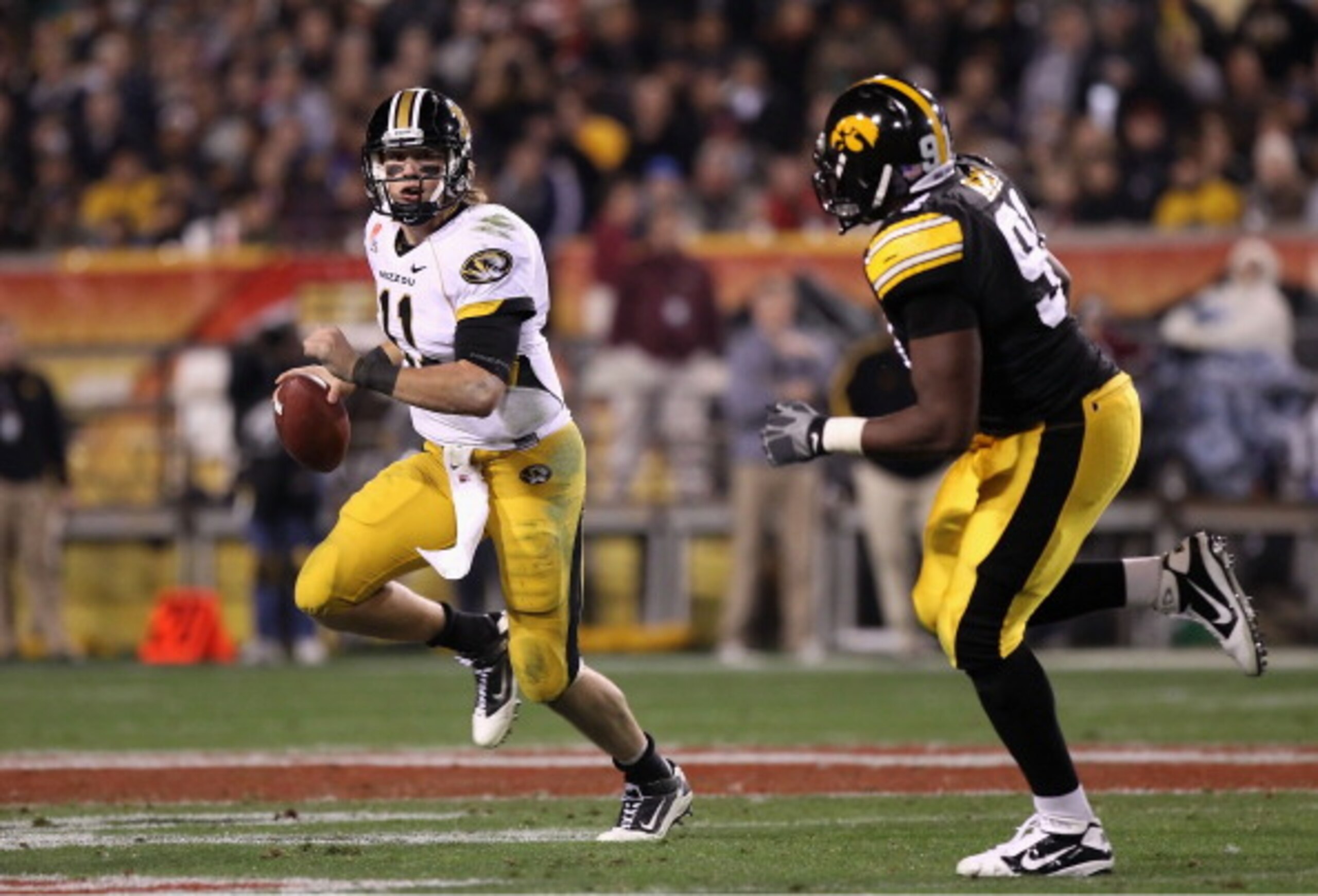
Height: 6'4" | Weight: 234 lbs | Missouri
Accuracy: Gabbert possesses good accuracy with a 63.4 percent completion percentage as a junior. It’s not quite the 70 percent number typically seen from many quarterbacks in similar systems, but Gabbert’s accuracy from the pocket is a plus. It’s especially good on deep throws where he has to place the ball in tight locations. Showed improved deep ball accuracy in 2010. Can place the ball right over the receiver’s shoulder in stride.
Arm strength: Has an exceptionally strong arm that helps him complete passes to all areas of the field. Throws a quick, tight spiral on shorter routes but doesn’t try and laser the ball through his receiver.
Athleticism/mobility: Gabbert has shown plenty that he’s more mobile than his size may indicate. Obviously he’s not Jake Locker, but that’s not a bad thing. Gabbert has the maneuverability to not only get around in the pocket, but pull the ball and run. Sometimes, though, he is too quick to bail on a play and try to make something happen with his feet. Also runs into trouble trying to throw after he commits to running.
Decision making: Coming out a spread system, Gabbert doesn’t have to make a lot complicated decisions with the football. Particularly, he doesn’t make his own check downs at the line of scrimmage. While you don’t expect a college junior to be Peyton Manning pre-snap, you have to wonder how well Gabbert will be able to go through his reads. Will he be able to tell when a safety is faking a blitz only to drop back or if a lineman is working in zone blitz coverage underneath?
Field vision: Is typically asked to go through only one read in the Missouri system. Will need a lot of training camp and practice repetitions to improve this flaw. However, when that one read is open, he can hit it. Has carved defenses up with pro-style nine routes and crosses. Will need to do much better trusting his check downs instead of looking for the deep ball. Gabbert’s draft placement may hinge somewhat on how he interviews and breaks down plays for coaches on the dry erase board.
Mechanics: Gabbert’s release is just as quick as any quarterback in this year’s draft class and perhaps his best asset. It’s a compact, fluid motion that doesn’t windup. Will likely need to refine his drop back since he’s taken a majority of his snaps from the shotgun. Got better with his footwork as a junior, but needs more consistently plant his feet when he throws.
Pocket awareness: This is where Gabbert will need to improve. He doesn’t have the best poise when he feels the rush around him and will start moving his feet around him. Needs to trust his linemen more and sit back in the pocket. At the same time, there were occasions in games this year where Gabbert held the ball too long and got sacked. The bottom line here is that he has to improve mental clock of when exactly he needs to release the ball. With his quick throwing motion, Gabbert could be a star if he rectifies this area of his game. Played in a system with a long line using deep splits.
Final word: As a pocket passer, Gabbert is loaded with potential. The first noticeable thing about Gabbert is his size. He maybe a legit 6'5" and has and NFL frame at 235 pounds. His arm strength is at a top level, he gets great ball placement and his throwing motion is crisp and sound. Some of the bigger concerns about Gabbert—coming from a spread where he doesn’t have to make many reads—are disconcerting but coachable. Because of that, Gabbert may be the kind of quarterback who is taken in round one but could be better served with a year as a backup.
Finished his career with 6,822 passing yards and 40 touchdowns. Won 18 games over his final two seasons. Was a backup as a freshman behind Chase Daniel. As a junior, ran for 232 yards and five touchdowns.
8. Julio Jones, Wide Receiver, Alabama
13 of 20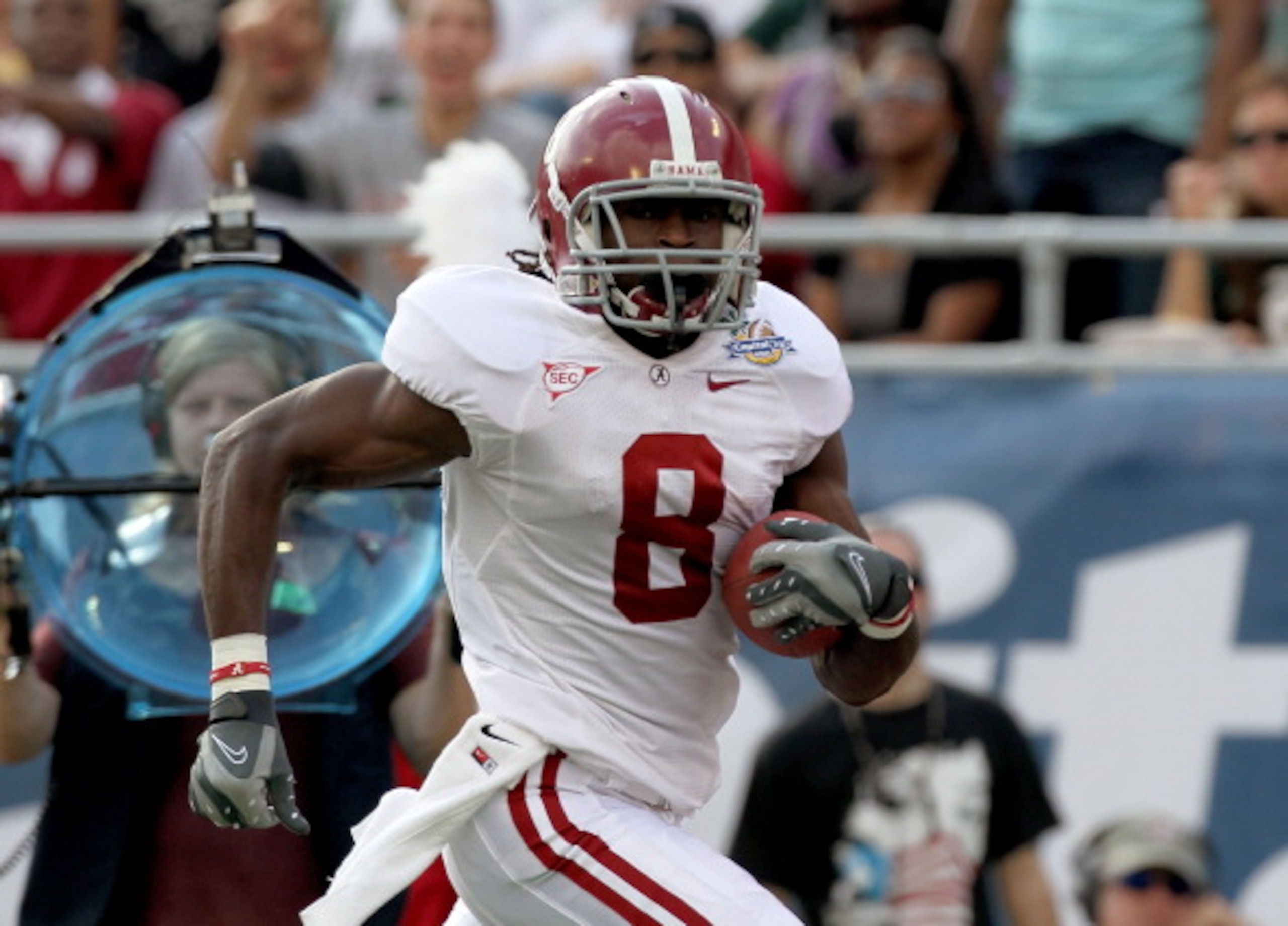
6’4" | 220 lbs | Alabama
Acceleration: Jones is a long strider and not a burst type receiver when you view him on film. In workouts, Jones is something else. Jones is a speed demon on the track, but this doesn't show up in pads. Must work to play at 100 percent and not take plays off or hold back. He has shown the elite speed and acceleration to dominate on the outside.
Agility: Jones is a natural athlete with good balance and body control. His burst has improved each year at Alabama and will become more of a threat once he is fully healthy.
Blocking: Surprisingly, Jones is one hell of a downfield blocker. In the Alabama offense, where running the ball was a priority, Jones had to become a good blocker. Uses his long frame to lock up defenders, but also runs off corners and sells play-action.
Hands: Jones can be too inconsistent here, which is one of the few attributes separating him from top wide receiver A.J. Green (Georgia). Lacks concentration. Some drops are caused by him tensing up before taking a hit from defenders. Will let the ball get into his body too often. Does make the occasional catch that blows your mind.
Release: Has a very good initial release off the line of scrimmage. Very good size and strength combination to fight off press coverage. Has big hands and long arms to swat away defenders who line up in zero coverage. Is not a quick-twitch athlete with a ton of burst, but he has exceptional speed and lateral mobility to avoid jams at the line of scrimmage. Gets off the line and in to his route fast. When given a cushion by the cornerback, Jones will exploit them every time.
Route running: Jones was very raw as a route runner, but has shown loads of improvement over the last year. Does a great job sinking his hips to make cuts and get in and out of breaks. Does not have the speed to plant and explode, but makes up for this with precise cuts and timing. Can get sloppy at times and will round off cuts. Will get too high at times in his breaks, making the route easy to diagnose by defenders. A very dangerous deep threat.
Size: Jones has ideal height, muscle tone and strength. He has long limbs and big hands. A lean frame, but surprisingly strong.
Speed: Jones surprised us all by showing sprinter speed at the NFL Scouting Combine. On film he is a long strider who takes time to get to full speed. He does have the speed required to run by defenders once he is given room to accelerate. Runs very well after the catch due to good agility and acceleration when he has the ball.
Final word: In any other year, Julio Jones would be the No. 1 receiver on our draft board. In 2011, he has to compete with A.J. Green in a fight he will not win. Jones should be lauded for his exceptional play at Alabama, and for his many talents as a receiver.
A fighter, Jones has played through injuries and will run routes across the middle with no fear. A dominating deep threat and downfield blocker, Jones will bring immediate value to any NFL team.
Jones projects as an early first Round pick, and could hear his named called anywhere from pick five to 20 in the first round.
7. Prince Amukamara, Cornerback, Nebraska
14 of 20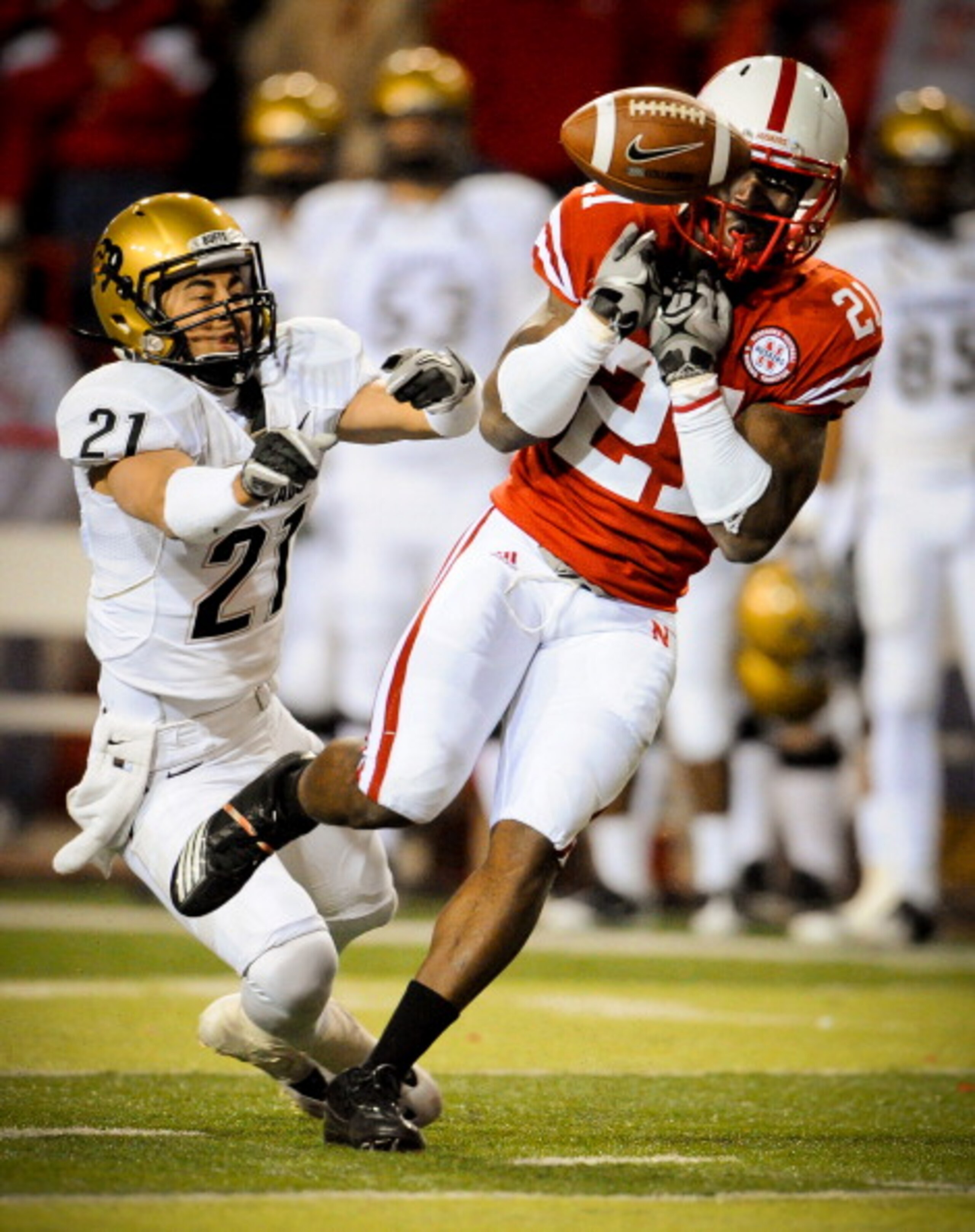
Height: 6’1 | Weight: 205 | Nebraska
Agility/Hips: A converted running back, Prince shows great flexibility in his hips and top-notch agility. He has the ability to change direction quickly. Is able to chop his feet to change direction. Flips his hips quick and effectively.
Ball Skills: Plays the ball well. Able to locate and track the ball. Plays mostly with his back to the quarterback, but shows an ability to flip and find the ball. Five interceptions in 2009 may seem minor, but few teams challenged Amukamara, so this number is much more impressive.
Body Control: Has the balance and quickness of a running back. Shows great foot speed and burst. Very balanced and aware of his body. Able to adjust to the ball in flight. Very impressed with his ability to shuffle his feet and sprint.
Instincts/Recognition: Although under-experienced, Amukamara’s instincts are top-notch. Has a good ability to read the receiver and jump routes. Anticipates the route well. Reads the quarterback when given the chance to play with his face to the passer.
Man coverage/turning ability/press skill: Very good at re-routing receivers. A physical corner, Amukamara is at his best in man coverage. Excels at bump and run against college receivers, but may not be as dominant against NFL-level receivers. Shows a good press at the line. Is quick enough to recover if his press fails. Detractors will point at the excellent Nebraska pass rush and the fact that Amukamara was not asked to hold his coverage for long periods of time.
Pursuit: Very able and willing, but this is one area where his lack of elite speed does hurt. Will not catch receivers or backs from behind. Could benefit from taking better angles down field. Comes up to attack the run well and racks up tackles in run support.
Speed: Is more quick than fast. Great in short bursts, but may be outrun by receivers. Fortunately he is able to use his vision, strength and agility to contend with receivers.
Tackling/Run Support: An able and willing tackler. Not afraid to play in the box and attack the line of scrimmage. Has been used on corner blitzes and shows great natural instincts when closing on the ball. He actually had two sacks during the 2009 season.
Zone coverage: Shows the skills to excel in zone coverage, but has not been used much as a zone cover man. Is tall with long arms, which enables him to reach the ball at its highest point. Has the footwork to sink into coverage, and the quickness to recover and come up to the ball.
Final Word: Only a two-year starter at Nebraska, he does not have the experience of other top cornerbacks in the class. However, Amukamara has more talent than those players. Although somewhat untested, he has gone up against top wide receivers in the Big 12 and is plenty battle tested.
Given the top grade by National scouts during the preseason, Amukamara did not live up to his hype in 2010, as opposing teams all-but ignored his side of the field. The statistics may not show an improvement, but Amukamara remains one of the most solid cornerbacks scouted this season.
6. A.J. Green, Wide Receiver, Georgia
15 of 20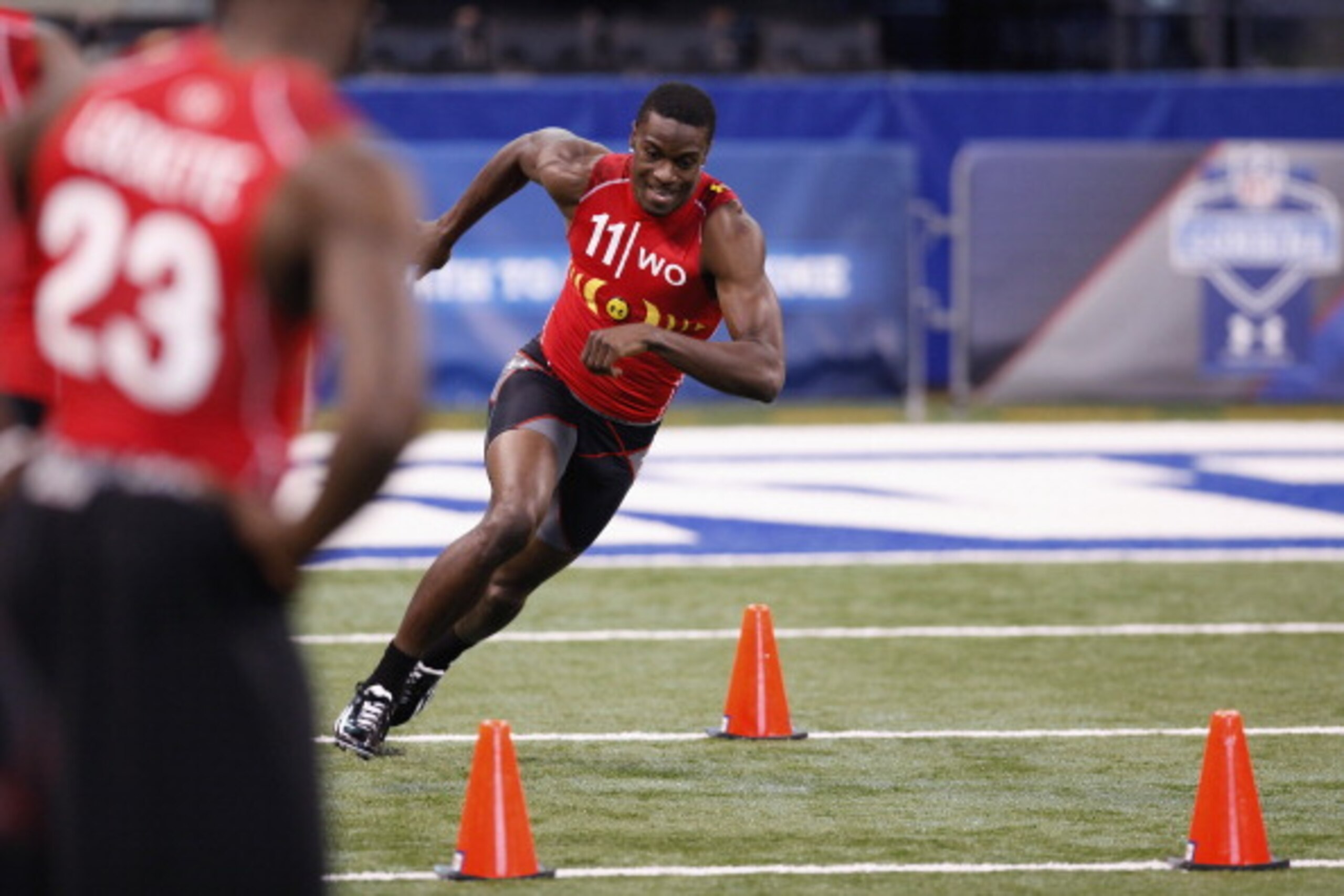
Height: 6’4″ | Weight: 212 lbs | Georgia
Acceleration: Very good acceleration. Surprisingly has the burst, at his size, to run away from cornerbacks off the line of scrimmage and once he makes a catch.
Agility: Very good agility, as expected. Shows good balance, lateral quickness and an innate ability to understand where and how to manipulate his body to make catches. Green will score very well in short-shuttle and 3-cone drills at the Combine and/or Pro Day.
Blocking: Green lacks the strength to be a dominant, Hines Ward-type blocker. He does have good size and length, though, and can mirror and block out defenders. Can improve in this area.
Hands: The one thing that stands out most about Green are his hands. At 6’4″, Green is blessed with long arms and big hands. Routinely makes one-handed catches in traffic. Great body control to put himself in position to make the impossible catches. Does not let the ball get in to his body. Great arm extension when making a catch. Appears to catch the majority of balls with his fingers and not his palms. Green is among the most sure-handed receivers ever scouted by our team.
Release: Very quick off the line of scrimmage. Great hand speed. Shows a consistent ability to knock away defenders hands when attempting to bump or press. Has a quick side/back step to avoid being jammed. Does a good job mixing up his method for beating press coverage, whether it is a hand slap or lateral move to avoid the defender. Accelerates well once free of the defender. Gets off the line very clean against press covers.
Route running: An underrated route runner by most standards. Has quick feet and does a nice job selling routes. Drops his hips to make sudden changes. Shows a good ability to plant and change direction. Unlike most big receivers, Green does not try to simply box out cornerbacks. Is a disciplined route runner. Very good burst in and out of breaks.
Size: Excellent size for an NFL wide receiver. Has the height, length and hand size every scout loves to see. Good muscle tone. Very lean and long.
Speed: Has the speed to separate from even the fastest cornerbacks. Not only does Green have great timed speed, his quickness on the field is exceptional.
Final word: Green may have missed seven games over the past two seasons, but he has left his mark on the record books at Georgia. Missing time due to injury and then a suspension would leave a negative mark on most scouting reports, but Green is simply too good to overlook or downgrade for minor issues.
Green’s combination of size and strength remind many, us included, of former Miami Hurricane Andre Johnson. Johnson was the No. 3 overall pick in the 2003 NFL Draft. A.J. Green could hear his name called even earlier.
Few rookies will have the opportunity to contribute as quickly as Green, and perhaps no player in this draft is better suited to play in the NFL immediately.
5. Robert Quinn, Defensive End/Outside Linebacker, North Carolina
16 of 20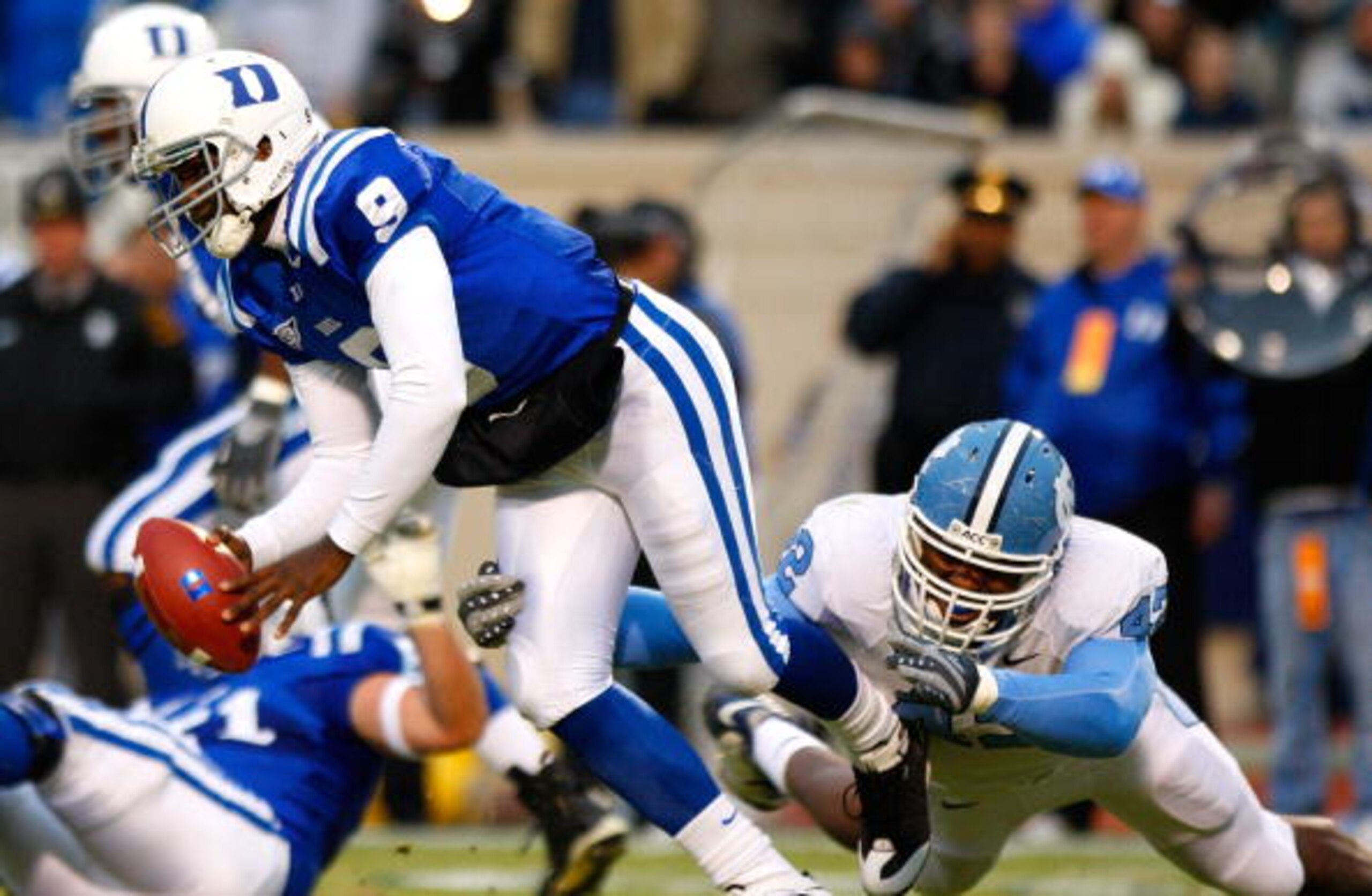
Height: 6’4" | Weight: 270 lbs | North Carolina
Pass rush: Shows signs of being a very good edge rusher. Is very good at getting his shoulder down, bending his knees and working around the outside. Lined up at every game in 2009 at right end, which is impressive for a sophomore. Needs to develop a counter move to go with a terrific outside rip move.
Pursuit: Has shown the agility to move around and isn’t just a straight forward pass rusher. Doesn’t look stiff in the hips and is flexible in the torso. Plays with a lot of effort, so pursuit isn’t a question. Has the kind of quickness to break to the outside to beat offensive tackles to the inside.
Run defense: Gets off blocks well, which helps him against the run. Outstanding short area quickness that helps him fire through to the tackle. However, Quinn needs to get stronger to better handle the run. Is better working the edge instead of standing his ground and driving his legs. As mentioned, he has the lateral movement to get outside and make plays.
Strength: Possesses decent strength. Doesn’t have tight skin, but consistently jolts blockers with his first hand move. Sheds blocks especially well with an arm swipe. Still developing in this area and has the frame to get much stronger. Can be easily washed out by double teams.
Tackling: Explosive on contact, as evidenced when he had an nasty effort sack against Duke in 2009. Better tackling in the open field than most college defensive ends. Does a nice job of sinking his hips and firing through the ball carrier. Gives a great effort at all times.
Technique: Quinn gets so much pressure because of his leverage and hand usage. He does really well dipping to the outside and quickly disengaging.
Final Word: Robert Quinn is an incredibly hard prospect to judge. When he’s played, he’s played well. But he’ll have sat out a whole year after the NCAA ruled him ineligible for accepting $5,642 in benefits from an agent. Still, it’s hard to look too negatively at a player who had 19 tackles for a loss and 11 sacks as a sophomore in 2009. Quinn showed he has the talent as a pass rusher to be worth a top 10 pick in the 2011 NFL Draft. His quickness is very good and he has an uncanny ability to get around the corner after the passer.
Some teams may have medical concerns about Quinn. In high school, he was diagnosed with a brain tumor. Even though doctors told Quinn his playing career may be over, he persevered. One thing that can’t be questioned about Quinn is his effort. He’s a classic to-the-whistle player and gives a great second effort.
To stay as a 4-3 end, Quinn needs to get stronger to help support the run. But he showed in 2009 that he has the athleticism to move to outside linebacker in a 3-4 system. Gets compared to DeMarcus Ware of the Cowboys, but isn’t quite as complete of a player. However, he has the upside to get there. Offseason workouts will be huge for Quinn.
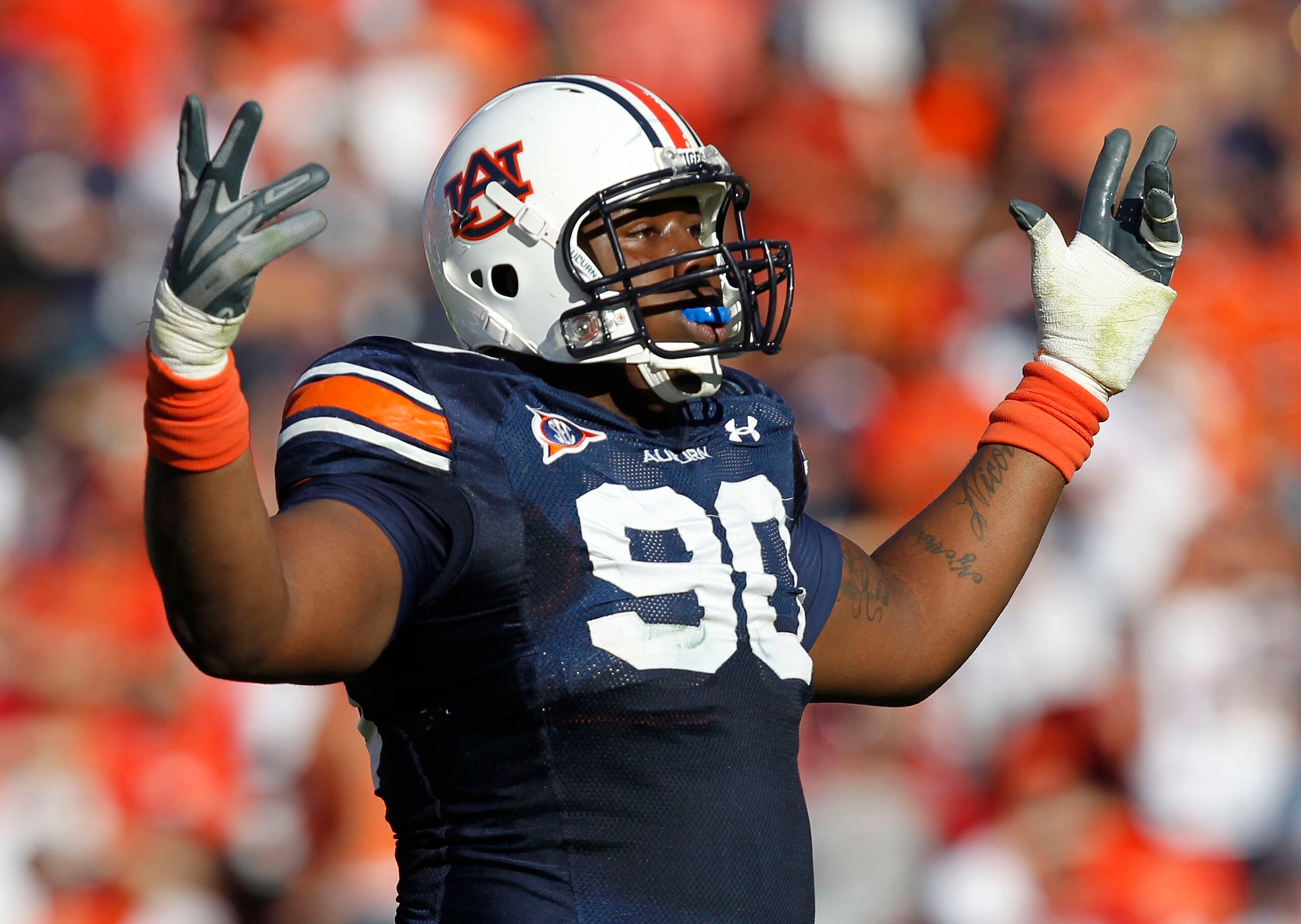
4. Nick Fairley, Defensive Tackle, Auburn
17 of 20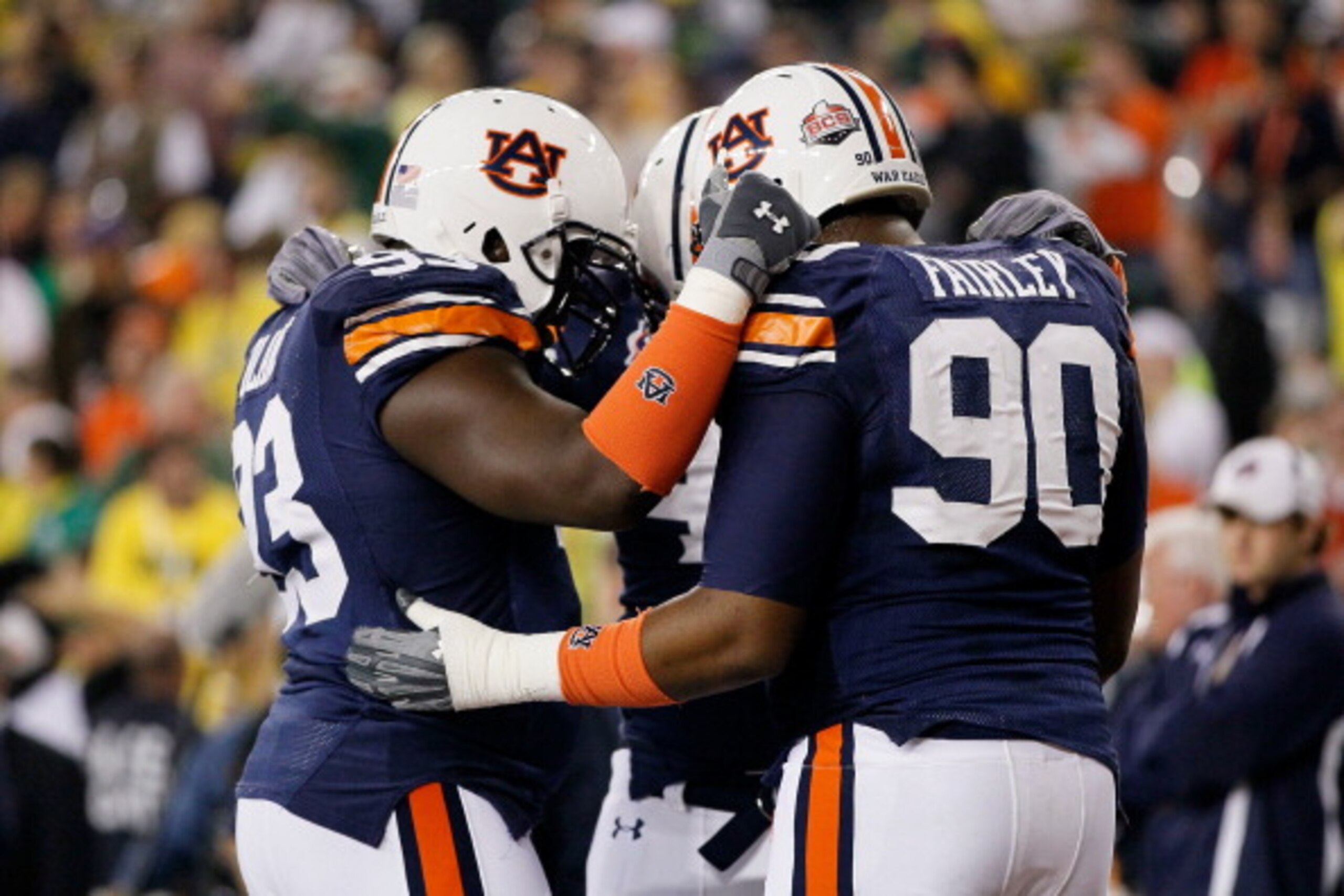
Height: 6’5" | Weight" 298 lbs | Auburn
Pass rush: Fairley is the premier one-gap defensive tackle in this year’s class due to his ability shoot the gap and get after the passer. Fairley finished 2010 with 12 sacks, including three in a standout performance against LSU. Most of his big plays come off the swim move. Has quick hands to get his arm over the blocker. Closes in a hurry and with aggression.
Pursuit: Is a player who is almost always on the move toward the ball carrier. Has the athleticism to move all around the line. Despite being somewhat limited in experience, Fairley shows good run/pass recognition. When Fairley plays with a lot of effort, he can move all around the field to make a tackle. But some question if Fairley always gives full effort on every play. As sensational as he is on some plays, Fairley can be completely non-existent on others. It’s an issue that Auburn head coach Gene Chizik brought up early in the season. Fairley showed better effort toward the end the season, however.
Quickness: For player of his size, Fairley has a great burst off the snap. Most of his game is centered around his quickness off the ball. Played basketball in high school and it shows in his foot speed. People will always compare Fairley to Ndamukong Suh and Gerald McCoy, and in the quickness category, he’s right there with them.
Run defend: Is a long-armed defender who can be disruptive in the run game. Even where the run isn’t coming right at him, Fairley can impact the run game simply by reaching his arms out and rerouting the ball carrier. Does a lot of his work against the run against single blockers. Fairley doesn’t always do well against multiple blockers. Still, he can be an asset against the run by taking up multiple blockers.
Strength: Doesn’t have the kind of strength where he can beat double teams on a consistent basis. Looks like he can get stronger in his lower body. Can get pushed back too often. Has a frame to add 20 pounds without it having a negative impact on his game.
Tackling: Fairley is a scary tackler. Every time he has room to make a hit, it’s an explosive one. If football doesn’t work for Fairley, his tackling shows he clearly has a future in pro wrestling. He frequently liked to suplex players. Several of Fairley’s tackles could get him fined in the NFL, so it will be interesting to see if he’ll continue his tackling technique at the next level.
Technique: Shows good hand fighting. Uses his hands well to keep blockers out of his pads. Has long arms, which is beneficial to his technique. Doesn’t take false steps that get him out of position.
Final word: Fairley was unquestionably the breakthrough player in the 2010 college football season. No one expected him to tally 11.5 sacks and 24 tackles for loss as a junior. In his first full season starting, Fairley was a force on his way to the Lombardi Award.
The question some will have about Fairley is if he’s a one-year wonder. As a redshirt sophomore in 2009, Fairley struggled with inconsistency and only had 28 tackles, 3.5 tackles for loss and 1.5 sacks. Prior to that, Fairley attended Copiah-Lincoln (Miss.) Community College. Considering that Fairley only played one year on the defensive line in high school, he’s not exactly a seasoned tackle.
Still, he is a dangerous, gap-shooting defensive tackle. His attitude could transform a lackadaisical defense into a ferocious one. He’s the kind of player rival teams will hate because of his sometimes-dirty play. Although Fairley doesn’t apologize for the way he plays, it’s unlikely he’ll get away with the same tactics in the NFL.
What he’ll be able to get away with is firing gaps and getting after the ball carrier. Fairley has uncanny quickness and will be a terror blitzing. Everyone is going to compare him to Suh, and that’s not fair. Maybe a more-apt one for Fairley is Kevin Williams of the Vikings.
3. Marcell Dareus, Defensive Tackle, Alabama
18 of 20
Height: 6’4" | Weight: 306 lbs | Alabama
Pass rush: Is a much better pass rusher than people give him credit for. Dareus gets out of his stance quickly due to an excellent first step. Is agile enough to move around and doesn’t simply have to rely on power moves. Closes fast on the quarterback. Has technically sound handwork to disengage from blockers. Good rip move. Uses some on stunts but looked good.
Pursuit: Consistently plays with high effort and is relentless. Shows good balance to maintain his pace when getting knocked around. Some questioned his effort as a junior, but Dareus routinely saw multiple blockers in 2010. He still finished with 11 tackles for loss as a junior.
Quickness: Dareus has surprising foot quickness for a player his size. Consistently gets across the face of offensive linemen. Is fluid in the hips to turn and move laterally down the line.
Run defend: Does a great job on the edge maintaining his position. Anchors his position nicely. Shows good leg drive to move blockers around. Although Dareus is stout against the run, he’s not necessarily the kind of lineman who can fill two gaps.
Strength: Dareus has NFL-ready strength throughout his frame. He’s thick in his lower body, which helps him bull rush. Got to show his strength playing the nose on occasion in 2010. That showed especially against Florida when he easily handled center Mike Pouncey with a bull rush.
Tackling: Is a sudden, hard-hitting tackler. Isn’t a big-time hitter like other interior linemen in this class. However, he’s more technically sound in his wrap-up.
Technique: An experienced five-technique, Dareus is the top 3-4 defensive end in the draft because of his long arms and technique. He consistently extends his arms to hold the edge. Stays low like a veteran to get leverage. Dareus’ technique is NFL ready and a big reason why he could be a good contributor early in his career.
Final word: It’s not often 3-4 defensive ends come along who are as polished, strong and athletic as Dareus. Playing end in Alabama’s pro-style 3-4 defense, Dareus should start as a rookie if a team with the same scheme picks him up.
He’s a good pass rusher for such a big player, but most teams will like him for his run-stopping ability. Dareus is powerful throughout his frame and should be able to hold the edge well.
Dareus really came on toward the end of the 2009 season and won defensive MVP honors in the BCS National Championship game. Suspended the first two games of 2010 after the NCAA found he accepted benefits from an agent. Has overcome a rough upbringing.
2. Von Miller, Outside Linebacker, Texas AM
19 of 20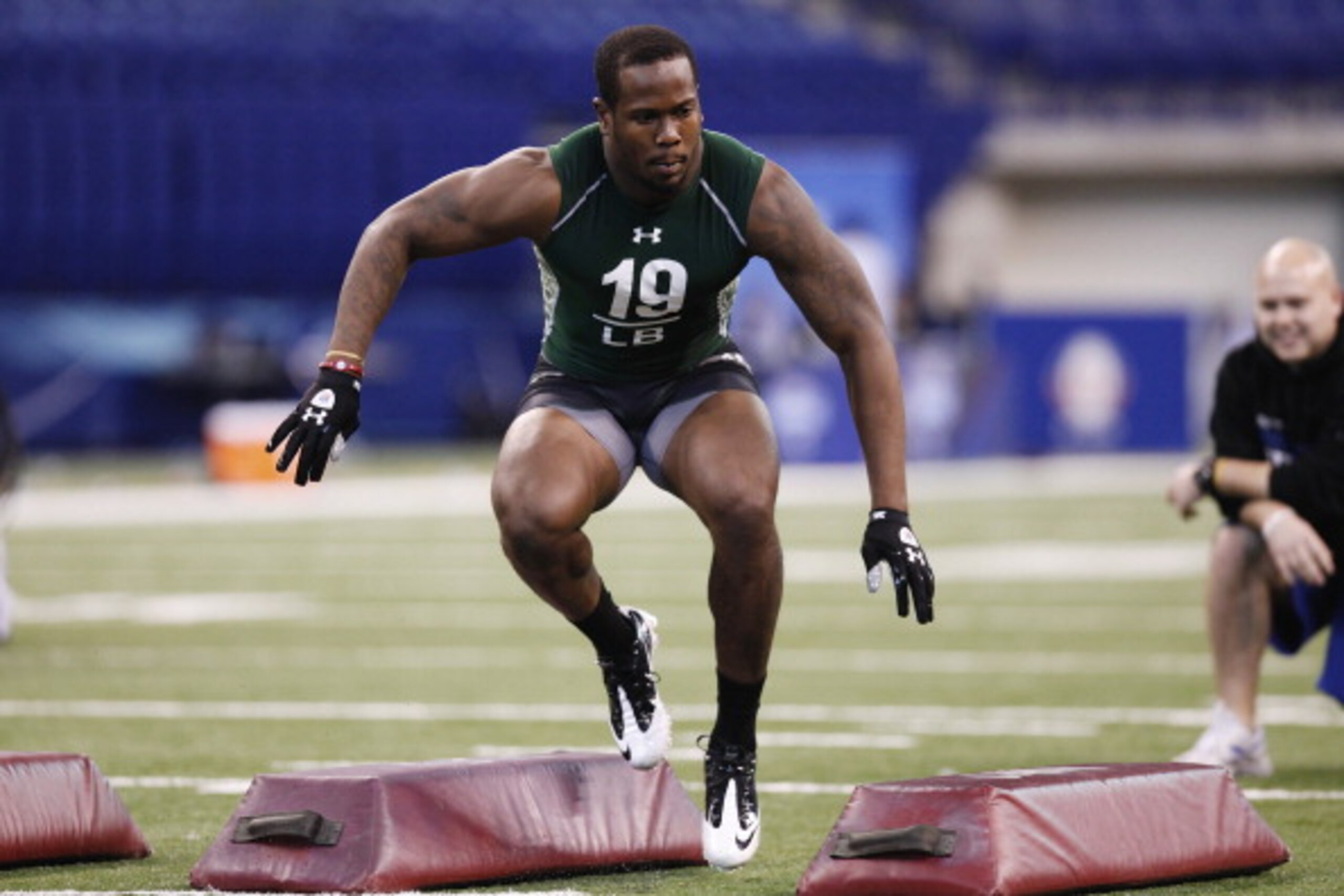
Height: 6’3" | Weight: 243 lbs | Texas A&M
Coverage: Has shown some improvement in this area, but was never required to consistently drop back in coverage. Miller is raw in his technique and following routes. He has the athleticism to make up for missteps, but can be fooled on double moves. Is better when asked to cover man-to-man than in zone. At times looks lost when there are receivers working behind him.
Instincts/recognition: Miller is a “see ball, get ball” athlete who coaches can let loose. If he’s put in a system where he can freelance, he should be fine. But Miller’s play recognition skills are only decent. He should improve here facing more-complicated looks in the pros. If he doesn’t, it will be hard for Miller to live up to his eye-popping college stats.
Pass rush: Miller was the “joker” for A&M, a hybrid linebacker/defensive end position that allowed him to stand up near the line of scrimmage. The pass rush is where he’ll make his money in the NFL and will perhaps garner him a first-round position. Miller is aplomb at working to the outside because of his great first step and follow-up speed. He’s surprisingly strong working to the inside and gets good natural leverage due to his height. But if Miller comes out of his stance too high, offensive linemen can easily neutralize him in space. Miller has a variety of pass rush moves, his best being an inside spin.
Pursuit/Lateral movement and agility: Miller is tenacious in pursuit as long as he’s free to run around. He has good range and lateral fluidity. Has good playing speed for a linebacker to close on the ball carrier. Needs to show more anticipation as he’ll often run himself out of a play.
Quickness: Possesses great quickness off the snap. This is by far Miller’s best feature. Is quick with his footwork and handwork. Can get up to his full speed in an instant. Very explosive out of a two-point stance.
Run defense: Because of what he was asked to do at A&M, Miller is behind the curve in run defense. Looked better in run defense as a senior, but still gives up too much space to the outside. Needs to learn to play more contained and fill gaps. Gets held up by power linemen, especially guards pulling. Because he can’t anchor, teams can elect to run at Miller and have success.
Strength/Ability to shed blocks: Is the kind of player who prefers to run around blockers instead of through them. Doesn’t have the lower body strength to anchor and hold up on the line of scrimmage. Because of that, Miller can be washed out of plays. Is fairly strong in his upper body to hit and tackle.
Final word: Miller is going to make a lot of money thanks to a player like Clay Matthews of the Packers. They’re very similar in that they played a hybrid pass rusher position in college.
But if Miller wants to succeed like Matthews has, he has some work to do. Matthews left USC at a similar size as Miller, but he’s bulked up 15 pounds since then. Miller will have to do the same so he can better play the run and handle the load of a 3-4 linebacker. Right now, Miller just doesn’t have the lower body strength to consistently play his side of the field.
Will enter the NFL raw in pass coverage and suspect against the run. Was mostly used at A&M as an upfield player and will start his pro career in the same role. If a team needs someone to purely get after the quarterback, that’s Miller. He could be a big-time mover up draft boards, similar to Matthews two years ago and Koa Misi in 2010.
Miller struggled early in his senior season due to a knee sprain. Really came on toward the end of 2010 with eight tackles in his final six games. Finished the year with 10.5 sacks.
1. Patrick Peterson, Cornerback, LSU
20 of 20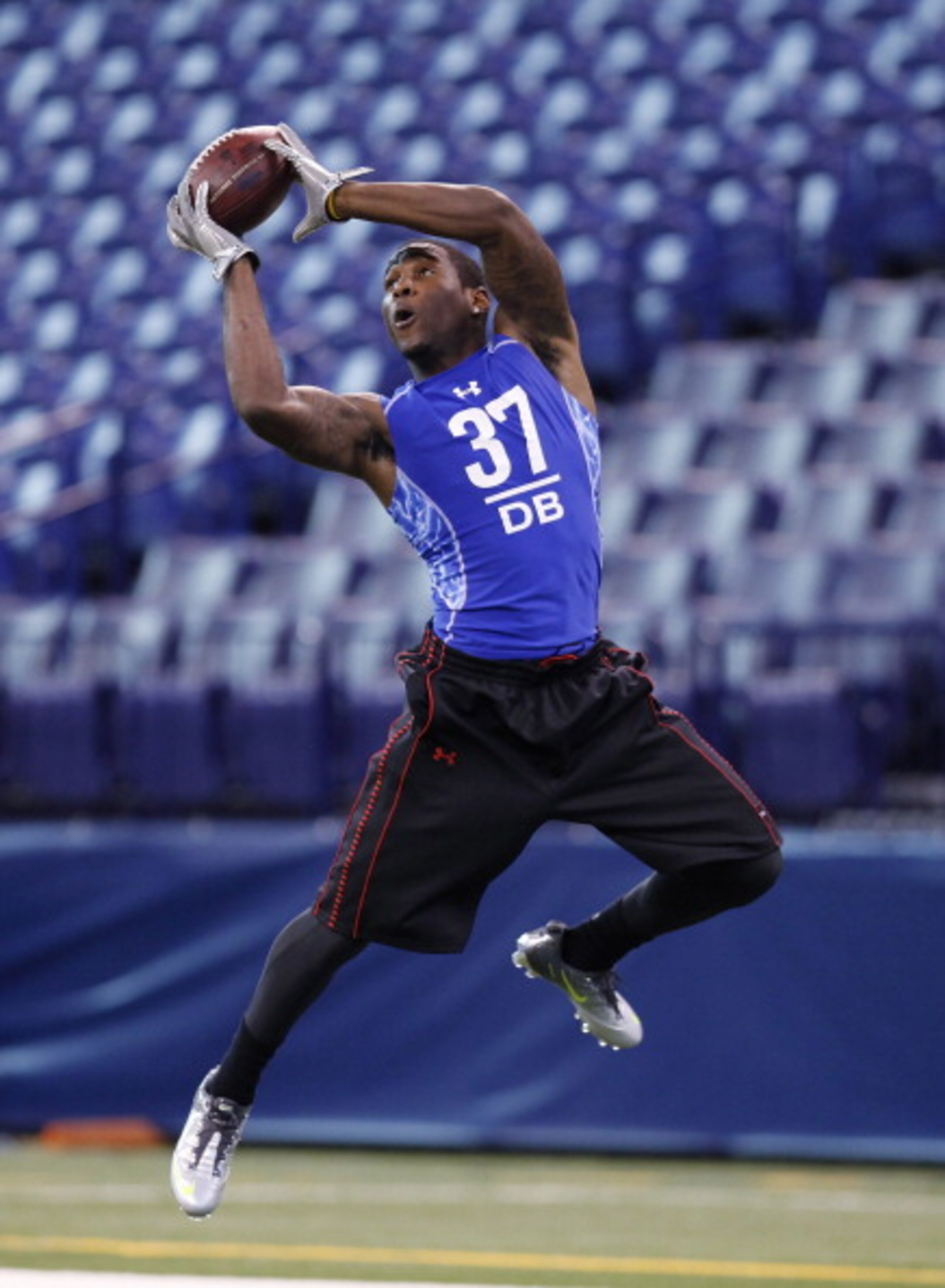
Height: 6’1" | Weight: 222 lbs | LSU
Agility: Has shown that he can flip his hips with ease both ways to turn and run with wide receivers. Terrific change of direction ability. Transitions out of breaks easily. Very fluid in space, which he shows on punt returns. Has a staggering 39-inch vertical leap.
Ball skills: As good in this area as any cornerback eligible for the draft. His numbers won’t show it because teams don’t throw at him, but Peterson has excellent hands for a cornerback. More importantly, he knows when to make a play on the ball, especially in man coverage. Locates quickly and has long arms to disrupt. Tends to play the ball more than his man.
Body control: Is a smooth, natural athlete who doesn’t get his feet mixed up. Stays balanced in his backpedal and doesn’t get high when moving backward. Peterson has a good strength base to fight with receivers in the air. Seems to be aware of the sidelines when working a wide receiver wide of the hash or making an interception.
Instincts: Shows above-average football intelligence in route running recognition. Will only get better here with experience. That may only come in the pros as college teams rarely throw in Peterson’s direction. Peterson is an aggressive cornerback who often seems to know where a play is going to develop and where the ball is going to be placed.
Man coverage: As far as physical cornerbacks go, Peterson is one of the best in a long time. He has the size to redirect a receiver on the line and disrupt routes. One of Peterson’s best assets is his hand checking, which he uses to close the natural window on receiver’s outside shoulder. Can get beat at times against smaller, quick receivers with a good double move.
Size: Is big for a cornerback. Added 10 pounds of mass between his sophomore and junior seasons. The added size doesn’t seem to have had a negative effect on Peterson’s play. In one interview since getting bigger, Peterson said he feels quicker than ever. His frame may be maxed out, but it’s NFL ready.
Speed: Peterson turned in a jaw-dropping 4.34 seconds in the 40-yard dash during the NFL Scouting Combine. He’s shown off that speed as a punt returner and will be able to immediately contribute in that area in the pros. Gets to speed in a hurry. Has the speed to chase down the ball carrier in the open field. Uses his speed nicely on comeback routes.
Tackling: Against the run, Peterson could be better. He’s strong enough to tackle, and is a sure tackler. But he doesn’t always get after it against the run. Can get lackadaisical and cut blocked. Will take solid pursuit angles to the ball. Is reliable on corner blitzes because he can beat blockers and close quickly on the quarterback with strength.
Zone coverage: Is good in zone but much better when in press coverage. Tends to break a little early on the ball to try and make an interception. This puts Peterson out of position, allowing good quarterbacks to complete passes in tight windows.
Final word: There is a lot to love about Peterson. His size and athleticism are elite and his coverage skills should only get better with more experience. He rarely got tested at LSU. Is a premier return specialist who should contribute in that role immediately. He plays with a lot of swagger, citing Deion Sanders as his positional blue print.
Peterson is a better cornerback prospect than 2010 first Round picks Joe Haden and Kyle Wilson.
However, Peterson is not a perfect cornerback. He’s struggled at times against quick receivers and gets beaten on double moves. Gets unfairly criticized for a 37-yard touchdown he allowed in the 2010 Capitol One Bowl, but the field was destroyed at that point in the game.
In 2009, he shut down Alabama’s Julio Jones—Jones had a 73-yard reception in that game after Peterson was out with cramps. Peterson hasn’t had injuries, but he’s had cramps on several occasions.
.jpg?w=2560 "DOLPHINS-AIKMAN")




.png?w=2560 "Week 8 Winners & Losers 📊")