
2011 NFL Draft: Power Ranking the Top 25 SEC Prospects
The SEC may be home to the national champion Auburn Tigers, but it's also home to some of the best NFL prospects in the country.
From perennial powerhouses like Alabama, Florida and LSU to rapidly improving schools like Arkansas and South Carolina, this conference is ripe with pro talent. Among the players who made their names in the SEC are five of the likely top 10 picks, and a certain Auburn quarterback who amazed the nation and won a Heisman Trophy.
But the SEC isn't just top heavy with elite players, it's incredibly deep. To prove it here's a list of the 25 best pro prospects.
Alabama, Georgia - 4
Arkansas, Auburn, Florida, LSU - 3
Mississippi State - 2
Kentucky, South Carolina, Tennessee - 1
Mississippi, Vanderbilt - 0
25. Cliff Matthews, DE, South Carolina Gamecocks
1 of 25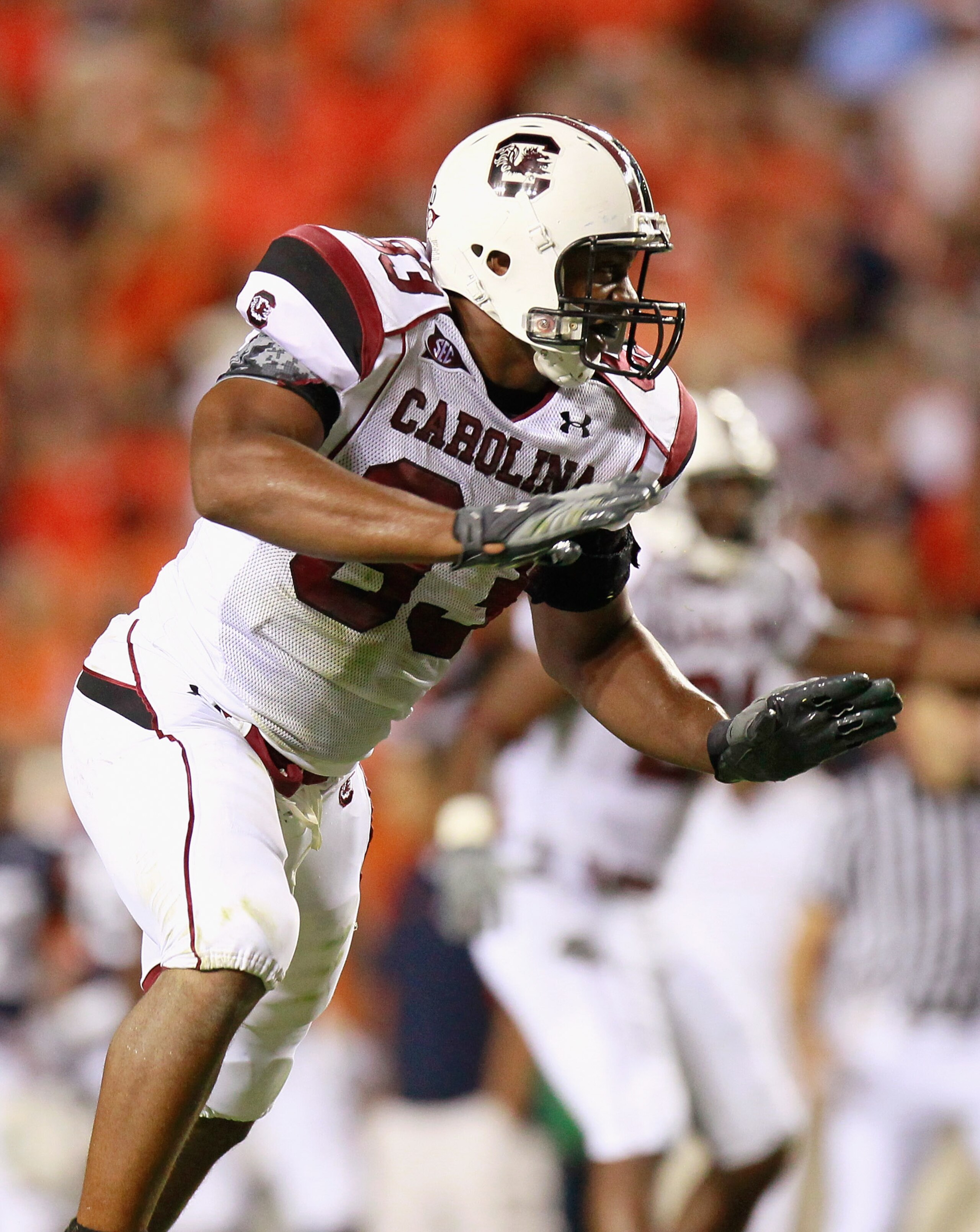
South Carolina won the East bracket of the SEC despite a roster that was low on NFL talent. But one player who will definitely be able to play at the next level is Matthews, a 6'4", 257 pound defensive end who finished his senior season with seven sacks and 10 tackles for a loss.
Matthews is a solid all around player. He's a good pass rusher with efficient spin and swim moves. He's a good run stopper with long arms and impressive upper body strength. He's got a good nose for the ball and a motor that never seems to shut off. But he will get pushed around by bigger offensive tackles and isn't fast enough to go after most NFL players.
Matthews projects as a backup lineman, though he could possibly start a few years down the road. He will be replaced at South Carolina by Jadaveon Clowney, the best high school prospect in the country and a potential top 10 pick in three or four years.
24. Pernell McPhee, DE, Mississippi State Bulldogs
2 of 25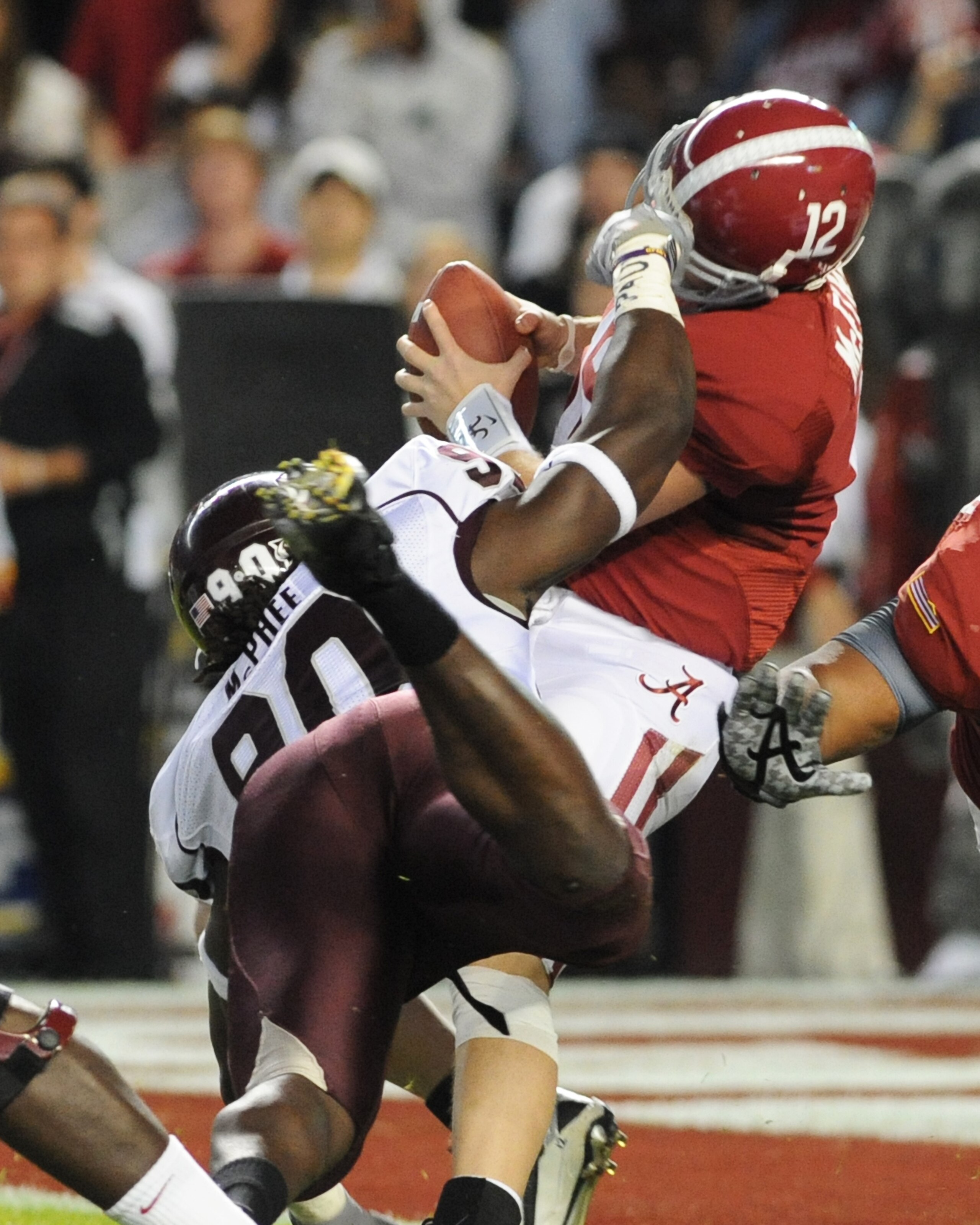
McPhee is another player who spent time playing JUCO football before joining America's power conference. But in his two seasons in the SEC he's shown that he definitely belongs.
He has ideal size (6'3" and 278 pounds) for the position and enough speed and strength to challenge much bigger offensive tackles. He doesn't have enough moves to be a dominant pass rusher and relies mostly on strength to gain positioning. However, he's a very good run stopper and consistently gets into the backfield to bring down the ball carrier.
McPhee would best be a fit as an end in a 4-3 scheme since he lacks the versatility to play a five technique. He's a late round pick.
23. Demarcus Love, OT, Arkansas Razorbacks
3 of 25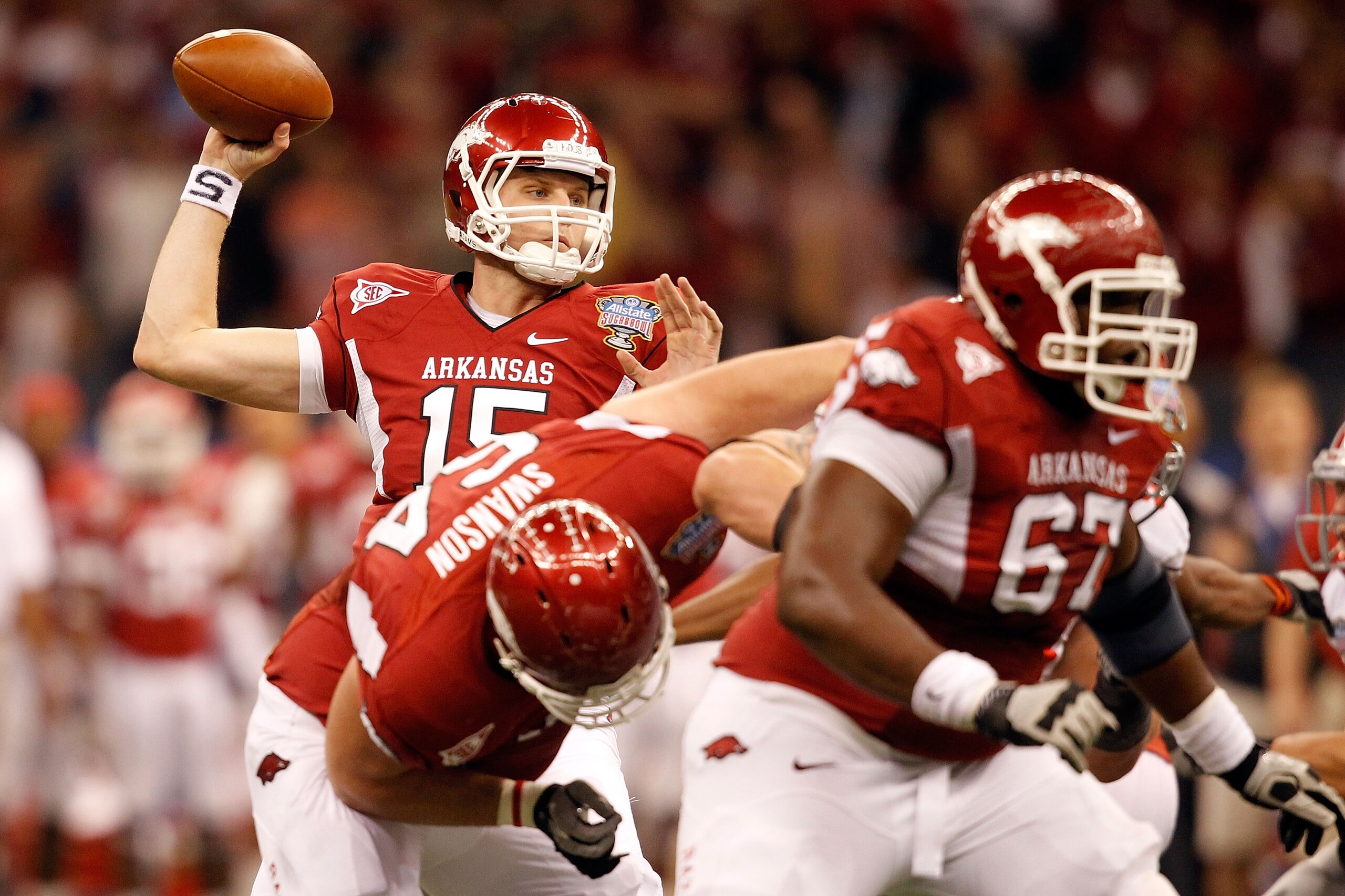
Love is in the second or third tier of tackles in the draft, which just shows deep the position is in this draft.
The 6'4", 315 pounder can play on both the left and right side. He is quick for his size and does a nice job staying in front of pass rushers. He's strong enough to neutralize a bull rush and agile enough to shift his feet to pick up additional defenders.
Love still needs to work on his run blocking, especially when it comes to engaging the linebackers. He also could do a better job recognizing different defensive schemes. Still, he's solid enough to earn a starting spot some day and should go in the fourth or fifth round.


22. Akeem Dent, ILB, Georgia Bulldogs
4 of 25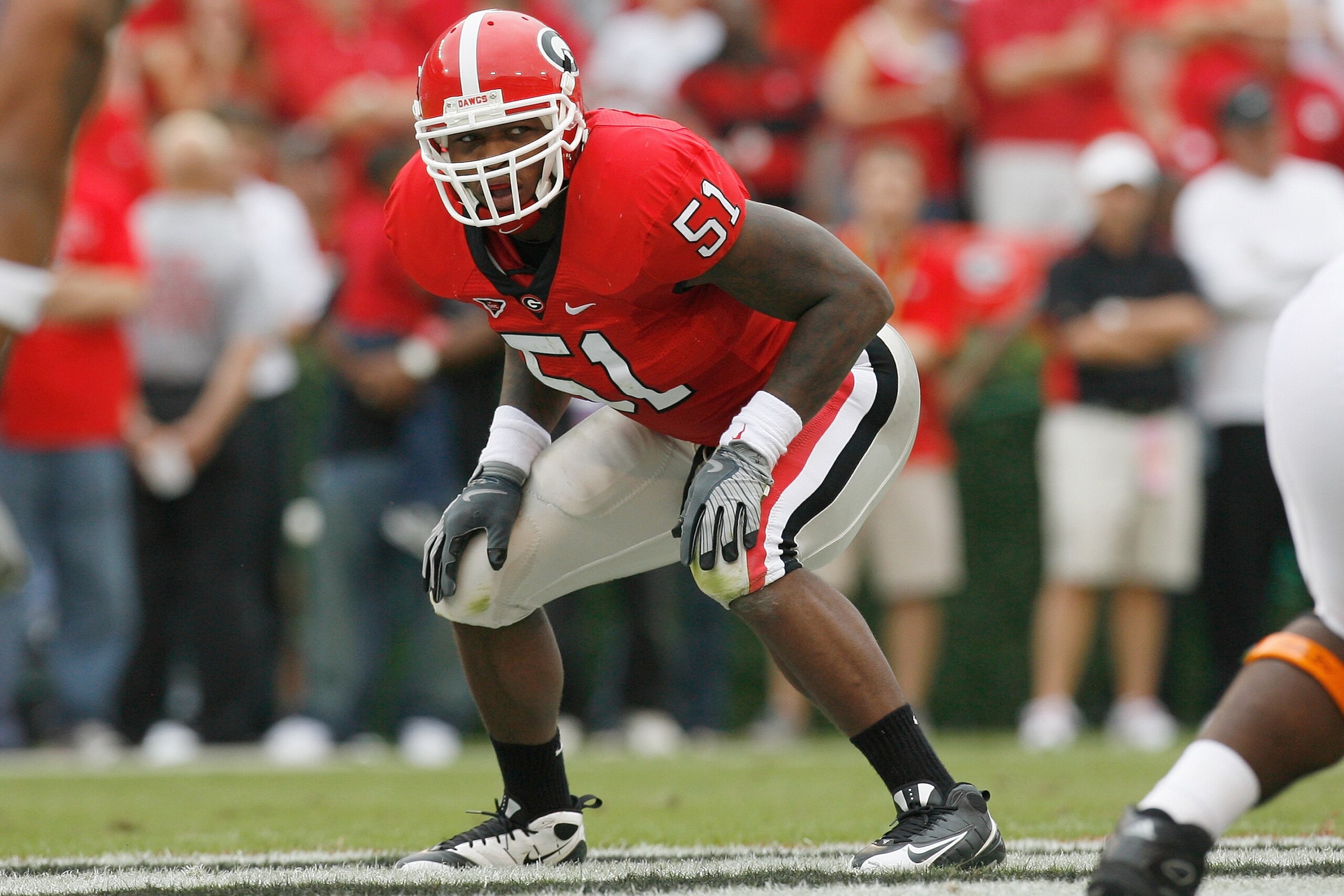
Dent served as Georgia's defensive captain last season, and he has the skills to back it up. He's a terrific run stopper and is quick enough to shed a blocker or two to bring down the ball carrier.
But at just 6'1" and 242 pounds, Dent lacks strength. He's also only average in pass coverage.
The inside linebacker position is incredibly weak this year, so there's a chance Dent could be taken as high as the third round.
21. D.J. Williams, TE, Arkansas Razorbacks
5 of 25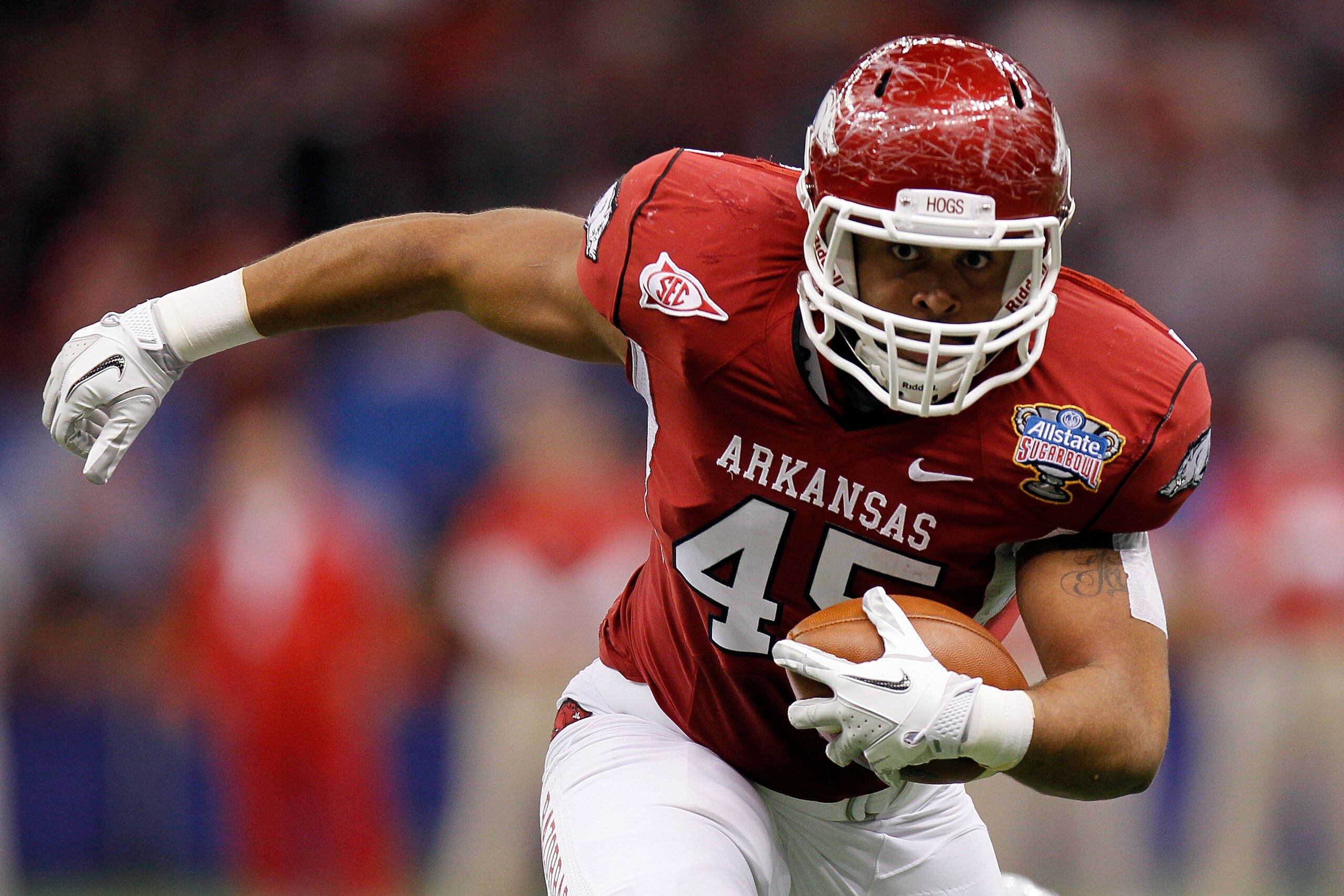
Williams has become one of Mallet's favorite targets after four outstanding seasons as a Razorback. He finished his collegiate career with 54 receptions for 627 yards and four touchdowns.
The 6'2", 245 pound tight end has good hands and speed to get into the middle of a defense and haul in tough catches. He isn't elusive enough to gain separation from his defender, but does a good job using his body to get the ball and shield it away from defenders.
Williams is a bit undersized at his position so pass blocking can be an issue. But he's a strong enough receiver to see consistent playing time in a tight end heavy offense.
20. Derrick Locke, RB, Kentucky Wildcats
6 of 25
It's not a particularly good year for running backs, but the 5'8", 188 pound Locke should find a home somewhere in the upcoming draft.
He's a very hard runner and is not afraid to get up close and personal with the defense. He also possesses top end speed to round the corner and break tackles, and good instincts to attack the right hole. He's even one of the better pass-catching threats at his position. The only knock against him is that he's small and won't be able to push past tackles in the NFL.
Locke looks like a good fit as the speed guy in a dual running back system. He should see his name called in the third or fourth round.
19. Luke Stocker, TE, Tennessee Vols
7 of 25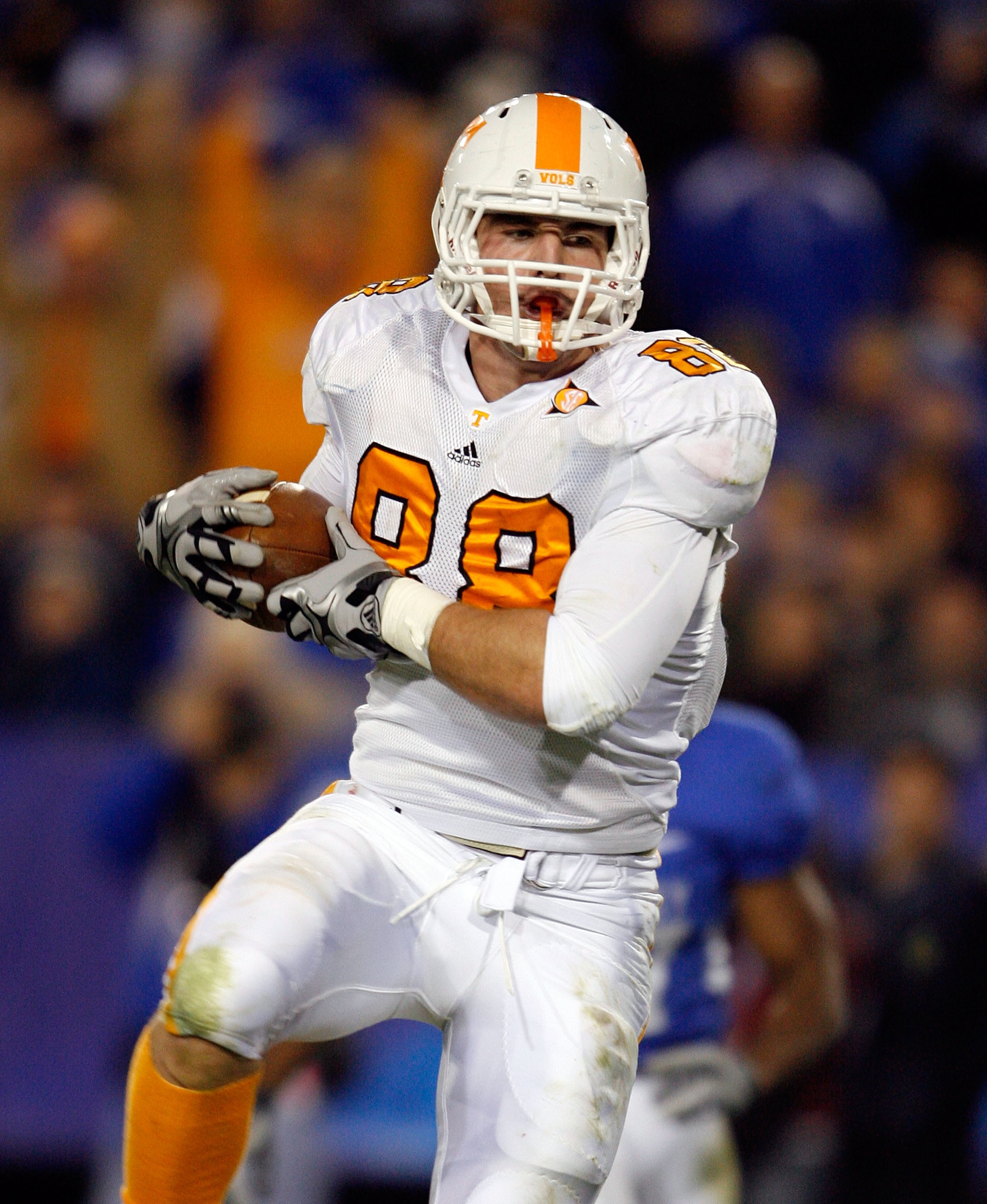
Tight end is another position that is surprisingly weak this year, but that's not because of Locker. The 6'5", 258 pound tight end is an outstanding player.
He's big and incredibly fast, with the soft hands to reel in the ball. He's not the most athletic tight end, but he's good at using his body to gain positioning and make difficult catches. He's better against zone coverage than man coverage, and isn't much of a force as a blocker.
Locker should go in the second or third round, especially given the success speedsters like Rob Gronkowski and Aaron Hernandez have had at the pro level.
18. Lee Ziemba, OT, Auburn Tigers
8 of 25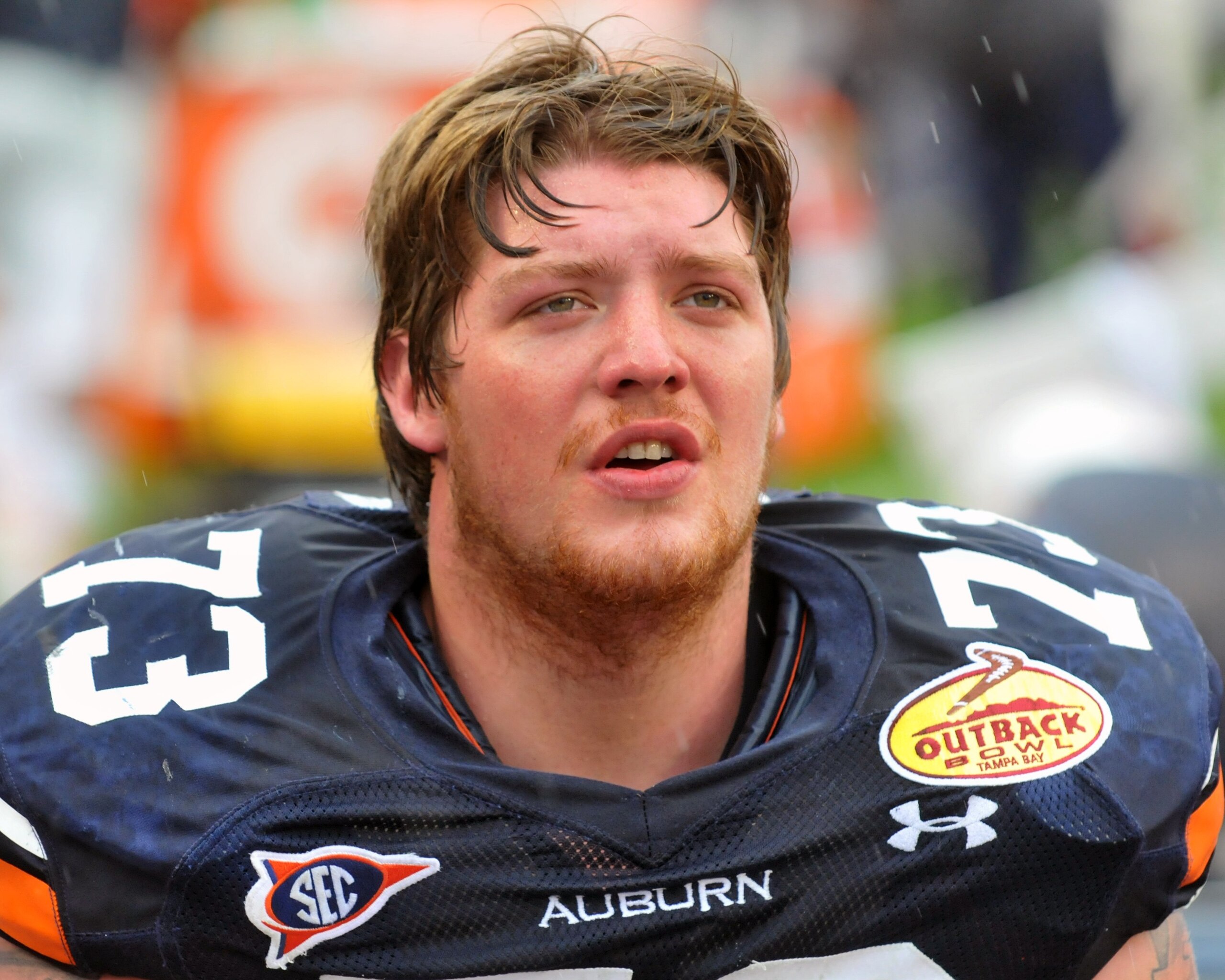
Ziemba deserves a lot of the credit for Cam Newton's unforgettable season as Auburn quarterback. The 6'6", 317 pound tackle is a strong pass blocker with the quickness to keep rushers outside of the pocket. He's not very athletic and has poor footwork on the outside, but he makes up for it by rarely being tricked.
He's a solid run blocker and consistently gets into the second level of defenders. He's at his best with his hands on a defender, but can get lost if he's in open space without someone to engage.
Ziemba spent three full seasons starting for Tigers and shouldn't take too long to adjust to the pro game. He's a third or fourth round pick.
17. Kelvin Sheppard, ILB, LSU Tigers
9 of 25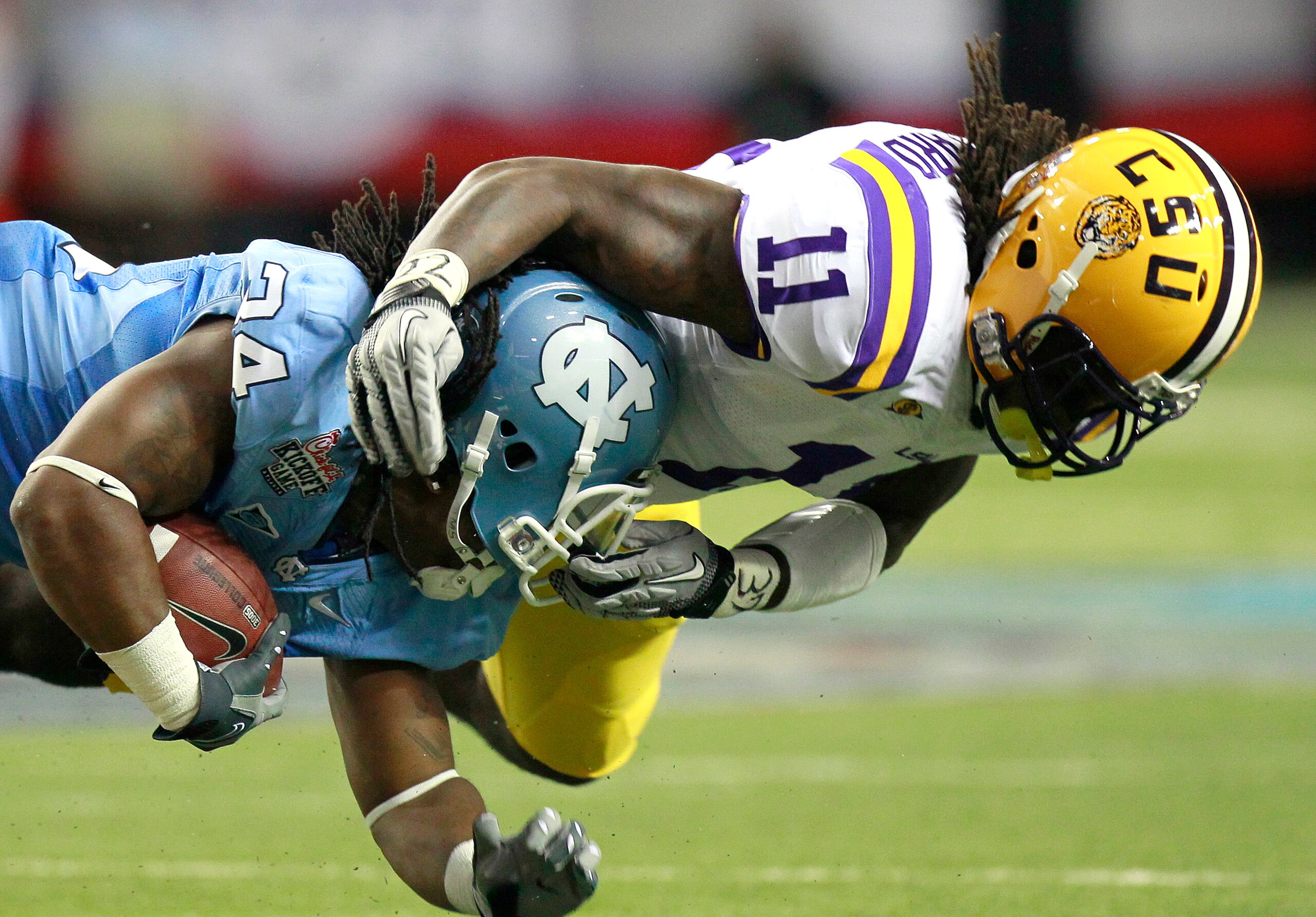
Sheppard was a monster in the middle of the Tigers defense, sporting two consecutive seasons with over 100 tackles. He's relentless when in pursuit and is not afraid to deliver the big hit. He can also more than hold his own in man or zone coverage, or as a pass rusher along the defensive line.
At 6'2" and 250 pounds Sheppard has good size, but could add more strength to his lower body to give him an edge against bigger blockers.
As the second best prospect in the entire draft at his position there's a good chance Sheppard could go in the second round. He won't fall past the third round.
16. Ahmad Black, S, Florida Gators
10 of 25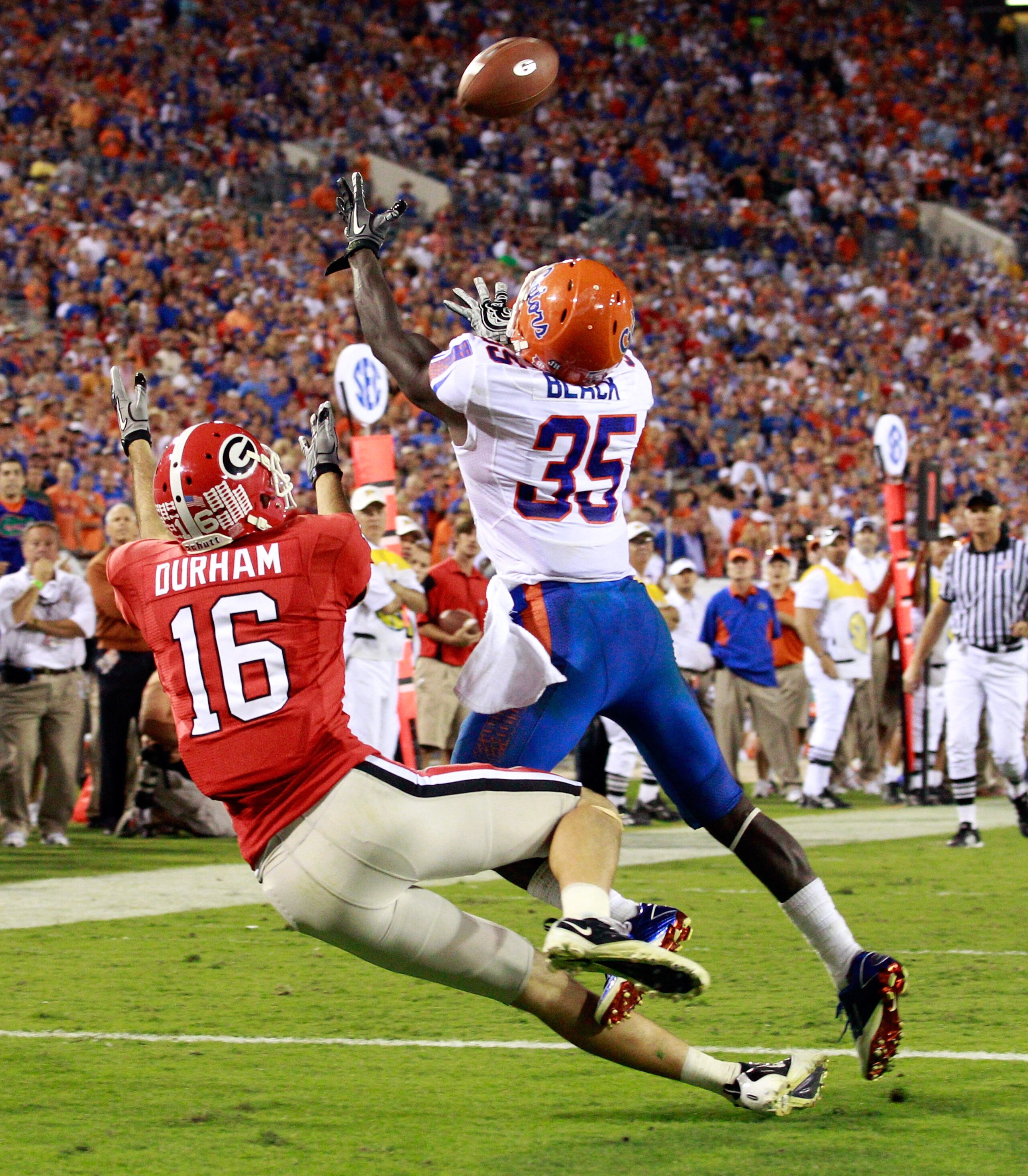
This draft may be short on big time safeties, but Black is certainly one player who qualifies after what he did in 2010—103 tackles, two forced fumbles and three interceptions.
Black, 5'"10 and 184 pounds, is all over the field thanks to good recognition skills and excellent closing speed. He's a bit undersized, but that's never stopped him from delivering a crushing tackle. He's even good enough to line up against a tight end or slot receiver in man coverage.
Black should go somewhere in the third round and will see playing time at both safety and cornerback.
15. James Carpenter, OG, Alabama Crimson Tide
11 of 25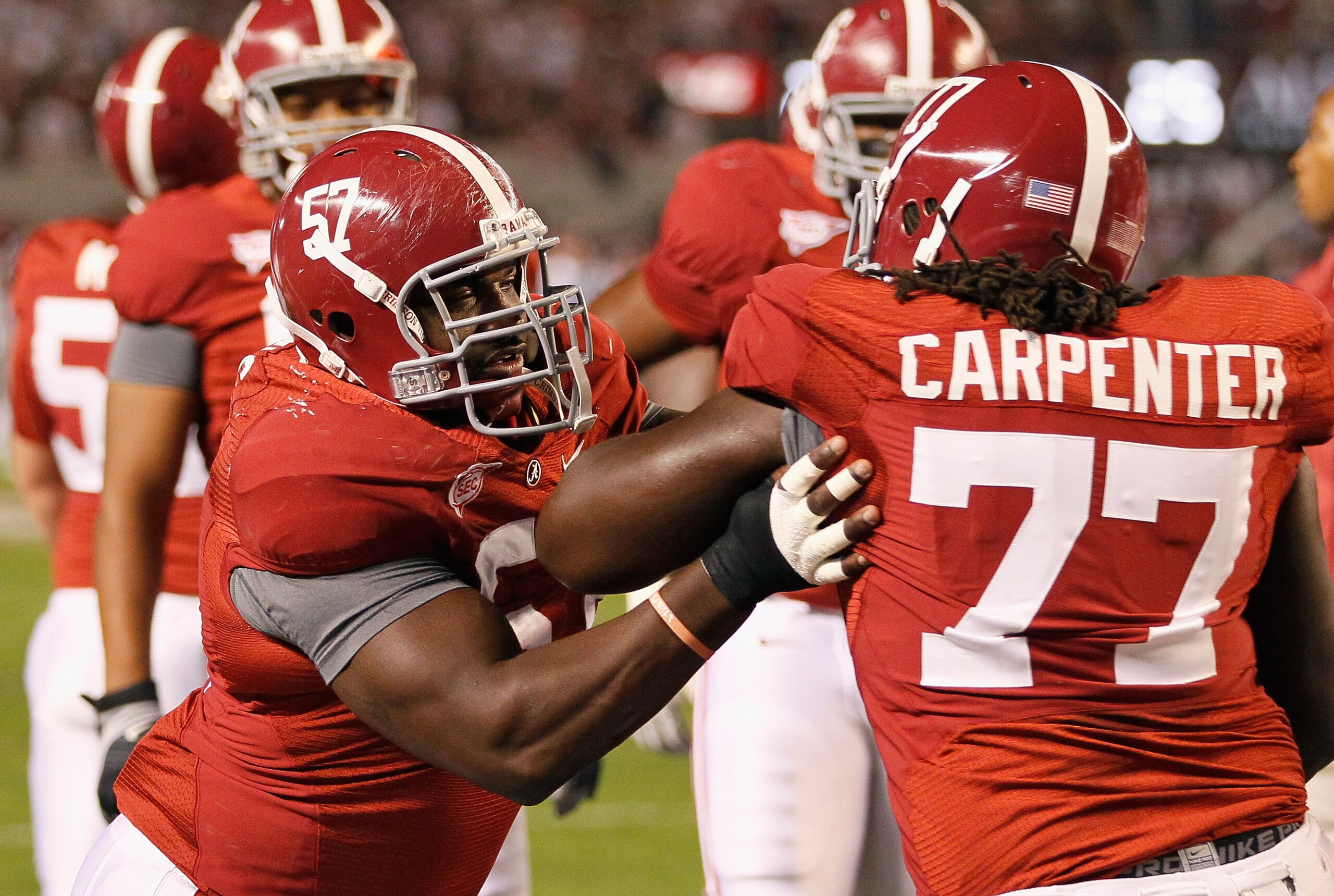
Carpenter has come a long way in his short football life. He started out at Coffeyville Community College in Kansas and didn't transfer to Alabama until 2009. But once he joined the Crimson Tide he immediately became an impact player and started all 14 games at left tackle.
The 6'5", 328 pound lineman projects as a guard at the next level because he has good lateral movement and can stay in front of pass rushers. He's strong and tends to do a good job of identifying blitzes and flashes some speed charging into the second level of defenders.
Carpenter is still inexperienced and will take some time to learn how to recognize different defensive packages in the NFL, but since he's made it this far there's no reason to think he won't continue to succeed.
14. Marcus Gilbert, OT, Florida Gators
12 of 25
Gilbert isn't the big name along the Gators' offensive line, but he's still a big part of what made the offense so lethal the past four years.
At 6'6" and 330 pounds he has prototypical size to play tackle in the NFL. He's very good in pass protection with good upper body strength and quick feet, allowing him to stay with most pass rushers. He's only average at run blocking because of a lack of athleticism and versatility to move around the field. He also needs to work on finishing his tackles and get better at reading and reacting to shifts in the defense.
Gilbert looks like a third round pick, but he could sneak into the second if there's a run on offensive tackles.
13. Drake Nevis, DT, LSU Tigers
13 of 25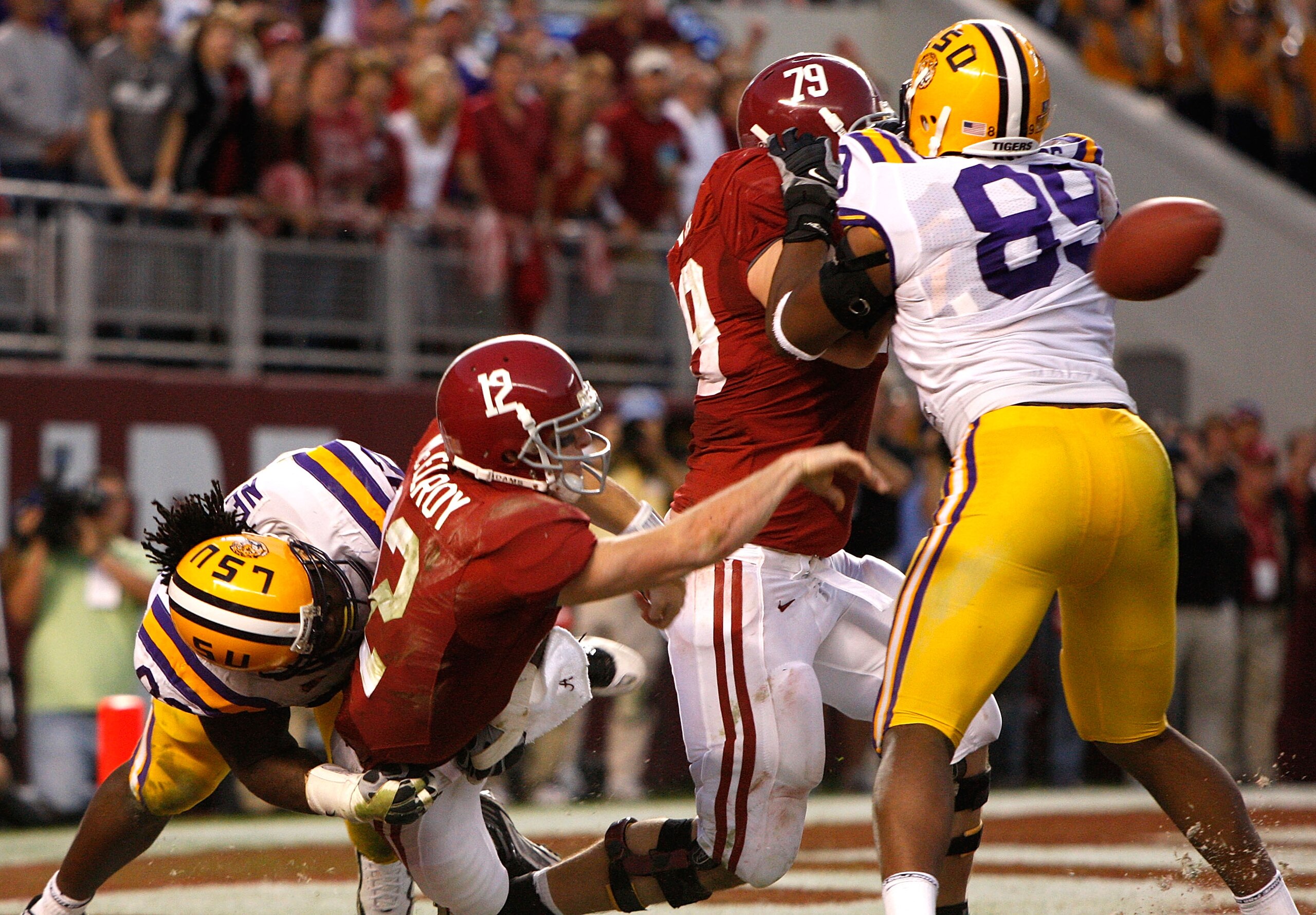
Despite playing in a conference with the two best defensive tackles in the country, Nevis is known as a major force inside. He's very strong and does a good job using his hands and body to challenge offensive linemen in the trenches. He's also quick and can get after the quarterback or penetrate to stop plays in the backfield.
Nevis will need to add some size to his 6'1", 294 pound frame if he wants to play with the big boys, but he's still a solid player who can do a lot of things well. If he can improve his pass rushing he could be a good fit inside in a 4-3 scheme.
12. Clint Boling, OG, Georgia Bulldogs
14 of 25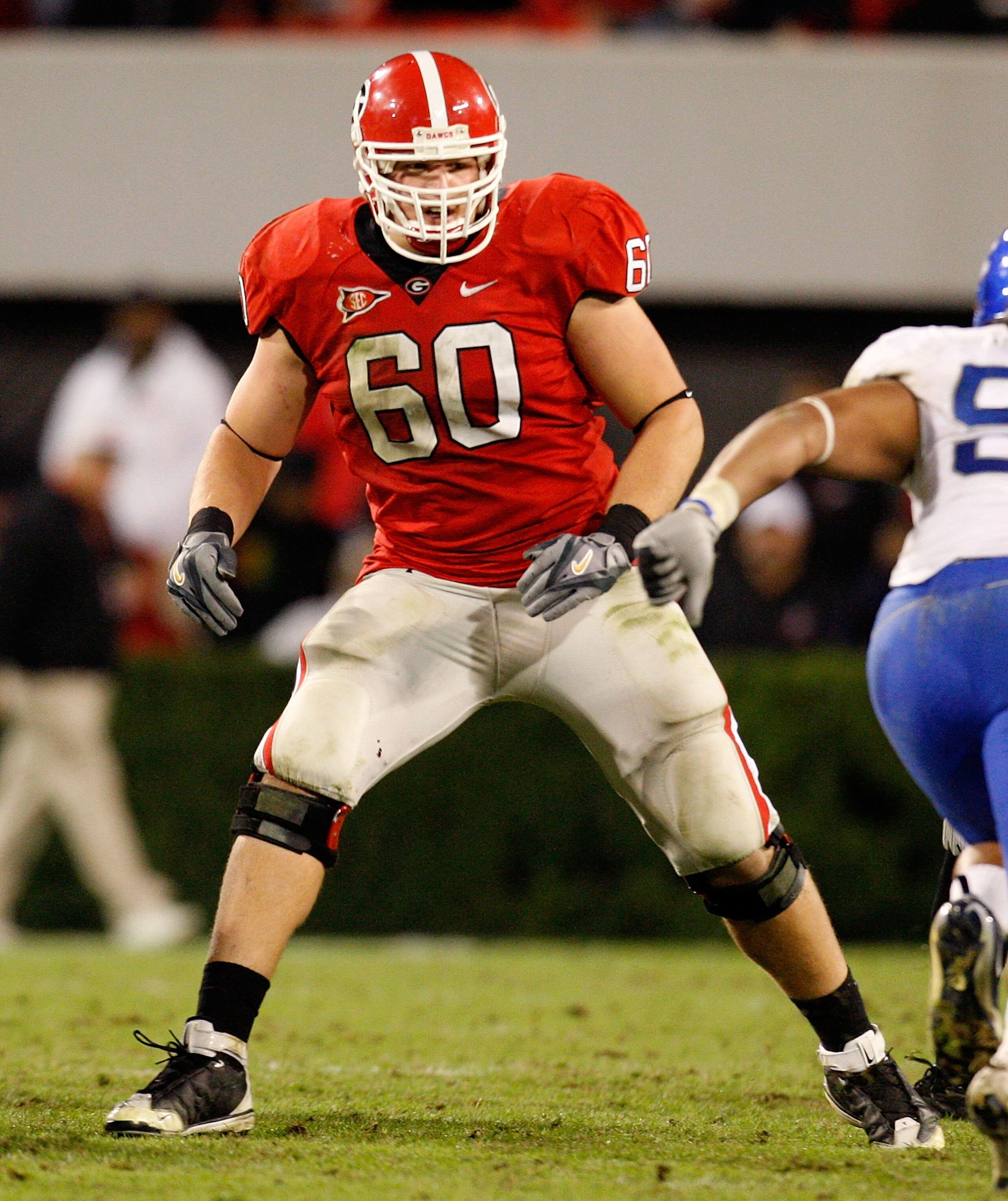
Boling has played up and down the Georgia offensive line, but he's projected as a guard at the next level.
The 6'5", 308 pound beast has never missed a game in his collegiate career (unless you count the one game he was suspended for in 2008). He has quick feet and solid lateral mobility, in addition to a natural feel for the game. He needs to get stronger if he wants to contain NFL defensive ends and needs to get better at run blocking. But if he gets the chance to get into position he's very difficult to move.
Boling is a solid player. His versatility makes him a likely second round pick.
11. Derek Sherrod, OT, Mississippi State Bulldogs
15 of 25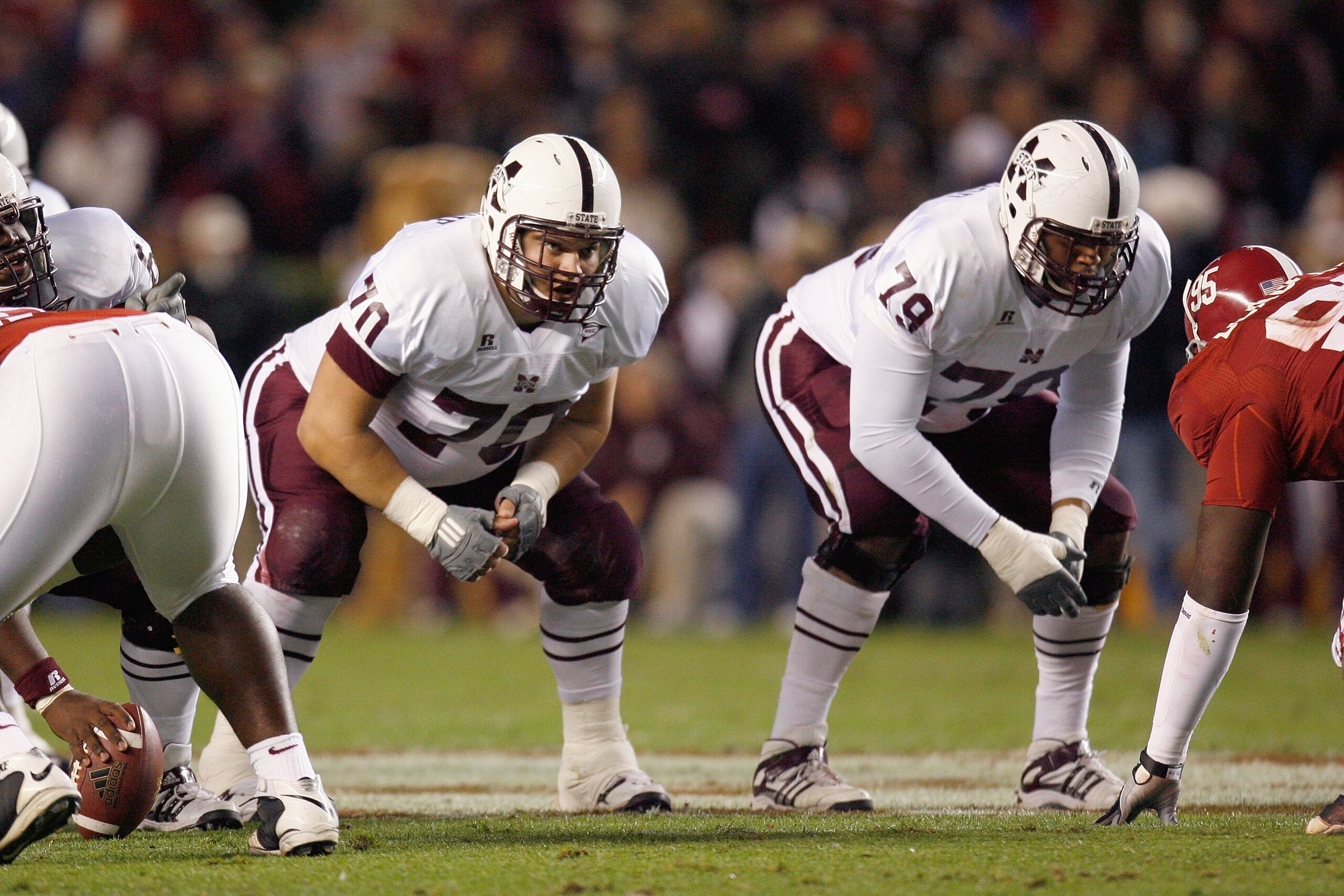
Sherrod was the best offensive tackle in the SEC and one is one of the best tackles in the draft.
At 6'5" and 321 pounds he has ideal size to stay in front of NFL pass rushers. He also has good speed and lateral mobility to shuffle his feet and cut off lanes. He's a decent run blocker when given the chance to get into position, but can get knocked off balance sometimes. He also needs to work harder to sustain blocks.
Sherrod is a potential first round pick and won't fall outside of the top 50.
10. Ryan Mallet, QB, Arkansas Razorbacks
16 of 25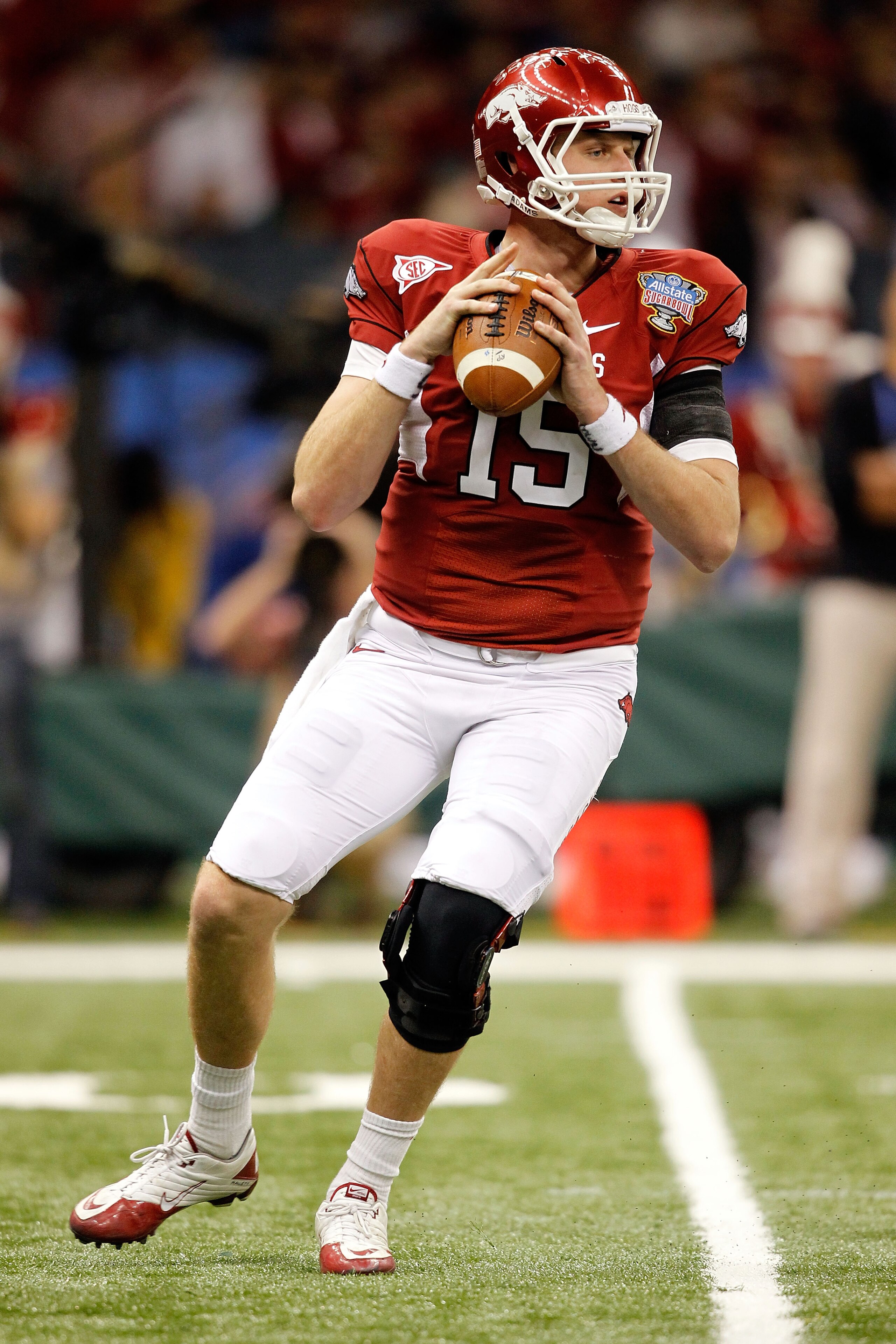
Mallet doesn't get nearly as much attention as some of his conference rivals at the quarterback position, but he's a great quarterback with the potential to excel in the NFL. The Arkansas star is coming off two consecutive seasons of at least 3,500 yards passing and 30 touchdowns and has managed to cut down on his interceptions each year playing in a pro-style offense.
Mallet is deceptively tall at 6'7" and uses his height to his advantage to see over the top of the defense and deliver crisp passes. He has good accuracy and features one of the strongest arms in all of college football.
The one downside for Mallet is that he's not particularly athletic. He has good pocket presence, but isn't fast enough to scramble when a play breaks down. He also has a habit of forcing some of his throws when under pressure.
9. Justin Houston, OLB, Georgia Bulldogs
17 of 25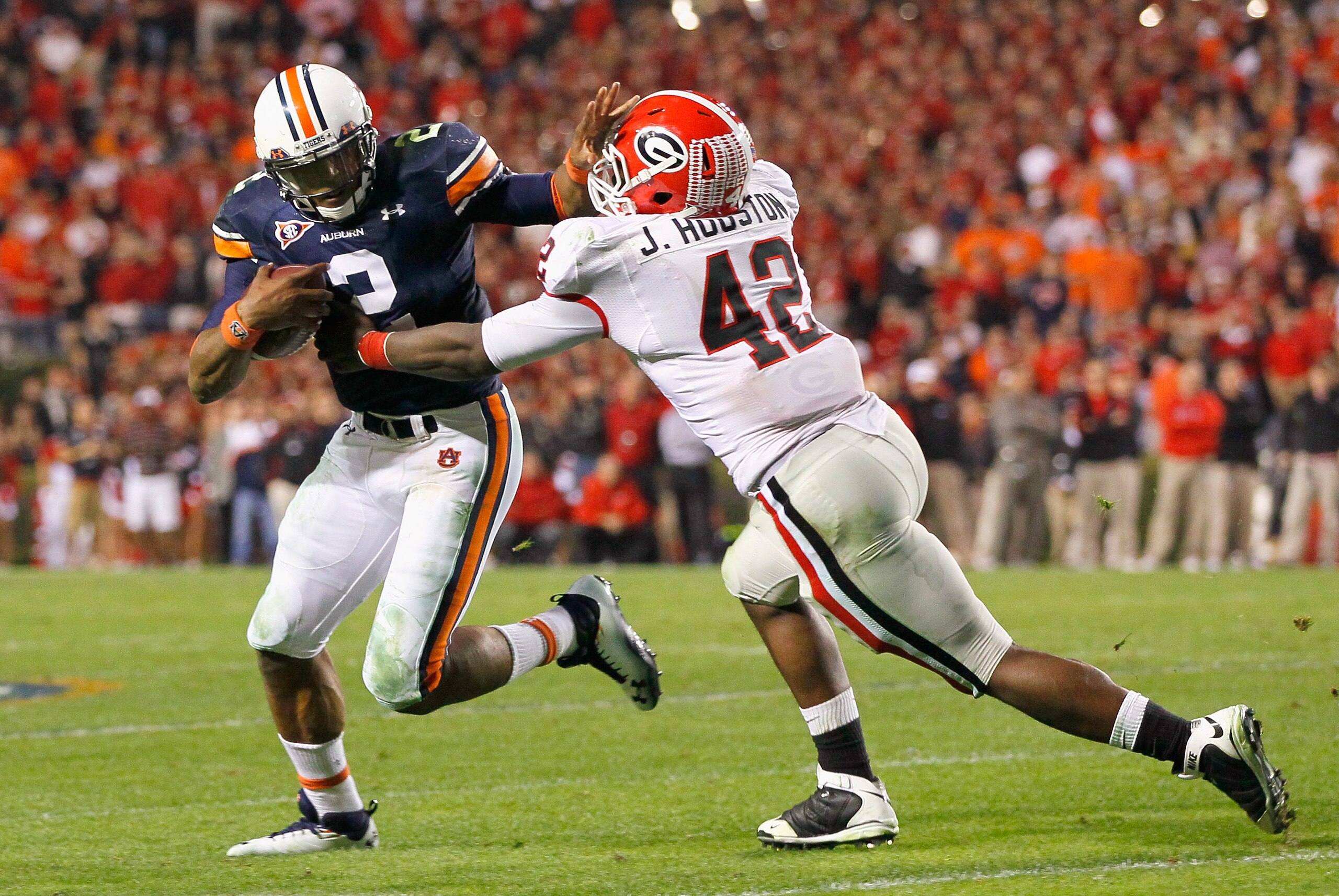
The 6'3", 270 pound linebacker made a name for himself as one of the SEC's best pass rushers. He had seven and a half sacks and 15 tackles for a loss in 2009, and then followed up that performance with 10 sacks and 18.5 tackles for a loss in 2010.
Houston has incredible instincts and quickness, two traits that give him a big head start going after the quarterback. He has strong hands and can overpower offensive lineman if he's going at close to full speed. He's not a great tackler and lacks coverage skills, but his speed separates him from most other players at his position.
Houston projects as either an outside linebacker in a 3-4 defense or an end in a 4-3. He'll go in the late first round or early second.
8. Mike Pouncey OG, Florida Gators
18 of 25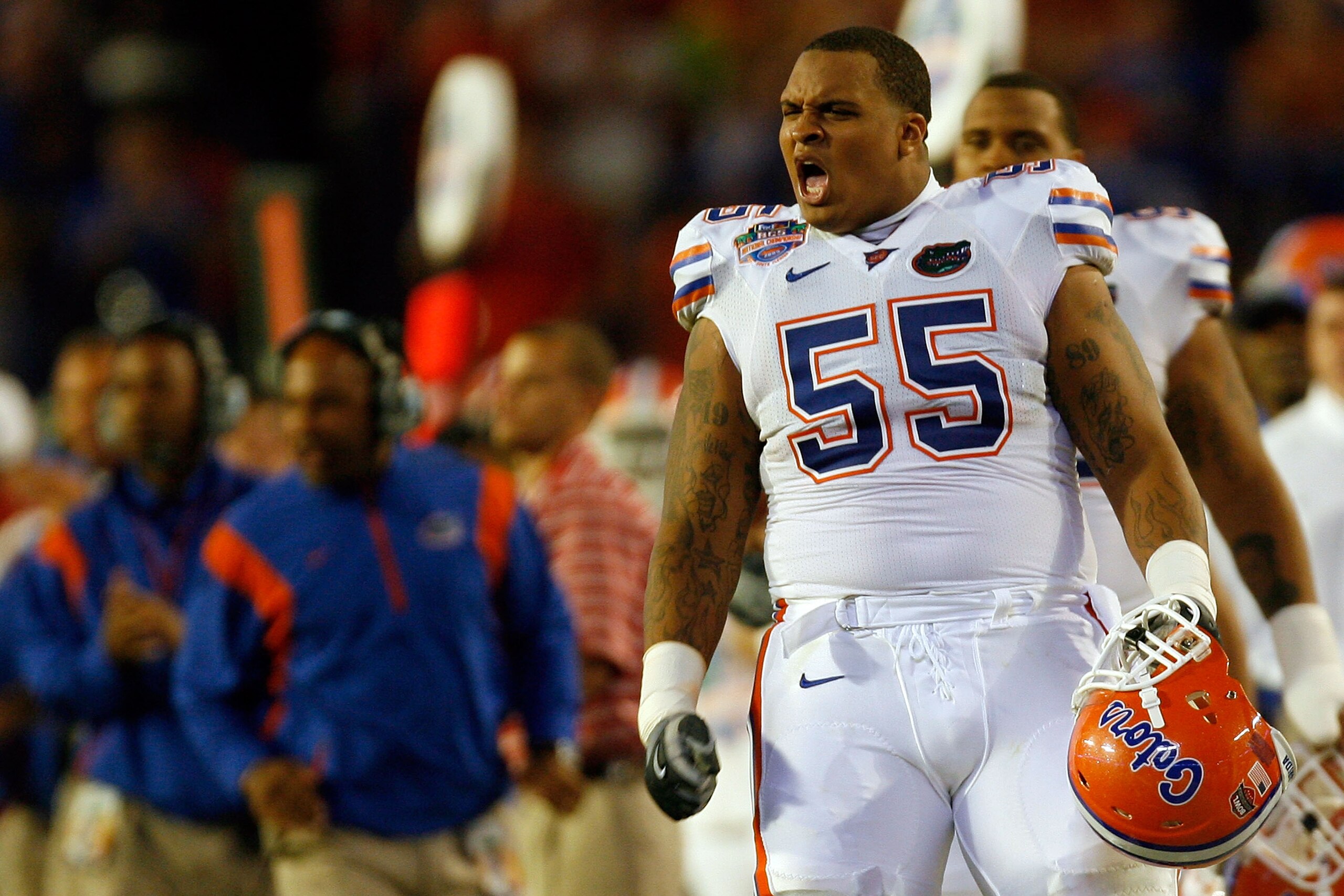
Pouncey is the best interior lineman in the draft and, like his twin brother Maurkice of the Pittsburgh Steelers, he has the ability to line up at either guard or center.
At 6'5" and 303 pounds he has good size to succeed at the next level and is very athletic when it comes to moving his feet and staying in front of rushers. He's also an above average run blocker and sets up good lanes for the running back. Pouncey is a leader on the line of scrimmage and has the elite awareness to call out plays and adjustments during the game.
Pouncey may go in the top 20, but won't fall out of the first round. There are too many teams that need a competent guard, and Pouncey is one of the few available in this draft.
7. Mark Ingram, RB, Alabama Crimson Tide
19 of 25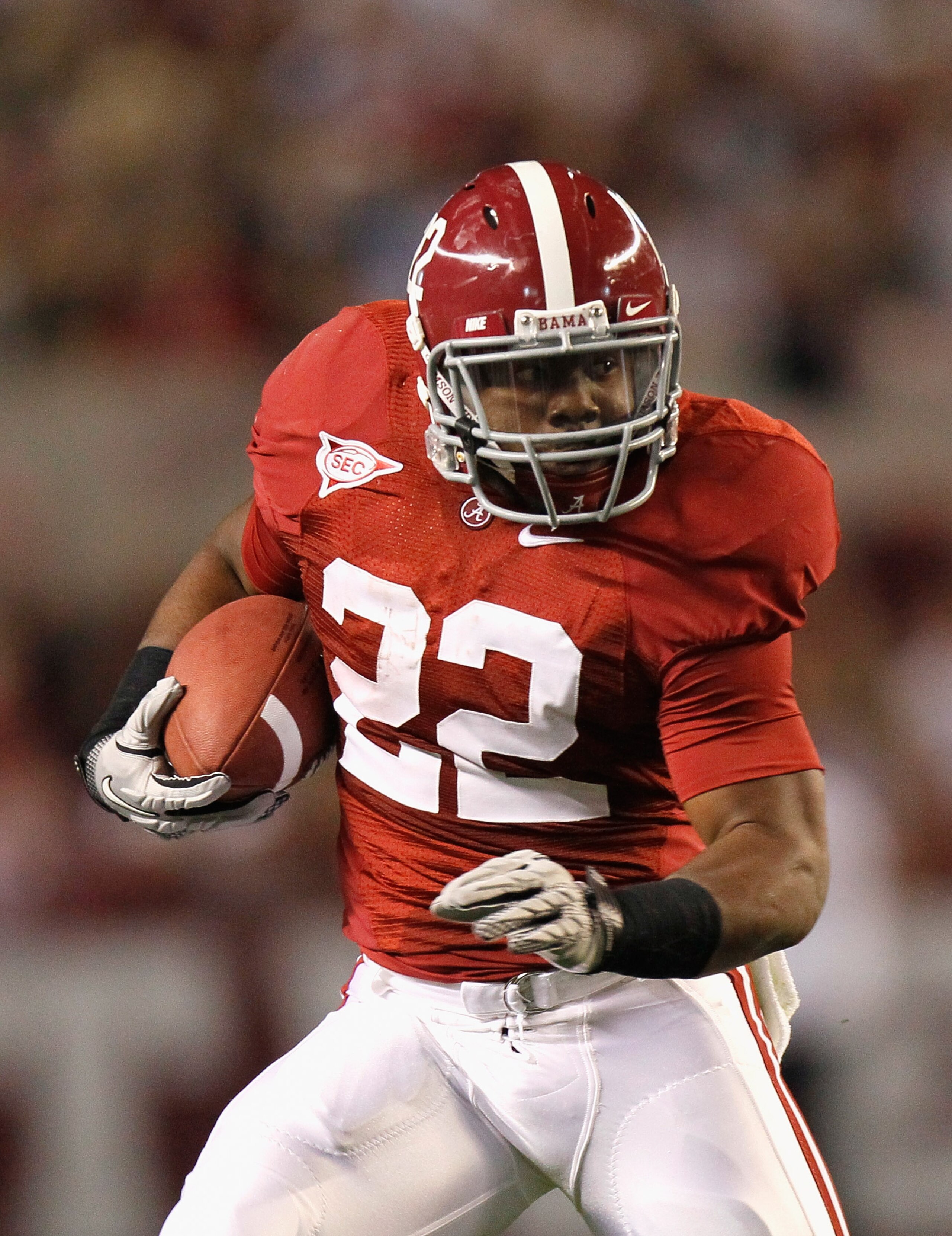
The consensus top running back in the draft and former Heisman Trophy winner was a monster for Alabama. In 2009, he carried the ball 271 times for an incredible 1,658 yards and 17 touchdowns. He didn't quite match that in 2010 (158 carries for 875 yards and 13 touchdowns) because of a reduced workload, but when he got the ball in his hands he was unstoppable.
Ingram is somewhat undersized at 5'9", but he packs enough size (215 pounds) into that frame to be a power runner reminiscent of Maurice Jones-Drew. He's incredibly hard to bring down and has a knack for always attaching the right hole. His elite vision gets him yards, but it's the top end speed that helps move the chains.
Ingram is a terrific open field runner and is a legitimate receiving threat out of the backfield. He's a guaranteed first round pick and will probably start full time for whichever team drafts him.
6. Cam Newton, QB, Auburn Tigers
20 of 25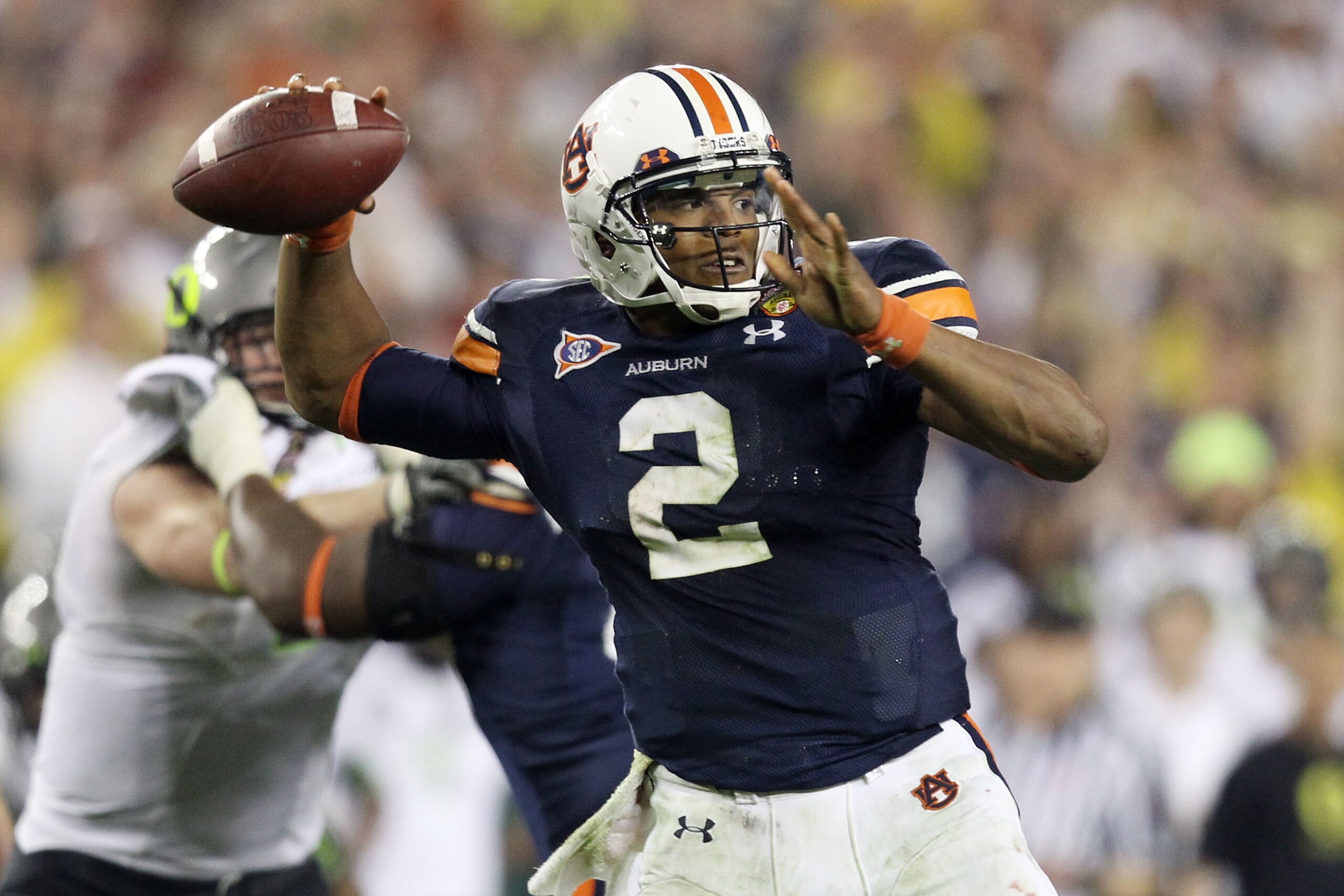
Newton is the ultimate hit-or-miss prospect. His athleticism is off the charts. He can tuck the ball in and weave through defenders with an ankle-breaking series of jukes and fakes. He can run it up the middle and muscle up against a team's defenders. Oh, he can even pass the ball too.
The Heisman Trophy winner earned more than 4,300 total yards last season with 50 total touchdowns. At 6'5" and 248 pounds he's bigger than most players on the defense, and he's almost certainly faster. He has good release and a natural touch for the ball, but features only average accuracy and rushes too many throws.
The question with Newton, as it was for many years with Michael Vick, is if he can overcome the urge to scramble and become more of a pocket passer. If he does, he could become the best player in the entire draft.
5. Julio Jones, WR, Alabama Crimson Tide
21 of 25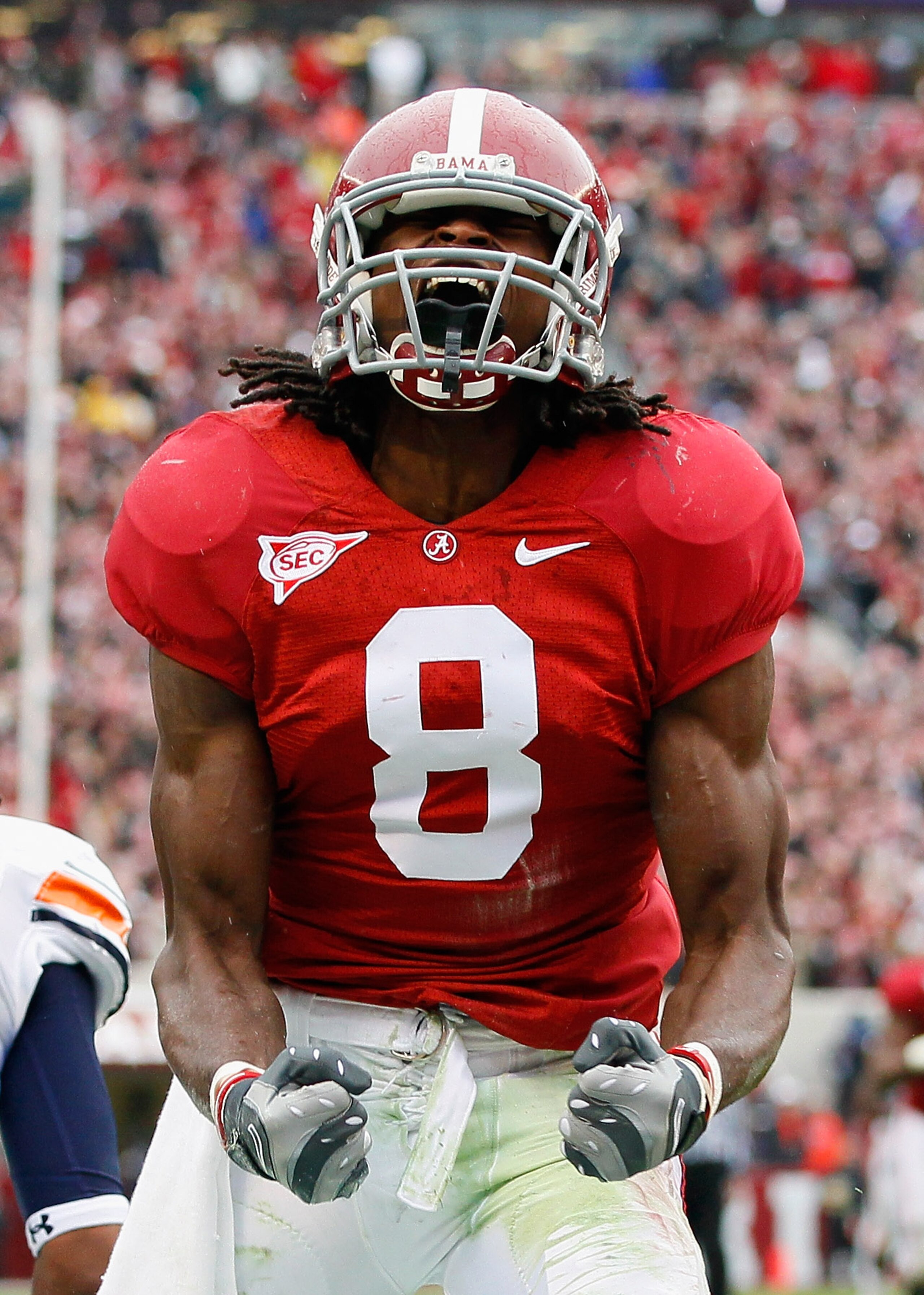
Jones was one of the most hyped high school players in the country a few years ago. Turns out all of that hype was warranted.
The 6'3", 220 pound wideout has dominated college competition. He started his SEC career by hauling in 58 passes for 924 yards and four touchdowns. Then he finished it with 78 receptions for 1,133 yards and seven scores. It's easy when you're taller and faster than everyone covering you, but that's not the only thing makes Jones so great.
He has incredible body control and awareness, skills that allow him to make impossible, jaw-dropping catches. He's a strong runner and can bruise past defenders after making the catch. He also has a knack for getting open by running consistent routes.
Jones' only weakness is a tendency to drop the ball, but if he can improve his hands then there's nothing stopping him from becoming a Pro Bowl receiver.
4. A.J. Green, WR, Georgia Bulldogs
22 of 25
Green is the best wide receiver in this draft, and for good reason. He dominated SEC competition despite repeatedly facing double and triple teams, recording a career-high 57 receptions for 848 yards and nine touchdowns in his final collegiate season.
Green has great speed and at 6'4" has the height to go up and grab the ball. He has outstanding hands and runs exceptional routes, allowing him to gain separation and consistently get open. His speed alone makes him a threat to go deep every time he steps onto the field, often leaving the middle of the field wide open.
If Green has a weakness it's that he's not a great open field runner and won't make defenders miss. But that won't matter if the defenders can't catch him in the first place.
3. Nick Fairley, DT, Auburn Tigers
23 of 25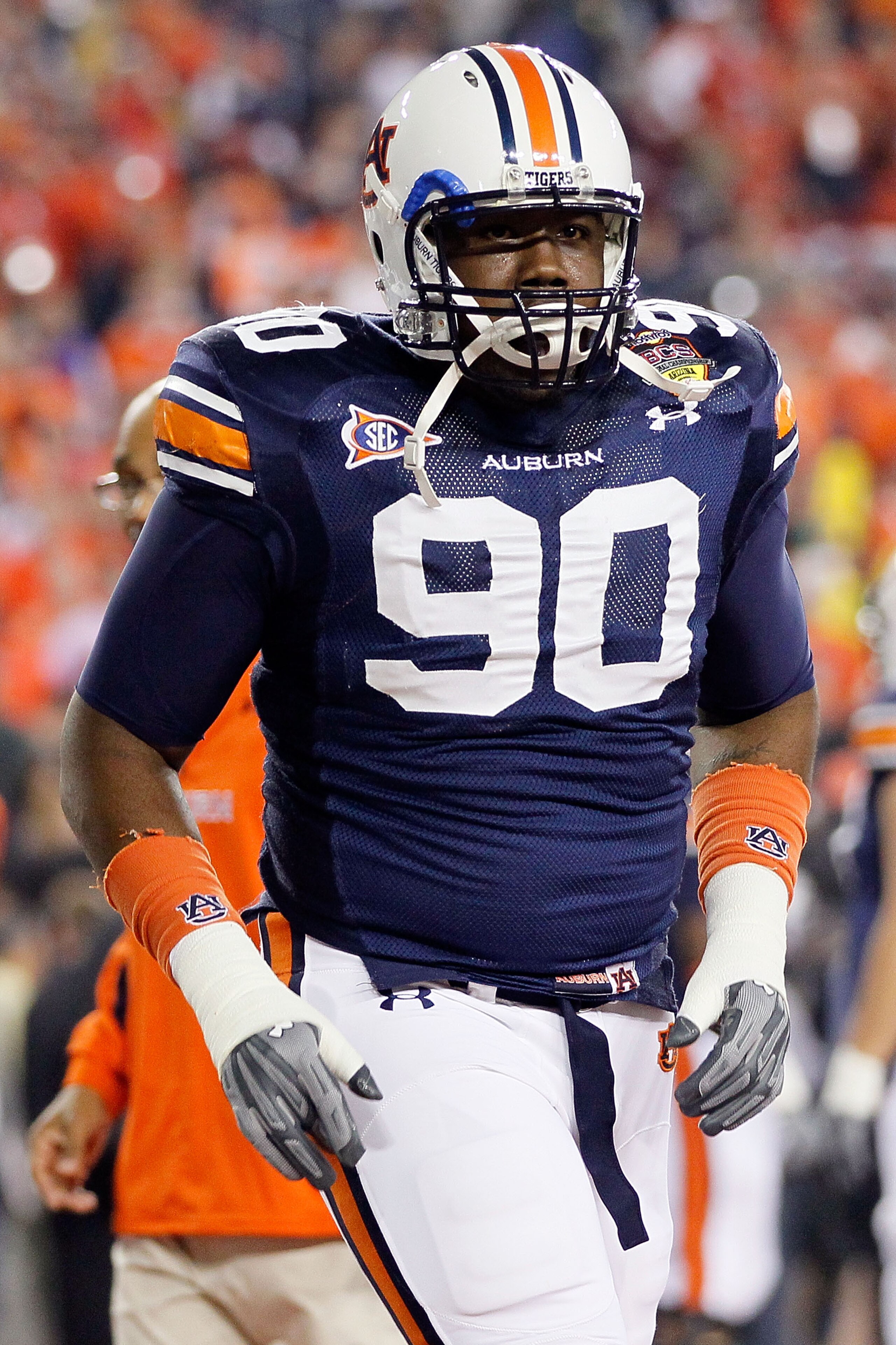
Newton may have been the MVP for the Auburn Tigers, but Fairley was undoubtedly the defensive leaders.
The 6'3", 291 pound tackle is an elite defender who recorded 11 sacks and 24 tackles for a loss in his final season. He's incredibly strong despite being slightly undersized and swallows up offensive linemen and ball carriers. He's consistently shown the ability to shed his blockers and is relentless when in pursuit. His explosive first step and full arsenal of moves makes him potentially the best pass rusher in the entire draft.
Fairley's only weakness is that he gets easily frustrated and takes some plays off. But even if he never becomes a three down type of player he's still a lock to be a top 10 pick.
2. Marcell Dareus, DT, Alabama Crimson Tide
24 of 25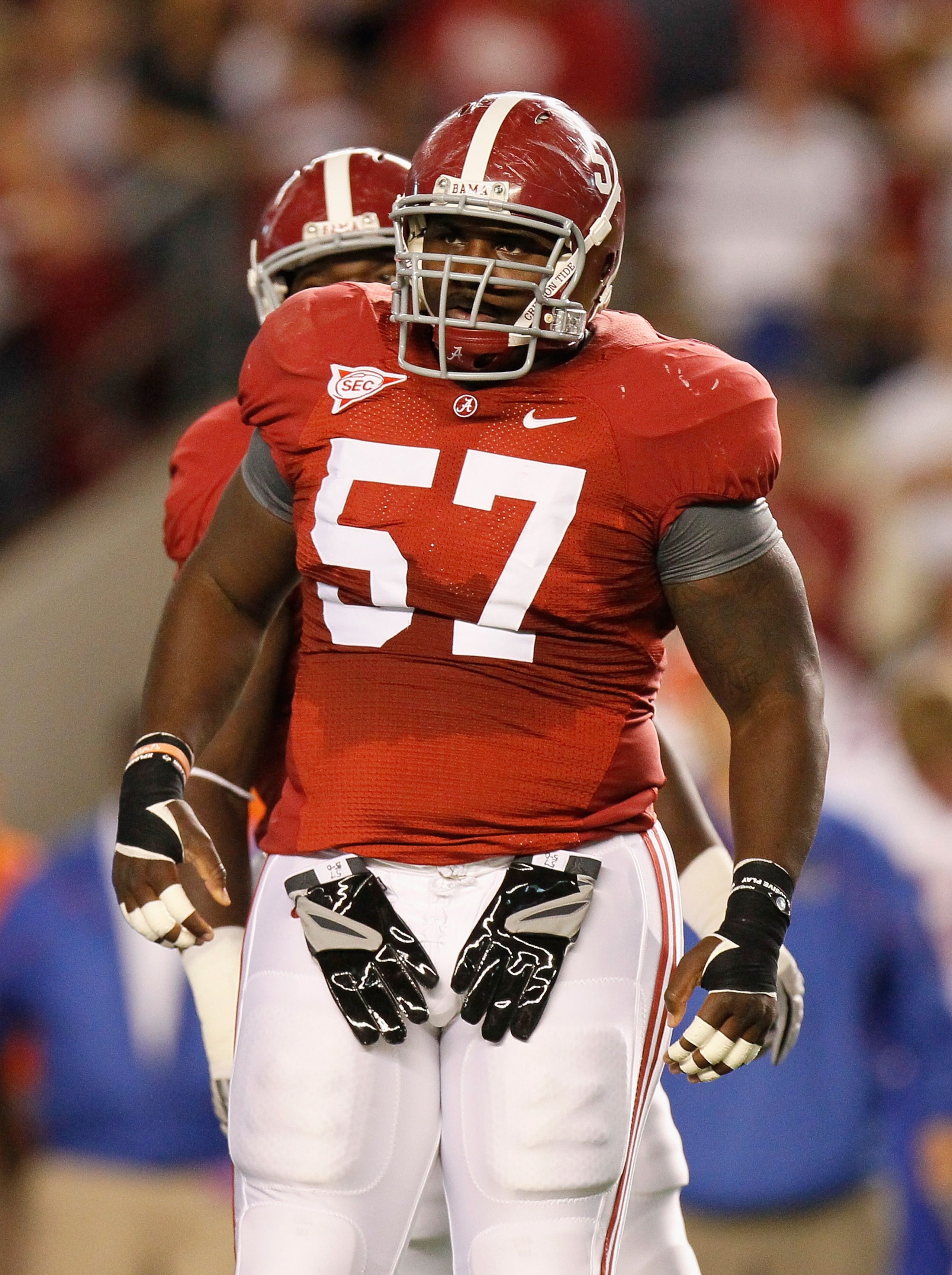
Dareus has spent his entire life overcoming obstacles almost as big as he is. He lost his father when he was six years old and nearly lost his mother to congestive heart failure just a few years later. Confined to a wheelchair and unable to take care of her son, Michelle Dareus allowed Marcell to live with other families. He played out his college days living with a sponsor family and now is eagerly awaiting his first professional paycheck.
Dareus will go somewhere in the top five, possible even first overall, so it's a good bet that his first paycheck will be a pretty sizable one. He's established himself as the best defensive line prospect in the draft thanks to an unbelievable combination of size (6'3" and 319 pounds) and speed. He can play inside at tackle and dominate against the run. He can line up outside and blitz the quarterback with a series of spin and strip moves.
If there's a single weakness for Dareus it's that he's never played a full season as a three down starter. But that should change very soon. He's simply too good to keep off the field.
1. Patrick Peterson, CB, LSU Tigers
25 of 25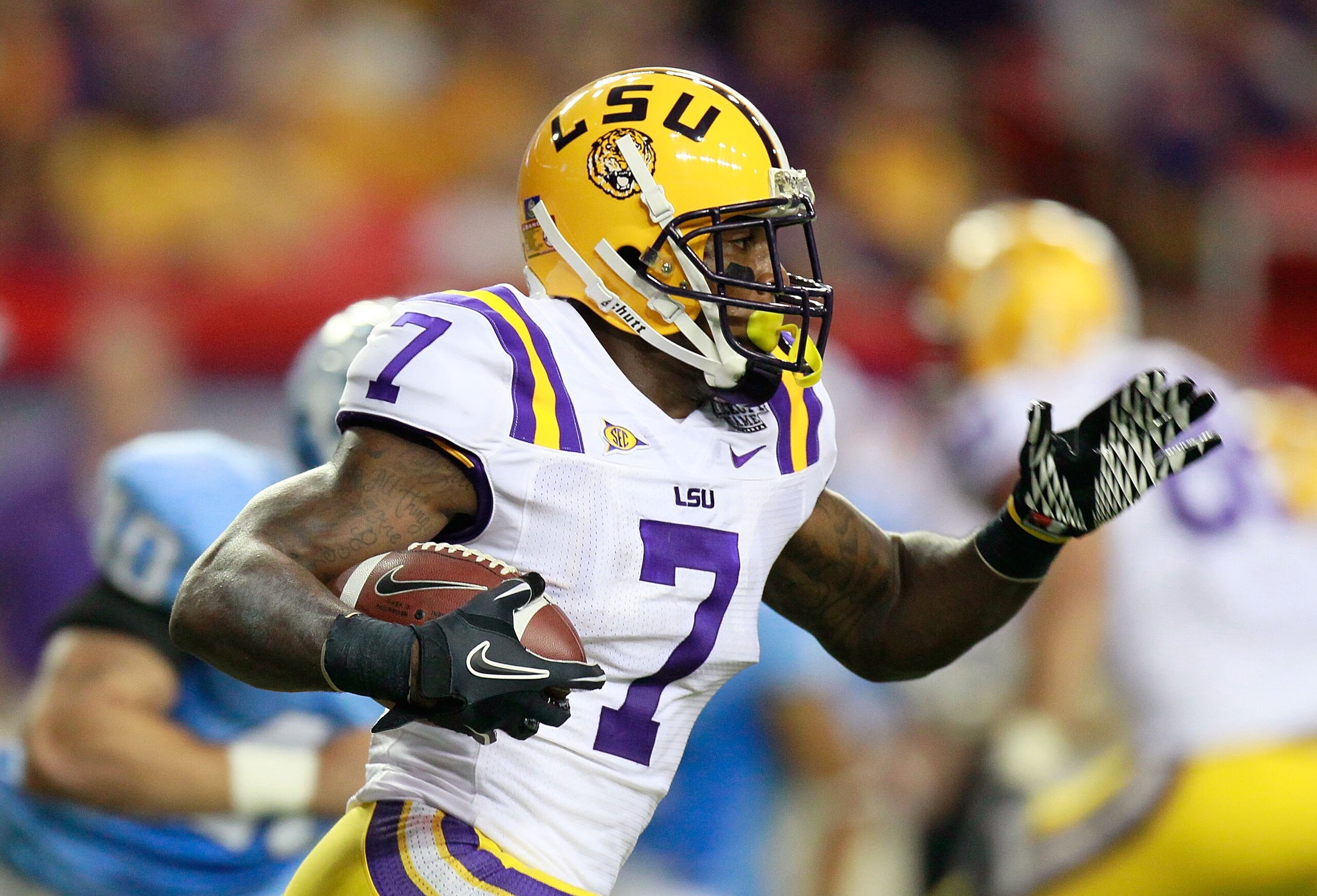
There's the type of cornerback you hope won't make you regret throwing in his direction, and there's the type of cornerback you know will make you regret throwing in his direction. Peterson is the latter.
Featuring an ideal combination of size (6'0" and 219 pounds) and speed (4.31 in the 40), Peterson is a once-in-a-generation type of player. He's an incredible athlete and can run stride for strike with any receiver. He's also physical enough to go up against bigger players and still make the play. He has great hands that allow him to go after any ball in his vicinity, and he's even fantastic in run support. If he has a weakness it's that he tries to go for the big play too often. Other than that he's the total package at defensive back.
Just because he's the most talented player in the draft doesn't mean he'll go No. 1. But whichever team gets Peterson will be getting a shutdown corner and a potential Hall of Famer.
.png?w=2560)
.jpg?w=2560 "Colts Texans Football")


.jpg?w=2560 "Chiefs, Steelers Eye WR Trades")


.jpg?w=2560 "Latest Peyton-Colts Rumors")