March Madness Bracket 2011: Ranking the 10 Best Players in the Southeast Region
In my opinion, the Southeast region is the weakest and most wide-open region in this year's March Madness melee.
With that being said, there is still going to be a very talented group of players taking the court in Tampa, Florida on opening weekend.
These ten players may not be elite NBA prospects, or even All-Americans, but make no mistake about it these guys can play basketball.
10. Orlando Johnson, UCSB
1 of 10
While Orlando Johnson may play for an overlooked UC-Santa Barbara team out of an obscure Big West conference. Orlando Johnson's talents are nothing to overlook.
Johnson, who began his career at Loyola Marymount, was the Big West Player of the Year last season and repeated this season as an all-league performer.
Averaging 21.1 points per game, 6.3 rebounds per game, along with 3 assists a game, Johnson is a versatile scorer for the Gauchos.
Johnson can score inside or out, averaging 40% from three point land, and will need to make more than his share of shots if the Gauchos hope to score a first-round upset over the Florida Gators.
9. Matt Howard, Butler
2 of 10
Coming off the possibly the greatest Cinderella run in NCAA tournament history, the Butler Bulldogs are hoping for a repeat performance in 2011.
If the Bulldogs are to make a run in any capacity, the load will fall squarely on Matt Howard's shoulders.
A three time, first team All-Horizon player, Howard has also earned the conference tournament's MVP award in each of the last two seasons.
Averaging nearly 17 points per game to go along with 7.8 rebounds per game, Howard is a consistent post presence for the Bulldogs when he can keep himself out of foul trouble.
With no Gordon Hayward to rely on this season, the onus falls even heavier on the shoulders of Matt Howard to score the basketball and control the game for the Bulldogs.
Will he rise to the occasion and get Butler a win or two, or will we see a very early exit from the 2010 darlings of the dance?
8. Brad Wanamaker, Pittsburgh
3 of 10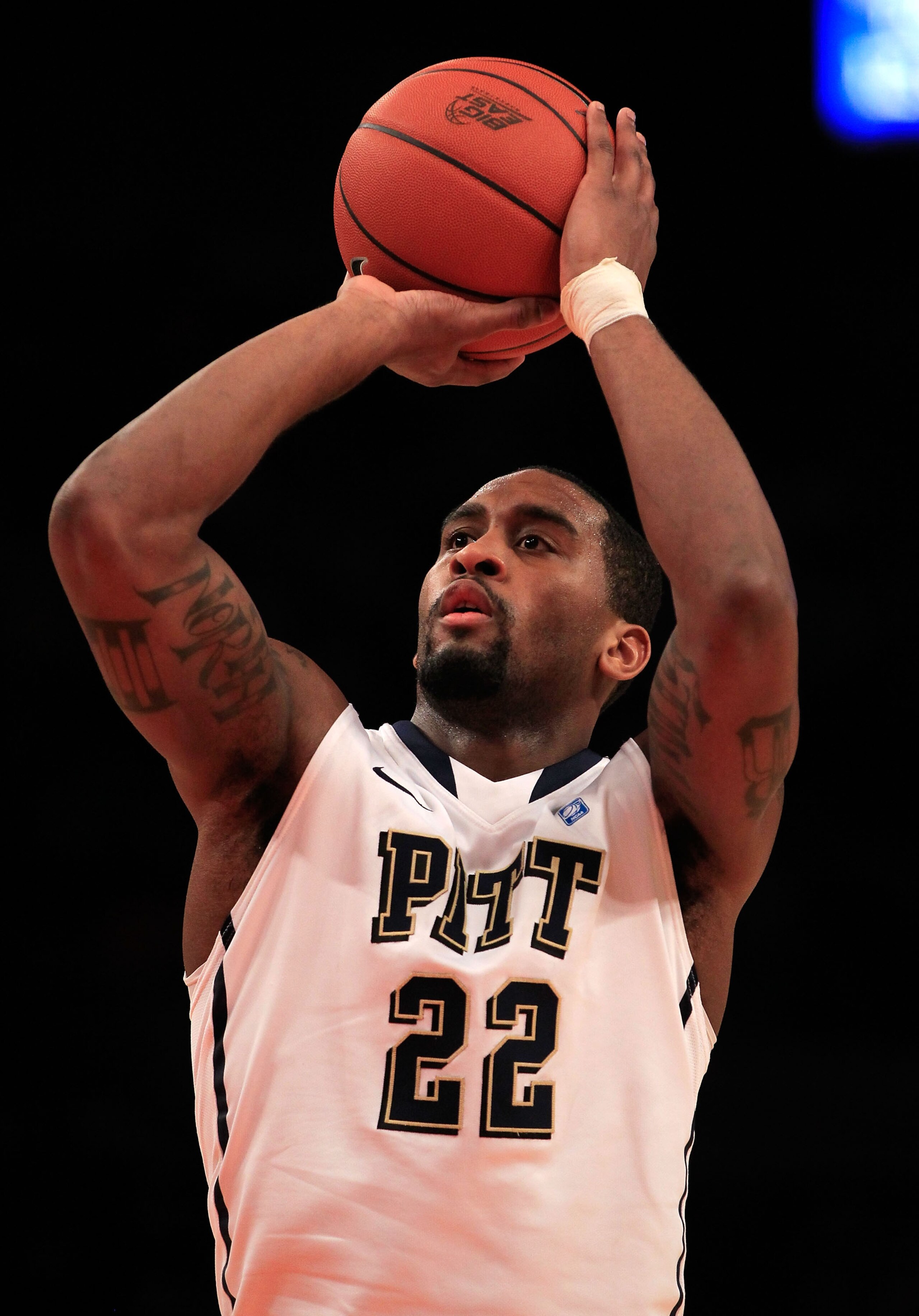
Brad Wanamaker may not be the biggest scorer for the Pittsburgh Panthers, averaging an even 12 points per game, but his 2.26 assist/turnover ratio makes him as important as anyone to the top-seeded Panthers.
While not a flashy player, Wanamaker is as sound as they come in an incredibly deep Big East conference. He is the second player in school history to score 1,000 points, grab 500 rebounds, and dish out 400 assists. How is that for consistency?
Wanamaker simply knows how to find people and is a big reason Jamie Dixon's Panthers rank fourth in the nation in assists, averaging 5.1 assists per game in the rugged Big East conference.
Pitt's success against faster and more athletic teams in the tournament will hinge on Wanamaker's ability to retain composure on both sides of the ball and be the senior leader he has been all season.
If Wanamaker can play his game and allow Pitt to outwork teams as they are accustomed to doing, this could be the year Jamie Dixon finally makes the deep tournament run all Pitt fans have yearned for.

7. Jordan Taylor, Wisconsin
4 of 10
Jordan Taylor, averaging over 18 points per game, still finds a way to average almost five assists per game for the Badgers of Wisconsin.
Couple this production with the fact that Taylor has nearly four times as many assists as turnovers and you are looking at a very consistent Badgers squad, largely in part to Jordan Taylor's ability to facilitate the offense.
Taylor is the only player in the Big Ten to average in the top five in both scoring and assists and usually saves his best for clutch situations.
The bottom line is, with Taylor running the show, the Badgers will be a very efficient offensive team and could shake their early-tournament woes of the last two years.
6. Dwight Hardy, St. Johns
5 of 10
To put it simply, Dwight Hardy is one of the hottest scorers in the nation.
Since the January 30th beatdown of the Duke Blue Devils, Hardy has averaged 23.2 points per game. Including the 26 he dropped on the lockdown Blue Devil defense.
Hardy is a scorer that never quits, ask Pitt fans. He drives to the lane hard and knows how to finish with contact.
With senior leader D.J. Kennedy sidelined with a knee injury for the extent of the tournament, Hardy will need to not only score but be the emotional leader of the Red Storm.
St. Johns has played giant killer all season, and in order for St. Johns to get a shot to continue to play David vs tournament Goliaths, Hardy will need to continue his torrid scoring streak basketball fans have come to expect from the clutch-performing guard.
5. Jon Leuer, Wisconsin
6 of 10
Jon Leuer is the main reason the aforementioned Jordan Taylor is able to rack up the assists for the Wisconsin Badger offense.
Leuer, like Taylor, averages over 18 points per game, and also averages over seven rebounds per game.
Standing 6'10'', Leuer has a deft scoring touch from all areas of the court, shooting almost 85% from the charity stripe and over 37% from the perimeter.
Simply, Leuer is one of the most consistent frontcourt presences in the nation. He knows how to score the basketball and is a consistent threat to do so on every possession.
He has the ability to pull bigger, slower post players out of the paint because of his shooting ability, which opens up the paint for the Badger offense to operate.
If the Badgers hope to make a run in this season's tournament, Leuer will have to capitalize on the chances Taylor will create for him, and also do a little creating himself.
4. Ashton Gibbs, Pittsburgh
7 of 10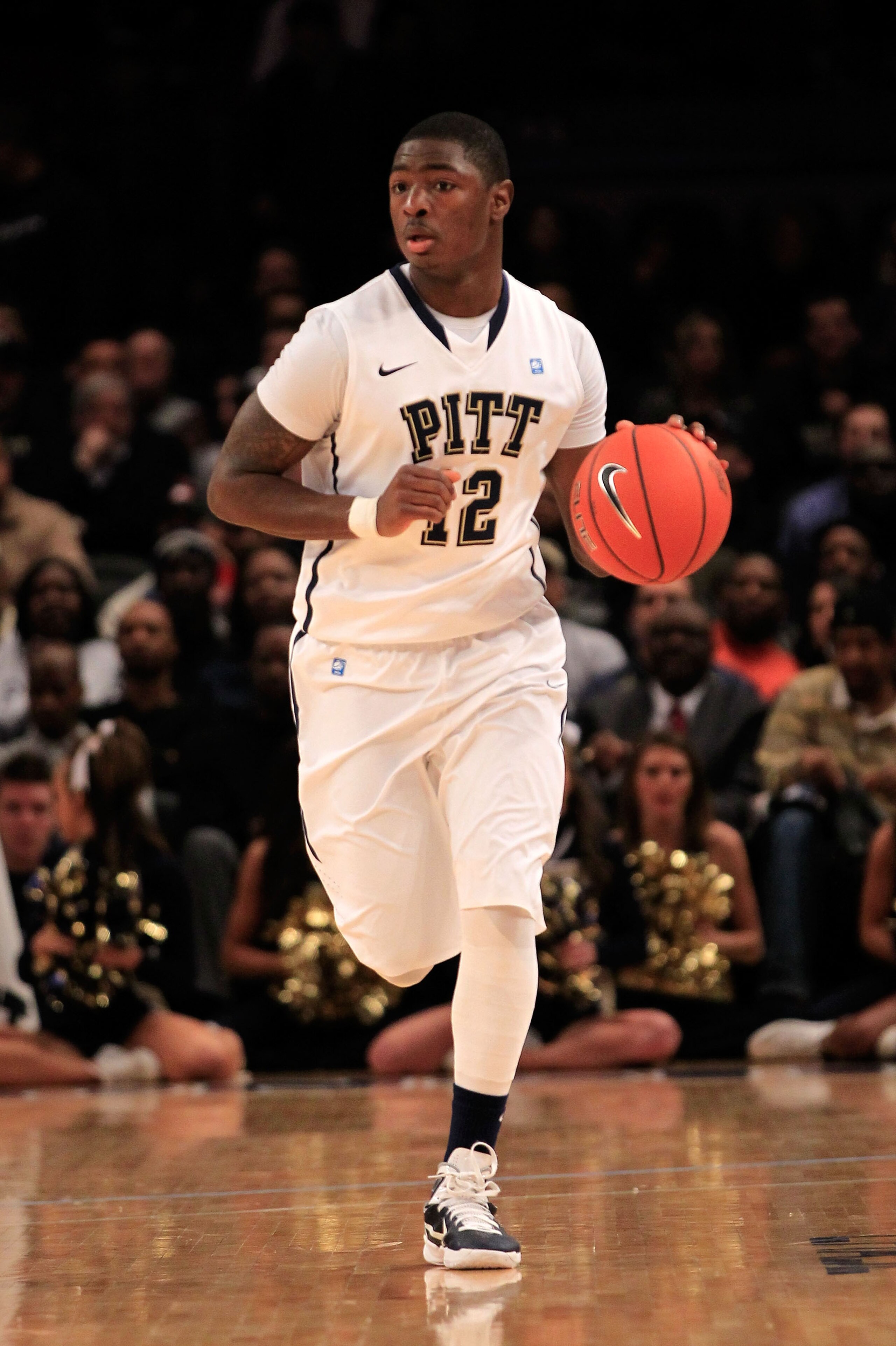
While Brad Wanamaker is the hand that steers the wheel of the Pitt offense, Ashton Gibbs is the gas that fuels the production of the hard-nosed Pittsburgh Panthers offense.
Gibbs shoots a ridiculous 48% from beyond the arc, helping him to achieve an average of over 16 points per game.
Gibbs is Pitt's only consistent three point threat and now that the Panthers enter their traditionally woeful month of March, that will become even more important.
Speed is not necessarily Gibbs' strong suit, but he is a crafty veteran capable of creating his own shot. He is a player opposing teams can ill afford to give any space for fear of the dreaded dagger from distance.
Coupled with Wanamaker in the Pitt backcourt, Gibbs provides a breakout scoring threat the Panthers have lacked in the past.
3. Kalin Lucas, Michigan State
8 of 10
Tom Izzo is an elite collegiate coach. Kalin Lucas is an extension of Izzo on the court for the Michigan State Spartans.
Lucas has shown perseverance through a devastating achilles tendon injury suffered in last season's tournament, and also roster defections such as Chris Allen and more recently Korie Lucious.
While listed as a point guard for Izzo's offense, Lucas has been forced to assume more of a scorer's role for the Spartans due to the previously mentioned losses of Lucious and Allen.
Averaging 17.2 points per game, Lucas is a player capable of throwing the offense on his back and running with it at any point in the game. He is a capable three point shooter, shooting around 38% on the year, and despite the depleted supporting Spartan cast, can still dish the rock to the tune of 3.3 assists per game.
Lucas is a senior, and most importantly a trusted leader. When the chips are down and the Spartans need a shot, you can bet Lucas will have the ball in his hands.
If the Spartans want to make an unlikely run deep into this year's Big Dance, Lucas will have to deliver just as Coach Izzo would expect him too.
2. Jacob Pullen, Kansas State
9 of 10
Jacob Pullen is a one man show in Manhattan, Kansas.
Leading the Kansas State Wildcats to wins in eight of their last nine games, Pullen brought a left-for-dead Wildcat team into a state of resurrection down the home stretch.
Averaging just under 20 points per game, Pullen can score in any way, shape or form on the hardwood. Pullen managed to score double digits in all but two games this season, with virtually all of opposing team' defensive attention being laid on his #0 jersey.
Pullen can distribute the ball as well with an average of 3.7 assists per game, which is a good number considering the lack of offensive talent on the Wildcat offense.
Pullen is capable of taking a game over at any moment. He is a trusted leader and scorer on a team that has underachieved all season after being dubbed an early favorite prior to the season.
In order for Kansas State to make a run in March this year and live up to expectations, Pullen will not only have to score but will have to setup his teammates with open looks and easy opportunities. If he can manage this, the Wildcats will open some eyes.
1. Jimmer Fredette, Brigham Young
10 of 10
It's Jimmer time!
The phrase that rings loudly every time the BYU Cougars take the court is about to be a household phrase.
Jimmer, obviously, is Jimmer Fredette, the nation's leading scorer at 28.5 points per game.
While anyone that has watched BYU is probably convinced Fredette could pull up from half court and hit nothing but net, what makes Jimmer a special scorer is his ability to get to the rim and finish as well.
Perhaps the most amazing part about Fredette is not his scoring ability, but the fact that while scoring over 28 points per game, he still finds time to average over four assists per game.
Make no mistake about it, BYU is a one-man show and Fredette is the ringleader. BYU goes when Jimmer goes. While Jackson Emery is a capable second option, he is strictly a role player for this Cougar team.
Fredette has eclipsed the forty point mark three times this season, not to mention a mind-blowing 52 point performance against New Mexico in the Mountain West conference tournament.
If he can continue his shooting stroke, and who would bet against him, the Cougars could turn some heads in March. However, if Fredette goes cold, the Cougars will flounder without his production and leadership.
.jpg?w=2560 "Texans-Mixon Released Football")
.jpg?w=2560 "Buyers or Sellers for NFL's Most Surprising Teams 🏈")
.jpg?w=2560 "CJGJ Shares Cryptic Post 🤔")