
BCS Bowl Predictions: Auburn vs. Oregon, Who Has the Better Offense?
If Oregon can hold off in-state rival Oregon State and Auburn can defeat South Carolina in the SEC Championship Game, the two teams will meet in the BCS National Championship Game (sorry TCU).
This game will pit two of the nation's most dynamic and exciting offenses against each other in what should be an exhilarating title game.
Oregon ranks first nationally in scoring at a whopping 50.5 points per game, while Auburn is the seventh highest scoring team in the country at 41.6.
Cam Newton and LaMichael James lead the Heisman race and have pushed their respective offenses to a top 10 rank in rushing yardage.
But which offense is in fact superior? Here we break it down position by position and see which explosive offense holds the advantage come January.
Quarterback
1 of 10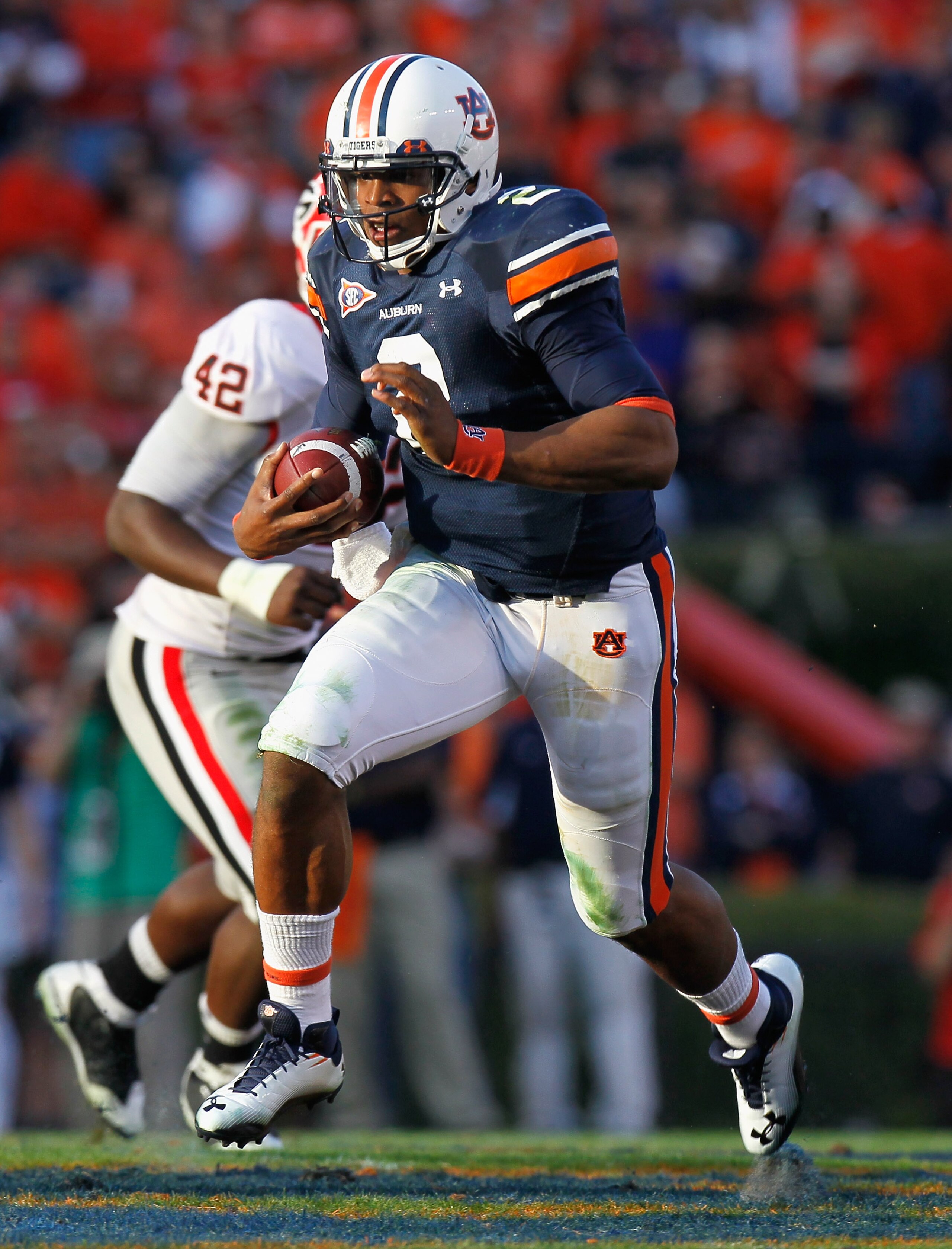
Cam Newton gets my Heisman vote. In fact, I’ve been voting for him since Denard Robinson was still everybody’s favorite.
Newton has accumulated over 3,500 yards of total offense while scoring 43 touchdowns versus only five turnovers. He’s a running quarterback who still completes 67.9 percent of his passes.
Still, the Ducks' Darron Thomas is no slouch. Thomas racked up almost 3,000 yards of total offense this season while making phenomenal decisions. Thomas has only seven turnovers this season and has taken only seven sacks over the first 11 games.
Cam Newton may have the edge in this category, but don’t underestimate Thomas.
Advantage: Auburn
Running Back
2 of 10
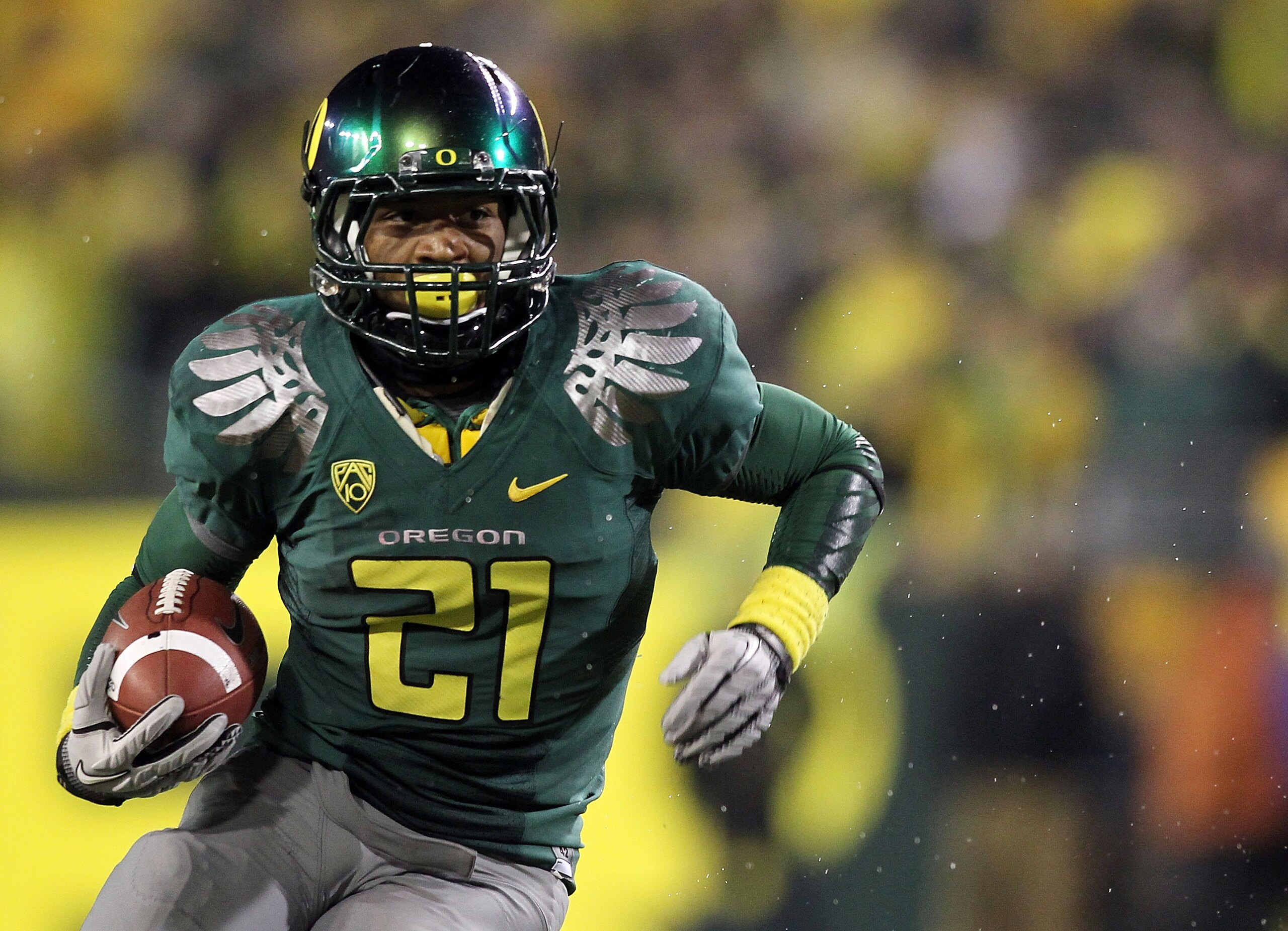
Michael Dyer has quietly put up a solid season. The bowling ball-shaped freshman has put up 886 yards on an impressive 6.1 yards per carry. While he may not be explosive, he fights hard in the trenches and seems to find ways to pick up additional yardage.
Unfortunately, his accomplishments pale to those of LaMichael James. LMJ will quite literally run away with the Pac-10 Player of the Year trophy after rushing for 1,546 yards and 19 touchdowns this season.
The diminutive James is an explosive playmaker with lightning-quick feet, although he’s not a true between the tackles-type rusher. The advantage goes to James, but that shouldn’t be viewed as a knock on Dyer.
Also, watch out for Auburn’s Onterio McCalebb. The pint-sized backup turned a mere 86 carries into 733 yards, good for 8.5 yards per rush. OMC should be good for eight to 10 carries when/if these teams play and could be the wild card for the Tigers.
Advantage: Oregon
Wide Receiver 1
3 of 10
Leading the Ducks in receptions and yardage this season was Jeff Maehl. The 6'1" senior has thus far tallied 61 catches for 857 yards while adding an impressive 12 TDs.
Maehl runs precise routes and has great hands, even if he lacks elite speed—although his 40 time was clocked at 4.55.
For Auburn, their leading receiver is Darvin Adams, standing 6'3". Adams' numbers dropped off significantly from last season. After catching 60 balls for 997 yards as a sophomore, Adams has managed only 41 catches for 692 yards as a junior. This drop-off can be explained by the run-heavy offense that Auburn has run this year with Cam Newton at the helm.
Adams runs a slightly faster 40 time than Maehl, but Maehl runs better routes. This matchup is essentially a toss-up, although if I had to pick I’d go with Maehl.
Advantage: Oregon

_0.png?w=2560)
Wide Receiver 2
4 of 10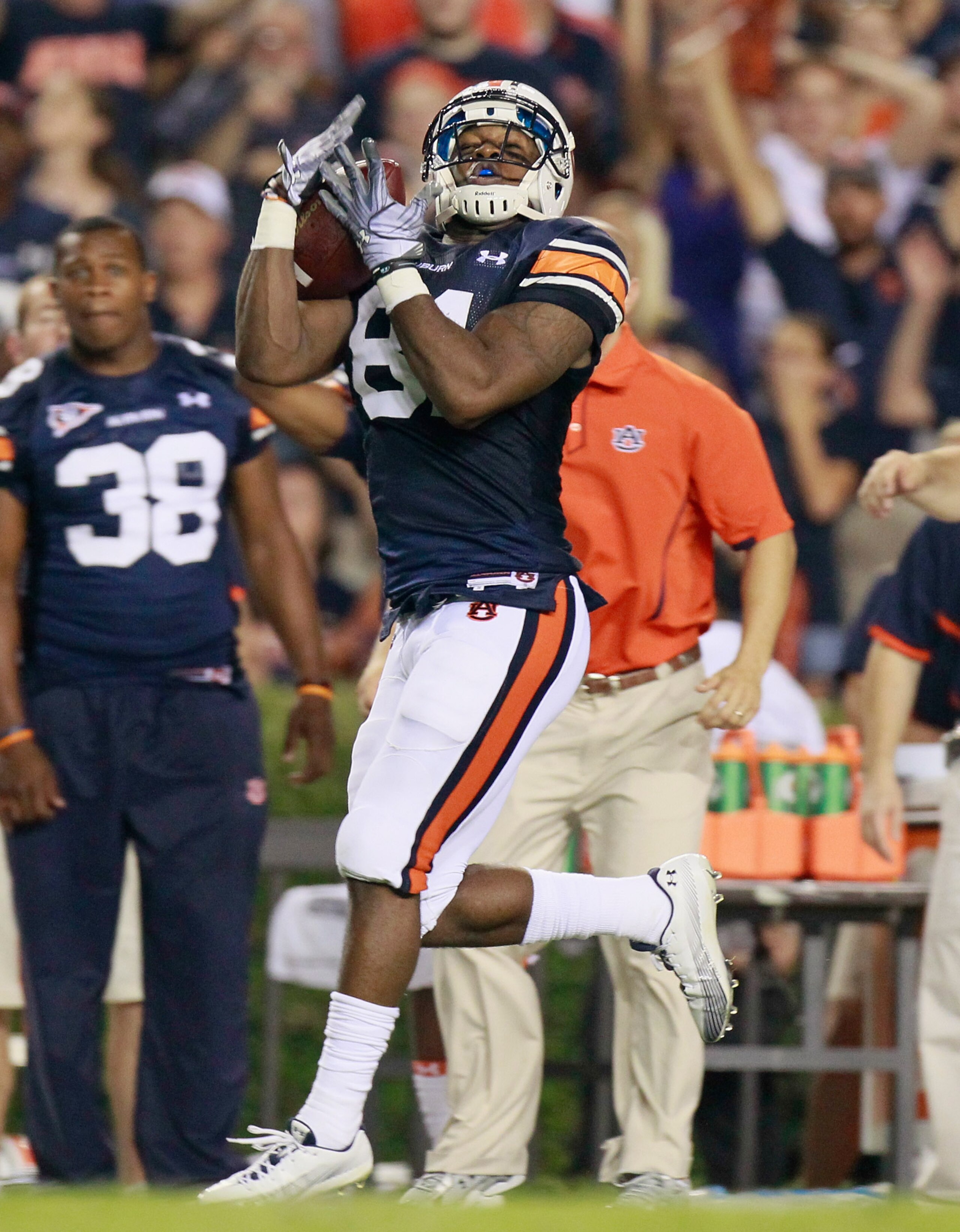
For Oregon, their receivers drop off significantly after Maehl. Not for Auburn. Terrell Zachery has 36 catches for 555 yards, including a 70-yarder last week against Alabama. The 6'1" Zachery is the team’s best big play threat and has a nice burst off the line.
D.J. Davis, a senior for Oregon, hauled in 33 receptions for 363 yards this season after totaling eight catches in the previous two seasons. Davis doesn’t have the speed or explosiveness of Zachery, so this matchup goes to the Tigers.
Advantage: Auburn
Offensive Line
5 of 10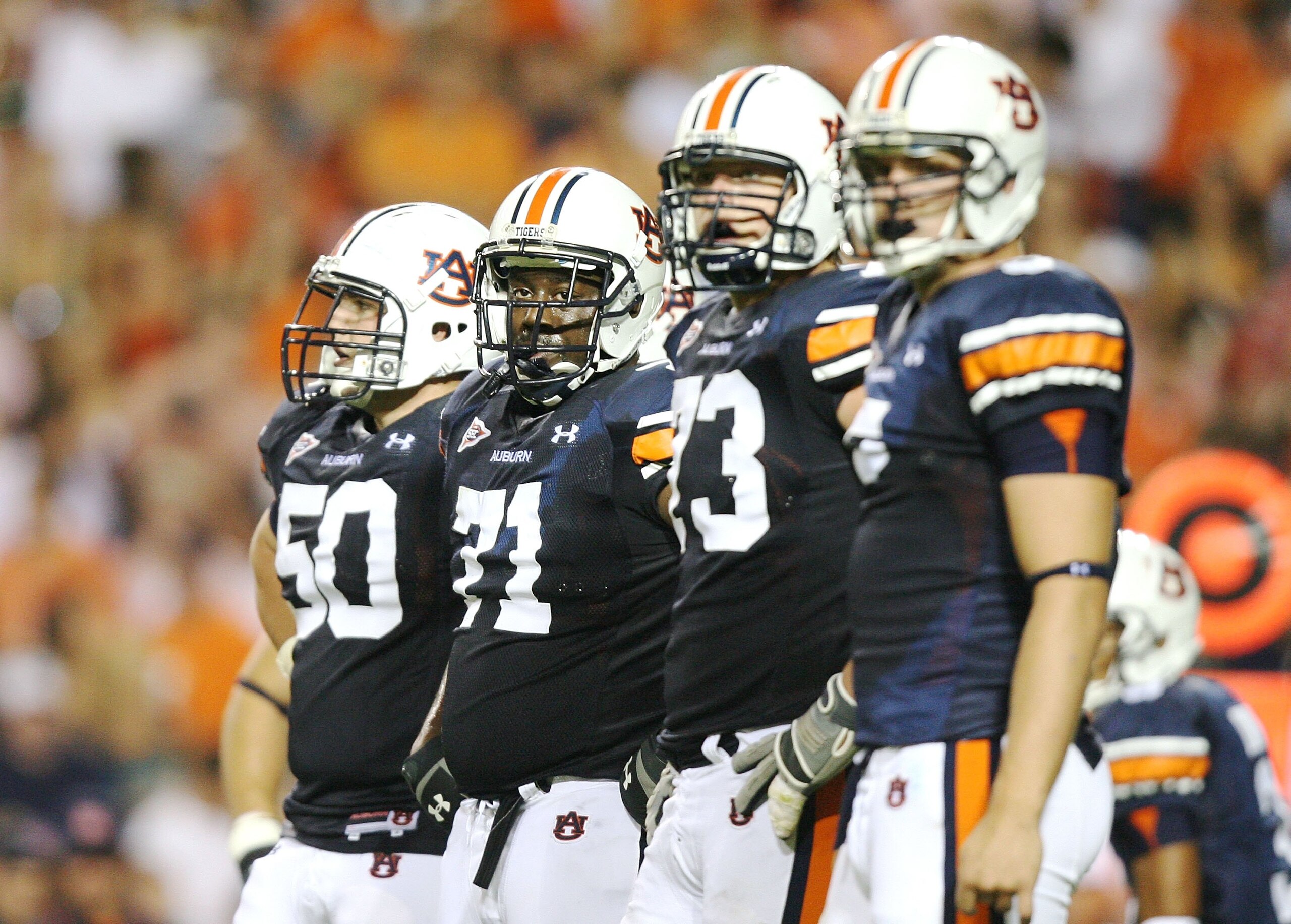
Auburn’s offensive line has been waiting years for this opportunity. Their starting unit includes four starters from a season ago and features four seniors and a junior. Both center Ryan Pugh and left tackle Lee Ziemba were All-SEC performers a season ago.
If you can believe it, Oregon’s offensive line has even more experience! The Ducks return all five starters from a season ago, although not one of them made the All-Pac-10 first or second team.
Advantage: Auburn.
Tight End
6 of 10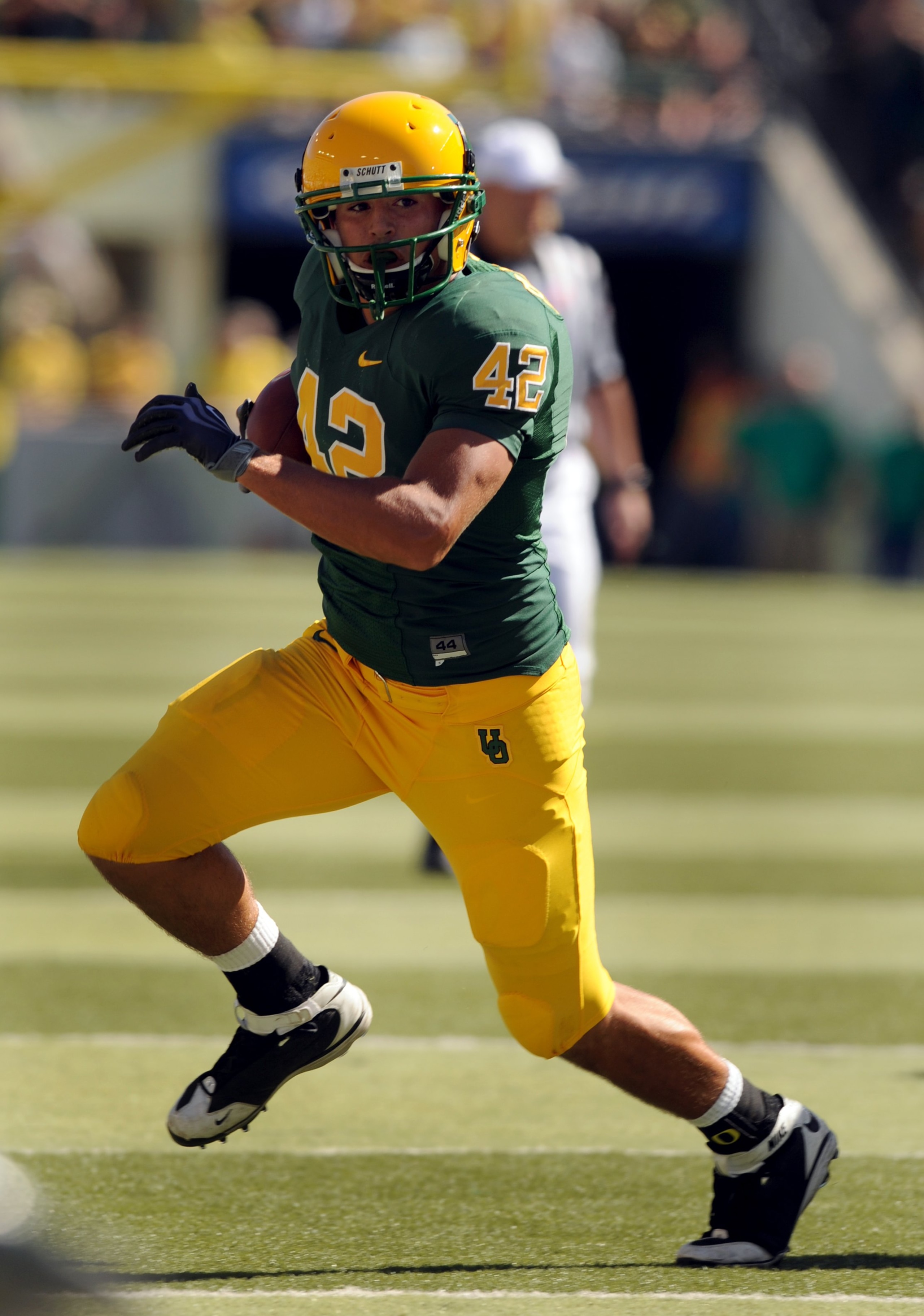
Last week in Auburn’s thrilling come-from-behind win over ‘Bama, Philip Lutzenkirchen’s touchdown with 12:15 remaining ended up being the game-winner. Unfortunately, the Tigers tight end has been otherwise quiet this season.
Often utilized as a blocker, the 6'4" sophomore has only 12 catches for 119 yards in six games this season.
However, for Oregon, their tight end is an integral part of the offense.
David Paulson, a junior, ranked second in yardage for the Ducks with 370. Paulson is athletic and makes for an excellent downfield threat, as shown by his 17.6 yards per reception.
Advantage: Oregon
Big Play Ability
7 of 10
This season the Ducks had four players with at least one play of 60 yards. Auburn had three.
Both offenses are absolutely loaded with big play potential. Both teams can rip off long runs in the blink of an eye, which sets up the big play action pass. In fact, despite Darron Thomas' 8.0 yards per attempt, he has completed at least one pass of 30 or more yards to eight different receivers.
Auburn’s receivers are faster than their Oregon counterparts, which would help to explain Cam Newton’s elevated 10.3 yards per attempt.
These are two of the top five big play teams in the country, which makes this a very difficult call. I’d like to give Auburn the benefit of the doubt, but that would be unfair.
Advantage: Push
Team Speed
8 of 10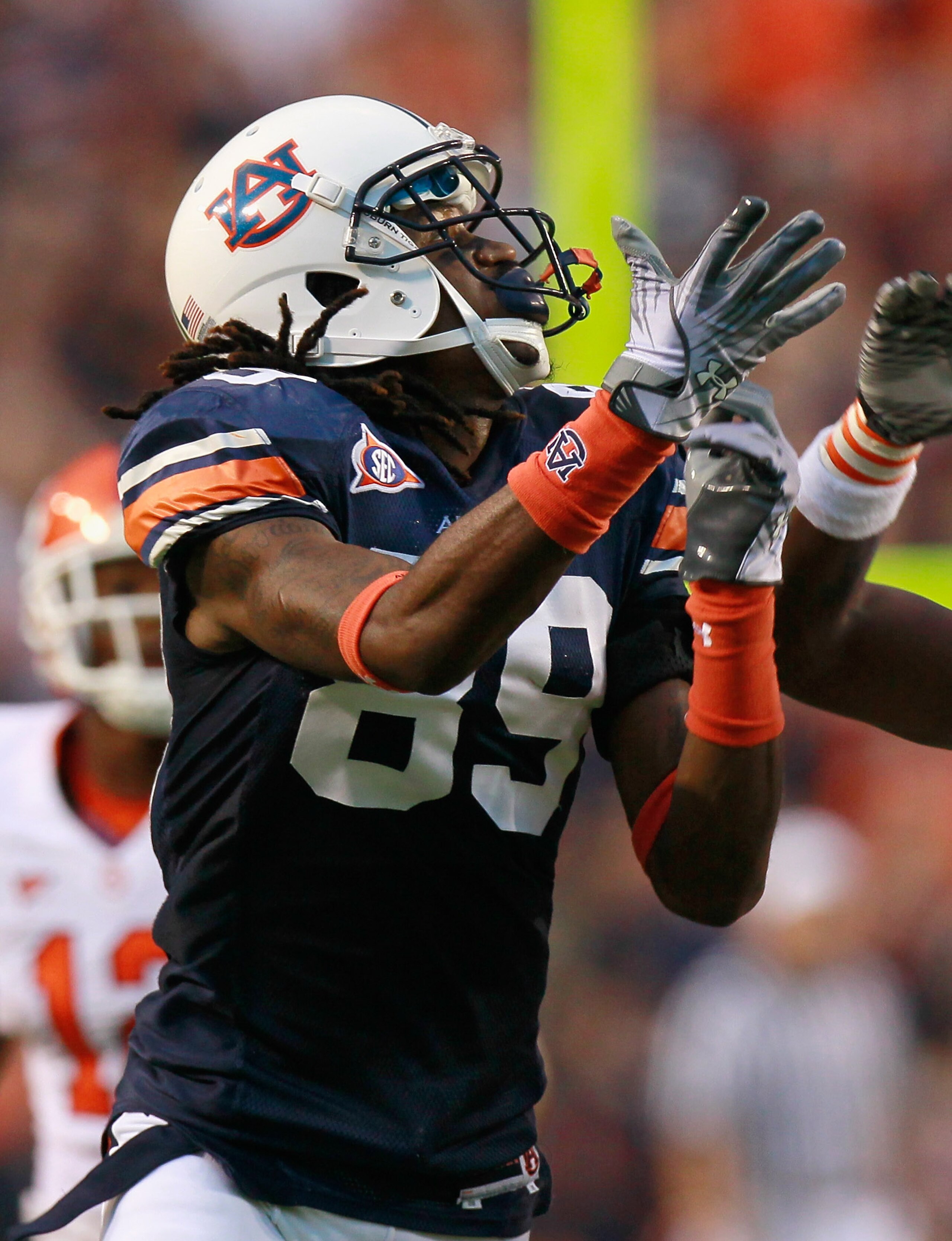
There are very few statistical components to speed, but the best is probably yards per catch. If that’s the case, then Auburn has the upper hand in this category.
The Tigers' top three receivers all average better than 15 ypc, while two of Oregon’s top three are below 14 ypc. Of course, that’s not to say Oregon isn’t fast. They fly around the field—anybody will tell you that.
However, without having ready access to accurate 40 times, I have to go with what the numbers tell me and my eyes have seen. Oregon is fast—but Auburn is faster.
Advantage: Auburn
Two-Minute Offense
9 of 10
In a way, neither of these teams is well-prepared to run the two-minute drill. These are run-heavy teams, and you need to keep the clock stopped when running the TMD.
Cam Newton definitely has a strong arm, although his accuracy is somewhat suspect at this point in his career. The biggest thing he has going for him is his ability to drop back in the shotgun and pick up 10 to 15 yards if the coverage downfield is good. Ditto for Thomas, albeit to a lesser extent.
Oregon’s biggest advantage is that they are used to running a hurry-up. Their typical offense runs plays faster than nearly every team in the nation. Oregon also has a clear-cut go-to receiver in Jeff Maehl, which helps late in games.
This is one area where neither of these elite teams thrives, but Oregon has the slight edge.
Advantage: Oregon
Coaching
10 of 10
In only his second season, Gene Chizik has the Tigers headed to a BCS bowl. However, I don’t know how much of their success I can attribute to his coaching.
As Cam Newton goes, so go the Tigers. Chizik set up a system that allows Newton to utilize his athletic gifts, but I would hardly call it the most complicated game plan.
On the other hand, Oregon has an utterly unique offense with a series of un-decodable play calls being sent in from the sideline. Their spread offense has scored at least 40 points in every game but one, and they do it by running a fast-paced attack that constantly keeps the defense off balance.
The Ducks offense take off an average of 23.2 seconds between plays—32 percent faster than the collegiate average. That is the mark of good coaching. Well-conditioned players. A hurry-up offense that produces very few turnovers. Kudos to coach Chip Kelly.
Advantage: Oregon
.jpg?w=2560 "OBJ Calls Out Giants After Release")



.jpg?w=2560 "Saquon Out for Game")