


Typically known for its dominance in football, the SEC is beginning to make noise in the college basketball world.
Much of this credit can be placed on the resurgence of Kentucky and, more specifically, John Calipari.
Combine that with the emergence of Tennessee and Florida as consistently solid teams, and the conference usually has a handful of quality teams capable of making noise in March.
Calipari is comparable to Houdini in that no matter how much trouble he gets into with the NCAA, he's always able to wriggle his way out and get off with no more than a slap on the wrist.
Last season, Calipari took his first group comprised primarily of freshmen to the Elite Eight before losing to West Virginia. Tennessee also reached the Elite Eight before losing to Michigan State. The other two teams, Florida and Vanderbilt, played in some serious nail-biters in the first round, losing to BYU in double OT and Murray State on a last-second shot, respectively.
This conference lost its fair share of talent to the NBA draft and graduation.
Kentucky had five players drafted in the first round, while Mississippi State lost one of the best shot-blockers in the history of the game in Jarvis Varnado. Vanderbilt lost big man A.J. Ogilvy and South Carolina lost its spark plug, and the conference's leading scorer, Devan Downey.
As much talent as this conference lost, it has more coming in and coming back. Five teams put together top-25 recruiting classes, and the teams that didn't fare well last year return tons of talent.
Alabaman Crimson Tide
1 of 13
Last year: 17-15, 6-10 in the SEC
Notable Losses: G Mikhail Torrance: 15.6 ppg (led team), 5.1 apg (led team), 3.7 rpg, 33 mpg (led team), G Anthony Brock: 6 ppg, 2.4 apg, started 25 games
Notable Gains: G Trevor Releford (No. 52 on ESPNU Top 100)
Strengths: One of the best returning players in the conference, big man JaMychal Green (14 ppg, 7 rpg, 50 percent FG) returns. Only a junior, his numbers should increase to where he could be a 20-10 guy every night. With Torrance now gone, he'll definitely be the first option.
The rest of the frontcourt also returns with 6'8" senior Chris Hines and 6'6" sophomore Tony Mitchell. These two split duty as the other starting forward, but expect both to start with Green this season due to their experience.
Mitchell actually had a solid freshman campaign, finishing third in scoring and second in rebounding. He can only get better. Returning their frontcourt will make these guys one of the better rebounding teams in the conference.
The backcourt, meanwhile, brings back some good experience, with three returning having seen major playing time.
Weaknesses: Losing two starters in the backcourt for a team that primarily played guards, one of whom being the leading scorer and distributor, will be hard to replace.
Returning starter Senario Hillman will be relied upon more than anyone else back there. Freshman Releford should see action due to their playing style. Finding a reliable scorer in the backcourt could be an issue as no returnee averaged over eight points per game.
Bringing in five freshmen will mean they will make up most of the bench, which can definitely be a problem. Free-throw shooting will be a huge problem as only Hillman shot better than 70 percent last season.
Prediction: Being a guard-oriented team and having to replace two of those starters will make it rough for the first part of the season. Green will have to become a conference Player of the Year-type player for these guys to improve.
Does he have the talent? Yes, but tapping into that talent for an entire season will be tough. This team can duplicate last season's record, but not much more. Twenty wins and an NIT berth would be a solid accomplishment.
Arkansas Razorbacks
2 of 13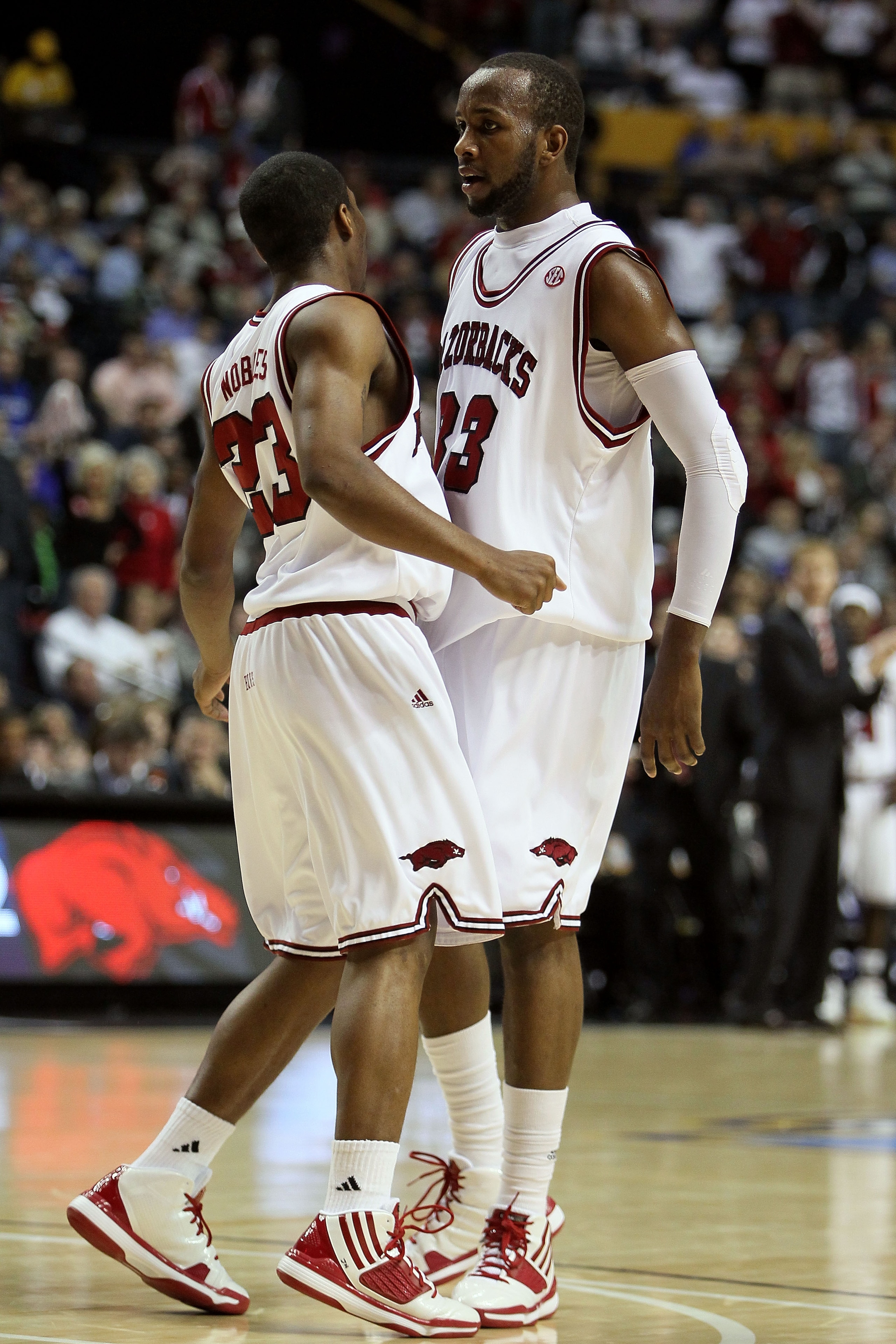
Last year: 14-18, 7-9 in the SEC
Notable Losses: G Courtney Fortson: 18 ppg (led team), 5.7 apg (led team), 5.2 rpg, F-C Michael Washington: 12.5 ppg, 6.1 rpg, 50 percent FG, G Stefan Welsh: 5.8 ppg, 20 mpg.
Notable Gains: None
Strengths: The Razorbacks return an inside-out duo who could be one of the best tandems in the conference.
Junior guard Rotnei Clarke is the top returning scorer (15 per game) and shot 43 percent from deep. Sophomore forward Marshawn Powell, 6'7", had one of the best freshman seasons in the country last year, averaging 15 points and just under seven rebounds (led the team) while shooting 50 percent from the field.
Having these two will force teams to worry about both the perimeter and the paint. Outside those two, five others return who averaged more than 13 minutes per game and started five or more games.
Weaknesses: After Powell and Clarke, the team takes a steep drop-off in virtually every category.
The next-best scorer is senior swingman Jemal Farmer, at 5.8 per game. Finding another guy who can score, while not absolutely critical, will help this team take the next step. This group will also need to find a point guard with Fortson now gone.
In terms of size, this team isn't the greatest. There are only three players above 6'7" and only one above 220 pounds. While the SEC isn't typically a big-man conference, protecting the paint could be a problem for this team.
Prediction: This team is a player or two away from being very, very good. Powell and Clarke are two solid players to build around, but they just don't have enough quality guys to enhance this team. Their record should improve regardless, but 20 wins seems high.
For Arkansas fans, look towards next year as coach John Pelphrey currently has a top five recruiting class, and neither Powell or Clarke should declare for the NBA, barring monster seasons.
Auburn Tigers
3 of 13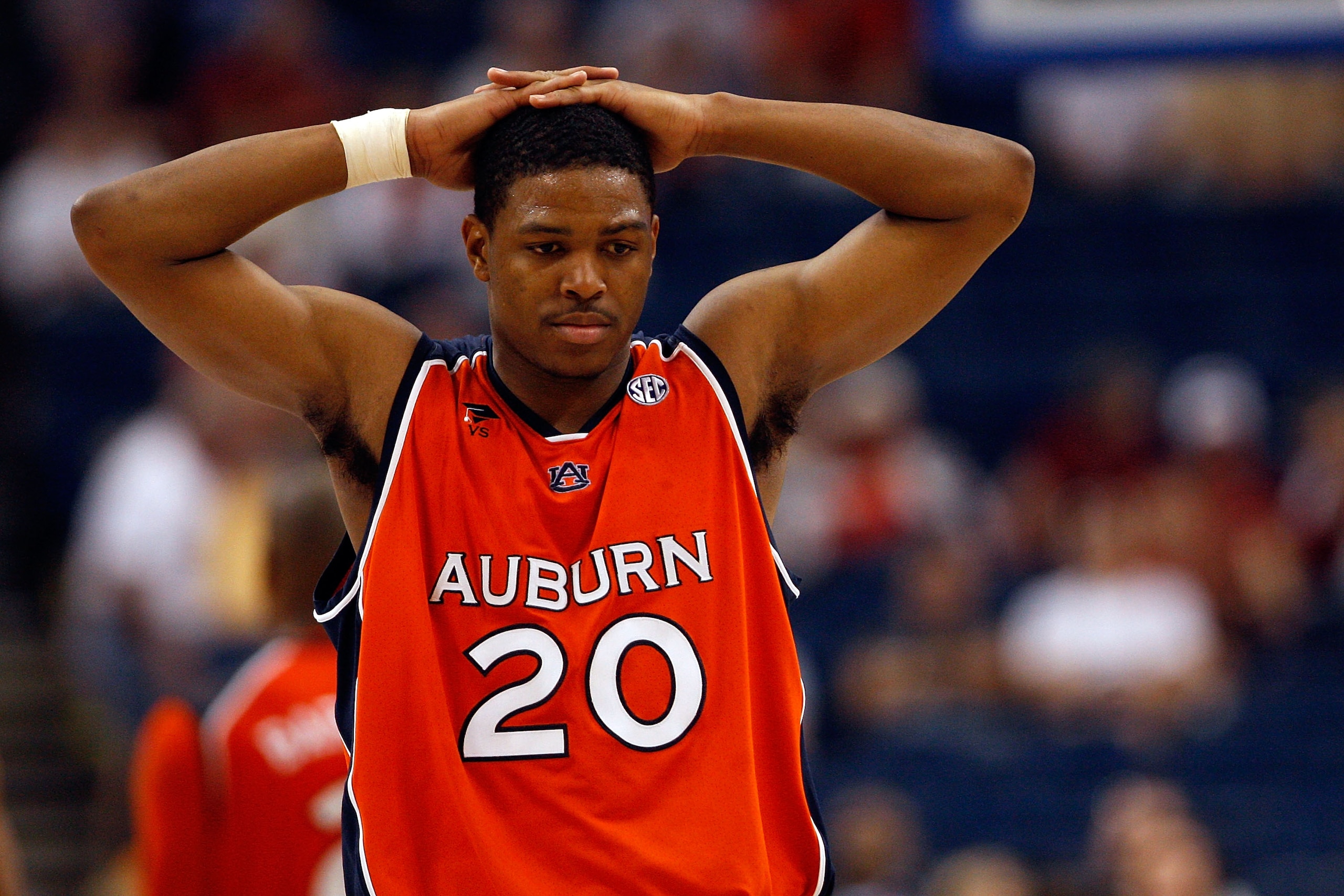
Last year: 15-17, 6-10 in the SEC
Notable Losses: G DeWayne Reed: 16.2 ppg (led team), 4.3 apg (led team), 33 mpg (led team), G Tay Waller: 15.3 ppg, 3.8 rpg, 41 percent 3PT, F Lucas Hargrove: 12.8 ppg, 7 rpg (led team), C Brendon Knox: 8.7 ppg, 4 rpg, 66 percent FG (led team), played in all 32 games, F Johnnie Lett: 2 ppg, 3.2 rpg, started 29 games
Notable Gains: None
Strengths: Hmm, well, their only returning starter, Frankie Sullivan, went out with what is most likely a season-ending knee injury. Sophomore guard Earnest Ross will be forced into the role of No. 1 option.
Probably their best strength is that they're young. There are no seniors on this team, so whatever positives they get out of this season will carry over. Former Texas guard Varez Ward transferred to the Tigers, though it's uncertain if he will be cleared to play this year.
Weaknesses: Man, where to start. Losing all five starters, their top five scorers and bringing back only two players who saw any time last season (Ross and guard Andre Malone) make this season almost a lost cause. New coach Tony Barbee, who previously coached at UTEP, will have his hands full with this inexperienced squad.
Prediction: Winning 10 games would be a huge accomplishment for this team. Barbee and the Tigers will take their lumps this season, but should be better in a year or two.
For now, this could be the worst big conference team in the country.

_0.png?w=2560 "CFB Top 25")

Florida Gators
4 of 13
Last year: 21-13, 9-7 in the SEC, lost to BYU in the first round of the NCAA Tournament
Notable Losses: F Dan Werner: 4.6 ppg, 4.1 rpg, started 17 games
Notable Gains: No. 9 class, F Patric Young (McDonald's All-American, No. 13 on ESPNU Top 100) and F Casey Prather (No. 35 on ESPNU Top 100)
Strengths: The Gators bring back virtually everyone from a team that won 21 games and was close to making it out of the first round of the NCAA tournament.
All five starters and double-digit scorers return, led by guards Kenny Boynton (14 ppg) and Erving Walker (12.6 ppg, 5 apg). These two should be the best backcourt in the conference with another summer to improve.
As a whole, this is probably the most balanced and experienced starting five in the country. Young and Prather will still see major playing time as both will be the first ones off the bench. Young is scary athletic and is one of the best post defenders in the 2010 class, while Prather is most effective in transition.
Weaknesses: After the starting five, the Gators don't bring back anyone who saw any time last year. Young and Prather should ultimately do well coming off the bench, but they could be shaky in the first couple months. Guard play could also be a problem as Prather is more of a small forward, and after Walker, the Gators don't have a true point guard.
Prediction: Making it back to the NCAAs isn't a matter of if but how far they will go. A Sweet 16 appearance is as far as I'll go with this team, but I wouldn't be surprised if they go further.
This is probably the best team in the SEC and easily the most experienced, which will really help them come conference play.
I'd put their win total at around 25.
Georgia Bulldogs
5 of 13
Last year: 14-17, 5-11 in the SEC
Notable Losses: G Ricky McPhee: 9.6 ppg, 38 percent 3PT, 32 mpg (led team), F-C Albert Jackson: 3.3 ppg, 3.3 rpg, 53 percent FG, started 18 games
Notable Gains: G Gerald Robinson (transferred from Tennessee State where he averaged 18 ppg, 4 rpg and 4 apg in 2008-09)
Strengths: The Bulldogs return their top two players in 6'9" junior forward Trey Thompkins (17.7 ppg, 8.3 rpg) and 6'4" junior guard Travis Leslie (14.8 ppg, 6.8 rpg).
Thompkins is one of the best big men in the conference and is a favorite to win conference Player of the Year. He's a threat to score inside and can step back and hit the three (shot 37 percent last season).
Leslie and fellow guard Dustin Ware make up an experienced backcourt. Robinson should also help shore up the guard position with McPhee's graduation. The starting rotation of Thompkins, Leslie, Ware and forwards Jeremy Price and Chris Barnes will be very experienced as each made big contributions last season.
Weaknesses: Returning five players who made major contributions means the bench is a question mark. Robinson should be solid off the bench, but after that it gets shaky.
The frontcourt will have to rely on newcomers Marcus Thornton and Donte Williams to bail any of the post players out should they get into foul trouble. Also, outside of Ware, no returnee has an assist/turnover ratio better than one. When Ware is on the bench, finding the best ball-handler could be a struggle. Many of these players are simply not used to winning, either, as Georgia hasn't been good for a while.
Prediction: A lot of experts are picking this team to surprise and make a big leap. While I think they'll be much better than a 14-win club, I don't see the NCAAs being a guarantee like most.
Twenty wins? Yeah, I'll buy that, but if they're not able to get quality wins against the best teams in this conference, the Bulldogs will be sweating like dogs come Selection Sunday.
Kentucky Wildcats
6 of 13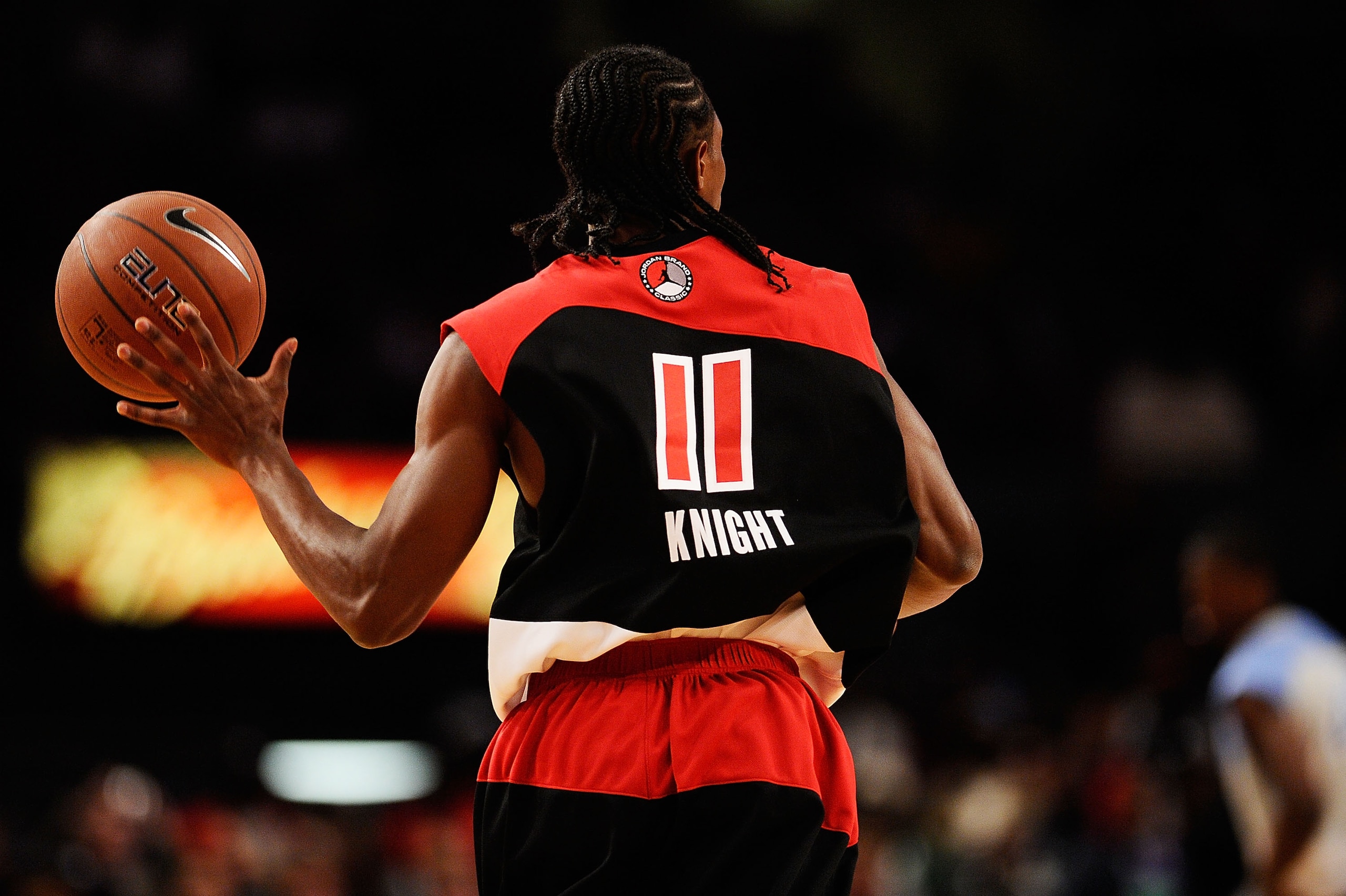
Last year: 35-3, 14-2 in the SEC, lost to West Virginia in the Elite Eight of the NCAA Tournament
Notable Losses: G John Wall: 16.6 ppg (led team), 6.5 apg (led team), 4.3 rpg, 35 mpg (led team), F DeMarcus Cousins: 15 ppg, 10 rpg (led team), 56 percent FG, F Patrick Patterson: 14.3 ppg, 7.4 rpg, 57 percent FG (led team), G Eric Bledsoe: 11.3 ppg, 3 apg, 3 rpg, 38 percent 3PT (led team), F Daniel Orton: 3.4 ppg, 3.3 rpg, 13 mpg
Notable Gains: No. 1 class, G Brandon Knight (McDonald's All-American, No. 4 on ESPNU Top 100), F Terrence Jones (McDonald's All-American, No. 9 on ESPNU Top 100), C Enes Kanter (No. 25 on ESPNU Top 100), G Doron Lamb (McDonald's All-American, No. 29 on ESPNU Top 100), and G Stacey Poole (No. 51 on ESPNU Top 100)
Strengths: Once again, coach John Calipari brings in the top recruiting class in the country to replace last season's top class. This class, however, is better suited to Cal's dribble-drive offense.
Knight is a slashing point guard and is one of the best long-range shooters in the 2010 class. Jones, at 6'9", is one of the most versatile big men in the country as he can hurt defenses inside and out. Kanter is the most polished center in the 2010 class. Lamb is another slasher with an outstanding mid-range game. Poole is the least-publicized newcomer, but will most likely back up Lamb and Knight as he is able to play both positions.
Calipari also brought in one of the best junior college prospects in the country in 6'10" Eloy Vargas. While last year's club sometimes struggled on offense, this new crop might be one of the best offensive teams in the country.
Weaknesses: Replacing 58 points, 25 rebounds and 12 assists per game is hard to do even with this talented freshmen class.
Notice how there was nothing about the returnees above? Well, that's because there isn't much talent coming back. Guard Darius Miller is the only returning starter and averaged 6.5 points. He's easily the most experienced player on the roster, which will be an issue in the beginning of the year when the Wildcats enter hostile environments. Kanter is also under eligibility questions as there's uncertainty as to whether he received money while playing for the Turkish national team.
Prediction: Kanter's eligibility is the key. If he's not eligible, this team has about 25 wins and is susceptible to an early exit due to lack of frontcourt talent. If Kanter is eligible, this team can win the SEC, and another trip to the Elite Eight wouldn't be surprising.
Knight, Jones and Kanter are candidates to be "one-and-done" this season.
Oh, and in case anyone was wondering, the 2011 class is currently the best in the country. Easily.
LSU Tigers
7 of 13
Last year: 11-20, 2-14 in the SEC
Notable Losses: F Tasmin Mitchell: 16.8 ppg (led team), 9.4 rpg (led team), 37 mpg (led team), G Bo Spencer: 14.5 ppg, G-F Zach Kinsley: 3.4 ppg, 39 percent 3PT, started 6 games
Notable Gains: No. 19 class, G Ralston Turner (No. 70 on ESPNU Top 100), G Andre Stringer (No. 72 on ESPNU Top 100), and F Matt Derenbecker (No. 87 on ESPNU Top 100)
Strengths: Junior forward Storm Warren (11.8 ppg, 7.2 rpg) returns and will be the leader of this squad. With Mitchell gone, he'll be the first option and his numbers will increase because of it.
Guards Chris Bass and Aaron Dotson started 19 and 17 games, respectively, so the backcourt will have plenty of experience. The Tigers are also incredibly long, having five players over 6'8", including 7'2" walk-on Andrew Del Piero.
The freshmen class is good enough to contribute right away. Derenbecker may be the best bet to start as the backcourt is locked in. The frontcourt does return four players who made contributions last season, so the experience is there.
Weaknesses: Despite there being plenty of experience, there's a serious lack of talent on the Tigers roster.
Losing the team's best two players from a squad that only won 11 games is never good and scoring is going to be a struggle. After Warren, it's very uncertain who else could average more than eight points per game.
In the frontcourt, outside of Del Piero, no player weighs more than 230 pounds. While their height is nice, maintaining post position will be problematic. The team is incredibly young as well, having no seniors and only four juniors.
Prediction: This will be another rough year for the Tigers. Warren will be good, but there's no one else who's a scoring threat. Anything more than 10 tens would be a surprise.
Luckily, next year they should be much better. The Tigers currently have the top center in the 2011 class committed to them, so talent will be coming sooner rather than later.
Ole Miss Runnin' Rebels
8 of 13
Last year: 24-11, 9-7 in the SEC
Notable Losses: G Terrico White: 15 ppg, 4.6 rpg, F Murphy Holloway: 10 ppg, 7.6 rpg (led team), 56 percent FG (led team), F DeAundre Cranston: 3.5 ppg, 4.1 rpg, started 21 games
Notable Gains: F Demarco Cox (No. 85 on ESPNU Top 100)
Strengths: Chris Warren will be the best point guard in the conference. He averaged 17.2 points and led the team in assists (3.5) and three-point shooting (40 percent). He's a candidate for conference Player of the Year.
Fellow senior guard Zach Graham is the next player with the most experience, as he started 12 games while averaging nine points per game. He is the prime candidate to replace White's production.
At 6'8" and 295 pounds, Demarco Cox will be one of the biggest players in the conference. He's pretty raw, but will most likely see tons of action with the frontcourt departures of Holloway and Cranston.
Weaknesses: Outside the five players returning who played big minutes, there is no experience. The five newcomers will have to make an impact for the Rebels to have a similar season.
Finding a reliable scorer down low would be nice, but doesn't appear too likely. The frontcourt in general will be inexperienced as no returnees started more than nine games or averaged more than 17 minutes per contest.
Prediction: 24 wins isn't happening this season. Losing White will be bigger than people think as finding another scorer will be their biggest issue. Warren is great, but his supporting cast is not. While they should be over .500, it won't be by much.
Mississippi State Bulldogs
9 of 13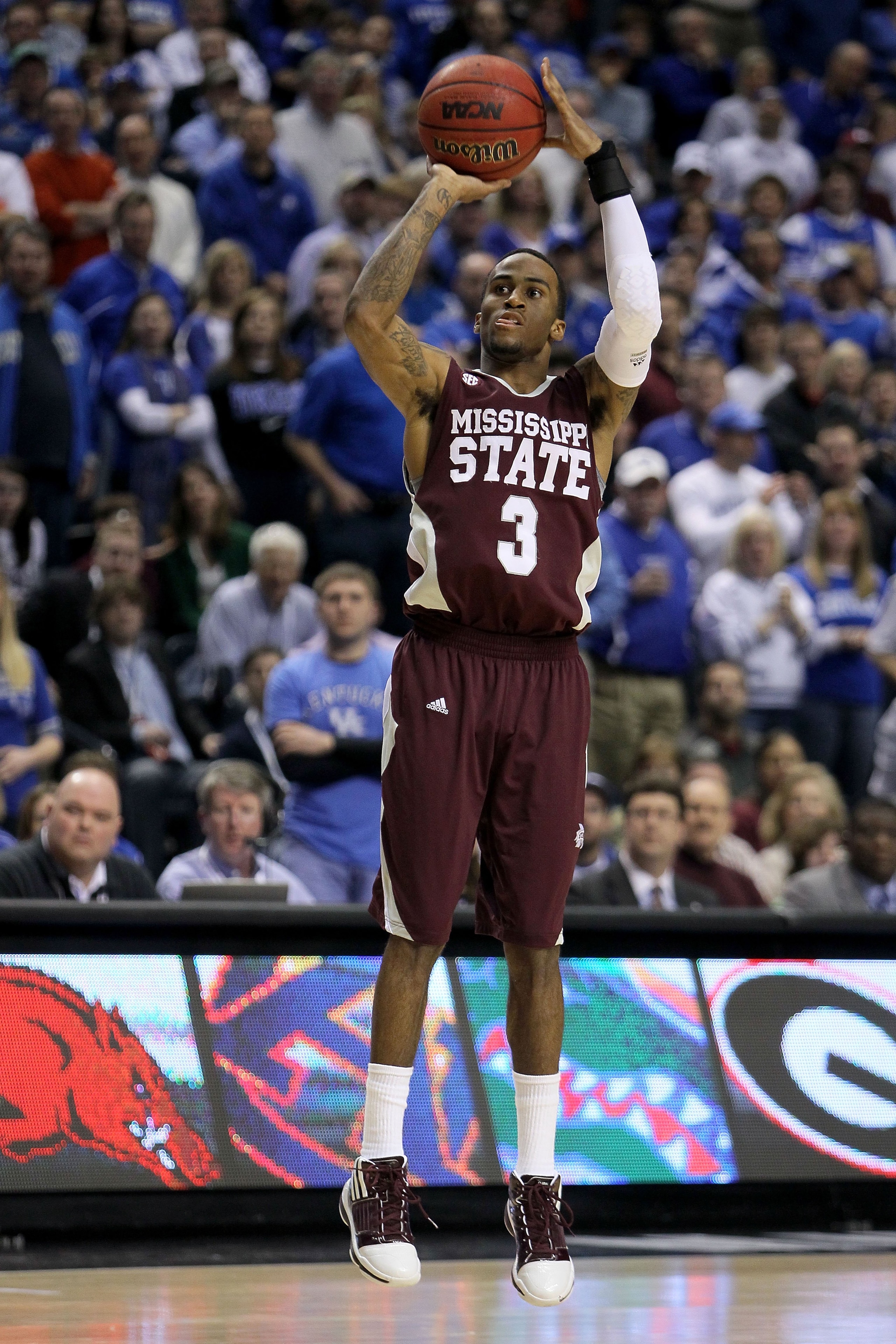
Last year: 24-12, 9-7 in the SEC
Notable Losses: F Jarvis Varnado: 13.8 ppg (led team), 10.2 rpg (led team), 4.7 bpg (led team), 58 percent FG (led team), G Barry Stewart: 11.8 ppg, 3.6 rpg, G Phil Turner: 5.5 ppg, 4.3 rpg, 21 mpg
Notable Gains: F Renardo Sidney (ineligible last season, but was a McDonald's All-American in 2008-09)
Strengths: Bringing in the incredibly talented Sidney will really help the Bulldogs recover from losing Varnado. He won't be eligible until December, but Sidney will immediately be one of the biggest (6'10", 270) and best post players in the conference.
The backcourt tandem of Ravern Johnson (13.2 ppg, 41 percent 3PT) and Dee Bost (13 ppg, 5.2 apg, 4.4 rpg) will make the Bulldogs multidimensional with Sidney. Bost will miss the first nine games due to NCAA suspension as he did not pull out of the NBA draft by the deadline.
The third starter returning is 6'8" senior forward Kodi Augustus. He will be counted on down low for the first month or so of the season to be a threat and pull down rebounds. He's also able to step outside and knock down threes (shot 37 percent). Actually, the Bulldogs took over 20 three-pointers last season with solid results, so expect them to rely on their good outside shooting at the beginning of the year.
Weaknesses: With Bost and Sidney out for quite some time, the beginning of the year will probably be a struggle. Losing Varnado, probably the best defensive big man in the country last season, is a huge loss.
Rebounding and defending the paint will be troublesome. Free-throw shooting will be problematic as well. Only Augustus shot better than 73 percent from the line last year. Also, the Bulldogs only bring back four major contributors from last season and only Augustus returns in the frontcourt. Inexperience could really hurt this team, especially on the bench.
Prediction: If the Bulldogs are able to stay afloat for the first month of the season, they should be OK. Sidney's effectiveness will be the key to just how good this team will be. I wouldn't be shocked if they end up with a similar record this year and are again on the bubble come Selection Sunday.
South Carolina Gamecocks
10 of 13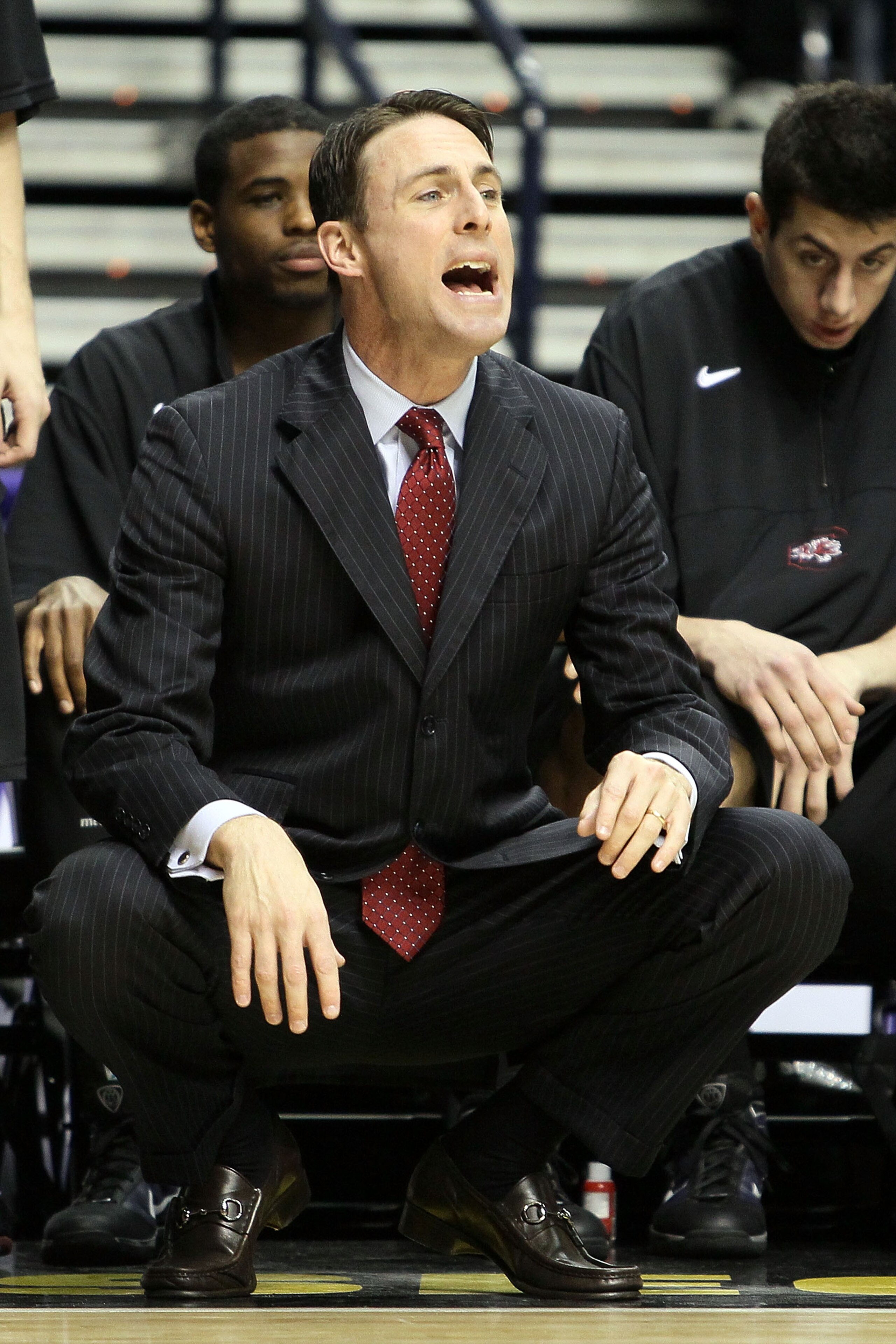
Last year: 15-16, 6-10 in the SEC
Notable Losses: G Devan Downey: 22.5 ppg (led team), 3.5 apg (led team), 34 mpg (led team), G Brandis Raley-Ross: 10.6 ppg, 3.6 rpg, F Austin Steed: 3 ppg, 3 rpg, started 11 games
Notable Gains: No. 25 class, C Damontre Harris (No. 68 on ESPNU Top 100) and F R.J. Slawson (No. 83 on ESPNU Top 100)
Strengths: The frontcourt starters return in 6'9" senior Sam Muldrow (10.4 ppg, 6.2 rpg) and 6'5" sophomore Lakeem Jackson (7.2 ppg, 5 rpg). These guys, along with newcomers Harris and Slawson, will be counted on to carry the load for the team. The talented freshmen class should contribute right away and a couple of them could start.
Weaknesses: Losing one of the best players in the conference in Downey from a team that couldn't reach .500 means that not much talent is on this team.
Only four players return having played major minutes, and only one is a guard. That guard, sophomore Ramon Galloway, will be forced to become the backcourt star, and it's doubtful that the young kid is up to it. Galloway is also the only player who shot better than 65 percent from the free-throw line, so closing out games with an inexperienced backcourt and poor free-throw shooters will be tough.
Muldrow is the only double-digit scorer, so putting the ball in the basket will be a huge challenge.
Prediction: This is a rebuliding season for the Gamecocks, plain and simple. Don't be surprised to see the freshmen see more action than normal if their record starts going south. They'll be in the basement of the conference, and 15 wins would be an accomplishment for this team.
Tennessee Volunteers
11 of 13
Last year: 28-9, 11-5 in the SEC, lost to Michigan State in Elite Eight of NCAA Tournament
Notable Losses: F-C Wayne Chism: 12.6 ppg (led team), 7.2 rpg, G Tyler Smith: 11.7 ppg, 3.7 apg (led team), 57 percent FG (led team), played only 12 games, G J.P. Prince: 10 ppg, 3.7 rpg, 3.1 apg, 53 percent FG, G Bobby Maze: 9.4 ppg, 3.1 apg
Notable Gains: No. 11 class, F Tobias Harris (McDonald's All-American, No. 6 on ESPNU Top 100) and Jordan McRae (No. 38 on ESPNU Top 100), F John Fields (transfer from UNC-Wilmington where he averaged 10 points and nine rebounds)
Strengths: Harris could be the best freshman in the country. He'll start from Day 1 and is the best recruit coach Bruce Pearl has ever had. Harris can play both forward positions and is one of the most versatile players in the conference.
Second-leading scorer Scotty Hopson returns as the No. 1 option on the perimeter. His 12 points per game average should move closer to 20 this season.
The team is also very experienced, having seven seniors and nine players making major contributions. The latter is primarily due to Pearl's play style as no player last year averaged more than 27 minutes per game.
Make no mistake, this team is up there with Kentucky and Florida as the most talented team in the conference.
Weaknesses: Losing three players who averaged more than three assists per game means finding a reliable point guard for the Vols. Returning guards Melvin Goins and Cameron Tatum are likely candidates, but neither started more than six games last season. Last year, the two combined for a 3:2 assist/turnover ratio. That will need to improve if the Vols hope to make it deep in the NCAA tournament this year.
Coach Pearl's NCAA violations and current investigation will definitely be a distraction for this team. Pearl is currently coaching without a contract and could resign or be fired at any time. That uncertainty won't help this club.
Prediction: Most teams that lose as much as Tennessee lost would not be expected to duplicate a similar run. However, the Volunteers could actually be better than last season.
Harris is the team's most talented player and will be a matchup nightmare for opposing teams. If Hopson's able to increase his production and the guard play is shored up, this team could win the conference due to its depth. NCAAs aren't even a question, but making it past the Sweet 16 could be challenging.
Vanderbilt Commodores
12 of 13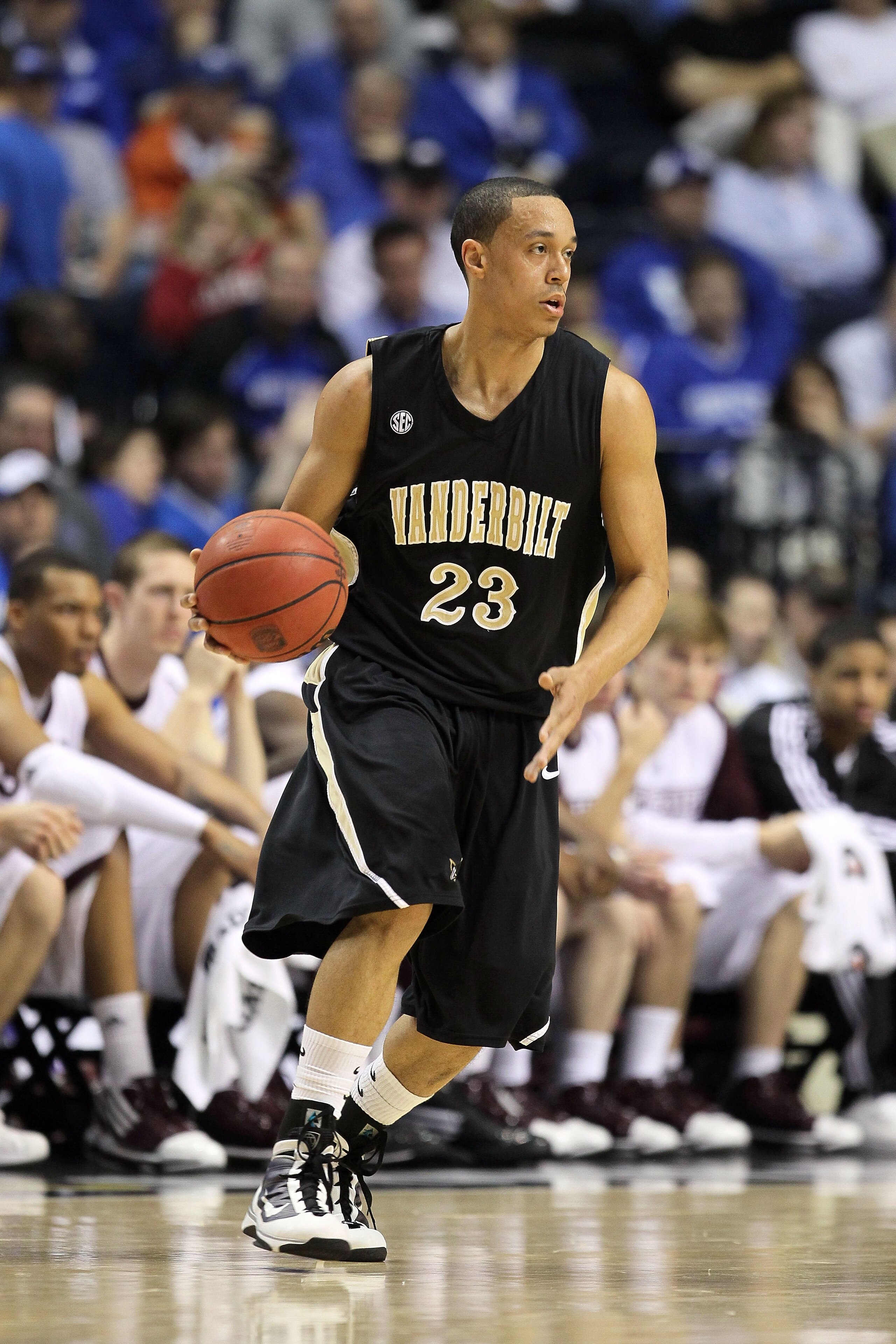
Last year: 24-9, 12-4 in the SEC, lost to Murray State in first round of NCAA Tournament
Notable Losses: G Jermaine Beal: 14.6 ppg (led team), 3.1 apg (led team), 38 percent 3PT, 32 mpg (led team), C A.J. Ogilvy: 13.4 ppg, 6.2 rpg (led team), 51 percent FG
Notable Gains: F Rod Odom (No. 66 on ESPNU Top 100)
Strengths: Despite the loss of Ogilvy, the strength will be in the now more athletic frontcourt led by 6'7" junior Jeffery Taylor (13.3 ppg, 5.2 rpg, 50 percent FG). Taylor is the most productive returnee and will be counted on to make up the scoring load left by Ogilvy, though it probably won't be strictly in the paint.
Four more post players who made contributions are back as well, including starter Andre Walker (6.1 ppg, 5.4 rpg). That experience should make the transition to a more run-and-gun play style easier.
In the backcourt, highly regarded sophomore John Jenkins was one of the best sixth men in the country last season, averaging 11 points and shooting an incredible 48 percent from three-point range. He will replace Beal in the lineup and will be expected to increase his productivity.
Weaknesses: It's hard for a team to quickly recover from losing its two best players. After Jenkins and returning starter Brad Tinsley, the backcourt has no experience. Only five guards are on the roster, with two of them hardly seeing the court last year and the other being a newcomer. It will be key that Jenkins and Tinsley stay on the court as much as possible. Tinsley will also have to take over the point guard position.
Prediction: Despite losing their top two players, this team still has the ability to be a threat to win the SEC. Jenkins and Taylor will be a solid inside-out duo for a team that will start to do more running with the loss of Ogilvy. Don't be surprised if they have a similar season with an NCAA appearance followed by an early exit. Not bad for a team whose two best players are not seniors.
Summary
13 of 13
The SEC will be an incredibly top-heavy conference. Three teams have the ability to make the Final Four, but after that, the talent level decreases dramatically.
This conference may have the most talented bunch of newcomers in the country, led by Tobias Harris, Renardo Sidney and the incredible class at Kentucky. Don't be surprised if one of them wins the conference Player of the Year.
There are certainly a couple sleepers who could get a handful of upset victories.
I have no doubt that the SEC will continue its rise to the top of the basketball power conferences this season.
NCAA: Kentucky, Florida, Tennessee, Vanderbilt
Bubble: Georgia, Mississippi State
NIT: Arkansas, Ole Miss, Alabama
Better luck next year: Auburn, LSU, South Carolina
Five players to watch: Trey Thompkins (Georgia), Tobias Harris (Tennessee), Brandon Knight (Kentucky), Kenny Boynton (Florida) and Renardo Sidney (Mississippi State).
Game every fan should watch: Kentucky at Florida (Feb. 5), because it's the most balanced team in the country against the most talented newcomers in the country. Calipari vs. Donovan is always fun to watch anyway, but this contrast in experience makes it even better.
.png?w=2560)
.jpg?w=2560 "Colts Football")





