
How They Measure Up: Demystifying the BCS Computer Rankings
One third of the BCS formula consists of an average of six computer rankings—that’s not really a secret.
But if you thought the brains behind the computer rankings were all mathematicians or statistical experts you’d be wrong. You’d also be wrong if you thought someone, anyone, was checking the formulas for accuracy and validity. In fact, five of the six inputs are proprietary.
A description of each and their top five teams this week follows:
Despite Near Loss Against Tennessee, LSU (Somehow) Debuts at No. 1
1 of 8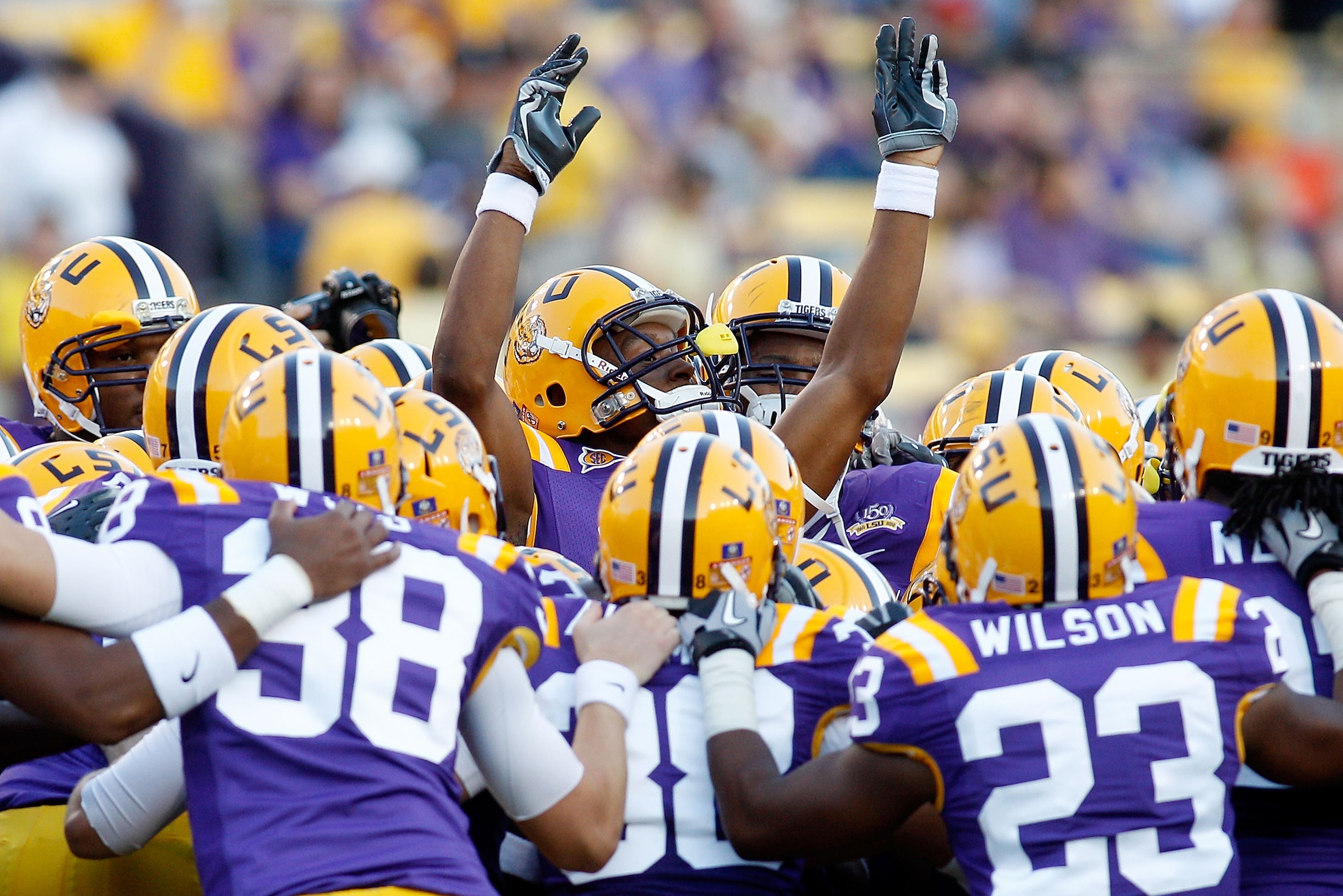
Anderson and Hester: They developed their formula while students at Washington in the early 1990s. Their rankings don’t debut until Week 5 in an effort to eliminate preseason bias. Margin of victory was never considered (it’s not allowed now). Weight is given to conference strength and home versus away records.
Their top five teams this week
1. LSU
2. Auburn
3. Oklahoma
4. Michigan State
5. Missouri.
Notable: Oregon debuted at number nine.
Common Opponents Should Matter but Often Don't
2 of 8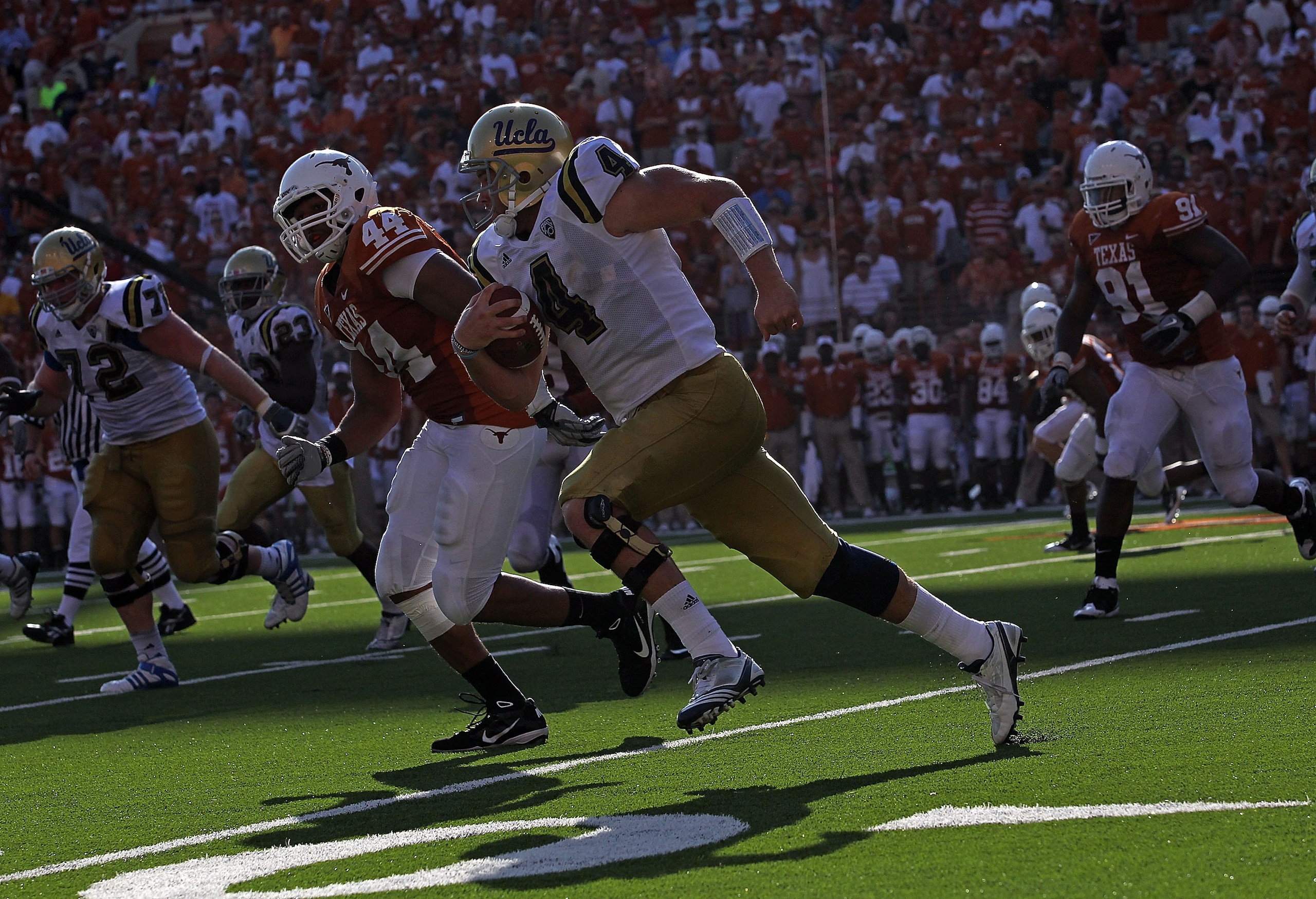
Richard Billingsley: He’s a stress management consultant who’s been working on his formula since 1970. Teams start where they finished last year. Consideration is given to an opponent's rank, not just its W-L record, and it factors in things such as home field advantage and whether the game was an upset.
His top five teams this week
1. LSU
2. Boise State
3. Oklahoma
4. Alabama
5. TCU.
Notable:
7. Oregon
11. Texas
17. Stanford.
In case you missed it, Texas and Stanford both played UCLA this year. Stanford won in a shut out but Texas lost at home. Go figure.
Oregon Can't Get Any Love from the Computers
3 of 8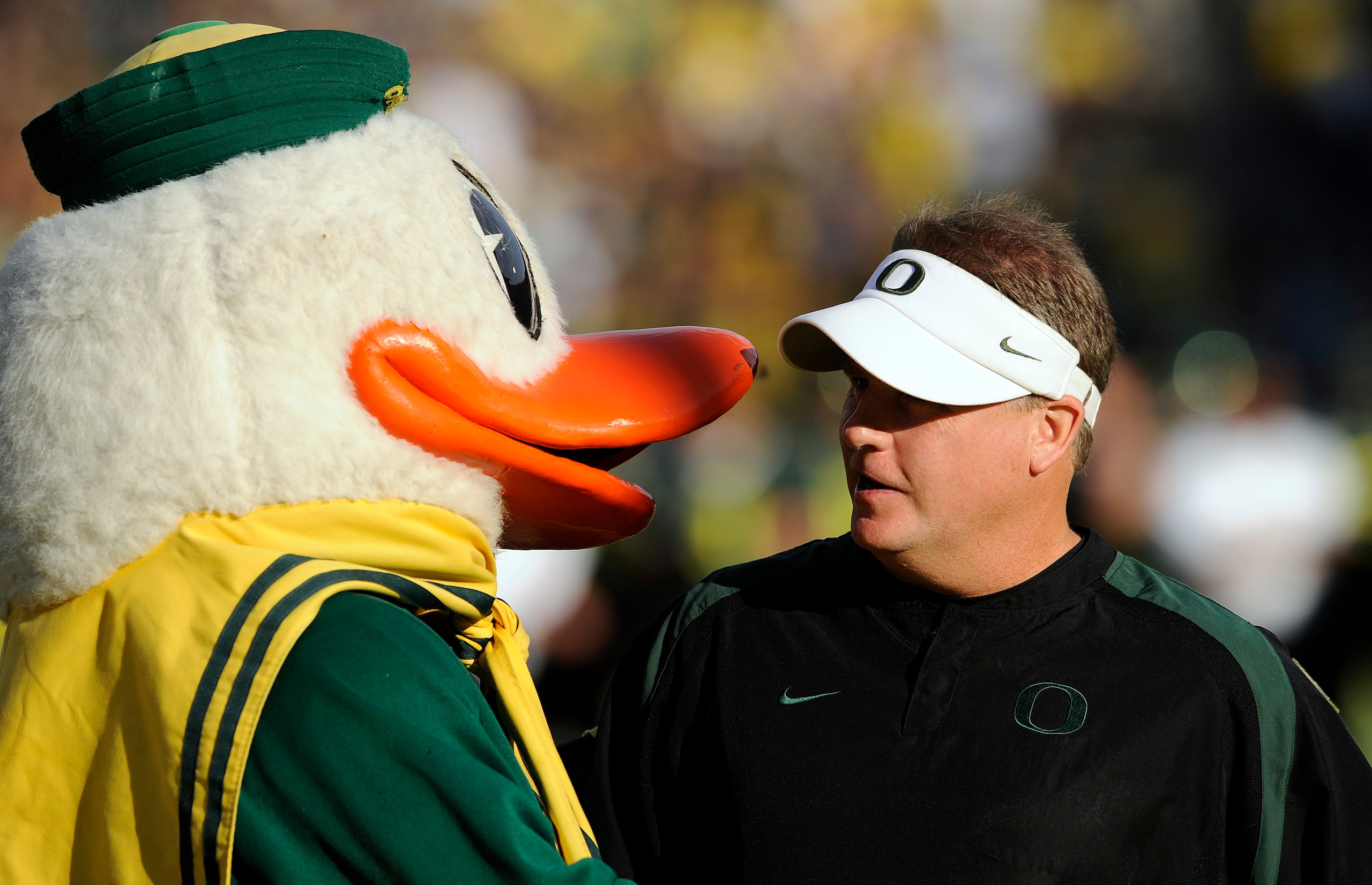
Colley Matrix: Wes Colley has a Ph.D. in astrophysics from Princeton. His is the only system that makes its formula public (Kudos). He doesn’t distinguish between home and road wins. Strength of schedule is determined by opponents’ W-L records, which means a team with more losses against quality opponents will be ranked higher than a team with more wins against weaker opponents.
His top five teams
1. Oklahoma
2. LSU
3. Auburn
4. Michigan State
5. Missouri.
Notable: Oregon, again, came it at number nine.

_0.png?w=2560)
Margin of Victory Is out but Points Scored, Allowed Are in
4 of 8
Kenneth Massey: He has a doctorate in mathematics and developed his formula as an undergraduate. Points scored and allowed are considered as is home field advantage. Teams are ranked prior to the season based on last year’s performance.
His top five teams
1. Oklahoma
2. Missouri
3. Michigan State
4. LSU 5. Auburn.
Notable: For comparison purposes, he ranked Oregon number eight.
Oklahoma Sits Atop Several of the Computer Polls Despite Near Misses
5 of 8
Jeff Sagarin: He’s a sports statistician whose work has been published in USA Today since 1985. His rankings are based on wins, losses and home versus road wins. He publishes a separate ranking for USA Today, which factors in margin of victory, which is not allowed in the BCS.
His top five looks like this
1. Oklahoma
2. Oregon
3. Michigan State
4. Auburn
5. Stanford
Conference Strength Matters Too (Ask Boise State)
6 of 8
Peter Wolfe: A researcher at UCLA’s School of Medicine, Wolfe’s rankings are based on the likelihood of one team defeating another. Wins, losses, conference strength and game location are all considered.
Rounding out his top five:
1. Oklahoma
2. Auburn
3. LSU
4. Michigan State
5. TCU.
Notable: He also had an unexplainable Stanford ranking: though they lost to Oregon by almost 20 points earlier this month, they ranked higher (9) than Oregon (11). What was that about the likelihood of one team defeating another?
Head-To-Head, Neutral Field: My Top 10
7 of 8
Since I believe that people in glass houses shouldn’t throw stones, I’m offering my own Top 10 rankings. My methodology was simple: based on performance to date who did I think would win in head-to-head matchups on a neutral field?
1. Oregon
2. Boise State
3. Auburn
4. TCU
5. Stanford
6. Utah
7. Oklahoma
8. Alabama
9. LSU
10. Michigan State.
Computer Formulas Must Be Peer-Reviewed or Tossed
8 of 8
Maybe you see it differently. There’s still a lot of football to be played, but surely we can agree that computer formulas should undergo peer review.
It’s bad enough the coaches (who cannot have time to watch enough games to be informed voters) keep their ballots secret. The schools demand accountability from their student-athletes. They should practice what they preach.
.jpg?w=2560 "OBJ Calls Out Giants After Release")