


One of the toughest awards voted on in the NBA, the Sixth Man of the Year, always sparks debate because the value of the sixth man is hard to define.
What makes a perfect sixth man? Some impact the game with instant offense, scoring or creating scoring opportunities for others. Others can change the game on the defensive end, challenging shots or harassing opposing scoring threats. And still others do a little of both, not always in a spectacular fashion, but often game-changing.
The key traits of any dominant sixth man are energy and versatility.
Energy comes first, as this player has to lead the bench unit through a seamless transition from the starters. The average sixth man’s minutes range from the high 20s to the low 30s, so it's essential that they enter the game with a high energy level and impact the game early and often.
Versatility is a close second. The sixth man, generally speaking, is not one of the team's top three players in terms of talent. There’s a reason these players don’t start. So, the versatility comes in to play because the more positions these players can play, the more opportunities they'll have for decent minutes.
In the muddled world that is the NBA preseason, rotations and starting lineups are anything but set at this point. But, this list reflects the players from each team most likely to fill the sixth man position for the majority of the season.
30. Quincy Pondexter, New Orleans Hornets
1 of 30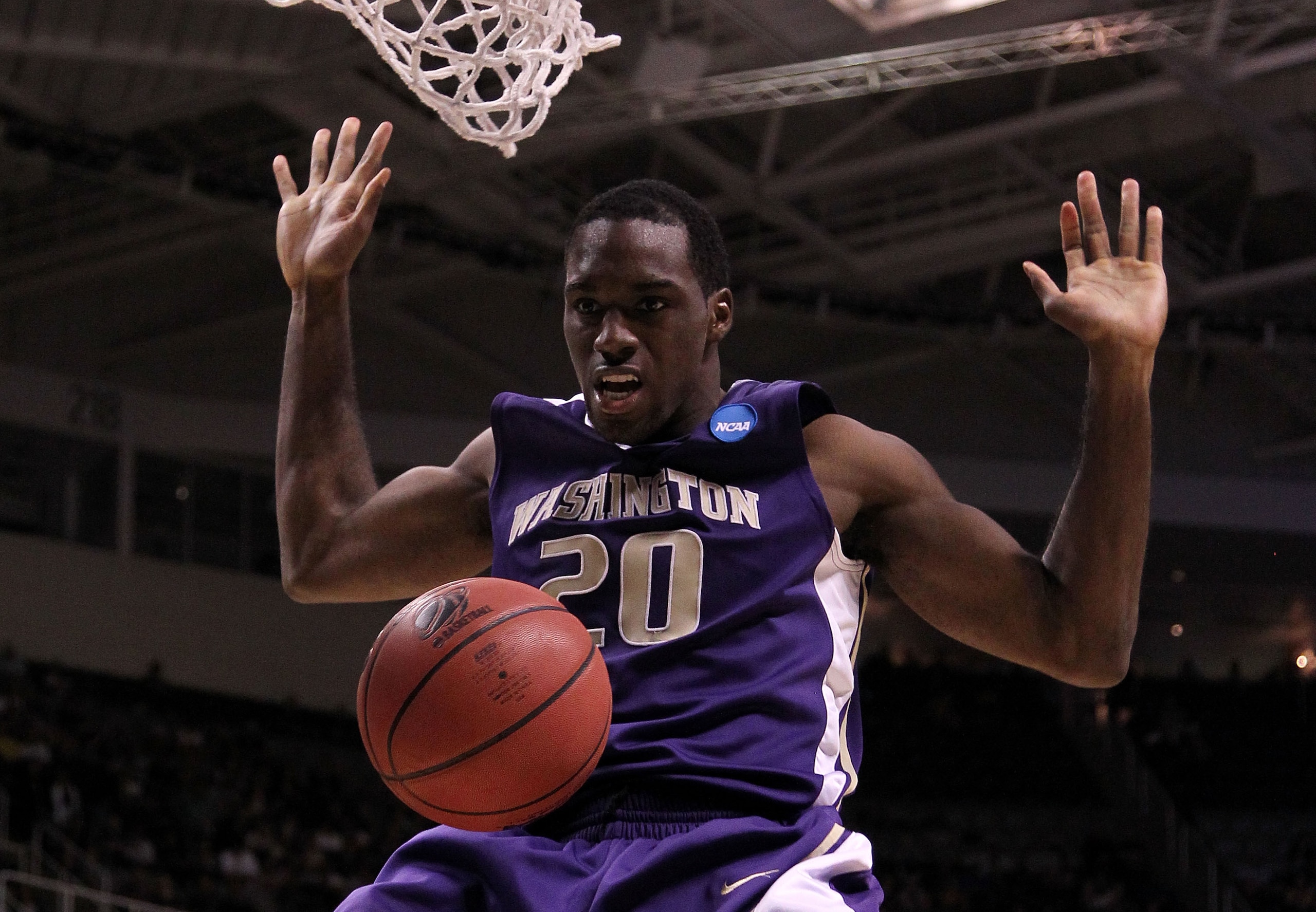
The 6'6", 215-lb forward out of Washington looks primed to gain an early edge for a weak bench on what should be one of the NBA's most explosive starting lineups. The 26th selection in this year's draft by the Thunder was shipped out on draft night along with Craig Brackins to New Orleans in exchange for Cole Aldrich and Morris Peterson. After Brackins was then shipped out to Philadelphia, Pondexter remains the Hornets’ prized possession from this year's draft class.
Pondexter proved to be a steady scorer in his four seasons at Washington, finishing his senior season with 19.3 points per game. He also rebounded well (7.4 per) and scored efficiently—52.8 percent from the field.
Pondexter won't face nearly the same level of competition as many of the players on this list—Marco Belinelli, Willie Green, Peja Stojakovic, Joe Alexander and Jason Smith—and should benefit from knowing that the Hornets made a move to add him to their roster.
His only downside is the fact that bench minutes may prove hard to come by after an offseason trade netted the Hornets swingman Trevor Ariza to vastly improve their starting five.
29. Xavier Henry, Memphis Grizzlies
2 of 30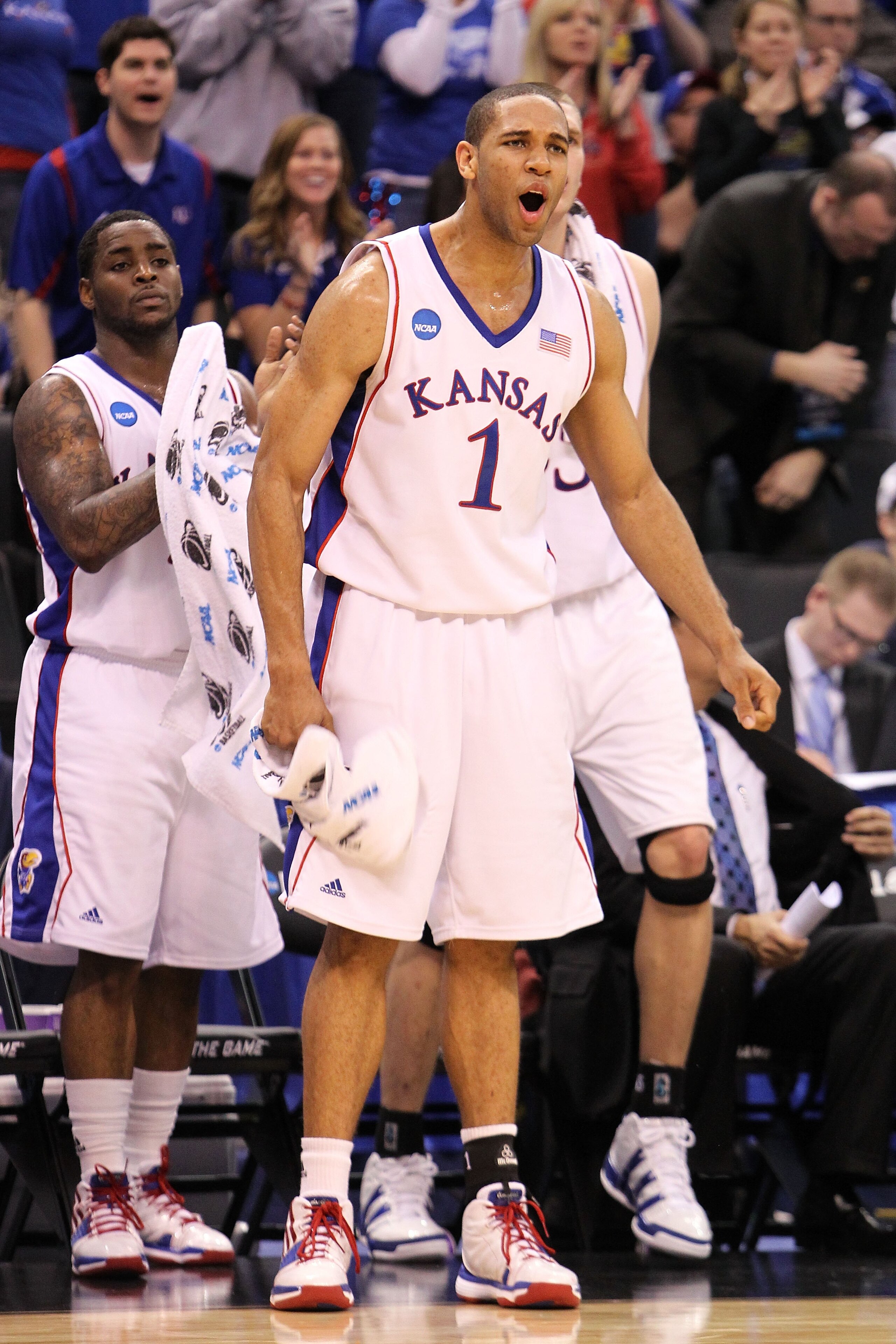
The freshman phenom who spent one year at the University of Kansas burst onto the scene at KU with double-digit scoring outputs in his first 11 games. Then came his first single-digit scoring effort, and a stretch in late January and early February saw Henry struggle with five consecutive single-digit scoring games.
Henry battled with inconsistency for much of the season, finishing with just 13.4 points per contest. But he did show enough flashes—with a 27-point and 31-point effort under his belt—to warrant the Grizzlies’ first selection, No. 12 overall.
Henry's numbers in college don't tell the whole story. He's blessed with an NBA-body—6'6", 220 lbs—that should allow him to contain bigger shooting guards. He also displayed a nice touch from beyond the three-point line at Kansas (41.8 percent) and the ability to score off of the dribble.
He’ll battle newcomer Tony Allen for the first spot off of the bench, but his size should allow the Grizzlies to use him to spell both O.J. Mayo and Rudy Gay. Mayo's ability to run the point should help Henry see the floor enough to provide that quick offensive burst that the Grizzlies bench seemed to lack last season.
28. Delonte West, Boston Celtics
3 of 30
Talent-wise, West is more than capable of finishing this season as one of the league's 10 best players off the bench. A hard-nosed defender, West can impact the game on both ends of the floor. At 6'4", he is short for the typical shooting guard in the NBA, but his defensive grittiness stemmed from his time with Boston, where he spent his first three seasons in the league.
West is just as impressive on the offensive end of the floor, where he averaged 8.8 points on 44.5 percent FG—32.5 percent 3-pt—and 3.3 assists.
But for West, the game has always been more than on-court production. His tumultuous offseason—traded to Minnesota in July, waived a week later and signed to a non-guaranteed contract with Boston the following month—seems to fit the M.O. for one of the league's most intriguing players.
Whether it be battling his mental demons, facing criminal charges or simply sleeping with a teammate's mom, no one can be certain what to expect from the talented swingman. It will also be worth monitoring what kind of mental state he's in when he laces up after a 10-game suspension for gun charges.
But he's back to where his NBA career started, with a franchise and a coach that want him there and no teammates' mothers to distract him. If he can find a way to separate himself from a deep Celtics backcourt (Marquis Daniels, Von Wafer, Nate Robinson and rookie Avery Bradley), West has a chance to be the spark for what should be one of the league's elite teams once again.

.jpg?w=2560 "NBA Gambling Charges")
27. Tyrus Thomas, Charlotte Bobcats
4 of 30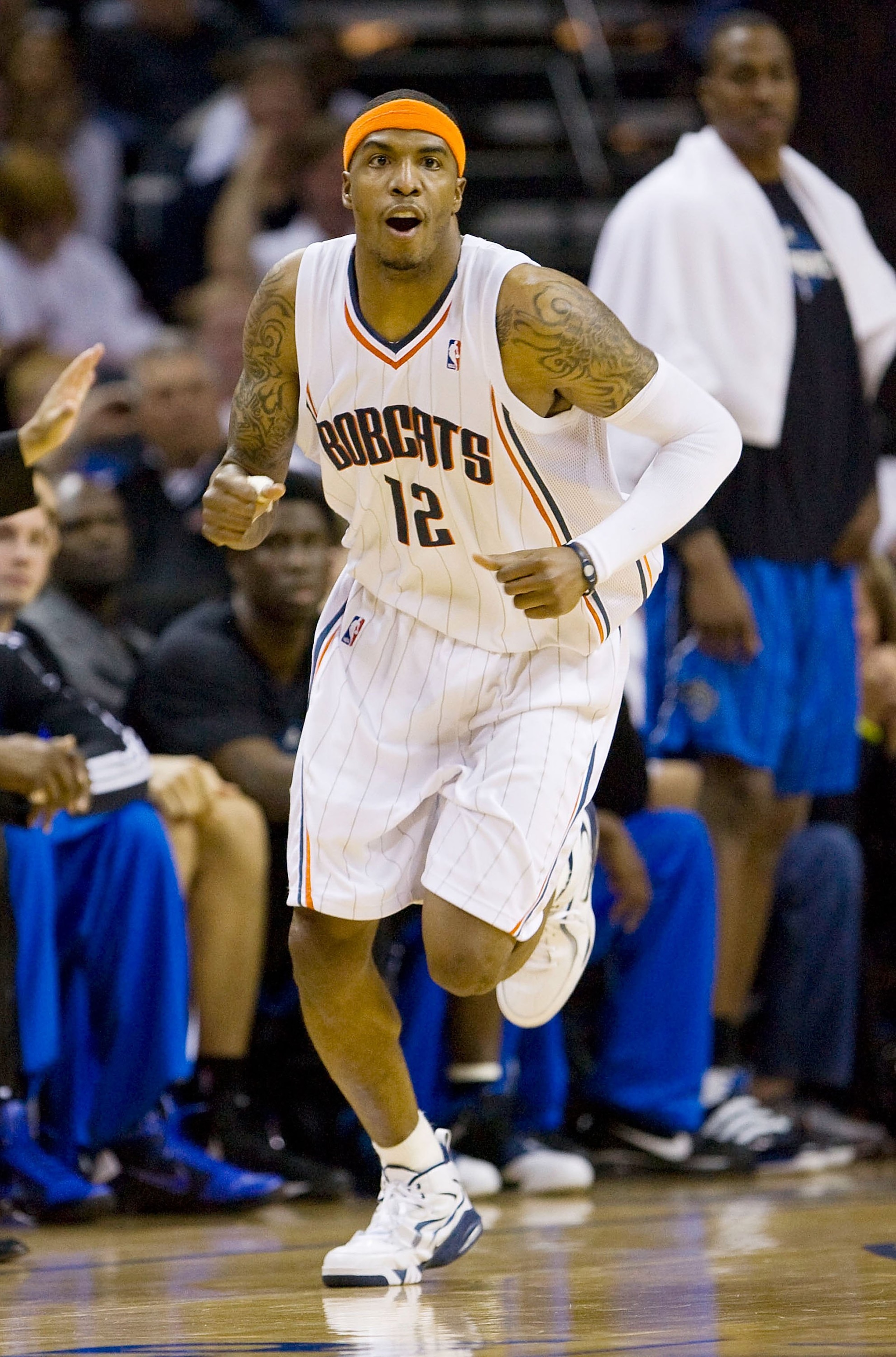
It wasn't quite the Pau Gasol-theft from the Grizzlies, but the Bobcats had to love their heist of Thomas, acquired from the Bulls in a trade deadline deal in exchange for Flip Murray, Acie Law and a lottery-protected future first round pick.
Thomas had his share of ups and downs with Chicago, but the former fourth overall selection in the 2006 draft perhaps never had the definitive role to develop and succeed in (see Anthony Randolph's tenure in Golden State).
Thomas' offense has been slow to develop—8.8 career points per game on 45 percent shooting—but he's always been a defensive presence. He's averaged nearly 1.5 blocks for his career in just 20.4 minutes. Thomas will help fill the Bobcats’ shot-blocking void, created when the club cut ties with Tyson Chandler and Theo Ratliff over the summer.
He'll also benefit from Boris Diaw's versatility to play the small forward or power forward position, which should free up enough minutes for Thomas to be an effective sixth man. On a typical Larry Brown defensive club, Thomas should be the high-energy first man off of the bench.
26. Paul George, Indiana Pacers
5 of 30
George is a dynamic player in the mold of a Joe Johnson-type scorer. In other words, he should prove to be worth more than the 10th pick that the Pacers invested in him. A gifted scorer (16.8 points, 42.4 percent FG, 35.3 percent 3-pt), George finished his sophomore campaign at Fresno State with nine games of 20 or more points.
At 6'8", 210 lbs, George could stand to add some bulk, but still showed the desire on the glass with 7.2 rebounds last season.
George finds himself in a tough spot for a sixth man—he plays the same position as Indiana star Danny Granger—but a strong preseason could gain him some separation from the Pacers’ backup wings. Dahntay Jones is a defensive specialist but struggles to score consistently, Brandon Rush is suspended for five games for violating the league's anti-drug policy and Lance Stephenson faces criminal charges stemming from domestic violence over the summer.
George's scoring ability could eventually move him into the starting lineup over Mike Dunleavy, but he should thrive in the sixth man role for this year.
25. Wesley Johnson, Minnesota Timberwolves
6 of 30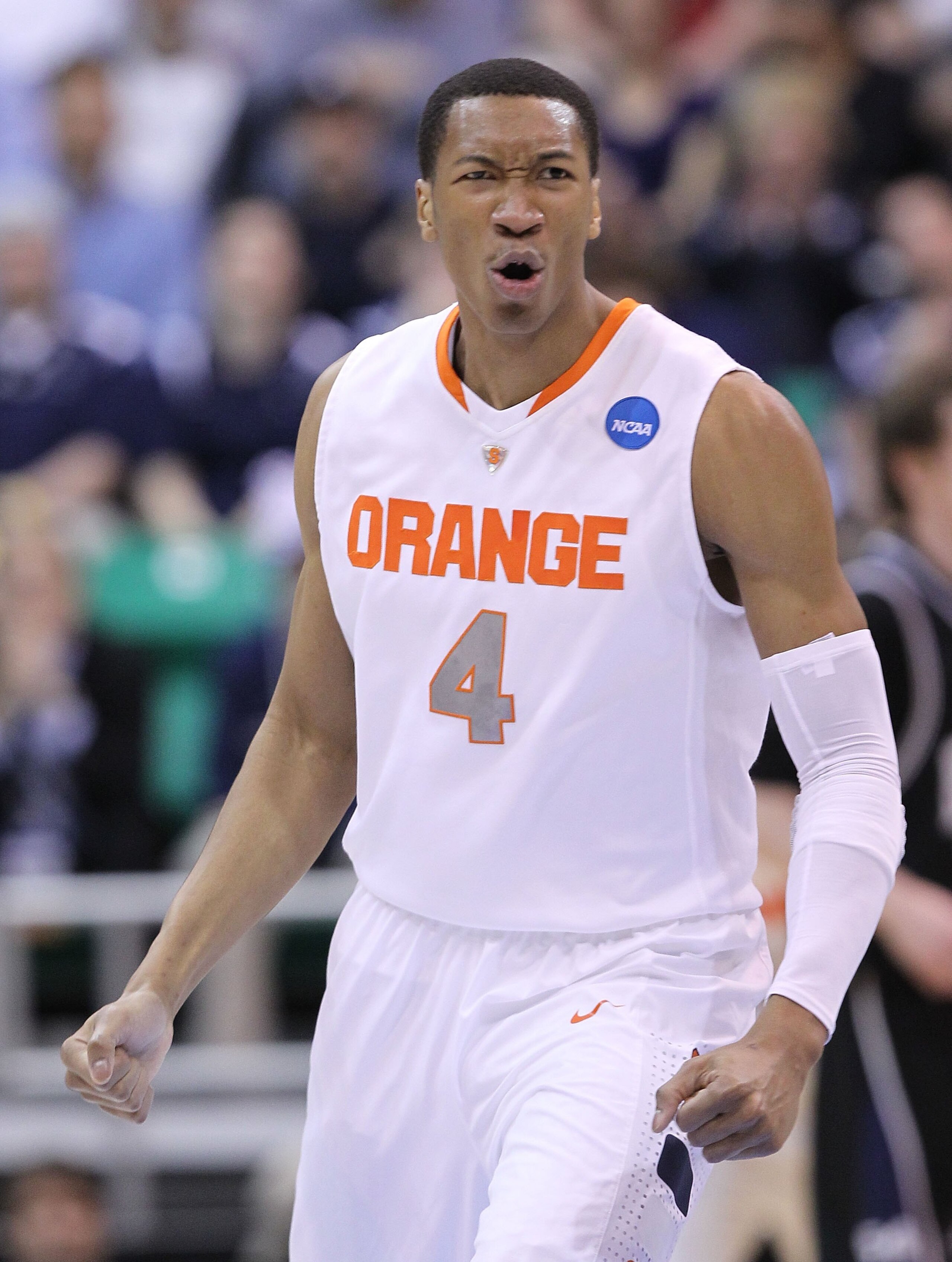
The final rookie on the list, Johnson appears to be the most NBA-ready of this year's class. At 23 years old, Johnson had a lot of seasoning in his four years split between Iowa State and Syracuse—including sitting out the 2008-2009 season after transferring to Syracuse.
Johnson faces an uphill battle to crack the Wolves starting lineup with Michael Beasley ahead of him at small forward and the Wolves' best player, Kevin Love, at power forward. Johnson used all of his 6'7", 205-pound frame to bully his way to 8.5 rebounds in his lone year with the Orange, and will need his 7'1" wingspan to continue his success on the glass in the NBA.
Johnson possesses a diverse array of basketball talents, seen in his 16.5 points, 2.2 assists, 41.5 three-point percentage, 1.8 steals and 1.7 blocks. He's a high-energy stat filler who should succeed in the sixth man role as long as he can hold off Corey Brewer and Martell Webster.
24. J.J. Redick, Orlando Magic
7 of 30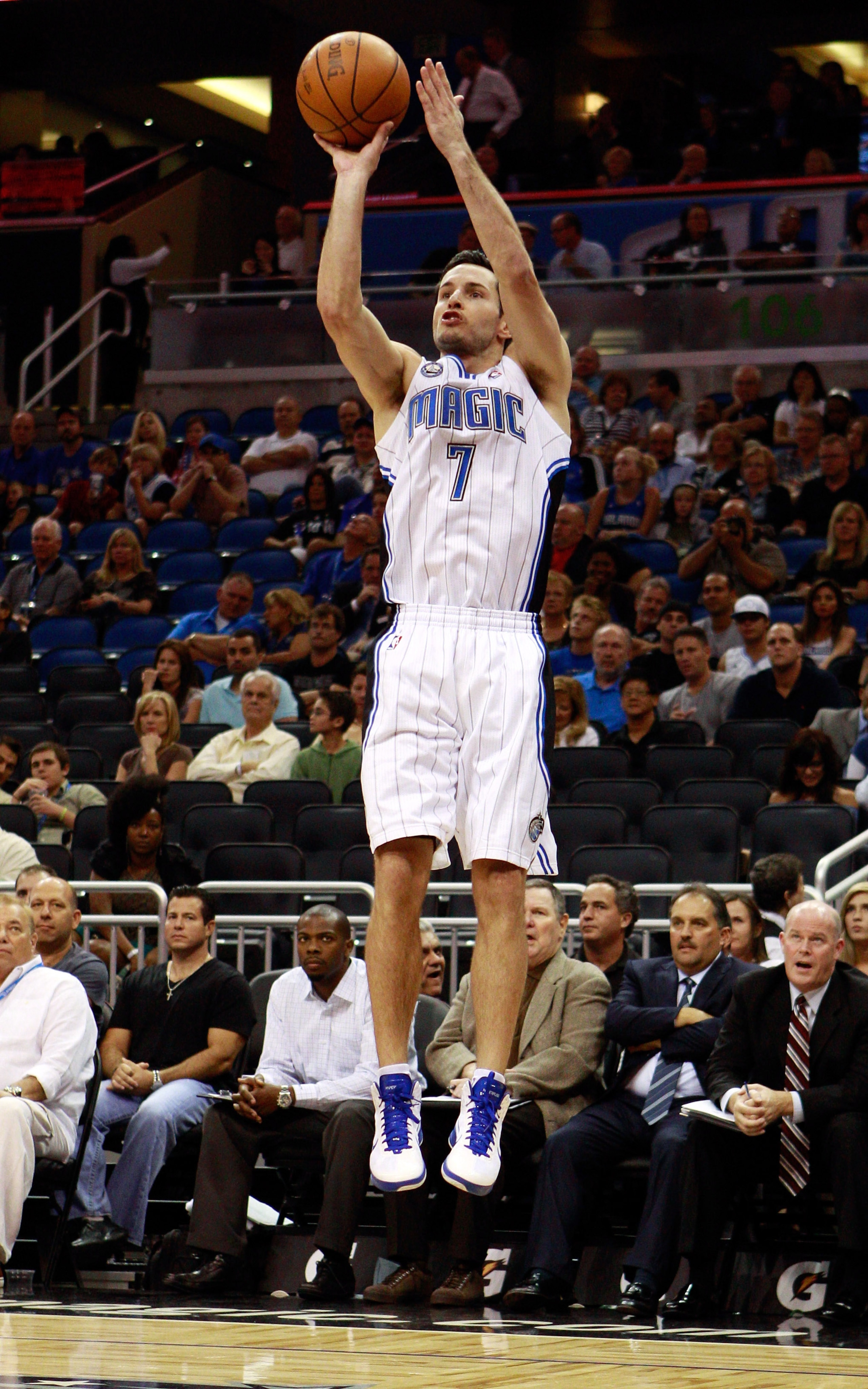
The preseason Brandon Bass/Rashard Lewis battle could shake up the Magic bench, but if Lewis wins the starting power forward position, then Quentin Richardson should be the starting small forward. Redick then would find himself in a head-to-head battle with Mickael Pietrus for the Magic's sixth man spot.
And while Pietrus should thrive in the defensive stopper role vacated by Matt Barnes, his spotty offense and questionable decision-making should open the door for the fourth-year former Dukie.
After struggling to crack the rotation in his first three seasons, Redick finally showed why he became the face of the Better Basketball shooting DVDs. He blossomed last season into an impact scorer off Orlando's bench, finishing the regular season with a respectable 9.6 points on 43.9 percent shooting, 40.5 percent from deep.
Redick also turned heads with his newly-found defensive intensity—albeit not DVD-quality defense—which should leave Stan Van Gundy comfortable with Redick seeing extended court time each night. And his knockdown three-point shooting ability should help the Magic create the spacing that would allow Dwight Howard, Brandon Bass and Marcin Gortat to go to work in the post.
23. Reggie Williams, Golden State Warriors
8 of 30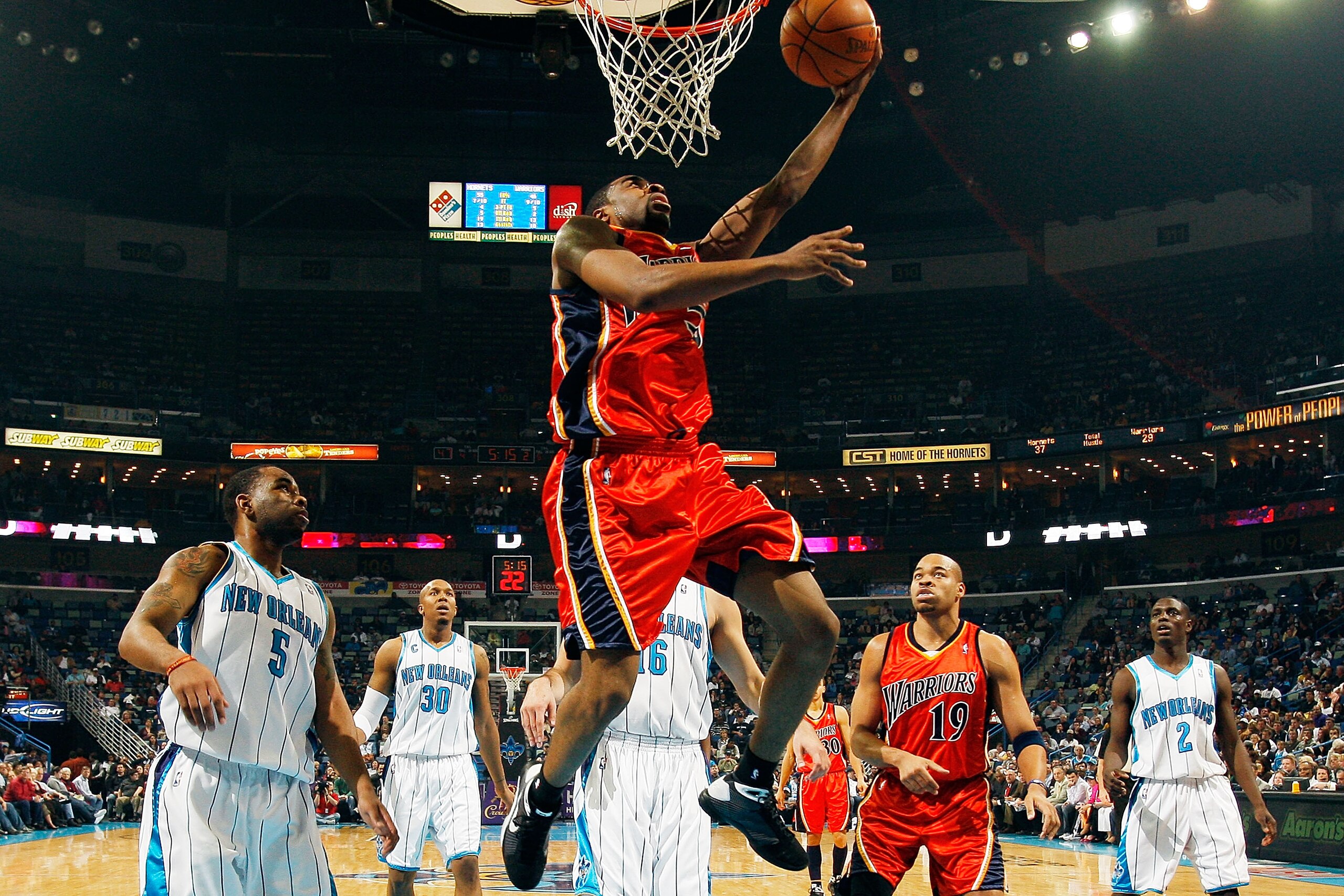
The offensively-potent wingman proved why the Warriors—or the Golden State D-Leaguers, as former coach Don Nelson liked to call them—might have the best D-League scouts in the NBA.
In just 24 games in the big league last season, Williams showed the scoring ability that earned him consecutive NCAA scoring championships in his time at the Virginia Military Institute. Williams finished the year with 15.2 points on 49.5 percent shooting from the field and 35.9 percent shooting from deep.
The Warriors expect a big season from Williams, who could serve as the primary backup at the shooting guard and small forward positions. Last season, Williams showed the ability to not only shoot the basketball, but also score off the dribble. For a club known for being one of the league's highest scoring teams, Williams could be the only reliable scorer off the Warriors bench. Newcomers Charlie Bell, Louis Amundson, Rodney Carney and rookie Ekpe Udoh were all brought in for their defensive prowess.
Unless the injury bug bites the Warriors again this season, he may not average 32.6 minutes a night again this season, but a solid 25+ would suit the Warriors and Williams just fine.
22. Andrei Kirilenko, Utah Jazz
9 of 30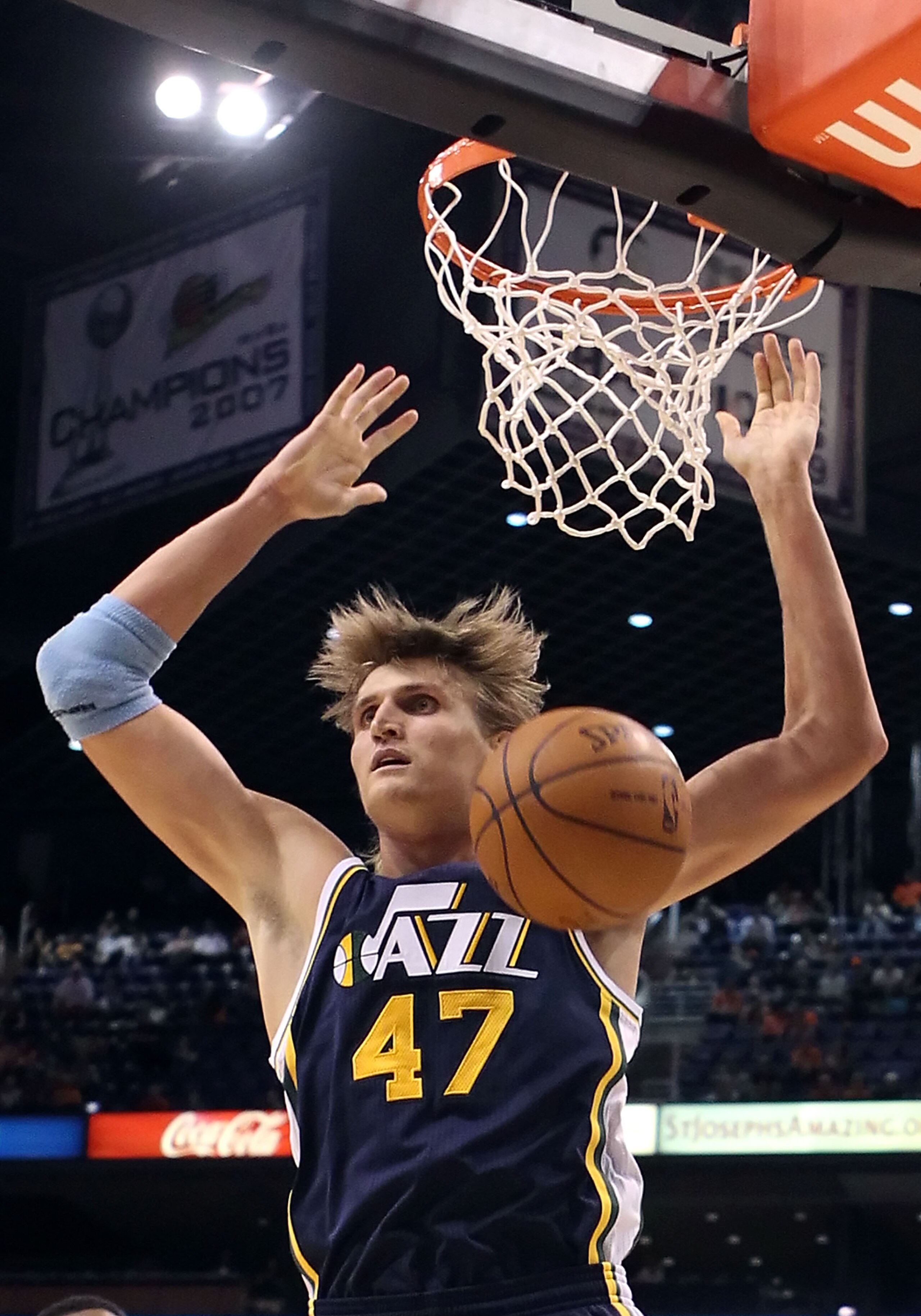
Kirilenko still has a chance to start for Utah at the power forward, but he's more of a 'tweener than Paul Millsap. Kirilenko has ideal size for the small forward position—6'9", 235 pounds—but his defensive ability allows him to suit up at both positions. In 2003-04, Kirilenko became just the second player in NBA history to finish in the top five in both blocks (2.8) and steals (1.9).
He's not a real outside threat—30.7 percent for his career from deep—but he generally shares the floor with at least two three-point threats. And while he's not a rebounding machine, he's pulled down 5.7 per night in his career.
Kirilenko has had to adjust to coming out of the starting lineup the last two seasons after starting for the previous five. And so far, the results have been positive. His scoring increased for the fourth straight season last year—11.9 points—and last season, he matched a career-high with 50.6 percent from the field.
21. Chase Budinger, Houston Rockets
10 of 30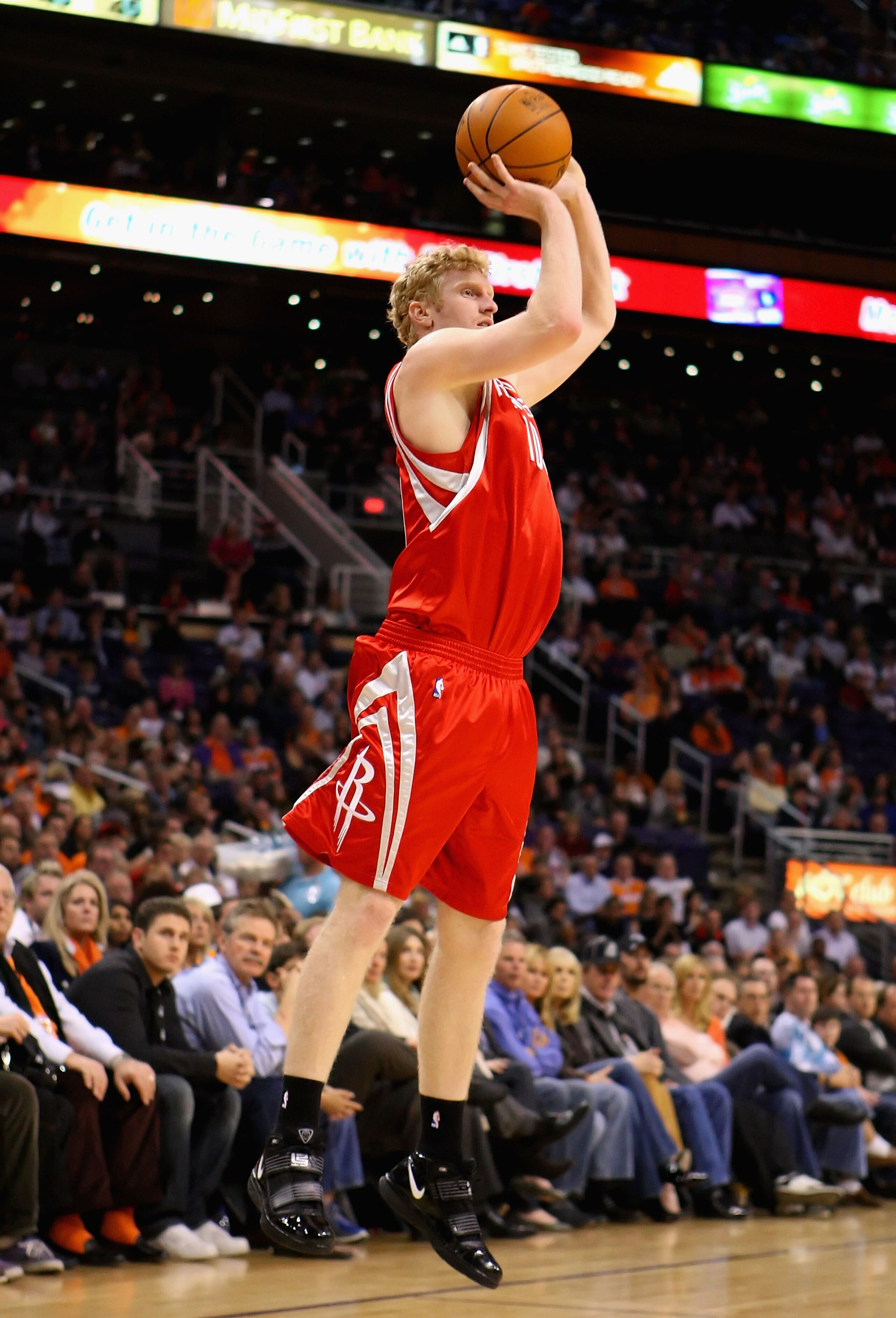
The second-year man out of Arizona proved to be an NBA-caliber player in his rookie campaign. A former nationally-ranked sand volleyball player, Budinger showed that he's more than just a white guy with a 40+ inch vertical. He finished the year with 8.9 points and an efficient 44.1 field goal percentage, while shooting 36.9 percent from three-point land.
On a deep Rockets bench, Budinger will have to put in the work to separate himself from a unit that features Kyle Lowry, newcomer Courtney Lee, Jordan Hill, Chuck Hayes and rookie Patrick Patterson. Budinger will benefit from backing up the Rockets' weakest starter, Shane Battier, who had his third consecutive season of averaging less than 10 ppg.
With Yao Ming back to protect the basket—even if it will only be for 24 minutes a game—head coach Rick Adelman may be willing to sacrifice a little of Battier's defense for Budinger's offensive ability. And if Budinger uses his springs to increase his 0.2 blocks per game, Battier might soon find himself battling for minutes off the bench.
20. Wesley Matthews, Portland Trailblazers
11 of 30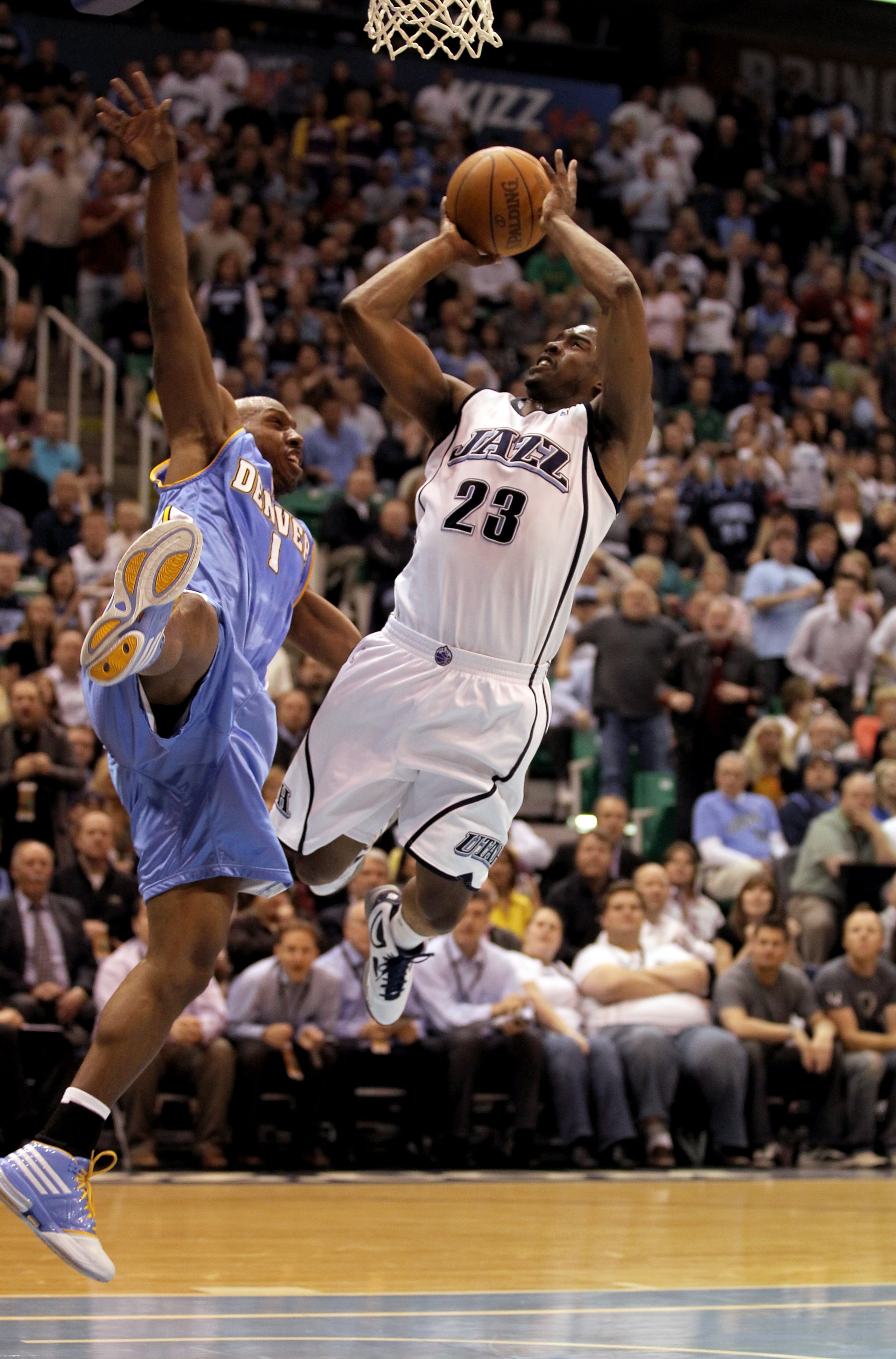
Matthews is another player whose talent level is arguably above the next 10 players on this list. An undrafted free agent out of Marquette, Matthews more than earned his five-year, $34 million deal with Portland by a stellar rookie year in Utah.
Matthews showed offensive versatility en route to averaging 9.4 points on 48.3 percent shooting from the field and 38.2 percent from the perimeter. Matthews used his 6'5", 220-lb frame to find playing time at the shooting guard and small forward for coach Jerry Sloan.
With Portland's financial commitment to Matthews, it's obvious that they would like to get at least the 24.7 minutes out of him that he averaged in Utah last season. A number closer to 30 would suit them even better.
In Portland, he'll serve as Brandon Roy's backup, but should get a chance to compete with incumbent Nicolas Batum for the small forward spot. Given that the Trailblazers let Travis Outlaw and Martell Webster leave town before Matthews was brought aboard, it's likely that the Blazers brass are comfortable with Batum logging the most minutes at the position. But between backing up both players, Matthews could see enough minutes to finish near the top 10 for the sixth-man voting.
19. Randy Foye, Los Angeles Clippers
12 of 30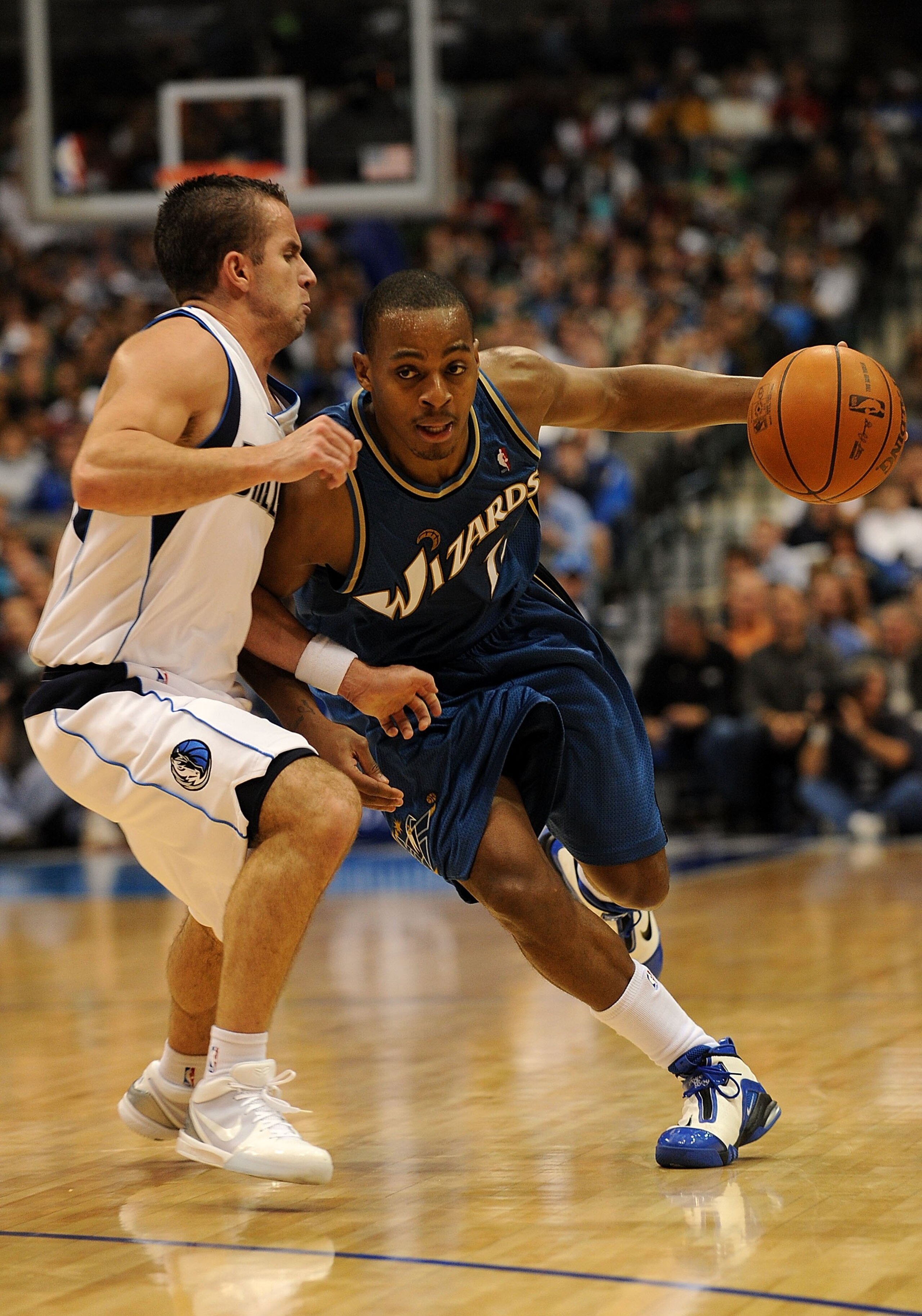
The 2010-11 season will offer Foye another fresh start, as the Clippers will be the third team in as many years for the former Villanova Wildcat.
After three productive seasons with the Timberwolves—averaging 16.3 points in his final season—Foye was shipped to the Wizards prior to the 2009 draft to acquire what would become Spanish star Ricky Rubio. Foye then served as the Clippers' consolation prize—along with Ryan Gomes—after finding out they would not win "The Decision" sweepstakes.
But, the good news for Clippers fans is that most players would not make Foye a consolation prize, he just managed to be a member of possibly the league's greatest free agent crop. In Foye, the Clippers get a talented backup for the point and shooting guard positions, capable of making plays and scoring the basketball.
In his 23.8 minutes last season for the Wizards, Foye finished with 10.1 points on 41.4 percent shooting—34.6 percent from three-point land—and 3.3 assists. The Clippers' starting backcourt—Baron Davis and Eric Gordon—missed a combined 29 games last season, so Foye has a chance at major minutes for that other team in the Staples Center.
18. Channing Frye, Phoenix Suns
13 of 30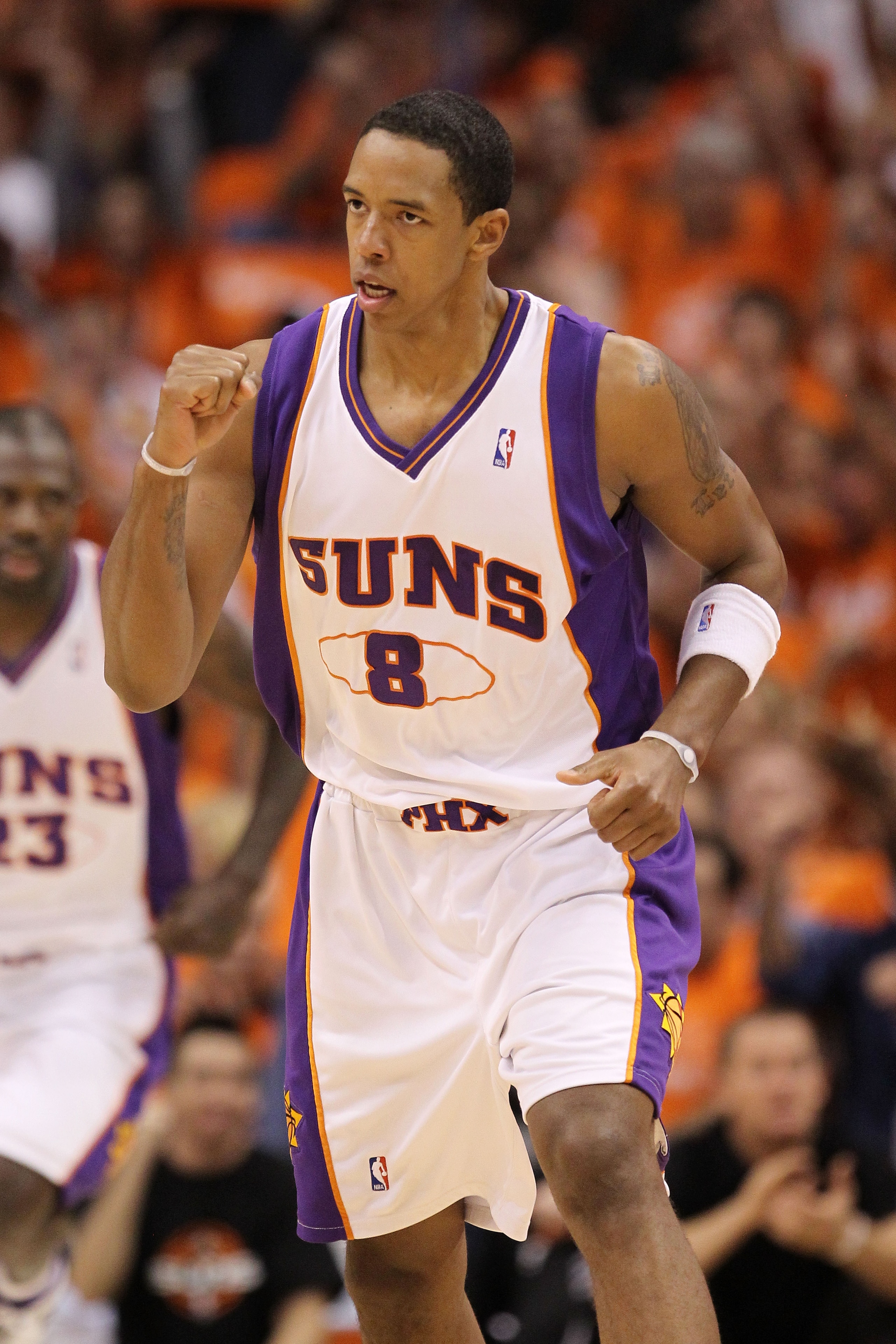
After three seasons of trying to recapture the form that led Frye to 12.3 points in his rookie campaign with the Knicks, Frye joined a Phoenix squad that could not have fit his skill-set any better. The 6'11", 245 pounder used his three-point stroke, a career-best 43.9 percent, to stretch opposing defenses and create driving lanes for Steve Nash, Jason Richardson, Goran Dragic and Co.
Frye will never be a great rebounder—4.7 career rebounds per game—but the Suns don't bring him in for rebounds. His shooting touch, and the resulting spacing it creates, helps him ignite the Suns' second unit to help keep up with the Suns’ frenetic pace.
Look for Frye to grab a chunk of the minutes vacated by Amar'e Stoudemire and really impact this Suns squad. With Hedo Turkoglu likely starting, Frye's only competition to back up the power forward and center position will come from Hakim Warrick, Dwayne Jones and Earl Clark.
17. Chris Douglas-Roberts, Milwaukee Bucks
14 of 30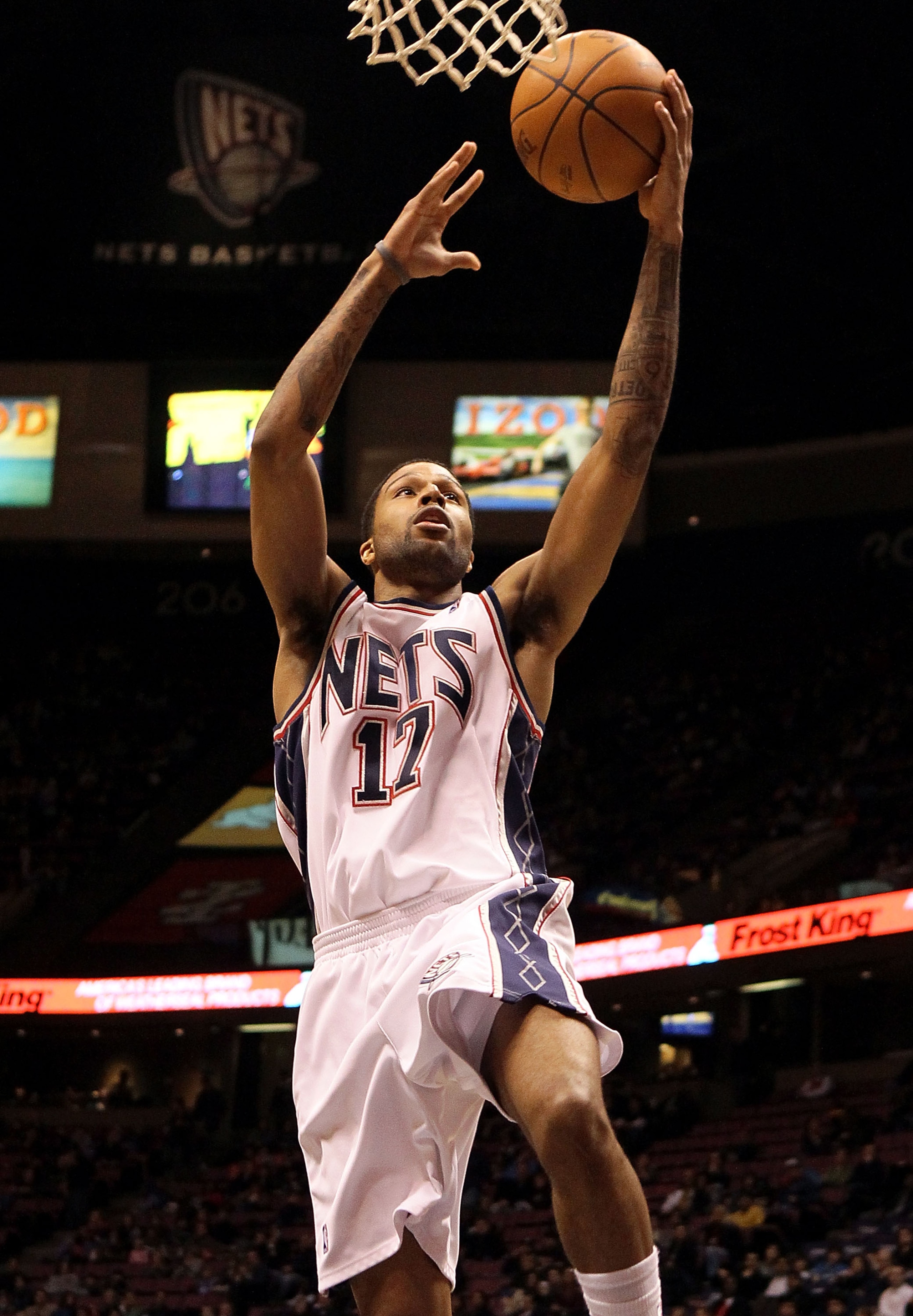
Chris Douglas-Roberts can simply score. CDR averaged 9.8 points in just over 25 minutes a night last season, doubling his total from his rookie season, 4.9.
The former second-round pick out of Memphis should excel from a fresh start away from New Jersey. Douglas-Roberts often found himself in hot water with the Nets after multiple ill-advised tweets. He's not the type of guy to shy away from any subject, and he'll speak whatever is on his mind.
He also struggled with the Nets, because his role was never clearly defined. He was one of a slew of above-average wingmen on New Jersey—Terrence Williams, Courtney Lee, Jarvis Hayes, Bobby Simmons—who shared similar skill-sets. The minutes fluctuated between the players, and none of the group ever grabbed a hold of the minutes.
But in Milwaukee, Douglas-Roberts will have the chance to be the man as he should serve as the first backup at the shooting guard and small forward positions. The Bucks have talent on the bench, where he’s joined by Ersan Ilyasova, Carlos Delfino, Luc Richard and Mbah a Moute. CDR's ability to play either spot on the perimeter, combined with his scoring prowess, should garner him the most minutes.
16. Kirk Hinrich, Washington Wizards
15 of 30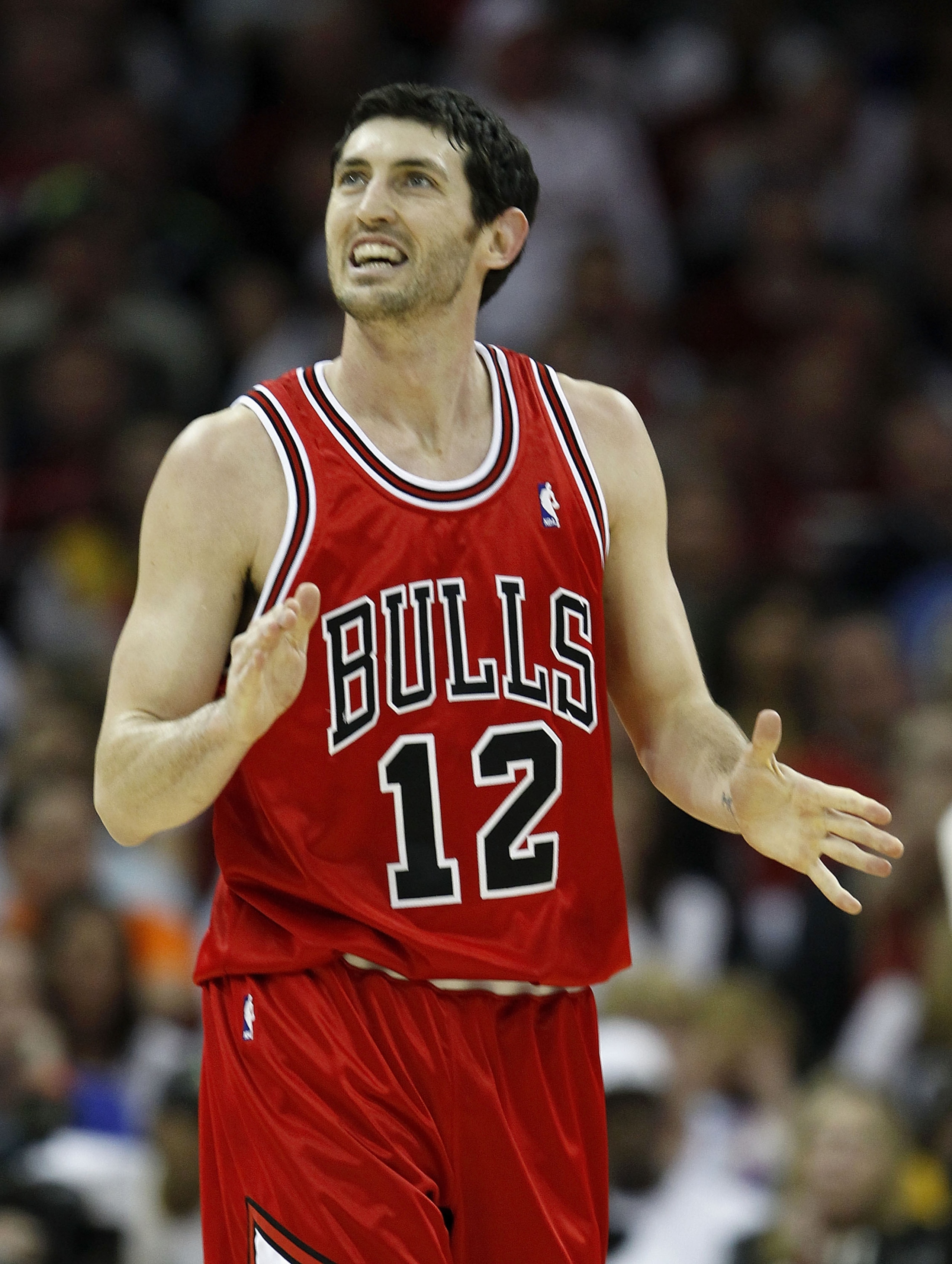
After spending the first seven years of his career with the Bulls, Hinrich and his two-year, $17 million contract were shipped to the Wizards in July in a cost-cutting move. The former Kansas Jayhawk is coming off one of his worst seasons statistically—second lowest point and assist averages in his career—but should benefit from the extra opportunities available to him in Washington.
Hinrich's numbers took a substantial dip after the Bulls drafted Derrick Rose, and he'll be backing up a point guard drafted with the first overall pick again this season, Kentucky's John Wall. But the shooting guard position, likely filled by Gilbert Arenas, looks shakier than a rookie point guard starting opening night. In other words, he's backing up talented players, but those players have question marks.
Hinrich is a hybrid player, capable of running the point or playing the off-guard position. He's a reliable three-point shooter—37.9 percent for his career—and a good decision maker (career 5.8 assists to 2.17 turnovers). He's also an underrated defender, a characteristic that should help him eat into the minutes logged by Wall and Arenas.
As far as his competition on the bench, the only other guard on the roster is Nick Young. Young has potential and is a scoring threat, but Hinrich's experience, defense and versatility should make him the first player off of the bench.
15. Kyle Korver, Chicago Bulls
16 of 30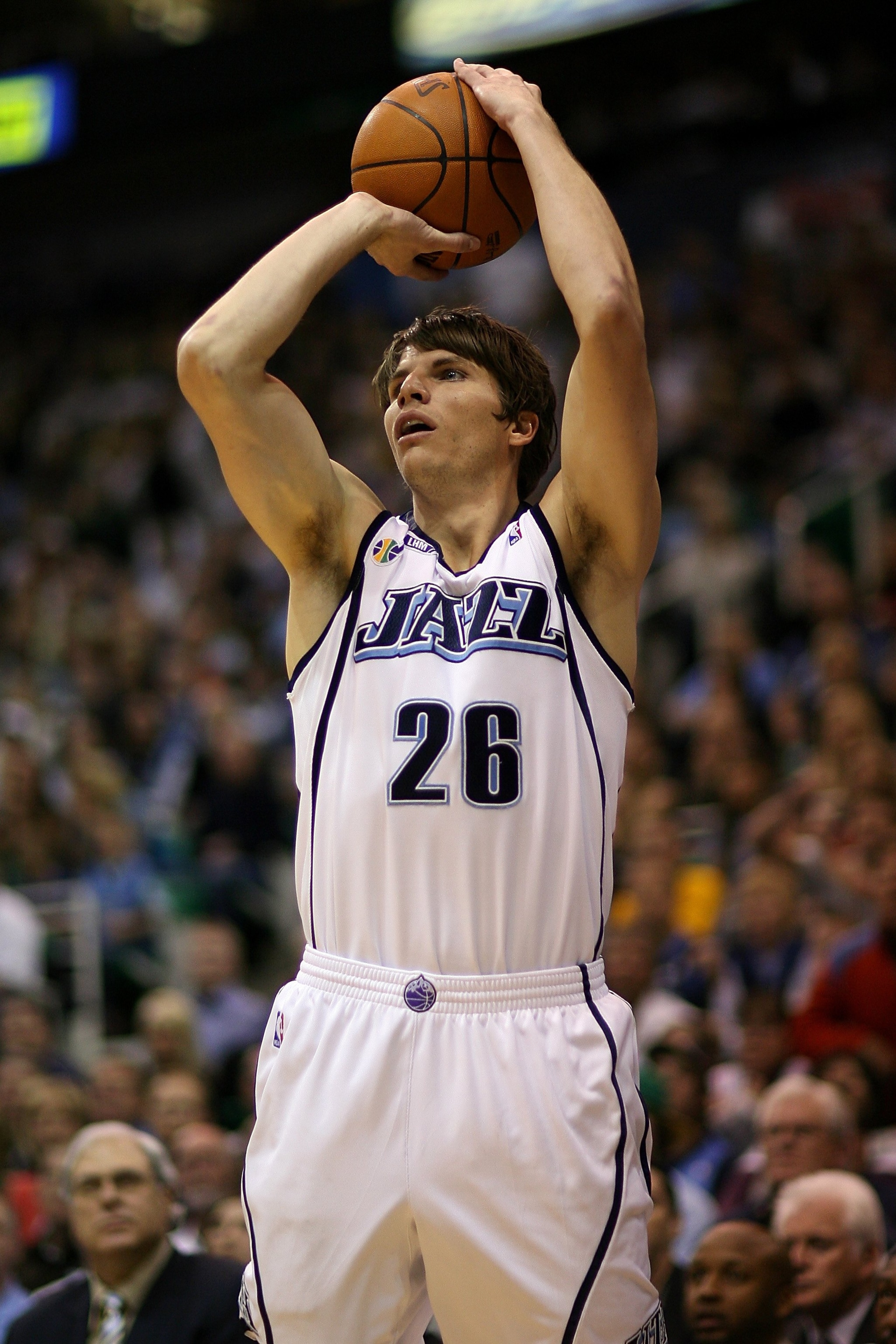
Maybe the most impressive, under-appreciated signing in the offseason, Korver is the outside shooter the Bulls have missed since Ben Gordon left for Detroit before last season. Korver's been a shooter for his seven-year career—41.0 percent from three-point land—but last season he paced the NBA with a league-best 53.6 percent from deep.
Korver is not the prototypical sixth man in that he's not thought of as a high energy guy and his skill-set is not all that versatile. But, Korver falls under a different type of sixth man: He's instant offense off the bench. His shooting ability alone is capable of picking up the team when their starters falter out of the gate.
He could potentially start, but fellow newcomer Ronnie Brewer brings the defensive ability that coach Tom Thibodeau covets. Korver's ability to stretch the defense and create space for Derrick Rose and Luol Deng to penetrate—and Carlos Boozer, Taj Gibson and Joakim Noah to work the paint—should give Korver more than the 25 minutes that he's averaged in his career.
14. Terrence Williams, New Jersey Nets
17 of 30
The Nets’ first choice—11th overall—in last season's draft, Williams was penciled into the Nets starting lineup this season by many analysts. But, that was before New Jersey extended an offer to sharpshooter Anthony Morrow for three years and $12 million that was too rich for Golden State's blood.
So, Morrow now will start at the shooting guard, and fellow newcomer Travis Outlaw will get the nod at small forward position, leaving the Nets with an athletically gifted Williams as the first man off the bench. Williams has the size—6'6", 220 lbs—to play the small forward and the quickness to play the shooting guard. He should serve as the main wing player off the Nets bench.
His shot could still use some work—40.1 percent, 31.0 percent from three-point land—but he's a stat-filler, capable of making the crowd-awakening finishes that could spark an improving second unit. Stephen Graham and rookie Damion James lack the ball-handling and quickness to get to the rim, so Williams' ability should put him close to the 30-minute plateau this season.
13. Louis Williams, Philadelphia 76ers
18 of 30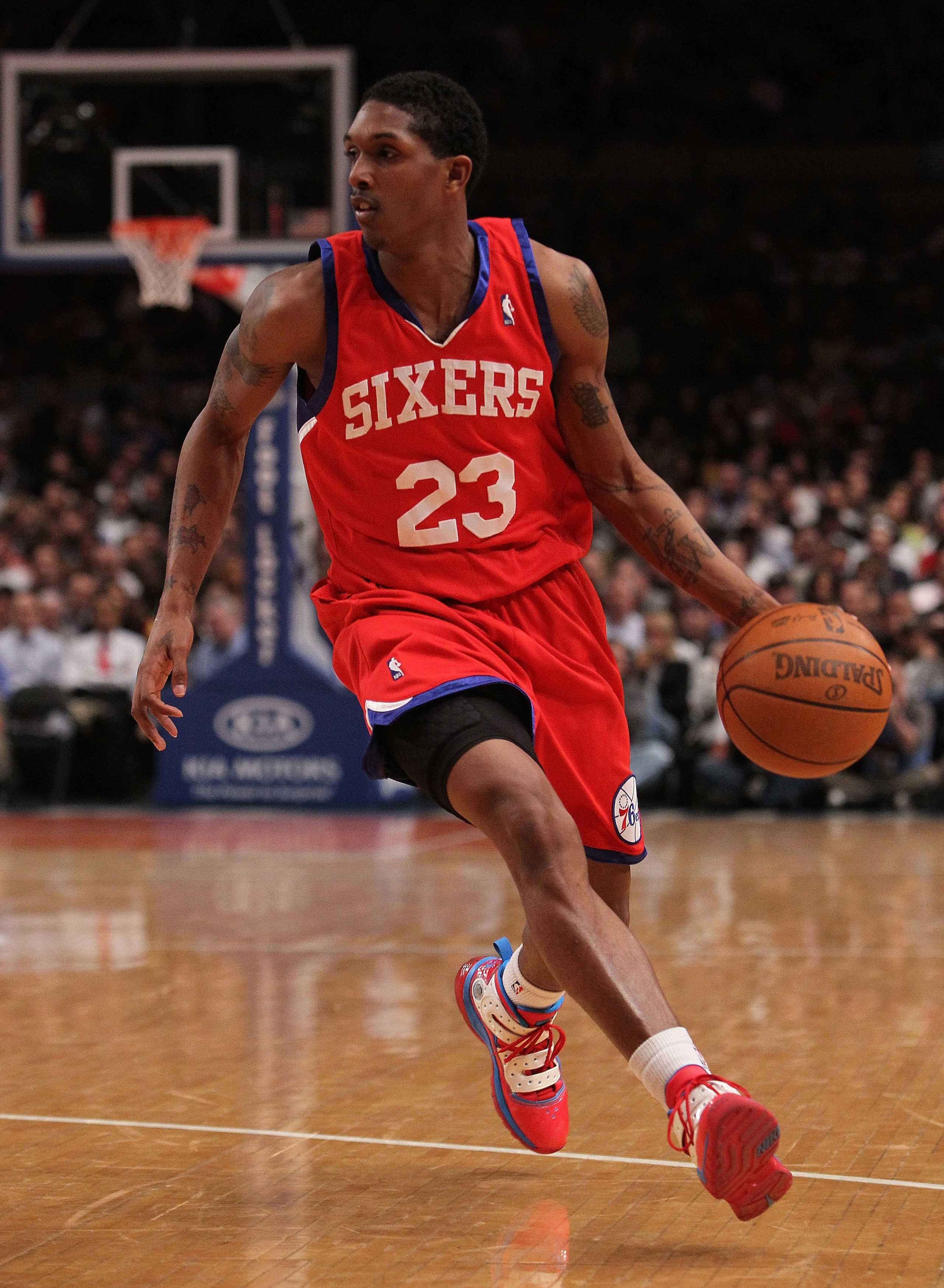
With five years under his belt, Sweet Lou's name says it all. Sweet jumper. Sweet handles. Sweet finishing at the rim. Sweet ability that has allowed him to increase his minutes, points and free throw percentage every season.
Of all the players listed so far, Williams is the first with a true chance to capture the Sixth Man of the Year Award. The 76ers were one of the league's most disappointing teams last season and have made strides in the offseason—acquiring Andres Nocioni and Spencer Hawes from Sacramento, drafting Evan Turner with the second pick, bringing in new coach Doug Collins—to play more to their talent level this season.
Collins has a history of turning teams around in his first season—18 more wins than the previous season in his first season as Wizards and Bulls coach—and NBA awards simply aren't given to players on bad teams.
For Williams, the success and subsequent exposure could lead him to household-name status by year's end. He possesses a quick first step and showed good range last season, connecting on 34 percent of his three-pointers en route to 14 points per game. He also has the ability to create for his teammates, as evidenced by his 4.2 assists. He's seen time at both guard positions and should continue to do so this season.
12. Leandro Barbosa, Toronto Raptors
19 of 30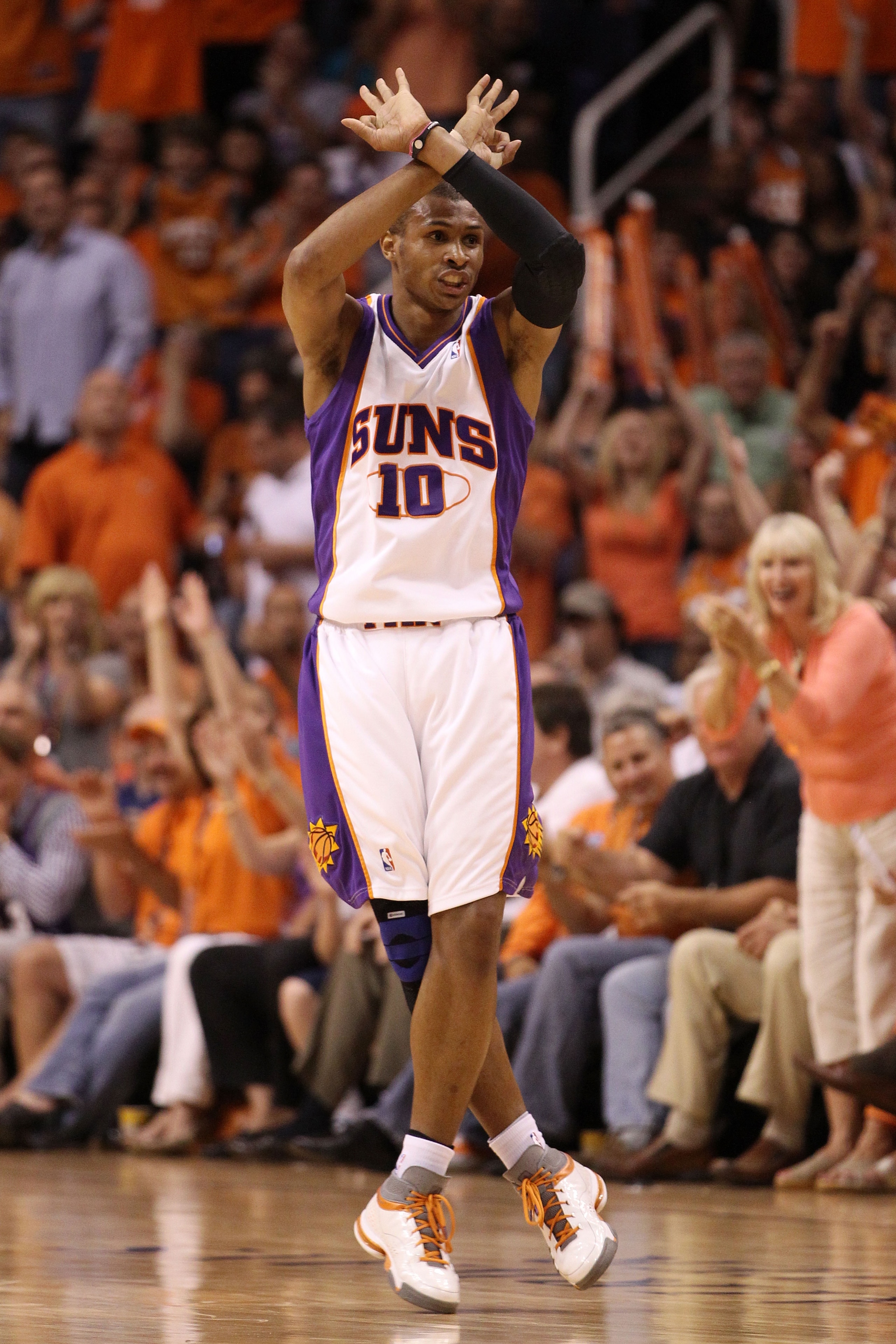
The first of seven previous Sixth Man of the Year winners to make the list, Barbosa will get a chance at a fresh start after seven productive seasons in Phoenix. Acquired by the Raptors as part of the deal that sent Hedo Turkoglu to the Suns, the Brazilian had a frustrating, injury-plagued 2009-2010 season. His points per game dipped into the single digits for the first time in five seasons, and he appeared in a career-low 44 games.
Barbosa appears healthy now, and is no longer trapped behind potent scorer Jason Richardson. Now he'll battle with DeMar Derozan and Sonny Weems for minutes at the shooting guard and could share the floor with DeRozan when the latter moves to the small forward position.
Assuming former Euro leaguer Linas Kleiza earns the starting small forward spot—he's started four of the Raptors' six preseason games—the young DeRozan will start at the shooting guard. That leaves Barbosa as the Raptors' spark off the bench. And he's got the hardware to prove that he can excel in this role.
He's averaged 12.1 points and 39.8 percent on three-pointers in his career, and his lightning-quick first step can get him around any defender in the league.
11. James Harden, Oklahoma City Thunder
20 of 30
After an abysmal showing—3-18, 19 points in 74 minutes—on the grandest of stages (March Madness), Harden appeared ready to plummet from his perch above most of his peers of the 2009 draft class. But his NBA-ready body and silky smooth jumper left Harden as the third overall choice, further proof that the Thunder's scouts are among the league's best.
Harden immediately made an impact on one of the league's most exciting—and talented—teams. Harden averaged 9.9 points on 40.3 percent shooting from the field, 37.5 percent from three-point land in just under 23 minutes a game.
Just like his Thunder teammates, he'll benefit from the postseason experience after they pushed the eventual champion Lakers to six games. Harden should eventually push incumbent starter Thabo Sefolosha to the bench, but Sefolosha's defensive prowess—and Harden's quick offense—should keep the Thunder rotation similar to last season. But don't be surprised if Harden's playing 30 minutes off the bench.
10. Jason Thompson, Sacramento Kings
21 of 30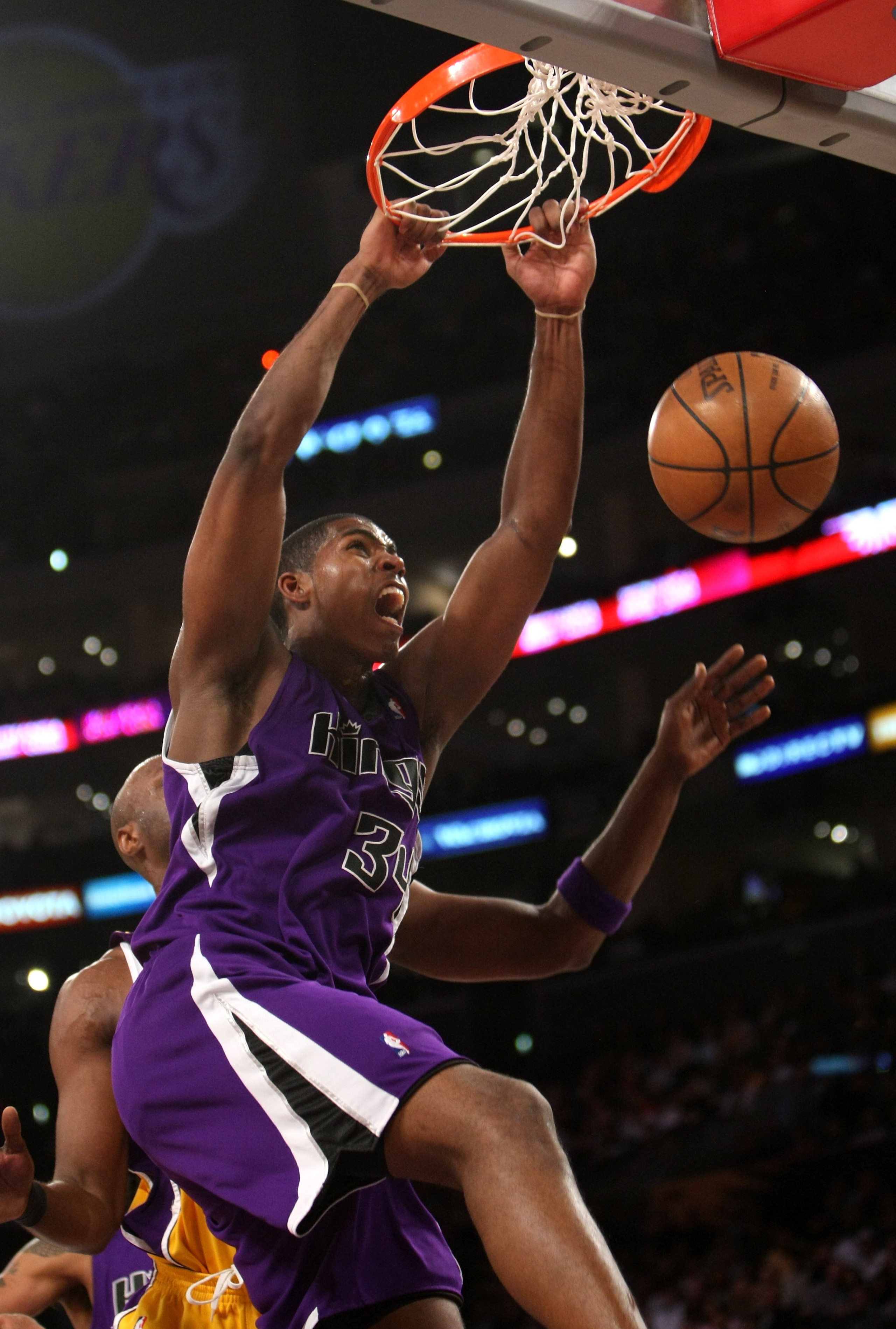
Thompson could very well be the Kings starting power forward by the time this season tips off. For that matter, he could even be the starting center. After averaging an impressive 12.5 points and 8.5 rebounds, Thompson looked primed for a breakout year this season.
But then the Kings acquired Carl Landry from the Rockets, and Samuel Dalembert was brought in from the 76ers. Then, the club drafted Kentucky big man DeMarcus Cousins with the fifth overall pick. Now, Thompson will have to fight for every minute he can get on what is quickly becoming one of the league's better front courts.
Thompson's ability to play either post position should garner him starter minutes, even if he starts the game on the bench. But like many great bench players, Thompson could easily finish the game on the floor most nights.
9. Antawn Jamison, Cleveland Cavaliers
22 of 30
Another former sixth man award winner, Jamison is in the unique position of being one of his club's top three talents and likely being relegated to the bench. Coach Byron Scott has said he wants J.J. Hickson to greatly increase his minutes this season, likely coming at the cost of Jamison's. Technically, the team could play both together, but Jamison is a little slow to play small forward and Hickson is a little undersized to play center.
It's tough to argue that Hickson gives the club a better chance to win now than Jamison, but Cleveland is not planning on winning now, despite what owner Dan Gilbert wants us to think. So for a rebuilding club, the young-upside player is the better choice.
But this is a role that Jamison can fill well. He has the ability to shoot from anywhere on the floor—48.5 percent field goals, 34.2 percent from three—and features a variety of floaters and runners that help him score over bigger defenders. He's an offense-first type of bench player, but could provide a much-needed boost for a team that might struggle to score consistently.
8. Mike Miller, Miami Heat
23 of 30
On the surface, Miller looks one dimensional: a lights-out shooter, brought in to create spacing for Miami Thrice to drive at will.
And on the surface, that's a correct statement. But Miller is more than just a shooter. And he came to the Heat to be more than just a decoy.
He trailed only Korver in three point shooting—48 percent—but helped his team in a number of ways. He pulled down 6.2 rebounds and averaged 3.9 assists per game. He's not a premiere defender, but his 0.7 steals shows a glimpse of the effort that he gives on that end of the floor.
He will knock down plenty of threes this season and James, Wade and Bosh will benefit from the spacing. But Miller will drive, create offense and hustle at both ends in what could be a special season for the former Gator and former Sixth Man of the Year.
7. J.R. Smith, Denver Nuggets
24 of 30
Smith might be the most explosive scorer of this group. At his best, he's a knock-down three-point shooter—33.8 percent last season—with the handles and athleticism to drive and finish at the rim.
But he's not consistently at his best, thus moving him down the list a bit. At his worst, he's a malcontent teammate and immature on and off the court. He'll take some bad shots, he'll drive where there's no lane but he does enough positive that the Nuggets try to see past the negative.
His offensive abilities are virtually unmatched by his NBA peers off of the bench. He scored at least 20 points in 17 games last season. He holds the Nuggets' franchise record of 11 three-pointers in a single game, just one shy of an NBA record.
And for all of the worries about Smith's attitude and decision making, people have to remember one thing: He's only 24 years old. He's entering his fifth season in Denver and has increased his scoring in his last three seasons. With Carmelo Anthony unhappy, Smith could actually help Chauncey Billups be the glue that holds this team together.
6. Jason Terry, Dallas Mavericks
25 of 30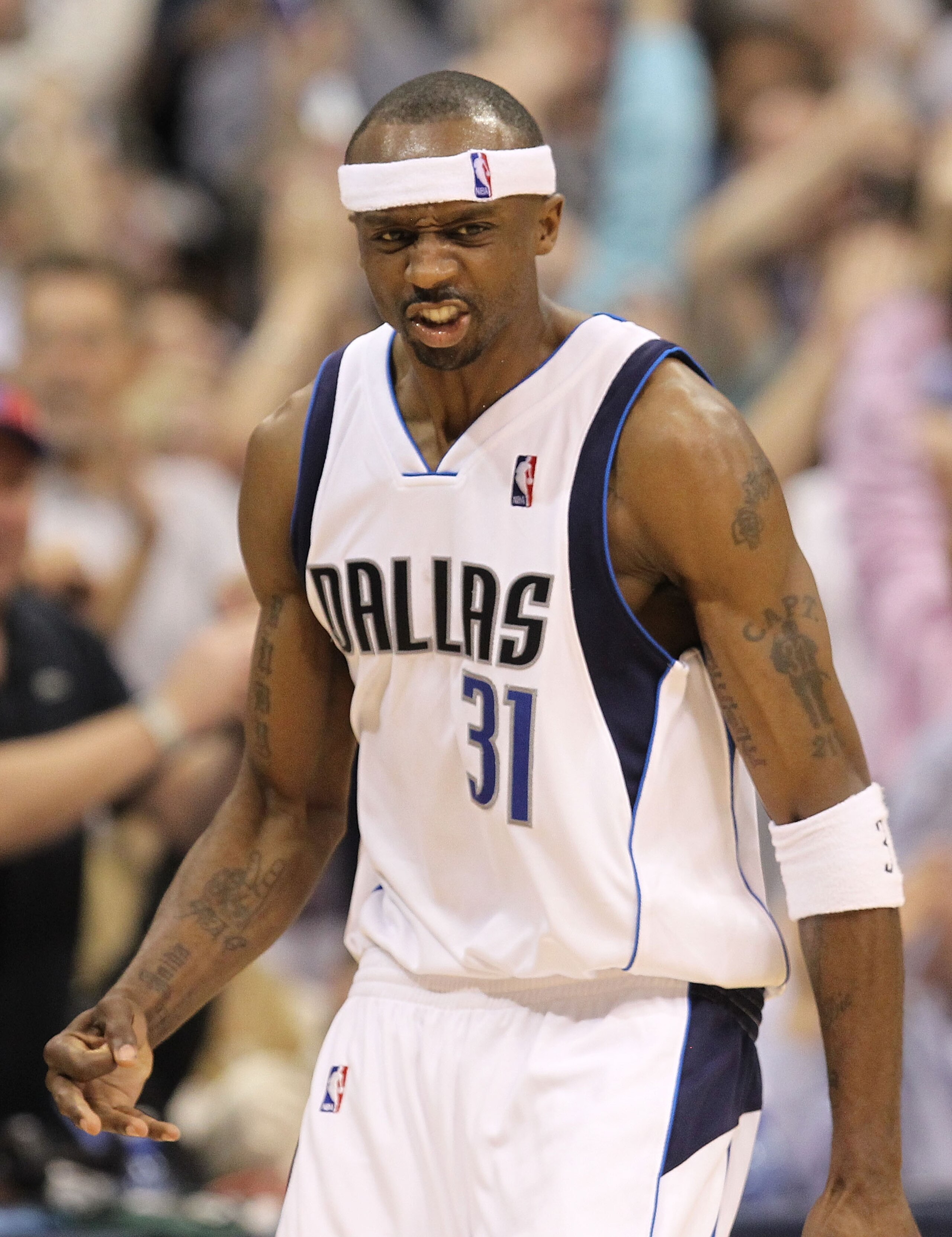
Another former Sixth Man of the Year recipient, Terry knows his role with Dallas and executes it well. A bench player getting starter minutes—33 last season—Terry has the versatility and energy level of an ideal bench man.
Terry has averaged at least 15.5 points and 31.5 minutes in his last three seasons, with 57 starts in 233 games. His 3.8 assists highlight his ability to create for others, and he's also a more-than-capable outside shooter—38.2 percent for his career.
Terry's candidacy this season is hurt only by the fact that he's a member of the league's deepest second units. Terry will have to fight the younger J.J. Barea and Rodrique Beaubois for any chance to play the backup point guard and now has to sit behind Caron Butler for a full season.
But, Terry's ability to succeed as a sixth man will no doubt serve the Mavericks well again, and he should remain a staple near the top of the ballot.
5. Anthony Randolph, New York Knicks
26 of 30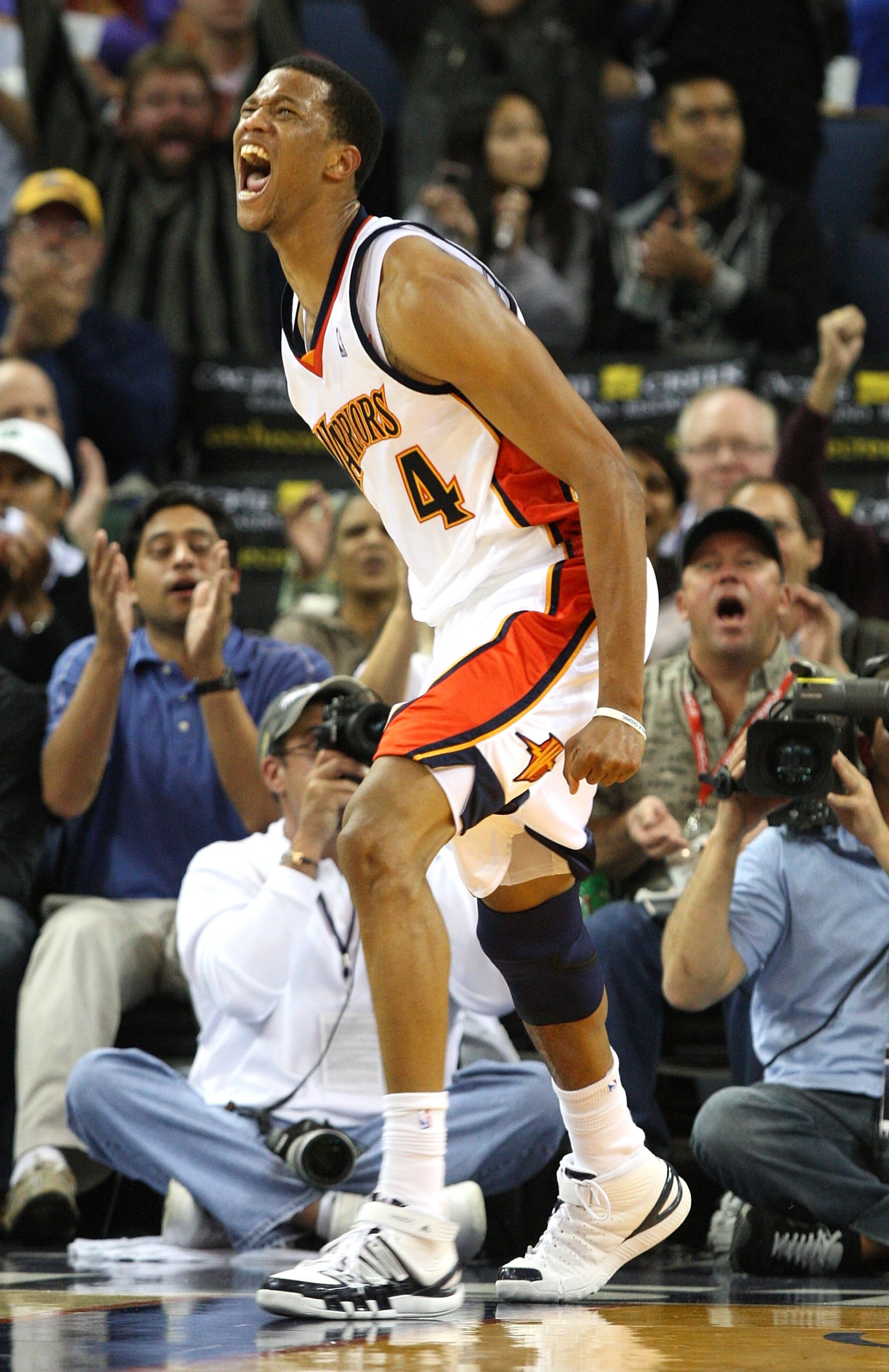
Randolph could start, finish anywhere on this list or simply fight to be in the Knicks' 10-man rotation and no one would be surprised at all. That's how little the NBA world really knows about Anthony Randolph's first two seasons in the league.
The talent level and the skill set to go with his 6'11", 225-pound frame had many scouts envisioning the next Lamar Odom when Randolph left LSU after just one season. His 2.3 blocks in college and 7'3" wingspan showed a defensive force in the making. Add this to a player with above average handling and a quick first step, and Randolph should have had teams searching for the next Anthony Randolph.
But, Randolph's first two seasons have left a lot to be desired. As luck would have it, the league's youngest player was paired with Don Nelson, perhaps the league's worst coach in terms of developing young talent. The lack of consistent roles and minutes left Randolph frustrated and confused. Despite the Warriors struggling in his first two seasons, Nelson showed little desire to develop the franchise's new face.
But, that's over for Randolph after a welcome trade to a Mike D'Antoni system that he should thrive in. Randolph has similar skills to another offseason plunder, Amar'e Stoudemire, which should keep him relegated to the bench for most of this year at least. But here, he'll be the first option off the bench, and a consistent 25-30 minutes could be all that he needs to show what he's capable of.
4. Jamal Crawford, Atlanta Hawks
27 of 30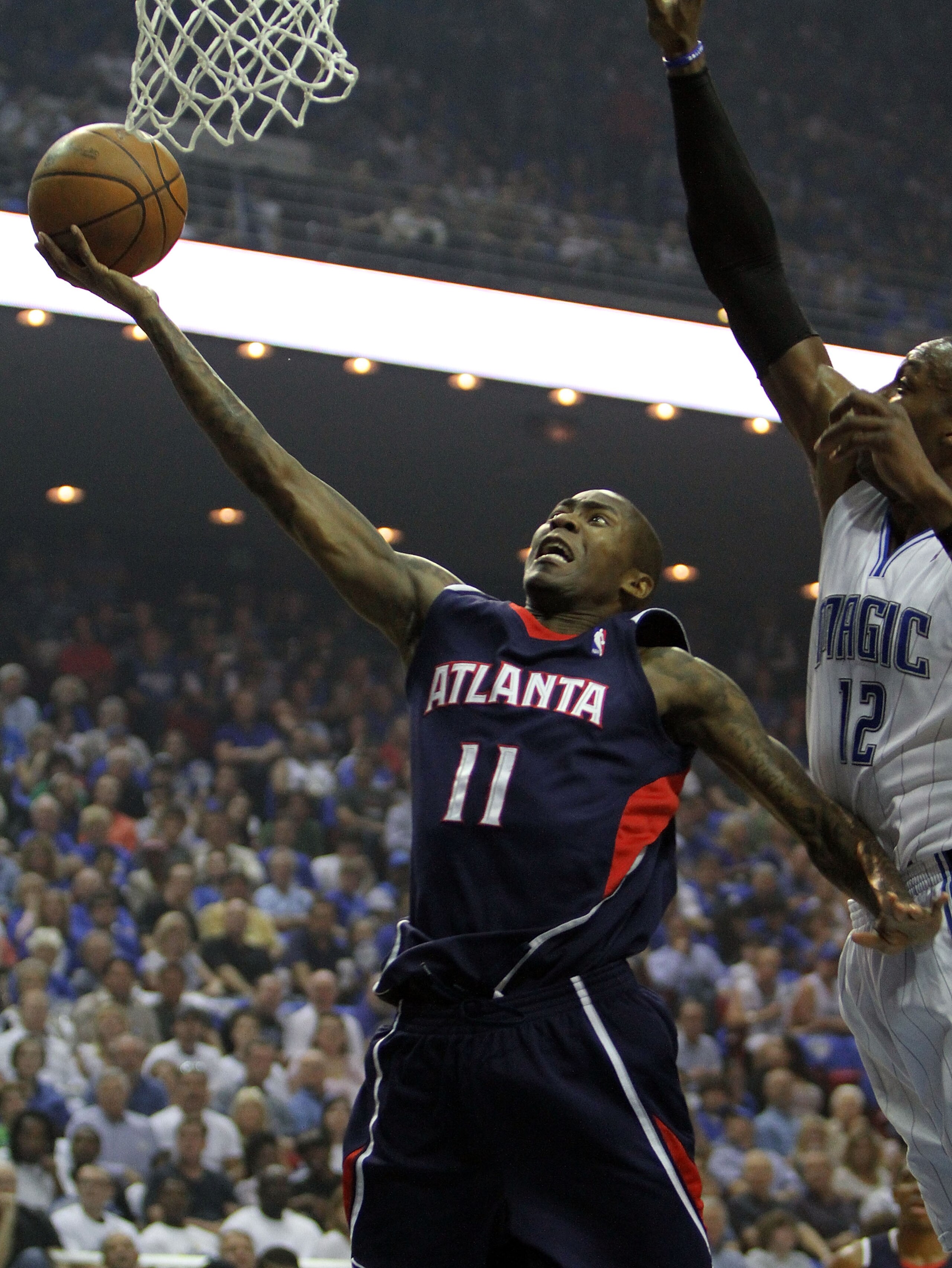
The reigning Sixth Man of the Year, Crawford and the Hawks look very similar to last season when he lit up the league to the tune of 18 points on 44.9 percent shooting, 38.2 percent from deep. He also dished out three assists in his 31.1 minutes and embraced the sixth man role from day one.
Why, then, has he been replaced on his throne? Simple answer, and one that's too common in sports: the business side might affect his play.
Crawford has been vocally unhappy about the lack of a contract extension offer from the Hawks for the free agent-to-be—he holds a $10.08 million player option for next season. Crawford made his debut in the club's fourth contest after he missed the first three with a back injury, but could have been propelled back after rookie guard Jordan Crawford scored 50 points combined in two games.
He might possess the best handles in the business and can play minutes at both guard spots. If he's in the right frame of mind, he could easily repeat as sixth man. But the longer the contract issue lingers, the less and less likely that will become.
3. Ben Gordon, Detroit Pistons
28 of 30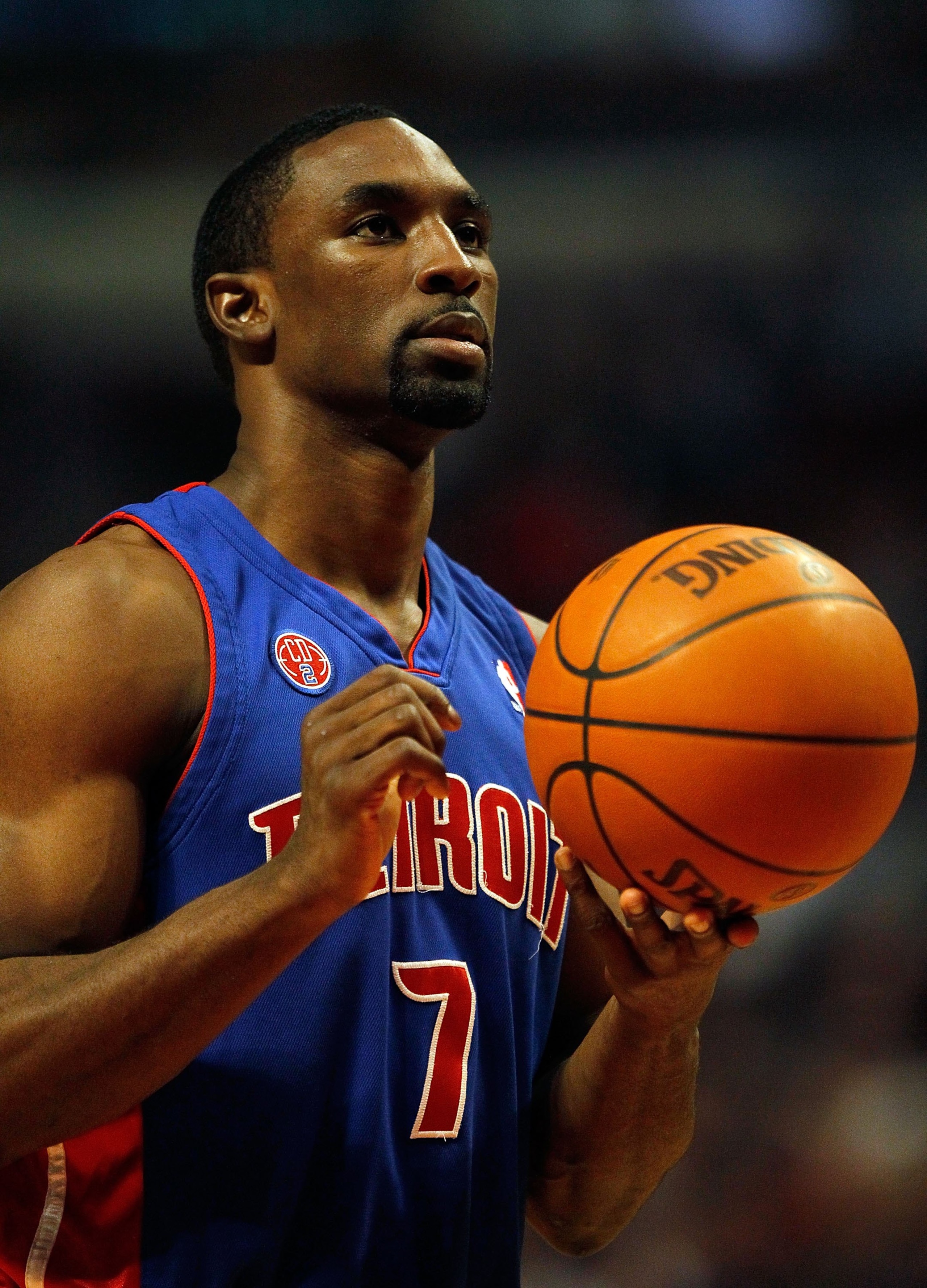
Another former Sixth Man of the Year, Gordon has been waiting for this season for his chance to prove that he is worth the $55 million, five-year contract he signed with the Pistons prior to last season.
His first season with the Pistons did little to prove that he was worth it, but he wasn't healthy for most of the season. A left ankle injury in November cost him 11 games, but lingered all season and required offseason surgery.
But, the surgery was a success, and Gordon should return closer to his career averages—17.9 points, 40.4 percent three-point—than his first campaign with the Pistons—13.8 points, 32.1 percent three-point. He's a deadly shooter and his handles and playmaking ability are underrated.
The Pistons have one of the more crowded wings in all of basketball—Richard Hamilton, Tracy McGrady, Tayshaun Prince, Austin Daye, Charlie Villanueva, Jonas Jerebko—but most players play at least two positions. Hamilton and Prince are the starters as long as they're in Detroit, but Gordon has the most talent of the remaining players.
2. Lamar Odom, Los Angeles Lakers
29 of 30
Odom had one first-place vote for the award last season. He also had six second-place votes and two third-place votes. He did not crack the top three on the other 113 ballots. No matter what the statistics say—not any dominant categories, but a prototypical stat-filler—Odom's impact on the Lakers warrants a top three spot on the award ballot.
A starter for his first nine seasons, Odom has done the ultimate for any professional athlete: put the team over himself. Rather than sulk over moving to the bench, Odom has embraced the role of sixth man and the team rewarded him for it with 31.5 minutes a night last season.
Odom's never been a prolific scorer, but he's averaged 14.6 points per his career. Since the move to the bench, Odom's remained steady around 11 points per. He also averaged 9.8 rebounds, 3.3 assists, 0.9 steals and 0.7 blocks.
He has the ability to run the point forward for Jackson's triangle offense and can score from inside and outside. All of the ingredients are still in place for Odom to have another strong season, and he should be rewarded by more voters agreeing with the nine smart enough to have him in their top three last year.
1. Manu Ginobili, San Antonio Spurs
30 of 30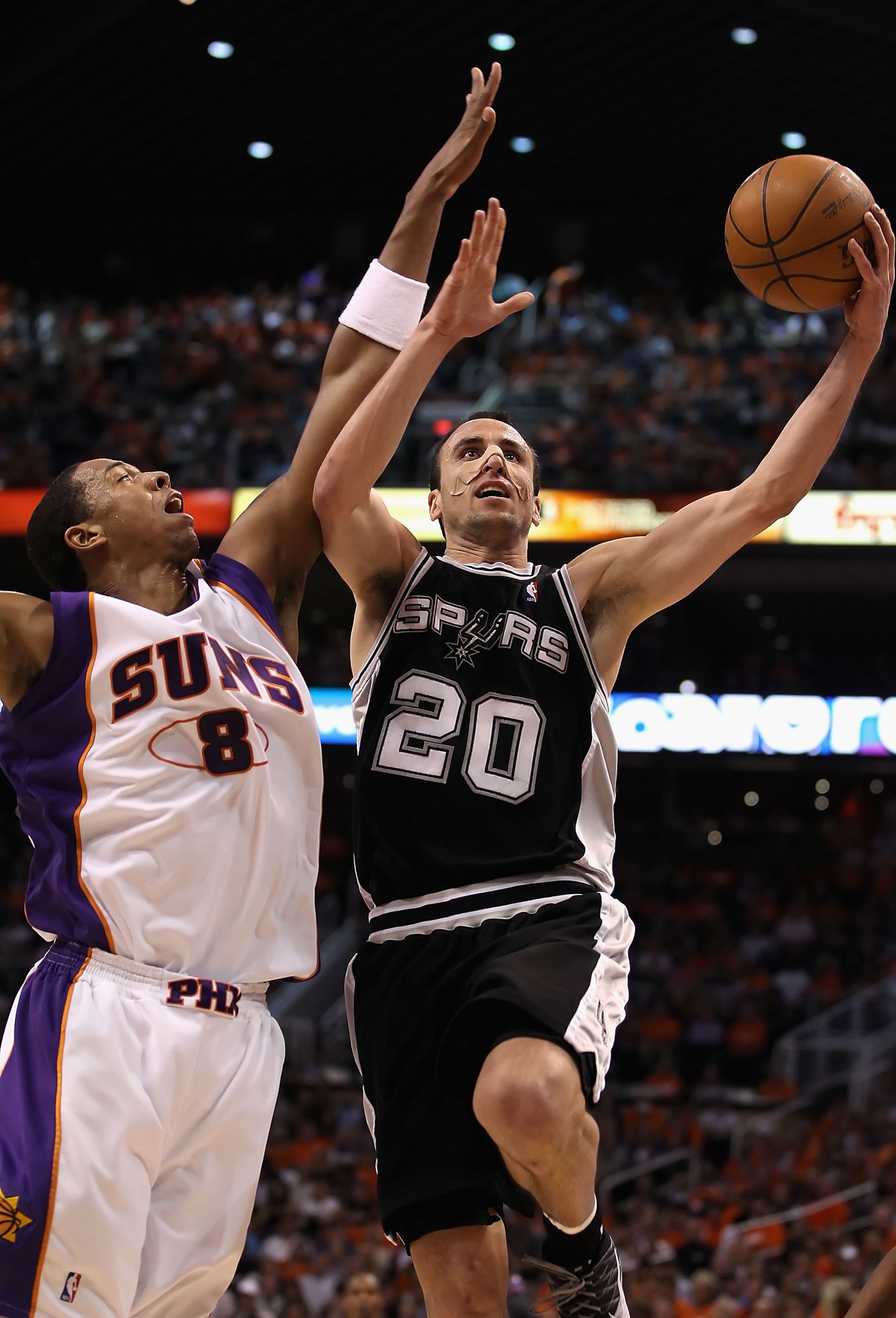
The final former Sixth Man of the Year winner has the chance to be the first multiple award winner since Detlef Schrempf won back-to-back awards with the Indiana Pacers in 1990-1992. It hardly seems fair to have a talent of his level on the bench, but coach Greg Popovich has enjoyed this luxury for the six of his eight seasons where he started fewer than games than not.
Even with two years of starting under his belt, his career minutes are just 27.8, and he's only averaged more than 30 minutes once. But, that has hardly hindered his production at all. He's been the model of consistency with at least 15 points per game in his last seven seasons. He's also shot above 37.6 percent from three-point territory in five of the last six seasons and above 45.2 percent from the field over the same stretch.
And he does more than score. He's averaged 4.0 rebounds, 3.8 assists and 1.5 steals for his career. He has some of the most effective and creative handles in the game and his signature "Euro-Step" is nearly unstoppable.
Call it luck of the draw, but he's also proven to be a winner. In his eight years with the Spurs, the club has won three championships. He's also just one of two players in basketball history to win the Euroleague, an Olympic gold medal and an NBA championship ring. And for any postseason awards, success can be the difference for players with similar stats.

.jpg?w=2560 "Jonathan Taylor Landing Spots")



.jpg?w=2560 "NFL House in Paris Closes for Protests (AP)")