
NBA Rumors: 10 Reasons All Fans Should Be Concerned About a 2011 Lockout
Flashback to 1998. The owners have just decided to reopen the league's collective bargaining agreement in an attempt to curb players' maximum salaries, while the players union looks to keep the current system in check and seek a raise for those making the minimum.
In late June the two sides break off negotiations, forcing a lockout. The parties continue to try and hammer home an agreement right before the season starts, but are unsuccessful and the first weeks of the season are cancelled.
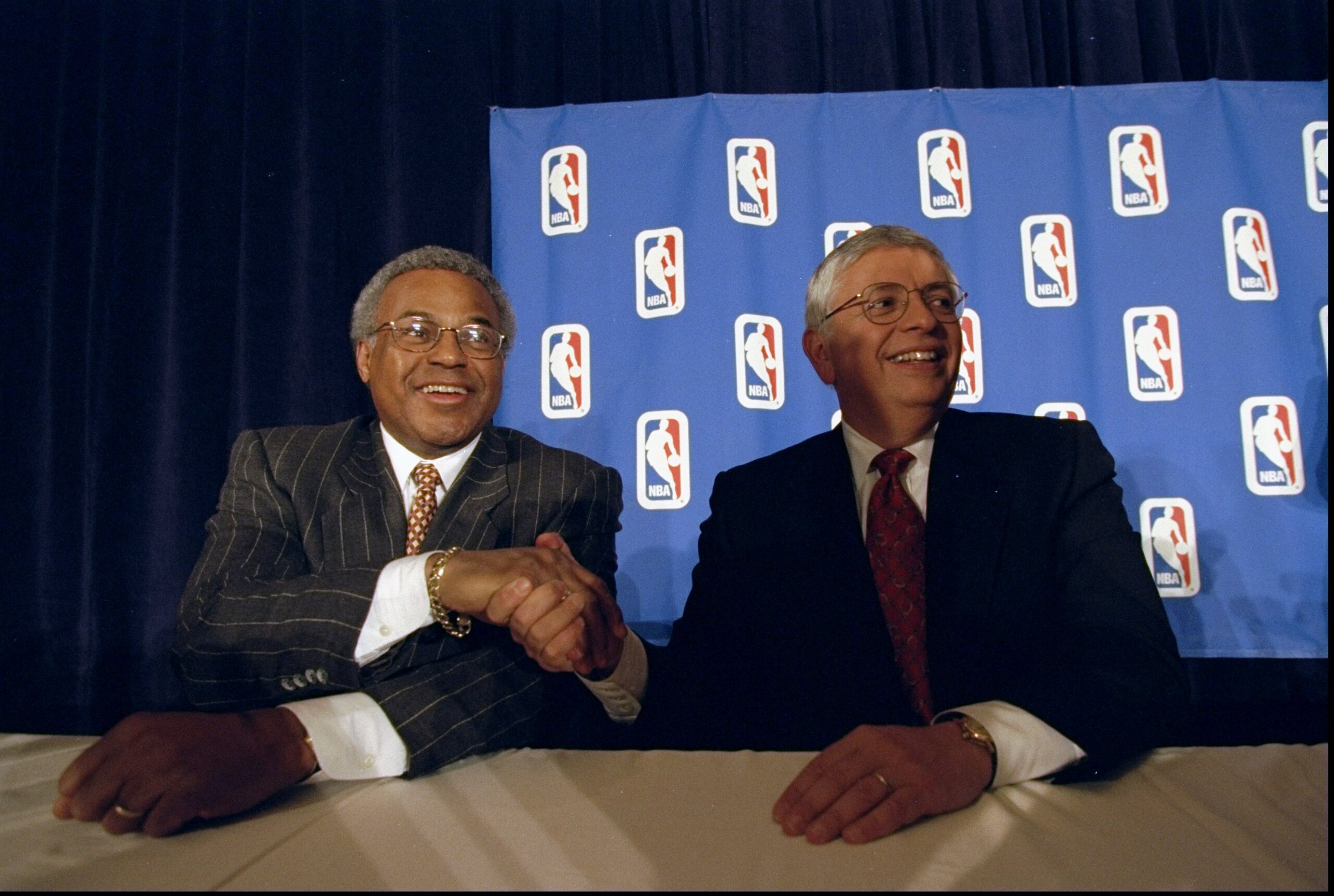
Finally, just when it appears all hope of salvaging the '99 season is lost, NBPA executive director Billy Hunter and NBA commissioner David Stern worked out a deal that ended a 204-day lockout, the longest in NBA history.
Back to the present day. It's 12 years later and the NBA and the players union find themselves in a much similar situation.
Owners once again want to place a limit on the maximum contracts a player can receive and argue that, even though attendance is near an all-time high, the owners lost a combined $370 million last season.
On the other hand, the players union counters that the current system is working—players salaries have remained constant over the past years while the NBA's revenue has peaked during that time.
The two sides got together last month to lay the groundwork for a new CBA, and the meeting was described as positive and productive. Still, with no future meeting scheduled until February 2011, the possibility of a lockout will loom over the league all season until a deal is reached.
It's hard to imagine the effect of a lockout next year. Even though one occurred just 12 years ago, the league's popularity is starting to take off once again. They have a plethora of young superstars (i.e. Kevin Durant, Chris Paul, Dwyane Wade) to thrust into the spotlight, as well as having several big-market franchises (Boston, Los Angeles, Chicago) in the hunt for the championship. A lockout could do irreparable damage to fans in this economic climate who don't feel sympathy for players and owners making millions every year.
There are many obstacles and issues that the union and owners will have to overcome to get a deal on the table by next June. While there are undoubtedly more reasons, let's highlight 10 areas that could cause some potential disputes between the two sides and ultimately lead to a lockout.
Franchises Losing Money
1 of 10
Attendance and popularity are reaching an all-time high, jersey sales are through the roof, and ticket sales have steadily increased. This is all a good thing for the owners and players, right?
Not necessarily. According to David Stern, the owners lost a combined $370 million last season. In the first four years of the new CBA (put into effect in 2005), Stern estimated that owners lost at least $200 million annually.
Forbes' 2009 report backs up this claim, showing that 12 teams lost money during the 2008-09 season.
However, the players union isn't willing to concede that owners are losing money left and right.
"There might not be any losses at all. It depends on what accounting procedure is used," NBPA executive director Billy Hunter said.
"If you decide you don't count interest and depreciation, you already lop off 250 of the 370 million dollars, and everything else was predicated upon what they were projecting, which was a decline in attendance that didn't happen. Attendance was the second-highest ever."
However, NBA deputy commissioner Adam Silver makes the claim that even though attendance was up, so were expenses.
"Part of the problem with the existing system is it's based largely on revenue, not net revenue," Silver said.
"Although our actual revenue numbers were better than what we projected, it came at a large cost. Our teams did a spectacular job in a down economy of increasing ticket sales, but that came at the cost of additional promotions, additional marketing, additional staff."
So until the two sides can move closer to what the actual dollar amount is, this will remain a big gap in their negotiations.
Revenue Sharing
2 of 10
The players union believes that one way to combat the losses of owners is with a better revenue sharing program among teams.
While the total revenue-sharing pool has increased since 2007, the NBA is still far behind other leagues in terms of distribution.
The following is from a Nate Jones blog entry where he highlights some of the discrepancies between leagues:
"In the NFL, the home team splits the gate 60-40 with the the away team. In the NBA, the home teams keep everything.
"In the NFL 70-75 percent of team revenue comes from revenue sharing. In the NBA it is only 20-25 percent.
"In the MLB 35 percent of each teams local media revenues (TV, Radio, etc.) are put into a pot and redistributed. There is no such agreement in the NBA.
In the NBA $49 million was redistributed for revenue sharing (via the lux tax and the escrow system) in 2008, while the MLB redistributed $300 million in 2005."
The players argument is simple: it's not the fault of the current CBA that owners are losing money. It's the fact that they don't pool their money as efficiently as other sports.
However, the owners see things a bit differently...
Players' Salaries
3 of 10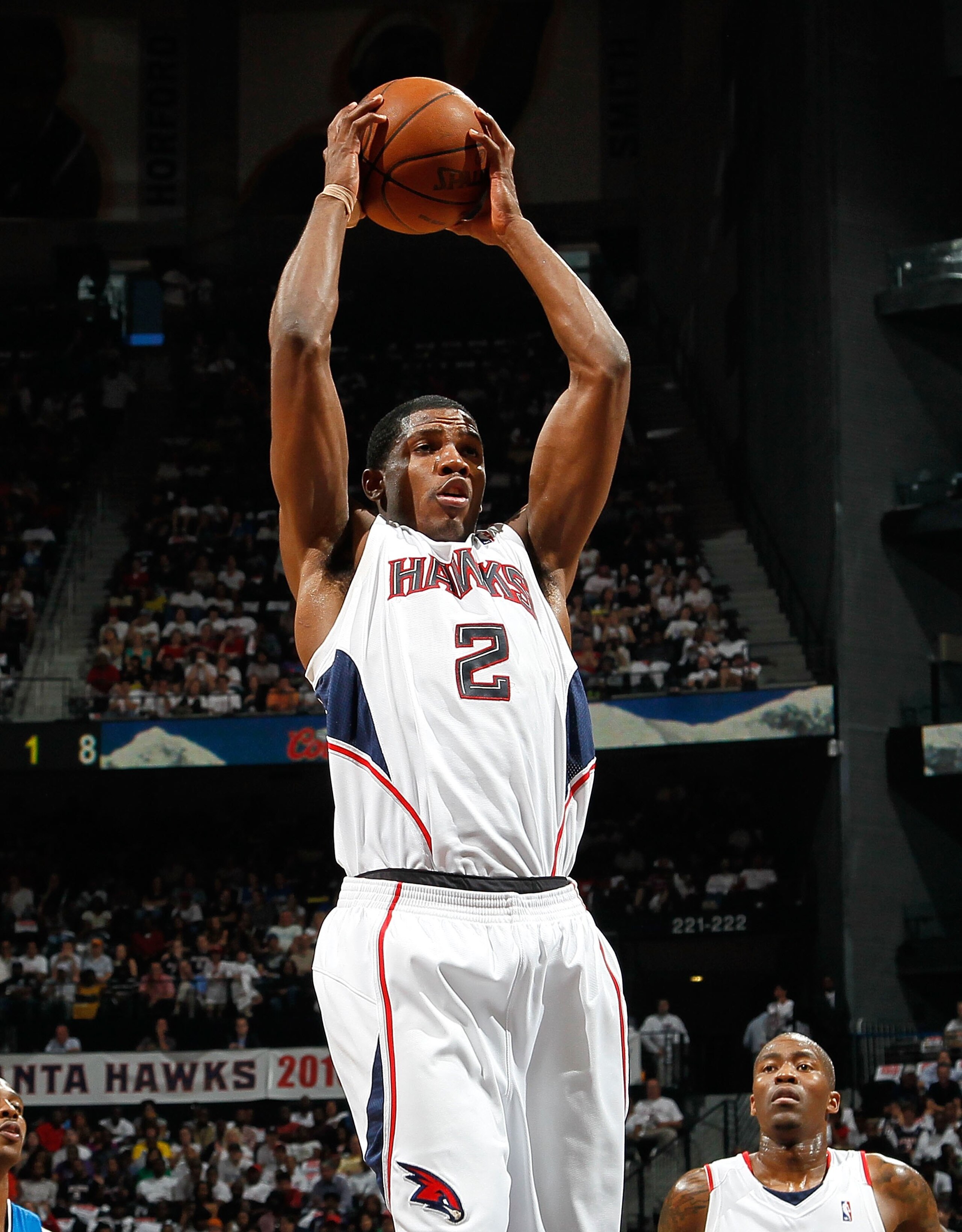
The owners don't want to receive financial advice from the players union. Instead, one of the ways they'd like to shed some of their losses is by cutting back on player salaries.
Ken Berger of CBSSports highlighted some of the progress made in the meeting last month, and many sources said that reducing contract length is one of the owners' top priorities.
"In the owners’ view, shorter contracts and the ability to restructure them midway through—a provision that exists in the NFL’s CBA—would help teams become more competitive faster.
The players acknowledge the problem with the current system when teams burdened with bad contracts get 'stuck in the mud,' according to a source, and need three-four years to clean up the mess."
You don't need to look hard around the league to find examples of teams being laden with bad contracts. Someone once thought it would be a good idea to give Adonal Foyle a $40 million-plus deal.
But the players union sees things differently. Even though the owners are claiming to lose money, they still shelled out over $2 billion worth of contracts this summer, including some real eye-opening deals.
Who would have thought that, in the summer where Dwyane Wade, Chris Bosh, Amar'e Stoudemire, Dirk Nowitzki, Paul Pierce, Rudy Gay, Carlos Boozer, Ray Allen, and LeBron James were all free agents, the highest contract dished out would be to a guy who averaged 12 points per game leading his team to a second-round sweep (Joe Johnson)?
It wasn't the only surprise. Drew Gooden got a (potentially) $30-plus million deal, while role players such as Amir Johnson, Martell Webster, Wesley Matthews, and Travis Outlaw (to name a few) all saw their market value escalate.
The owners feel that the only way to restore competitive balance in the current system is to keep spending. The players think that, if the owners were really that strapped for cash, they wouldn't hand out such lucrative deals.
And around, and around it goes.


Mid-Level Exception and Base Year Compensation
4 of 10
As mentioned in the previous slide, owners want to see contract lengths reduced and the dollar amounts lessened. One way they'll likely go about changing that process is by redefining terms such as mid-level exception and base-year compensation.
Quoting from Larry Coon's salary cap FAQ, the MLE is defined as:
"This exception allows a team to sign any free agent up to the average salary. This exception may be split and given to multiple players. It may be used for contracts of up to five years in length, and raises are limited to up to eight percent of the salary in the first year of the contract.
"Signing a player to a multi-year contract does not affect a team's ability to use this exception every year. For example, a team can sign a player to a five-year contract using this exception and still use the exception the following year to sign another player.
"If the player is a restricted free agent with one or two years of service and receives an offer sheet from a new team, the player's prior team may use the mid-level exception to match the offer sheet."
The problem is that MLE players often receive too much money, leading to labor cost growth that exceeds revenue growth.
In the eyes of the owners, part of the resolution is in shorter contracts that have set buy-out clauses. But once again, the players' argument is that no one is forcing the owners to sign players to such lucrative contracts with few incentives.
Similarly, owners want to eliminate base-year compensation as well, which prevents a salary cap loophole by lowering a players' trade value during the first year of a new contract.
One unnamed executive from Berger's post sees the MLE and BYC as obstacles to eliminate in the new CBA.
“If there’s anything I’d love to see happen in collective bargaining, it’s for the term ‘free agent’ to go away and I’d love to see the term ‘mid-level’ go away,” the executive said.
“There’s nothing free about it, when you’re making the mid-level, you’re making more than two-thirds of the league. Mid-level sounds like mid-major, Holiday Inn, Applebee’s. It’s inappropriately termed.”
Split of Basketball Related Income
5 of 10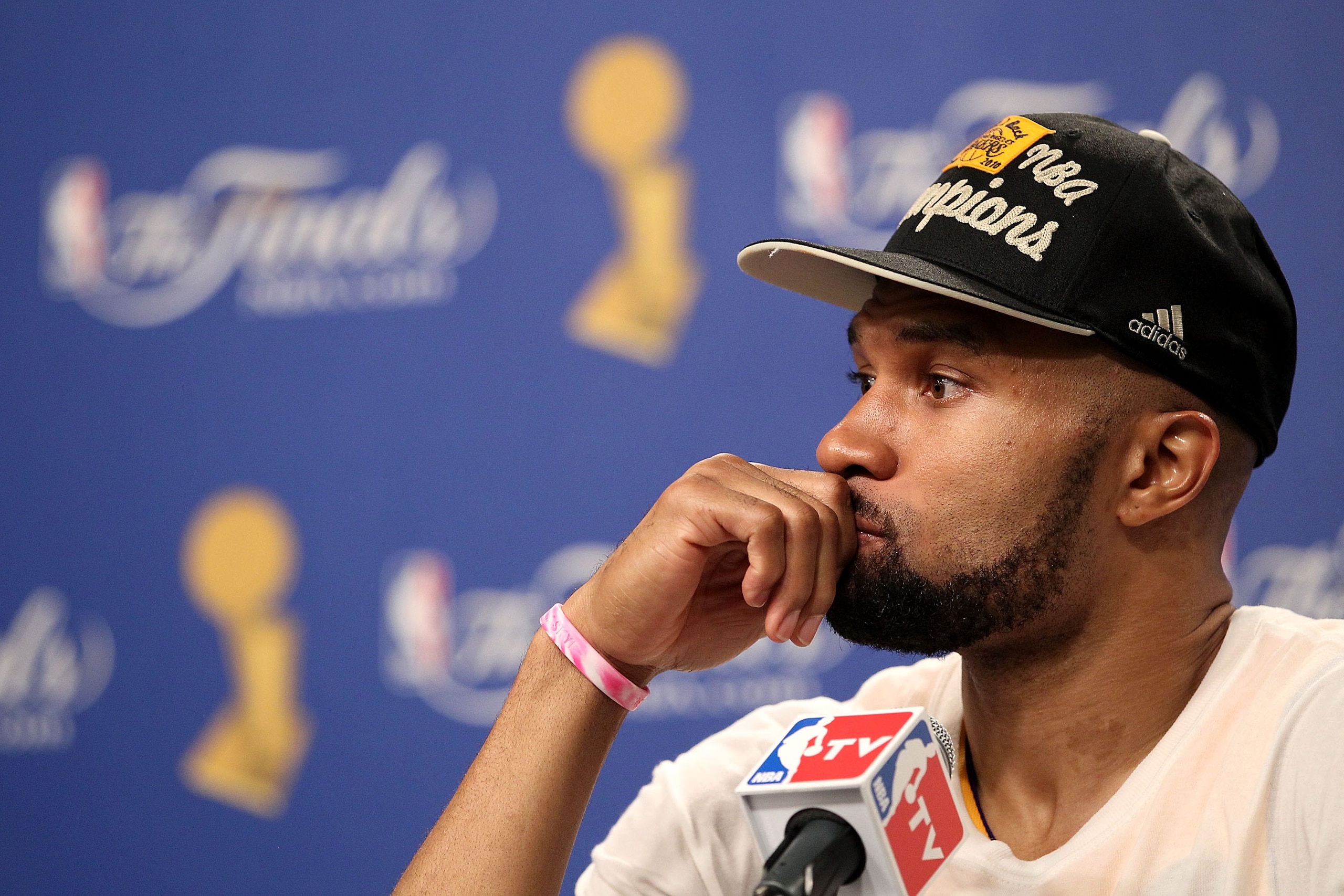
There is another way for both sides to earn a little extra money, and while it doesn't seem to be a controversial subject heading into the new CBA, it still could possibly be restructured by the owners.
Basketball related income is defined as the following (once again courtesy of Larry Coon's extensive salary cap FAQ):
—Regular season gate receipts
—Broadcast rights
—Exhibition game proceeds
—Playoff gate receipts
—Novelty, program, and concession sales (at the arena and in team-identified stores within proximity of an NBA arena)
—Parking
—Proceeds from team sponsorships
—Proceeds from team promotions
—Arena club revenues
—Proceeds from summer camps
—Proceeds from non-NBA basketball tournaments
—Proceeds from mascot and dance team appearances
—Proceeds from beverage sale rights
—40 percent of proceeds from arena signage
—40 percent of proceeds from luxury suites
—45-50 percent of proceeds from arena naming rights
—Proceeds from other premium seat licenses
—Proceeds received by NBA Properties, including international television, sponsorships, revenues from NBA Entertainment, the All-Star Game, the McDonald's Championship, and other NBA special events.
It's currently split up so that the players get 57 percent of BRI and the owners 43. But the league also as an escrow tax that helps protect owners.
Quoting from Nate Jones again: "If the players' total salaries are larger than their allocated portion of basketball related income (currently set at 57 percent of BRI), the percentage that they are over is kept by the league and (at least partially) re-distributed to the owners.
"Basically, if revenues fall significantly, the players are going to be taxed significantly."
According to Berger's post, the owners seem more intent on lowering contract lengths and size than re-distributing the BRI pool. But if they get that idea in their minds, it could cause a real division between them and the players association.
Especially considering that the BRI includes less than 50 percent of stadium naming rights and luxury box income.
Salary Cap: Hard vs. Soft
6 of 10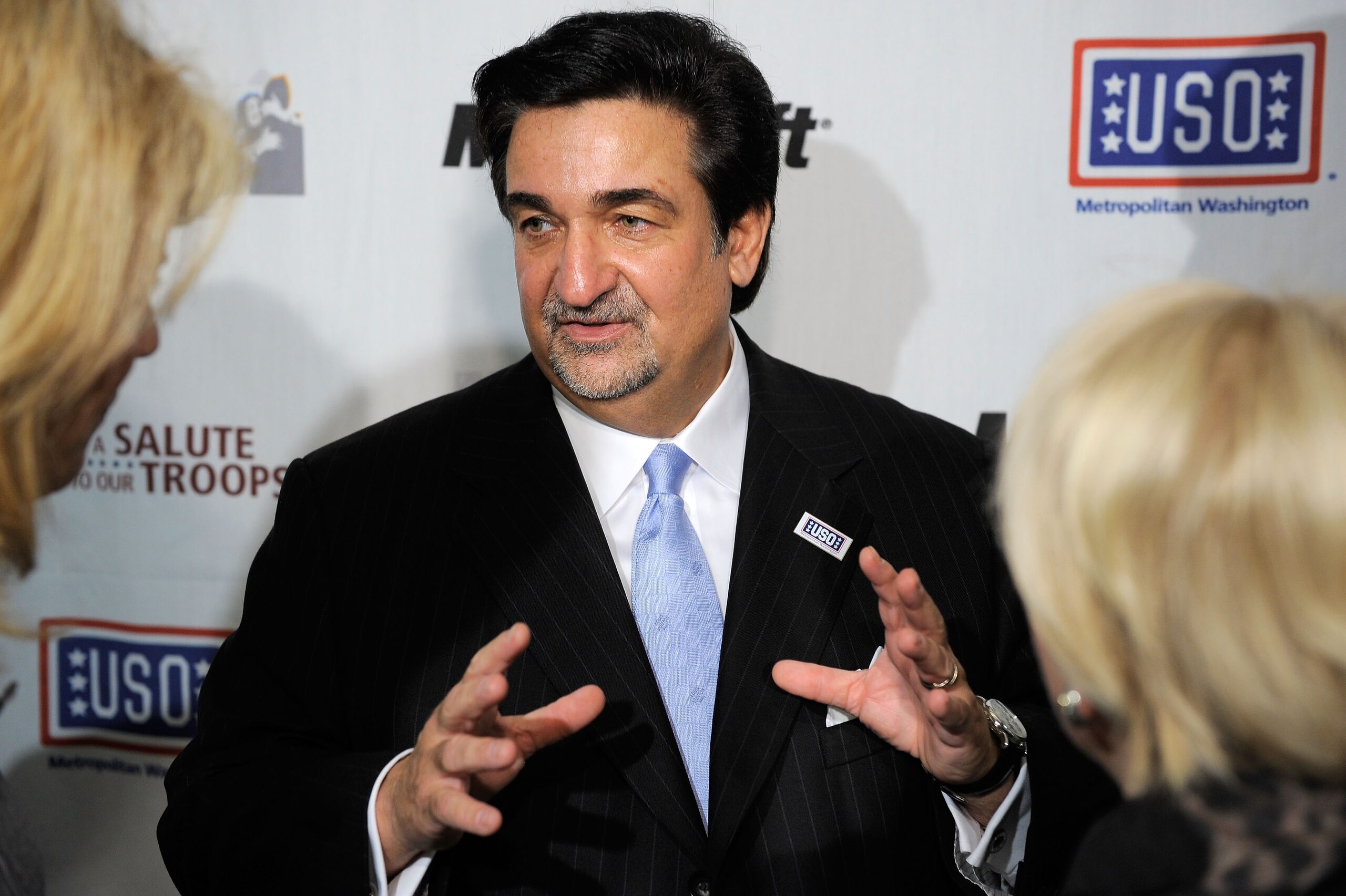
This has been a hot topic over the last few weeks that really gained steam yesterday when Washington Wizards owner Ted Leonsis made a comment regarding the potential salary cap structure in the new CBA.
Leonsis told other business leaders that he expects the league to have a hard salary cap in structure soon. It took about 15 seconds for David Stern to slap a $100,000 fine on Leonsis for "unauthorized public comments regarding the league's collective bargaining negotiations."
The league's salary cap decreased over the previous two seasons because the overall revenue decreased, but bounced back up to $58 million heading into the 2010-11 year.
The NBA currently institutes a soft cap, meaning that while a salary cap is in place, teams can still exceed that limit with certain exceptions (i.e. the mid-level exception). The goal of this (from Larry Coon's FAQ) is to try to promote players' ability to stay with their current teams.
The exceptions allow teams to resign their own players even if it means going over the cap line. In turn, one of the reasons the luxury tax is instated is as a deterrent for teams to just start handing out massive contracts.
It's a dollar-for-dollar tax—teams pay one dollar for each dollar they are over the tax line.
But with a hard cap, there are no exceptions—the salary cap cannot be exceeded for any reason.
Take the Miami Heat, for example. After signing three max players, they have enough money in exceptions to field an appropriate amount of talent around them (using the MLE to sign Mike Miller, for example). However, a hard cap would make it extremely difficult for them to surround the Wade-James-Bosh trio with sufficient talent.
Restricting Player Movement
7 of 10
The aforementioned unnamed executive from Ken Berger's piece says that owners, perhaps a little shell-shocked from this summer's free-agent explosion, are focusing on limiting player movement.
"There is a real sense from the owners, according to this executive, that they’re determined to write provisions into the new CBA that would provide stronger disincentives for free agents to leave their teams," Berger wrote.
And if the league is to institute a hard salary cap (as the owners seemingly want), it'll change the way teams approach free agency.
One of the exceptions that would likely vanish is a players' 'Bird' rights, which in a nutshell is a team's ability to exceed the cap by resigning one of their own players.
If teams are unable to go over the cap limit at all, then all of these current exceptions that we see in the league will go out the window. In turn, we'll see a serious restriction in player movement, something that the players union does not want.
"The elimination of exceptions would really mean more restricted [player] movement," union president Derek Fisher said. "That's one thing we're working really hard to combat.
"A lot of players are in situations that aren't good for them and aren't good for their teams. Our exceptions, our Bird rights, allow our players to make those decisions, and give the teams more flexibility to make changes they need to make."
What kind of cap is set in the new CBA will weigh heavily on factors such as player movement and free agency. And speaking of free agency...
Free Agency
8 of 10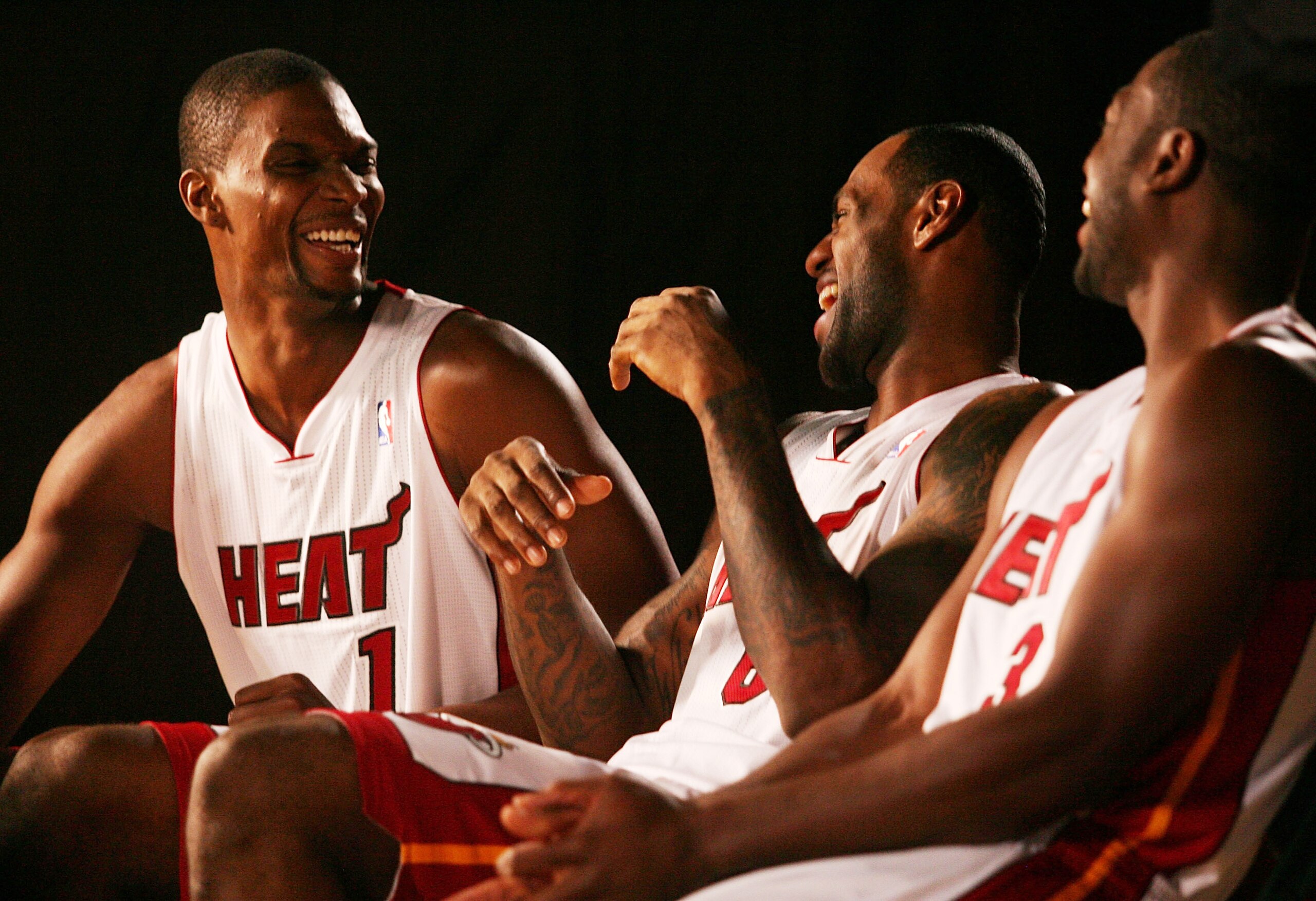
While nothing has been said publicly, some owners were a bit rattled by the free-agent lottery won by the Miami Heat this offseason. As a result, they don't want teams to be built through free agency and will look to put a dramatic halt on spending the new CBA.
According to Jonathan Feigen of The Houston Chronicle, "the league will likely try to eliminate, or greatly reduce, the exceptions to the salary cap that permit teams to overly outspend opponents, particularly the ones that intentionally move under the cap to pursue free agents.
"If teams can no longer acquire or keep players through those cap exceptions, the risk in cutting payroll to move far under the cap would not be so great, since competitors would no longer be permitted to exceed the cap to outspend them."
We saw the uncertainty of free agency this summer when Richard Jefferson opted out of his $15.2 million deal to sign a four-year deal with a base salary of about $8.4 million. Players recognize the severity of the changes of free agency and looked to cash in while they could.
It's what makes the Carmelo Anthony situation so intriguing, and why another super-team of Anthony, Chris Paul, and Amar'e Stoudemire will be more difficult to put together. Anthony is walking away from a $65 million contract that will go into effect before the new CBA.
If he waits, he could find it difficult to make that amount of money next year.
And, playing a conspiracy theorist for the moment, if it's true that 'Melo has his heart set on New York, it'll be much more difficult to sign with them next summer and find other pieces to plug in on the roster under a hard cap.
Larry Coon sums it up best in his CBA article special to ESPN.com:
"The upshot of this is that locking in long-term deals under the current agreement—either via a new contract or an extension—could end up being for naught. Since we won't know what the new rules will be until we get there, it's still prudent for players to get what they can under the terms of the current CBA."
Possible Collusion?
9 of 10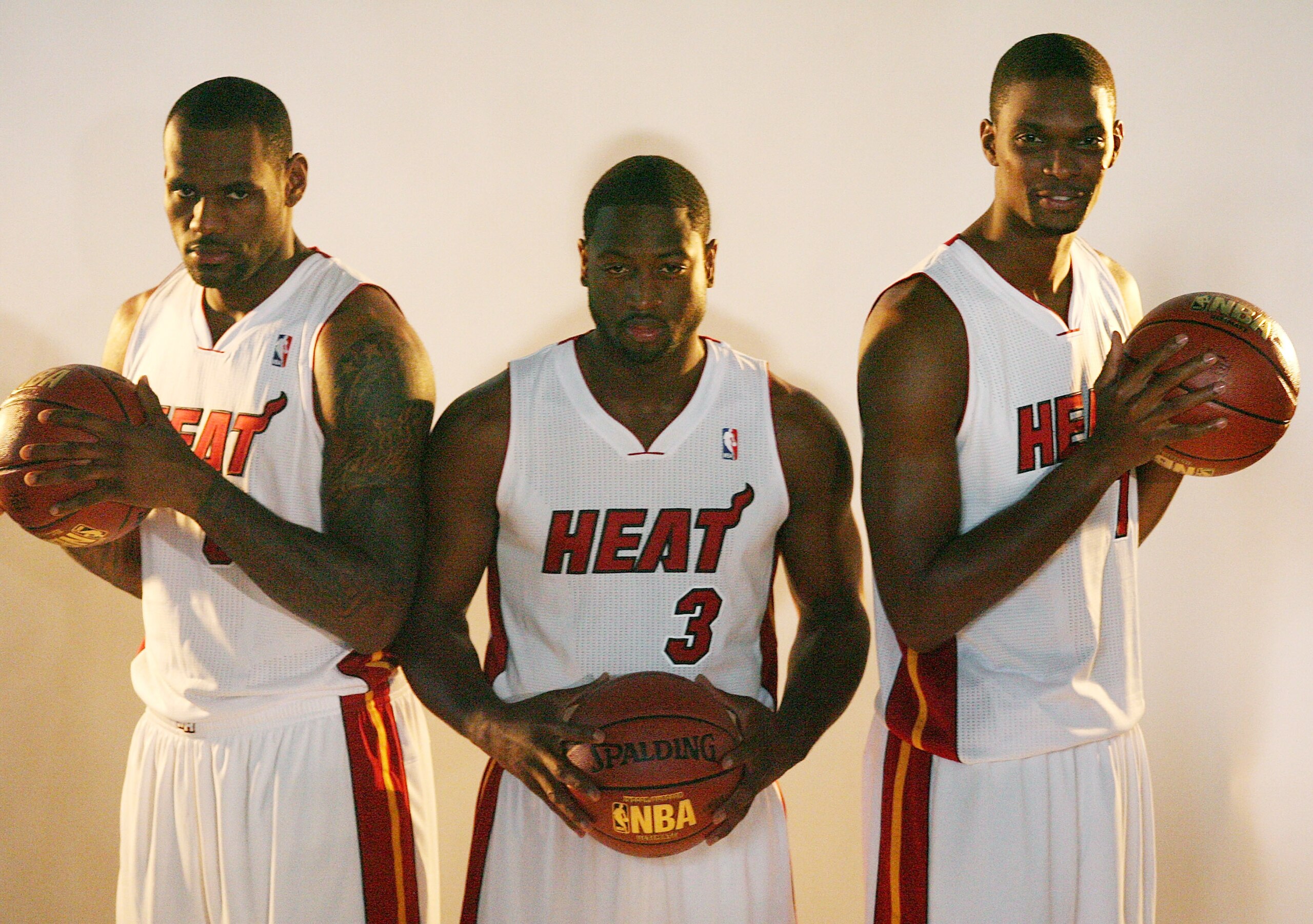
Admittedly this is a vague area and a rule that couldn't be 100 percent enforced even with the most extensively laid-out guidelines in the new CBA. But the term "collusion" has been tossed around a lot this offseason and could be a relevant topic next February.
While David Stern deemed that Chris Bosh, Dwyane Wade, and LeBron James didn't break any collusion rules when discussing their futures this offseason, the evidence points the other way.
If these three players had any sort of agreement in place, then technically they violated the collusion rules. Many well respected writers around the league believe that some sort of groundwork for this had been laid years in advance.
Bosh himself even said so, though he quickly tried to backtrack on his comments.
During Miami's "celebration" to welcome the new big three into town, Bosh said that he had been talking with his new teammates about this moment for months. He then switched that remark to "days", but he said what many of us had been thinking all along—this was a pre-planned move.
However, you can't just ban players from discussing their future with one another. There is no appropriate way to monitor all player conversations—it's just not plausible. And no one knows 100 percent either way how the Miami Heat trio came to uniting.
But remember the previous slide; owners don't want to see anything like this happen again. It's not necessarily the fact that three (well, make it two-and-a-half) superstars teamed up in one location—it's that multiple teams completely gutted their rosters for years in an effort to make a run at one (if not all) of these players.
Mark Cameron detailed this process nicely. He stated that "the salary cap is meant to serve as a rule that restores the competitive balance in the NBA, making it impossible for a team to bag multiple all-stars in one free agency swoop.
"However, given the fact that the NBA’s top young stars don’t want to compete against one another in today’s league, player collusion could make league parity a thing of the past and cap circumvention as easy as one, two, three."
Since collusion is a somewhat undefinable term, the only way to maintain the salary cap's competitive balance sway is to redefine it in a new CBA.
Who Has the Power?
10 of 10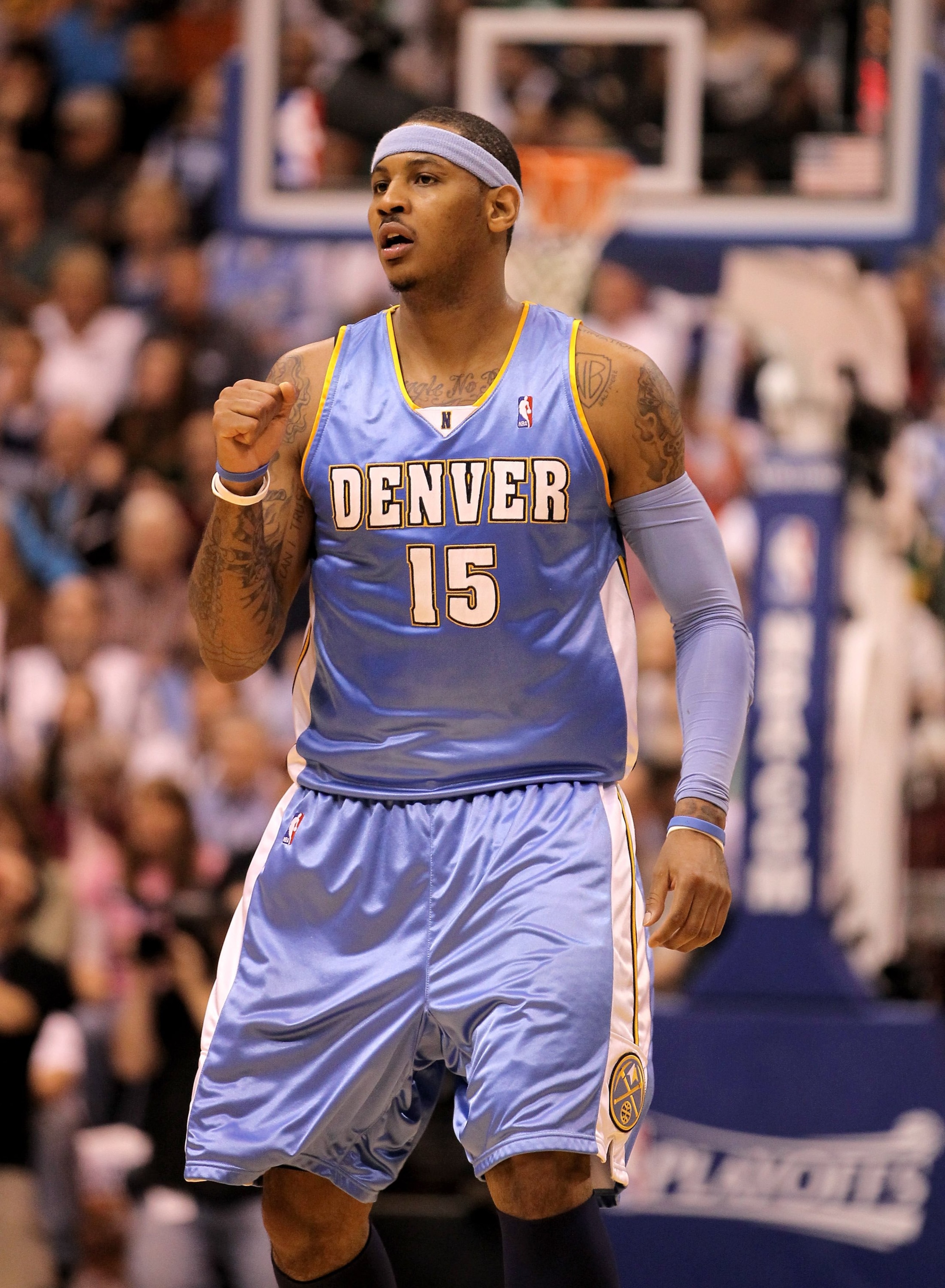
In the end, it comes down to who has the power: the players or owners?
The obvious answer seems to be the owners. After all, they control what goes on in the league, they all look after one another, and they're the ones paying athletes to play a game.
They have taxes set in their favor to prevent players from earning too much of the basketball related income, and tickets and merchandising sales are near the highest they've ever been.
And, during a lockout, owners have the right to withhold current player salaries as further incentive for the union to keep negotiating.
But the players have some leverage as well. Right now, big-name players on small-market teams (i.e. Carmelo Anthony) can hold their respective teams hostage by refusing contract extensions and requesting trades to certain cities.
We can see this now; even if a team like Houston can put together the best package to deal for Anthony, they're not going to do it without a commitment for the future. So Denver might be stuck taking a lesser offer from a team like New York simply because Anthony would rather be there.
Finally, if the CBA expires and the union decertifies, then an antitrust lawsuit can be filed against the league for restricting player movement and salaries.
Quoting Larry Coon for the 500th time in this slideshow, "the salary cap, luxury tax, maximum salaries, limits on free agency, age limits and draft would all be under attack. Even the league's ability to stage a lockout would be challenged, and existing player contracts would likely become enforceable."
The bottom line is that both sides need one another and a work stoppage is quite damaging for all parties, even if it hurts the players' wallets a bit more than the owners. The owners saw the damages from the last lockout and, even though a majority of the current NBAers were just kids in '99, Derek Fisher acknowledges that the union knows the impact as well.
"I think everybody's smart enough to know. Even though they were probably 10 years old when the lockout happened in '99, they're smart enough to understand how [it] would be bad for our business," Fisher said.
With the NBA market growing nationally and globally, everyone involved knows the league can't afford a repeat of '99.
(Personal note: This barely scratches the surface of all of the in-depth complications of the current CBA and how the new one could be affected. If you're interested in knowing more, I recommend reading more from quality writers such as Larry Coon, Nate Jones, and Ken Berger.)




.jpg?w=2560 "Mahomes Asked OT to Leave Meeting")
.jpg?w=2560 "Jonathan Taylor Landing Spots 📍")

.jpg?w=2560 "Five Teams Eyeing Taylor")
