Aaron Simpson: UFC Middleweight Discusses All Things Wrestling in MMA
These days it seems that almost entirely across the spectrum, mixed martial artists with a strong foundation in wrestling are the athletes who are achieving the most success and dominating their respective weight classes with relative ease.
In the Ultimate Fighting Championships alone three out of the five reigning champions have either an extensive background in amateur wrestling or have been able to “pick it up as they go,” as is the case for current welterweight king and dominant grappler, Georges St. Pierre.
When discussing wrestling in mixed martial arts, who better to speak with than someone who has spent years both learning and teaching the intricacies of the sport, but has also made the transition from accomplished amateur wrestler to successful professional mixed martial artist?
.jpg?w=2560 "Seahawks Chiefs Football")

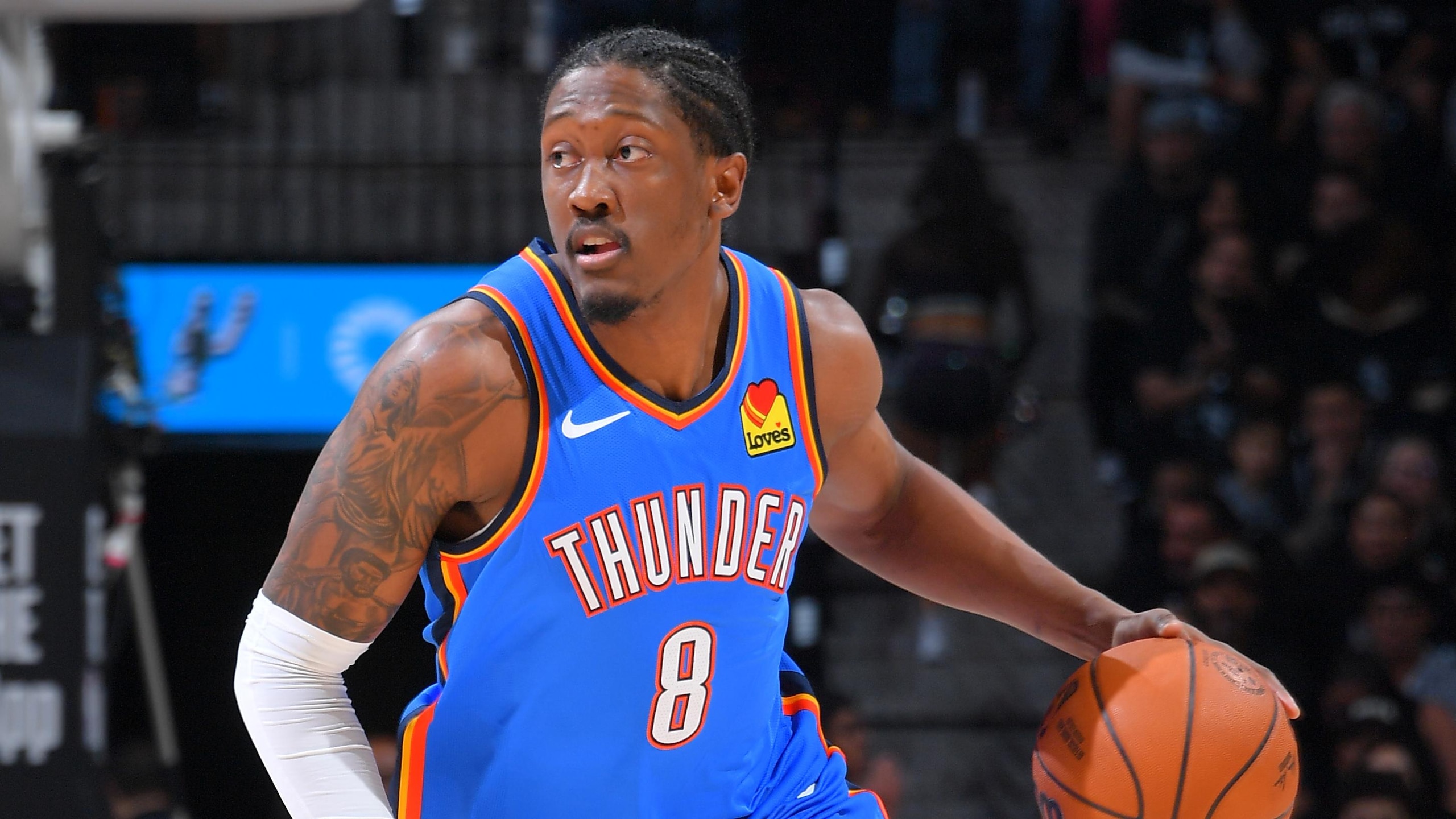
Enter UFC middleweight Aaron Simpson.
After enjoying a nearly perfect high school wrestling career that included three Arizona state championships while thrice being named an All-American grappler, Simpson began his collegiate career as a walk-on at Arizona State University.
As a Sun Devil, Simpson was a two-time All-American and ended his four year collegiate career as one of the most accomplished athletes in Arizona State University.
After ending his run as an amateur wrestler, Simpson transitioned into coaching the sport that he had long dominated.
During his decade-long tenure as an assistant coach at his alma mater, Simpson helped mentor six All-American grapplers, including an array of future prominent mixed martial artists that include Ryan Bader, C.B. Dollaway, and Cain Velasquez.
As a professional mixed martial artist, Simpson started his career on a high-note and was undefeated in three bouts before he was signed by the UFC.
Inside the Octagon, the Welton, Ariz., native flourished in four straight victories and was believed to be only a handful of wins away from a shot at Anderson Silva’s middleweight crown before he was temporarily derailed by Chris Leben at the ‘The Ultimate Fighter Finale 11' in June, 2010.
Although Simpson is excited to get back inside the Octagon and avenge his fist career loss as a professional mixed martial artist, he has recently been sidelined with an elbow infection that required immediate surgery.
Fortunately, Simpson has been recovering well and is expected to start training in September and back to professional competition by the end of the year.
Simpson recently took time out of his less-than-appealing rehabilitation schedule to discuss all-things wrestling in the world of mixed martial arts.
A lot of collegiate wrestlers turned mixed martial artists say that their conversion to mixed martial arts was just a part of their natural progression as an athlete. Why do you think that is the case for so many young and old wrestlers alike? Was this the case for you?
Simpson:"Wrestlers throughout time have trained at the highest levels of intensity in order to be able to go out and physically take another person to the ground and hold them there. Wrestlers believe that they are the best conditioned, hardest working athletes in the world and with the growth of mixed martial arts, we now have a way to prove this on a much bigger stage. I personally felt like I was a fighter every time I stepped out onto the mat as a wrestler. Every match was a fight. Every practice was a fight. When the opportunity came for me to train with my friends and possibly take care of my family by fighting, I jumped at it."
It is widely believed that the strongest foundation for an elite mixed martial artist is an extensive amateur wrestling background. Given your success as both an amateur wrestler and professional mixed martial artist, do you believe this is the case?
Simpson: "Wrestling take a lifetime to perfect. The other forms of mixed martial arts can be gradually learned to see some success in fighting, but there is so much involved when it comes to wrestling; balance, strength and position. It is the most important aspect of mixed martial arts."
Some guys that have extensive wrestling credentials seem to not be able to translate their past success as a grappler into proficiency as a mixed martial artist, whereas some competitors who have little-to-no experience are able to impose their will on their opponents with ease. Why do you think this is? Is it because the two sports are so dissimilar, or is there another reason?
Simpson: "I believe that it comes down to personality and mental make-up. If you have a "fighter" mindset, you have no problem going out there and imposing your will on somebody to get your hand raised. That is why you see success in guys with predominantly Brazilian Jiu-Jitsu or Muay Thai backgrounds. It is their character, their personality to actually go out and physically punish their opponent. Not many people are willing to do that or feel comfortable doing that. Some have it and some do not. There are the some great wrestlers who do not have it."
Do you think a reason why a lot of top level collegiate wrestlers eventually become elite mixed martial artists is at least partly made possible by the tremendous amount of discipline and mental toughness that is gained through years of training as a wrestler?
Simpson: "This is a huge reason why they can make the transition. If you have ever been around a college practice room, you know that there is no substitute for hard work. I don't care what room you are in, they work hard. You do not get that in any other part of mixed martial arts at the collegiate level. There is no Brazilian Jiu-Jitsu or kickboxing at the collegiate level."
An extensive background in amateur wrestling is no doubt an invaluable asset to a fighter’s arsenal, but typically after competing as an amateur wrestler is there a lot that needs to be done to be “mixed martial arts ready”, or is it enough just to be an experienced wrestler?
Simpson: "It used to be enough, but, now the sport is evolving and just wrestling alone is not enough. You must be willing to learn to stand up and trade punches. You must learn to submit and keep from being submitted. The wrestler can have minimal success just doing what he does, but in order to be the best, he must grow in all aspects of mixed martial arts."
Although this seems to happen less and less these days, often when a bout is taken to the ground for an extended period of time, or when a referee fails to bring engaged combatants to their feet while grappling, “fans” of the sport in attendance boo at the top of their lungs to voice their displeasure with where the bout is taking place. As a man who has spent a large portion of his life on wrestling mats trying to perfect your technique and teaching the intricacies of amateur wrestling to what is probably hundreds of students, is this something that bothers you?
Simpson: "It bothers me if the person getting the takedowns isn’t inflicting damage to his opponent. If he is constantly looking to better the position to throw punches or look for subs, then the "boos" are uncalled for. I get annoyed in general when fans boo fighters at all. Fans really should appreciate the fact that two men are going in to fight each other and put it on the line. I have a lot of respect for anyone who has the guts to step into a circle and battle someone else. I think fans should give the same respect."
As an assistant wrestling coach at Arizona State University you trained a number of future proficient mixed martial artists including Ryan Bader, C.B. Dollaway and Cain Velasquez, did you ever foresee your past students competing in, and achieving so much success in mixed martial arts?
Simpson: "We all knew Cain would be greatly successful in the sport. He couldn't wait until he got his shot to train. Once CB and Bader stepped in, I also knew they would be great. Their work ethic, combined with toughness and athletic skill would be a hard combination for anyone to beat."
Who do you think is the most efficient wrestler in mixed martial arts? Why do you think that is?
Simpson: "I believe that Cain is the most efficient wrestler. He does not get tired. His conditioning and work ethic are second to none in mixed martial arts, and he can knock you out. He is truly a mixed martial artist."