

The Top 5 Fighters Who Shouldn't Have Come Back To The UFC
In the highly competitive world of mixed martial arts, there are very few guarantees.
Despite putting on timeless performances, innovating the sport, and achieving great deals of success inside and outside the world of mixed martial arts, there are very few fighters who have been granted a “lifetime pass” to compete in the Octagon. As a result of this, it has become commonplace for fighters to wear out their welcome in “the show”. Their departure could be a result of too many losses, character issues or other problems, but many fighters eventually find themselves back in the Octagon after posting a few quality wins outside of the UFC.
Typically, mixed martial artists will come back smarter, stronger and more technically proficient than they were when they were released. Unfortunately for a select few, achieving the same level of success experienced earlier in their career by way of a comeback hasn’t always been the case.
The following is a list of fighters who should’ve never come back to compete in the UFC.
5. Mark Coleman
1 of 5
Arguably one of the most accomplished fighters in the history of mixed martial arts, Mark Coleman dominated nearly everyone he fought during his first tour in the UFC but when he returned in 2009, “The Hammer” looked to be, at times, completely out of his element.
Regarded as the first man to employ the now commonplace “ground and pound” tactic in the world of mixed martial arts, Coleman made his professional debut inside the Octagon at the tender age of 31 at UFC 10.
After “grounding and pounding” his way to tournament victories at UFC 10 and 11, Coleman defeated Dan Severn at UFC 12 to become the organization’s first ever Heavyweight Champion. Unfortunately for Coleman, his reign as title-holder was rather brief; after only six months as the division’s king, “The Hammer” was displaced by Maurice Smith as the UFC’s Heavyweight Champion. Coleman subsequently dropped his last three bouts inside the Octagon before parting ways with the UFC.
As a competitor in the Pride Fighting Championships organization, Coleman amassed a record of nine wins with five losses. Despite racking up victories over Don Frye, Kazuyuki Fujita, Mauricio Rua, and Igor Vovchanchyn, Coleman struggled against upper-echelon fighters outside of the UFC. He suffered loses at the hands of Fedor Emelianenko and Mirko Filipovic.
Although “The Hammer” enjoyed a productive career in Japan with the Pride Fighting Championships organization, it is hard to argue that victories over a largely unknown Milco Voorn and Mauricio Rua (Rua broke his arm and was unable to compete past the two minute mark of the first round) justify Coleman’s second stint with the UFC. Despite this, Coleman signed a contract to compete inside the Octagon in 2009.
In his first match back, Coleman was pitted against Rua for the second time in his career. Although he appeared sharp in the opening rounds of his bout against Rua, Coleman’s pace slowed greatly and the Fremont, Ohio native was stopped via strikes in the third round by the eventual UFC Light Heavyweight Champion.
Although Coleman snagged a unanimous decision victory over Stephan Bonnar at UFC 100, the former Olympic wrestler was stopped by the ageless Randy Couture in an uninspired performance that saw Coleman appear his “advanced” age; something that was yet to happen at that point in time.
After his loss at UFC 109, his second in three appearances, the UFC Hall of Famer was released by Dana White and Co. onto the open market.
4. Paul Buentello
2 of 5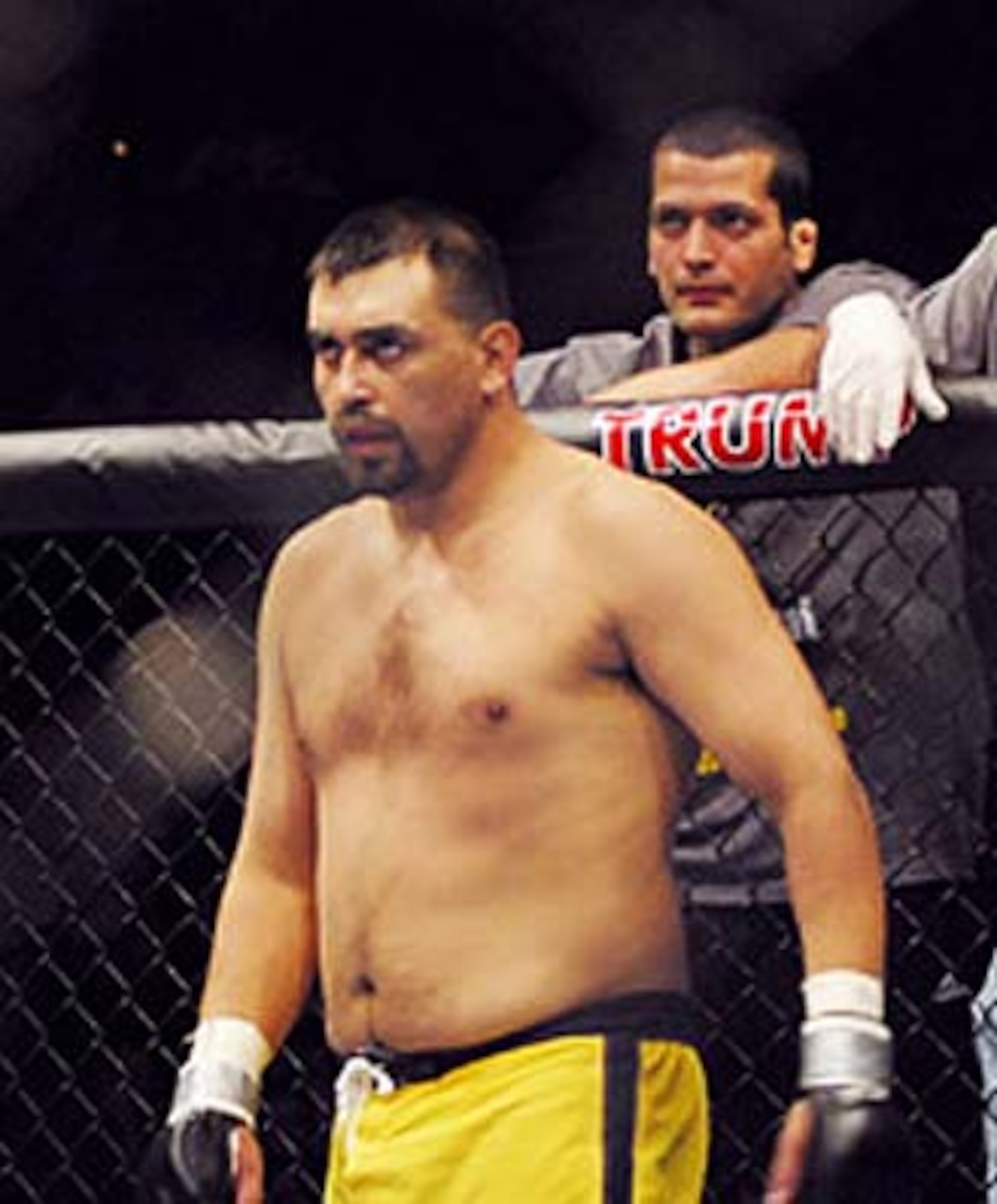
Although Paul Buentello impressed nearly everyone in the sport throughout his short-lived UFC career in 2005 and 2006, one could argue that “The Headhunter” didn’t even belong in the Octagon when he later returned to compete in 2009.
It didn’t take long for Buentello to turn heads in the UFC, as after his first two bouts, both first round stoppage victories, the Amarillo, Texas native was given a shot at then Interim Heavyweight Champion Andre Arlovski. Despite engaging Arlovski with “guns blazing” from the onset, Buentello was clipped and knocked out within 15 seconds of the opening bell.
Although he was arguably at the top of a rather weak UFC heavyweight division at the time, Buentello left the UFC after amassing a record that consisted of three stoppage victories and only one “flash knock-out” loss.
Following his departure from the UFC, Buentello fought under the Affliction and Strikeforce banners. Even though he performed well against lesser quality opponents like Tank Abbott and Gary Goodridge, Buentello didn’t exactly prove that he deserves another chance inside the Octagon.
After a lay-off of nearly four years, Buentello was brought back to the UFC to add even more depth to a heavyweight division that some considered to be the UFC’s strongest.
Despite coming back to a great deal of fan-fair, Buentello didn’t exactly make waves in his second stint in the UFC. Dropping a fairly close majority decision to the up-and-coming Stefan Struve and experiencing a complete and utter dismantling at the hands of Cheick Kongo that culminated in a third round submission due to strikes.
After his second loss in as many outings inside the Octagon, Buentello left the UFC for the second time, and likely final time.
3. Frank Trigg
3 of 5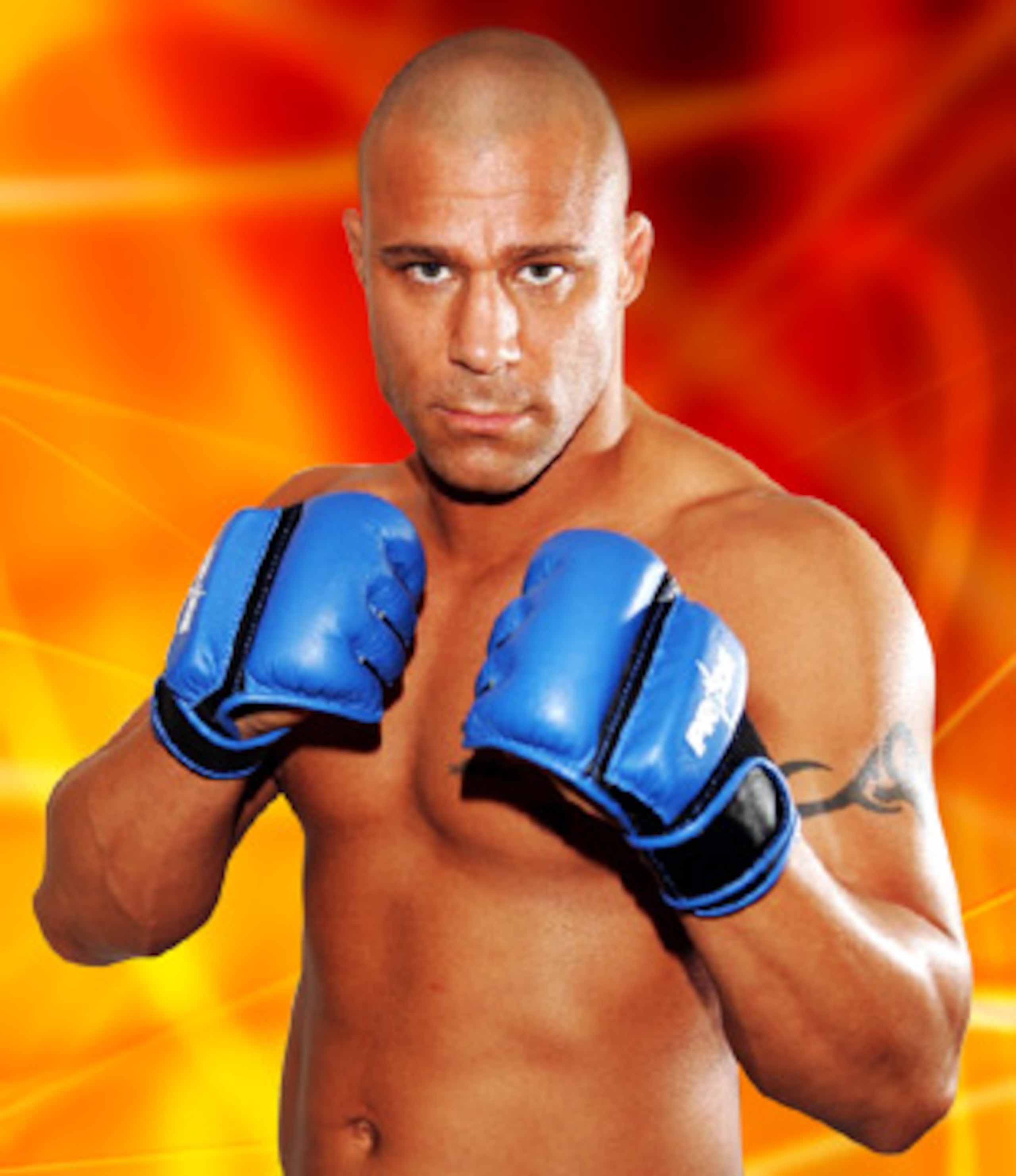
Although Frank Trigg was once regarded as one of the sport’s top welterweights during his first stint inside the Octagon, “Twinkle Toes’” ill-fated 2009 return proved that he wasn’t nearly the competitor he was once perceived to be.
A semi-established fighter before ever entering the Octagon, Trigg excelled against lower-calibre opponents, but failed to deliver against the UFC’s elite. In his three “biggest” matches in the UFC, “Twinkle Toes” was submitted by former champion Matt Hughes (twice) and current welterweight king Georges St. Pierre, all via rear naked choke inside the first round.
After parting ways with Dana White and the UFC in 2005, Trigg experienced modest success as a professional mixed martial artist; racking up victories in the Pride Fighting Championships, Rumble on the Rock, Sengoku and Strikeforce organizations.
Although many are quick to point out that Trigg struggled against upper-level competition like Carlos Condit and Robbie Lawler during his run outside the Octagon, the Rochester, New York native inked a four fight deal with the UFC in 2009.
Despite the fact that many fans were skeptical as to how effective Trigg would be in his return to the Octagon, the former UFC Welterweight Championship contender was immediately thrown into fire in the form of a match against Josh Koscheck. He was man that many believed to be one of the sport’s most dangerous 170 pound fighters. Unfortunately for Trigg, he really wasn’t given enough time to put on a show, as he was decimated by Koscheck in less than 90 seconds.
In the second match of his UFC comeback, Trigg was pitted against the very well-rounded and always dangerous Matt Serra at UFC 109. For the second time in as many appearances, Trigg was outclassed and strapped with an ‘L’ on his record, as Trigg once again failed to reach the end of the opening round.
Despite signing a four match contract with Dana White, Trigg was released by the UFC after his second straight uninspired knock-out loss inside the Octagon.


2. Jens Pulver
4 of 5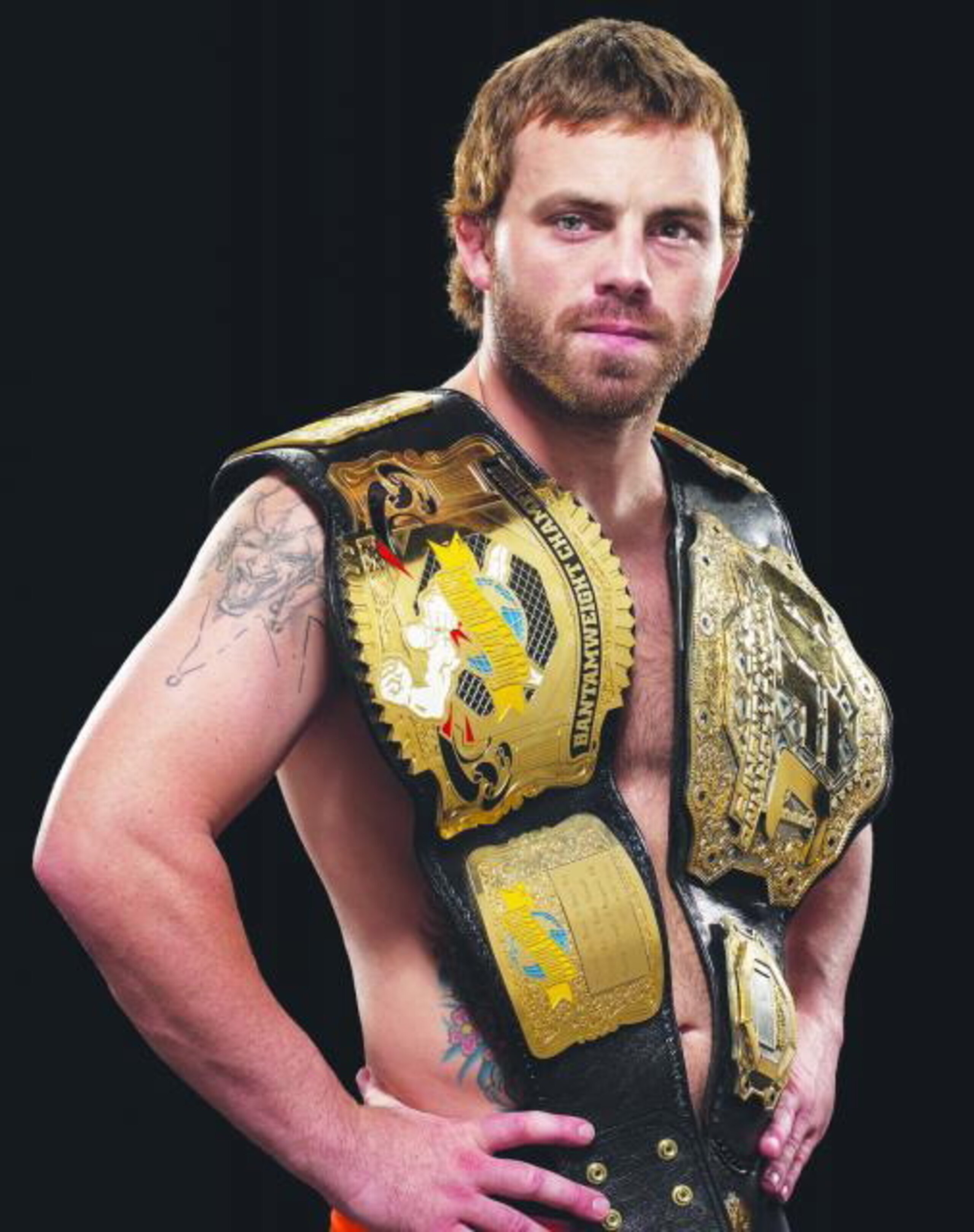
When Jens Pulver was in his prime, there was little doubt that he was one of the very best lightweights in the world. However, when he returned to the UFC after a seven year lay-off, there was very little doubt that he wasn’t nearly the fighter he once was.
One of the best lightweights in the history of the UFC, Pulver was unbeaten in seven bouts inside the Octagon before he left “the show” as the UFC’s Lightweight Champion after notching victories over Dennis Hallman, BJ Penn, and Caol Uno.
After parting ways with the UFC, Pulver went on to fight under the International Fight League, Pride Fighting Championships, and Shooto banners; achieving modest success but struggling against top-tier competition like Takanori Gomi and Hayato Sakurai.
When Pulver returned to the UFC, he was granted a “warm-up” fight of sorts in the form of a bout against a then very green Joe Lauzon at UFC 63. Despite entering the Octagon as a seven-to-one favourite, Pulver was knocked-out by Lauzon in less than one minute.
In his second fight back in the UFC, Pulver was matched up against Penn in a highly-anticipated rematch. Although many believed Pulver had a good chance of success against the then-inconsistent “Prodigy”, Penn made light work of Pulver en route to a second round submission victory at The Ultimate Fighter 5 Finale; essentially severing Pulver’s affiliation to the UFC in just over eight minutes.
Although Pulver was once regarded as one of the best fighters on the planet, it became abundantly clear in his return to the Octagon that Pulver was no longer a world-class competitor and thus no longer belonged on the grandest of stages.
1. Royce Gracie
5 of 5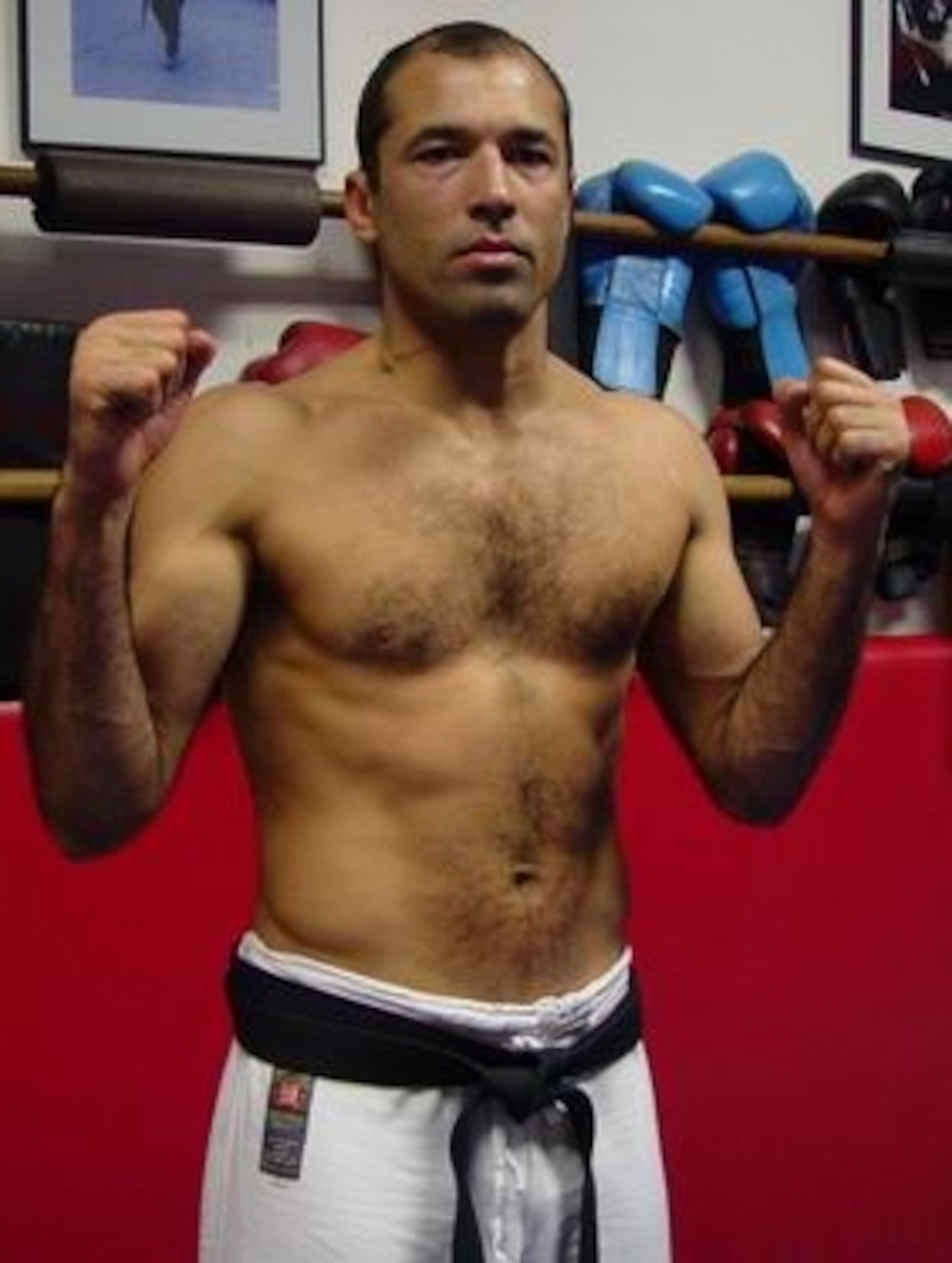
It is hard to imagine where, if anywhere, the sport of mixed martial arts would be without the contributions of the Gracie family, as early UFC dominator Royce Gracie showed the world that skill and air-tight technique can trump size advantages and overwhelming power while bringing submission grappling to the forefront of no-holds-barred combat sports. Unfortunately for the first family of mixed martial arts, it was in fact the once phenomenal Gracie who was dominated in his short-lived return to the Octagon.
After making fairly light work of nearly all of his opponents throughout his first run in the UFC en route to three Open-Weight Tournament Championship wins, Gracie took a five-year hiatus from professional mixed martial arts before departing for Japan to fight under the Pride Fighting Championships banner in 2000.
Possibly due to Gracie’s extended lay-off from the sport, or due to the fact that Brazilian Jiu-Jitsu and submission grappling had become commonplace in mixed martial arts, or perhaps because he was fighting opponents that were at times, three times heavier than he was, Gracie never found any type of real success in short stints with the Pride Fighting Championships and K-1 organizations after his initial success as a UFC pioneer.
Despite posting a modest record that consisted of two wins, one loss and a pair of draws, UFC president Dana White brought Gracie back to the Octagon at UFC 60 to take on Matt Hughes. The match was billed as a battle between the two best welterweights in the history of the sport, although it was contested at a catch-weight of 175 pounds. From the get-go, Hughes dominated the over-matched Gracie, and effectively used his superior grappling, in conjunction with his tremendous strength advantage to take the UFC Hall of Famer out inside the first round of action.
Because of his contributions to the sport, it is understandable why Gracie was brought back to the UFC, but it didn’t take very long at all for Hughes to dispel the myth that he, in fact, did not belong there.

.jpg?w=2560)

.jpg?w=2560 "Viral Rams Coach Vid 🖕")
.jpg?w=2560 "Bijan's INSANE 1st Half 🤩")

.jpg?w=2560 "Injury-stricken Seahawks signing veteran RB")

.jpg?w=2560 "2 NFL Officials Suspended")
