
The Argument Against Every Top 2022 NBA Title Contender
In the NBA, even the best aren't bulletproof.
The dynastic Golden State Warriors only won three titles in five years, despite allegations that they'd ruined the game by stockpiling an unsporting level of talent. Injuries were a factor for that group, but health is just one of the reasons the "best" so often fall short of a ring.
The playoffs are just different—more tactically demanding, less forgiving of weakness—and they have a way of exploiting the smallest frailties.
This year's field of contenders is enormous, and the only sure thing is that all but one of its members will end the season in disappointment. We'll limit the entries to teams with at least a 1 percent chance to win a championship, per FiveThirtyEight's projections.
That still leaves us with a whopping 11 teams to consider.
Think about that! With only a couple of weeks left in the season, you could call more than a third of the league a contender while keeping a straight face. Shout out to parity.
For all but one of these teams, something will go wrong, derailing a title chase. These are the issues to keep an eye on for each contender as the playoffs approach.
The Non-1 Percenters
1 of 12
I know we limited the "contender" class to teams FiveThirtyEight gives at least a 1 percent chance of winning the title, but everybody would have wondered where these two squads were. So we're giving them a courtesy mention...and then explaining why they wouldn't have gone the distance anyway.
Chicago Bulls
The thing about the playoffs is bad teams don't get to participate. And seeing as the Bulls only ever beat bad teams and lose to good ones, the case against them pretty much makes itself.
Chicago is 0-16 against the top three teams in each conference, which removes any realistic championship upside. Considering the low ceiling of the current roster, does anybody think the Bulls would like a do-over on the deal that got them veteran Nikola Vucevic at the cost of Wendell Carter Jr., the pick that became Franz Wagner and a 2023 first-rounder?
Minnesota Timberwolves
The Wolves distanced themselves from the other teams vying for a play-in spot by winning 10 of their 11 games from Feb. 28 to March 19, and they actually own a better point differential than the Dallas Mavericks and Denver Nuggets, the two teams immediately above them in the standings.
Minnesota is also just a couple of decimal points on D from ranking in the top 10 in efficiency on both ends, the hallmark of a contender.
In addition to the general lack of playoff experience on the roster, Minnesota figures to struggle against postseason competition because it gives opponents too many low-stress opportunities. The Wolves are in the bottom five in fast-break points allowed, and they also rank near the cellar in opponent second-chance points. Add to that the highest opponent free-throw rate in the league (stop hacking, Wolves!) and way too many offensive rebounds allowed, and Minnesota's foes pile up cheap points in almost every way possible.
We could also note how smart teams will dare Jarred Vanderbilt (15.4 percent) and Jaden McDaniels (31.3 percent) to beat them from deep, or how they'll relentlessly attack Karl-Anthony Towns and D'Angelo Russell in the pick-and-roll, but that feels like piling on.
Boston Celtics: Suspect Scoring
2 of 12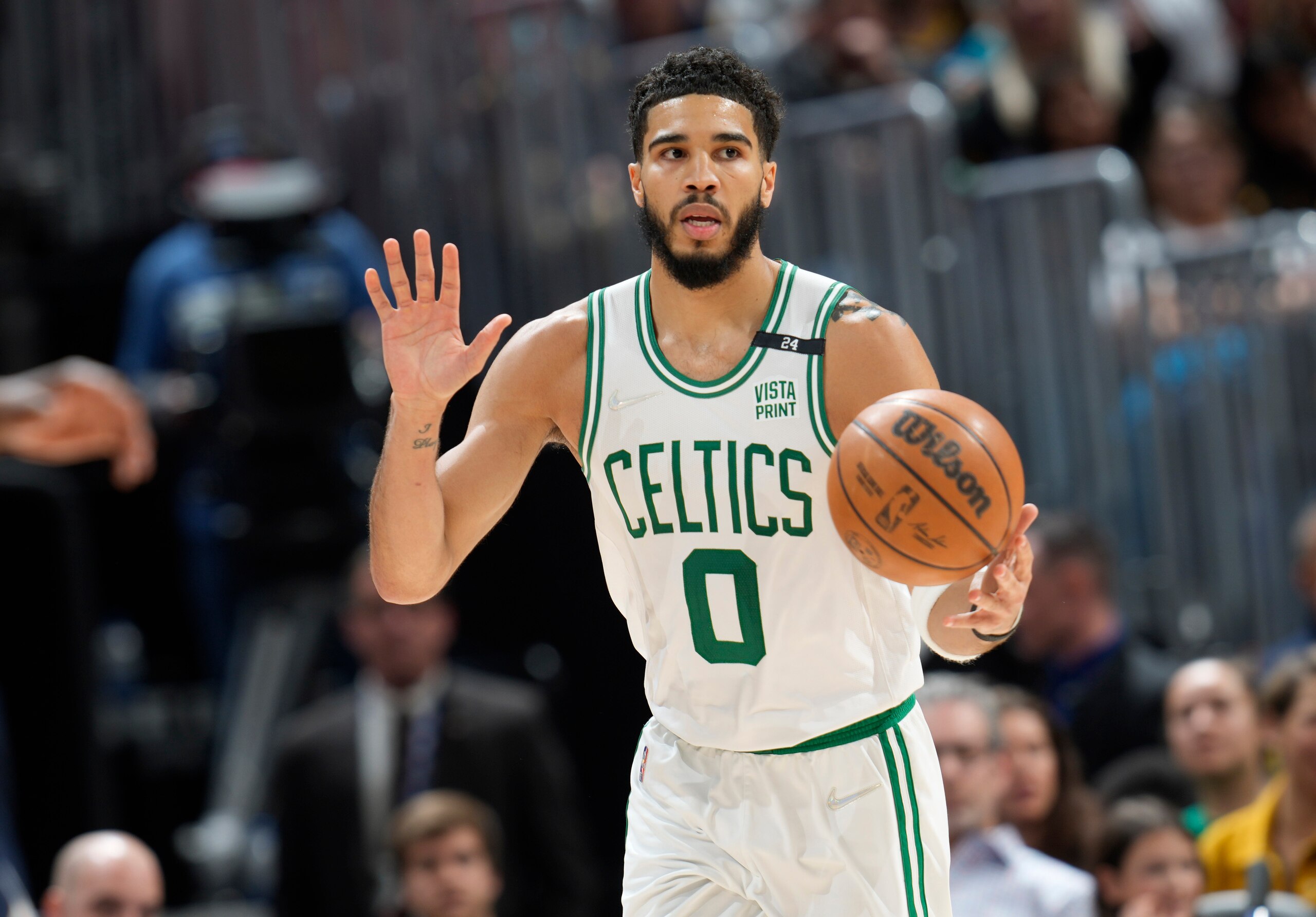
This is a tough one, as the Boston Celtics have been the best team in the East by a mile since Jan. 1, surging to the top of the league on defense and nudging their offensive efficiency up into the top 10 behind Jayson Tatum's scoring binge.
It's possible Boston will run into trouble stashing Robert Williams III on a corner shooter so he can wreak havoc as a help defender, the key to their NBA-best defense. If playoff opponents deploy a shooter too threatening for Williams to abandon, it could leave the lane wide-open against the pick-and-roll. Switching high screens would be an option, but it's hard to imagine Al Horford shutting down guards in that alignment through four playoff rounds.
The Celtics defense is elite, though, so the search for weak points has to focus on the other end.
Despite the scoring uptick in the second half, Boston still ranks 25th in rim-attempt frequency and 20th in expected effective field-goal percentage based on its shot profile. And though it's a simple note, the Celtics just aren't a good shooting team. They're 22nd in three-point accuracy.
Teams will rejoice any time Marcus Smart, Derrick White or Horford casts away from deep.
Having Tatum as a bailout option could help against the dug-in half-court defenses that dominate the postseason. He's a middling isolation scorer, ranking in the 58th percentile in efficiency. But you can trust him to create looks at high volume. Sometimes in the bogged-down playoffs, high volume and moderate efficiency is the best you can hope for. Still, March is the only month he's shot better than 35.0 percent from deep this year.
The Celtics are a threat to win it all. But if they fall short, it'll be because they don't create enough high-quality looks and probably won't make enough of the ones they do.
Brooklyn Nets: All That Scoring May Not Matter
3 of 12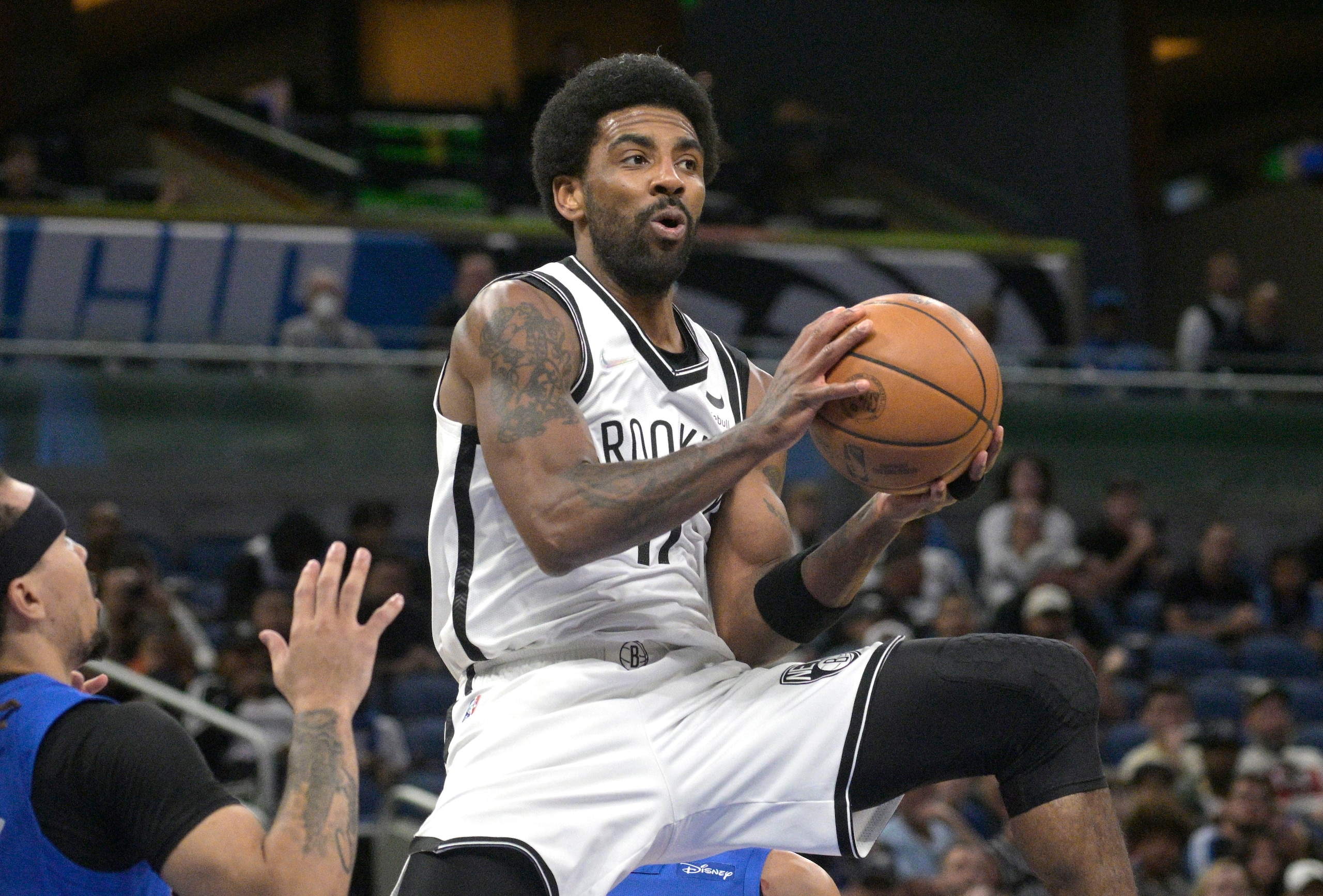
Now that New York's vaccine mandate won't keep Kyrie Irving from playing a full slate of postseason games, we can rule out scoring as a problem for the Brooklyn Nets.
With Irving in the lineup alongside Kevin Durant, the Nets crank out a ridiculous 130.7 offensive rating—and that's after filtering the data to make sure those lineups don't include former teammate James Harden.
Those two, on their own, are unstoppable. It won't even matter that Joe Harris is out, or that Ben Simmons' herniated disk could cost the Nets a key distributor.
Simmons' potential absence is, however, related to the main argument against the Nets: They have to score at absurd rates because they lack stoppers on defense. James Johnson, Bruce Brown and Nic Claxton are all quality defenders individually, with each earning positive Estimated Defensive Plus/Minus figures. But those three have barely shared the floor together this season because those lineups cannot put the ball in the basket.
If you were going to bet on a team to win a bunch of 140-135 games, the Nets would be the best pick. A 24th-ranked defense isn't fatal when you profile as the best postseason offense—by a lot. Durant, basically working solo last year, nearly got Brooklyn to the conference finals. That team's defense was 21st heading into the postseason—not much better than the 2021-22 version.
With Irving back and elite scoring assured, the only non-health-related argument against the Nets is on the defensive end.



Dallas Mavericks: Luck Doesn't Last Forever
4 of 12
Luka Doncic has dominated both of the playoff series he's seen in his young career, posting averages of 33.5 points, 9.5 assists and 8.8 rebounds while shooting 49.4 percent from the field and 39.2 percent from long range. All that, despite being the sole focus of every team's defensive game plan.
Doncic also lost both of those series because opponents correctly judged that they could force the ball out of his hands without fear of the other Dallas Mavericks making them pay for it.
Though Dallas' defense looks sturdier, and though some new lineup configurations will make teams think twice about selling out to stop Doncic, it's still fair to be suspicious about the rest of the roster coming through when it matters.
Spencer Dinwiddie has been a revelation, and his late-game wizardry (now that he's not on the Wizards) has produced a 9-1 clutch mark since he came aboard via trade. Clutch play, though, is notoriously unreliable.
Per The Ringer's Zach Kram: "The correlation between regular-season clutch winning percentage and postseason clutch winning percentage is negative-0.05, among teams with at least five clutch playoff games since the 2010-11 season—or basically zero, signifying no meaningful correlation at all."
Dallas has won three more games than it should have, based on net rating, since Dinwiddie's arrival. Normalize the Mavs' clutch luck, and this team looks a lot less threatening than its record suggests.
Luck crops up again in one of Dallas' key lineups. The trio of Doncic, Dinwiddie and Jalen Brunson is the kind of multipronged attack that could theoretically punish teams that dare someone other than Doncic to beat them. And lineups featuring those three have handily won the minutes they've played.
No one in that trio is renowned as a defender, and it turns out the unit's success owes mostly to opponents' wayward three-point shooting. Even more concerning, that three-man group allows an unholy conversion rate of 79.5 percent at the rim. That part is to be expected, and regression to the mean on opponent long-range shooting is likely to make the layup parade even more damaging.
So yes, Dallas has much more shot-creation support for Doncic than in years past. But the team's luck in the clutch and on opponent shooting is bound to run out.
Denver Nuggets: Jokic Can't Do It Alone
5 of 12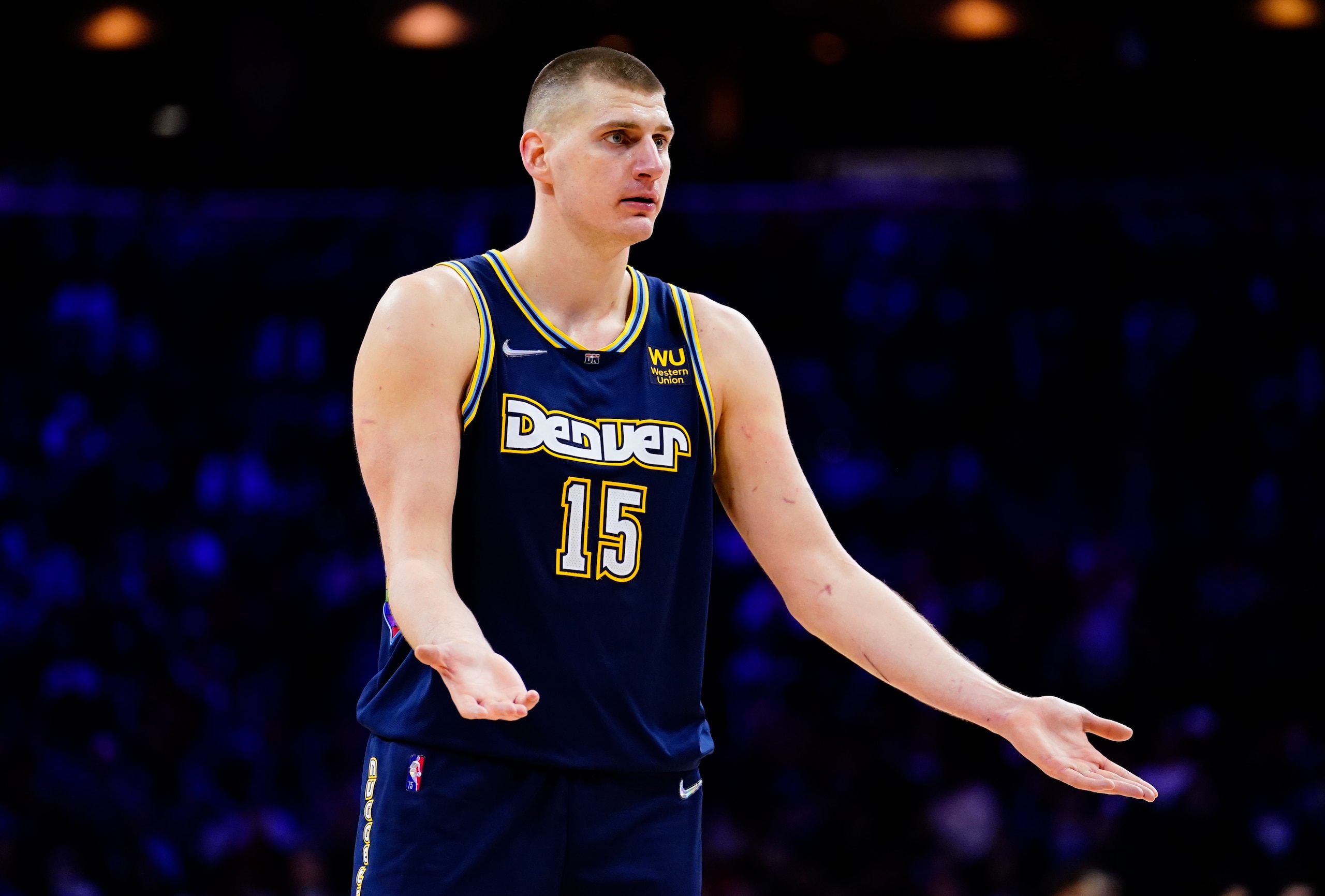
Nikola Jokic is statistically the best player in the NBA this season.
He leads the league in a raft of advanced metrics, including Dunks and Threes' Estimated Plus/Minus, FiveThirtyEight's RAPTOR WAR, Box Plus/Minus, Player Efficiency Rating and Win Shares. The reigning MVP is on pace to become the first player to ever average at least 26.0 points, 13.0 rebounds and 7.0 assists per game, and he's doing it with a true shooting percentage 16 percent above the league average.
Jokic is only one man, though, and the playoffs demand a collective approach.
Granted, the typical defensive schemes you see deployed against singular stars may not be as effective against a pass-first center who brings the ball up the floor and can score from anywhere. Drawing up defenses that force Jokic to pass is a little like begging DeMar DeRozan to shoot from 17 feet; it's exactly what he prefers to do.
We can't pretend the absences of Jamal Murray and Michael Porter Jr. don't matter. It's not like Jokic has carried a Denver team missing its second- and third-best players to glory during the regular season. He's done admirable work, to be sure, but the Nuggets are fighting to avoid the play-in round.
A return from Murray or Porter would help, but neither is a lock to see the floor until next year. Both have missed months with significant surgeries, and it wouldn't be fair to expect top form in the unlikely event they see playoff action.
Golden State Warriors: They Can't Score Without Steph
6 of 12
With Stephen Curry on the floor, the Golden State Warriors offense can be downright symphonic.
Without him, well...I guess you could still call their attack musical, but only if this counts as music.
The Warriors needing Curry to score is only news if you haven't paid attention to the team for the last decade. Every year, like clockwork, the two-time MVP appears near the absolute top of the league in points added per 100 possessions.
Any injury to a contender's best player is a big deal. But the sprained ligament in Curry's foot, which could cost him the rest of the regular season and may hobble him during the playoffs, is of special concern because Golden State is shorter on shot creation than it's been in years.
Jordan Poole is a bucket; he's averaging 24.5 points on a 69.7 true shooting percentage in March. But beyond him, the Dubs simply don't have another pass-dribble-shoot threat on the roster.
Klay Thompson is not a self-starter, Draymond Green would rather not shoot at all, Andrew Wiggins hasn't done much right on offense since starting the All-Star Game, and Kevon Looney averages more screen assists (3.3) than made field goals (2.7) per game.
The offense has worked just fine with Curry in the game this season, as evidenced by the Warriors' 114.1 points per 100 possessions during his minutes. Over a full season, that'd be a top-five figure in the league. With Curry out, the Dubs' offensive rating tumbles to 104.4, the rough equivalent of a bottom-three figure.
The scoring just stops when Curry isn't in the game drawing every defense's full attention. Thompson's looks are tougher, Green has nowhere to go with the ball and Poole has to do entirely too much.
No Steph on the floor, no chance.
Memphis Grizzlies: Those Transition Points Won't Come so Easily
7 of 12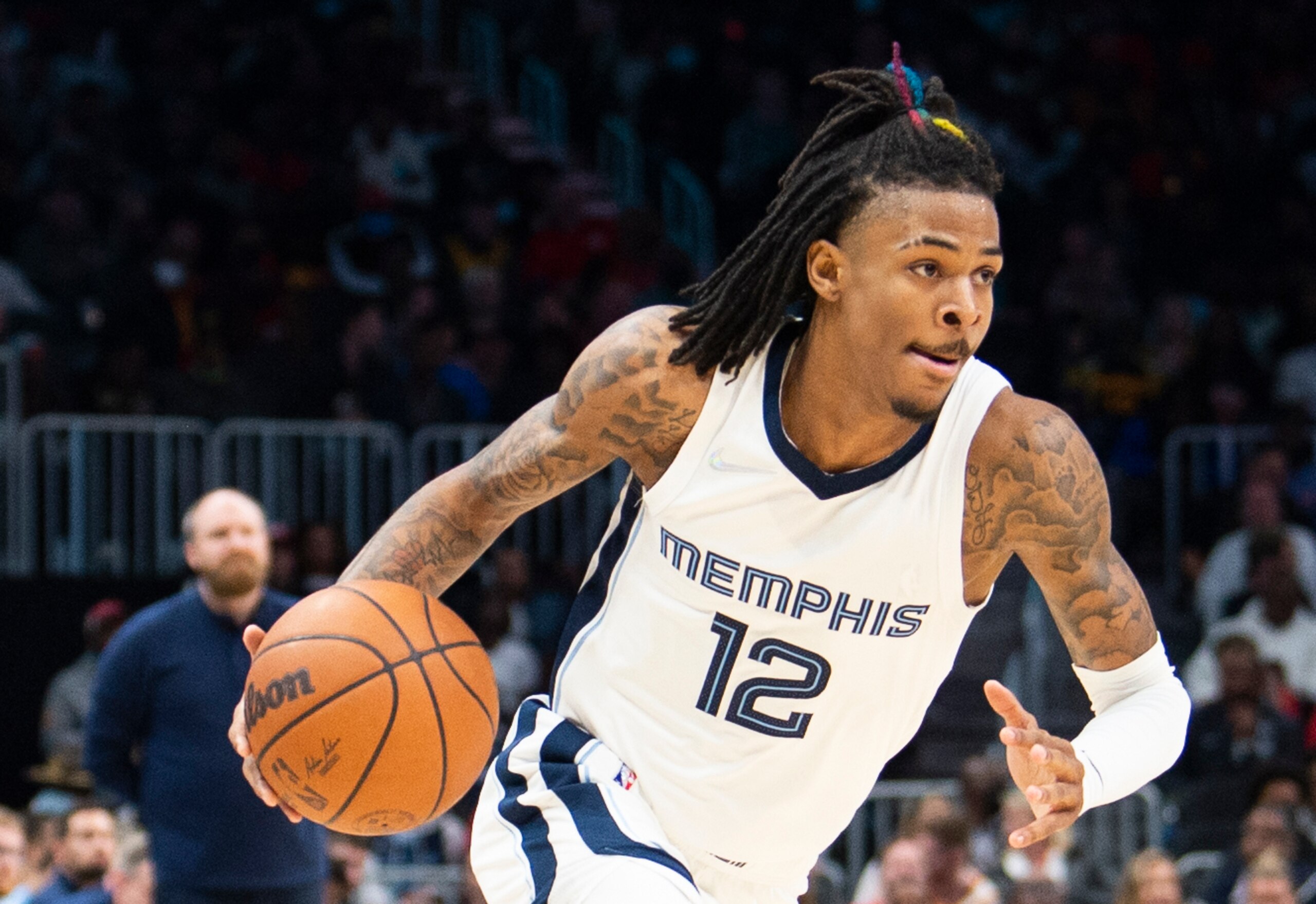
It'd be easy to say the Memphis Grizzlies aren't ready. That they're too young. That playoff progress is incremental, marked by increasingly painful pre-Finals eliminations that eventually lead to a breakthrough.
But you know the preposterously confident Grizz have no time for talk like that.
How about a numbers-based knock, then?
Memphis' offense relies on its running game for success, ranking first in the league in points added per transition play and transition frequency. It makes sense; if you have Ja Morant (whose knee is also now officially a concern), you up the pace and trust his dynamic athleticism to make things happen.
Offenses slow down in the playoffs, though. The league's least disciplined teams—the ones that don't get back on D—aren't involved. Attention to detail is at an elevated level. Postseason defenses are just more attuned to the little things, and hustling back to prevent easy baskets falls into that category.
The sample from the Grizzlies' 2021 postseason trip is tiny, but they lost about a percentage point from their regular-season transition frequency. Some of last year's other uptempo squads, like the Milwaukee Bucks and Brooklyn Nets, similarly decelerated in the playoffs.
Memphis is 22nd in half-court scoring this season. Though it excels at grabbing offensive boards and piling up second-chance points, surviving on a larger share of possessions against a set defense will be a challenge.
The Grizzlies are deep, feisty and primed for a run. But they're a little less dangerous when you make them walk it up.
Miami Heat: Very Good Is Not Great
8 of 12
The only sign of weakness the Miami Heat have shown in a season spent atop the East standings was a brief in-game spat between Jimmy Butler, Erik Spoelstra and Udonis Haslem.
Most likely, the Heat's sideline fracas won't matter. It might even galvanize them. But with a team this well-rounded, experienced and complete, you've got to grasp at straws. In this case, maybe "a very competitive, gnarly group," as Spoelstra put it, will get a little too intense, and frustrations will affect play on the floor.
Opponents had better hope so, because Miami's makeup and statistical profile is otherwise blemish-free.
You could point to the Heat's high turnover rate on offense and their tendency to foul too much on D, but those issues aren't new, and both of those numbers have improved in the team's last two postseason trips. When they need to dial it in and minimize self-inflicted wounds, the Heat have shown they can do it.
Maybe spacing will be an issue with Butler's three-point slide continuing (he's down to 20.2 percent), Bam Adebayo's refusal to shoot from deep at all and P.J. Tucker needing to be spoon-fed in the corner. But Miami leads the NBA in three-point percentage because the guys that do shoot them at high volume—Duncan Robinson, Tyler Herro, Max Strus and Kyle Lowry—are deadly accurate.
The Heat's halfcourt offense ranks in the middle of the pack, but it's not as bad as Memphis', and a glut of veteran experience makes it hard to bet against these guys manufacturing points when they need to. Spoelstra's lengthy postseason history of success suggests he'll figure out how to attack whatever schemes Miami sees.
Not to get all galaxy brain on you, but maybe the best argument against Miami is about the difference between good and great. The Heat are pretty good at everything, which makes finding a glaring flaw hard. But they're not truly exceptional at anything, and that could be a problem late in the playoffs, particularly in the Finals.
The Phoenix Suns are dominant on both ends, running away with the net rating crown. The Utah Jazz's offense is unstoppable. Boston has that merciless defense. Even the Golden State Warriors, if healthy, can reach a higher level than Miami. Those teams (and we should throw the champion Milwaukee Bucks in here, too) have the ability to be special. To be spectacular.
The Heat, in contrast, just seem solid. Maybe that won't be enough.
Milwaukee Bucks: Missing Defensive Heft
9 of 12
Brook Lopez was key to the Milwaukee Bucks' defensive dominance from 2018-19 to 2020-21, a three-year stretch in which the team ranked second, first and 10th on that end of the floor. Lopez's minutes coincided with even stingier play all three seasons.
Milwaukee's hulking center also proved he could survive against downsized opponents during last year's title run, but the back surgery that cost him most of the season could make it hard to repeat that feat.
The Bucks have other options. Units with Giannis Antetokounmpo at center have held up well on defense, and those configurations might even be preferable against every East foe outside of the Philadelphia 76ers. However, manning the middle full time might overtax Antetokounmpo, and the trickle-down effect could create more problems for an otherwise small team.
P.J. Tucker isn't around to bully wings and forwards anymore, and third big man Bobby Portis, though much better this season, isn't exactly renowned for his defense. Jrue Holiday will guard anyone, but he's usually at a size disadvantage against any position above shooting guard.
The Bucks have the league's second-best offense since the All-Star break, possess championship pedigree and have shown the ability to ratchet up their defense late in games. That said, they do appear a bit diminished on defense. With such a small margin for error in the playoffs, and with so many dangerous scorers standing in the way of a return trip to the Finals, a lack of stopping power, particularly up front, could stymie the Bucks.
Phoenix Suns: So Many Middies
10 of 12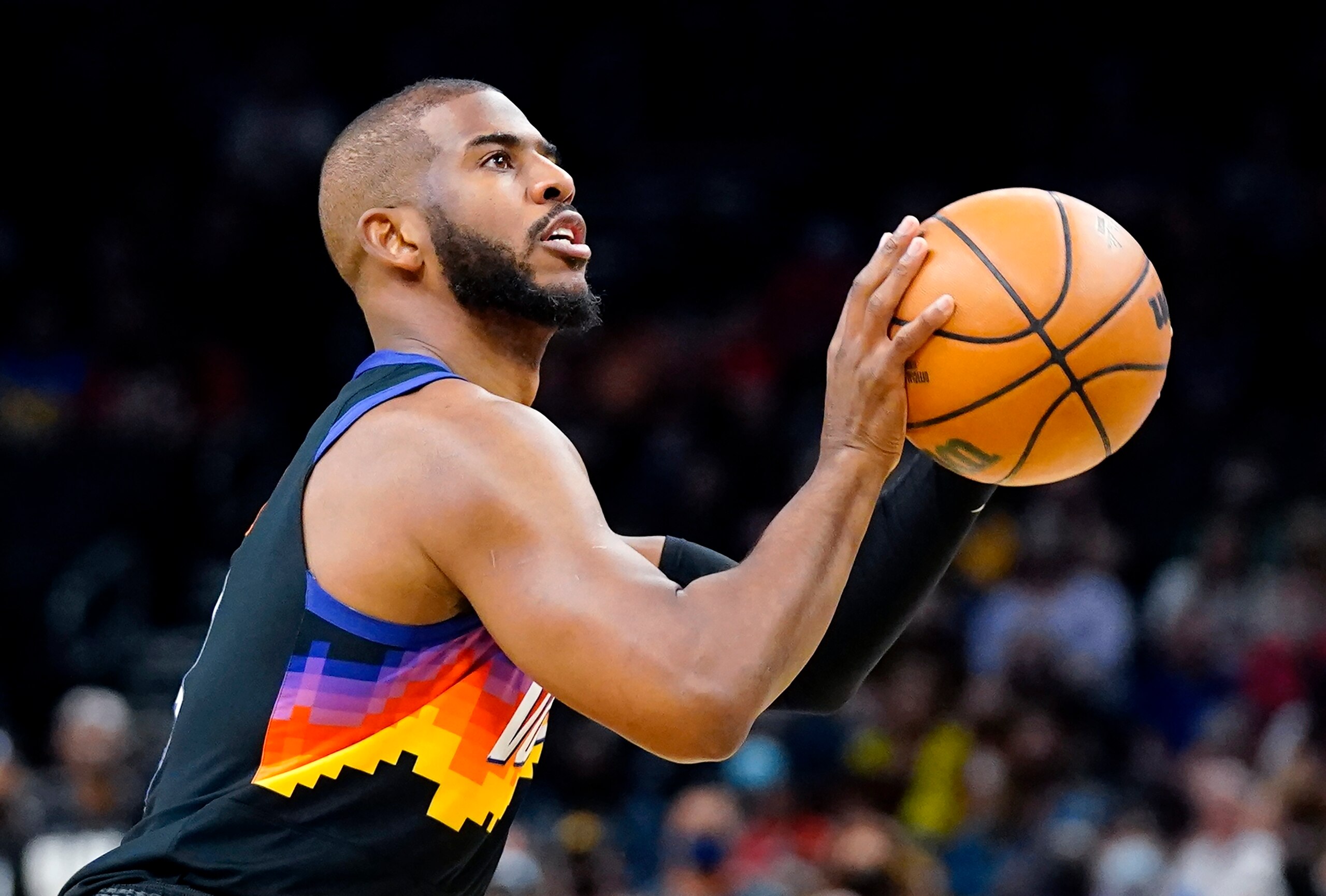
Chris Paul's history of postseason injuries is a concern, but he's back in action ahead of schedule after fracturing his thumb, and the Phoenix Suns kept right on shredding the league when he was out.
Besides, the possibility of a future injury is a concern for every contender. It's not unique to Paul or the Suns.
Speaking of unique, how about Phoenix's shot profile?
No team shoots more mid-range jumpers than the Suns, which was also true last year when they were a couple of wins short of a title. If anything, it seemed like Phoenix's preference for those ill-favored shots was a useful weapon against modern defenses designed to surrender them. Thing is, Phoenix's approach has grown even more extreme.
Last year, the Suns took 36.2 percent of their shots from the mid-range area, a rate that ranked sixth. In 2021-22, they're devoting an incredible 41.8 percent of their attempts to mid-rangers—by far the highest share in the league. Those looks come at the expense of the higher-value ones at the rim, where the Suns are dead last in attempt rate, and from deep, where they rank 26th.
We're way past the point of judging the quality of an offense solely on the locations of its shots. Those Houston Rockets teams of the late teens never won a title, despite heaving threes at historic rates. And we shouldn't ignore the reason Phoenix likes those in-between looks so much: They go in! The Suns are great at them, ranking first in accuracy two years running.
At some point, though, the lack of threes, free-throw attempts and offensive rebounds that come with its approach could put Phoenix at a disadvantage.
It should be clear that when you have to cite what might be a contender's greatest strength as a possible playoff weakness, there really aren't many nits to pick. The Suns should be title favorites for a reason.
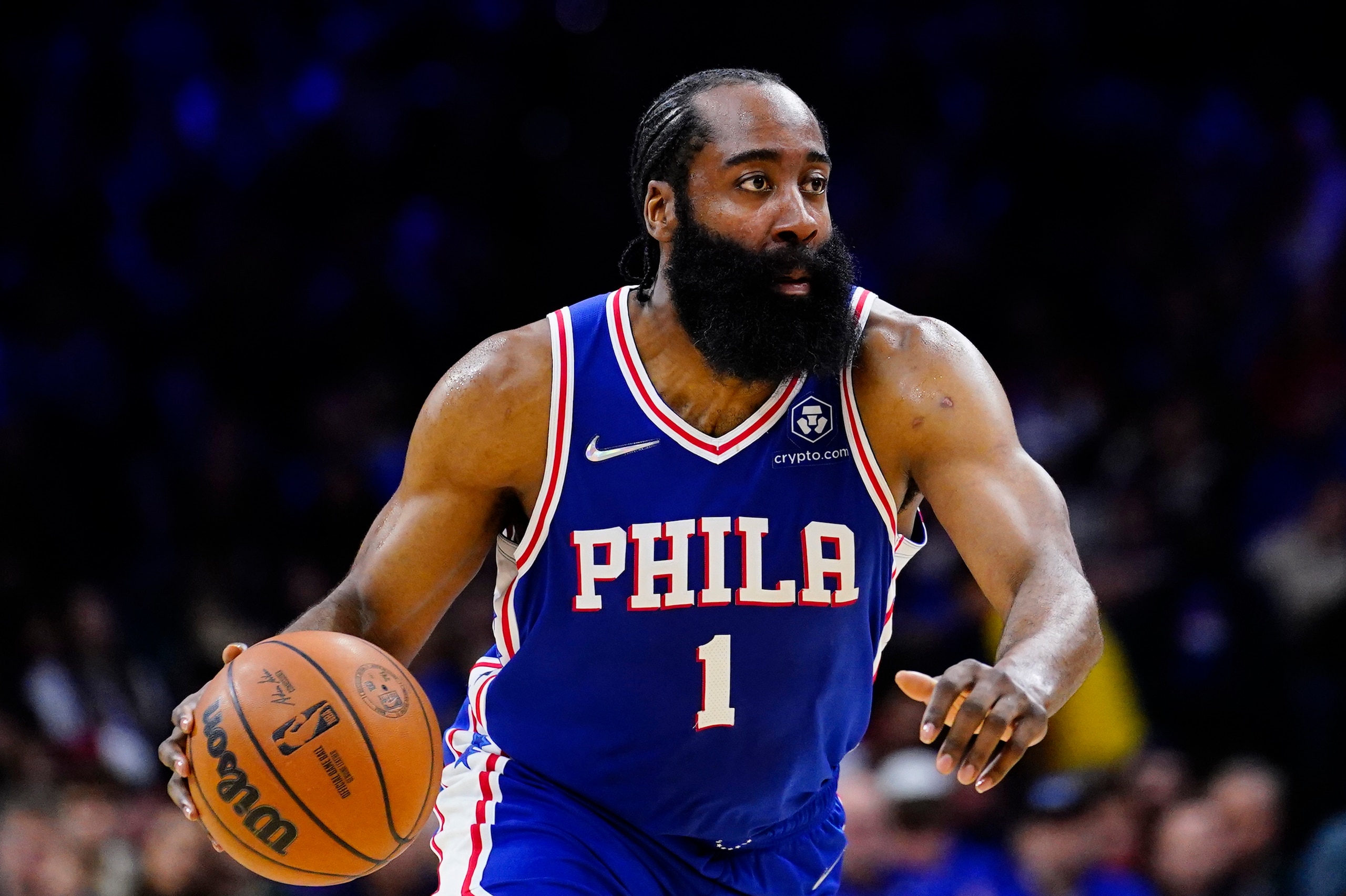
Philadelphia 76ers: James Harden Isn't Enough
11 of 12
As usual, the Philadelphia 76ers struggle whenever Joel Embiid isn't in the game doing MVP things.
That's been a constant throughout Embiid's prime, but one of the supposed main benefits of James Harden's arrival was a stabilization of non-Embiid units. Who better to keep things running smoothly than the guy who spent several seasons with the Houston Rockets operating an offense almost entirely by himself?
Unfortunately for Philly, Harden-led units haven't scored enough without the MVP candidate big man to offset the damage done by a porous defense. Philly's net rating with Harden on the court and Embiid off is a worrisome minus-5.5.
Harden isn't solely responsible for that figure. Tobias Harris and his $36 million salary have to wear this failure as well.
There are hotter takes available. We could cite the 32-year-old Harden's lack of offensive burst, or his long history of coming up short in big games as the reason Philly won't win it all. Or we could worry over the extremely free-throw-dependent Sixers offense stalling when playoff whistles go quiet.
In the end, this very different Philadelphia team's problem is the same as ever. When Embiid is in the game, the Sixers wreck shop. When he's not, they're a wreck. And historically, Embiid hasn't made it through the playoffs without missing time or suffering a nagging injury.
If and when that happens again, Harden and the Sixers won't be good enough to cover for him.
Utah Jazz: Perimeter Defense
12 of 12
The Los Angeles Clippers' five-out, downsized attack exposed the Utah Jazz's weak perimeter defense in the 2021 playoffs. Nothing that has happened since suggests the Jazz will hold up any better against guards and wings this time around.
Sure, Donovan Mitchell and Mike Conley were hampered by injury against the Clips. But Mitchell grades out this season as a negative on D as measured by Estimated Defensive Plus/Minus, and Basketball Index shows he rarely handles high-difficulty assignments. Conley fares better in both metrics, but he's strictly a one-position defender who lacks the size to switch effectively.
Bogdan Bogdanovic also struggles to stay in front of his man, and though the slow-footed Joe Ingles is no longer on the team, many of his postseason minutes could go to Jordan Clarkson—yet another undersized, suspect performer on D.
Royce O'Neale can't guard three wings at once.
Rudy Gobert's mobility as a back-line eraser is part of the reason he always lands on the shortlist for DPOY. But unless he learns how to teleport or clone himself, even he can't cover for all of his teammates' mistakes.
Other than Rudy Gay, who's probably best utilized as a small-ball 5 in non-Gobert configurations, the Jazz haven't addressed the issue that got them bounced last season.
Remember, the Jazz defense that failed last year ranked first during the regular season. The 2021-22 version ranks 10th, providing little hope that better results are ahead.
Coming up short in the playoffs is always painful. But if the Jazz fail again, it's likely to be for the same reason as last year. That'll sting a little more, and it might even lead to significant roster changes.
Pressure's on.
Stats courtesy of NBA.com, Basketball Reference and Cleaning the Glass. Accurate through March 24. Salary info via Spotrac.

.jpg?w=2560 "NFL investigating 2 referees for separate viral exchanges")

.jpg?w=2560 "Report: Chiefs Contact Hill's Agent")
.jpg?w=2560 "OBJ Calls Out Giants 😳")
.jpg?w=2560 "Tyreek makes another cryptic post amid Chiefs rumors")