
Biggest Winner and Loser from Each Noteworthy CBB Conference with 1 Month to Go
Memphis might not even finish in the top half of the AAC. Wisconsin's Johnny Davis has transformed from a benchwarmer to a top candidate for National Player of the Year. Penn State transfer Izaiah Brockington has propelled Iowa State straight from a 2-22 disaster back to national relevance. And things have gone so horribly awry for both Louisville and Maryland that the head coaches for those teams have already parted ways with their schools.
Just like we all expected, right?
While those are some of the most unpredictable things to transpire in the first three months of this men's college basketball season, they're far from the only unlikely developments.
For each of the 10 most noteworthy conferences—as well as one "mid-major grab bag"—we've chosen an individual for biggest winner and a team for biggest loser. (If you're curious which teams have been the biggest winners of the season, I'll be writing about the most surprising contenders for regular-season conference titles next week.)
Conferences are listed in alphabetical order.
ACC
1 of 11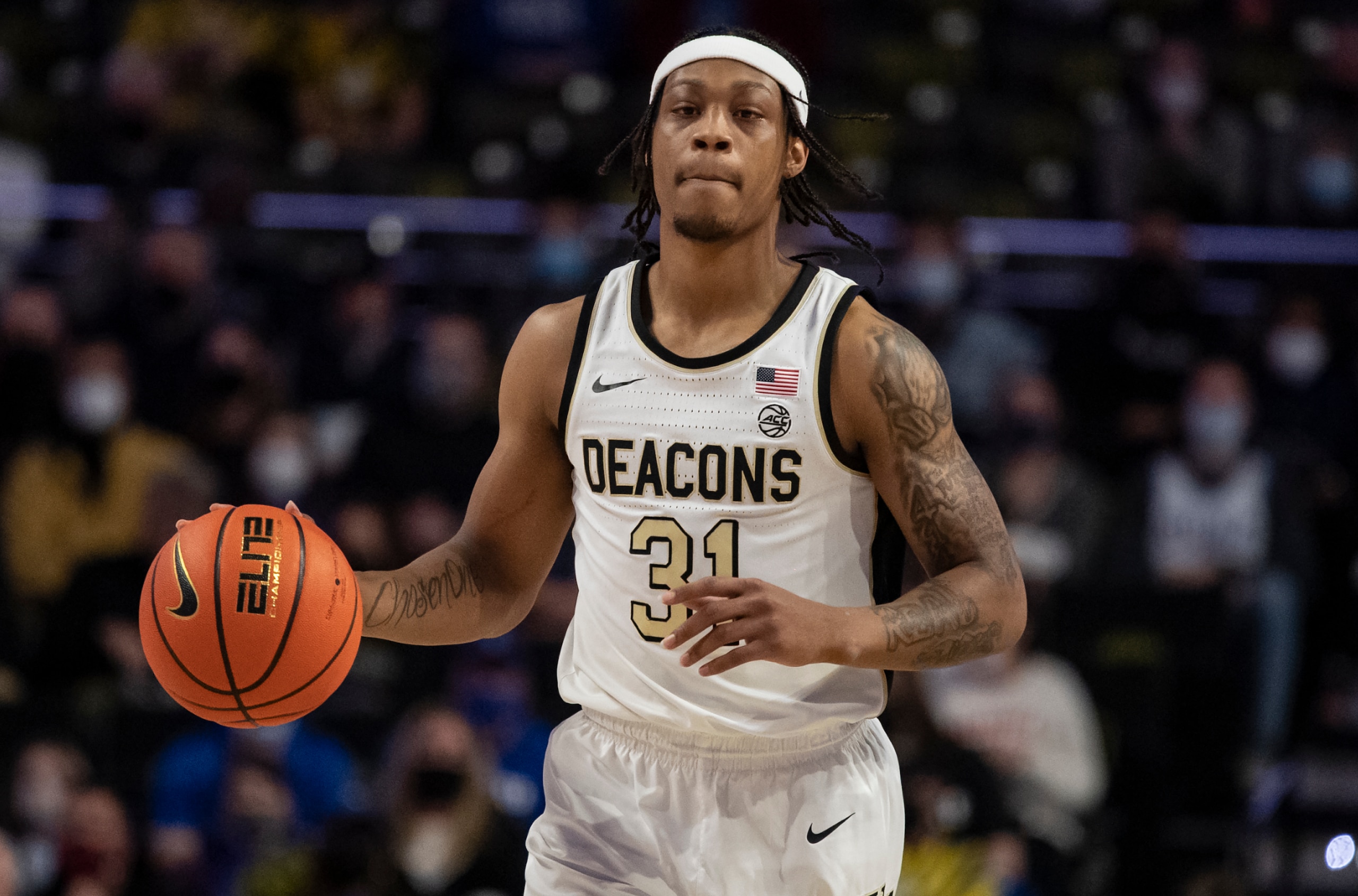
Winner: Alondes Williams, Wake Forest
Over the previous two seasons with Oklahoma, Williams was a square peg being forced into a round hole. Austin Reaves and De'Vion Harmon ran the offense, starting center Brady Manek was the primary perimeter threat and Williams was an underutilized glue guy.
But with the free season of eligibility, the fifth-year senior transferred to Wake Forest and has become one of the best lead guards in the nation.
Williams is leading the ACC in both points (19.6) and assists (5.3) per game, and he is also comfortably top-20 in the league in rebounding at 6.9 boards per night. He had a triple-double in mid-December against USC Upstate and has come relatively close to a few others, including 15 points, 10 rebounds and nine assists against Pitt on Wednesday.
He's just about on pace to join Penny Hardaway, Evan Turner, Ayo Dosunmu and Ricky Minard as the only players in the past 30 years to average 20 points, six rebounds and five assists per game for a full season. And Wake Forest is on pace to make the NCAA tournament because of his heroics.
Loser: Louisville Cardinals
Louisville was supposed to be one of the teams contending with Duke for the ACC crown. The Cardinals even got one of the 81 first-place votes in the preseason media poll.
They instead devolved into the laughingstock of the country and parted ways with head coach Chris Mack a little over a week ago.
Louisville got out to a decent start, going 5-1 with victories over Mississippi State and Maryland while Mack served a six-game suspension. But the Cardinals went 6-8 with him on the sideline and were getting blown out left and right by not-great teams when he finally left the team.
Maybe Louisville can hire that up-and-coming coach out of Iona. Rick something.
American Athletic
2 of 11
Winner: Kelvin Sampson, Houston
With an honorable mention for SMU's Kendric Davis, who's doing everything in his power to carry the Mustangs into the tournament conversation, this is the one spot where we simply must hand the winner label to a head coach.
Even though the Houston Cougars lost leading scorer Quentin Grimes, point guard DeJon Jarreau and rebounding star Justin Gorham from last year's Final Four squad, expectations remained high for the team—largely because it was bringing back Marcus Sasser and Tramon Mark and adding Texas Tech's Kyler Edwards.
But Mark suffered a shoulder injury in the preseason and lasted just seven games before shutting it down to have surgery, and Sasser suffered a season-ending foot injury just two days after the announcement that Mark was out for the rest of the year.
Yet, somehow, some way, the Cougars continue to dominate, and Sampson deserves a whole lot of credit for that. This team is relentless on defense and on the offensive glass, and the trio of Edwards, Josh Carlton and Taze Moore has improved its scoring substantially to overcome Sasser's absence.
Loser: Memphis Tigers
Fun fact: Memphis (No. 12) was ranked ahead of Houston (No. 15) in the AP poll to open the season, as the two were co-favorites to win the AAC.
But while Houston has thrived in the face of adversity, Memphis has been more like a cartoon tiger, failing in spectacular fashion in its attempt to plug all the holes in the sinking ship.
Early losses to Iowa State, Georgia and Ole Miss were the product of a young team's sloppiness with turnovers and/or fouls. In the loss to Murray State, the Racers simply couldn't miss a shot. More recently, it's been an injury bug-COVID outbreak combination leaving the Tigers short-handed on a nightly basis.
But regardless of how they got to this point, the Tigers are 11-8 and one of the most disappointing teams in the country.
Atlantic 10
3 of 11
Winner: Foster Loyer, Davidson
Over the past three seasons with Michigan State, Loyer was a pass-first point guard who bounced in and out of the starting lineup. He was efficient when he played, but with A.J. Hoggard coming back and Tom Izzo bringing in freshmen Max Christie and Jaden Akins as well as veteran transfer Tyson Walker, it was clear Loyer's playing time wouldn't increase in year No. 4 in East Lansing.
So he packed his bags and transferred to Davidson—a program in dire need of an experienced guard after losing both Kellan Grady (Kentucky) and Carter Collins (Murray State) to the transfer portal, and a program in which just about everyone who can shoot has a permanent green light.
And it has been a match made in heaven.
It only took 15 games for Loyer to surpass the point total he had in 86 games with the Spartans, as he has thrived as one part of Davidson's four-headed monster. Loyer is averaging 15.7 points and 3.6 assists per game while shooting 45.7 percent from three-point range and 94.9 percent from the free-throw line. And Davidson is well on its way to what might be the first single-digit seed in the NCAA tournament in program history.
Loser: St. Bonaventure Bonnies
The Bonnies brought back all five starters from a team that went 16-5 en route to a No. 9 seed in the 2021 NCAA tournament, each of whom averaged at least 10 points per game. Each member of that quintet is, once again, averaging at least 10 points per game.
But the wins haven't followed suit, because they lost all of their luck in the three-point defense department.
Last year, the Bonnies allowed a lot of three-point attempts but held opponents to 30.7 percent shooting from deep. Only one team shot better than 42.1 percent against them, and Dayton (6-of-12) barely even capitalized on that edge.
This year, in the losses to George Mason, Dayton, Virginia Tech and Northern Iowa, St. Bonaventure's opponents shot a collective 53-of-109 (48.6 percent) from three-point range.
Maybe that luck will turn and the Bonnies can get back in the hunt for an at-large bid, but what a major disappointment the campaign has been for the preseason AP No. 23 team.
.jpg?w=2560 "Chiefs Giants Football")
.jpg?w=2560 "AP Poll Top Five Week 9")
Big 12
4 of 11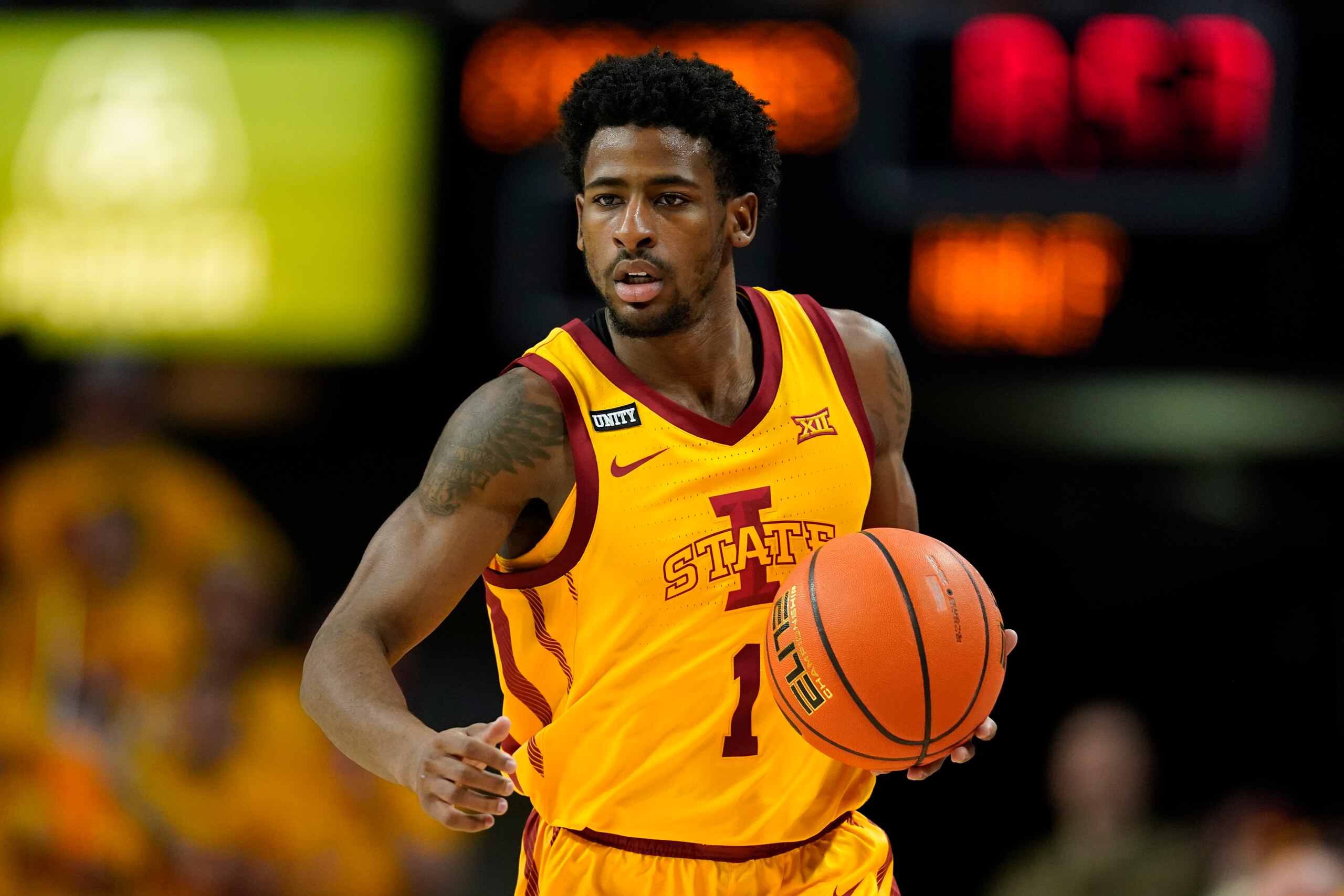
Winner: Izaiah Brockington, Iowa State
Kansas' Ochai Agbaji is the no-brainer choice for Big 12 Player of the Year, but Izaiah Brockington might also be a no-brainer choice for first-team All-Big 12.
Who saw that coming when the guy who averaged 10.1 points and 3.7 rebounds per game in two years at Penn State transferred to a Cyclones team that went 2-22 last season?
Brockington is leading Iowa State in both points and rebounds by such a wide margin that he could conceivably miss the rest of the regular season and still end up on top of those leaderboards. And it's because of his veteran leadership (and vastly improved team defense) that the Cyclones have gone straight from one of the worst major-conference teams in the country to a legitimate Sweet 16 contender.
Loser: Oklahoma State Cowboys
Frankly, no team in the Big 12 is a loser. The entire conference is ranked in the KenPom top 75, and if the season ended today, there's a good chance that eight of the 10 teams would partake in the NCAA tournament.
But when the NCAA ruled to uphold its 2022 postseason ban on Oklahoma State in early November, the Cowboys were all but locked in as this conference's biggest loser for this season.
As many wrote at the time, it's a heaping pile of malarkey that the Cowboys were handed that ruling six days before the start of the regular season—aka too late for anyone to realistically transfer and still play this season—for something a former assistant coach did five years ago.
With the exception of Bryce Williams, everyone on the roster still has at least one more year of eligibility. And at least the Pokes did make the tournament last year. But to punish the current kids for something they had no involvement in is absurd.
In spite of that, Oklahoma State has battled admirably, already knocking off Baylor, Texas and TCU.
Big East
5 of 11
Winner: Justin Lewis, Marquette
During Marquette's unexpected 5-0 start, Maryland transfer Darryl Morsell got most of the national attention. The former Terp was on fire from three-point range, scoring at least 21 points in each of the first four games.
But while Morsell has cooled, Lewis has been a warrior for the Golden Eagles night in and night out.
Marquette has nine wins against Quadrants 1 and 2, with Lewis averaging 20.2 points, 8.0 rebounds and 1.6 steals while shooting 26-of-51 (51.0 percent) from three-point range in those games.
Not much was expected from a Marquette team that lost all five starters from a 13-14 squad, but Lewis (and head coach Shaka Smart's defensive prowess) has the Golden Eagles looking like a lock for a single-digit seed next month.
Loser: St. John's Red Storm
The Johnnies have not won an NCAA tournament game since 2000 and have only made the Big Dance three times since 2003. But with Julian Champagnie and Posh Alexander returning as the leaders of a team that went 10-9 in Big East play last season, it felt like this could be the year that the drought finally ended.
Instead, it took two-and-a-half months for St. John's to win a road game or beat an opponent worth mentioning, and it would take a miracle for this team to even sniff the NCAA tournament.
The Johnnies are at least fun to watch, playing at one of the fastest paces in the nation. They also had close calls at Indiana and Connecticut and had Providence on the ropes deep into the second half both times they faced the Friars. But we're not talking about a track meet, horse shoes or hand grenades, and it's frustrating that this once-great program is underachieving yet again.
Big Ten
6 of 11
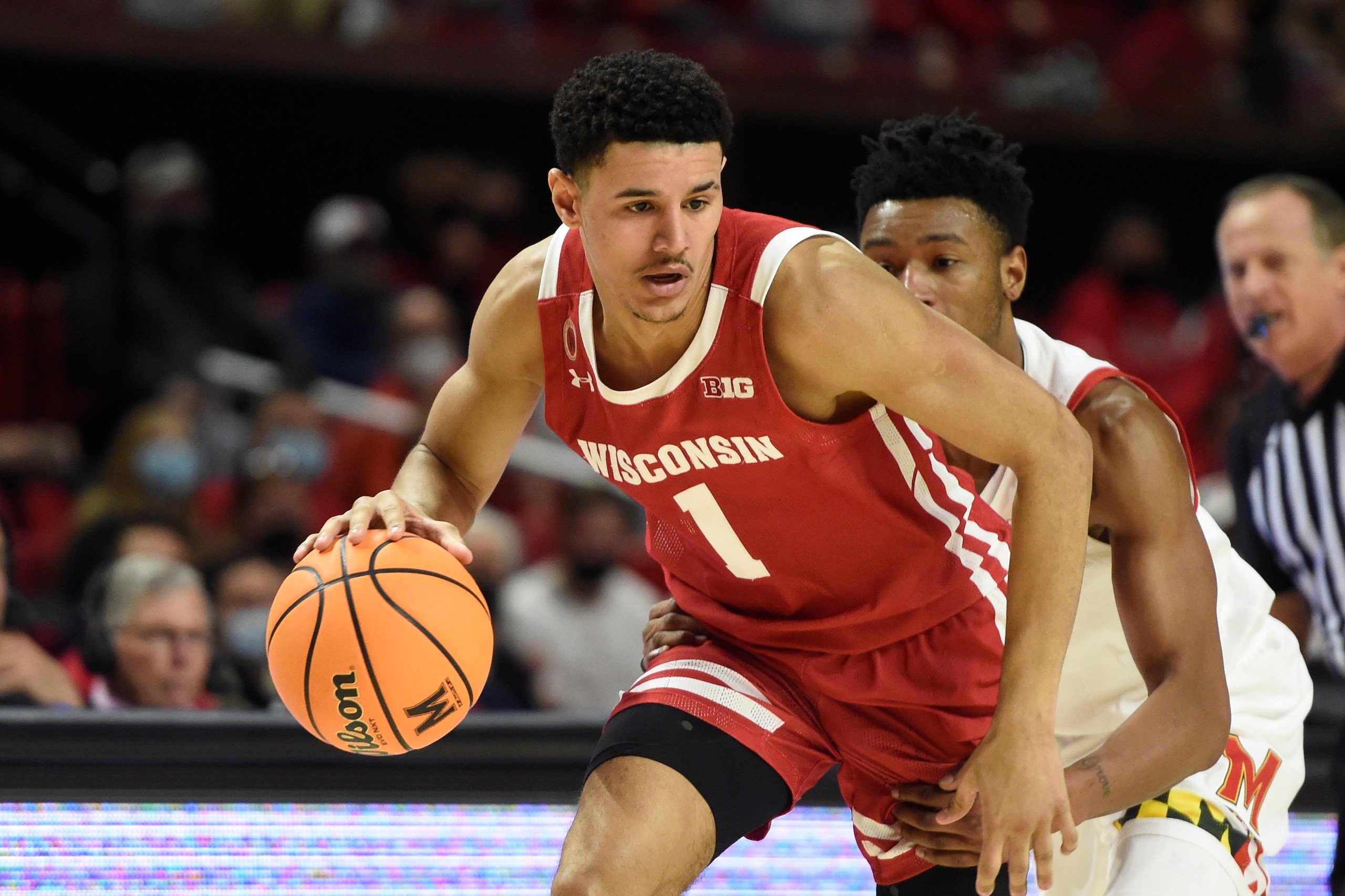
Winner: Johnny Davis, Wisconsin
Coming into the season, the Big Ten was overflowing with potential National Player of the Year candidates, and with the exception of Illinois' Andre Curbelo, who's missed most of the season because of neck troubles and COVID-19 protocols, those guys have largely lived up to the preseason hype.
Coming off a freshman season in which he averaged 7.0 points off the bench, Wisconsin's Davis wasn't one of those NPOY candidates. He understandably wasn't even among the 11 players named to the preseason All-Big Ten team.
But he has left all of them in his dust while carrying the Badgers to what is shaping up to be their best season since those back-to-back Final Fours in 2014 and 2015.
All that heavy lifting might be taking its toll, as Davis has had a few subpar performances in the past few weeks. Even so, he's averaging 21.4 points and 8.3 rebounds per game and would be the choice for Big Ten POY if the season ended today.
Loser: Maryland Terrapins
If you want to put Michigan in this spot, I fully understand. The Wolverines were one of the top candidates to win the national championship when the season began, and they might not even make the tournament.
At least Michigan is one quality win away from vaulting into the projected field, though. And at least the Wolverines' coach didn't step down less than one month into the season.
Maryland opened the campaign at No. 21 in the AP poll, but it can't say either of those things after Mark Turgeon's departure. In fact, the Terrapins appear to be headed for their first sub-.500 season since 1992-93. And with Louisville already parting ways with its head coach, Maryland probably isn't even going to get the best candidate on the market this offseason.
Mountain West
7 of 11
Winner: Graham Ike, Wyoming
During his senior year of high school, Ike suffered a torn ACL and vanished from the high-major radar. He ended up at Wyoming, where he didn't make his career debut until late January 2021. But within two months, it was clear that head coach Jeff Linder made the right decision in never giving up on Ike.
Now in his second season and with that injury further in the rearview mirror, Ike has become a wrecking ball in the paint. He has scored in double figures in every game played, and he draws fouls at the highest rate in the country. In the big wins over Colorado State and Boise State this week, he went for a combined 49 points and 18 rebounds (and attempted 22 free throws).
Flanked by a three-point assassin in Drake Jeffries and a 6'7" triple-double threat at point guard in Hunter Maldonado, Ike is the centerpiece of the best Cowboys team since the 1980s.
Loser: Nevada Wolf Pack
With six teams ranked in the NET top 60, the Mountain West has a decent chance to be a four-bid league.
But, surprisingly, Nevada isn't one of those six teams. In fact, the Wolf Pack are sub-.500 overall after being picked to finish third (garnering two of the 20 first-place votes) in the MWC's preseason poll.
Coach Steve Alford retained five of the six leading scorers from a team that went 16-10 last season, and he added three transfers (AJ Bramah, Will Baker and Kenan Blackshear) who were expected to make a significant impact.
Not a single person would have been surprised if Nevada won this league with room to spare.
But, unfortunately, Alford isn't allowed to do the shooting for his team, and the Wolf Pack routinely can't buy a bucket. In his first year on the job (2019-20), Nevada shot 38.3 percent from three-point range and held opponents to 29.8 percent. This year, the Wolf Pack are shooting 31.1 percent and allowing 35.5 percent, and they are 9-10 overall.
Pac-12
8 of 11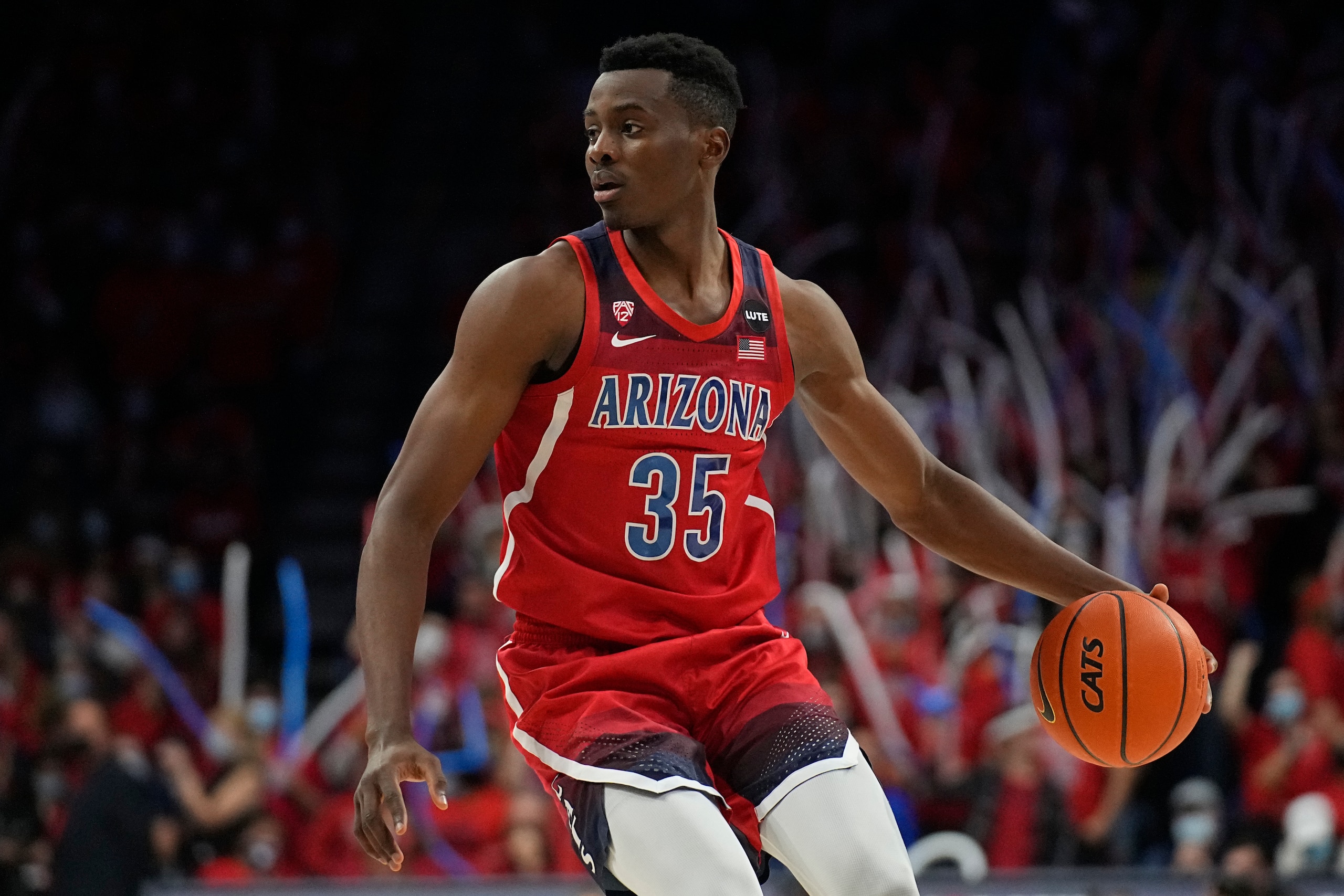
Winner: Christian Koloko, Arizona
Bennedict Mathurin gets the vast majority of the attention given to Arizona, and understandably so. He's the team's leading scorer and is probably going to be a lottery pick in a few months.
But Christian Koloko has been a breakout star for the Wildcats and the most valuable player on the team as far as most advanced metrics (PER, WS/40, BPM, etc.) are concerned.
That's because the 7'1" rim-protector makes such a big impact on both ends of the floor.
In the November win over Michigan, he had 22 points, seven rebounds and four blocks. He didn't contribute much on offense in the December win over Illinois, but he had four blocks and three steals while annoying the heck out of Kofi Cockburn. And it's largely because he fouled out in 19 minutes played against Tennessee—his only DQ of the season—that the Wildcats lost that one.
I hope the NCAA tournament gives us an Arizona-Purdue clash at some point, because the world deserves to watch the Koloko-Oumar Ballo platoon go to war with the Zach Edey-Trevion Williams platoon.
Loser: Arizona State Sun Devils
Arizona State lost all three of its leading scorers from last season, and the fourth-leading scorer (Marcus Bagley) from that squad has been limited to three games played this year.
No one expected this team to be this bad, though.
After all, coach Bobby Hurley signed a highly touted freshman center (Enoch Boakye) and loaded up on transfers in the backcourt to make up for losing Remy Martin, Josh Christopher and Alonzo Verge. But it hasn't worked out, as this is one of the worst shooting teams in the country. In their last 13 games, the Sun Devils have scored at least 70 points as many times as they've failed to score 30 points (once each).
SEC
9 of 11
Winner: Walker Kessler, Auburn
Even though he was a 5-star recruit, Kessler was the odd man out in North Carolina's four-man frontcourt last year. He was a great rebounder and shot-blocker when he did get on the court, but he only played 8.8 minutes per game.
So he transferred to Auburn and has become an absolute force in the paint as the starting center for the No. 1 team in the AP poll.
Kessler is leading the nation in block percentage, averaging nearly seven rejections per 40 minutes. He's also shooting 73.7 percent from inside the arc and has just enough three-point range to keep the competition honest. (He made two triples in Saturday's win over Oklahoma.)
He got out to a bit of a slow start on offense for the first month or so, but he has scored at least a dozen points in 11 of Auburn's last 13 games.
Loser: Georgia Bulldogs
Sahvir Wheeler is thriving as Kentucky's point guard. K.D. Johnson has been outstanding as Auburn's shooting guard. Justin Kier has been one heck of a veteran glue guy in Arizona's rotation.
What do those three key contributors on title contenders have in common?
They all played at Georgia one season ago. But because they left via the transfer portal—as did Toumani Camara, Tye Fagan, Andrew Garcia and Christian Brown—the Bulldogs have turned into an unmitigated disaster, neck-and-neck with Pittsburgh for the dubious title of worst major-conference team in the country.
Perhaps worse than the current state of affairs is that they aren't even building toward a future. Three of the four leading scorers are seniors, Christian Wright is the only freshman playing more than 20 minutes per game and coach Tom Crean has yet to sign a single recruit in next year's class. As bad as this team is, next year's could be worse.
West Coast
10 of 11
Winner: Yauhen Massalski, San Francisco
If you'd prefer to pick a Gonzaga Bulldog here, by all means. Drew Timme is a National Player of the Year candidate. So is Chet Holmgren, and he could go No. 1 overall in the next NBA draft. Andrew Nembhard has been outstanding at point guard. Julian Strawther is a breakout star. Even the non-Holmgren freshmen have been valuable contributors to one of the favorites to win the national championship.
But give me Massalski. He decided after four seasons of bouncing in and out of the starting lineup at San Diego to transfer to a different WCC team that would give him a full-time job and possibly an opportunity to play in the NCAA tournament.
With the Dons, Massalski is averaging 14.2 points, 9.1 rebounds and 2.4 blocks per game. In the recent loss to Saint Mary's, he went for 18, 13 and seven, respectively, and had 16 points and 13 rebounds in Thursday's big road win over BYU.
Jamaree Bouyea gets most of the spotlight, but San Francisco wouldn't be anywhere near the at-large mix without its big man.
Loser: Pepperdine Waves
The first few years of the Lorenzo Romar era were fine for Pepperdine. Not great, but fine. The Waves went 47-46 over the past three seasons, which at least was an improvement upon the 15-48 record they had in the two years prior to Romar's arrival.
But year No. 4 has been a nightmare.
In fairness to Romar, the Waves did lose the dynamic duo of Colbey Ross and Kessler Edwards, as well as starters Sedrick Altman and Kene Chukwuka. Even for a guy who could get seemingly any recruit he wanted while coaching at Washington, that's an awful lot of talent to need to replace at a school that has only ever signed two 4-star prospects.
While somewhat of a drop was to be expected, this team isn't even competitive. The Waves are 6-18 overall and 0-9 in WCC play, and those eight losses have come by an average margin of 16.2 points. If they don't win the home game against Pacific on Saturday, they may well go winless in league play.
Mid-Major Grab Bag
11 of 11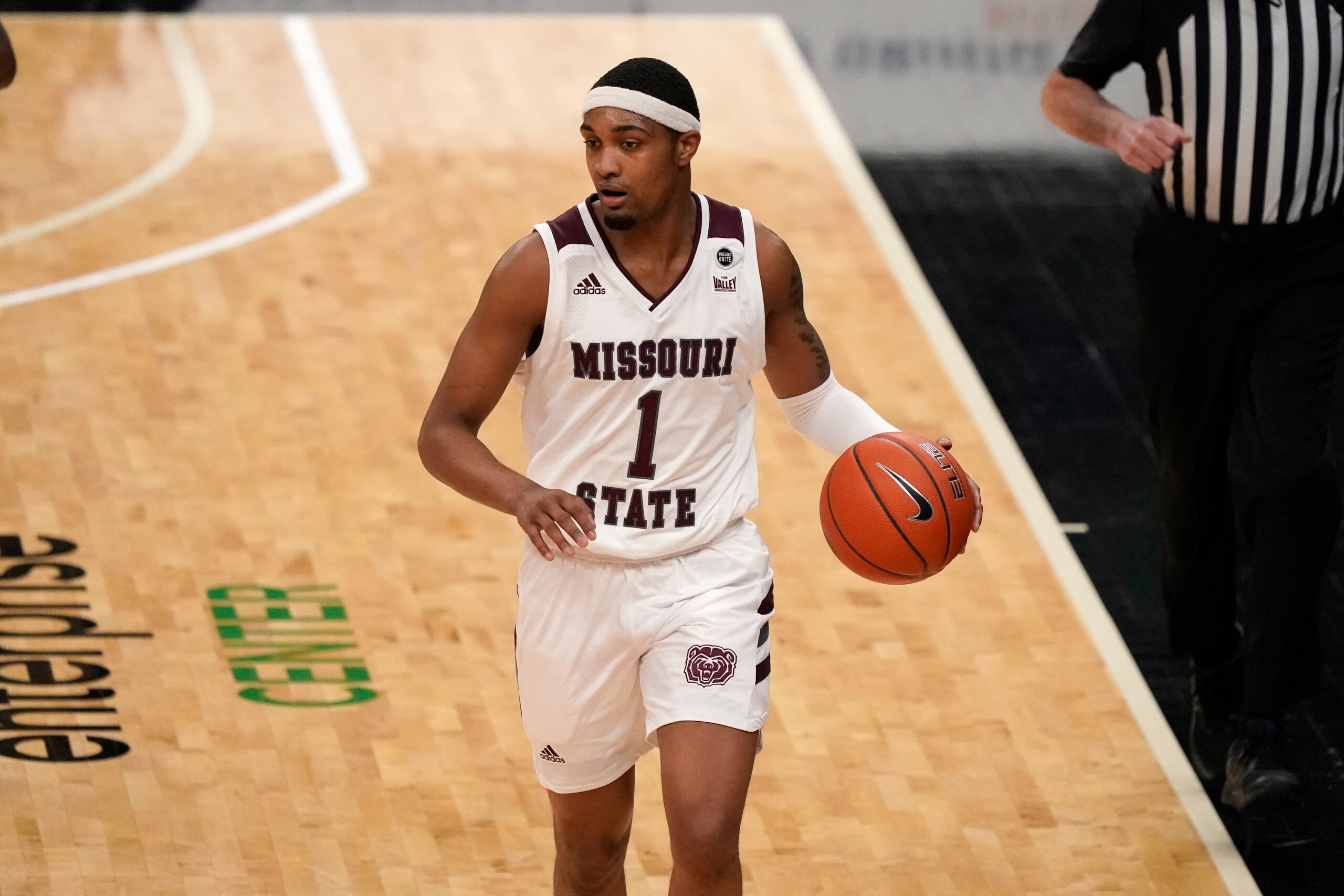
Winner: Isiaih Mosley, Missouri State
If Missouri State happens to win Arch Madness, watch out for this walking bucket in the Dance.
Mosley is averaging 21 points per game for the season, but he has been particularly unguardable over the past few weeks. He put up 43 points in a Jan. 8 loss to Northern Iowa, as well as 40 points in a Jan. 22 road win over Loyola-Chicago. That was part of a six-game stretch in which he averaged 32.8 points in 33.5 minutes per game.
He had a similar run last season when he posted at least 20 points in eight consecutive games, but an 0-5 record against the top two teams in the Missouri Valley Conference kept the Bears from partaking in the NCAA tournament. If they sneak in this March, he could be this year's Max Abmas.
Loser: Milwaukee Panthers
Despite five consecutive losing seasons, Milwaukee was able to sign 5-star recruit Patrick Baldwin Jr.—notably the son of head coach Pat Baldwin—and immediately became one of the top candidates to win the Horizon League. KenPom had the Panthers at No. 120 overall in the preseason, second to only Wright State in 109th place.
But with PBJ bouncing in and out of the lineup with leg injuries and not even playing all that well when he does get on the court, Milwaukee has been the most disappointing team in the country, at least in comparison to preseason KenPom rankings.
It took less than a month for the Panthers to drop outside the top 200, and after a recent 24-point loss to Robert Morris, they fell out of the top 300.
It's still feasible they could win the Horizon League tournament and get PBJ a little taste of March Madness as a No. 16 seed. But at 7-15 overall, they would just about need to win out to snap that streak of losing seasons.
Statistics via KenPom.com, Sports Reference and NCAA.com unless otherwise noted. Recruit rankings via 247Sports.

.jpg?w=2560 "Steelers Buccaneers Football")
.jpg?w=2560 "Steelers Roll Saints in Paris")
.jpg?w=2560 "5 Teams Eyeing Jonathan Taylor")
.jpg?w=2560 "NFL investigating Eagles")
.jpg?w=2560 "Updates from EVERY Game")