


Conference tournaments offer the unique reward of automatic qualification for the college basketball postseason no matter a team's record, but that benefit is also a double-edged sword.
Every year, bubble teams see bid-stealers reduce the at-large spots available in the men's NCAA tournament. And in an uncommon 2020-21 season full of disruptions and a smaller schedule, the threat of bid-stealers is seemingly higher than ever.
Losing early in a conference tournament can be a major problem.
Our list of the biggest potential losers in that scenario is subjective, but it's based on projected matchups and considers the impact a loss would have on a respective team's resume for March Madness. The teams are organized alphabetically.
Colorado Buffaloes
1 of 7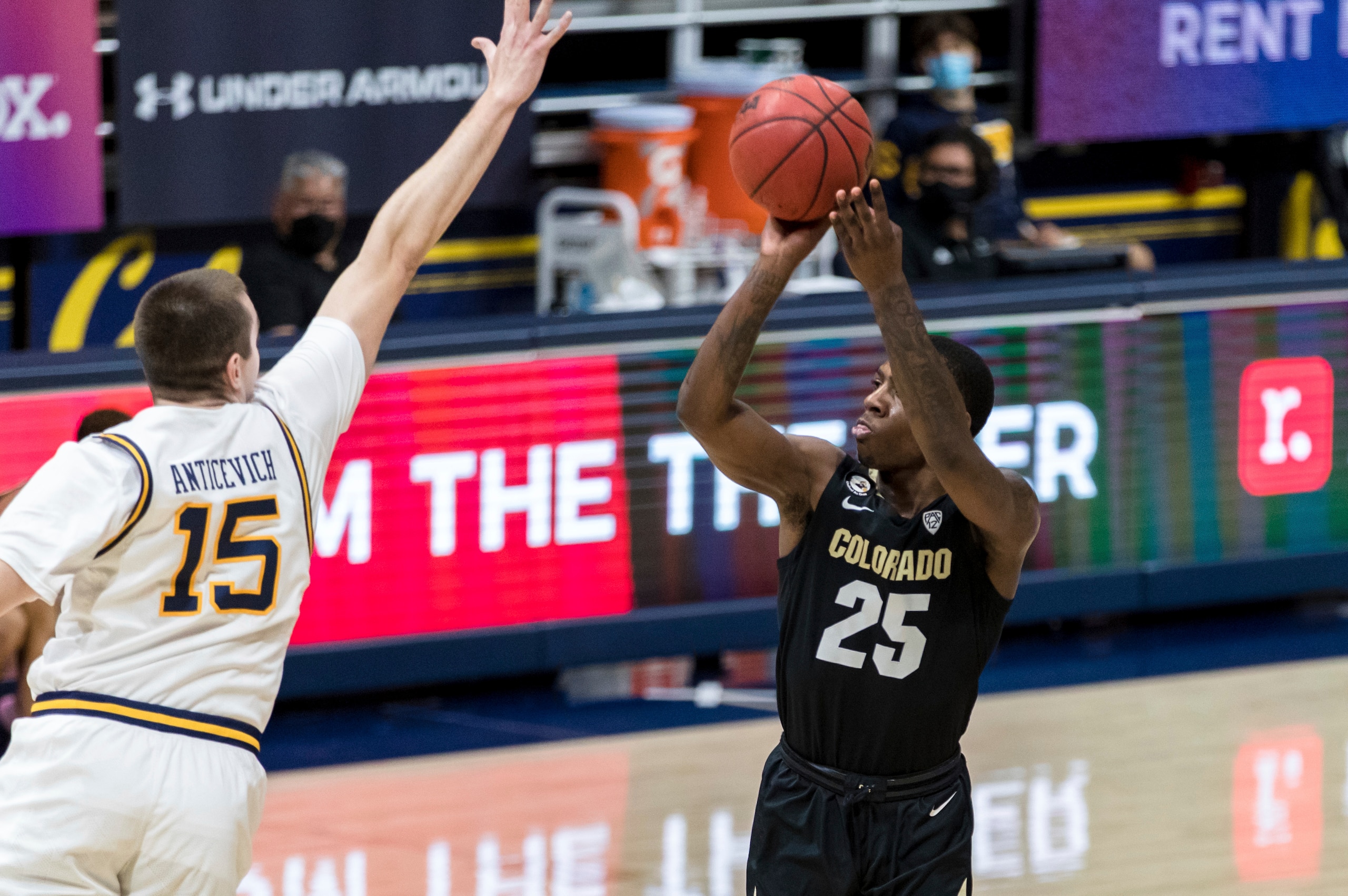
Colorado has picked up a few solid victories lately, defeating USC and UCLA in a three-day stretch. No matter what happens in the Pac-12 tournament, the Buffaloes are headed to March Madness.
However, a season-long trend isn't in their favor.
Colorado is 10-1 at home, including an 8-1 record against Pac-12 teams. Outside of Boulder, the Buffs are 9-6 overall and 5-5 opposite conference foes. They have routinely played close games against the Pac-12's bottom tier, even falling to Washington and Cal.
That combination makes it difficult to expect the Buffs will successfully navigate a neutral-site tournament. And a loss could mean Colorado slips from a top-five seed to a seventh or eighth seed.
Colorado State Rams
2 of 7
Colorado State has locked up the No. 2 seed in the Mountain West tournament, but the Rams are probably headed for a nerve-wracking Selection Sunday.
Would reaching the semifinals of the MWC tourney be enough?
Although it's a simple question, the answer isn't contingent on just Colorado State. How much does the bubble shrink because of bid-stealers? If the Rams lose, did they fall to NCAA lock San Diego State or a bubble companion in Boise State or Utah State? In other words, was this a Quadrant 1 or 2 opponent?
Knocking off UNLV, Fresno State, Wyoming or Air Force in the quarterfinals wouldn't do much for CSU. The Rams desperately need no bid-stealers and a win in the semis, but both happening is unlikely.
Drake Bulldogs
3 of 7
Drake is getting dangerously close to a "what-if" season.
Early in February, the Bulldogs were 18-0 and had finally cracked the AP Top 25. But the losses—both in the team's record and injury department—have started to piled up.
Valparaiso handed Drake its first blemish, then top scorer ShanQuan Hemphill underwent surgery to repair a foot fracture. In the next game, the Bulldogs fell to Missouri Valley front-runner Loyola. The next weekend, a broken foot ended key guard Roman Penn's year. During the regular-season finale, sub-.500 Bradley defeated Drake.
In the process, Drake has dropped dangerously close to the wrong side of the bubble. And without Hemphill and Penn, the Bulldogs aren't likely to secure the MVC's auto-bid.


.jpg?w=2560 "Rams Raiders Football")
Indiana Hoosiers
4 of 7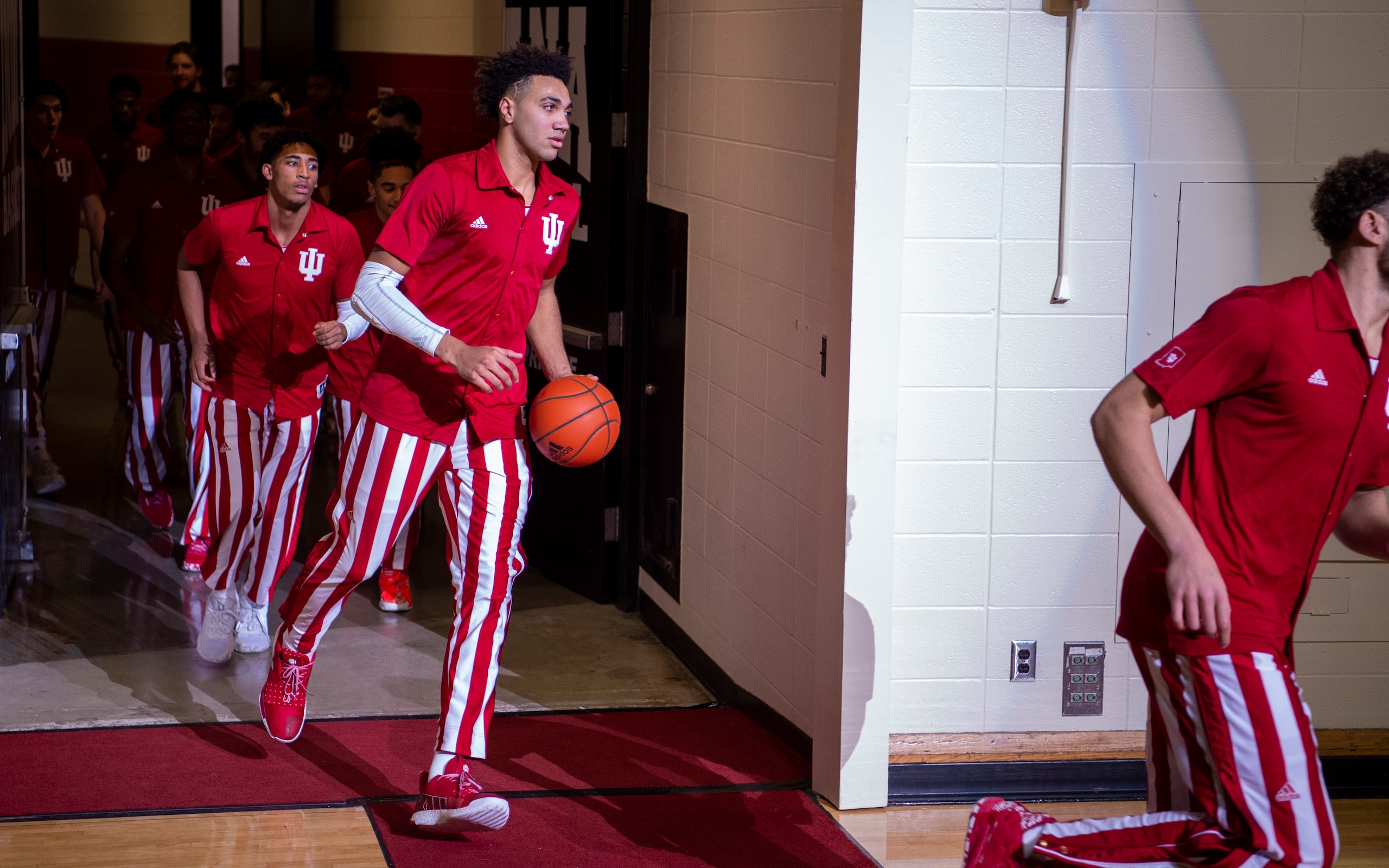
Considering the Big Ten's depth, Indiana's 4-7 record in the last 11 games isn't surprising. The problem is that the Hoosiers' bubble hopes are largely hinging on two victories over Iowa.
And that won't cut it.
Indiana can finish no better than 10th in the conference. Though an early matchup with Maryland, Wisconsin, Rutgers or Michigan State would be helpful, none are enormous resume boosters. That opportunity may arrive opposite Michigan, Illinois or Iowa, but we wouldn't pick IU over any of those programs right now.
Without at least one marquee win during the Big Ten tournament, Indiana likely won't be a part of March Madness.
Seton Hall Pirates
5 of 7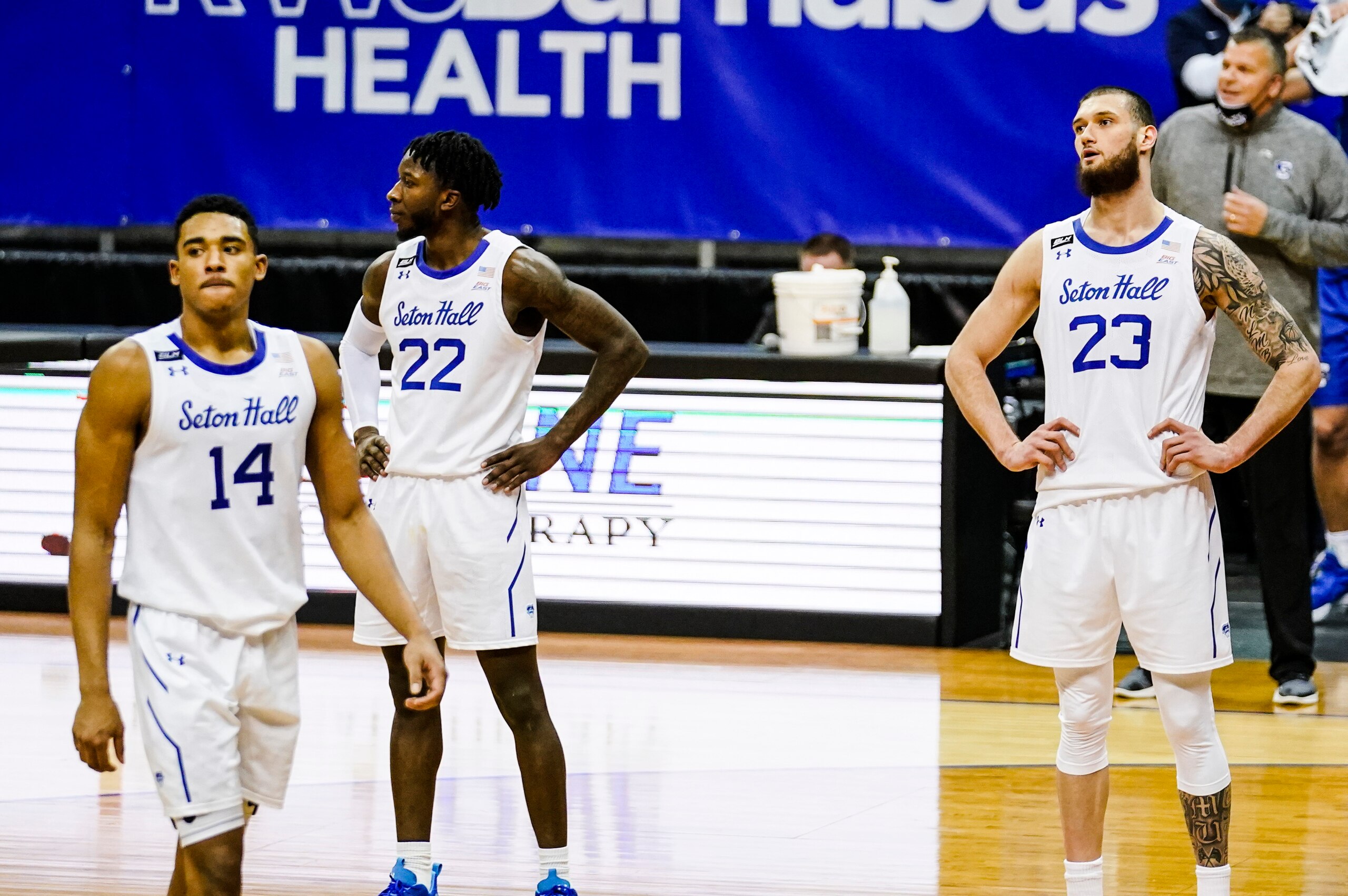
Until late February, Seton Hall had done an excellent job avoiding bad losses. Stealing one of the close losses to Villanova or Creighton would've been ideal, but the Pirates were in a fine position.
That has changed dramatically, though.
Losses to Georgetown, Butler and Connecticut have shifted Seton Hall's outlook in a hurry. While the Pirates have six victories in Quadrants 1 and 2, UConn and Xavier are the only likely NCAA tourney teams. They're awfully thin on quality wins.
Not only will that sting in comparison to bubble teams, a couple of bid-stealers would drop Seton Hall even farther. Seton Hall probably needs to upset Villanova or Creighton in the Big East tourney.
St. Bonaventure Bonnies
6 of 7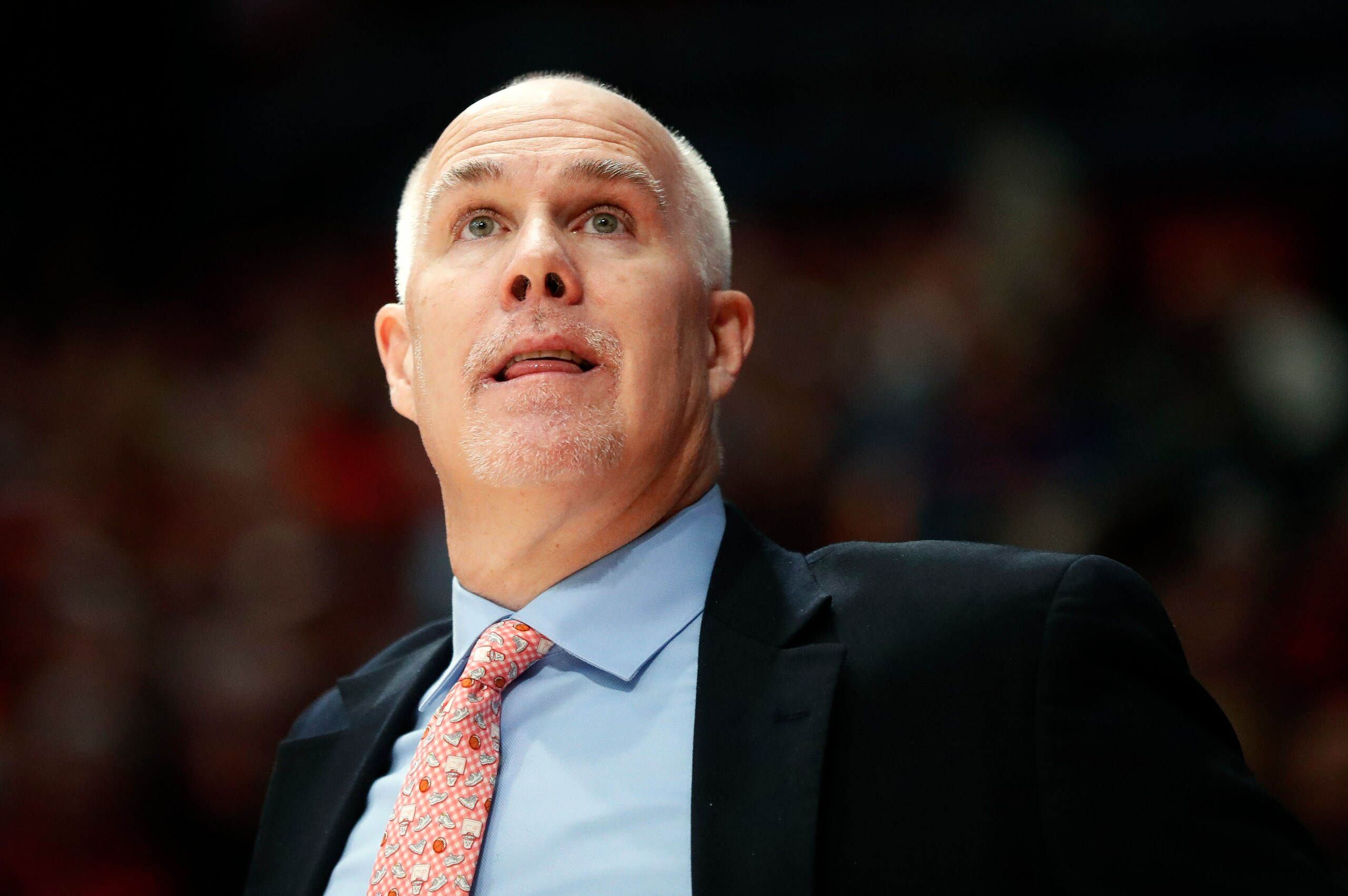
This is less about St. Bonaventure than the oddity of what happened in 2020-21; postponements created a messy regular season in the Atlantic 10. For example, Rhode Island played 17 conference games to George Washington's eight.
As a result, Saint Louis finished fourth despite playing just 10 games. And St. Bonaventure lost by 11 in the earlier matchup.
On the positive side, the Bonnies could slightly strengthen their resume with a victory over the Billikens. St. Bonaventure managed just a 4-3 record in February, though.
St. Bonaventure might sneak into the NCAA tournament anyway, but a loss before the A-10 final would be damaging.
Syracuse Orange
7 of 7
The shortage of quality wins has started to catch up with Syracuse.
While toppling Clemson in the regular-season finale boosted the Orange to 4-1 against Quadrant 2 teams, they're 1-6 in Q1 games. Factor in two bad losses to Pitt, and their NCAA tournament upside is hanging on by a thread.
Fortunately for Syracuse, the ACC tournament offers a few resume-padding games. Even though the ACC isn't as strong as usual, five programs are NCAA locks.
But can the Orange reach the quarterfinals? And if they actually do, will they topple a caliber of team they haven't all season?
Syracuse cannot afford a "no" in either situation, or else Jim Boeheim's squad will be watching March Madness from home.
Recruiting information via 247Sports. Statistics courtesy of KenPom.com or Sports-Reference.com, unless otherwise noted. Follow Bleacher Report writer David Kenyon on Twitter @Kenyon19_BR.




.jpg?w=2560 "Rodgers Iced Out on Plane 💎")

.jpg?w=2560 "🚨 Week 8 AP Top 25 Poll")