
The Most Surprising Men's College Basketball Conference Contenders in 2020-21
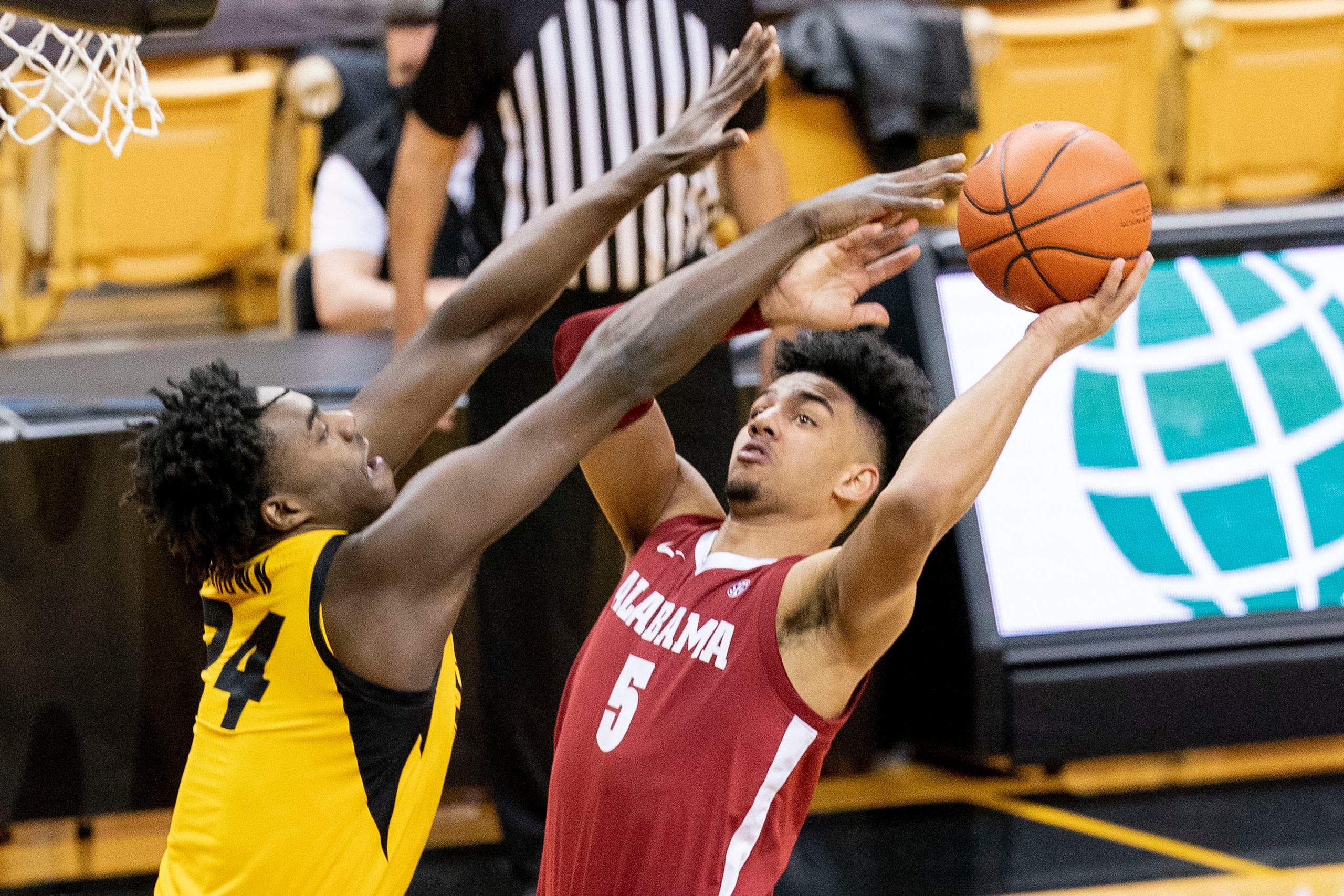
Neither Alabama nor Michigan felt like a lock for the 2021 men's NCAA tournament three months ago, but those teams are currently alone in first place in the SEC and Big Ten standings, respectively.
Elsewhere, Drake wasn't even expected to finish top four in the Missouri Valley Conference, let alone start out the season with 18 consecutive wins. And in perhaps the biggest surprise of all, Bellarmine is in the mix to win the Atlantic Sun regular-season title in just its first season at the D-I level.
The two sources used for this exercise were Lindy's and Three Man Weave. The former produces a several-hundred-page season preview magazine that I purchase every year. The latter publishes so much season-preview content that it could probably fill a 1,000-page book. Good luck finding a more comprehensive source for preseason rankings of every conference in D-I hoops.
I compared those preseason rankings to the actual current state of affairs in search of conferences where teams are in drastically better position than expected. For each of those eight situations, I've included brief excerpts from each prognostication before trying to put a finger on why they've exceeded expectations by such a wide margin.
Conferences are presented in alphabetical order.
ACC: Virginia Tech Hokies
1 of 8
Lindy's Preseason Synopsis (11th out of 15): "This year's team won't be burdened by high expectations. ... Plenty of work remains before an NCAA Tournament berth is possible. ... There will be some nights when the Hokies look darn good and some when the disparate pieces don't fit."
Three Man Weave's Preseason Synopsis (7th out of 15): "Last year's team was crippled by not having a true big man outside of raw freshman John Ojiako. ... [With the addition of frontcourt transfers Keve Aluma and Cordell Pemsl,] the NCAA Tournament is probably an optimistic expectation, but it's certainly within the realm of possibility."
Current State: 8-3 in ACC, 1.5 games back
What Changed?
Keve Aluma has been a godsend for the Hokies.
In both offensive rebounding and the ability to draw fouls and get to the free-throw line, Virginia Tech was one of the worst teams in the entire country last year. Per KenPom, the Hokies ranked 340th in the former and 347th in the latter. They had an overall rebound margin of negative-3.3 per game and allowed 1.7 more free-throw attempts per game than they were taking.
Now that they actually have a frontcourt presence, those deficiencies have transformed into areas of strength.
Aluma—who played two seasons under Mike Young at Wofford before transferring when he got the VT job—is leading the Hokies in points (15.7), rebounds (7.6) and blocks (1.4). He has also attempted more than twice as many free throws as his next-closest teammate.
And, really, who could have seen that coming?
At Wofford, Aluma was a low-usage, no-range big man. He averaged 9.5 points per 40 minutes and attempted just one three-pointer in his two seasons with the Terriers. Yet despite transferring to a much better conference, he has exploded for 20.6 points per 40 minutes while averaging nearly one made triple per game. He's easily one of the top breakout sensations in the country.
On top of that, Virginia Tech got a little addition by subtraction when Landers Nolley II transferred to Memphis. He has improved considerably with the Tigers, but VT's leading scorer last year was also the least efficient player on its roster. With Nolley out of the picture, the Hokies have been able to spread the ball around more to guys like Jalen Cone and Hunter Cattoor with great success.
Atlantic 10: VCU Rams
2 of 8
Lindy's Preseason Synopsis (11th out of 14): "As [Mike] Rhoades reshuffles the deck, he has the size, athleticism and talent that fits the Rams' style of play. How quickly the players acclimate themselves to each other will be a major key with so much youth and inexperience."
Three Man Weave's Preseason Synopsis (5th out of 14): "Valid concerns remain about the offensive side of the ball. ... There are big shoes to fill, but VCU’s success is often system driven rather than personnel driven."
Current State: 6-2 in Atlantic 10, 0.5 games back
What Changed?
VCU had to replace all five of its primary starters from last season, and that left the Rams with gigantic question marks. Rising sophomore Nah'Shon Hyland was clearly going to be the star of the offense, but unknowns throughout the rest of the rotation made it just about impossible to gauge expectations for this team.
We assumed the Rams would thrive on defense. They almost always do. And they have gotten major contributions in that regard from somewhat unexpected sources. Freshman point guard Adrian Baldwin Jr. is averaging 2.1 steals per game. Sophomore reserve Jimmy Clark III has more than doubled his steal rate from last season (from 1.9 per 40 minutes to 4.5). And in the rim-protection department, sophomore Hason Ward has blossomed into the best shot-blocker in the conference with 5.1 rejections per 40 minutes.
The surprise is how competent they have been on offense.
Hyland is leading the way with nearly 20 points per game and is likely on his way to A-10 Player of the Year honors. Baldwin has immediately become a team leader on both ends of the floor with 4.7 assists to go along with his aforementioned steals. And Vince Williams has taken a huge step forward to the tune of 10.4 points per game with a 40.7 percent three-point stroke. (He had marks of 4.6 and 21.8, respectively, in his first two seasons.)
The biggest change, though, is that VCU is more regularly gutting out close wins this year. The Rams went 12-13 in their final 25 games last season with a 2-9 record in games decided by 10 points or fewer. They are 4-1 in those types of close calls thus far in 2020-21, including A-10 wins over George Mason, George Washington and Rhode Island.
Atlantic Sun: Bellarmine Knights
3 of 8
Lindy's Preseason Synopsis (9th out of 9): "The school has been a Division II powerhouse. It won a national title in 2011, and followed that with three Final Four appearances. ... Scott Davenport has three starters returning for this season, including his entire backcourt."
Three Man Weave's Preseason Synopsis (8th out of 9): "The Knights will miss [triple threats Alex Cook and Ben Weyer] in 2021, but Davenport has a long track record of adapting to the circumstances and molding players into the multi-skilled archetypes that has bred success for over a decade and a half."
Current State: 8-2 in Atlantic Sun, first place
What Changed?
In both cases, the prognosticator acknowledged that Bellarmine had a ton of success at the D-II level and expressed faith in Scott Davenport, who worked under both Rick Pitino and Denny Crum at Louisville before spending now 16 seasons with the Knights.
Yet in both cases, the prognosticator still decided Bellarmine would finish at or near the bottom of a conference that typically ranks among the eight worst in the nation.
It was probably an assumption that the Knights would naturally struggle in their transition to D-I, but that actually hasn't been an issue in recent history. In the past 10 years, there had been seven new additions to the D-I ranks: Cal Baptist, Grand Canyon, Incarnate Word, Merrimack, North Alabama, Northern Kentucky and Omaha. Those teams went a collective 62-52 in league play in their first season, and none of them had a conference winning percentage below .375.
Bellarmine has followed suit with an impressively efficient offense led by Pedro Bradshaw and CJ Fleming. The former is averaging 14.9 points and 7.6 rebounds per game; the latter is shooting 42.6 percent from three-point range. As a team, they shot 11-of-20 from downtown in an 11-point loss to Notre Dame.
But maybe they just buried Bellarmine near the bottom of the projections because—at least for NCAA tournament purposes—the Knights are irrelevant. They are ineligible for postseason play during the four-year "transition period" from D-II to D-I. But like Merrimack in the NEC last year, they could still mess around and win the conference's regular-season crown.

.jpg?w=2560)
Big Sky: Idaho State Bengals
4 of 8
Lindy's Preseason Synopsis (10th out of 11): "After losing 22 games, severing an assistant coach late season and losing a half-dozen players with eligibility remaining, Ryan Looney launches a second-year re-do with 10 new faces. ... The Bengals have to get it together on defense."
Three Man Weave's Preseason Synopsis (10th out of 11): "There's a scenario where everything clicks this year and ISU climbs out of the Big Sky gutter, but it's more likely they spend another year or two in the depths while Looney continues to build the program back to conference competency."
Current State: 5-3 in Big Sky, 1.5 games back
What Changed?
Idaho State was one of the worst defensive teams in the nation last year. The Bengals ranked 345th in both two-point percentage and steal percentage, and opponents barely even bothered shooting threes against them because it was so easy to score in the paint.
They're still quite bad at producing turnovers, but their two-point defense actually ranks in the top 50, thanks to the addition of JUCO transfer Brayden Parker and freshman Zach Visentin. In the entire 2019-20 season, the Bengals got nine minutes of playing time out of guys with a listed weight of greater than 215. If nothing else, Parker (250) and Visentin (260) are making it tougher for opponents to establish position in the lane.
JUCO transfer Robert Ford III has also been a key acquisition on both ends of the floor, averaging 11.7 points, 7.4 rebounds, 3.5 assists and 1.1 steals. He ranks either first or second on the team in all four categories.
However, this record is probably fool's gold. The Bengals have yet to face any of the Big Sky's five teams ranked in the KenPom Top 200. They should win the upcoming home games against 0-15 Idaho to improve to 7-3 in league play, but the subsequent six in a row against Montana State, Montana and Eastern Washington will likely bring them back to a .500 conference record.
Even if they don't finish in the top four, though, the Bengals should end up in no worse than seventh place. That's much better than expected.
Big Ten: Michigan Wolverines
5 of 8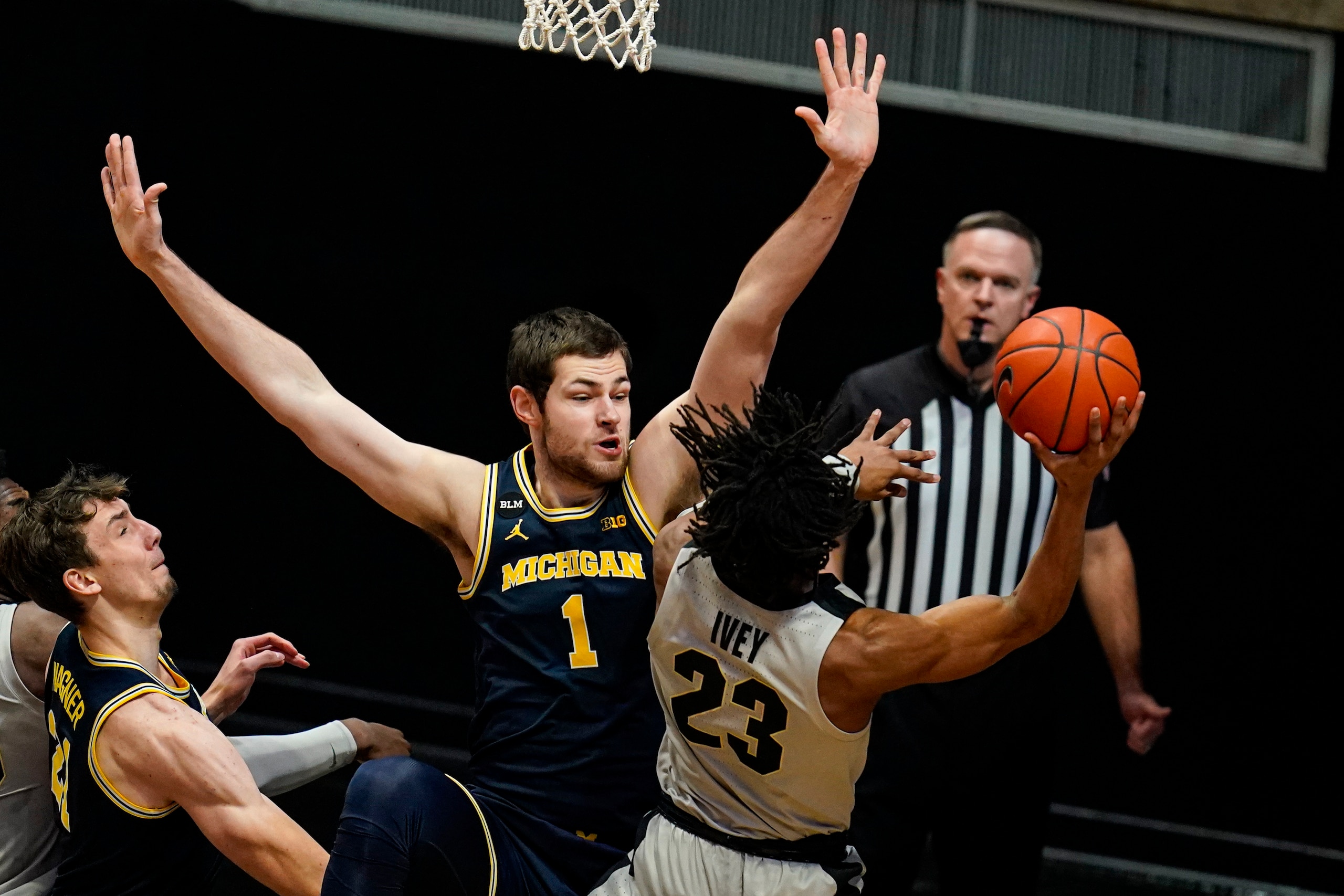
Lindy's Preseason Synopsis (8th out of 14): "With three double-figure scorers returning and several impact players arriving, [Juwan] Howard's second season should be smoother than his first."
Three Man Weave's Preseason Synopsis (9th out of 14): "The upside is absolutely there if [Franz] Wagner has the star turn that many expect and (Hunter) Dickinson is able to control the paint early on in his career. The margins are extremely thin between the top of the B1G and the Wolverines, so it really won’t take much to surge up toward the top of the standings. If the start of last season is any indication, Howard and the Wolverines are plenty capable of pulling a few surprises."
Current State: 8-1 in Big Ten, first place
What Changed?
Replacing senior point guard Zavier Simpson and senior center Jon Teske was expected to be a significant challenge for Michigan. While both outlets expressed optimism about the Wolverines in Juwan Howard's second year at the helm, it was cautious optimism in a loaded conference because of those two roster changes.
But Columbia graduate transfer Mike Smith has done a phenomenal job running the offense. He calls his own number way less frequently than he did as the leader of the Lions, but he's averaging a career-best 5.6 assists per game and has been a 47.1 percent three-point shooter when he does hunt for his own bucket.
The real difference, though, has been the play of freshman big man Hunter Dickinson.
In only 25.4 minutes per game, Dickinson is averaging 15.1 points, 7.2 rebounds and 1.4 blocks. In just about any conference, he would be the runaway favorite for Player of the Year. Even with Luka Garza, Ayo Dosunmu and other Big Ten stars hogging the spotlight, Dickinson has gotten a lot of much-deserved national attention.
Michigan is making 58.1 percent of its two-point attempts while holding opponents to 40.1 percent, and Dickinson is the biggest reason for that colossal divide.
Returning starters Eli Brooks and Franz Wagner have both been more efficient than last year, too, so basically everything has panned out about as well as Michigan could have realistically dreamed.
Horizon League: Cleveland State Vikings
6 of 8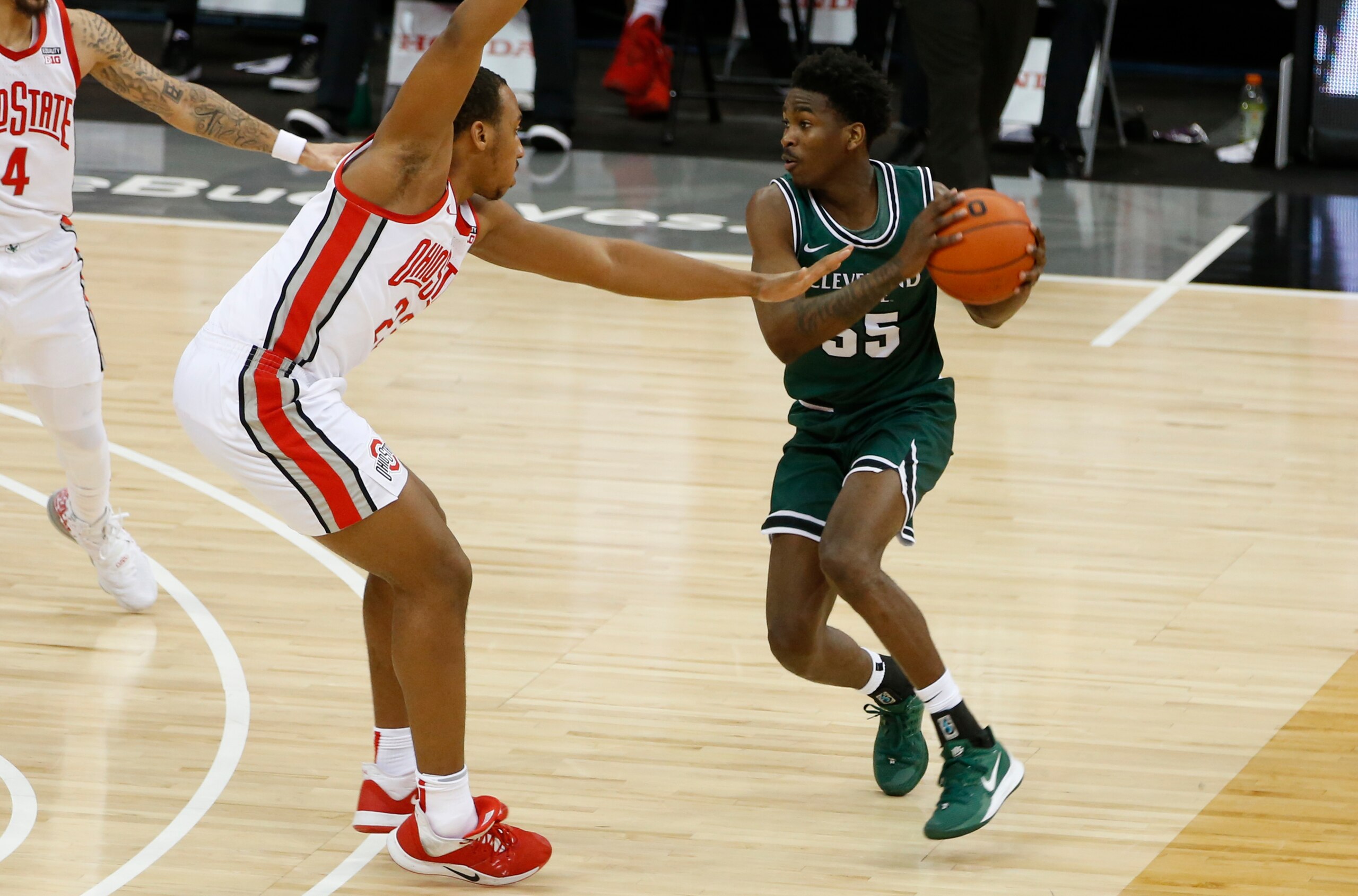
Lindy's Preseason Synopsis (11th out of 12): "It might not look like CSU had a successful season [11-21 overall, 7-11 in Horizon League], but after Dennis Gates was hired late in the summer to take on a total mess, his job was considered done well enough to be named conference co-Coach of the Year."
Three Man Weave's Preseason Synopsis (6th out of 12): "CSU may have maxed out its potential last year. Gates will have his hopes set much higher, though, and if D'Moi Hodge is as good as I think he can be (Horizon Newcomer of the Year?), competing with the morass in the middle of the league is a realistic goal."
Current State: 14-2 in Horizon League, first place
What Changed?
Cleveland State's defense was just plain awful last year. In both two-point and three-point percentage, the Vikings ranked 336th in the country. On top of that, they committed 15.2 turnovers per game and couldn't seem to get out of their own way on offense.
Much of that can be attributed to the offseason roster/coaching turmoil noted above. Four of the five leading scorers from the 2018-19 roster transferred out of the program—an exodus that led to the decision to fire head coach Dennis Felton after just two seasons. From there, the Vikings had to scramble just to put together a full roster.
That led to a situation where opponents didn't even need to worry about Cleveland State's perimeter game. Six of the team's seven leading scorers shot worse than 28 percent from distance and attempted 2.0 or fewer triples per game. Because of that, floor spacing simply did not exist when the Vikings had the ball.
They still aren't a great shooting team, but at least they have established perimeter options now.
The Vikings have seven players who are both averaging at least 1.5 three-point attempts per game and making at least 30 percent of those shots. As a result, points in the paint are easier to come by (big man Deante Johnson is shooting 59.8 percent from inside the arc, compared to 44.1 percent last year) and turnovers happen less often.
Their defense has also improved, thanks to JUCO transfer D'Moi Hodge averaging 1.8 steals and 0.6 blocks per game.
As far as the metrics are concerned, Wright State is still clearly the team to beat in the Horizon League. But Cleveland State is alone in first place thanks to a road win over the Raiders. At the least, the Vikings are the second-best team in the league, which was quite unexpected.
Missouri Valley Conference: Drake Bulldogs
7 of 8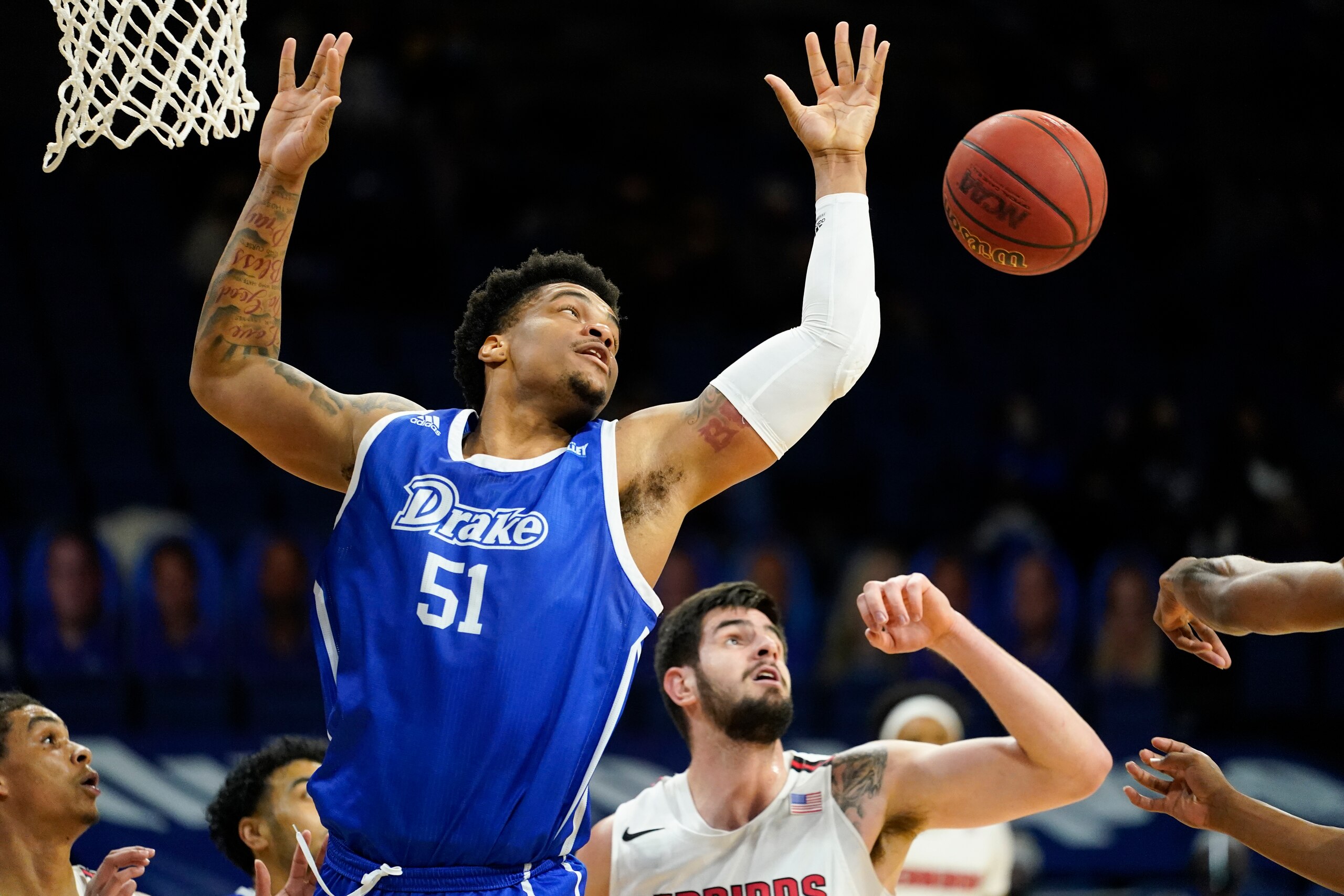
Lindy's Preseason Synopsis (5th out of 10): "It's hard not to notice something's missing when a 7-footer walks out of the room. ... Without the nation's fifth-leading shot-blocker in the middle [Liam Robbins, who transferred to Minnesota], Drake will look and play differently."
Three Man Weave's Preseason Synopsis (5th out of 10): "Drake has the potential to vault back up the standings in year three of the [Darian] DeVries era, although the possible lack of an interior presence means he'll have to find a different way to get it done."
Current State: 9-1 in MVC, second place
What Changed?
When both of those previews were written, it was still unknown whether Seton Hall transfer Darnell Brodie would be granted immediate eligibility—which was a massive variable.
With Robbins transferring to Minnesota and Anthony Murphy graduating, Drake's top five returning scorers were all 6'3" or shorter. Despite being listed at just 175 pounds, Garrett Sturtz was the top returning rebounder at 5.8 per game.
One almost could not overstate how important it was for the Bulldogs to get the 6'10", 275-pound Brodie on the floor. Not surprisingly, he has been a major contributor in the paint, averaging 7.4 points and 7.4 rebounds per game.
And while Brodie has thrived down low, Drake's perimeter shooting has improved by leaps and bounds. D.J. Wilkins—a 32.0 percent three-point shooter last year—has cooled off lately, but is still averaging 2.3 makes per game at a 44.0 percent clip. Out of nowhere, he has become the most lethal shooter in the Missouri Valley Conference.
The return of Tremell Murphy (only played five games last year) was also a huge boost, as he has been a staple in the starting lineup and in the box score with his three-point shooting (38.5 percent) and rebounding (5.2 per game).
Drake did suffer its first loss of the regular season this past Sunday, but its upcoming home games against Loyola-Chicago (Feb. 13-14) should determine which of those two NCAA tournament at-large contenders wins the regular-season crown.
SEC: Alabama Crimson Tide
8 of 8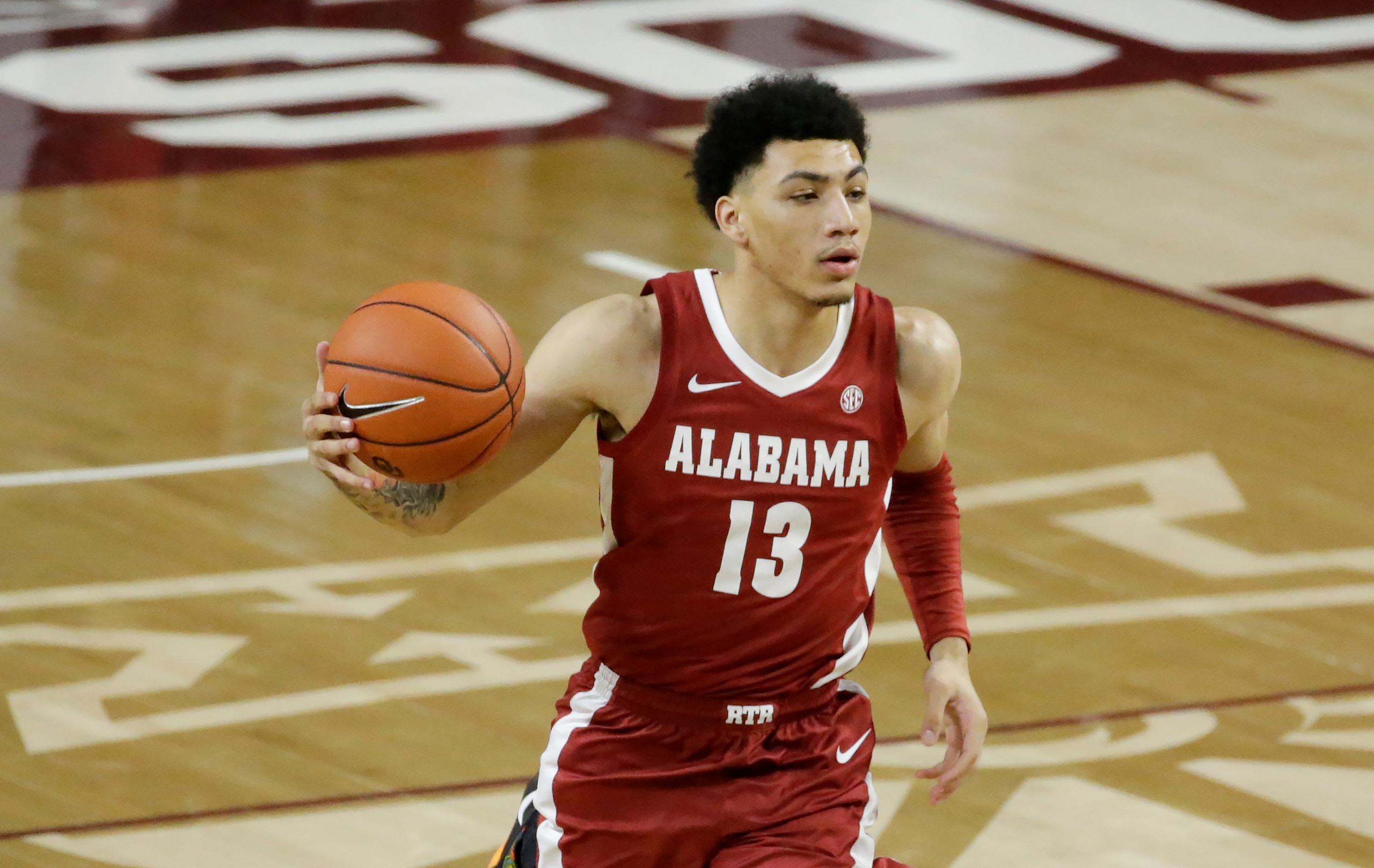
Lindy's Preseason Synopsis (7th out of 14): "The new faces and returnees possess the speed and skill to space the floor, attack the paint, knock down open shots and defend multiple positions. Finding the resolve to finish possessions with a defensive rebound more frequently will determine whether the Crimson Tide advances to the 68-team bracket this season."
Three Man Weave's Preseason Synopsis (4th out of 14): "Degree of success will ultimately rest on [Jahvon] Quinerly's shoulders. If he can even mostly live up to his pre-college hype, Alabama will be a dangerous team in the SEC and a contender for a top 5 seed in the Dance."
Current State: 10-1 in SEC, first place
What Changed?
It's not a surprise that Alabama is competitive in the SEC. Both outlets had the Crimson Tide projected to finish in the top half of the league standings. But it's definitely surprising that—save for Saturday's loss to Missouri in which they darn near clawed all the way back from a 22-point second-half deficit—they have been this dominant in a league that has produced at least five single-digit seeds in each of the last three NCAA tournaments.
The run-and-gun offense is generating results similar to last year. After averaging 82.0 points per game while making 34.9 percent of their 30.9 three-point attempts per game in 2019-20, those numbers have been tweaked to 79.1, 35.5 and 29.6, respectively. In other words, Alabama's offense is getting along just fine, despite the losses of star point guard Kira Lewis Jr. and key reserve James Bolden.
Where things have changed for Alabama is on the defensive end of the floor.
Last year, the Crimson Tide ranked 114th in adjusted defensive efficiency, good for fifth-worst in the SEC. This year? No. 2 in the country. They've made drastic improvement in the turnover-forcing department from 6.3 steals per game to 8.8. They're also committing significantly fewer bad fouls and have done a much better job of limiting second-chance opportunities.
Add it all up and Alabama's rate of points allowed per game has plummeted from 79.0 to 69.1. In SEC-only games, it has gone from 80.2 to 67.9. And that's despite playing the past seven games without primary big man Jordan Bruner. When he's able to get back in the paint, Alabama will be even tougher to score against.

.jpg?w=2560 "Rams Eagles Football")
.jpg?w=2560 "Bijan's INSANE 1st Half 🤩")
.jpg?w=2560 "Injury-stricken Seahawks signing veteran RB")

.jpg?w=2560 "2 NFL Officials Suspended")

