

Duke, Kentucky, Kansas and UNC Still Searching for Answers in Arduous CBB Season

In all but one of the last 29 NCAA men's college basketball tournaments, at least one of Duke, Kentucky, Kansas and North Carolina earned a No. 1 seed in the Big Dance. (2013-14 was the exception, which was the year Kentucky made it to the national championship game as a No. 8 seed anyway.) In 17 of those 29 tournaments, at least two of these four programs got a No. 1 seed.
Moreover, that quartet is also responsible for nearly half (13) the national championships since 1991, and at least one of those four teams has played in 19 of the last 29 national championship games—including head-to-head battles in 2012 (Kentucky over Kansas) and 1991 (Duke over Kansas).
TOP NEWS
Ole Miss Men's CBB Punished for Violations
.jpg?w=2560 "Chiefs Giants Football")
Mahomes Told Teammate to Leave Meeting
.jpg?w=2560 "AP Poll Top Five Week 9")
🚨 Week 8 AP Top 25 Poll
At this time two years ago, Duke (No. 2 in the AP Top 25), Kentucky (No. 7), North Carolina (No. 9) and Kansas (No. 11) were in their all-too-familiar spots among the nation's elite.
This season has been anything but business as usual for them.
Kansas is sitting at No. 15 in the latest AP poll and entered Thursday's matchup against TCU on a three-game losing streak. The Jayhawks are four games behind Baylor in the loss column of the Big 12 standings and are in fifth place in a league they have won 17 of the last 19 years. Their streak of 19 consecutive years as a No. 4 seed or better in the NCAA tournament is in serious jeopardy.
And Kansas has had, by far, the least troubling campaign of these four blue bloods.
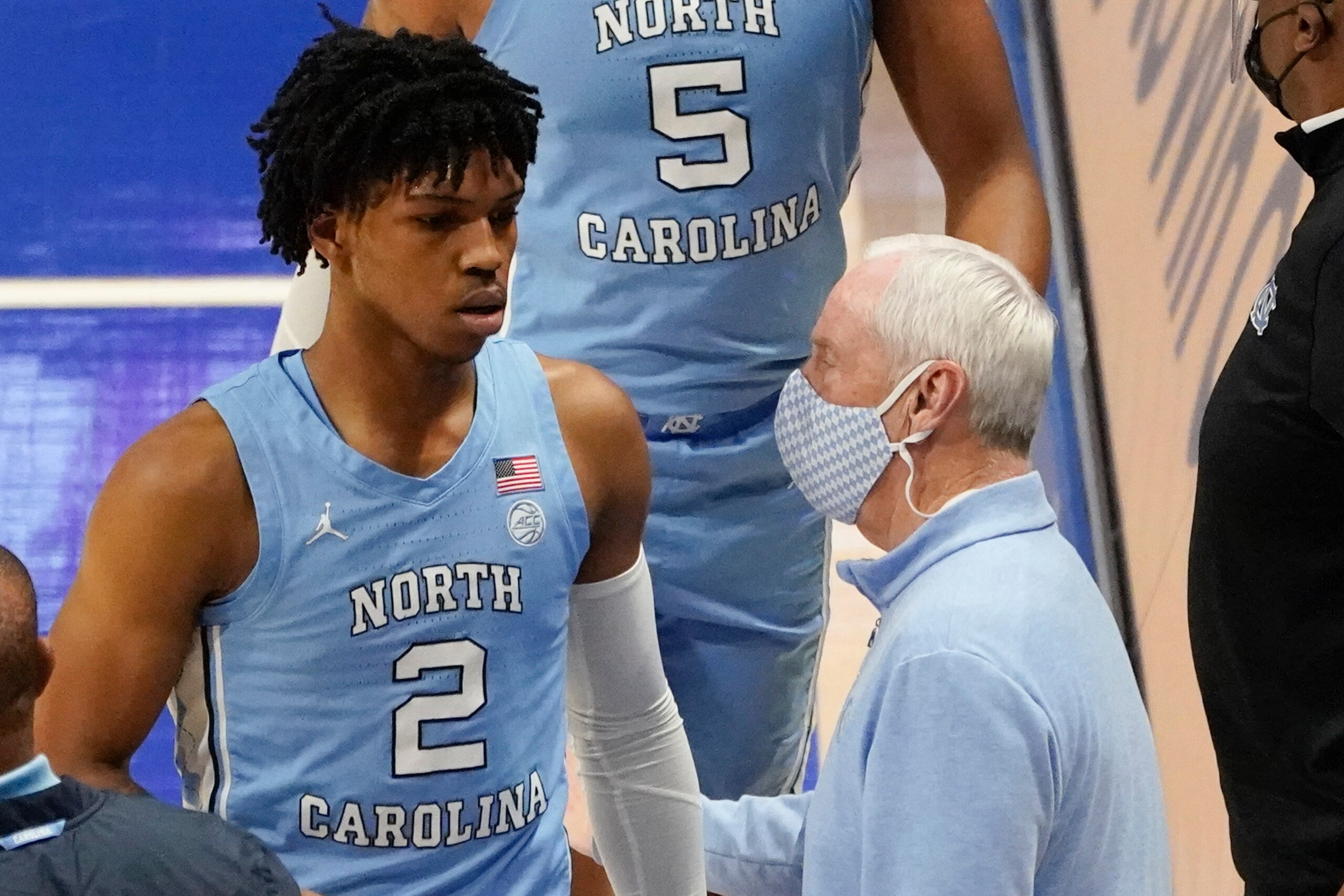
Not only are Duke, Kentucky and North Carolina all unranked, but they also didn't receive a single vote in the latest AP poll.
St. Bonaventure got six votes. Toledo received four. Six-loss Purdue got 11 votes. Even Clemson—which entered the most recent poll with three consecutive losses by a combined margin of 72 points—still got eight votes. But nothing for the Blue Devils, Tar Heels or Wildcats.
North Carolina is 11-5 overall and has won six of its last seven, but the Tar Heels are still in bubble trouble, sitting on the No. 10 seed line of the latest Bracket Matrix update.
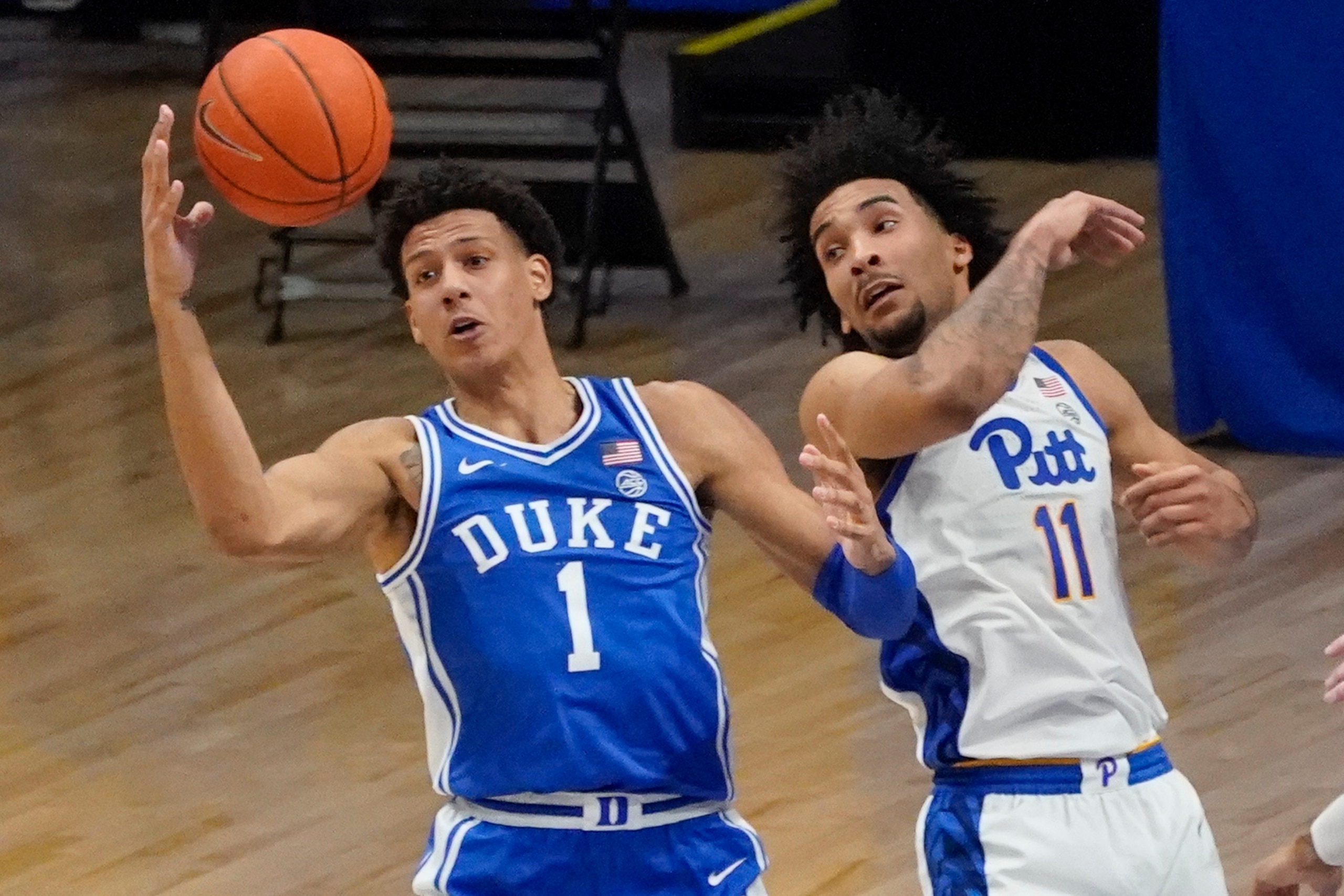
At 6-5, Duke has fallen to the wrong side of the bubble. And at 5-10, Kentucky would need to win just about all of its remaining games to even get back into the bubble conversation.
What the heck happened here?
Our belief is the COVID-19 pandemic is primarily to blame.
Yes, everyone is struggling through the same pandemic. But not everyone had the near-impossible task of replacing most of its scoring during said pandemic.
Kentucky, North Carolina and Duke signed a combined total of nine 5-star recruits and nine 4-star recruits in putting together the three highest-rated 2020 classes. All three intended to rely heavily upon those freshmen, which—even for Duke and Kentucky, who have been doing that far more often than not for the past decade—is an unpredictable strategy that can take time to come together.
In each of the previous five seasons, the path of Kentucky's yearlong AP ranking had a bell-curve shape. The Wildcats start the year in the Top Five, balloon into the teens or 20s at some point in January while adjusting to the rigors of conference play, and then they end the year looking like one of the top threats to win it all. Duke has gone through similar ebbs and flows throughout its time as a one-and-done machine.
Those previous teams had a full offseason to break in their new weapons, though. They also had a full nonconference slate, which usually includes at least a half-dozen home games against mid-majors and low-majors going nowhere fast—confidence-building games for the first-year players as well as opportunities for the coaches to figure out which guys can be trusted.
Even with all that time to work together, they still usually go through rough patches before (ideally) hitting their stride in March.
This year, they didn't have a normal offseason, and Duke and Kentucky played a combined total of three nonconference games against teams outside the KenPom.com Top 100. It was unrealistic to expect either team to thrive under those circumstances, but especially Kentucky, which had to replace 94 percent of its scoring from last season. Even the 6 percent that did return (Keion Brooks Jr.) wasn't on the floor until Jan. 9, so the Wildcats were forced to go through a full reset at the worst time imaginable.
Duke had to replace 69.7 percent of its 2019-20 scoring, which might have been fine if Wendell Moore Jr. and Joey Baker had taken the expected steps forward. Instead, it has been all Matthew Hurt and freshmen, and that has left the Blue Devils well below their usual standard of excellence.
North Carolina only lost 47.9 percent of its scoring from last year, but we're talking about a team that went 14-19 and lost two of its top three scorers. An influx of freshman talent (especially in the backcourt) was a must for the Tar Heels to return to normal.
Instead, the freshman backcourt duo of Caleb Love and RJ Davis has failed to live up to its hype, shooting a combined 27.3 percent from three-point range while averaging 5.6 assists and 5.1 turnovers per game.
Despite replacing 54.6 percent of its scoring, Kansas was always going to be the least dependent upon freshmen. But even the Jayhawks were banking on 5-star combo guard Bryce Thompson to play a huge part in helping the team overcome the losses of Devon Dotson, Udoka Azubuike and Isaiah Moss.
Unfortunately, Thompson has been ineffective, missed a couple of games with a back injury and is out with a broken finger.
Not only did the pandemic make it a tough year to rely on freshmen, but the G League had already thrown a curveball into this year's class, decreasing the overall talent in the pool by signing top-20 overall recruits Jalen Green, Jonathan Kuminga, Daishen Nix and Isaiah Todd straight out of high school.
That perfect storm has led to a point where Duke, Kentucky, Kansas and North Carolina might produce a combined total of just two first-round draft picks (Duke's Jalen Johnson and Kentucky's Brandon Boston Jr.)
In 2019, seven of the top 13 picks came from these four schools.
Can these blue bloods turn it around this year?
Maybe next year?
Or is this the beginning of the end of their reigns?
As difficult as this season has been for them, I see no reason for long-term panic.
Even if the G League continues snaring star players before they get to college, Duke, Kentucky, Kansas and North Carolina will still put together excellent recruiting classes on an annual basis. They would actually probably benefit from that change, because the top guys who go to college will be more likely to stay for multiple years, meaning less of an annual "starting over from scratch" dilemma.
As we've seen with Duke's Hurt and North Carolina's Armando Bacot—and as we saw from that 38-1 Kentucky team a few years back—talented sophomores can be quite the commodity.
That's of little consolation for this season, of course, but it's still possible for at least three of these four teams to salvage the mess.
Kansas is just going through a rough stretch in which Jalen Wilson has struggled and in which opponents have been unconscious from both three-point range and the free-throw line. Even at that, they were close in each of the road losses to Oklahoma State, Baylor and Oklahoma. It wouldn't take much of a shift in the luck department for the Jayhawks to get back on the right track.
As previously noted, North Carolina has won six of its last seven, and it has done so by finally starting to click on offense. The Tar Heels were held to 72.3 points in their first 11 games, but they've been able to drive that up to 79.4 for the past five contests.
It's not a "suddenly hot from three, will cool off soon" thing, either, as they've shot just 30.6 percent while averaging 5.2 triples during that five-game stretch. They're simply imposing their will in the paint, which is what should happen when you've got big men Bacot, Garrison Brooks and Day'Ron Sharpe at your disposal. And the Love-Davis backcourt is at least starting to make a positive impact instead of a detrimental one.
Duke has moments when it looks like it's starting to come together, but its big problem has been inconsistency from the three primary freshmen: Jalen Johnson, DJ Steward and Jeremy Roach. When at least two of those three guys show up well enough to post an O-rating of 88 or better, the Blue Devils are 5-1. But in each of their last 10 games, one of the three either didn't play, didn't play enough minutes to record an O-rating or recorded an O-rating of 72 or worse.
And, to be clear, an 88 O-rating isn't asking much. In the entire 2019-20 season, Tre Jones and Vernon Carey Jr. each only had two games below 88. Zion Williamson never had a game below 99.
Johnson missed a few games. Roach has struggled since Johnson returned from a foot injury Jan. 12. And Duke was competitive in road losses to Virginia Tech, Pitt and Louisville in spite of that. If the Blue Devils could just get respectable performances from all three (and Hurt), they could right the ship in a hurry.
Barring some miracle run in the SEC tournament, Kentucky's season is toast. However, brace yourselves for the Wildcats to bring back at least six of the guys from the primary 10-man rotation, pair them with the usual stockpile of incoming stars and open next season ranked No. 1 in the nation.
These blue bloods are down, but they'll be back in short order. And at least Gonzaga and Baylor are a whole lot of fun to watch while we wait for the return of the usual suspects.
Recruiting info via 247Sports unless otherwise noted. Statistics courtesy of Sports Reference and KenPom.com.

.jpg?w=2560 "Steelers Buccaneers Football")
.jpg?w=2560 "Steelers Roll Saints in Paris")

.jpg?w=2560 "NFL investigating Eagles")
.jpg?w=2560 "5 Teams Eyeing Jonathan Taylor")
.jpg?w=2560 "Updates from EVERY Game")