'It Sounds Stupid, but It's Real': Spite, Revenge and the NBA Draft
Raja Bell, one of the premier NBA on-ball defenders in the 2000s, smelled blood the first time he saw Roberto Bergersen in person. It was a one-sided beef that originated after the 1999 NBA draft.
Bell wasn't drafted coming out of Florida International University. He thought he was going to get taken by the Hawks with the 52nd pick, but Atlanta went with another guard in Bergersen. That slight, unbeknownst to Bergersen and the rest of the world, ignited a fire inside Bell. And Bergersen became collateral damage.
"Roberto Bergersen was not a bad kid," said Bell, who played against Bergersen in the Continental Basketball Association the following season. "In another world, Roberto Bergersen and I would be cool. I tried to destroy Roberto Bergersen every time. I accidently hit him with an elbow, like split his face open in the CBA. And I didn't mean to do it, but I played like it. I was angry at him.
TOP NEWS

Duren Calls Out 'False' Rumors

Pic of LeBron's Helicopter Commute 🚁

NBA Power Rankings Entering Preseason 🔢
"...and that's the way I played because, quite frankly, I couldn't afford not to. I wouldn't have existed in the NBA unless I played like that."
Bell's vengeance early in his career extended to teams. Like in the movie The Waterboy, Bell would envision faces of those who were not only drafted before him but also personnel on teams that cut him during training camps, such as San Antonio and Atlanta.
"I would put Gregg Popovich in my mind. I would have Lenny Wilkens' face in…I mean it sounds stupid, but it's real," said Bell, who played 12 NBA seasons.
Trying to prove doubters wrong is common for NBA players in every position. If we learned anything from The Last Dance, it's that Michael Jordan, arguably the greatest player of all time, was petty as hell. Every slight, every grudge was a sign of disrespect and fueled his otherworldly competitiveness.
Many NBA players can relate. They have to battle for roster spots, starting spots, playing time, contracts in free agency. It's me against the world. Kill or be killed. And that cutthroat mentality is ever-present at the start of their NBA journey: the draft.

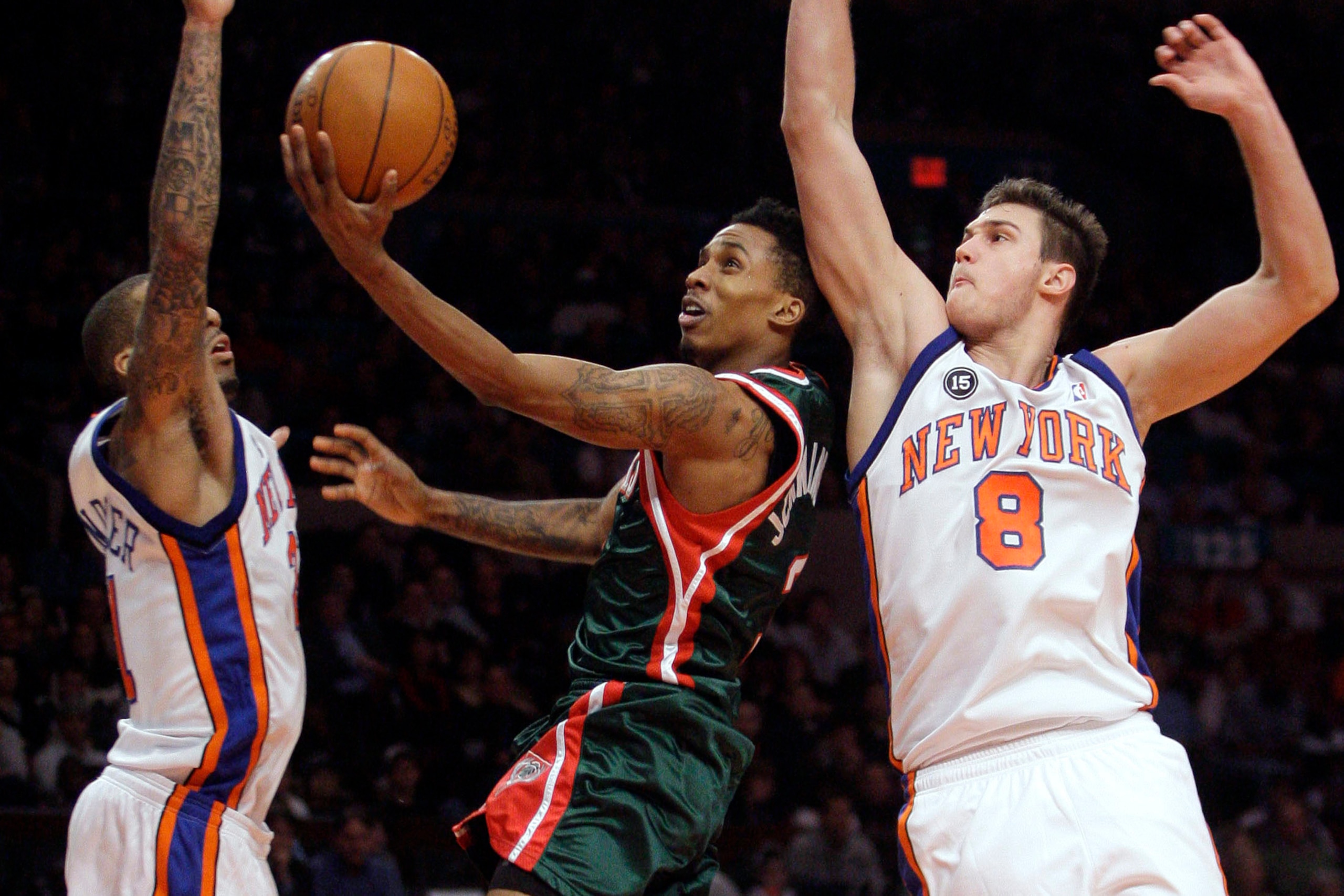
In 2009, Brandon Jennings was drafted by the Bucks. He doesn't need Wikipedia open to recite every player drafted before him.
"Blake Griffin, Hasheem Thabeet, James Harden...um, Tyreke Evans..."
Off the top of his head, the 10th pick in that draft can even do it in order. Other than swapping Jonny Flynn (the sixth pick) and Ricky Rubio (fifth) in a mixup (doesn't matter; they were both drafted by the Wolves) and needing a fact-check for Stephen Curry's exact spot ("Steph was eight, right?"), he was pretty damn accurate.
"I mean, it's competition, so you know every guy probably remembers their draft," Jennings said.
"I definitely do."
For Jennings, just getting selected in the lottery wasn't enough. Although he conceded that the Bucks and coach Scott Skiles were the perfect fit for his game, the flashy point guard wanted to play in the Mecca.
"That year of that draft, I circled that workout because I wanted to be a Knick," said Jennings, who bypassed college the season before to play pro in Italy.
In the Knicks' predraft workout, Jennings went up against Evans and Austin Daye from Gonzaga. Mike D'Antoni was the coach at that time, and he had the prospects, not surprisingly, doing three-pointer and one-on-one drills—two of Jennings' strengths.
"I know for sure I killed that whole workout, and I knew for sure I was going to the Knicks," Jennings said. "And then they picked Jordan Hill [a power forward out of Arizona with the eighth pick]."
Jennings speculated that his dreams of playing in the Garden were sabotaged.
"So the story I was told was that my coach from Italy was hating—I'm going to be real now because I'm retired," said Jennings, who last played in the NBA in 2018 during his second stint with Milwaukee.
Every time Jennings played the Knicks, especially early in his career, he made sure to let them know they made a mistake.
"Oh yeah, I was going for 30 every time," said Jennings, who famously went off for 55 points in his seventh game during his rookie season versus Golden State.
Trevor Ariza did not have one specific team he had a score to settle with after his 2004 draft night—although he believed he was going to the Suns via Chicago's 31st pick (Jackson Vroman was selected instead). But he did not appreciate slipping to 43, where the Knicks picked up the UCLA swingman. When it came to revenge, Ariza played the long game.
"OK, someone else doesn't see my worth, so what I'm going to do is focus on myself and make you see my worth," he vowed to himself after the draft.
Drafted in the same class that produced Dwight Howard, Ben Gordon and Andre Iguodala, he saw players he dominated during predraft workouts taken off the board before him.
"Not saying I wasn't happy for the players drafted in front of me or anything like that; I just felt I was just as good or better with more potential," said Ariza, now playing for the Trail Blazers.
Being an unproven second-round pick who could get cut at any point, he developed a relentless work ethic that has kept him in the league 16 years later. He also notably won a title with the Lakers in 2009. Many times after a long road trip, he would go straight from the airport at 1:30 in the morning to the Knicks' practice facility in White Plains to get up shots. Ariza had a chip on his shoulder to prove he belonged.
"Not only was I drafted in the second round," he said, "but I also had to fight and find my way for minutes in this league with guys who were well-established and making a s--t ton of money."

Jameer Nelson was part of that same 2004 draft as Ariza. He was the most accomplished point guard in the draft, being named the National Player of the Year coming out of Saint Joseph's University. But in a draft loaded with high school prospects—eight were selected in the first round—Nelson, a senior, was almost penalized for having a storied collegiate career.
"The negative things I was hearing from people in the league was that I was too old," Nelson said. "And the one that bothered me the most was when people said that I couldn't get better. I was maxed out."
Despite being a proven college player, three point guards were picked ahead of Nelson, including two high schoolers, Shaun Livingston and Sebastian Telfair. Nelson fell to the 20th pick by the Nuggets before immediately being traded to the Magic.
"I couldn't envy the guys who were drafted in front of me because they didn't draft themselves, but I felt like I could have gone earlier in the draft," said Nelson, who was hired as a scout for the Sixers and an assistant general manager for their G League team, the Delaware Blue Coats, in October. "My chip was the teams that drafted the players in front of me."
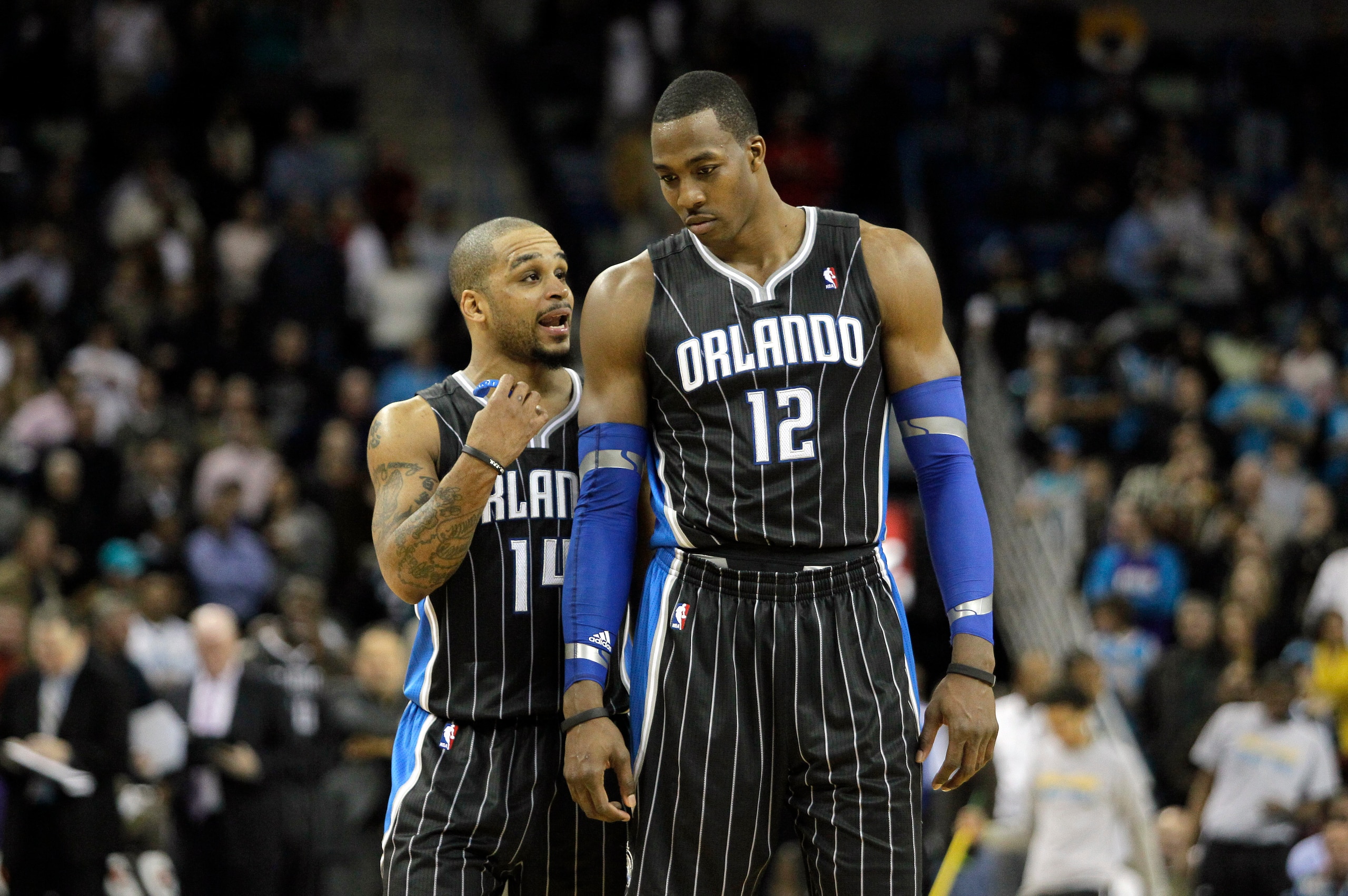
Orlando proved to be a perfect fit for Nelson. Paired with Howard, the top pick of the draft, the duo quickly became one of the league's top one-two combos for the next several years. He made the All-Rookie second team and was a key component in bringing the Magic back to the postseason a few years later. In the process, Nelson got his revenge.
"Once people saw me play after year three or four, certain teams and general managers came up to me and apologized," he said.
Prior to the draft, Nelson thought teams that needed a point guard such as the Suns (seventh pick), his hometown Sixers (ninth) or Heat (19th) would pick him up. Cleveland, which had the 10th pick, was another team Nelson thought could draft him. The Cavs selected Luke Jackson from Oregon.
"I can say LeBron came up to me and said, 'Look man, I apologize for not taking you. I had nothing to do with it,'" Nelson recalled James, who was drafted the year before, saying to him a few years after Nelson was in the league.
Nelson, who played 14 years in the league and made the All-Star team in 2009, believes that players are always in that proving mentality—especially when it comes to draft night and their egos.
"I mean it happens every year," Nelson said. "Somebody's going to get drafted earlier than somebody, and a player will be upset with a team or upset with a guy that got drafted before. It's going to become personal, and that will never go away ever."
For Ariza, it was just as much about proving something to himself versus the teams that snubbed him.
"Once I got drafted, my focus didn't become kill everybody in front of me," he said. "My focus has always been on what I have to do. Focus on myself and keep my head down and stay in love with my craft."
Not that he has a problem with being a little petty. He admits now that his "ego was bruised" when he slipped to the middle of the second round. But even in his youth he had some wisdom. He knew that getting drafted was just an opportunity—one that could be taken away at any point. So he worked his ass off 10 times over. He knew in 16 years it wouldn't matter if he was the first pick or the last. It was whether he'd still have a job.
"Maybe that is what was meant for me, and it wasn't about slipping or anything like that," said Ariza, one of only four players (Howard, Iguodala, JR Smith) left from the 2004 draft still in the league. "It was just my spot I was supposed to be taken at."
.jpg?w=2560 "NFL investigating 2 referees for separate viral exchanges")
.jpg?w=2560 "OBJ Calls Out Giants After Release")
.jpg?w=2560 "Report: Chiefs Contact Hill's Agent")
.jpg?w=2560 "Tyreek makes another cryptic post amid Chiefs rumors")