'I Wasn't a Part of That 60': NBA Draft-Day Stories from the League's Unwanted
The spotlight was finally on Duncan Robinson.
Zipping off picks. Catching and shooting. The most unlikely player for the most unlikely team during the most unlikely of seasons was in this year's NBA Finals getting buckets. On Kyle Kuzma. On Kentavious Caldwell-Pope. On Danny Green, twice. Robinson—who finished with 26 points and seven threes in the Miami Heat's Game 5 victory—was one of the biggest offensive threats on the court. A court he shared with Anthony Davis and arguably the greatest basketball player of all time, LeBron James.
The King and AD are former No. 1 picks in the annual NBA draft. Robinson was not a first pick. Hell, he wasn't even the last. Nobody selected one of the league's top three-point snipers in the 2018 draft.
TOP NEWS

Heat, Giannis were down by 20+ in each of their 3 losses

Brown with an all-time summary of relationship with Tatum
.jpg?w=2560 "NBA Gambling Charges")
Malik Beasley Negotiating Plea Deal (AP)
"The interesting thing about the draft is that it's the best representation of where you stand in comparison to your counterparts," Robinson says. "Teams are picking in order the top 60 guys that they think will help them win.
"And I wasn't a part of that 60."
Every year, some 100-plus players make themselves eligible for the draft. College stars with all-conference and All-America honors. Seniors and early entrants. Overseas unicorns with ridiculous skill sets. Defensive specialists. Shooters. Rebounders. When the draft is said and done, dozens of solid players are left behind, scrambling to secure roster spots for NBA teams' summer-league squads, overseas teams and in the G League.
In addition to Robinson, this year's NBA Finals featured six undrafted players, including Alex Caruso and Quinn Cook from the Los Angeles Lakers and Kendrick Nunn and Derrick Jones Jr. from the Heat. Between two-way deals and guaranteed contracts, 36 undrafted players from the 2019 draft played in the NBA last season. Current players like Fred VanVleet, Joe Ingles, Seth Curry, Wesley Matthews and Jeremy Lin, and legends like Ben Wallace, John Starks and Avery Johnson all had to find a back door to the league.

There are several different ways a player can make an NBA roster, but going undrafted is likely the least desired route. Players dream from a young age of hearing their name called and walking up on that stage—fresh fit on their body, team hat on their head—and shaking the commissioner's hand. Their proud family, friends and hometown are beaming. They can finally buy mom that house.
That was Robinson's dream. Starting in 2007 with the Kevin Durant draft, he would watch the event with his friends, and they would conduct a draft recap together afterward where they made season predictions for each first-round pick. This became an annual tradition.
But when it was his turn to be a participant in the draft just over a decade later, the result was anticlimactic. The once glamorous allure of the draft faded as reality set in and Robinson became a free agent.
"I really felt that I was good enough to be drafted," he says.
Raja Bell had one chance.
Before the 1999 draft, one NBA team had expressed remote interest in drafting the 6'5" guard.
Coming out of a mid-major college like Florida International University (FIU), Bell knew his odds. He wasn't on any mock drafts. He wasn't invited to the invitation-only predraft showcases in Chicago or Portsmouth. Even his new agent didn't think he could make the NBA.
"I've been an underdog at whatever level I played at," Bell says. "I was never the guy. I was always: If the guy didn't exist, I could be the guy.
"And I've always felt some kind of way about that."
Pete Babcock, the general manager for the Atlanta Hawks at the time, spotted Bell, a diamond in the rough, at a holiday tournament in Tucson, Arizona. After an impressive performance against Arizona's Jason Terry, Babcock approached the senior after the game.
"I think you might be able to play in the NBA," he told Bell.

In his one and only predraft workout with Atlanta, Bell showed out. He out-jumped the freakishly athletic Melvin Levett from Cincinnati in a standing vertical test. He shot better than the University of Minnesota's Quincy Lewis, the leading scorer in the Big Ten. And he was more creative off the dribble than Chris Herren, the legendary point guard from Fresno State.
"The feedback [from the Hawks] was that if I was around at 52, they would really consider me," says Bell, who played at FIU with Carlos Arroyo, another undrafted player who found success in the NBA.
That glimmer of hope was enough for Bell to hold on to. On draft night, his parents and sister watched the draft from the family home in Miami. The family was relaxed and entertained.
Elton Brand was chosen first. Steve Francis infamously pouted about getting drafted by a Canadian team at No. 2 overall. In the second round, Bell hoped a team that secretly scouted him might surprise him and select him. But as that wishful thinking subsided, he knew there was still Atlanta at No. 52.
Rod Thorn, the executive vice president of basketball operations at the NBA, stepped to the podium.
"We hear the 'R' start to roll off his tongue, and we were like, 'Holy s--t, it's happening, man!'" Bell recalls with a laugh.
In a cruel twist, the Hawks used their final pick on a guard with the same initials, Roberto Bergersen from Boise State. Even with the disappointment, there were still six picks left.
"When you're a competitor, you're always thinking there's time on the clock and you think something can happen," Bell says. "But deep down, I knew my fate was sealed when Atlanta didn't take me with that pick."
The San Antonio Spurs took future Hall of Famer Manu Ginobili with the 57th pick, while the Utah Jazz selected Eddie Lucas, a guard out of Virginia Tech, with the 58th and final pick.
A few days after the draft, Bell signed with the Tampa Bay Windjammers of the now-defunct United States Basketball League, which played its games in the summer.
Bell laughs when he tells tales of driving up to Washington, D.C., for a game with five tall players crammed into a rented Ford Taurus. Or having to wake up at the crack of dawn to do the team's laundry. He's fairly positive he never received a paycheck.
"It was a catastrophe of a league," he says. "But it was great basketball."
He got his break in the spring of 2001 when the Philadelphia 76ers brought him up from the CBA. He instantly became an aggressive and productive role player for the Allen Iverson-led Sixers that made the NBA Finals against the Lakers. The lifelong underdog found a niche as a defensive stopper on Kobe Bryant (at times) and a reliable shot-maker. He played 12 seasons in the league with six different teams. His best years came with the Phoenix Suns, with whom he earned an All-Defensive First Team nod in 2007.
Today, Bell, now 44, co-hosts Real Ones with Logan Murdock on Mondays on The Ringer NBA Show. While he is his signature engaging self on the podcast, he can easily switch back to that uber-competitive player with a chip on his shoulder when he thinks back to his draft night 21 years ago.
"I think the draft and the empty feeling I had that night really was just what I needed to say, 'F--k it, I'm going after this,'" he says. "'I'm going to prove everyone wrong one day. It might not be today, might not be tomorrow, but I will use this as fuel to really commit myself to make it.'"
The NBA draft was not the first time Robinson was overlooked.
Not heavily recruited out of high school in New Hampshire, Robinson headed to little Williams College, a Division III school in Massachusetts, for a season before transferring to Michigan. Even in Ann Arbor, he was in and out of the starting lineup, sometimes out of the rotation.
But still, he is tall and can shoot the three-ball—two qualities that are quite in demand in today's NBA landscape.

In the month leading up to the draft, Robinson worked out for 12 teams. Some teams twice. Didn't matter if it was three workouts with three different teams in three consecutive days. A few nights before the draft, Robinson drove to Boston—his second group workout with the Celtics—from New Hampshire because a draft prospect pulled out and they needed an extra body. "Whatever it takes to just get me in the door," thought the then-24-year-old draft prospect.
There was tepid interest from the NBA, though, and many believed Robinson's future was elsewhere. When he was selecting an agent, even his coach at Michigan, John Beilein, suggested one who specialized in overseas prospects.
"But I told him that I kind of wanted to go my route," Robinson says.
Robinson, his mother, his siblings and a few close friends watched the draft from his house in New Hampshire. Although he told company as well as the media that he didn't have expectations to get selected, he was cautiously optimistic. His agent mentioned the Memphis Grizzlies had expressed strong interest. He also had a solid workout with the Oklahoma City Thunder, who happened to have three second-round picks.
Early in the draft, there were no surprises as Deandre Ayton, Luka Doncic and Trae Young came off the board. As the first round turned into the second, hope in the living room dimmed as Robinson's name was continuously passed on. His mother even left early to go to bed.
"At that point, I was not mad about it, but I was like, 'Wow, really nobody thinks I'm going to get selected,'" he says. "Like, my own mother is calling it a night here."
Memphis and OKC's picks came and went, and the Sixers capped off the night by selecting a player with a familiar bloodline in Kostas Antetokounmpo with the 60th and final pick.
"The end of the draft came around, and there was definitely some internal disappointment," admits Robinson, who drove up to Maine the next day with his friends from his draft party to hoop in a pro-am.
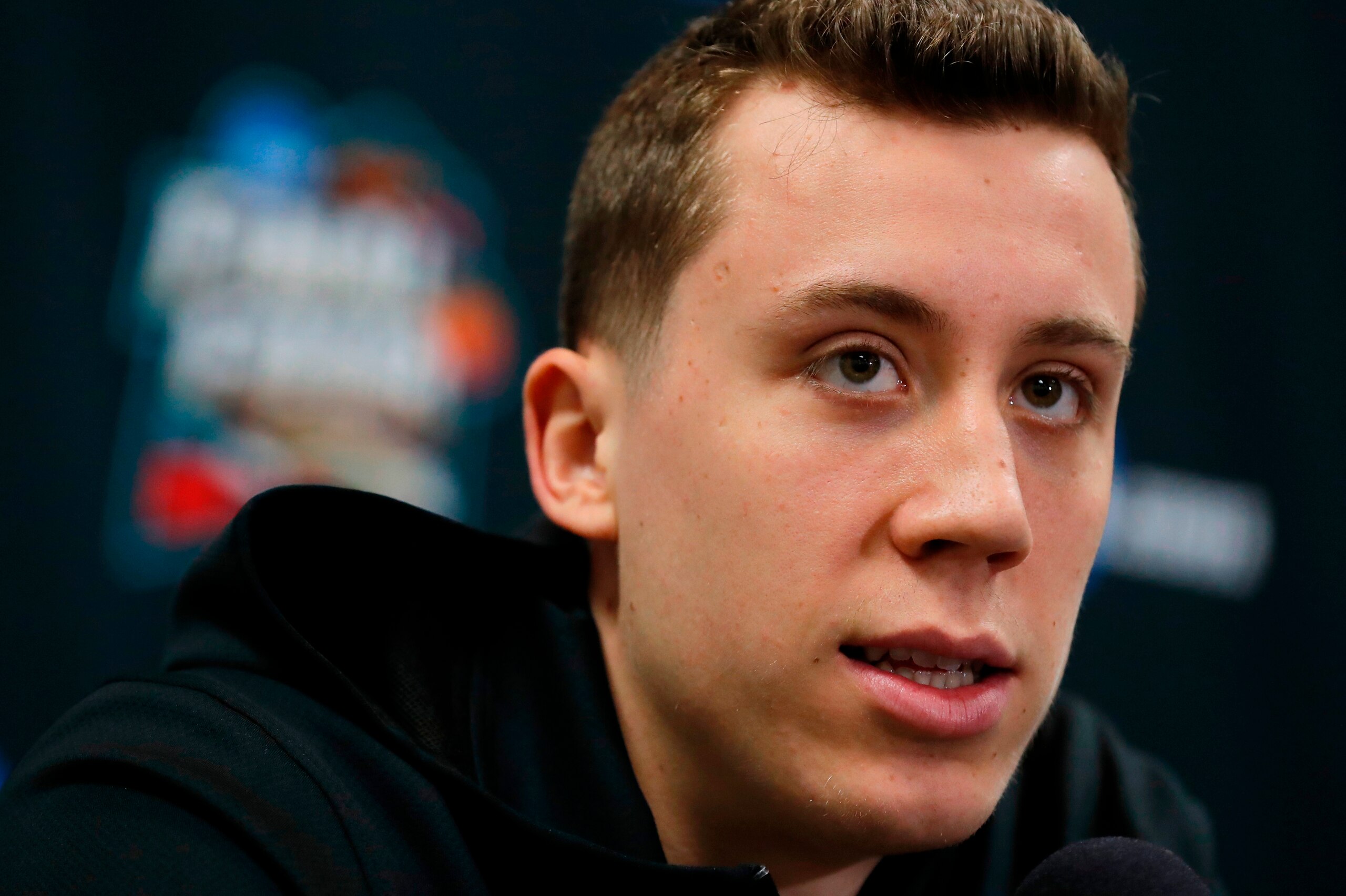
For prospects who go undrafted, it's expected that teams will reach out immediately after the draft to extend summer-league or minicamp invites, and sometimes even contracts (non-guaranteed, usually). Robinson and his agent agreed that if he went undrafted, he would join Miami's summer-league team. The Heat did not have a draft pick but were impressed with the 6'7" three-point specialist's predraft workout and intrigued by his potential.
"Coach Spo [Erik Spoelstra] is the only coach to call me before the draft and say that if I wasn't selected that they would love to have me for summer league," says Robinson. "So that meant a lot to me."
Robinson's two-year ascension up the NBA ranks happened fast, from summer league to two-way contract to partially guaranteed contract to the NBA Finals. It helps that he shot nearly 45 percent from behind the arc last season, including making 10 threes, tying a franchise record for a game, against the Hawks.
Even as he stood among greatness in the bubble in Orlando, Florida, his perspective of the start of the journey was never lost.
"It's a day to acknowledge progress and acknowledge that I've improved a lot since then."
Earl Boykins had the credentials to be an NBA first-rounder.
As a senior at Eastern Michigan, he was second in the nation in scoring at nearly 26 points a game. He was an AP All-America Honorable Mention. He was USA Basketball's Male Athlete of the Year in 1997. And he could bench-press over 300 pounds.
But he's also 5'5".
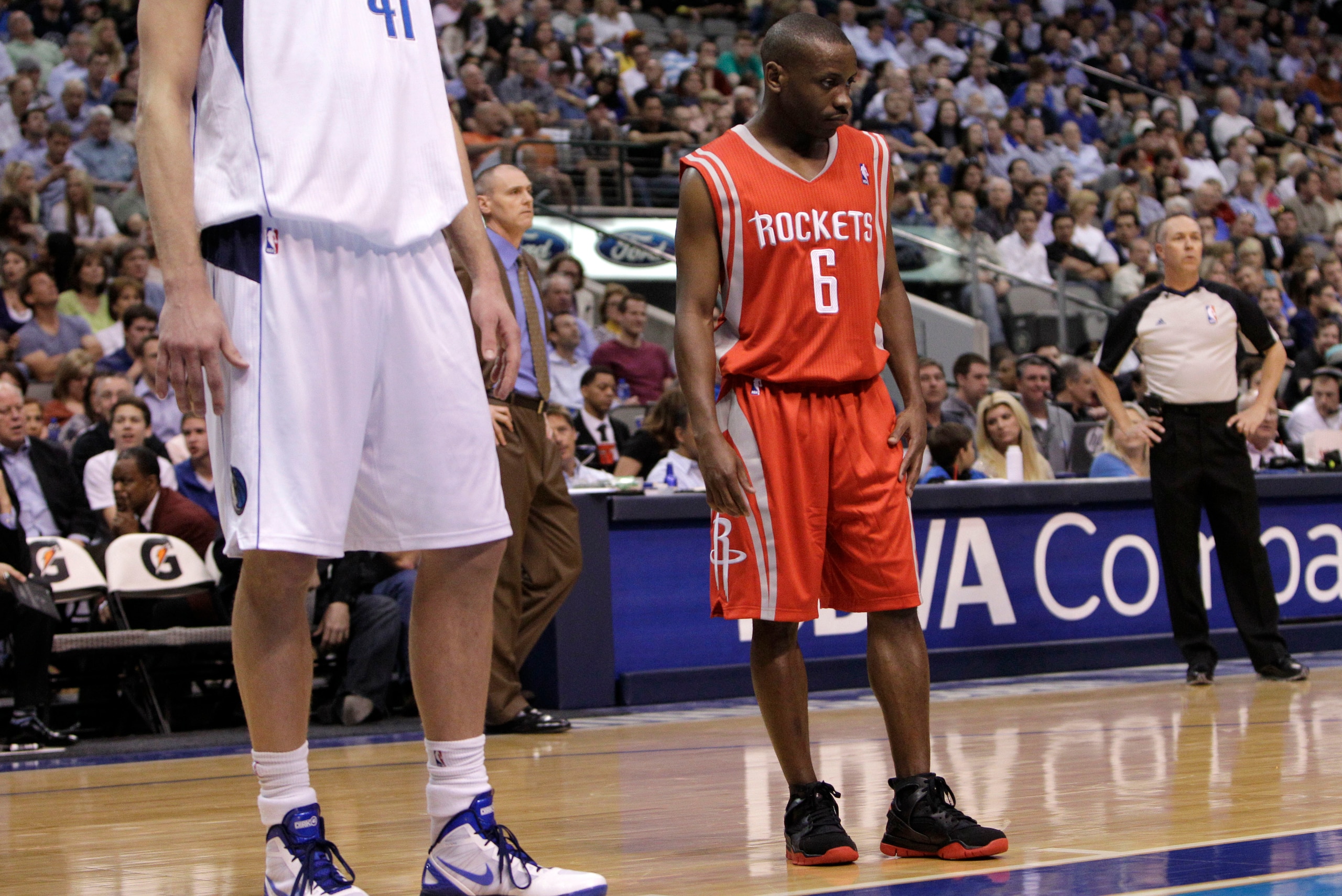
By 1998, guards like Muggsy Bogues (5'3") and Spud Webb (5'7") had proved that little men can have game. However, there was, and always will be, a stigma.
"Playing basketball has never been hard," says Boykins, now 44. "The hard part is overcoming what other people think."
Regardless of people's perception or the long odds ahead of him, Boykins was going to play in the league.
"My confidence has always been on 10," he says. "From the age of 10 years old, I knew I'd play in the NBA.
"I didn't have a backup plan."
On the evening of the 1998 draft, the Boykins family—parents, cousins and all—congregated at his uncle's house in his hometown of Cleveland. He only worked out for two teams, the Minnesota Timberwolves and the then-Vancouver Grizzlies. He knew he would likely not be picked in the first round, where future stars like Vince Carter, Dirk Nowitzki, Paul Pierce, Mike Bibby and Jason Williams were predictably taken in the lottery.
As the draft transitioned from the first to the second round, Boykins and his family watched as point guard after point guard was selected, including Tyronn Lue, Shammond Williams and Rafer Alston. He had an indication from his agent that Toronto might snag him with the 47th pick, but they went with a slightly less diminutive guard, Tyson Wheeler (5'10") from Rhode Island. He watched his college teammate Derrick Dial get picked, as well as many of his Team USA teammates from the 1997 World University Games, where Boykins was the leader and top scorer.
"It was the first time my height was blatantly put in my face," says Boykins, who admits experiencing disappointment that night.

After the Chicago Bulls selected Maceo Baston, a forward from Michigan, with the 58th and final pick, Boykins' father, Willie Williams, asked his son if he wanted to go on a walk. Outside, his father put things in perspective.
"The only thing that happened tonight is that you didn't get your name called on TV," said Williams. "That doesn't mean you don't play in the NBA."
"I was upset maybe an hour-and-a-half. After that, I was fine," Boykins says.
Because of the NBA lockout, Boykins missed out on summer-league opportunities. He spent the beginning of the 1998-99 season with the Rockford Lightning of the CBA, where he would log DNP-CDs (did not play, coach's decision). When the NBA resumed in February 1999, he caught on with the then-New Jersey Nets and finished the year with the hometown Cavaliers. That sign-then-get-cut routine was common in his first pro years.
"When you're my height, not only do you need someone to give you an opportunity, but once you're given that opportunity, there are even parameters around it," says Boykins. "If someone scores on you, the reason they scored is because you're 5'5". Not because they actually can play. The level of scrutiny that I played under was the hard part."
Eventually, his heart and his abilities between the lines made it hard for GMs to overlook him.
"I'm built different," Boykins says. "It never mattered who I played against. I always felt I was better than everybody."
Boykins finally found stability when he signed long-term deals with first the Los Angeles Clippers in 2000 and then the Denver Nuggets in 2003, where he played with Carmelo Anthony and Kenyon Martin. His best season came in 2006-07 when he split time between Denver and the Milwaukee Bucks, averaging 14.6 points and 4.4 assists. He retired in 2012 after playing for 10 teams over 13 seasons.
Now the director of student-athlete development for the Arkansas Razorbacks' men's basketball team, Boykins is bringing his knowledge and instilling his unparalleled confidence in his players. Perhaps one day he will get a standout player who might be a little undersized or isn't the prototypical NBA player. When that situation happens and the player goes undrafted, he'll know exactly what to say to him.
"If you are good enough, you will play in the NBA," he says. "One night won't determine your future."



.png?w=2560 "Week 8 Winners & Losers 📊")