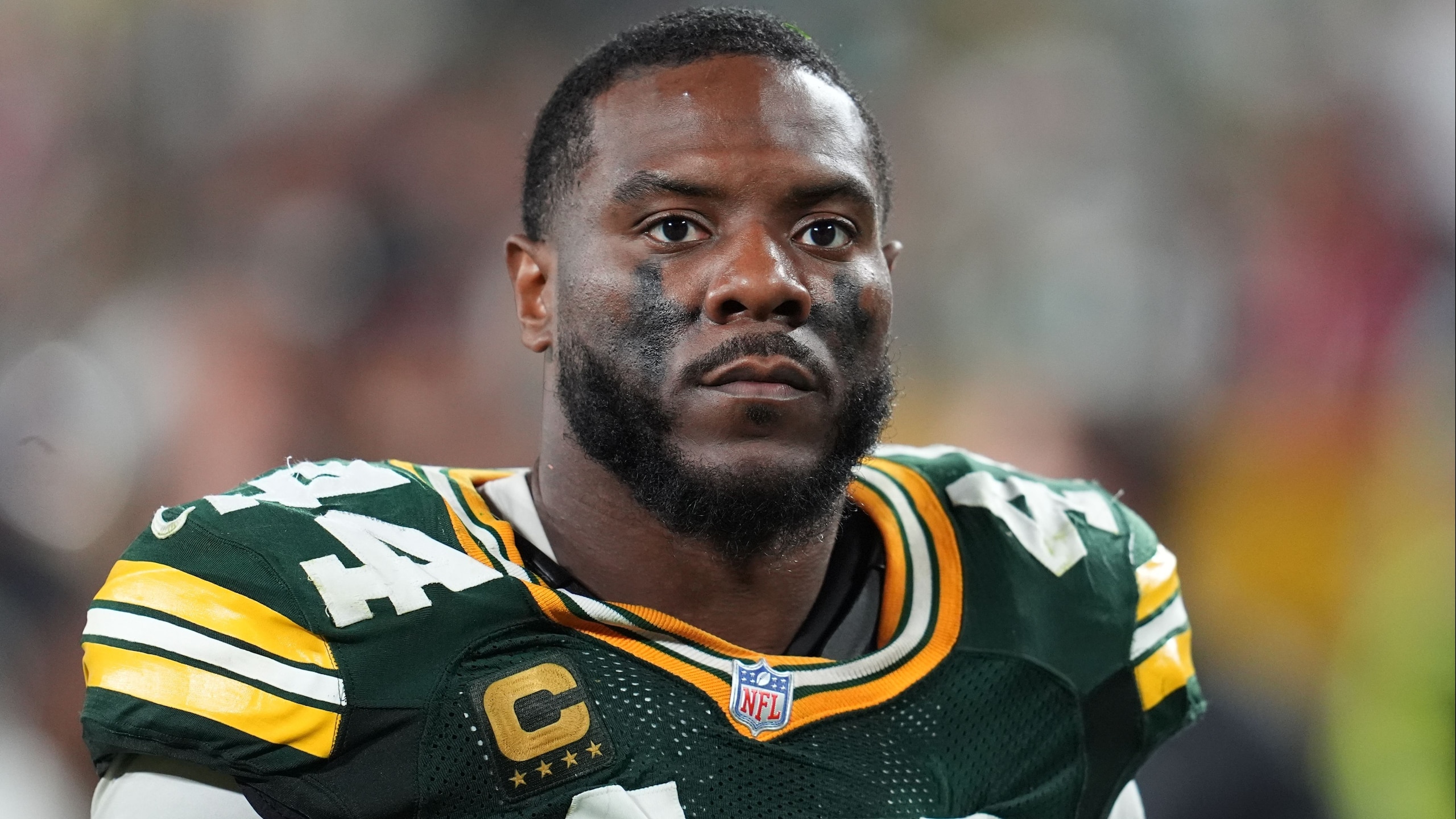
Packers GM Didn't Expect to Get Jordan Love Entering 2020 NFL Draft
Green Bay Packers general manager Brian Gutekunst didn't expect Jordan Love to be available at No. 26. When he was, however, Gutekunst knew he had to make a trade—even if it meant taking public criticism.
He told Peter King of NBC Sports:
"Ron [Wolf] traded a one in 1992 for Brett [Favre], who'd been a second-round pick and wasn't even starting for Atlanta. Imagine the media fervor if that happened today. I believe if you're going to sit in this chair, you have to accept that you'll be heavily criticized. I watched my father go through it [John Gutekunst was the head coach at the University of Minnesota in the '80s] as a college coach. I know what Ted [Thompson] went through in 2008 with Brett. But I'm trying to do the right thing for the organization. That's my sole focus."
.jpg?w=2560 "Packers 49ers Football")
.jpg?w=2560 "Seahawks Cardinals Football")
.jpg?w=2560 "Lions Cardinals Football")
Gutekunst told King he expected Love to go off the board in the teens or early 20s. Knowing that another team was looking to trade into the first round to snag Love, the Packers gave up a fourth-rounder in a trade with the Miami Dolphins to slide up four spots and take their quarterback of the future.
The reaction to Green Bay's draft was one of collective shock and dismay, particularly in the first two rounds.
Gutekunst not only drafted a backup quarterback in Love but also took running back AJ Dillon in Round 2, despite the presence of Aaron Jones and Jamaal Williams. It's unlikely that either of the team's first two picks makes an impact in 2020, an odd decision for a team that was one win away from a Super Bowl berth with glaring needs at receiver and in the front seven.
Rodgers, he of the famously prickly sort, has not publicly commented on the Packers' draft. It would be understandable if he were perturbed, if not angry, at the strategy, though Love said Rodgers was congratulatory when they had a private conversation.
"Yeah, I was able to talk with him earlier," Love told ESPN's Maria Taylor. "You know, really good guy. [He was] just congratulating me, and I was just letting him know that I was excited to be able to work with him."
It would be easy to find similarities between the Love-Rodgers situation and the Packers' decision to select Rodgers in 2005 when Brett Favre was still on the roster. The flaw in that argument is that Favre was already openly talking about retirement in 2005; Rodgers, 36, has made it clear he wants to play until at least his 40th birthday.
If Rodgers plays until he's 40, the clock will have run out on Love's rookie contract—the best time to build around a young star.
.jpg?w=2560 "Steelers Browns Football")
.jpg?w=2560 "Cam Ward Says He's Not A Loser")