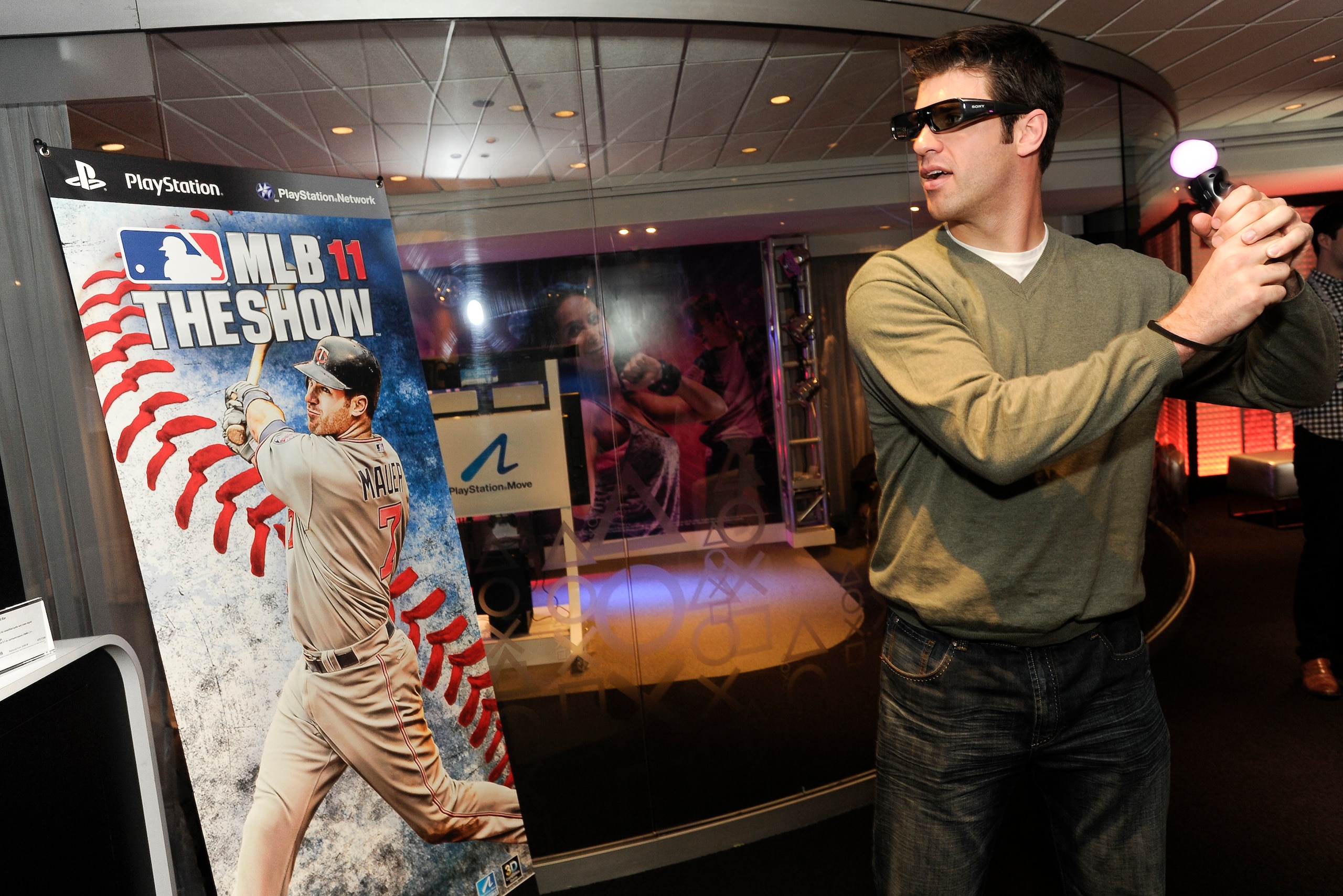


At least until the real thing returns, perhaps the best way for Major League Baseball fans to get their fix is to boot up a baseball video game.
There have been hundreds of those over the years, but there are 10 in particular—not all of which were affiliated with MLB—that deserve a place among the all-time greats of the genre.
In putting together our list, our only actual rule was to allow only one entry from assorted long-running franchises. Otherwise, we prioritized games that were innovative in some way, shape or form. Naturally, nostalgia was also a factor in some cases.
Once we had our list of games, we attempted to balance their quality, memorability and appeal to modern gamers in ranking them from No. 10 to No. 1.
10. Wii Sports
1 of 10Release Year: 2006
Platforms: Nintendo Wii
Because it was included with the system itself at launch, Wii Sports was the first experience that many gamers had with the Nintendo Wii. And simple though the game was, it made an immediate impression.
That gets at just how effectively Wii Sports demonstrated the Wii's ground-breaking motion controls. Buttons and joysticks no longer drove gameplay. For the baseball mini-game, specifically, players had to mime throwing and swinging motions in order to pitch and hit.
Granted, this was better in theory than it was in execution. The bowling, tennis and golf mini-games were more fun to play than the baseball one, which suffered from inconsistent translation of motion to results and less-than-realistic baseball action.
But if nothing else, the baseball end of Wii Sports was worth it for the dingers. The thrill of swinging, hearing the crack of the bat and watching the flight of the ball was and still is a pretty good stand-in for the real thing.
9. R.B.I. Baseball
2 of 10Release Year: 1987
Platforms: Nintendo Entertainment System
We're not talking about any of the R.B.I. Baseball games that have come out since Major League Baseball rebooted the series in 2014. To put it lightly, none of them are particularly good.
We're talking, of course, about the O.G. R.B.I. Baseball. Though it wasn't the first game of its kind, it was notably the first console game to be officially licensed by the Major League Baseball Players Association. As such, it was the first to use the names and likenesses (such as they were) of real players.
Moreover, players' in-game abilities lined up with those of their real-world counterparts. Nolan Ryan and Roger Clemens threw hard. Vince Coleman ran fast. Darryl Strawberry hit hard. Accordingly, gamers could truly live vicariously through their favorite players for the first time.
Though the original R.B.I. Baseball is certainly dated now, it still has a certain something that's been missing from the reboot series. As Chris Getz might vouch, it could be that there's just no beating the classic game's delightful theme music.
8. Earl Weaver Baseball
3 of 10Release Year: 1987
Platforms: Amiga, MS-DOS, Apple II
Go figure that a real-life manager who was way ahead of his time also inspired one of the most innovative baseball games of all time.
In creating Earl Weaver Baseball, designers Don Daglow and Eddie Dombrower conducted interviews with Weaver himself—who was then the skipper of the Baltimore Orioles—throughout the 1985 season. As Dombrower recounted to Keith Law of The Athletic, Weaver didn't hold back in giving them an earful about baseball strategy.
The result was the first truly authentic baseball video game. In addition to simulating the sport's basic hit, run, field and throw mechanics, Earl Weaver Baseball also allowed gamers to play the percentages by adjusting everything from starting lineups to defensive alignments. To boot, it even recreated actual major league stadiums in digital form.
Even if it weren't seemingly lost to time, Earl Weaver Baseball would probably be too dated for modern gamers to actually enjoy playing. It's sheer audacity, however, should not be forgotten.

7. Baseball Stars
4 of 10Release Year: 1989
Platforms: Nintendo Entertainment System
Coming on the heels of R.B.I. Baseball, Baseball Stars was a baseball simulator that offered better graphics and more polished, realistic gameplay.
And what it lacked in official licensing from MLB and the MLBPA, it made up for with revolutionary features. At least among baseball games available on consoles, Baseball Stars was the first to allow gamers to create their own teams and players.
Further, it also broke ground by allowing players to accumulate their own statistics throughout a season's worth of games. Finally, kids could go to school and brag about having hit X home runs with Player Y.
To these extents, Baseball Stars was a better proof of concept for where baseball games were headed than even Earl Weaver Baseball or R.BI. Baseball. And because of its relatively detailed visuals and animations, it holds up better than other games from its era.
6. MLB SlugFest 2004
5 of 10Release Date: 2003
Platforms: PlayStation 2, Xbox, Nintendo GameCube
What if baseball, except overtly cartoonish and violent?
If 1991's Base Wars—which was basically a mashup of baseball and Rock 'Em Sock 'Em Robots—pioneered this premise, Midway Games more or less perfected it in the early 2000s by slapping a baseball skin on its popular NFL Blitz series and calling it MLB SlugFest.
After debuting with MLB SlugFest 2003, the series found its groove with its second installment in 2004. It added an element of realism by implementing a fatigue mechanic for pitchers, but it mainly stuck to what made the first one work: seven-inning games, over-the-top animations and sound effects, and hard tags and slides that basically functioned as combat mechanics.
At the time, anyone who wanted a more immersive baseball experience had better options. But MLB SlugFest was good for anyone in the mood for cheap yucks, and it can probably still serve that purpose even today.
5. Ken Griffey Jr. Presents Major League Baseball
6 of 10Release Date: 1994
Platforms: Super Nintendo
Even if it's not quite the best, Ken Griffey Jr. Presents Major League Baseball might nonetheless be the most beloved baseball game of all time.
To be sure, the game wasn't perfect. Though it featured real teams and stadiums by way of a license from MLB, a lack of a license from the MLBPA meant that Ken Griffey Jr. was its only real-life player. It also had some gameplay issues—i.e., tracking fly balls on defense—that were frustrating even at the time.
And yet it was darn fun to play. It had by far the best graphics ever seen in a baseball game to that point, and its wacky character designs and animations and its downright killer soundtrack further heightened its charm.
If you were a baseball fan who owned a Super Nintendo during the 1990s, KGJPMLB was basically required playing. And warts and all, it's still playable even nearly 30 years after its release.
4. Backyard Baseball
7 of 10Release Year: 1997
Platforms: PC and Mac
Because baseball is, at heart, a kids' game, a baseball video game doesn't necessarily have to be about Major League Baseball to hit home. Backyard Baseball is proof of that.
The game leaned headlong into a depiction of baseball as an activity that neighborhood kids pursued in whatever backyard or sandlot is capable of hosting pickup games. And though the aesthetics were decidedly cartoonish, the game achieved a semblance of realism through surprisingly nuanced baseball mechanics.
If anything, the reputation of Backyard Baseball has only improved over time. Mike Delayo of the Hardball Times recently sang the game's praises for being ahead of its time with its diverse cast of characters. Of the bunch, Pablo Sanchez is rightfully regarded as one of the best virtual athletes ever.
So if you've never played Backyard Baseball, don't let its kid-friendly trappings fool you. It's truly a game that can be enjoyed by people of all ages.
3. All-Star Baseball '99
8 of 10Release Year: 1998
Platforms: Nintendo 64 and Game Boy
Though All-Star Baseball '99 might not immediately jump to mind as one of the greatest baseball games ever made, we obviously think it should.
If nothing else, All-Star Baseball '99 made full use of licenses from MLB and the MLBPA. Its renditions of players, uniforms and stadiums were more life-like than any that had come before, and it even programmed hitters to have the batting stances of their real-life counterparts.
Whereas popular baseball games from years past—e.g., Ken Griffey Jr. Presents Major League Baseball—gave players unrealistic control over the speed and movement of pitches, All-Star Baseball '99 did away with the nonsense and preprogrammed those elements. The N64 controller's joystick, meanwhile, turned hitting into a test of both timing and location.
Throw in immersive play-by-play commentary from John Sterling and Michael Kay, and All-Star Baseball '99 effectively laid the roadmap for the future of baseball simulators on consoles.
2. MLB The Show 20
9 of 10Release Year: 2020
Platforms: PlayStation 4
The MLB The Show franchise has existed in some form ever since 1997, and it's pretty much had the baseball simulator market to itself ever since the MLB 2K series sputtered out in 2013.
Thankfully, all this time hasn't been wasted. Though early iterations of The Show had some gameplay issues—the defensive controls were a common bugaboo among critics—they've gradually been chipped away while increasingly in-depth game modes have enhanced the broader experience.
All these roads have led to MLB The Show 20, which is easily the most comprehensive baseball game ever made. The gameplay is dynamic without being overwhelming, and features such as Franchise Mode and Road to The Show still make the total experience feel as much like a role-playing game as a baseball sim.
Yet arguably the biggest advancement of this year's rendition is the inclusion of full minor league rosters. With that, there may be no more stones left for baseball games to turn over.
1. MVP Baseball 2005
10 of 10Release Year: 2005
Platforms: Xbox, PlayStation 2, Nintendo GameCube, PC, PSP
Despite all the advancements that the MLB The Show franchise has made over the years, our hearts and minds are still with MVP Baseball 2005.
Above all, the MVP Baseball series ought to be remembered for gamifying pitching in a way that hadn't been done before. The pitch meter let players choose whether they wanted to try for speed or location. The harder they threw, the more difficult it was to locate as the pitcher's pitch count got higher.
Hitting, meanwhile, was a simple matter of timing (when to push the swing button) and intent (whether to use the joystick to try for, say, a pulled fly ball or a line drive the other way). MVP Baseball 2005 also introduced the "hitter's eye" mechanic, through which batters could read incoming pitches.
Between all this, play-by-play and color commentary by Duane Kuiper and Mike Krukow, the game's Dynasty and Owner modes and its full assortment of minor league clubs, pretty much the only thing missing from MVP Baseball 2005 was Barry Bonds.

.jpg?w=2560 "Mahomes Told Teammate to Leave Meeting")
.jpg?w=2560 "🚨 Week 8 AP Top 25 Poll")
.jpg?w=2560 "Baker Gets Glove From Rays 🧤")
.jpg?w=2560 "Steelers Roll Saints in Paris")
.jpg?w=2560 "5 Teams Eyeing Jonathan Taylor")
.jpg?w=2560 "NFL investigating Eagles")
.jpg?w=2560 "Updates from EVERY Game")