


MLB award season is upon us.
The American League and National League Rookie of the Year awards were handed out Tuesday night, and Houston Astros designated hitter Yordan Alvarez and New York Mets first baseman Pete Alonso took home the hardware.
They joined an impressive collection of all-time greats who have won the award, including Willie Mays, Frank Robinson, Tom Seaver, Cal Ripken Jr., Rod Carew, Pete Rose, Jeff Bagwell, Johnny Bench and Derek Jeter.
For every future star who claimed the title, however, there's a player who flamed out just as quickly as he arrived on the scene.
In an effort to identify the biggest busts among Rookie of the Year winners, we did some simple math—subtracting each winner's rookie-season wins above replacement from his career WAR—to find out how productive every player was in subsequent seasons.
Players with 0.0 to 5.0 WAR were highlighted on a dishonorable mentions slide, while players with negative WAR following their rookie seasons received their own slides.
Off we go.
Note: For a list of each Rookie of the Year winner's WAR total following his rookie season, take a look at this doc.
Dishonorable Mentions
1 of 7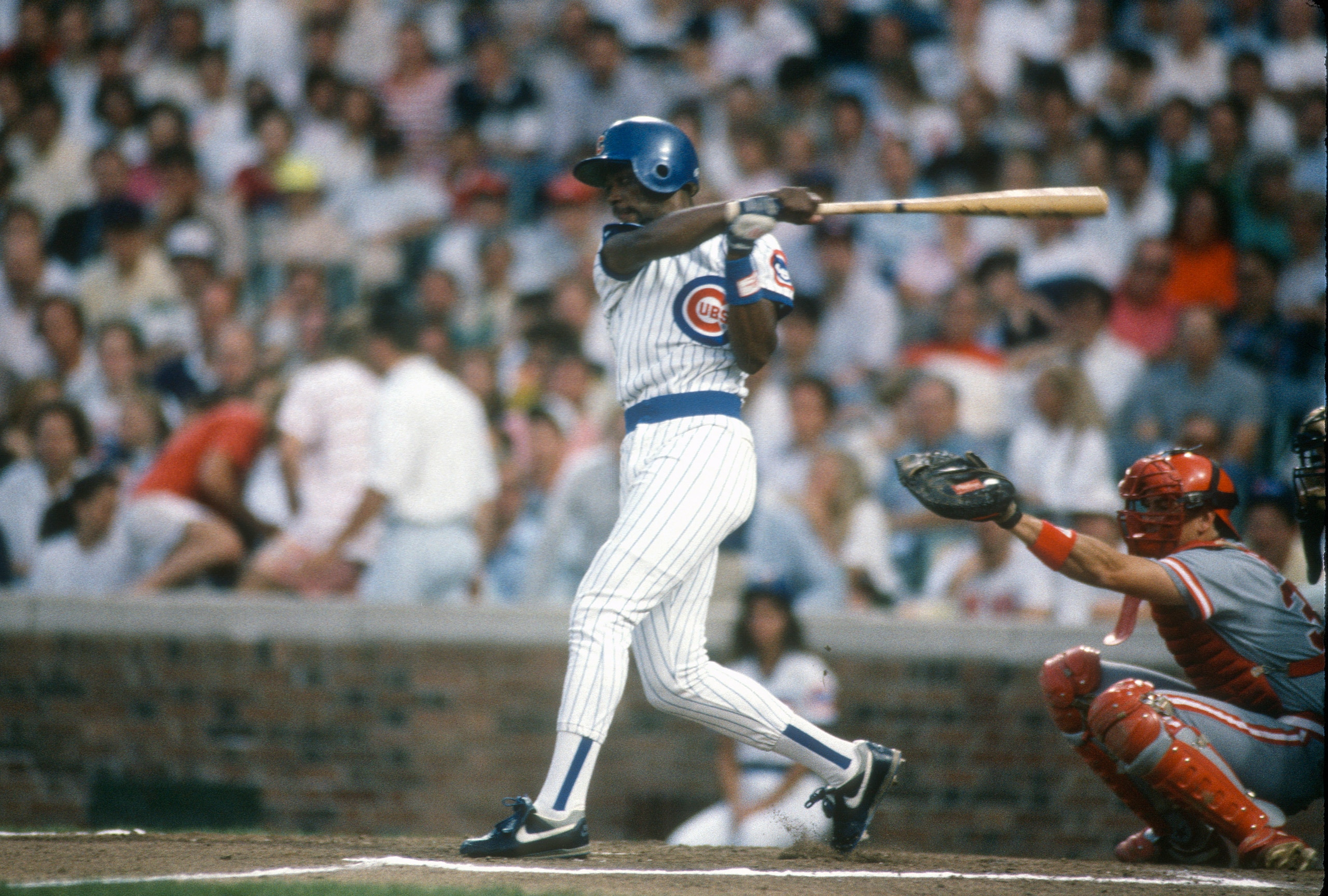
Below is a list of each retired Rookie of the Year winner who produced between 0.0 and 5.0 WAR in the seasons following their victory:
- 1950: 1B Walt Dropo, Boston Red Sox (1.1 WAR)
- 1952: SP Harry Byrd, Philadelphia Athletics (1.4 WAR)
- 1954: SP Bob Grim, New York Yankees (4.2 WAR)
- 1961: SP Don Schwall, Boston Red Sox (1.4 WAR)
- 1971: C Earl Williams, Atlanta Braves (4.4 WAR)
- 1976: SP Mark Fidrych, Detroit Tigers (1.8 WAR)
- 1979: SS Alfredo Griffin, Toronto Blue Jays (0.7 WAR)
- 1983: LF Ron Kittle, Chicago White Sox (2.9 WAR)
- 1989: CF Jerome Walton, Chicago Cubs (1.8 WAR)
- 1995: LF Marty Cordova, Minnesota Twins (4.4 WAR)
- 2002: 3B Eric Hinske, Toronto Blue Jays (3.9 WAR)
- 2004: SS Bobby Crosby, Oakland Athletics (2.7 WAR)
- 2009: RP Andrew Bailey, Oakland Athletics (2.2 WAR)
- 2010: RP Neftali Feliz, Texas Rangers (3.5 WAR)
While they fit the criteria, the following players were not considered busts for various reasons:
- 1952: RP Joe Black, Brooklyn Dodgers (0.6 WAR). Black didn't begin his MLB career until his age-28 season after seven years in the Negro Leagues.
- 1962: 2B Ken Hubbs, Chicago Cubs (1.3 WAR). Hubbs died in a plane crash at the age of 22 after his second full MLB season.
- 2000: RP Kazuhiro Sasaki, Seattle Mariners (2.4 WAR). Sasaki was 32 years old when he made his way stateside after 10 pro seasons in Japan.
Now, let's take a look at the six players who posted negative WAR in the seasons following their Rookie of the Year Award wins. They represent the biggest busts among past winners.
SS Pat Listach, Milwaukee Brewers (1992)
2 of 7
WAR After Rookie Season: -0.1
Pat Listach was a fifth-round pick out of Arizona State in the 1988 draft, and he debuted in the Milwaukee Brewers' second game of 1992, at the age of 24.
He played 149 games that season as the starting shortstop for a 92-win team, hitting .290 with a .352 on-base percentage, 54 steals, 93 runs and 4.5 WAR.
Fellow rookie Kenny Lofton bested him for the AL steals title with 66 thefts, but Listach got the last laugh by garnering 20 of 28 first-place votes in Rookie of the Year balloting.
Listach, however, developed a knee problem, and he was never the same.
He batted just .244/.319/.317 for a 73 OPS+ in his sophomore season, though his 18 steals and solid glove work still made him a 1.6 WAR player.
The Brewers traded him to the New York Yankees during the 1996 season in the deal that brought eventual closer Bob Wickman and outfielder Gerald Williams to Milwaukee, and the 1997 season was his last in MLB.
Since retiring, he's spent time on the coaching staffs of a number of different teams, and he is now the manager of the Mexican League's Acereros del Norte, who won the 2019 LMB title.
Career Stats: 503 G, 68 OPS+, .251/.316/.309, 81 XBH, 250 R, 116 SB, 4.4 WAR
DH Bob Hamelin, Kansas City Royals (1994)
3 of 7
WAR After Rookie Season: -0.2
The Kansas City Royals selected Bob Hamelin in the second round of the 1988 draft out of Rancho Santiago College in California.
He was the No. 30 prospect in baseball heading into the 1990 season, according to Baseball America, after posting a stellar .308/.454/.640 line with 33 extra-base hits in 269 plate appearances in a full season at Double-A.
He didn't make his MLB debut until Sept. 12, 1993, but took over as the team's designated hitter during the strike-shortened 1994 season.
As a rookie in his age-26 season, he hit .282/.388/.599 for a 147 OPS+ with 25 doubles, 24 home runs, 65 RBI and 2.6 WAR. He received 25 of the 28 first-place votes in AL balloting to handily beat Manny Ramirez and Rusty Greer.
After playing a combined 161 games in 1995 and 1996, he signed with the Detroit Tigers in free agency. He had a solid season in 1997, posting a 122 OPS+ with 18 home runs in 370 plate appearances, but he played just one more year in MLB.
Career Stats: 497 G, 109 OPS+, .246/.352/.464, 67 HR, 209 RBI, 179 R, 2.5 WAR

RP Butch Metzger, San Diego Padres (1976)
4 of 7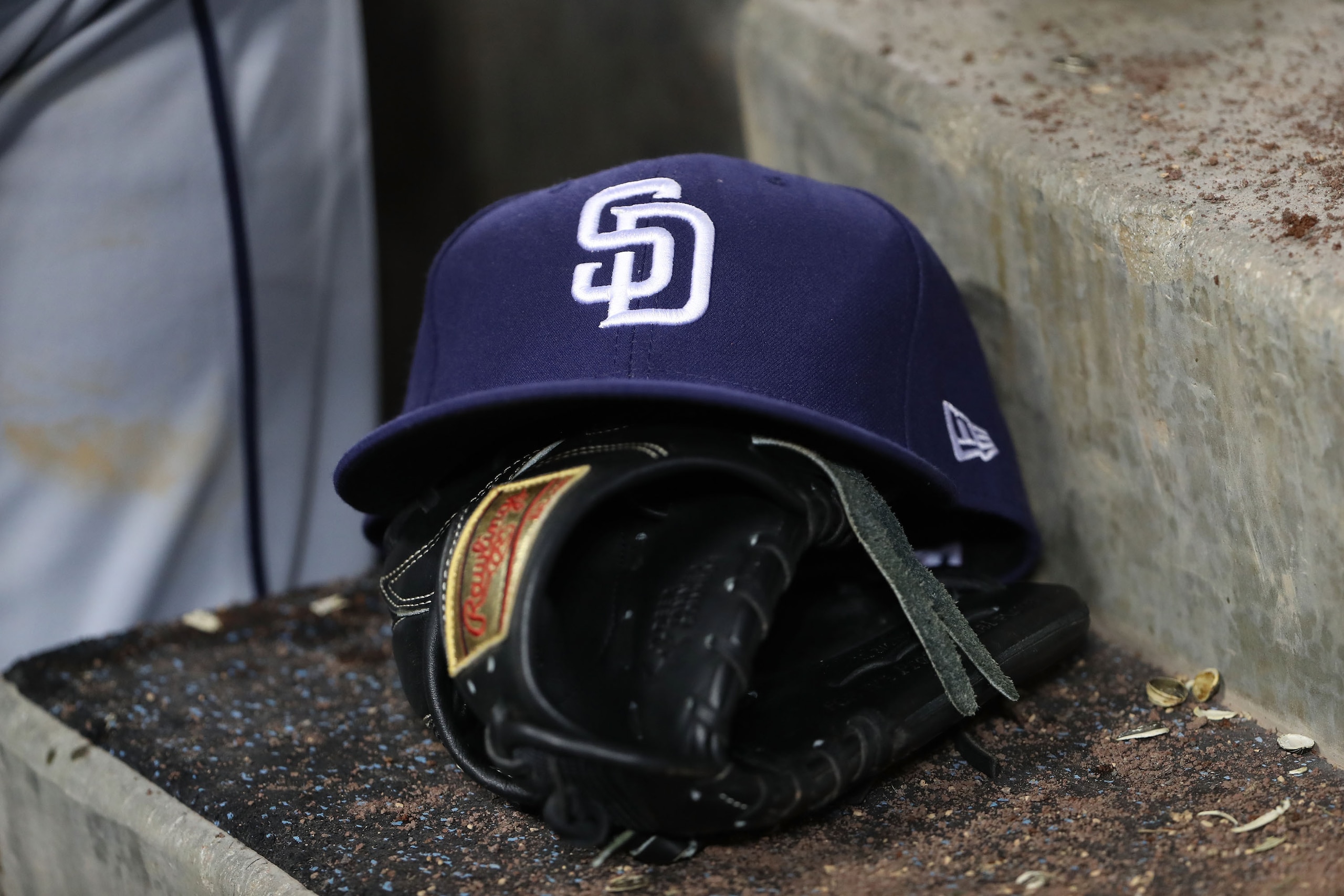
WAR After Rookie Season: -0.3
The 1976 season was a different time when it comes to how bullpens were used, and Butch Metzger is the perfect example.
The 24-year-old led the San Diego Padres with 16 saves that season in 77 appearances out of the bullpen, but he also finished fourth on the team with 123.1 innings while posting a 2.92 ERA and 1.3 WAR.
He shared NL Rookie of the Year honors with Cincinnati Reds right-hander Pat Zachry, as each player received 11 of the 24 votes back when voters only selected a winner.
Success proved fleeting.
His ERA jumped to 5.56 in 17 appearances to start the following season, and he was traded to the St. Louis Cardinals in May. He rebounded with a 3.11 ERA in 58 games following the deal but lasted just one more season in the majors.
Career Stats: 191 G, 23 SV, 3.74 ERA, 1.46 WHIP, 175 K, 293.1 IP, 1.1 WAR
LF Chris Coghlan, Miami Marlins (2009)
5 of 7
WAR After Rookie Season: -0.8
Chris Coghlan looked like a star in the making for the Florida Marlins when he hit .321/.390/.460 with 46 extra-base hits in 565 plate appearances and 1.1 WAR to win NL Rookie of the Year in 2009.
The 24-year-old beat out Philadelphia Phillies left-hander J.A. Happ in the voting, while Tommy Hanson, Andrew McCutchen and Casey McGehee also picked up first-place votes.
A torn meniscus in his left knee ended Coghlan's second season the following July, and injuries became a recurring theme, as he played just 265 games in the four years following his Rookie of the Year win.
He enjoyed something of a renaissance for the Cubs in 2014 and 2015, posting a 118 OPS+ while averaging 26 doubles and 12 home runs in 468 plate appearances.
His final MLB action, however, came in 2017 with the Toronto Blue Jays in his age-32 season.
Career Stats: 801 G, 98 OPS+, .258/.334/.398, 53 HR, 234 RBI, 353 R, 0.2 WAR
LF Joe Charboneau, Cleveland Indians (1980)
6 of 7
WAR After Rookie Season: -0.8
After a rocky start to his professional career, left fielder Joe Charboneau found a home with the Cleveland Indians.
He hit .352/.422/.597 with 24 doubles and 21 home runs in 109 games for the team's Double-A affiliate in 1979, and he broke camp with a starting job the following spring after Andre Thornton suffered a knee injury.
Charboneau emerged as a fan favorite and an offensive force, hitting .289/.358/.488 for a 129 OPS+ with 23 home runs and 87 RBI in 131 games en route to 2.4 WAR.
He ran away with the AL Rookie of the Year honor, receiving 15 of 28 first-place votes (no one else garnered more than four).
After suffering a back injury during spring training and enduring a brief trip to the minors—not to mention the 1981 strike—Charboneau finished with a .210/.247/.362 line and four home runs in 48 games during his second season.
He underwent back surgery in the offseason and was sent to the minors again during the 1982 season, playing just 22 games with the big league club. Those were his final contests in MLB, and his once promising career was over at the age of 26.
Career Stats: 201 G, 115 OPS+, .266/.329/.453, 29 HR, 114 RBI, 97 R, 1.5 WAR
SS Angel Berroa, Kansas City Royals (2003)
7 of 7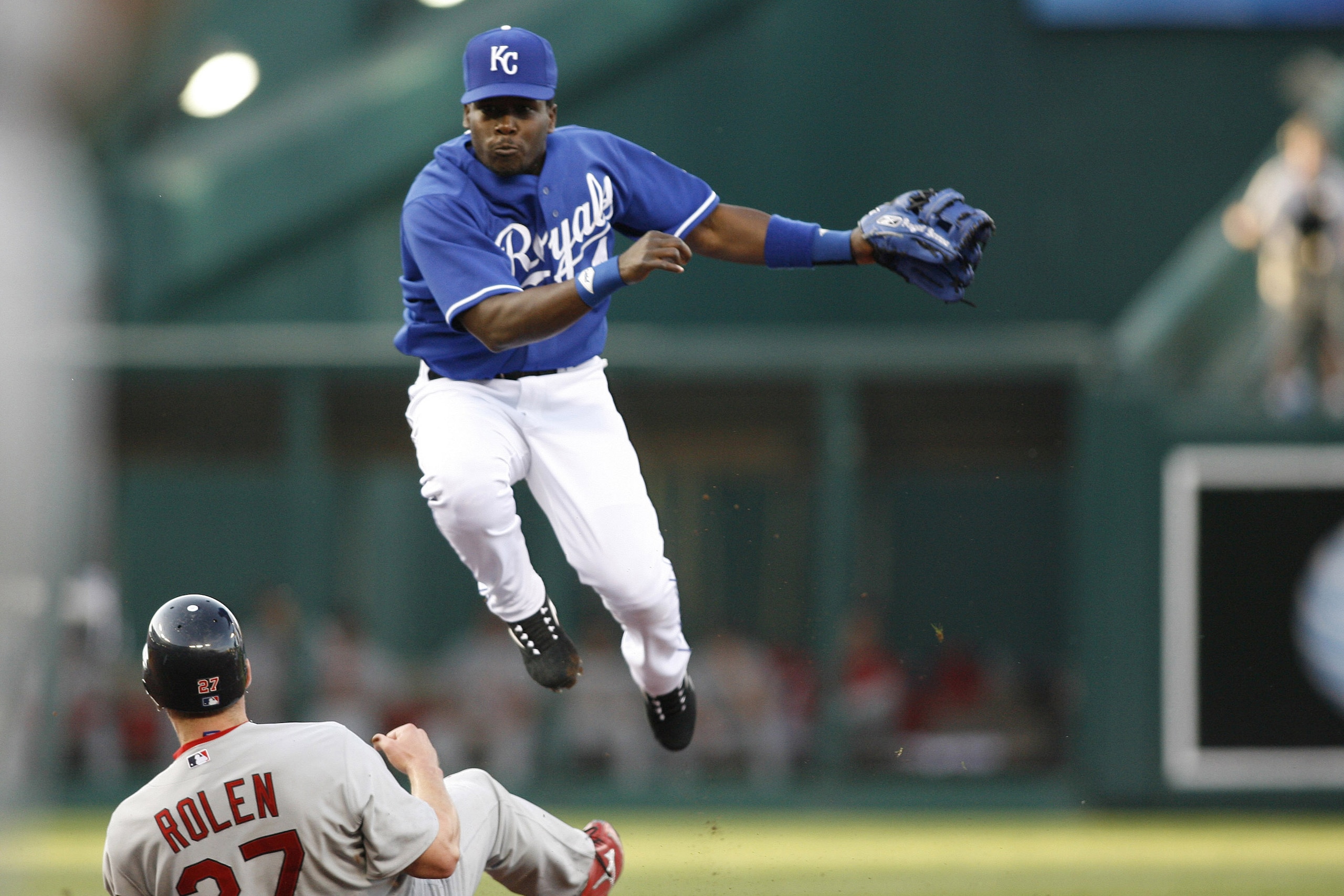
WAR After Rookie Season: -2.3
The 2003 AL Rookie of the Year field included the No. 1 and No. 2 prospects in baseball at the start of the season, per Baseball America, in Mark Teixeira and Rocco Baldelli as well as supremely hyped Japanese import Hideki Matsui.
To say it was a surprise that Angel Berroa won the honor would be putting it mildly, as he was not even on the preseason top 100 list.
But he edged Matsui by four points. His 2.5 WAR also bested Matsui's (2.3) and was not far behind Baldelli's (2.9) and Teixeira's (2.7), so it's not like he wasn't a viable candidate.
The 25-year-old Berroa hit .287/.338/.451 for a 101 OPS+ while showing some nice pop with 28 doubles, seven triples and 17 home runs. He also added value with his speed, swiping 21 bases in 26 tries.
He remained the Royals' starting shortstop for the next three seasons, but his offensive production dipped considerably to a .257/.293/.366 line and 72 OPS+ average. He played three more seasons in MLB before his big league career wrapped at the age of 31.
Career Stats: 746 G, 76 OPS+, .258/.303/.374, 46 HR, 254 RBI, 329 R, 50 SB, 1.0 WAR
All stats courtesy of Baseball Reference and FanGraphs unless otherwise noted.


.jpg?w=2560 "Raiders Could Start Mendoza")



.jpg?w=2560 "Rodgers Iced Out on Plane 💎")

.jpg?w=2560 "🚨 Week 8 AP Top 25 Poll")

.jpg?w=2560 "Packers Safety Slams Refs 🤬")