

Why Can't Real Madrid Regularly Win La Liga Anymore?
Barcelona will win La Liga again if they defeat Levante at the Camp Nou Stadium on Saturday night. The club will have retained the title with three games left to play. It will be Lionel Messi's 10th championship winners' medal during his 15-season career. It's a remarkable haul.
The club's domestic dominance during the Messi era—in which the Blaugrana are also bidding to win a fifth Copa del Rey in a row if they defeat Valencia in next month's final at the Benito Villamarin Stadium in Seville—contrasts starkly with Real Madrid's diminishing returns over that period on the home front. Real Madrid have only won two league titles, for example, over the past 11 seasons. It wasn't always this way.
TOP NEWS

Final Men's Ballon d'Or Rankings 📊
Most to Blame at Man Utd? 😡

Unranked CFB teams cause chaos in Week 8
Historically, Real Madrid are the dominant force in the land. They have won 33 league titles during their history, eight more, at the time of writing, than Barcelona.
Real Madrid's domestic success is on a par with other dominant powers in Europe's great leagues. Juventus and Bayern Munich, for instance, have won 35 and 28 titles, respectively, in Serie A and the Bundesliga, with Bayern Munich set to make that 29 if they prevail in a tight league title race with rivals Borussia Dortmund.

There has been a shift, however, in Real Madrid's fortunes going back a generation. Since the 1990s, they have only averaged three league titles a decade, which is a significant historical slide. Alfredo di Stefano, the club's most iconic player, for example, won eight league titles with the club during 11 campaigns before his departure in 1964. The club finished the 1960s with eight championship wins in the decade.
Vicente del Bosque, who managed Spain's FIFA World Cup-winning team, won five league titles in the mid-to-late 1970s as a midfielder with Real Madrid. The fabled "Quinta del Buitre" team—which took its name from a quintet of academy graduates who came of age with the striker and present-day institutional relations director Emilio Butragueno—won five league titles on the bounce a decade later. Then the return to Spain of a Dutchman caused a shift in the balance of power.
"The problem of Real Madrid is called Football Club Barcelona," says Lu Martin, the Catalan writer and journalist. "When Johan Cruyff returned to the dugout of the club as trainer in 1988, he changed the course of history. The club started to win titles again. He put in the bases of a new structure. He instilled a playing philosophy.
"There was a period when it was broken, but it was renovated with Pep Guardiola—when he won 14 trophies in four seasons—and after Guardiola, it has been maintained more or less since, including Luis Enrique's triple-winning season and what will be back-to-back league title wins for Ernesto Valverde. That is the statistical problem of Real Madrid when it comes to winning leagues regularly."
The impact of Cruyff cannot be understated. He installed a number of his old Barca teammates from the 1970s, including Juan Manuel Asensi, Antonio de la Cruz and Pere Valenti Mora, in the club's youth academy, La Masia, to ensure fidelity to a specific, possession-based style of football. He ended the club's inferiority complex. After only winning two league titles in three decades, his Dream Team won four league titles in a row in the early 1990s, as well as the club's first European Cup win in 1992.
Messi—and his teammates Sergio Busquets and Gerard Pique—have taken that winning mentality to another level. Today, the club's fans only know about consistent success. Meanwhile, Real Madrid's successes have largely been on the international stage in winning, for example, four UEFA Champions League trophies in a recent five-season period. They have tended to peak for the European stage. They have a different mindset.
"To win a league title you have to play consistently well week in, week out," says Martin. "To win a Champions League, you have to come through seven knockout games. You need luck and a specific kind of talent. Against Atletico Madrid in the 2014 final, for example, Real Madrid was losing until the 93rd minute until a goal by Sergio Ramos saved the team.
"Many times, it depended on decisive 'moments' from Cristiano Ronaldo. You need a lot of things to win a league. Real Madrid has a president in Florentino Perez who doesn't know how to give it these things. He wants to rely on talent, on moments of genius, but that's not enough."
Perez oversees the club's transfer dealings without a director of football. Since coming to power in 2000, he has operated a Galactico philosophy, in which he has bought the world's best players, including Luis Figo, the Brazilian Ronaldo and Zinedine Zidane during his first great wave. When he returned to office after a three-year hiatus in 2009, he purchased the likes of Cristiano Ronaldo, Kaka and Gareth Bale.
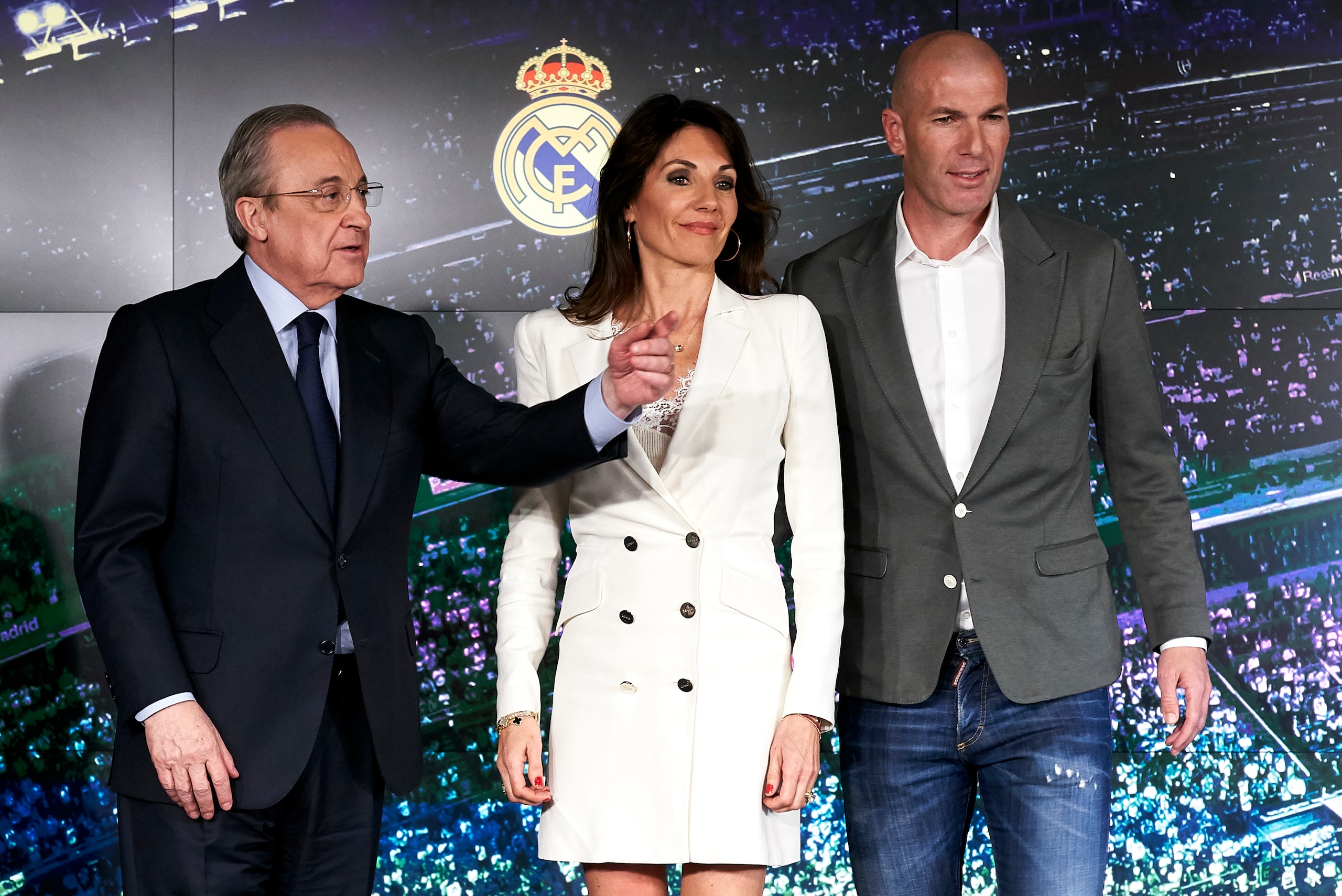
"Florentino has built a team of stars," says Alfredo Relano, editor of Diario AS. "They try to play their best in the most difficult matches, but they don't have any more the perseverance that historically they used to have in small stadiums, in matches in the Spanish league. Games which are hard because of poor, bumpy pitches or an aggressive public. That virtue Real Madrid used to always have, of fighting until the end, has been lost. I don't think Real Madrid's team is weaker than previous eras, but it's some kind of vanity to think that the only thing that matters is the Champions League."
The Galactico policy of Perez has been reined in over the last five years. The club haven't bought a marquee player since James Rodriquez, a star of the 2014 FIFA World Cup. Instead, they have focused on a hit-and-miss strategy of buying the best of Spain's emerging talent and international prodigies like the Brazilian teenagers Vinicius Jr., who arrived last summer, and Rodrygo, who will join the squad for pre-season training in the summer.
Sid Lowe, the Guardian newspaper's football correspondent in Spain, challenges the notion that Real Madrid's transfer dealings have been unsuccessful during this period: "In the first Galactico era, there was something structurally wrong, but in the second era, if you go through what Real Madrid has done in the transfer market, I don't think there's very much wrong with it. Take Raphael Varane. He was an astonishing signing. How cheaply they got Luka Modric, Toni Kroos and—I know it didn't go brilliantly—Mesut Ozil. Could you really, for example, question the success of signing Karim Benzema? Or Xabi Alonso? Cristiano Ronaldo is a slightly different case.

"Then you look at Florentino's recent policy of buying the best young Spaniard at other clubs—Theo Hernandez, Dani Ceballos, Alvaro Odriozola, Jesus Vallejo. All of these, we don't know yet whether they are going to work or not, but the idea behind it is perfectly rational. There is an economic reality that they have to deal with recently. They have to be fiscally prudent.
"Remember Barcelona has bought badly as well. You see forwards coming in and out. No one really works except Luis Suarez. I do, however, think that over the last few years the Real Madrid squad has clearly become debilitated. The last time Real Madrid won the league in 2017, you have James and Alvaro Morata playing key roles. They let both of those go. The following season they let Mateo Kovacic, who was another quality squad player, go.
"Rather than it being a structural problem, it's more about the club's priorities. Real Madrid is a club that has built its identity through winning the European Cup that takes on a significance—and this is amongst people at board level—which possibly diminishes the league. Also, the reality is that only one team can win the league each year. And Real Madrid has to compete against Messi's Barcelona."
Lowe notes that Messi has won 35 per cent of the titles Barcelona has won in their history. As well as his goals, Messi—who this season has been made captain—brings an insatiable appetite for winning to the club. He has an unfussy, do-your-talking-on-the-pitch way about doing his business.
It has proved to be more effective than his counterpart at Real Madrid, the club's swashbuckling captain Sergio Ramos. It could be a personality thing—and the culture that filters down from the top—when it comes to accumulating league titles.
"Historically, there's been the construction of an idea about Real Madrid that its teams are physically strong and super competitive," says Lowe. "No one embodies this more than Ramos. He's full of aggression. This is a guy that goes out there and fights to the end, and yet Ramos at Real Madrid has won only two league titles in more than a decade.
"He was really important in the Champions League win in 2014—in the final against Atletico and also in the semi-final against Bayern Munich. He was man of the match in the 2016 final. He has his moments but lacks consistency. Maybe it's not so much about leadership in the Action Man sense as day-to-day application perhaps—'Right, let's go out there and keep winning. Boom, boom, boom.' This is what Messi brings—he has normalised the abnormal."

Real Madrid are limping towards the end of another poor league campaign. Last year, they finished 17 points behind Barcelona. There will be a similar gap again this season—at the moment, they are 16 points shy of their eternal rivals (with a game less played).
Los Blancos have turned again to Zidane—who won three European Cups in a row last time out—to fix the problem. Former Real manager Fabio Capello told Sky Sport Italia (h/t AS) that he will have a war chest of approximately €500 million to draw on. The Frenchman will measure his success based on his ability to deliver a league title, or many of them, argues Lowe.
"Zidane is the one person at Real Madrid who keeps saying publicly, 'the league is more important' than the Champions League. There are people at board level who don't agree with him. It's an incredible thing. Zidane is contradicting his own club's legend by saying this—that the club needs to change its priorities. He hasn't come back to win another European Cup. He's come back to win, say, three of the next five league titles.
"He returns with more authority than even Jose Mourinho had when he was made manager in 2010. In theory, the situation should be better for Real Madrid, as he'll be given some of the things he was denied in the past, and yet the contradiction in all of this is that my suspicion is that Barcelona's fans aren't too upset at seeing Zidane returning—that they're going back to the way they were."
Follow Richard on Twitter: @Richard_Fitz



.jpg?w=2560 "Mahomes Asked OT to Leave Meeting")
.jpg?w=2560 "Jonathan Taylor Landing Spots 📍")


.jpg?w=2560 "Five Teams Eyeing Taylor")
