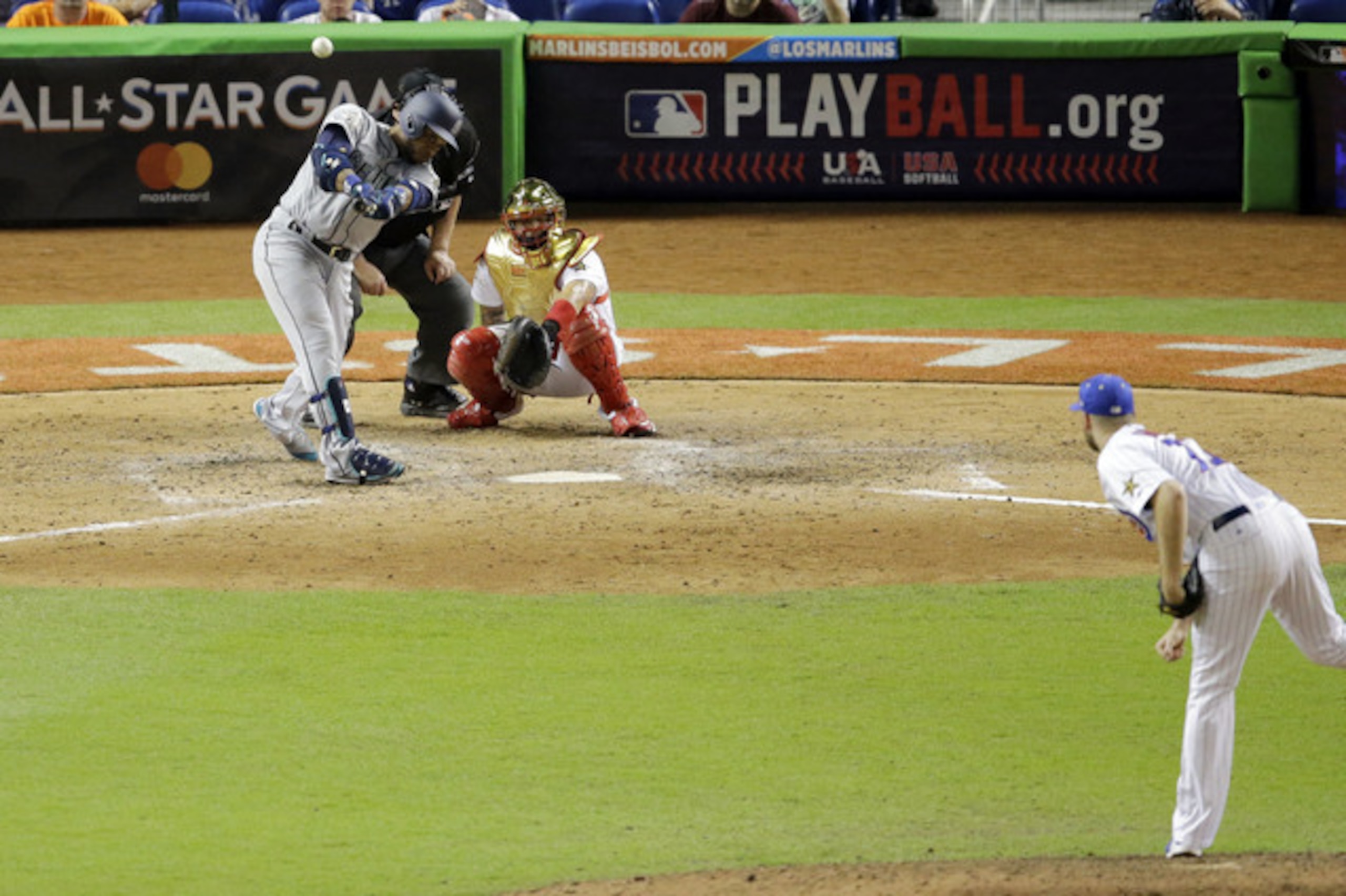


Whether the All-Star Game has been an exhibition or a battle to determine home-field advantage for the World Series, Major League Baseball has had a lot of memorable Midsummer Classics over the past eight-plus decades.
Including last year's pitchers' duel, there have been a dozen All-Star Games that went to extra innings—several of which produced unforgettable walk-off moments. Others on this list were gems that only required nine innings. (This year's game takes place July 17 in Washington, D.C.)
Regardless of the length, these contests were the best of the best thanks to a combination of drama and individual performances.
Games are listed in chronological order.
Honorable Mentions
1 of 9
1950: Extras Special
Ralph Kiner homered in the ninth to force the first extra-innings game in ASG history, and in his only at-bat, teammate Red Schoendienst hit a round-tripper in the 14th to give the National League the 4-3 victory. And there was one heck of a pitching performance. Larry Jansen allowed just one baserunner in five scoreless innings with six strikeouts.
1961 (First Game): Ninth-Inning Meltdown
A Harmon Killebrew solo home run in the sixth inning was the only hit the National League's Warren Spahn, Bob Purkey and Mike McCormick allowed through the first eight innings. But four errors, three hits, a walk and a balk between the ninth and 10th innings allowed the AL to come back and take the lead. But with a murderer's row of Hank Aaron, Willie Mays, Frank Robinson and Roberto Clemente leading off the bottom of the 10th, the NL came back to win 5-4. (From 1959 to 1962, there were two All-Star Games.)
1989: Bo Knows Baseball
Bo Jackson and Wade Boggs hit back-to-back home runs to lead off the bottom of the first inning for the AL. While that was the extent of Boggs' contributions, Jackson added an RBI groundout, a stolen base and a single en route to being named the MVP of a game that turned into a solid pitchers' duel after the third inning.
1998: Runs in the Rockies
It was the apex of the steroids era. It was Coors Field. Of course it was the highest-scoring MLB All-Star Game ever. There were actually just three home runs in the contest, but the AL outlasted the NL to win 13-8. Roberto Alomar, Ivan Rodriguez and Devon White each had three-hit performances on a night with 31 hits allowed and 11 walks.
2001: Cal Ripken Jr.'s Last Ride
The Iron Man had announced a few weeks before this game he would retire at the end of the season, but he still had one more trick left up his sleeve. After Alex Rodriguez insisted on letting Ripken start at shortstop instead of third base, Ripken clubbed a home run in his first at-bat and was named the game's MVP.
2002: The Tie
Save for Torii Hunter's robbing Barry Bonds of a home run in the first inning, followed by Bonds' homer in the third, these 11 innings (and many of the names involved) were rather unmemorable. It's only because the game controversially ended in a 7-7 tie that we'll never forget it.
1934: American League 9-7
2 of 9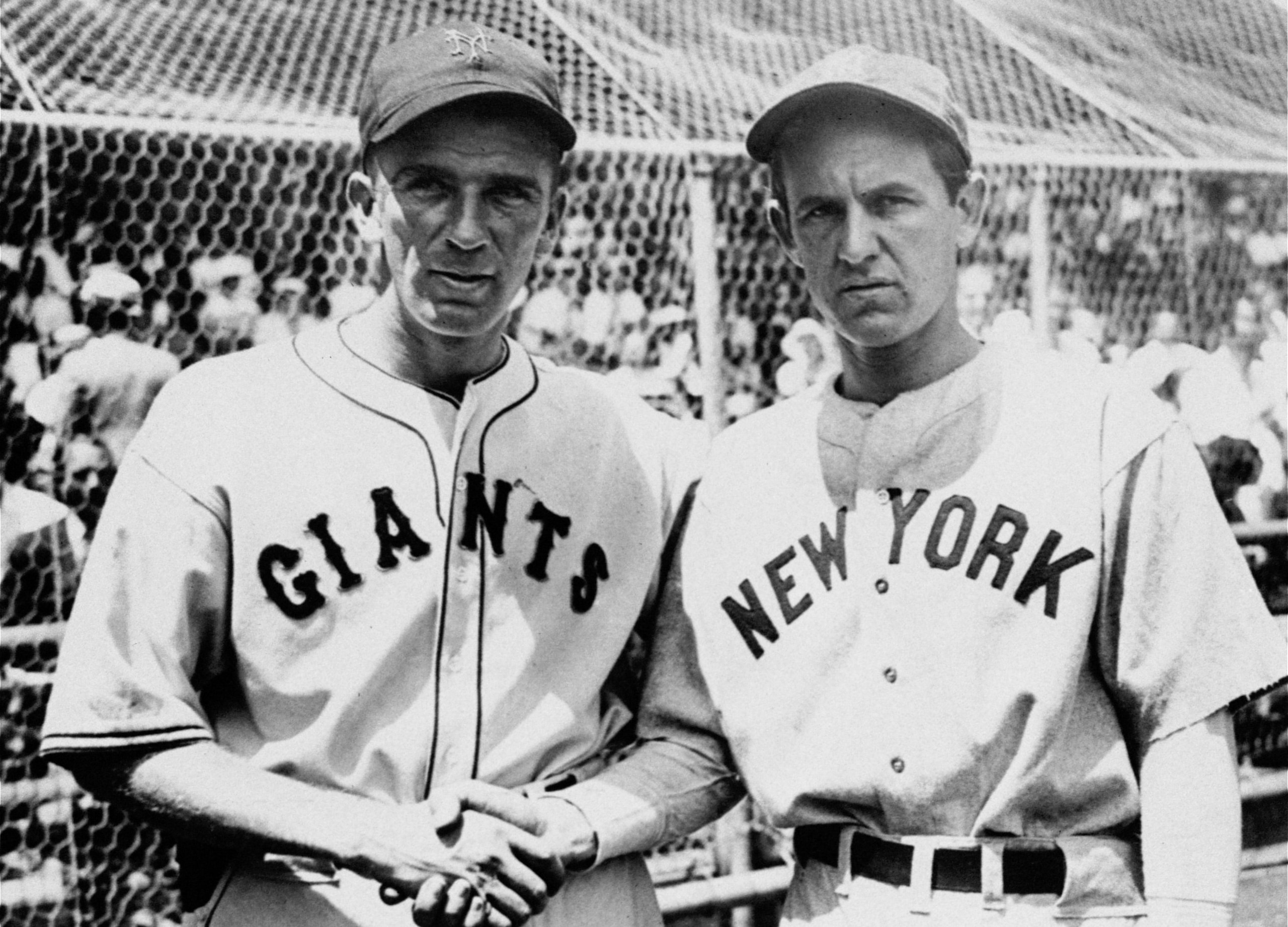
Whether you enjoy masterful pitching performances or high-scoring affairs, the 1934 All-Star Game featured the best of both worlds.
In the offensive department, the sides combined for 16 runs on 22 hits—even though Babe Ruth and Lou Gehrig went a combined 0-for-6 at the dish. Seven different players recorded multiple hits, including Al Simmons, who went 3-for-5 for the AL, and both Frankie Frisch and Joe Medwick, who each homered off Lefty Gomez for the NL.
There were nine runs in the fifth inning alone. From Ruth's walk to lead off the top of the inning through Chuck Klein's RBI single in the bottom of the frame, 12 out of 15 batters reached base. It was quite the station-to-station affair, though, as there were six singles, five walks and just one double.
In spite of all that offense, NL starting pitcher Carl Hubbell struck out six batters in the first two innings and logged three scoreless frames before departing. Even more impressive, Mel Harder came on in relief for the AL to end the aforementioned 12-out-of-15 stretch and allowed just one hit and one walk in five scoreless innings.
1941: American League 7-5
3 of 9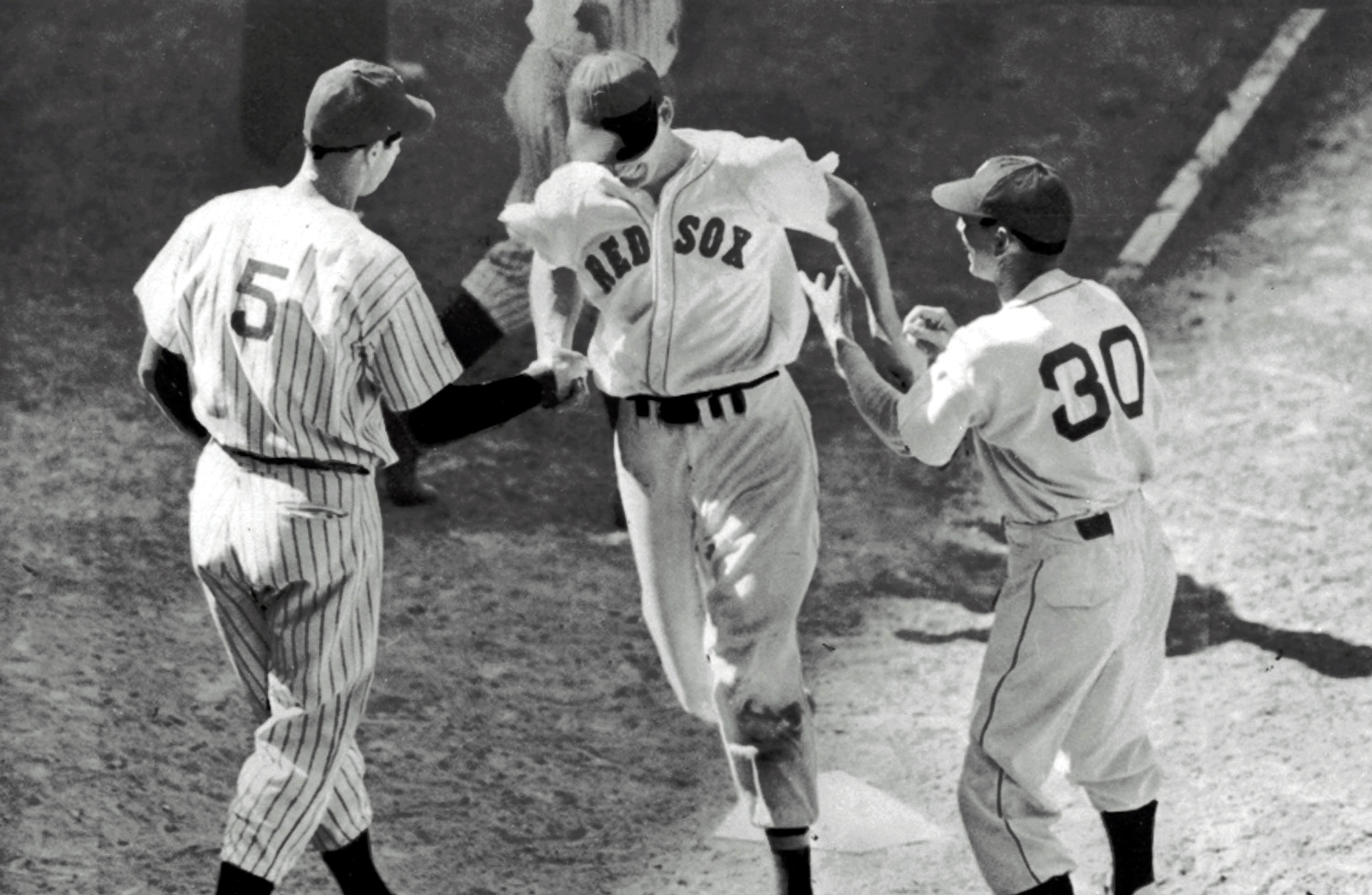
There have been plenty of great pitching showdowns over the years, but you have to go all the way back to 1941 to find one of the best head-to-head batting battles in All-Star Game history.
In the NL corner, it was Arky Vaughan. The shortstop was on the ASG roster for the eighth consecutive time, but he had yet to record so much as an RBI in the exhibition game. He made up for lost time with a pair of two-run home runs—one in the seventh inning, the other in the eighth—to propel the NL to a 5-2 lead late in the contest.
It was quite the feat from someone whose last multi-home run game occurred more than four years prior.
In the AL corner, however, it was one of the greatest hitters of all time: Ted Williams. The Splendid Splinter had an RBI double in the fourth inning and a walk-off three-run home run in the bottom of the ninth.
(Williams later had the best individual ASG performance ever, going 4-for-4 with a pair of home runs, four runs and five RBI in 1946. That 12-0 AL blowout wasn't remotely worth consideration as one of the best games, though.)
In addition to that head-to-head slugfest, Bob Feller turned in one heck of a start on the mound. He struck out four NL All-Stars in three innings of one-hit ball, and he immediately erased that lone single by picking off Lonny Frey.


1955: National League 6-5 (12 Innings)
4 of 9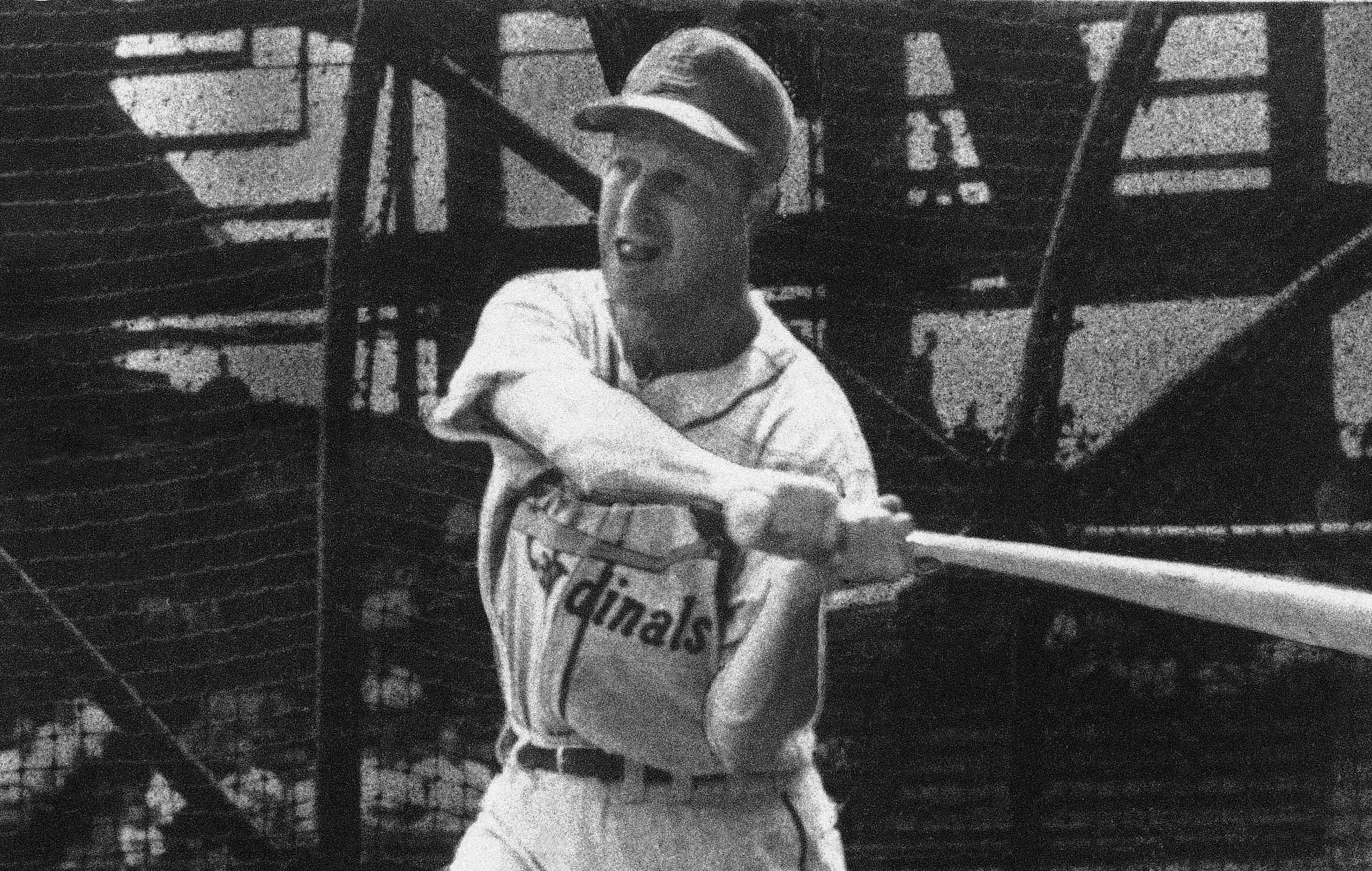
One of the greatest to play the game clubbed a home run in the top of the first inning, and then another baseball legend belted one of his own in the bottom of the 12th.
The first dinger belonged to Mickey Mantle, as the American League quickly jumped on top of Robin Roberts. After Harvey Kuenn, Nellie Fox and Ted Williams reached base to start the game, Mantle made it 4-0 just four batters into the contest.
Things proceeded uneventfully until the National League put together two-out rallies in the bottom of the seventh and eighth innings against Whitey Ford. Punctuated by a Hank Aaron two-run single, the NL erased a 5-0 deficit and sent the game to extras.
At long last, Stan Musial led off the bottom of the 12th with a home run.
1967: National League 2-1 (15 Innings)
5 of 9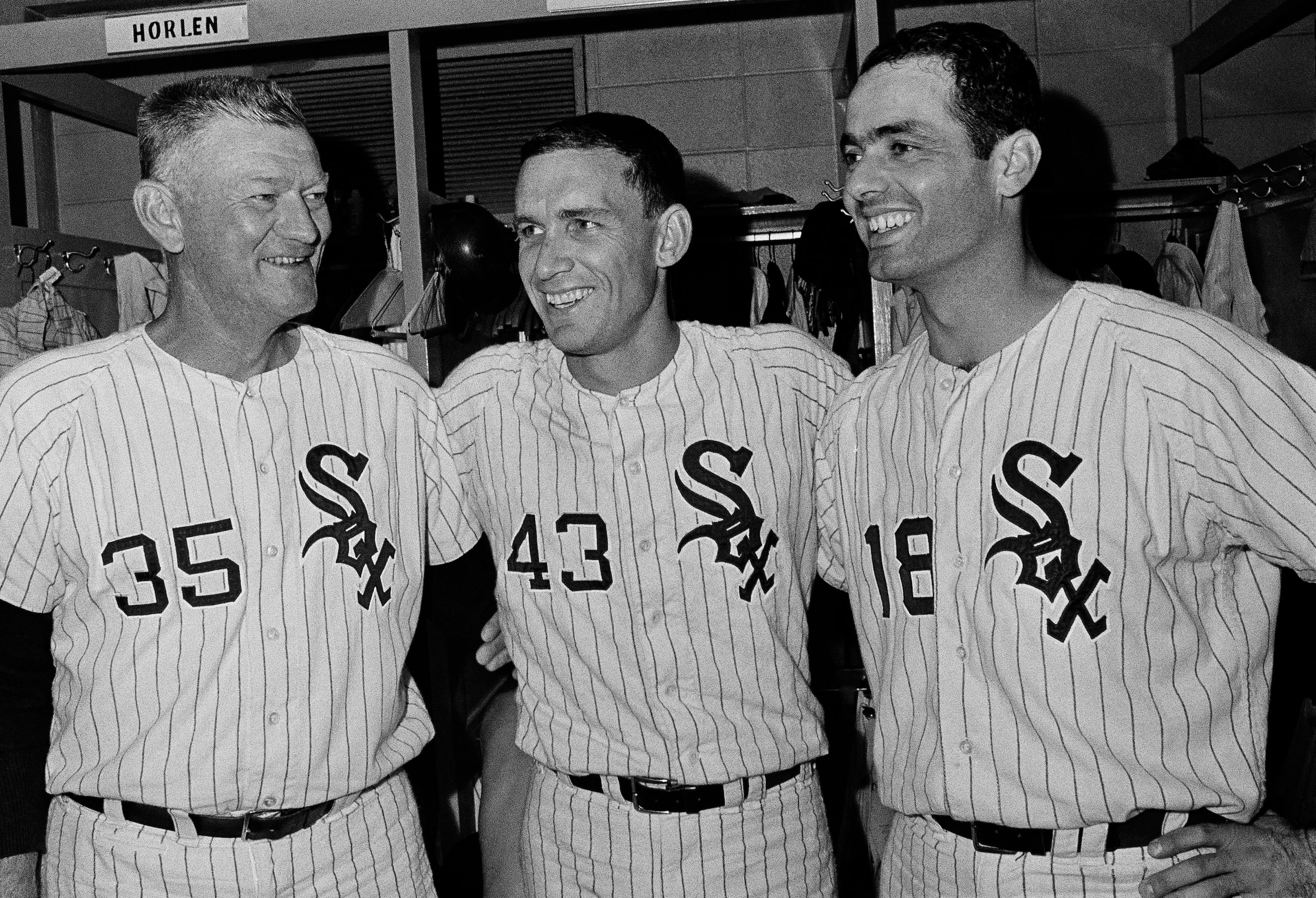
Eventually matched in 2008, 1967 produced the longest game in All-Star Game history.
Legendary hurlers refused to give an inch in a battle that went 15 innings. All 12 pitchers who appeared logged at least one strikeout. In all, the sides combined for 30 strikeouts against two walks.
Among pitching staffs littered with the likes of Bob Gibson, Fergie Jenkins, Tom Seaver and Catfish Hunter, the biggest star on this day was Gary Peters. The 1963 AL Rookie of the Year and two-time All Star went three innings without allowing a baserunner and struck out four. Every other pitcher in the game put at least one guy on base.
The few runs that were scored came in impressive fashion. Dick Allen hit a solo home run in the second inning, and it was his replacement at third base—Tony Perez—who clubbed the game-winner for the NL in the 15th. The lone run for the AL came on a Brooks Robinson blast in the sixth inning.
Fun fact about this game: It wasn't until the 13th inning that someone finally reached third base (excluding the solo home runs). Tim McCarver doubled to lead off the inning, and Bill Mazeroski bunted him to third before he was stranded.
1968: National League 1-0
6 of 9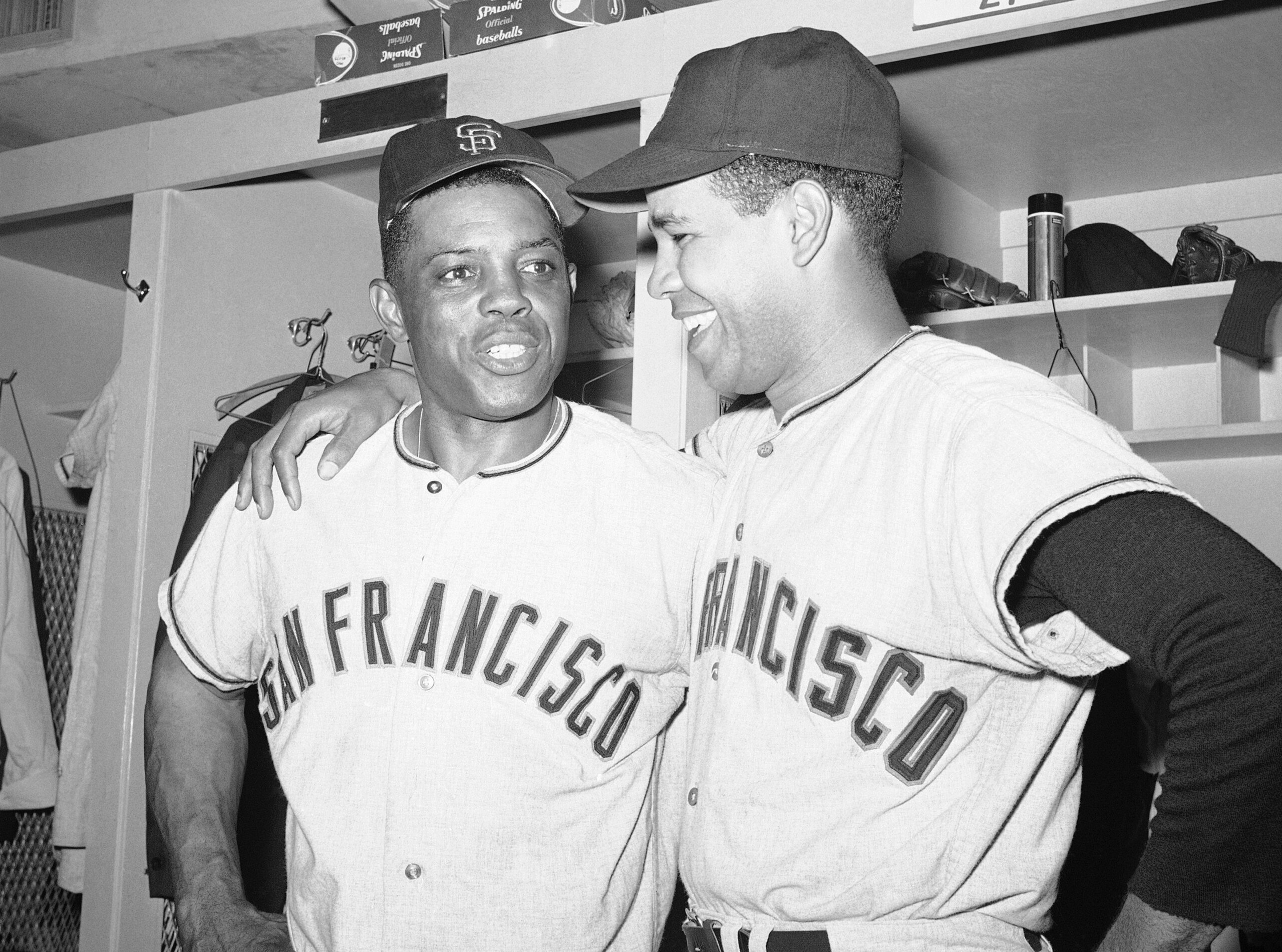
If you watch the Midsummer Classic for the long ball, well, this one was downright miserable for you.
It should come as no surprise that The Year of the Pitcher produced the greatest pitching duel in All-Star Game history—even though Bob Gibson and his historic 1.12 ERA didn't make an appearance.
Willie Mays led off the bottom of the first inning with a single. He advanced to second on an error, got to third on a wild pitch and scored on a double play. And that was it. No other runs scored, so the 1968 All-Star Game ended without a single earned run allowed and without a single RBI.
No wonder Major League Baseball lowered the mound the following season in an effort to produce more runs.
For the NL, it was Hall of Fame starter after Hall of Fame starter toeing the rubber. Don Drysdale pitched the first three innings, followed by two frames from Juan Marichal, an inning out of Steve Carlton and two from Tom Seaver. They had a combined pitching line of eight innings, three hits, no runs, no walks and nine strikeouts.
Try as they might, AL greats Carl Yastrzemski, Harmon Killebrew, Brooks Robinson, Frank Howard, Rod Carew and Mickey Mantle couldn't even get on base.
1970: National League 5-4 (12 Innings)
7 of 9
There have been unforgettable moments throughout All-Star Game history, but nothing quite compares to when Pete Rose plowed through Ray Fosse for the walk-off win in the 12th inning in 1970—an unfortunate collision Fosse never fully recovered from.
Long before that moment, though, this was already an outstanding game.
It started out as a pitchers' duel for the ages. Through the first five innings, the National League's Tom Seaver and Jim Merritt had allowed just two hits while recording five strikeouts. Ditto for the American League's Jim Palmer and Sam McDowell, albeit with two walks allowed. Carl Yastrzemski was the only starter with a run or an RBI, and that's only because he played the full game and got three of his four hits after the fifth inning.
The bats finally woke up in the later frames, highlighted by a Brooks Robinson two-run triple in the eighth inning to give the AL a 4-1 lead. In the bottom of the ninth, a Dick Dietz leadoff home run sparked a comeback against Catfish Hunter, resulting in extra innings.
That's when Rose separated Fosse's shoulder with a collision at the plate.
1999: American League 4-1
8 of 9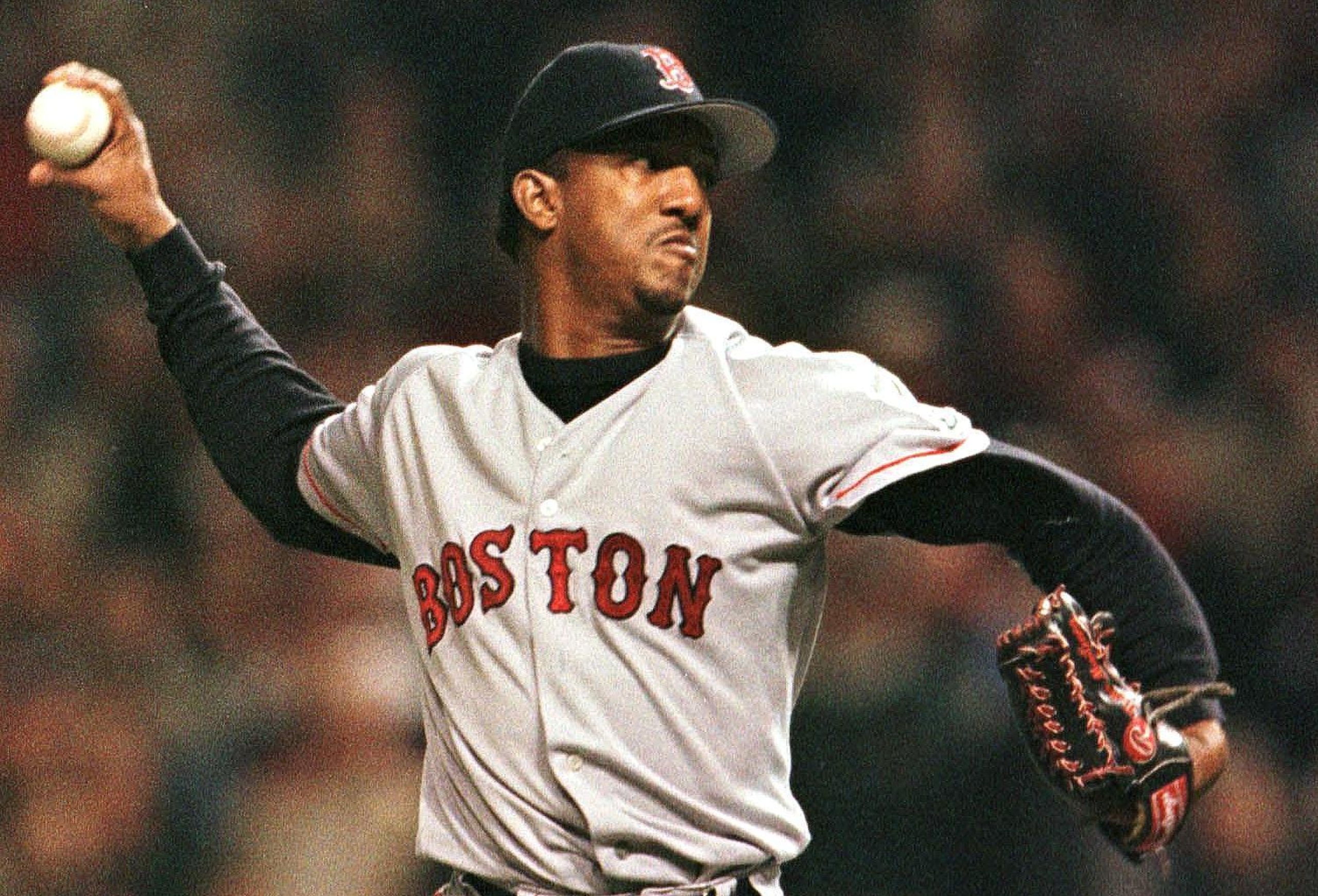
This night was going to be memorable no matter what happened in the game. In addition to that year's All-Stars, Fenway Park played host to many of the living nominees for the All-Century Team, including Hank Aaron, Willie Mays, Stan Musial and hometown hero Ted Williams. After that pregame ceremony, the contest could've been rained out and it still would've been one of the greatest nights in ASG history.
But Pedro Martinez put on one heck of a show in front of the home crowd, too. One year after the highest-scoring game in ASG history, Martinez delivered arguably the greatest pitching performance ever seen at the Midsummer Classic.
Barry Larkin, Larry Walker, Sammy Sosa, Mark McGwire, Matt Williams and Jeff Bagwell combined for 12,726 hits, 2,600 home runs and four NL MVP awards in their careers. But on this night in Boston, that sextet went six up, six down against Martinez with five strikeouts. The only ball put in play came when Matt Williams reached base on an error by Roberto Alomar, and he was erased on a strike-'em-out, throw-'em-out double play moments later.
Granted, from 1997 through 2003, Martinez was virtually unhittable no matter who he was facing. But this was the moment it became undeniable that he was one of the greatest pitchers of this era—if not one of the greatest pitchers ever.
The rest of the night was a meaningless blur. No one homered, and yet, no one other than Martinez pitched particularly well. Still, nearly two decades later, this stands out as one of the few All-Star Games worth remembering.
2008: American League 4-3 (15 Innings)
9 of 9
One night after Josh Hamilton put on the most memorable show in Home Run Derby history, the 2008 All-Star Game at Yankee Stadium was a small-ball nail-biter.
Yes, Matt Holliday homered in the fifth inning to break a scoreless tie. And, yes, J.D. Drew was named the MVP because of his game-tying two-run blast in the bottom of the seventh inning. But this contest was all about trying to manufacture runs on the basepaths.
In all, there were seven stolen bases, two players caught stealing and one player picked off. There was also an extra-innings sacrifice bunt by a power-hitting catcher (Russell Martin) and three runs scored on sacrifice flies, including the game-winner in the bottom of the 15th inning.
It was probably the most intensely managed game in ASG history. It was also the longest contest based on time, lasting nearly five hours before an otherwise perfect closer finally cracked.
Brad Lidge had a great 2008. Between the regular season and playoffs, he converted 48 save opportunities without a single blown save or loss. But in this exhibition game, he gave up two hits, a walk and a sac fly to take the L.
Kerry Miller is a multisport writer for Bleacher Report. You can follow him on Twitter, @kerrancejames.



.jpg?w=2560 "Jonathan Taylor Landing Spots 📍")




