
NBA Draft 2018: 1st-Round Mock Predictions and Top Fringe Prospects to Know
The fiercest NBA draft debates are seen at the top.
Who should follow Deandre Ayton? Will Luka Doncic really slip outside of the top three? What's the right spot for Michael Porter Jr. or Trae Young?
You'll hear fierce arguments from all sides between now and the June 21 talent grab. What you won't hear as much is talk of players projected to be on the first-round bubble, even though history has a number of stars selected from that range.
TOP NEWS

Duren Calls Out 'False' Rumors

Pic of LeBron's Helicopter Commute 🚁

NBA Power Rankings Entering Preseason 🔢
After laying out our latest first-round mock, we'll spotlight three fringe first-rounders you need to know.
2018 NBA Mock Draft
1. Phoenix Suns: Deandre Ayton, C, Arizona
2. Sacramento Kings: Marvin Bagley III, PF/C, Duke
3. Atlanta Hawks: Jaren Jackson Jr., C, Michigan State
4. Memphis Grizzlies: Luka Doncic, SG, Slovenia
5. Dallas Mavericks: Mohamed Bamba, C, Texas
6. Orlando Magic: Trae Young, PG, Oklahoma
7. Chicago Bulls: Wendell Carter, C, Duke
8. Cleveland Cavaliers (via Nets): Michael Porter Jr., SF/PF, Missouri
9. New York Knicks: Kevin Knox, SF, Kentucky
10. Philadelphia 76ers: Mikal Bridges, SF, Villanova
11. Charlotte Hornets: Collin Sexton, PG, Alabama
12. Los Angeles Clippers (via Pistons): Shai Gilgeous-Alexander, PG, Kentucky
13. Los Angeles Clippers: Lonnie Walker IV, SG, Miami
14. Denver Nuggets: Miles Bridges, SF/PF, Michigan State
15. Washington Wizards: Robert Williams, C, Texas A&M
16. Phoenix Suns (via Heat): Aaron Holiday, PG, UCLA
17. Milwaukee Bucks: Zhaire Smith, SF, Texas Tech
18. San Antonio Spurs: Jerome Robinson, PG/SG, Boston College
19. Atlanta Hawks (via Timberwolves): Elie Okobo, PG, France
20. Minnesota Timberwolves (via Thunder): Kevin Huerter, SG, Maryland
21. Utah Jazz: Khyri Thomas, SG, Creighton
22. Chicago Bulls (via Pelicans): Troy Brown Jr., SF, Oregon
23. Indiana Pacers: Donte DiVincenzo, SG, Villanova
24. Portland Trail Blazers: Chandler Hutchison, SF, Boise State
25. Los Angeles Lakers (via Cavs): Mitchell Robinson, C, Western Kentucky
26. Philadelphia 76ers: Josh Okogie, SG, Georgia Tech
27. Boston Celtics: De'Anthony Melton, PG/SG, USC
28. Golden State Warriors: Jacob Evans, SF, Cincinnati
29. Brooklyn Nets (via Raptors): Keita Bates-Diop, SF/PF, Ohio State
30. Atlanta Hawks (via Rockets): Dzanan Musa, SG/SF, Bosnia and Herzegovina
Fringe First-Rounders
Jacob Evans
Jacob Evans has the two biggest things NBA teams want from their role-playing wings—three-point shooting and defensive versatility.
He splashed 174 triples over three seasons at Cincinnati, or nearly two per contest. He was a career 37.7 percent shooter from distance, and his conversion rate climbed to 39.4 the past two years. This season, he buried at least three long-range looks in different outings.
Defense, though, looks like Evans' biggest selling point.
"Evans is tough and competitive, with the lateral quickness to guard 2s and some 1s, and the frame to check big wings as well," ESPN's Mike Schmitz wrote. "His size, length and strength allow him to slide up in smaller lineups and guard 3s and 4s without too much of an issue, which gives him great versatility in today's NBA."
Had Evans averaged more than 11.7 points per game, he might be a lottery candidate and not a fringe first-rounder.
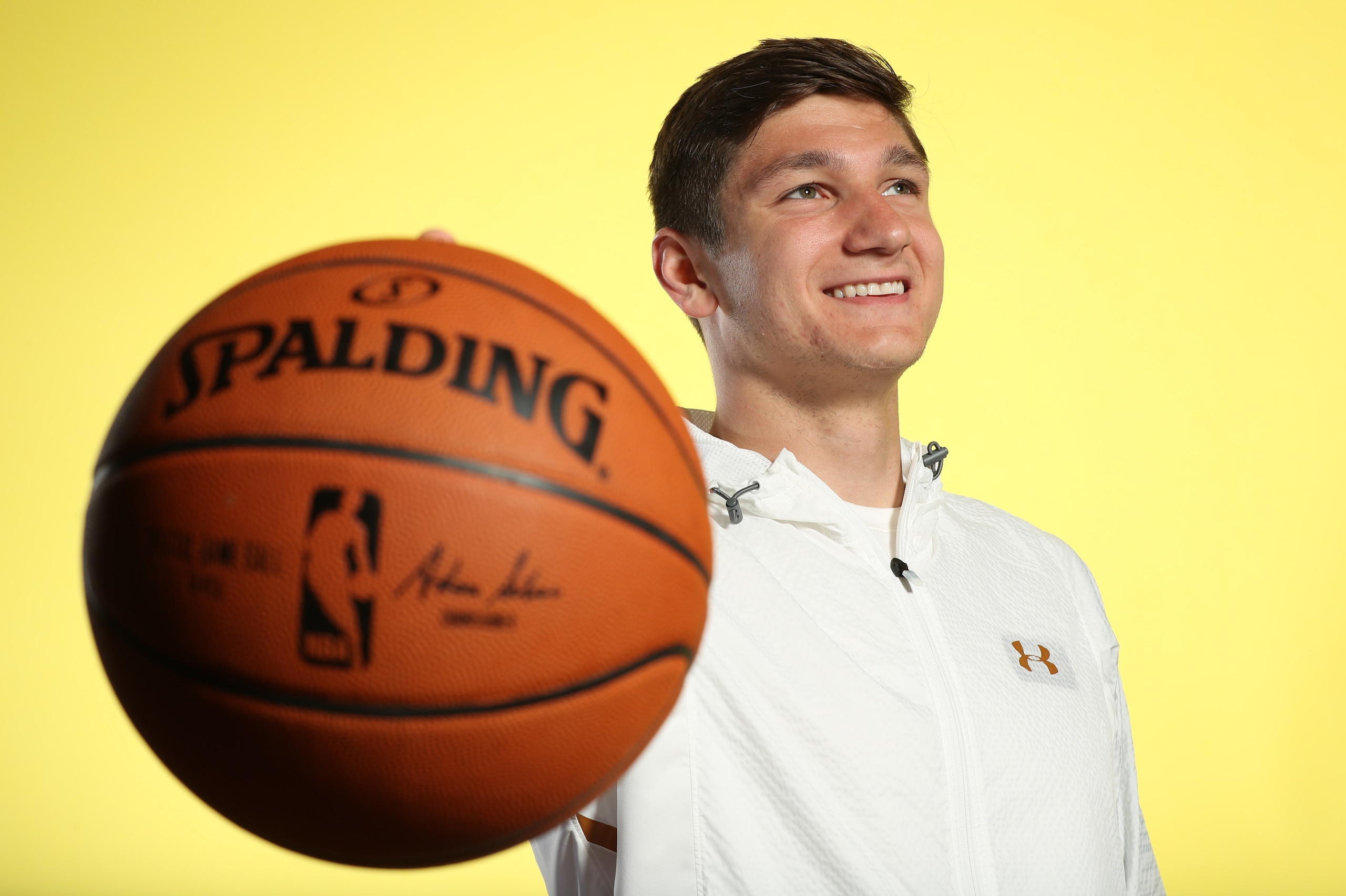
Fans might remember Grayson Allen for more than his production over four seasons at Duke, but executives will view him solely through the lens of basketball.
They should like what they see, though.
Due to changing supporting casts, Allen showcased a little of everything with the Blue Devils. He filled a featured scoring role for the 2015-16 version (21.6 points per game on 46.6 percent shooting), then served in more complementary fashion the past two years (15 points, 4.1 assists per game).
He stroked threes like a three-point specialist, a talent he's continued to showcase on the workout circuit.
But shooting specialists don't usually have the athletic gifts he possesses. This was the combine's quickest player in the lane agility drill (10.31 seconds), and he was a top-10 finisher in the shuttle run (3.04 seconds, ninth) and the max vertical (40.5", tied for sixth).
If Allen was younger (23 in October) or longer (8'1" standing reach, shortest among non-point guards), he'd be an opening-round lock.
Bruce Brown
Back in August, Bruce Brown was viewed as a lottery candidate.
But in the second game of his sophomore season, he missed nine of his 10 shot attempts. The woes only foreshadowed turbulent times ahead.
By year's end, Brown's draft stock had torpedoed. His shooting percentages crashed from every level, and his final slash was 41.5/26.7/62.9—gruesome for a guard. He'd also been limited to 19 appearances by a foot injury that required surgery.
Even still, a lot of what initially attracted scouts is still true.
He's big, long, quick and strong, attributes that help him defend all over the floor. He can create shots for himself and his teammates. His effort level is helpful on the glass and the defensive end. He looked like a decent scorer in the making as a freshman, averaging 14.9 points per 40 minutes with a 45.9/34.7/74.4.
He can't erase this past season, and his draft position will surely reflect that. But given his upside, he's an intriguing value buy in the late first or early second round.
Statistics used courtesy of Sports-Reference.com and NBA.com.
.jpg?w=2560 "NFL investigating 2 referees for separate viral exchanges")
.jpg?w=2560 "OBJ Calls Out Giants After Release")
.jpg?w=2560 "Report: Chiefs Contact Hill's Agent")
.jpg?w=2560 "Tyreek makes another cryptic post amid Chiefs rumors")