
Is LeBron James Having the Best Age-33 Season the NBA Has Ever Seen?
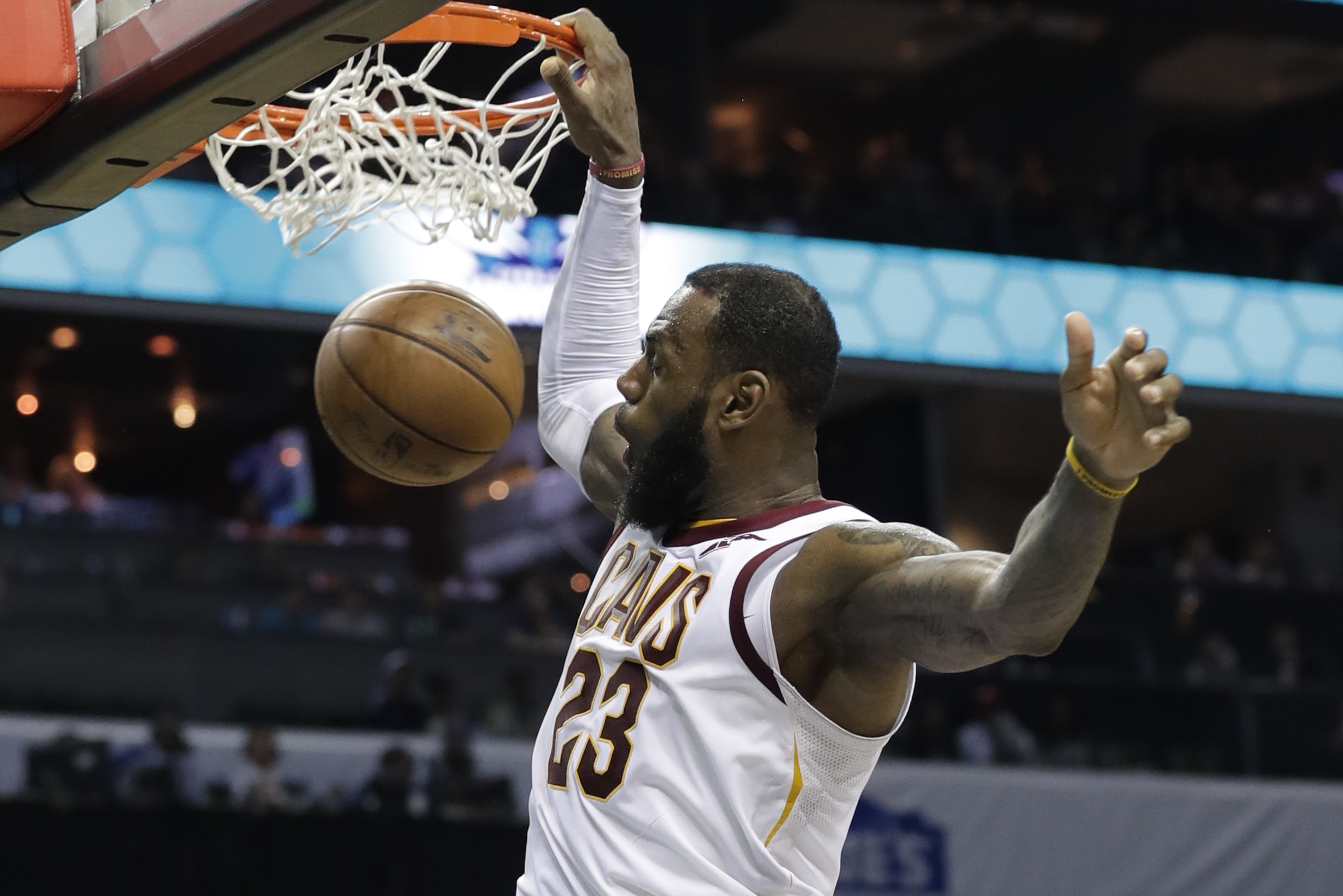
When LeBron James left the court with 1:31 remaining in Wednesday night's game against the Charlotte Hornets, he was met with a chorus of cheers. A standing ovation and sporadic chants of "MVP" littered Spectrum Center as a response to his 41-point, 10-rebound, eight-assist outing.
The Cleveland Cavaliers were up by 17 over the Hornets, and his job well done was being acknowledged—by Charlotte fans.
James' 2017-18 campaign, his 15th season in the NBA, has been one for the ages. Not only is the 33-year-old producing at levels that rival his peak-age years, but he's also played in all 75 of the Cavaliers' games. After years of fans criticizing him for sitting out occasional road contests, he's used this season to not just excel on the court but also put a show on for fans well beyond the city of Cleveland.

"It's pretty incredible," James told the media, speaking of the recognition he received. "When [you're] done with the game, those are the moments right there where you wish you had it back. And obviously you'll never be able to get it back, but you never take that for granted, especially being on the road."
Despite his age and mileage, James doesn't appear to be near the end of his career. His game appears to be ascending into the spring, coming off of a March that saw averages of 31 points, 9.6 rebounds, and 9.4 assists. That the last two statistics are a regression from the previous month shows just how dominant James has been this season.
James' "down" month was January, when he averaged 23.5 points, 7.3 rebounds, and 7.4 assists.
A small percentage of players get to see age 33 on an NBA court, and only a handful have been among the best in their class when doing so.
Which raises the question: Is this the best age-33 season the NBA has seen?
When we talk about age-based seasons, we have a tendency to omit several variables. Specific to James, his age-33 season is his 15th year in the league. He's ranked 20th overall in total NBA minutes played, recently passing Vince Carter. Further, James' minutes aren't created equal to others on the list when factoring in measurable items like usage rate or immeasurable items like the pressure of playing in seven consecutive NBA Finals.
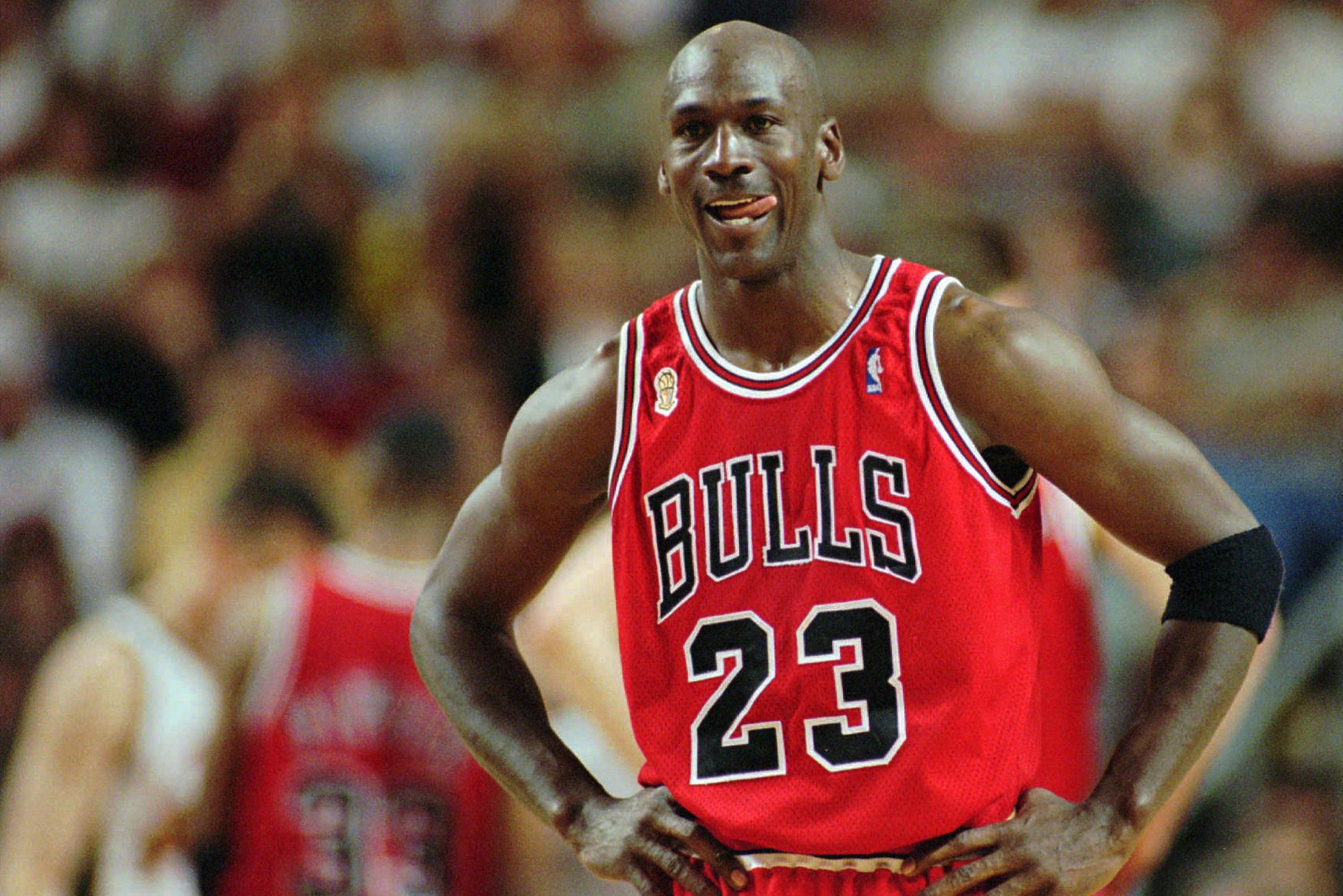
Michael Jordan, for example, turned 33 during his 11th season in the league. Jordan played three years at North Carolina and skipped the 1993-94 season (his age 30 season) to play minor league baseball. Thus, fewer NBA minutes had taken a toll on his body by age 33.
Jordan, however, did not have access to the same technology and physiological information utilized today by James. Jordan's leather high-top Jordan I signature shoe continues to fly off the shelves, but basketball courts are littered with lighter, more flexible materials.
While Jordan was in elite physical condition, this generation of players has access to an expansive array of care and wellness techniques that have allowed them to be bigger, faster and stronger when compared to their predecessors. This care has led to a different type of longevity.
So let's forget the number of seasons these legends have played. Instead, focus on what we've seen from every 33-year-old in the National Basketball Association throughout the league's history. Look at the names, the numbers produced and the awards won and see how much of an outlier LeBron James' 2017-18 season has been.
Honorable Mentions: Hakeem Olajuwon (1995-96), Kareem Abdul-Jabbar (1980-81)
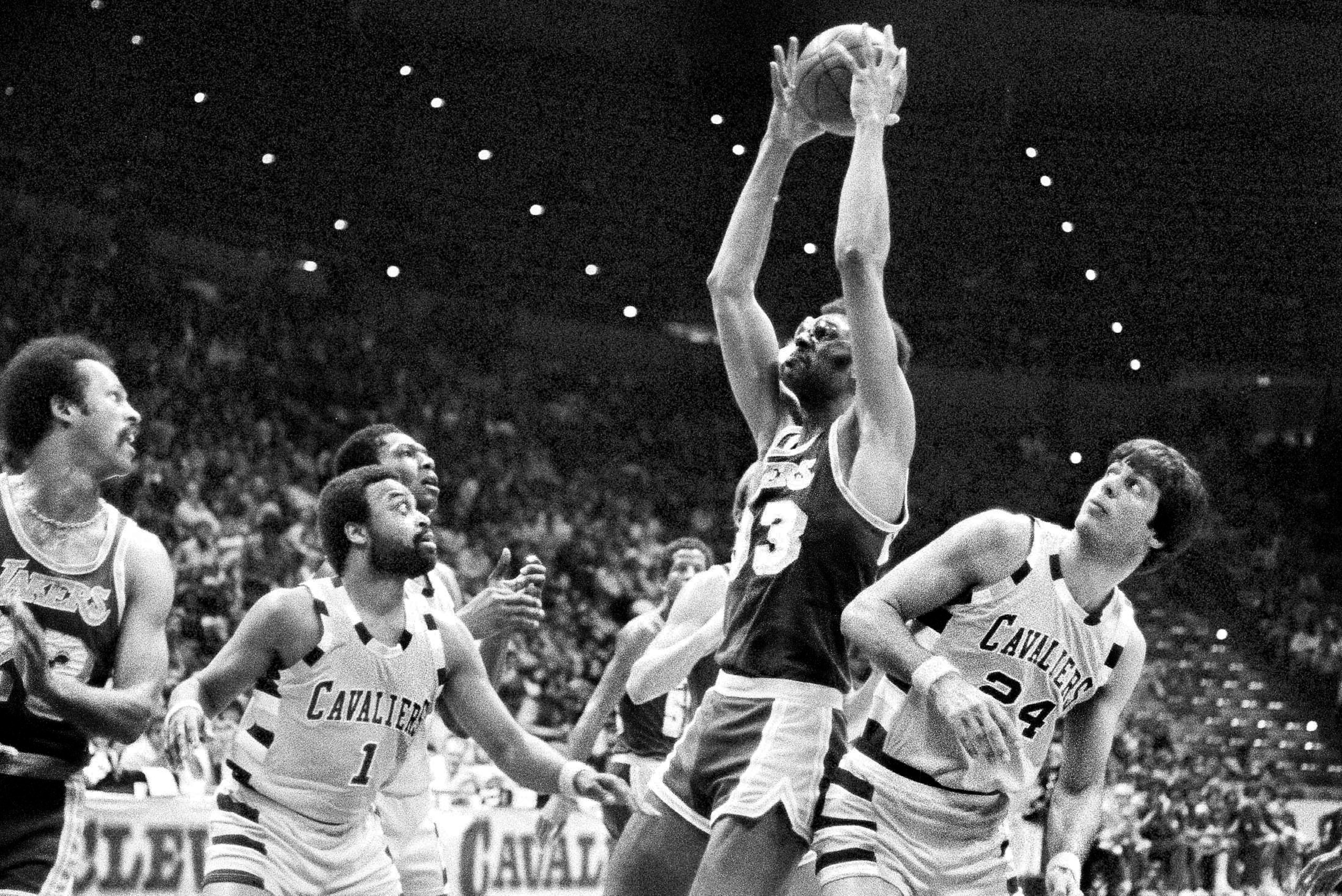
A pair of superstar big men who benefited from the absence of star teammates. Despite inking a new contract extension with the Houston Rockets in the previous offseason, guard Clyde Drexler missed a chunk of time of time in the spring of 1996. A 33-year-old Kareem Abdul-Jabbar shone for the Los Angeles Lakers while a 21-year-old Magic Johnson was only able to suit up for 37 games.
Both seasons were head-turning for their body of work as much as they were for how identical they were. Hakeem Olajuwon's age-33 season saw averages of 26.9 points, 10.9 rebounds and 2.9 blocks. Abdul-Jabbar produced per-game averages of 26.2 points, 10.3 rebounds and 2.9 blocks. Both players had a PER of 25.5, but Jabbar's edge in true shooting, effective field-goal rate and the Lakers' 54 wins (compared to the Rockets' 48) gave him the nod in VORP and win shares.
| James (2017-18) | Olajuwon (1995-96) | Abdul-Jabbar (1980-81) | |
| PER | 28.8 | 25.5 | 25.5 |
| WS | 13.1 | 9.7 | 14.3 |
| PTS | 27.6 | 26.9 | 26.2 |
| REB | 8.6 | 10.9 | 10.3 |
| AST | 9.1 | 3.6 | 3.4 |
| TS% | .622 | .558 | .616 |
For his efforts, Olajuwon came in fourth in league MVP voting, trailing a 33-year-old Michael Jordan, a 30-year-old David Robinson and a 24-year-old kid named Anfernee Hardaway. Abdul-Jabbar fared better, coming in third in the MVP race, getting topped by a 30-year-old Julius Erving and a 24-year-old Larry Bird.
These two seasons are remarkable in their own right. To think that both were produced by big men (a position generally punished by Father Time) in their age-33 seasons make them all the more impressive.
In the Hunt: Jerry West (1971-72)
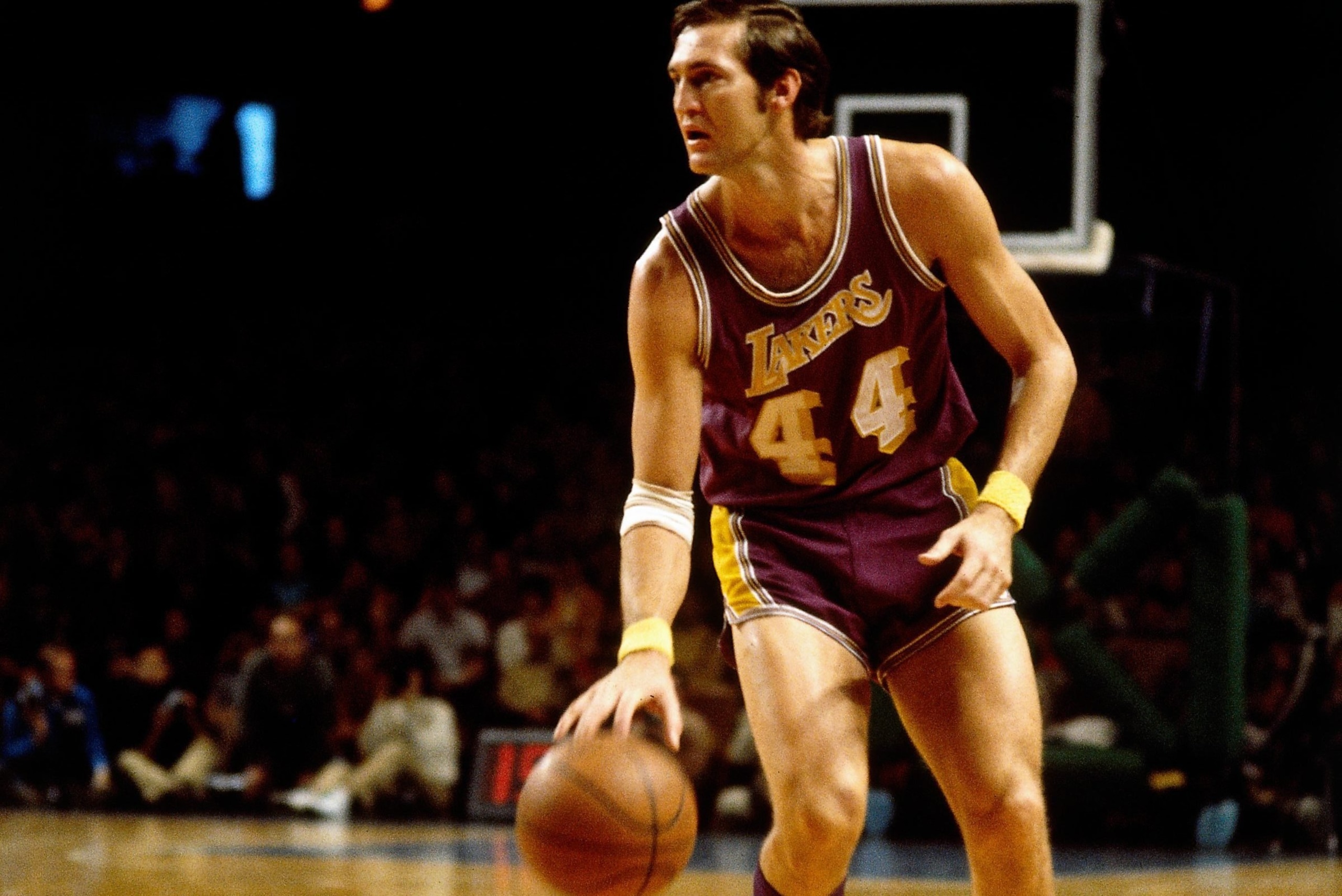
Plenty of guards in their age-33 seasons deserve consideration for this exercise. John Stockton's double-double 1995-96 season was terrific. Gary Payton's 2001-02 was one of the best seasons of his 17-year career. But it is Jerry West who, in 1971-72, was a part of a 33-game winning streak in Los Angeles that saw the Lakers win 69 games and the NBA Championship.
"We had one of those teams that comes along every once in a while," West once said of that season to the Associated Press (h/t NBA.com). "The only bad thing about it is we were really too old to be able to sustain it. ... It was a very special time."
| James (2017-18) | West (1971-72) | |
| PER | 28.8 | 23.1 |
| WS | 13.1 | 13.3 |
| PTS | 27.6 | 25.8 |
| REB | 8.6 | 4.2 |
| AST | 9.1 | 9.7 |
| TS% | .622 | .546 |
To date, The Logo has the highest win share produced by any 33-year-old point guard in the history of the NBA. That season, he averaged 25.8 points, 4.2 rebounds and 9.7 assists in an era that predated the three-point line. While no fault of his own, West also produced this season in an era when a defensive stalwart like himself did not get credit for steals.
West finished second that season in MVP voting, falling to Abdul-Jabbar, who was 24 at the time.
The Contenders: Karl Malone (1996-97), Michael Jordan (1996-97)

To put it bluntly, 1996-97 was a hell of a year for basketball, with a pair of aging stars showing no signs of slowing down. Jordan was the league's top scorer, averaging 29.6 points per game, while Karl Malone produced 27.4 points and 9.9 rebounds per night. The Mailman's .600 true shooting percentage was up there with Abdul-Jabbar's .616 as one of the most efficient seasons a 33-year old has produced.
Jordan, who turned 34 in February 1997, won the league's MVP the season before, but Malone edged him out for the league's top individual honor in 1996-97, becoming the only 33-year-old to win the award. Only Jordan and Malone received first-place votes that season, the epitome of a two-man race to the top of the league's mountain.
| James (2017-18) | Malone (1996-97) | Jordan (1996-97) | |
| PER | 28.8 | 28.9 | 27.8 |
| WS | 13.3 | 16.7 | 18.3 |
| PTS | 27.6 | 27.4 | 29.6 |
| REB | 8.6 | 9.9 | 5.9 |
| AST | 9.1 | 4.5 | 4.3 |
| TS% | .622 | .600 | .567 |
Both Malone and Jordan played in all 82 of their teams' games, which were coupled with lengthy runs in the postseason. It should be no surprise that the 1996-97 season saw the Jordan-led Bulls match up against the Malone-led Jazz in the NBA Finals. While Malone won the regular-season MVP award, it was Jordan who left with the NBA Finals MVP and another championship ring for his collection.
It was this Finals series that featured Jordan's iconic flu game, but that 38-point outing in a pivotal Game 5 should not overshadow either man's domination throughout that entire season.
The Case for LeBron James
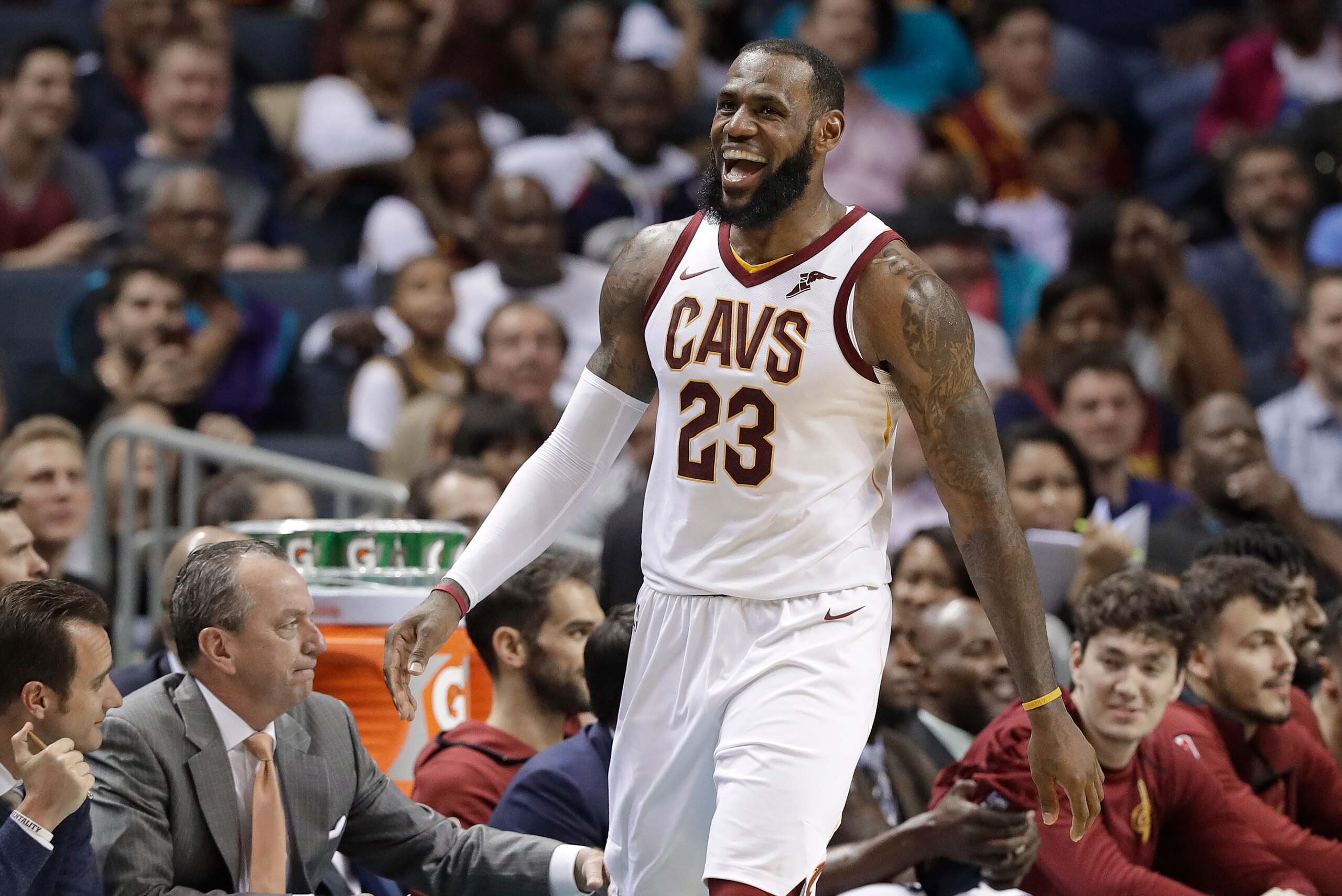
Depending on how one wishes to sort the statistics, James' name is near the top of any list.
In terms of per-game averages, James' 27.6-point, 8.6-rebound and 9.1-assist stat line amounts to one of the most well-rounded age-33 seasons in the history of the game. Getting more into the numbers only furthers The King's case.
James is attempting more three-pointers per game than each of the last two seasons, yet he is producing efficiency numbers that rank among the best in his career. His .622 true shooting is more efficient than Abdul-Jabbar and Malone's respective seasons.
James' PER is just 0.1 points away from that of Malone with April's games left to play. His win shares mark is hampered by the Cavaliers' position in the middle of the Eastern Conference pack this season, but James is the only 33-year-old to have a value over replacement player north of 8.0, with his value listed at a league-best 8.4.
While most players of James' size and age would morph their games into a back-to-the-basket, below-the-rim style, James' explosiveness is akin to his rookie season. In recent weeks, he's made posters of players big (the Portland Trail Blazers' Jusuf Nurkic) and small (the Brooklyn Nets' Joe Harris). He's running the floor, catching lobs and living up to every ounce of crowd expectation, both home and away.
And when James is not scoring in a variety of highlight-reel ways, he's creating opportunities for his teammates. Not only is he averaging more assists per game this season than Malone and Jordan combined during their age-33 seasons, he's also second in the league in potential assists, ranking ahead of some of the best point guards in the game today.
"You can say what you want about LeBron, whether it be positive or whether it be a negative, but what he has done is just...it's amazing," Cavaliers interim coach Larry Drew told the media following Wednesday night's win. "At his age, him being able to play every game, him being able to sustain and him able to play with the consistency he has played with, game after game after game, speaks volumes."
Much like the other players listed above, James' MVP chances may be thwarted by a combination of voter fatigue and an emphasis on overall team wins. The Cavaliers are barely clinging to home-court advantage in the first round of the playoffs.
But as his PER creeps toward 30 and Cleveland continues to rack up wins, having won six of its past seven games, the vote between The King, James Harden and Anthony Davis should get more interesting.
Before those votes are tabulated, at least we can say this may be the most dominant performance the game has seen from a 33-year-old.
And the scariest part: James is showing no signs of slowing down.
Advanced stats per Basketball Reference as of March 31, 2018.
.jpg?w=2560 "Commanders OL HEATED After Tie ▶️")
.jpg?w=2560 "49ers LB Suspended for Headbutt")
.jpg?w=2560 "AD Trolls Bears WR on IG 😂")