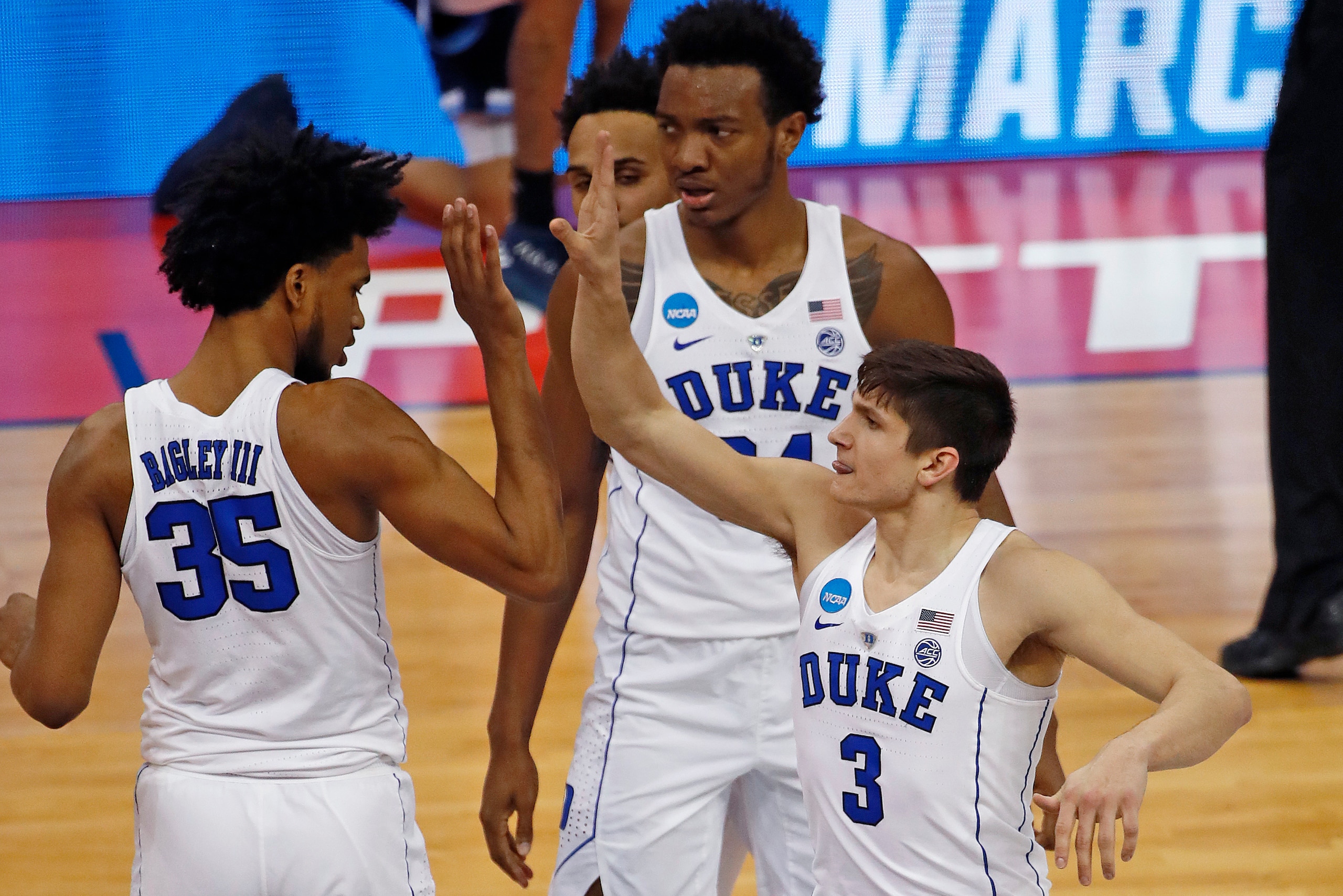


The No. 1 overall seed (Virginia) in the 2018 NCAA tournament was unable to survive the first round, leaving the Duke Blue Devils and Villanova Wildcats battling for the top spot in our power ranking of the Sweet 16 teams.
For the most part—let's call it 80 percent—these rankings are based on how well the teams played during the regular season. But they aren't necessarily in the same order as they were in our pre-tournament power rankings, because a significant amount of consideration was given to how they looked in their first two NCAA tournament games.
Case in point: Michigan was No. 10 before the tournament, but it is still only ranked No. 10 since its offense has been lacking.
One important thing to note: Difficulty of path to the national championship has no bearing on this list. Rather, this could be considered a ranking of how we would re-seed the remaining 16 teams based on perceived strength.
(If it's title odds you're interested in, we published those earlier in the week. Kentucky fans will be much happier about their team's ranking in that list than this one.)
We'll examine how they played in the first two rounds, their biggest strength and weakness, their MVP and what they need to do to win it all, starting with the one team that never should have been in the tournament in the first place.
16. Syracuse Orange
1 of 16
How They've Looked: Impenetrable. Syracuse held Arizona State, TCU and Michigan State—teams that are still ranked 18th, 10th and 13th, respectively, in adjusted offensive efficiency—to 56 points or fewer. You would think Michigan State would be the perfect team to bust the 2-3 zone, given its ample supply of long, athletic players more than capable of scoring from the elbow. Instead, the Spartans jacked up bad three after bad three in what would become one of the biggest upsets of the tournament.
Bread and Butter: Zone defense. The Orange allow a ton of three-point attempts, but they are rarely easy looks. All seven guys who play legitimate minutes are 6'5" or taller, giving Syracuse the tallest average height ever recorded in the KenPom.com database. And they all close out quickly on shooters. Everyone on the roster blocks shots, forces turnovers or both, and they usually do so without getting into foul trouble. That is crucial, given the lack of depth on this roster.
Achilles' Heel: Shooting. Syracuse is just plain awful at trying to put the ball in the hoop. The Orange rank 323rd in three-point percentage and 309th in two-point percentage. The only other remaining team that ranks outside the top 210 in either category is Texas A&M, which is 263rd in three-point shooting. But at least the Aggies are dominant in the paint, so it doesn't hurt them. Syracuse, on the other hand, has been held to 60 points or fewer in five of its last six games, as well as 13 times this season.
MVP: Tyus Battle, Oshae Brissett and Franklin Howard are the co-MVPs. All three rank in the top seven nationally in percentage of minutes played, a testament to how badly they are needed on the floor. Each member of the trio averages better than 14 points per game. (No one else is above 5.6.) Brissett is the top rebounder, Howard leads in assists and steals, and Battle is the one most likely to put up 25 points on any given night.
Championship Blueprint: Defend like mad and hope some offense shows up. The first part is almost a given, as Syracuse has held 22 of 36 opponents to 65 points or fewer. The offense part is another story. The Orange are shooting 37.8 percent from the field thus far in the tournament, including just 4-of-22 from three-point range in the last two games. Were it not for the 23 free-throw attempts per game, they wouldn't have even reached 50 points yet. That's not much of a winning formula with the likes of Duke, Kansas and Villanova on the horizon.
15. Kansas State Wildcats
2 of 16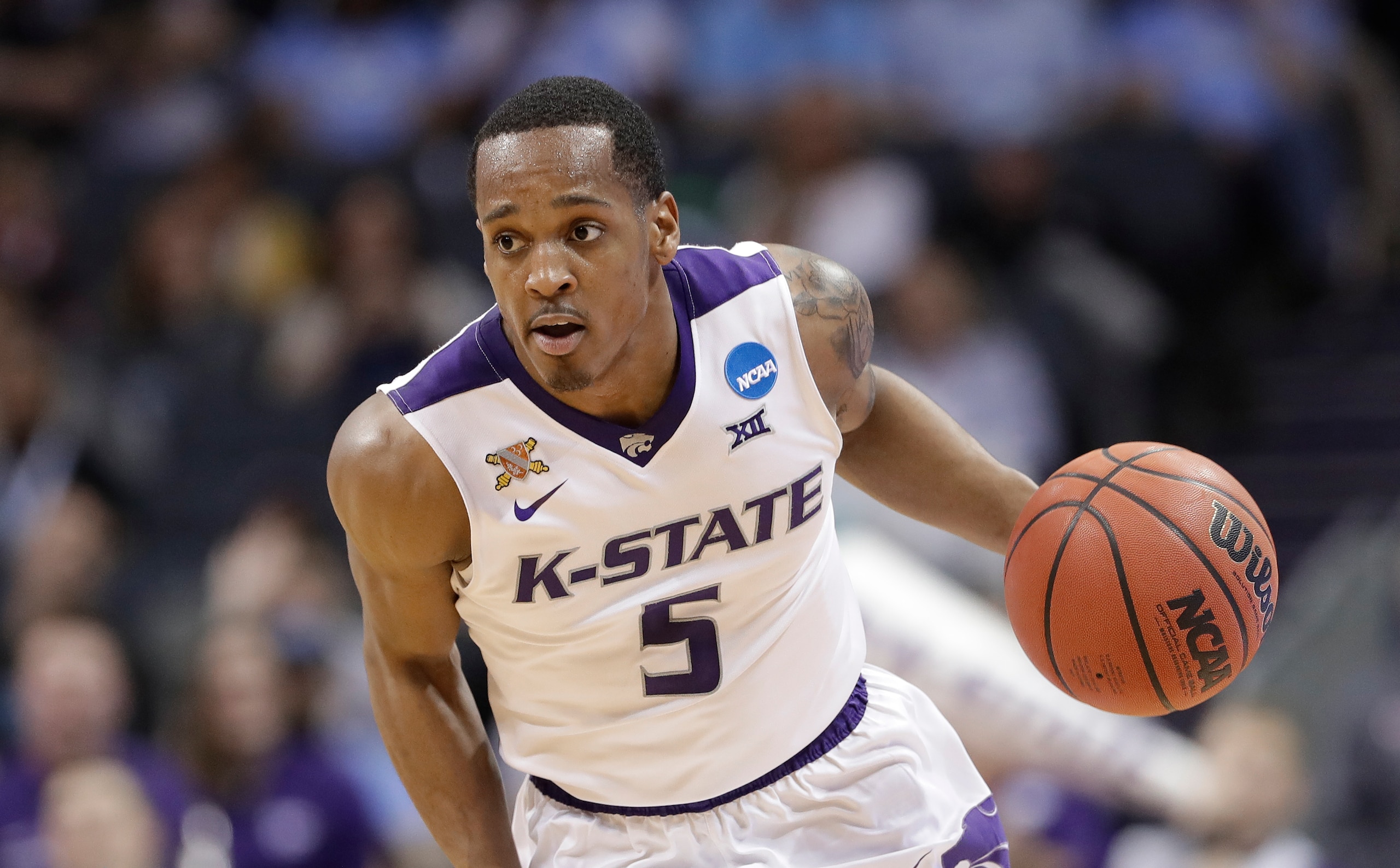
How They've Looked: Defensive. Kansas State shut down Creighton's offense in the first round before holding UMBC to just 43 points in the second. Defense has been this team's strength all year, but never quite to this extreme. The Wildcats have forced 30 turnovers and have only allowed 31 made field goals. They are also rarely putting the opposition at the free-throw line, which is a nice change of pace for them. It hasn't been the toughest road to the Sweet 16, but they've looked great on defense anyway.
Bread and Butter: Turning defense into offense. Would you believe that Kansas State—not West Virginia—has the best steal percentage among remaining teams? Well, you should. The Wildcats have averaged 7.9 steals per game this season, and they had 13 in the second round against UMBC.
Achilles' Heel: Rebounding. This wasn't a problem in the first two games against teams with limited frontcourt talent, but Kansas State has allowed 105 more rebounds than it has grabbed this season, per Sports Reference. With Kentucky on deck and top rebounder Dean Wade at considerably less than 100 percent after missing the last three games, that could get ugly.
MVP: Barry Brown. It's usually Wade, as he's their most efficient player at both ends of the floor. With Wade battling injury, though, Brown isn't a bad Plan B at MVP. He averages 16.1 points, 3.3 assists and 1.8 steals per game. He led the Wildcats in scoring in each of their first two games, tallying 18 against both opponents.
Championship Blueprint: Suddenly start beating elite teams. Kansas State went 0-7 this season against teams that earned a No. 5 seed or better. I could sit here and tell you the Wildcats need to force a ton of steals, defend the paint and avoid getting destroyed on the glass, but the crux of the matter is they'll need to do something multiple times that they haven't done once.
14. Florida State Seminoles
3 of 16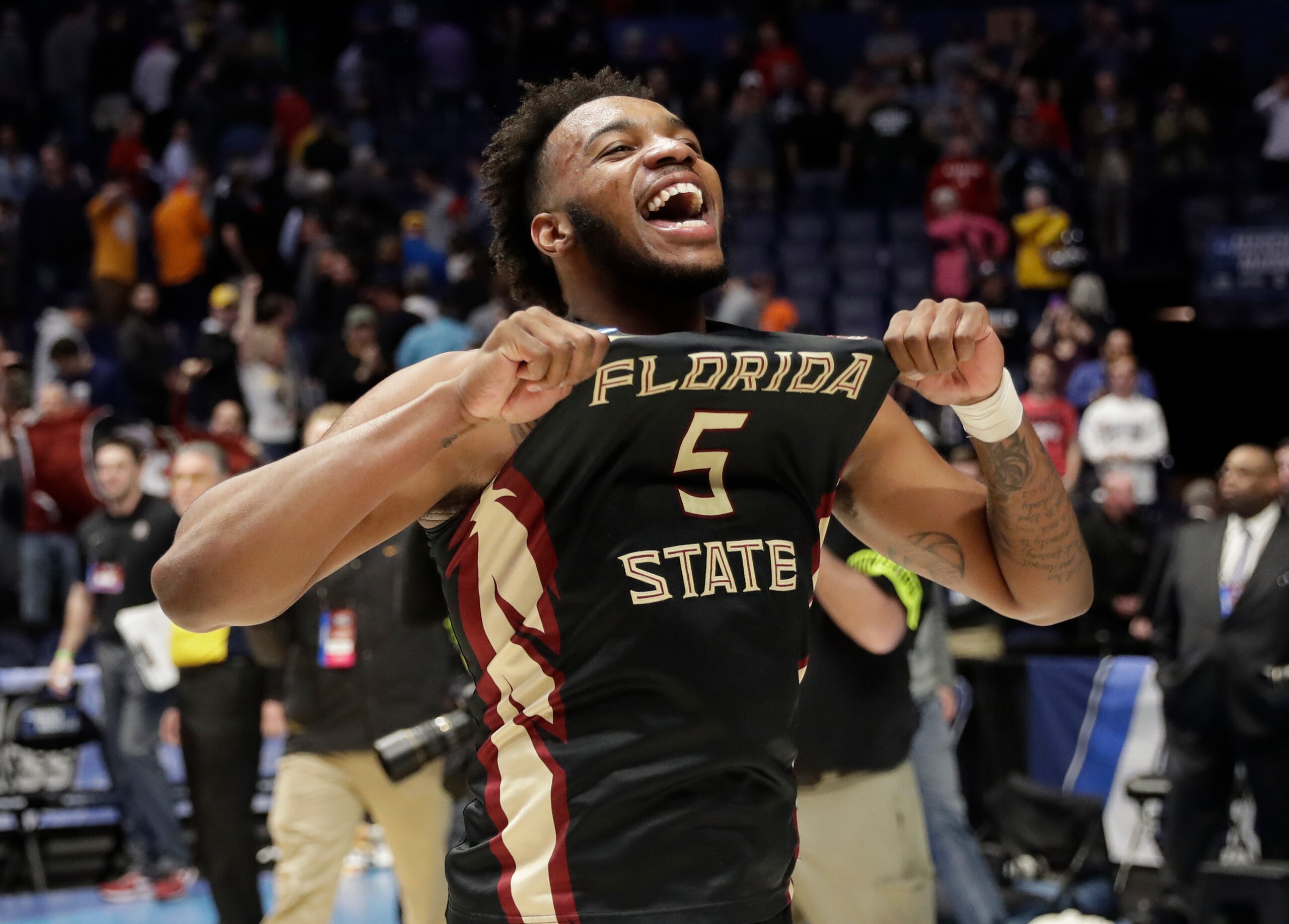
How They've Looked: Sporadic. Florida State jumped out to a huge 22-point lead over Missouri before allowing the Tigers to claw all the way back to within six in the span of about 10 minutes. The Seminoles then looked lost for the first 10 or so minutes of each half against Xavier, but they closed the game on a 25-9 run to pull off the upset. Depending on when you flipped the channel (or when you paid attention to that monitor), you could think Florida State is a strong candidate to win the title or luckier than a leprechaun to still be in the tournament.
Bread and Butter: Protecting the paint. As often seems to be the case, Florida State is loaded with big men who protect the rim. Missouri shot just 32 percent inside the arc against the Seminoles, who finished the first weekend with a combined total of 10 blocked shots and 19 steals. Leonard Hamilton's teams have always been at their best when they are aggressive on defense and making things happen with their athleticism. So far, so good.
Achilles' Heel: Three-point defense. It somehow wasn't a problem against Missouri or Xavier, but Florida State entered the tournament having allowed seven consecutive opponents to make at least 10 three-pointers. And it's not like the 'Noles were facing Villanova, Kansas, etc. during that stretch. We're talking about Pittsburgh, Boston College, Notre Dame, NC State, Louisville and a pair of games against Clemson. Those teams shot 46.1 percent from behind the arc against FSU.
MVP: Diversity. Florida State has nine players averaging between 6.6 and 13.0 points per game, and no one has topped 16 in a game since the regular season ended. For the first two-thirds of the season, Terance Mann was the star, but he has hasn't been anything special since late January. At this point, it's almost a different MVP every night.
Championship Blueprint: Get contributions from everyone. Florida State can win with its defense, but when it has been beating quality opponents this season—winning at Florida, at Virginia Tech, at Louisville, vs. Clemson, vs. Miami, vs. NC State, vs. Syracuse—it has always scored at least 80 points, typically with seven or more guys scoring at least seven points each. This isn't a team that can just have two or three guys catch fire and ride them to victory. Florida State needs to grind out wins with everyone pitching in.

.jpg?w=2560 "Rams Raiders Football")

13. Loyola-Chicago Ramblers
4 of 16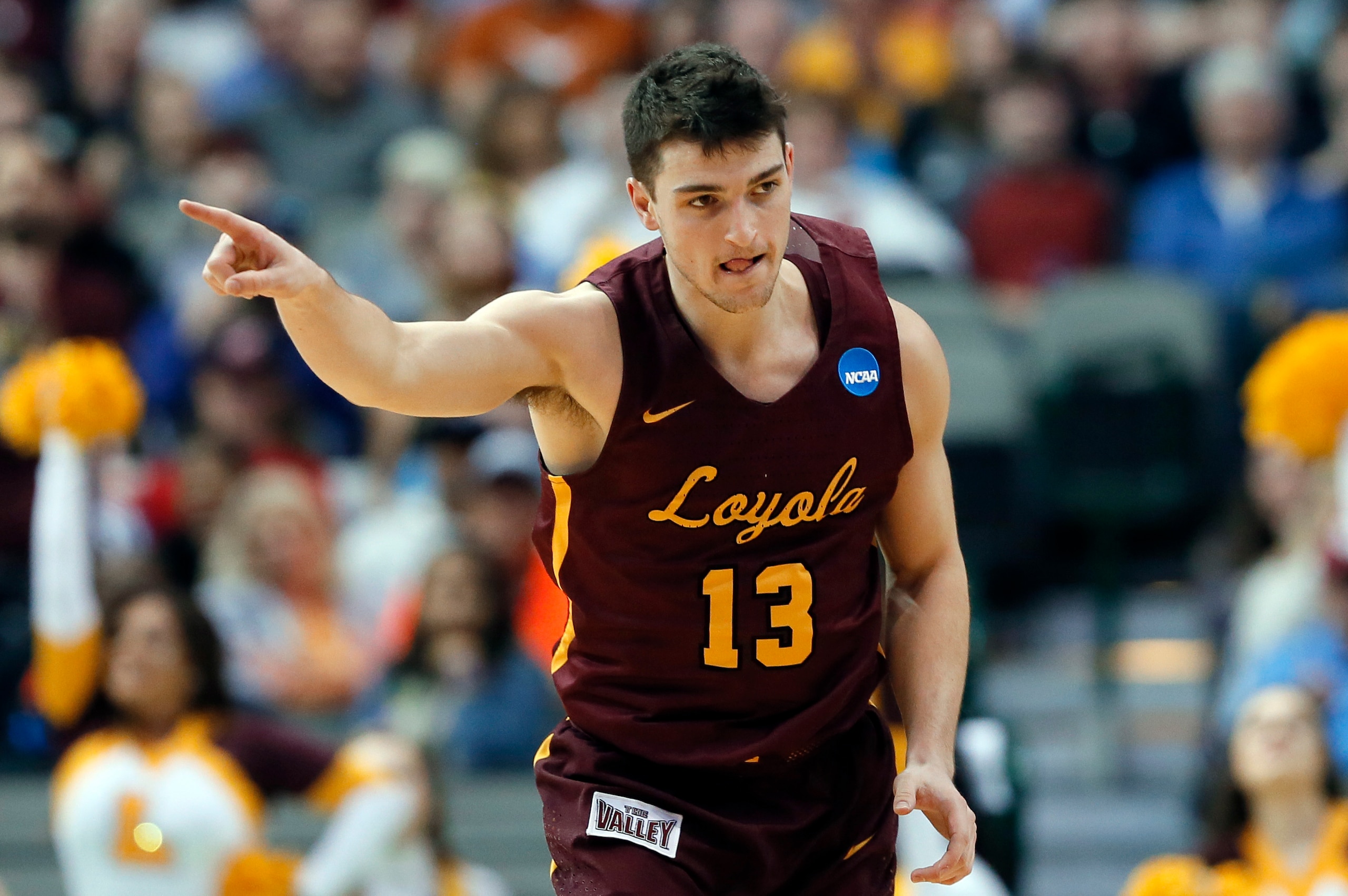
How They've Looked: Belonging. Given how well it played all season, it's hard to believe this team would have been left out of the NCAA tournament if it had lost in the Missouri Valley championship. But the Ramblers didn't lose, and they are proving they deserve to be here. Oftentimes, Cinderella teams catch fire and/or run into an opponent playing its worst game of the season. Loyola-Chicago, however, has simply been better than both Miami and Tennessee. The last-second drama and the Sister Jean factors only make it all the more entertaining to watch.
Bread and Butter: Efficient shooting. The Ramblers are dreadful on the offensive glass and slightly below-average in both fouls drawn and turnovers committed. But these guys sure can shoot. For the season, they rank 14th in three-point percentage (40.0) and 13th in two-point percentage (56.5) against D-I competition. Those numbers have held up nicely against two major-conference opponents, too.
Achilles' Heel: Size. Loyola-Chicago is the smallest team left in the tournament. Freshman Cameron Krutwig, 6'9", is the only big man this team plays, and he has had less of an impact than usual dating back to the start of the MVC tournament. The Ramblers have been fortunate thus far by avoiding teams with multiple true frontcourt presences, but that luck is about to run out.
MVP: Clayton Custer. The former Iowa State transfer leads the Ramblers in points (13.3), assists (4.2) and steals (1.5). He's also the best three-point shooter (46.0 percent) and the best free-throw shooter (77.3 percent) in the primary seven-man rotation. Put it this way: It's no surprise that Custer took the game-winning shot against Tennessee.
Championship Blueprint: Shoot well in slow-paced games. Dating back to the marquee road win over Florida on Dec. 6, Loyola-Chicago has done an excellent job of forcing opponents to play at its preferred tempo. It defends at a high level and shoots about as well as any team in the country. A national championship seems unlikely for this Cinderella story, but it's not impossible.
12. Nevada Wolf Pack
5 of 16
How They've Looked: Resilient. Nevada trailed Texas by 14 in the second half of the first game before storming back, forcing overtime and prevailing. The Wolf Pack kicked it up a few notches in the following round against Cincinnati, rallying from a 22-point deficit with less than 11 minutes remaining, winning in regulation. Putting together rallies like those against two of the best defensive teams in the country was even more unlikely than UMBC upsetting Virginia. No, seriously. KenPom gave UMBC a 2.3 percent chance of beating Virginia prior to tip off; Nevada's win probability when down 22 against Cincinnati was 0.4 percent.
Bread and Butter: Avoiding turnovers. Nevada already led the nation in offensive turnover percentage prior to coughing the ball up just twice in the entire game against Cincinnati—a damn impressive feat made even more incredible with the knowledge that Nevada lost its starting point guard to a torn Achilles less than a month ago. Per Sports Reference, it was the 25th time in 36 games the Wolf Pack committed 10 or fewer turnovers.
Achilles' Heel: Depth. With Lindsey Drew out of the picture, Nevada only plays six guys. Seventh-man Elijah Foster can occasionally eat a few minutes, but he hasn't played 10 or more minutes in a game since January. And while Hallice Cooke is part of the six-man rotation, he has scored just three points thus far in the tournament. The slightest bit of foul trouble could end this team.
MVP: Cody Martin. He is the linchpin of this versatile team, averaging 14.0 points, 6.3 rebounds, 4.7 assists, 1.6 steals and 1.5 blocks. He leads the Wolf Pack in each of the latter three categories, and he has been their savior thus far in the tournament. He had 25 points, seven assists and six rebounds against Cincinnati.
Championship Blueprint: Stop digging early holes and put up a more respectable fight on the glass. In addition to the deficits on the scoreboard, Nevada was out-rebounded by Texas and Cincinnati by a combined margin of 19. It's still incomprehensible that they were able to make those comebacks. But relying on doing so seems like a horrible strategy. It has been a while since the Wolf Pack came out hot in the first half of a game, but they do have the talent to beat anyone if they play a full 40 minutes (and avoid foul trouble).
11. Clemson Tigers
6 of 16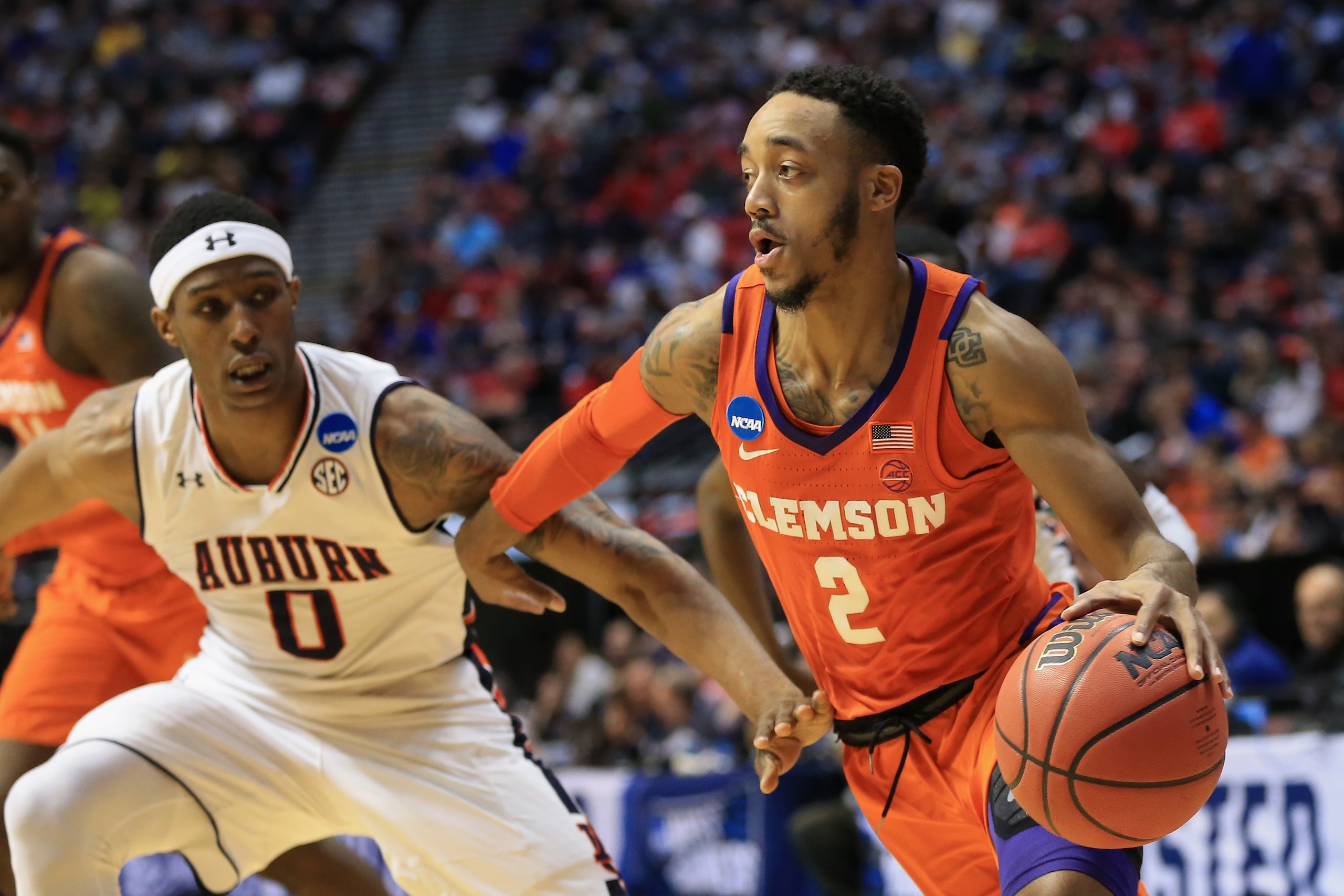
How They've Looked: Surprisingly good. Clemson limped into the tournament about as badly as any top-five seed ever has. The Tigers lost five of their final eight games and looked helpless on offense in most of them. But they avoided the popular first-round upset against New Mexico State before eviscerating Auburn in the second round. To be fair, though, Clemson was neck-and-neck with Auburn as far as limping into the tournament goes, so we're somewhat reserving judgment until the upcoming game against Kansas.
Bread and Butter: Interior defense. Losing Donte Grantham to a torn ACL in January hurt Clemson a bit in this regard, but it still has Elijah Thomas and Aamir Simms swatting away shots on a regular basis. The Tigers only blocked 10 combined shots in the first two rounds, but New Mexico State and Auburn shot 25-of-71 (35.2 percent) from inside the arc.
Achilles' Heel: Offense in general. Clemson shoots OK, but not great. It is a solid free-throw shooting team, but it doesn't get to the line often. It is well below average in offensive rebounding, and it gets a lot of its shots blocked. It's just a bad combination, which resulted in 58 points or fewer scored in four of the final seven games before the NCAA tournament began. The Tigers shot well in the first two games, but will it continue?
MVP: Marcquise Reed. Hard to believe this guy started his college career at Robert Morris, because he has been the most important piece for this high-major program since Grantham's injury. Reed averages 15.8 points, 4.7 rebounds, 3.4 assists and 1.7 steals per game.
Championship Blueprint: Keep all four of the main cogs turning. Reed is just one piece of the puzzle. The Tigers also have Gabe DeVoe, Shelton Mitchell and Thomas averaging better than 10 points per game. And the biggest reason they looked so good in the first two games is because all four of those guys showed up in a huge way. If any one of them has an off night, though, it will likely be curtains for Clemson.
10. Michigan Wolverines
7 of 16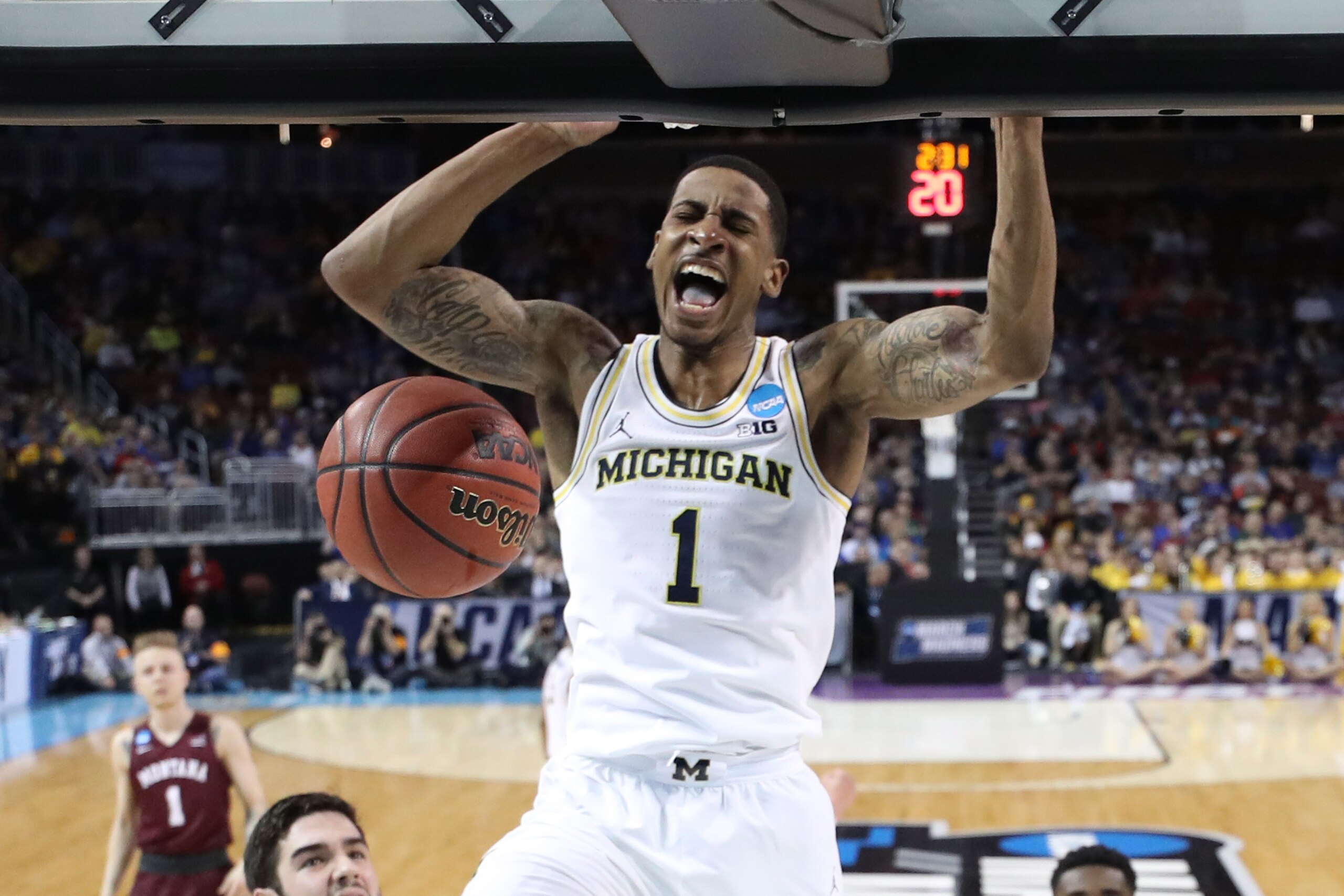
How They've Looked: Cold. Michigan entered the tournament on a nine-game winning streak, scoring at least 72 points in each of those games. But despite playing at the same pace as usual, it hasn't even reached 65 points yet in the Big Dance. In particular, Muhammad-Ali Abdur-Rahkman (23 points on 26 shots) has struggled, and Moritz Wagner (17 total points) has been a ghost. (Foul trouble in both games hasn't helped matters for Wagner.)
Bread and Butter: Turnover-free offense. Michigan did commit 14 turnovers in the first round against Montana, but things were back to normal with a less error-filled game against Houston. For the season, the Wolverines rank fourth nationally in offensive turnover percentage. Prior to the disappointing showing against the Grizzlies, the last time they gave the ball away more than a dozen times was Jan. 6.
Achilles' Heel: Free-throw shooting. Charles Matthews leads the Wolverines in free-throw attempts, but he only makes 57.1 percent. Zavier Simpson averages more than two attempts per game, but he only converts 51.8 percent of the time. Duncan Robinson is clutch, but he's about the only one. Michigan shoots just 65.9 percent as a team. Factor in an offensive rebound rate that ranks 270th, and this team occasionally struggles to score, even with the impressive turnover rate.
MVP: Matthews. The former Kentucky transfer was basically the only guy to show up on offense in the first game, finishing with 20 points and 11 rebounds. Wagner should be the MVP, but the Wolverines have had trouble getting him involved thus far.
Championship Blueprint: Defend like usual and wake up on offense. We don't often think about John Beilein's teams as being elite on defense. Per KenPom, the last time he had a top-35 defense was way back in 2002 with Richmond. But Michigan is No. 3 in adjusted defensive efficiency this year and has held its last 10 opponents to just 61.4 points. That should be more than enough to keep winning, if and when the three-pointers start falling again.
9. Purdue Boilermakers
8 of 16
How They've Looked: Under-staffed. Isaac Haas played 15 minutes against Cal State Fullerton before fracturing his elbow—and fracturing Purdue's odds of winning the title. Vincent Edwards was outstanding against Butler, but he was just OK in the first game. Carsen Edwards wasn't great in either one. Matt Haarms constantly adjusting his hair may be one of the funnier talking points of the first weekend, but Purdue as a whole hasn't looked feathered or lethal.
Bread and Butter: Three-point shooting. Despite struggles scoring in the paint against Cal State Fullerton and defending against Butler, Purdue's perimeter prowess has kept it in business. The Boilermakers are a combined 20-of-46 (43.5 percent) from downtown in the tournament, and they are shooting 42.1 percent on the season—good for second-best in the nation.
Achilles' Heel: Rebounding. Even when Haas was healthy, Purdue was just OK on the glass. And in all five of their regular-season losses, the Boilermakers either broke even in rebounding margin or lost that battle. It's not a massive concern like it is for Kansas State, but it's definitely something to keep an eye on.
MVP: Vincent Edwards. This changed many times throughout the course of the season, and it seemed like Carsen Edwards had the position locked down heading into the tournament. But Vincent has led the team in scoring in both games. Honorable mention to PJ Thompson, who has been a super-efficient glue guy for the past three seasons. He is for this team what Josh Gasser was for the Wisconsin team that made back-to-back Final Fours.
Championship Blueprint: Keep hitting threes and hope that Haarms is enough in the defensive paint. Purdue's 7'3" redshirt freshman is just about the only guy on the roster who doesn't shoot from the perimeter, but he has been a sensational shot-blocker this season. He was the perfect backup for Haas, coming off the bench for about 15 minutes per game and providing a ton of energy. If he can do that for 30 or more minutes per game the rest of the way, Purdue has a real shot.
8. Gonzaga Bulldogs
9 of 16
How They've Looked: Disjointed. Gonzaga was out-rebounded by UNC-Greensboro and certainly would have lost that game if not for the Spartans shooting 3-of-22 from three-point range. The Bulldogs were much better on the glass against Ohio State, but they gave up 11 three-pointers to let the Buckeyes hang around. The Gonzaga we knew from the first four months of the season should have destroyed both of those opponents. But this Gonzaga needed some heroics from Zach Norvell Jr. just to survive the first weekend.
Bread and Butter: Interior play. UNC-Greensboro game notwithstanding, this is one of the best rebounding teams in the country, and it ranks in the top 10 in two-point field-goal percentage on both offense and defense. And it's not just because they're bigger than any other team in the West Coast Conference. In the six early games against major-conference opponents, Gonzaga was plus-23 in rebound margin, shooting 61.0 percent from inside the arc while allowing just 46.0 percent on the other end.
Achilles' Heel: Rust. Not only did Gonzaga have a nine-day wait between the end of the WCC tournament and the start of the NCAA tournament, but it had not faced a tournament team since Dec. 21 (San Diego State) and had not beaten a tournament team since Dec. 1 (Creighton). Statistically, the Zags should hold their own against any opponent, but can they beat the likes of Michigan and Kentucky? Also, free-throw shooting is a problem. Gonzaga has already missed 24 of 56 free-throw attempts in the tournament.
MVP: Take your pick. Thus far in the tournament, it has been Norvell. He hit the dagger three against UNC-Greensboro and exploded for 28 points, 12 rebounds and four assists against Ohio State. But five Zags average better than 10 points per game, and they have a sixth player (Silas Melson) at 9.3 points who is extremely valuable as a glue guy.
Championship Blueprint: Own the paint, but defend the arc. In the double-overtime loss to Florida, Gonzaga broke even in rebounds and gave up 17 three-pointers. In the loss to Saint Mary's, the Zags were minus-one on the glass and the Gaels shot 61.5 percent from three-point range. Similar story in the blowout loss to Villanova. As long as they rebound like they should and don't get obliterated with three-pointers, the Bulldogs can beat anyone.
7. Texas A&M Aggies
10 of 16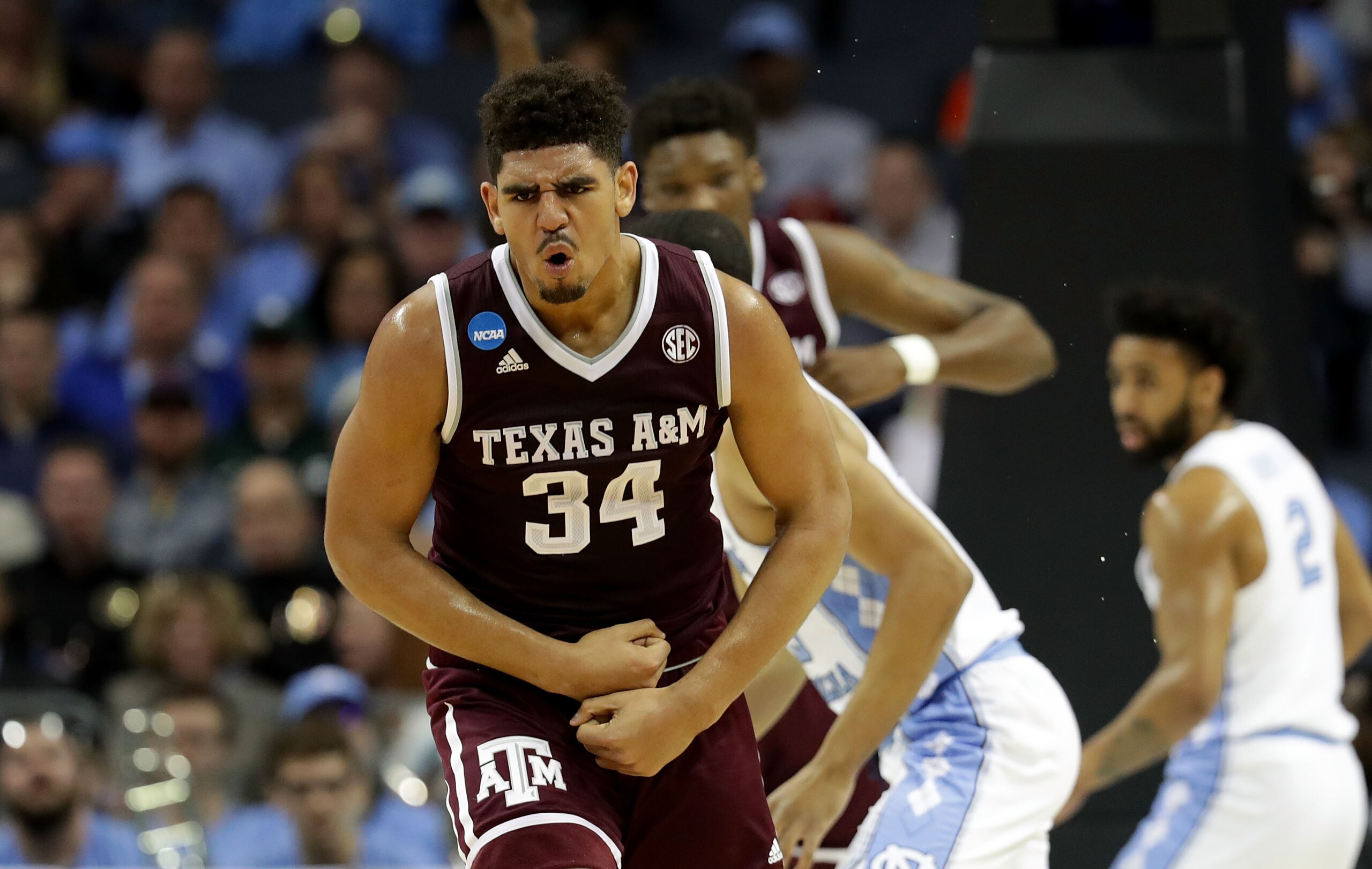
How They've Looked: Engaged. There has not been a more Jekyll & Hyde team than Texas A&M. Much of that is due to injuries and suspensions. (Tyler Davis and Tonny Trocha-Morelos are the only Aggies who have not missed multiple games this season.) But everyone who is currently available was also on the active roster for the 19-point loss to Arkansas followed by the 12-point home loss to Mississippi State. There's just no rhyme or reason to whether this team will play like it wants to win. It definitely did against North Carolina, though.
Bread and Butter: Interior defense. Robert Williams is the primary shot-blocker, but Davis, Trocha-Morelos and DJ Hogg have each swatted away more than 25 field-goal attempts this season. This team is so big that any attempt to score in the paint against Texas A&M should come with a warning label. The Aggies blocked eight shots against Providence and eight more against North Carolina.
Achilles' Heel: Turnovers. The blocked shots weren't the only eights for Texas A&M in the first two rounds. The Aggies were also minus-eight in turnover margin in both games, committing 14 and forcing just six in each contest. Freshman TJ Starks wasn't A&M's first choice at point guard. He's only playing because Duane Wilson and JJ Caldwell have both been out for more than a month. Still, Starks is what the Aggies have, and in four games in March, he has 22 assists, 20 turnovers and two steals.
MVP: Davis. All five starters average better than 10 points per game, but Davis is the workhorse who can carry them. Through two tournament games, the big man is averaging 16 points, 12 rebounds and 2.5 blocks. He hasn't changed much in the past three seasons, but if you remember how effective he was as a freshman, that's a good thing.
Championship Blueprint: Keep pounding the paint and rebounding relentlessly and hope the three-point defense holds up. This team does not shoot well from the perimeter, but it has been converting at a high rate inside the arc. The Aggies were plus-32 in rebound margin on opening weekend and held the opposition to 12-of-51 (23.5 percent) from three-point range. If they can replicate that for two more weeks, they can win the title as a No. 7 seed.
6. Texas Tech Red Raiders
11 of 16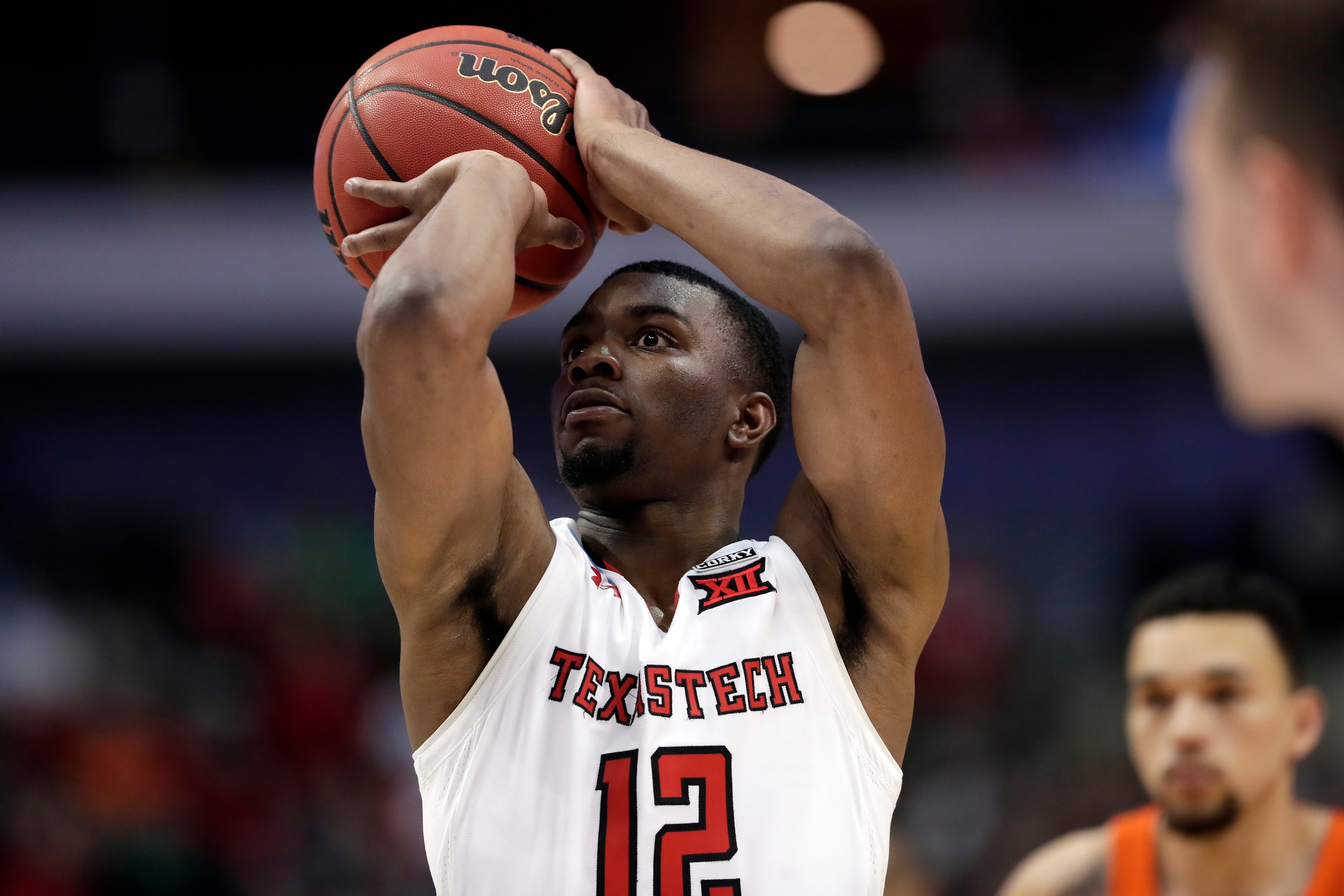
How They've Looked: Healthy. That was the big concern for Texas Tech heading into the tournament. Zach Smith missed 14 games in January and February with a broken foot. Keenan Evans missed one game in late February and was limited in a few others due to a toe injury. Justin Gray missed two games with concussion-like symptoms at the end of February. But all three of those guys—Evans in particular—look good and have been making positive contributions through two games.
Bread and Butter: Suffocating defense. It's not Press Virginia, but Texas Tech's defense is statistically way more efficient. The Red Raiders force turnovers and block shots well above the national average, but they don't over-commit to those things to the point where they give up easy buckets. They do occasionally get into some foul trouble, but that isn't much of a problem for a team that legitimately goes 10 deep.
Achilles' Heel: Free-throw shooting. Texas Tech spends a lot of time at the charity stripe, but aside from Evans (81.2 percent), that's not necessarily a good thing. The rest of the roster shoots just 65.0 percent. And through two tournament games, the Red Raiders have converted on just 23-of-38 (60.5 percent)—despite a 10-of-10 performance from Evans against Stephen F. Austin.
MVP: Evans. No surprise, right? We've already mentioned him several times in the above sections, so he's clearly important. The senior leads the team in both points and assists by a wide margin. And here's the proof that he is the sine qua non for the Red Raiders: Since Christmas, they are 15-1 when he scores at least 15 points and are 0-7 when he doesn't reach that mark.
Championship Blueprint: Clamp down on defense and get Evans going early. The star of the show didn't do much of anything for the first 25 minutes against Stephen F. Austin, which led to the Red Raiders trailing the Lumberjacks for most of the game. Once Evans showed up and started hitting shots, though, it was a different story.
5. Kentucky Wildcats
12 of 16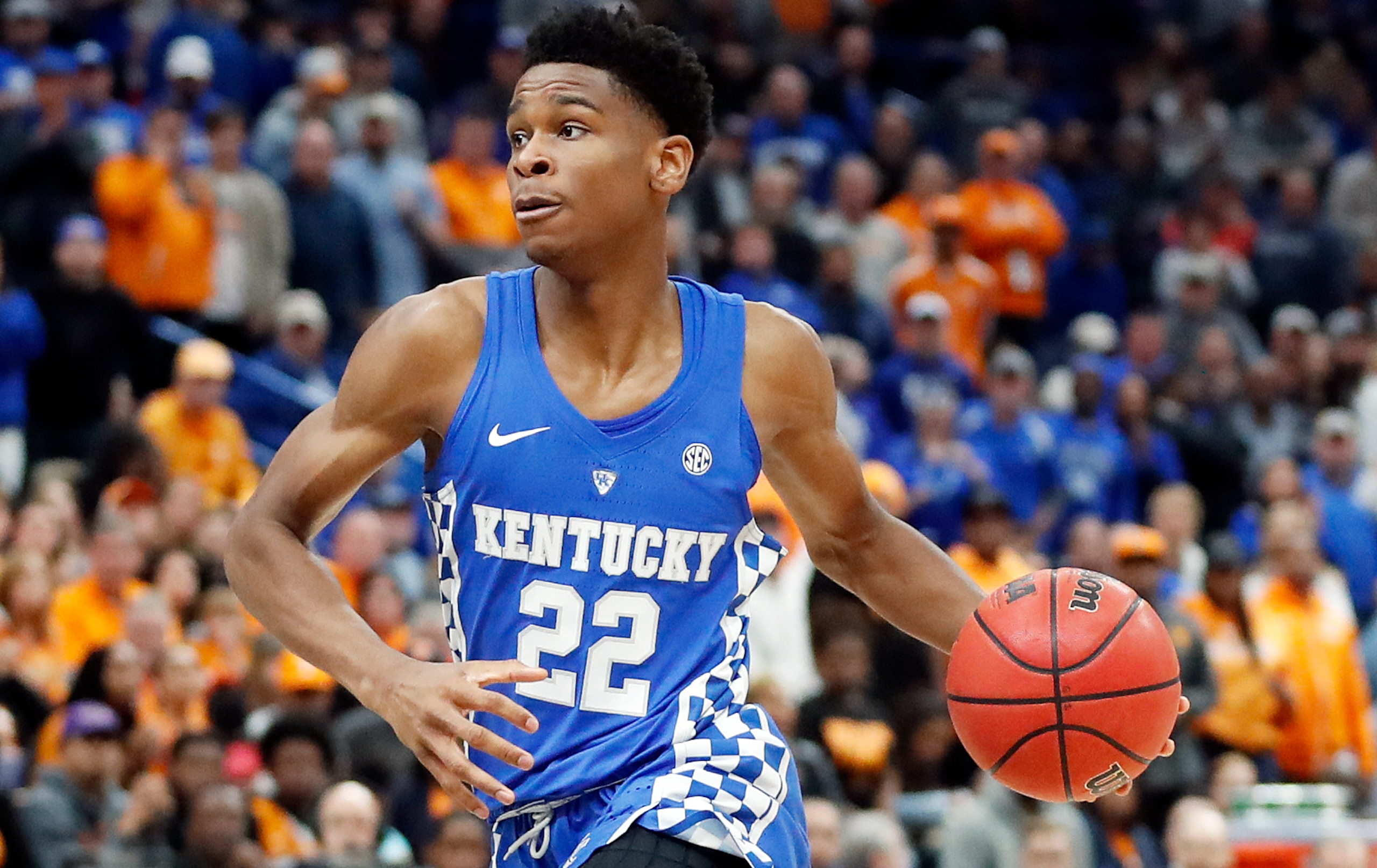
How They've Looked: Mature. Kentucky still makes the occasional careless mistake, but these Wildcats are a far cry from the kittens they were back in November. They controlled the glass, worked the ball inside extremely well and defended their tails off. Davidson did eventually go on a run in the second half when Jon Axel Gudmundsson was raining threes, but Kentucky was clearly the aggressor and the superior team in both games, imposing its will to win.
Bread and Butter: Three-point defense. At 29.8 percent, Kentucky has the second-best three-point defense in the country. Both Davidson and Buffalo shot well below their season averages, as the Wildcats closed out with vigor on every shot attempt. But this is just one byproduct of Kentucky's hustle. The Cats also rank seventh in free-throw rate, eighth in offensive rebounding and 18th in block percentage; each of which is a category you dominate when athleticism and give-a-darn join forces.
Achilles' Heel: Shooting. This hasn't been a problem lately. In its last four games, Kentucky is shooting 55.1 percent from the field and 47.3 percent from three-point range. But in the 32 games before that, those numbers were 46.5 and 34.7, respectively. If and when things return to normal, can the Wildcats score enough to win? Hard to believe a team with this much 5-star talent could struggle to hit shots, but Kentucky was held below 70 points 10 times this season, resulting in eight losses (10 overall).
MVP: Shai Gilgeous-Alexander. Coming into the season, it was supposed to be either Kevin Knox or Hamidou Diallo doing most of the heavy lifting on offense, but it has been abundantly clear since late December that Gilgeous-Alexander is the one who can carry this team. And he has been doing it consistently for the past month. In his last nine games, SGA is averaging 19.4 points, 6.9 assists, 5.3 rebounds and 1.6 steals, including converting on 83.9 percent of 62 free-throw attempts during that time.
Championship Blueprint: Outwork the opposition. When Kentucky is engaged on both ends of the floor, it is terrifyingly beautiful. But this team has had losses (and near-losses) to woefully less talented teams when it just kind of sleepwalks its way through a game. Given the remaining draw to reach the national championship game, as long as Kentucky takes each game seriously, it should finish no worse than runner-up.
4. West Virginia Mountaineers
13 of 16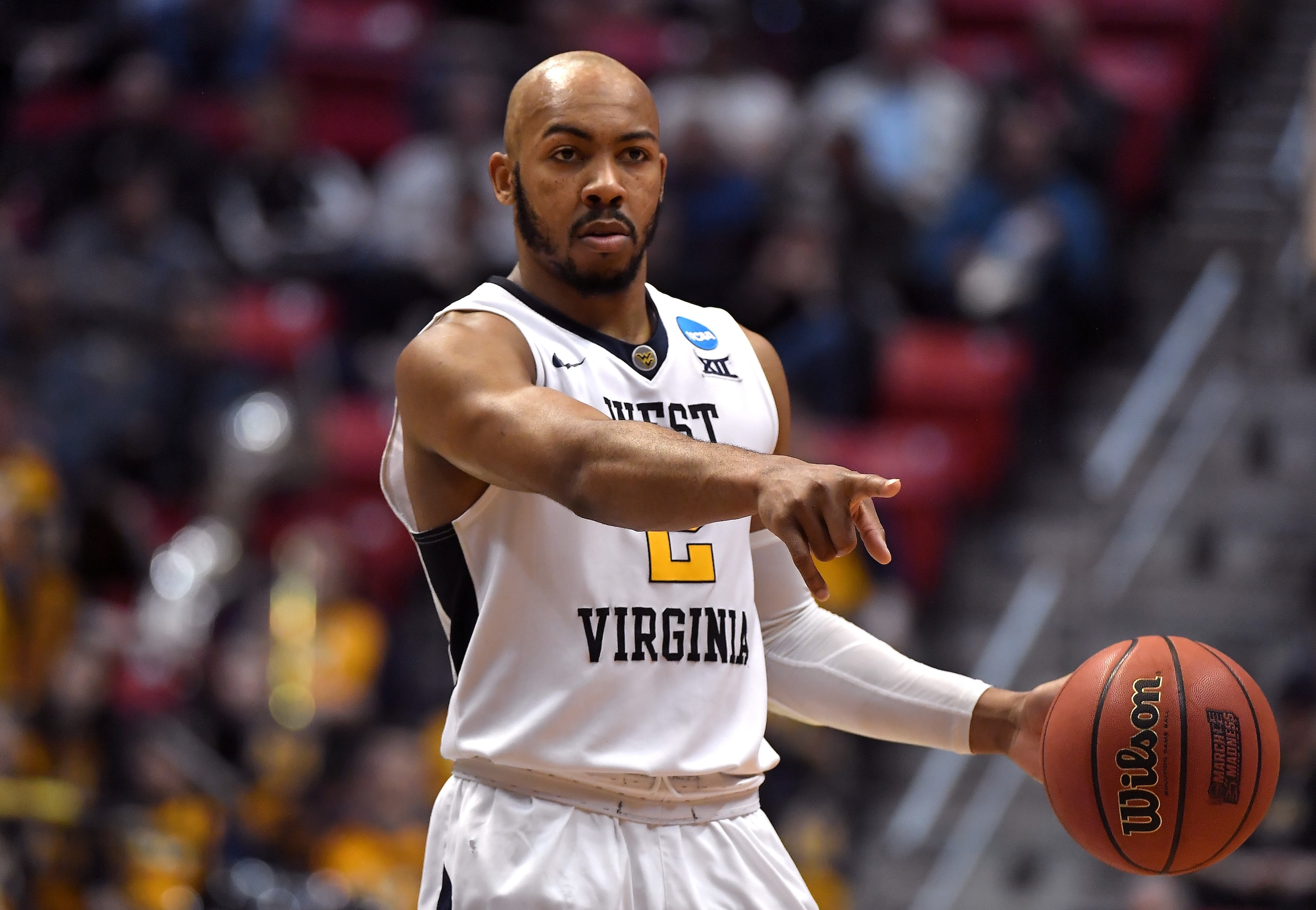
How They've Looked: Relentless. Murray State's Jonathan Stark and Marshall's Jon Elmore were arguably the two best minor-conference players in the country this season, but Press Virginia made them look like a pair of bench-warmers. The duo had a combined line of 24 points on 24 field-goal attempts with eight assists and 10 turnovers. The Mountaineers were suffocating on offense, too, averaging 89.5 points in easy-looking victories.
Bread and Butter: Shot-preventing defense. It used to just be steals, but over the last two seasons, West Virginia has also been one of the best shot-blocking teams in the nation. The Mountaineers currently rank No. 5 in block percentage and No. 8 in steal percentage. And even when they aren't actively piling on numbers in both categories, the opposition often looks skittish, worried about where the next Sagaba Konate emphatic rejection or Jevon Carter "pick-two" is going to come from.
Achilles' Heel: Half-court sets. If you can keep the turnovers under control and run your offense while forcing West Virginia to do the same on the other end, this team is beyond beatable. The Mountaineers don't shoot well, and the constant effort to force turnovers frequently results in fouls or wide-open three-point attempts. If they get at least 14 combined steals and blocks, it's game over. If that total is 11 or fewer, they lose more than 60 percent of the time (5-8).
MVP: Carter. The senior point guard has been quietly putting up phenomenal numbers all season long, but he's really balling out in postseason play. In five games dating back to the start of the Big 12 tournament, Carter has averaged 20.2 points, 7.4 assists, 4.0 rebounds and 3.6 steals while shooting 48.3 percent from three-point range. Good luck finding anyone else coming anywhere close to those numbers.
Championship Blueprint: Wreak havoc on defense and keep getting contributions from multiple sources on offense. Too often this season, it was Carter or bust on offense. Case in point: Daxter Miles Jr. is the team's second-leading scorer for the year, but he hasn't scored in double figures in either tournament game. Yet there are a lot of Mountaineers who are capable of putting up points. Konate, Esa Ahmad, Teddy Allen, Lamont West and James "Beetle" Bolden each scored at least 11 in one of the two games. When four or more guys score in double figures, Press Virginia is almost unbeatable.
3. Kansas Jayhawks
14 of 16
How They've Looked: Short-handed. Udoka Azubuike had to play 22 minutes against Seton Hall because Angel Delgado was eating Mitch Lightfoot alive, but the big man is still clearly nowhere close to 100 percent recovered from the knee injury that kept him out of the Big 12 tournament. Throw in Malik Newman struggling against Penn and Devonte' Graham having a rare off night against Seton Hall, and the Jayhawks haven't looked as good as we know they can.
Bread and Butter: Three-point shooting. The Jayhawks shoot 40.3 percent from three-point range. Both Graham and Svi Mykhailiuk have made more than 100 triples while converting on better than 40 percent of attempts. Newman (74 makes at 40.9 percent) and Lagerald Vick (54 makes at 37.8 percent) have also provided invaluable contributions in that department. When Azubuike is healthy and just dunking everything, the four-out, one-in offense for Kansas has been lethal.
Achilles' Heel: Defensive rebounding. Delgado had 24 points and 23 rebounds against Kansas, and nine of those rebounds were on the offensive glass. In total, the Pirates got back 15 of their own misses, which is hardly a new problem for the Jayhawks. Per KenPom, they rank 293rd in defensive rebounding percentage. Among remaining teams, only Kansas State (307th) is worse.
MVP: Graham. Strong case to be made here for Azubuike compared to the rest of the frontcourt options on this roster, but Graham leads the team in points, assists and steals and has been the clear veteran leader all season. It's hard to believe Kansas went from Frank Mason to Graham at lead guard and may have gotten even better in the process.
Championship Blueprint: Own the perimeter game. When Kansas has struggled this season, it's usually because it either wasn't making threes or wasn't stopping the opposing team from draining them. The Jayhawks are 5-6 this season when the opposing team shoots at least 39 percent from downtown but 24-1 in all other games. Thus far in the tournament (21-of-53), they have not done a great job on the defensive end. Turn that around and get Azubuike back to his usual self, and they'll be in business.
2. Villanova Wildcats
15 of 16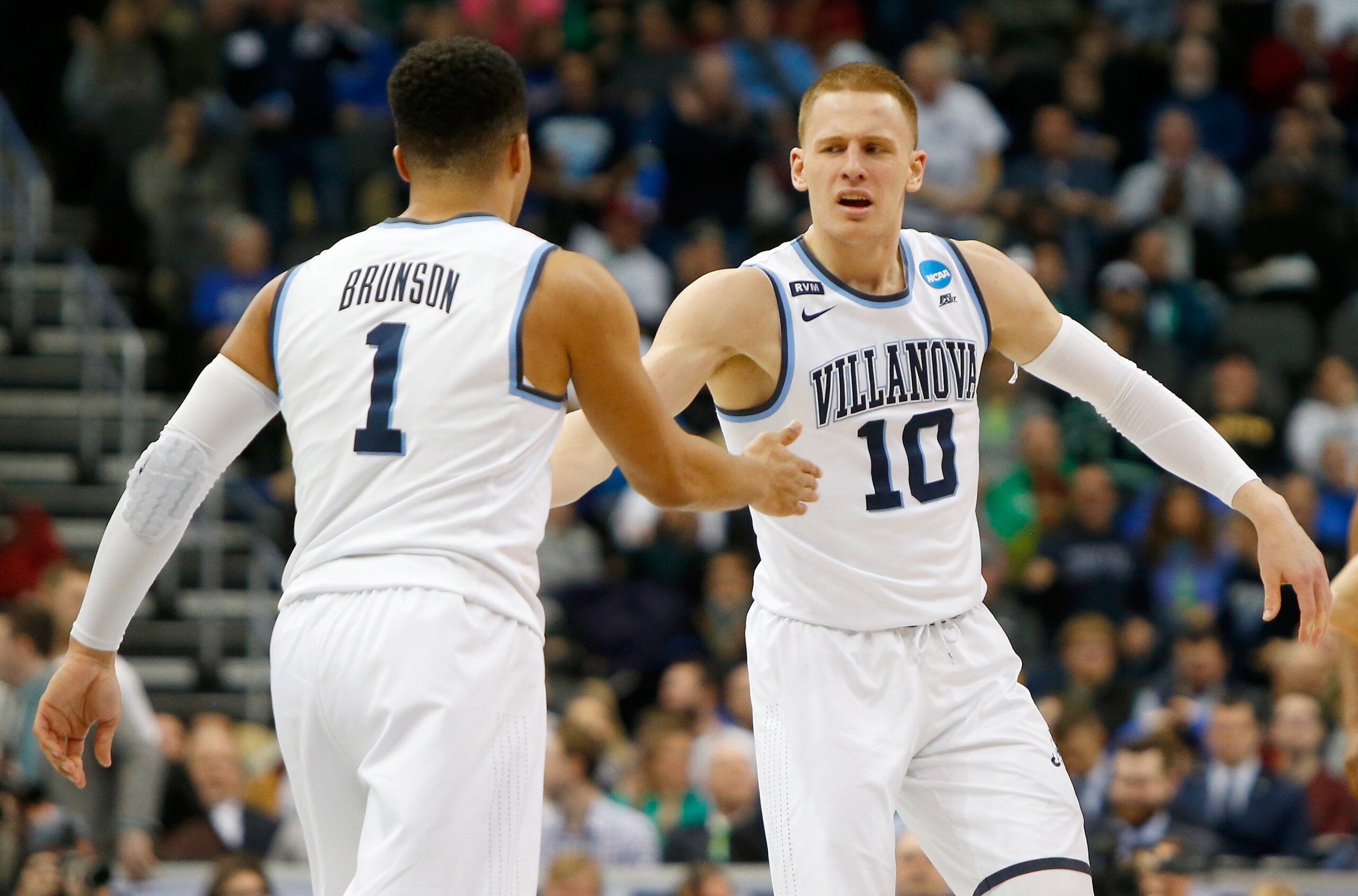
How They've Looked: Three-mendous. That's a word, right? Well, it is now, since Villanova made 31 three-pointers in its first two tournament games. The Wildcats have also been impressive on defense, holding Radford and Alabama to just 59.5 points per game. Both wins were by more than 20 points.
Bread and Butter: Three-point shooting. Many teams have adopted the "Live and Die by the Three" model, but no team has done it better than Villanova over the past four seasons. In fact, 47.3 percent of its field-goal attempts come from beyond the arc, which is easily the highest mark among teams still in the tournament. But because they make 40.2 percent of them—good for 11th in the nation—it's hard to complain about how many deep shots the Wildcats take. Six of their seven leading scorers shoot better than 39 percent from downtown.
Achilles' Heel: Three-point shooting. Yes, it's stupid to list something as both a team's forte and its potential downfall, but Villanova is so dependent on the three that its season could go up in flames with one poor performance. The Wildcats are 84-2 over the last four seasons when shooting at least 35 percent from three-point range, but they are mortal when those shots aren't falling, because they rarely get to the free-throw line and don't have much size in the paint.
MVP: Jalen Brunson. Villanova's point guard doesn't put up Trae Young numbers, but that's because he doesn't force the issue and doesn't need to. What Brunson does put up are some of the most efficient numbers imaginable for player in his position. He had a smooth 28 points and eight assists in the first two games, even though he didn't need to play much in either one.
Championship Blueprint: Avoid injuries and historic shooting performances. Villanova lost to Butler when the Bulldogs shot 15-of-22 from three-point range, and it dropped a few games in February when Phil Booth and Eric Paschall were either out of the lineup or playing at less than 100 percent. But when the Wildcats are healthy, hitting threes and defending, they're the best team in the country. We're listing them at No. 2, but both the Wildcats and Blue Devils get A-plus grades while everyone else is fighting for a distant third place.
1. Duke Blue Devils
16 of 16
How They've Looked: Unstoppable. Duke's offense hit a few snags late in the season. The Blue Devils were held below 70 points in three of their final five games before the NCAA tournament began. But they are back to looking like the team that averaged 91.7 points through the first 20 games, scoring at least 81 in all but one game during that stretch of more than two months. They dropped 89 on Iona before going for 87 against Rhode Island, shooting 45.1 percent from three-point range.
Bread and Butter: Offensive rebounding. They haven't needed much of this while setting the nets ablaze in the first two rounds. However, with Marvin Bagley III, Wendell Carter Jr., Marques Bolden and Javin DeLaurier all at their disposal, the Blue Devils lead the nation in offensive rebounding percentage. For good measure, they're also No. 1 in defensive free-throw rate, committing 15 fouls or fewer in nine of the last 10 games.
Achilles' Heel: Turnovers. Duke either lost the turnover-margin battle or broke even in each of its last six games. The Blue Devils have coughed the ball up a little more often with Grayson Allen taking on more of a lead-guard role in the second half of the season, and they have forced more than 15 turnovers just once in their last 15 games. The good news: That one time was a 17-turnover game against their Sweet 16 opponent, Syracuse.
MVP: Bagley. The big freshman scored 22 points in both games and is a combined 18-of-24 from the field. And he was the MVP long before the tournament began. By the end of the season, it was a four-horse race between Bagley, Jalen Brunson, Deandre Ayton and Devonte' Graham for National Player of the Year.
Championship Blueprint: Hope the zone doesn't suddenly become a weakness. Since making the full-time switch to the 2-3 defense, Duke has held all 11 of its opponents to eight made three-pointers or fewer. Only two of those teams shot better than 29.2 percent. If that holds up against the likes of Kansas and Villanova while Bagley continues to do whatever he darn well pleases on offense, Mike Krzyzewski is headed for a sixth national championship.
Statistics courtesy of KenPom.com and Sports Reference.
Kerry Miller covers men's college basketball for Bleacher Report. You can follow him on Twitter, @kerrancejames.


.jpg?w=2560 "Rodgers Iced Out on Plane 💎")
.jpg?w=2560 "🚨 Week 8 AP Top 25 Poll")
