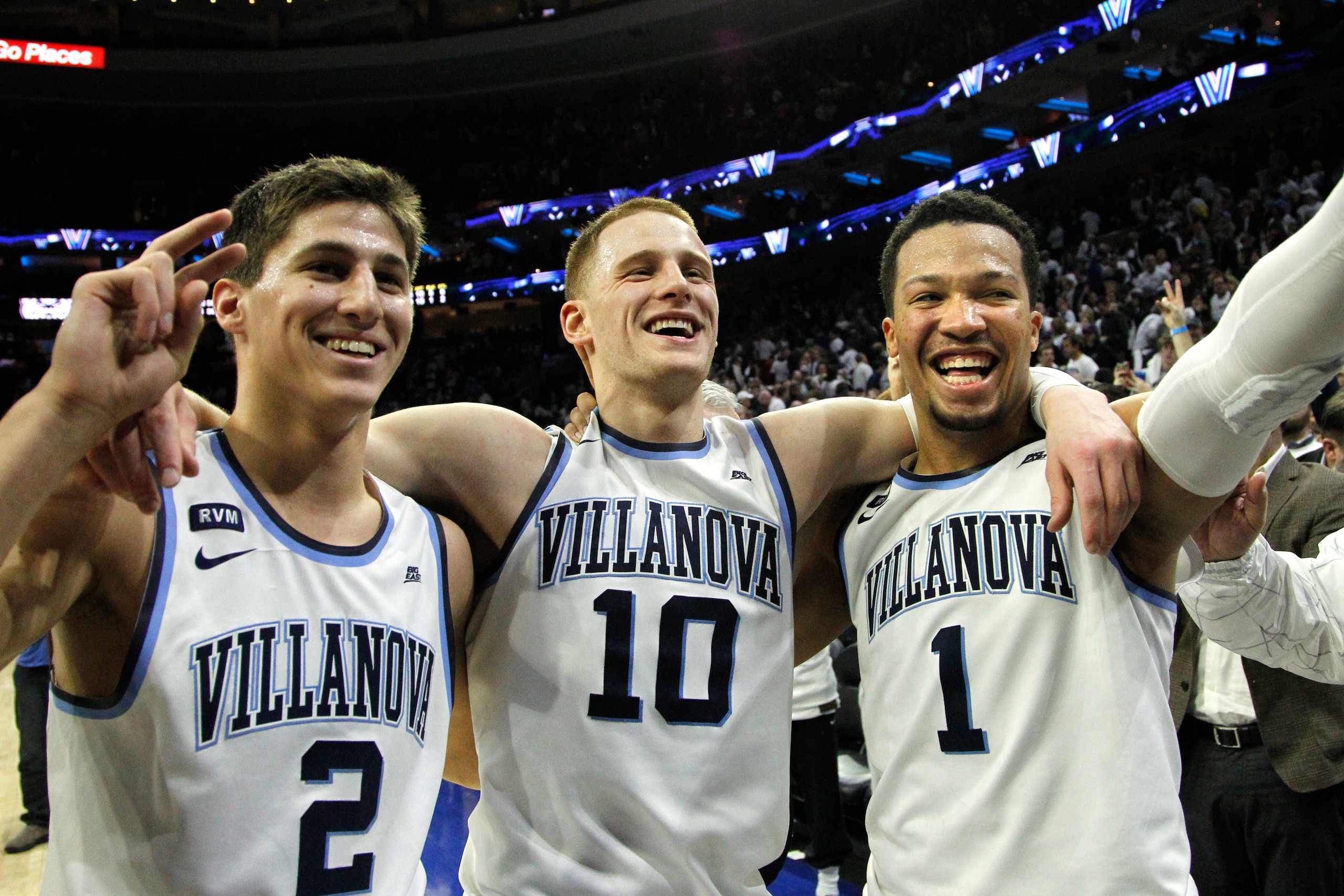


Some say defense wins championships, but it's the offense for college basketball teams like Villanova, Purdue and Duke that puts them among the top candidates to win it all in 2018.
Nine of the last 10 teams to play in the national title game had a top-16 adjusted offensive efficiency on KenPom.com. (The one exception was Connecticut at No. 39 in 2014, but that team was an exception to virtually all of the rules about title contenders.) Five of those teams ranked in the top three: 2013 Michigan (No. 1), 2015 Wisconsin (No. 1), 2015 Duke (No. 3), 2016 Villanova (No. 3) and 2016 North Carolina (No. 1).
Naturally, the starting point for this exercise could've been this season's teams currently rated No. 16 or better, but this ranking is based on more than just offensive efficiency.
Which teams have the most unstoppable individual player? How many guys can they count on to score every night? And what is their biggest weakness?
Teams are ranked in ascending order of how much we would trust them to score consistently against an average defense.
Honorable Mentions
1 of 10
Creighton Bluejays: In nonconference play, Creighton would've been a lock for this list, averaging 92.3 points per game. But the Bluejays have yet to score more than 90 points in 13 Big East games and have averaged just 74.9 over their last eight. Marcus Foster is still doing incredible things, but they've taken a clear step backward without Martin Krampelj.
Oklahoma Sooners: Trae Young is unbelievable, but between his turnovers and the unreliable shooting from most of his teammates, this offense isn't anywhere near as unstoppable as it once seemed to be.
Kansas Jayhawks: The last time Kansas scored more than 80 points in a game was more than a month ago. The Jayhawks occasionally catch fire in short bursts, but it's hard to believe this is the same team that averaged 94.5 points per game back in November.
Marquette Golden Eagles: Marquette doesn't always fire on all cylinders. In fact, it has been held to 78 points or fewer in five of its last seven games. But when Markus Howard, Andrew Rowsey and Sam Hauser are all feeling it, this is a team that can put a ton of points on the board.
9. Auburn Tigers
2 of 10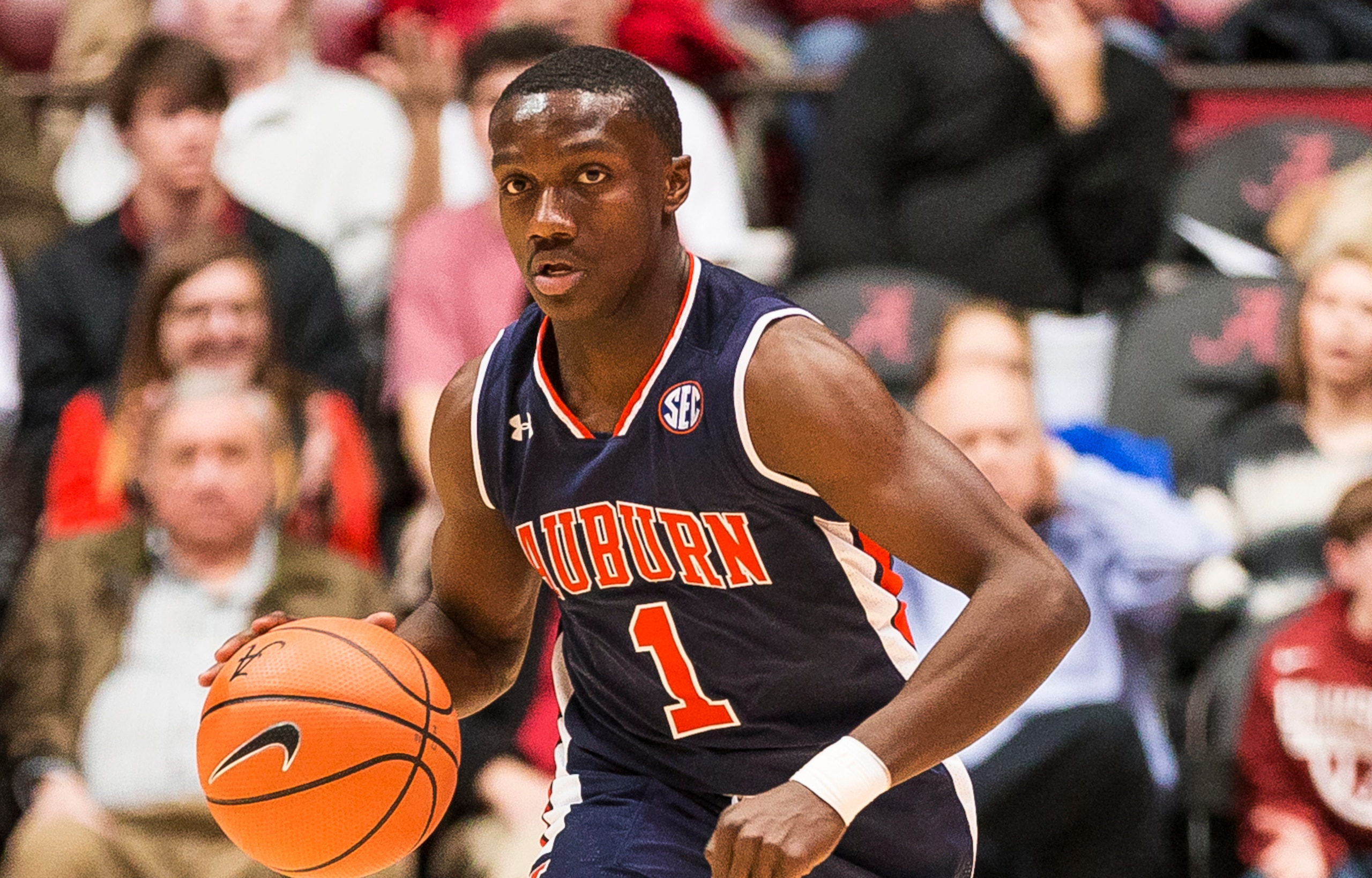
Adjusted Offensive Efficiency Rank: No. 6
Bread and Butter: Auburn thrives at getting to and converting from the free-throw line. The Tigers shoot 77.7 percent from the charity stripe as a team, and each of their four primary one-point shooters makes at least 78 percent of his attempts. In fact, every player that has taken at least 25 free throws this season has made at least two-thirds of them. And the team averages better than 24 attempts per game.
Table-Setter: Sophomore point guard Jared Harper has not gotten the national respect he deserves. Auburn could have crumbled before the season began when it lost Austin Wiley and Danjel Purifoy, but Harper has led this bunch to the precipice of one of the unlikeliest No. 1 seeds in NCAA tournament history. Harper averages 13.3 points and 6.0 assists per game, better than 3.0 assists per turnover and 41.3 percent shooting from the perimeter.
Bucket-Getter: It depends on what type of bucket we're talking about. Both Bryce Brown and Mustapha Heron average better than 16 points per game, but the former is the primary perimeter shooter while the latter is a 6'5" bowling ball who can get to the rack as needed.
X-Factor: One of the biggest keys to Auburn's offense is its defense, and in turn transition scoring. The Tigers average a combined 13.2 blocks and steals per game, and it doesn't take long for them to run the floor and turns those stops into points. They can suck the life out of an opponent that struggles with turnovers or avoiding blocks.
Achilles' Heel: For a high-efficiency offense, Auburn sure is average when shooting inside the arc, converting on just 50.7 percent of two-point attempts. Should the long ball fail them at any point in the tournament, the Tigers don't have much of an interior game to fall back on.
8. North Carolina Tar Heels
3 of 10
Adjusted Offensive Efficiency Rank: No. 11
Bread and Butter: Though its tallest starter is only 6'8", North Carolina thrives on the offensive glass. That's certainly nothing new for a Roy Williams team: The Tar Heels have ranked in the top 21 nationally in offensive rebound percentage in 14 of the last 15 seasons, per KenPom. But it's a little bizarre that they're doing it with Cameron Johnson and Luke Maye instead of traditional big men like Brice Johnson and Kennedy Meeks.
Table-Setter: Joel Berry II might technically be listed at point guard, but Theo Pinson is the straw that stirs this drink. The senior point-forward averages 4.5 assists per game and is the driver who creates space for the four three-point shooters in this starting lineup. It's also Pinson's hustle plays that often ignite big runs for the offense.
Bucket-Getter: Maye is the leading scorer (18.7) and North Carolina's best argument for a Wooden Award candidate, but Berry can make things happen by himself. He's going to have the ball when the Tar Heels desperately need a basket, even though his shooting percentages are way down from the past two seasons.
X-Factor: As I wrote after North Carolina's win over Duke last week, this is a championship-caliber team when the wings are making shots. Kenny Williams and Johnson shot a combined 10-of-20 from three-point range against the Blue Devils, carrying the Tar Heels to victory on a night where neither Berry nor Maye shot well.
Achilles' Heel: It's weird to call this an Achilles' heel of North Carolina's offense, but its horrendous three-point defense forces the offense to be near-perfect in order to win. Opponents shoot 38.4 percent from three-point range against the Tar Heels and get 41.7 percent of their points from those shots. The latter number is the third-highest in the nation.

.jpg?w=2560 "Rams Raiders Football")

7. Arizona Wildcats
4 of 10
Adjusted Offensive Efficiency Rank: No. 8
Bread and Butter: Arizona can score with high efficiency in a variety of ways, but its tried-and-true method for getting points is to feed the big men. Deandre Ayton and Dusan Ristic have each scored in double figures in 12 of 13 conference games. One of the giants has scored at least 20 in nine of those games. So even on nights when Allonzo Trier or Rawle Alkins can't get going, it's a safe assumption the frontcourt will do enough on offense to keep Arizona in the game.
Table-Setter: Some have argued that Arizona can't win a title with Parker Jackson-Cartwright running the offense, but I'm not sure why. The senior is averaging nearly five assists per game and nearly three assists per turnover, and he is a career 41 percent three-point shooter—though he doesn't shoot often. He won't be the reason Arizona makes a deep run, but it's hard to imagine he'd be the reason this team would be unable to make one.
Bucket-Getter: Though there's a case to be made that Arizona should just give the ball to Ayton on every possession and see what happens, Trier is actually the best scorer on the roster. He isn't scoring like he did for the first four games of the season (29.3 PPG), but he's still an extremely efficient scorer, ranking fourth in the nation in true-shooting percentage—and with a higher usage rate than any other player in the top 10.
X-Factor: The big unknown is whether Arizona will get any contributions from its bench. The starting five is impressive and full of guys who can score in bunches, but offense becomes a question mark when guys like Dylan Smith, Keanu Pinder and Brandon Randolph are on the floor. If any one of those players can give the Wildcats something in March, it would be a major development.
Achilles' Heel: As with North Carolina, Arizona's defense is the biggest factor holding back its offense. Despite playing at an average pace, the Wildcats have given up at least 71 points in 10 of their last 13 games, including four games at 80 or more. If everyone on offense contributes, scoring 80 points is no problem for Arizona. But expecting everyone to be hot every night in the tournament is unrealistic.
6. Xavier Musketeers
5 of 10
Adjusted Offensive Efficiency Rank: No. 7
Bread and Butter: Similar to Auburn, Xavier is best at drawing fouls and making the opposition pay. Per KenPom, the Musketeers rank in the top 30 in both free-throw rate and free-throw percentage. As of Friday, they were the only team in the top 30 in both categories. Each of their nine leading scorers averages at least 2.8 free-throw attempts per 40 minutes, five of whom shoot better than 80 percent.
Table-Setter: Sophomore Quentin Goodin's emergence is one of the biggest reasons for Xavier's success. He was almost unplayable as a freshman, but he is running the point admirably with 5.0 assists per game. He won't get named to any All-Big East teams, and it's still a terrifying adventure when he fires up a three-point attempt (30 percent), but he is great in the role that Xavier needs him to play.
Bucket-Getter: Trevon Bluiett is one of the best players in the nation. It's unclear if the senior will even get drafted in a few months, but he has left a lasting imprint with his ability to repeatedly come through in the clutch. In back-to-back overtime wins to begin February, Bluiett had 31 points against Georgetown and 26 against Butler, shooting a combined 12-of-19 from three.
X-Factor: Kerem Kanter is a liability on defense, but he has been in the starting lineup for the past month because of his immense offensive potential. Dating back to Jan. 6, Kanter has scored 149 points in just 197 minutes. But he did have zero-point performances against Butler (Jan. 2) and Seton Hall (Jan. 20), which makes him the definition of an X-factor.
Achilles' Heel: It's not a nightly problem, but Xavier has been known to struggle with shot-blocking teams. In two of its three lowest-scoring games of the season, it had nine shots blocked by Providence and nine shots blocked by East Tennessee State. An opponent like Michigan State could be a serious problem in the NCAA tournament.
5. Michigan State Spartans
6 of 10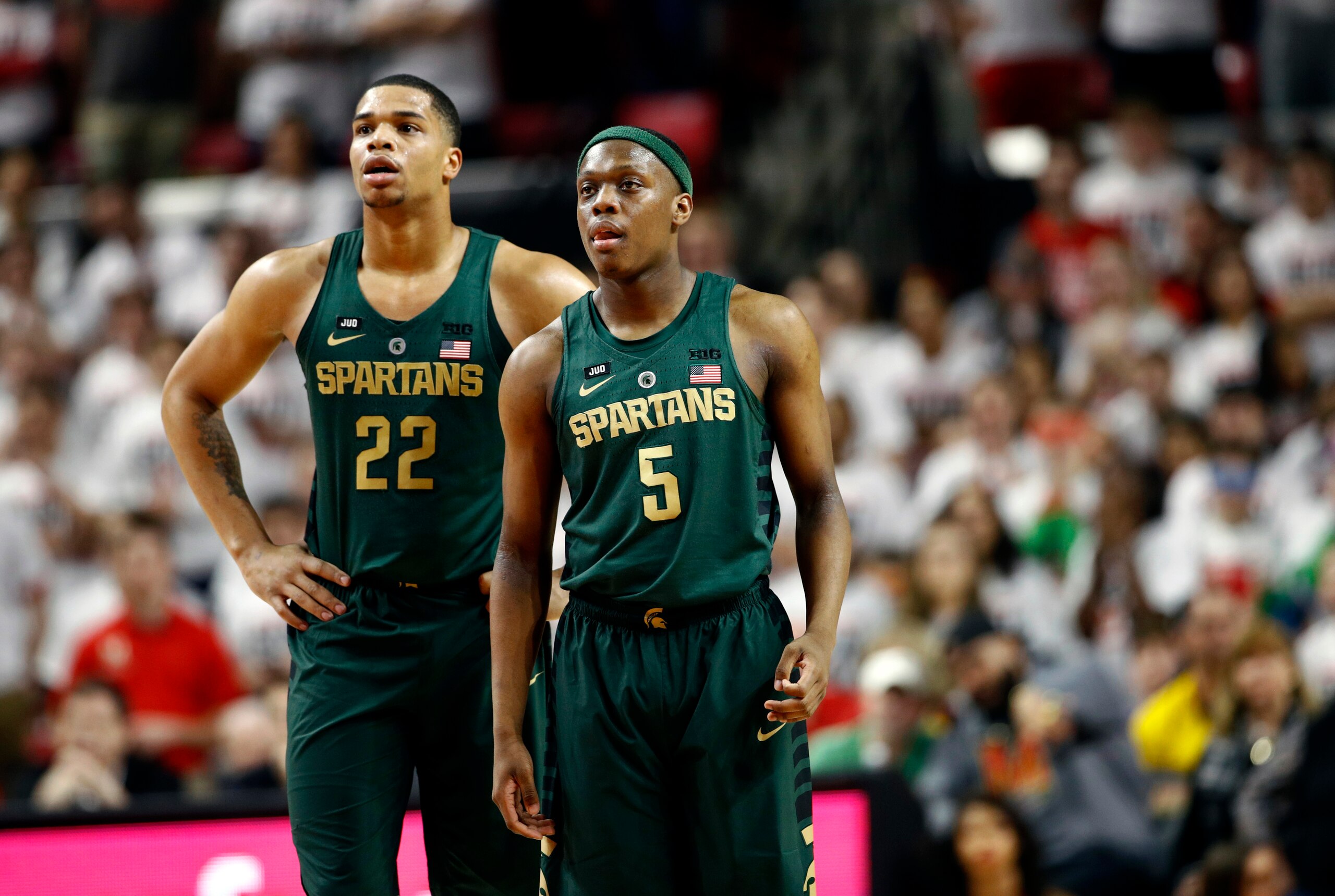
Adjusted Offensive Efficiency Rank: No. 10
Bread and Butter: Take your pick, really. Michigan State ranks in the top 10 in two-point percentage, three-point percentage and offensive rebound percentage. If the Spartans didn't have turnover issues (more on that shortly), they would easily have the most efficient offense in the nation (No. 10). But you have to love that Michigan State leads the nation in assist rate and averages more than 20 assists per game.
Table-Setter: Cassius Winston is the biggest cause of that distribution dominance. MSU's sophomore point guard averages 7.1 assists per game and shoots 51.9 percent from three. If he keeps it up for a few more weeks, he'll join former Kansas guards Aaron Miles and Kirk Hinrich as the only players in the past 24 years to average at least 6.5 assists while shooting 50 percent or better from downtown.
Bucket-Getter: The Spartans have five go-to starters who average better than 17.5 points per 40 minutes, but Miles Bridges is the clear alpha dog who is finally starting to assert his dominance. Bridges has scored at least 20 points in six of his last eight games, despite attempting 16 shots or fewer in each. When he enters "Takeover Mode," there's not much the opposition can do.
X-Factor: Michigan State's foul trouble is arguably the biggest X-factor in the entire country. Both Jaren Jackson Jr. and Nick Ward have had trouble staying on the floor because of frequent early whistles. To be fair, though, that was an oft-expressed concern about both Gonzaga (Zach Collins) and North Carolina (Isaiah Hicks and Tony Bradley) last season, and those teams made it to the national championship.
Achilles' Heel: Ah, yes. The turnovers. Over the last 11 games, Michigan State has committed 142 turnovers while forcing just 83. In one particularly poor performance, the Spartans finished minus-15 in turnover margin against Illinois. Fortunately, they shot 68.2 percent from the field and were able to beat one of the worst major-conference teams in the country, but this has been a serious concern for the Spartans since prior to the season.
4. Saint Mary's Gaels
7 of 10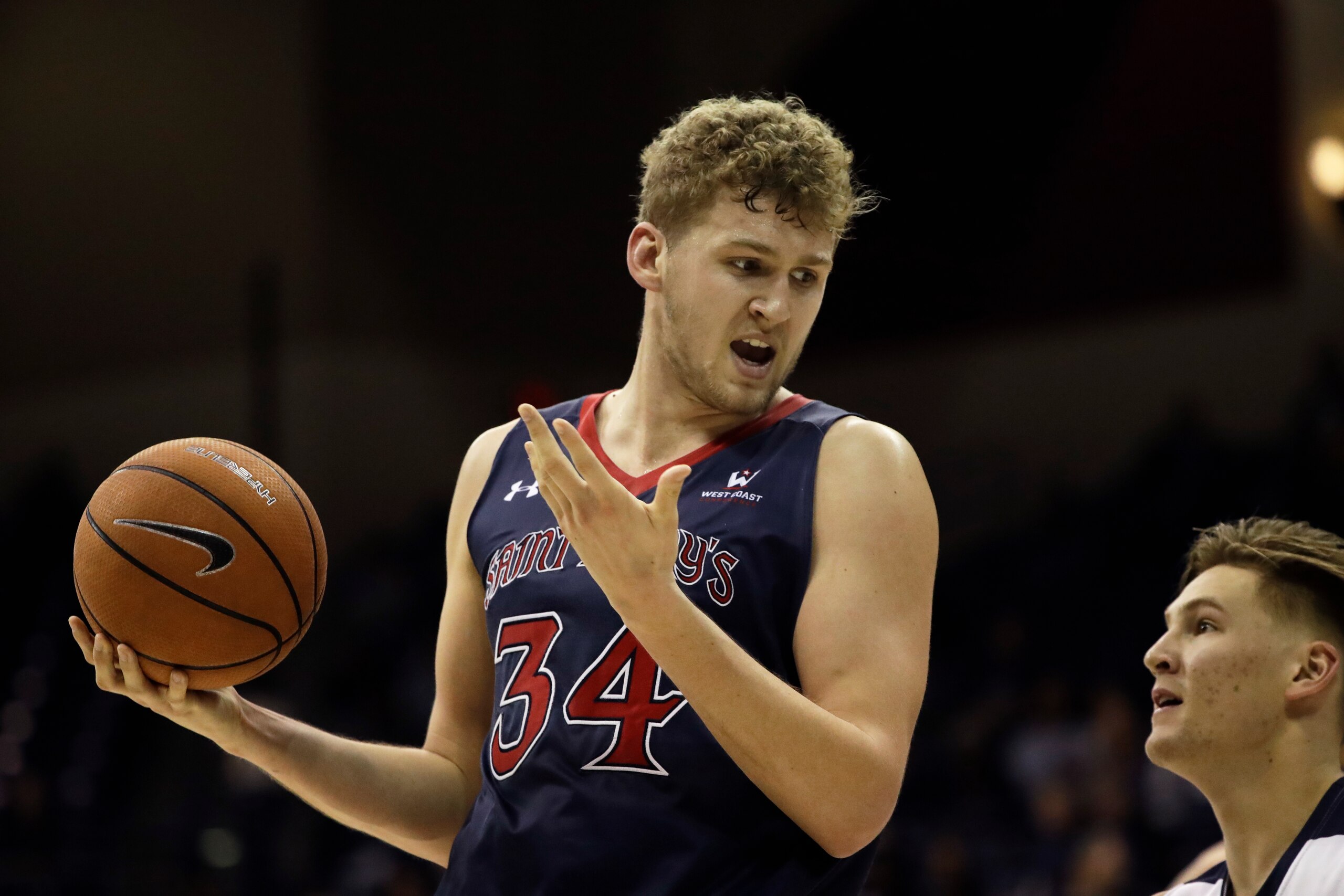
Adjusted Offensive Efficiency Rank: No. 4
Bread and Butter: Saint Mary's is like the Virginia of offense. The Gaels play at a slow, deliberate tempo, but they rarely commit turnovers and almost always get a high-percentage shot. As a result, they rank second in the nation in effective field-goal percentage and rank fourth in adjusted offensive efficiency. And best of luck trying to speed them up: They have played only four games with more than 67 possessions, none of which exceeded 71 and two of which only got that high because of overtime.
Table-Setter: There are only two players in the country averaging at least 7.6 assists per game—Oklahoma's Trae Young (9.4) and Emmett Naar of Saint Mary's (8.9). At this rate, Naar is going to finish his career with roughly 850 assists, which has only been done nine times in the past 26 years. But he's much more than just a passer. Naar is also a career 42 percent three-point shooter and an 85 percent free-throw shooter.
Bucket-Getter: Nobody gets buckets like Jock Landale. The big man averages 22.0 points per game. When he gets the ball in the low post, it's almost an automatic two points, a foul or both. He leads the nation in KenPom.com Game MVP honors and would be a first-team All-American if the season ended today.
X-Factor: Evan Fitzner lost his starting job back in November, but the 6'10" stretch 4 is still a legitimate weapon. He shoots 39.6 percent from beyond the arc and is one of the Gaels' many three-point options.
Achilles' Heel: The big question about this team is the level of its competition. Outside of the two games against Gonzaga, the only game Saint Mary's has played against a projected tournament team was a home game against New Mexico State on the fourth day of the regular season. Will that dominance in the West Coast Conference translate to games against the Big 12 and ACC?
3. Duke Blue Devils
8 of 10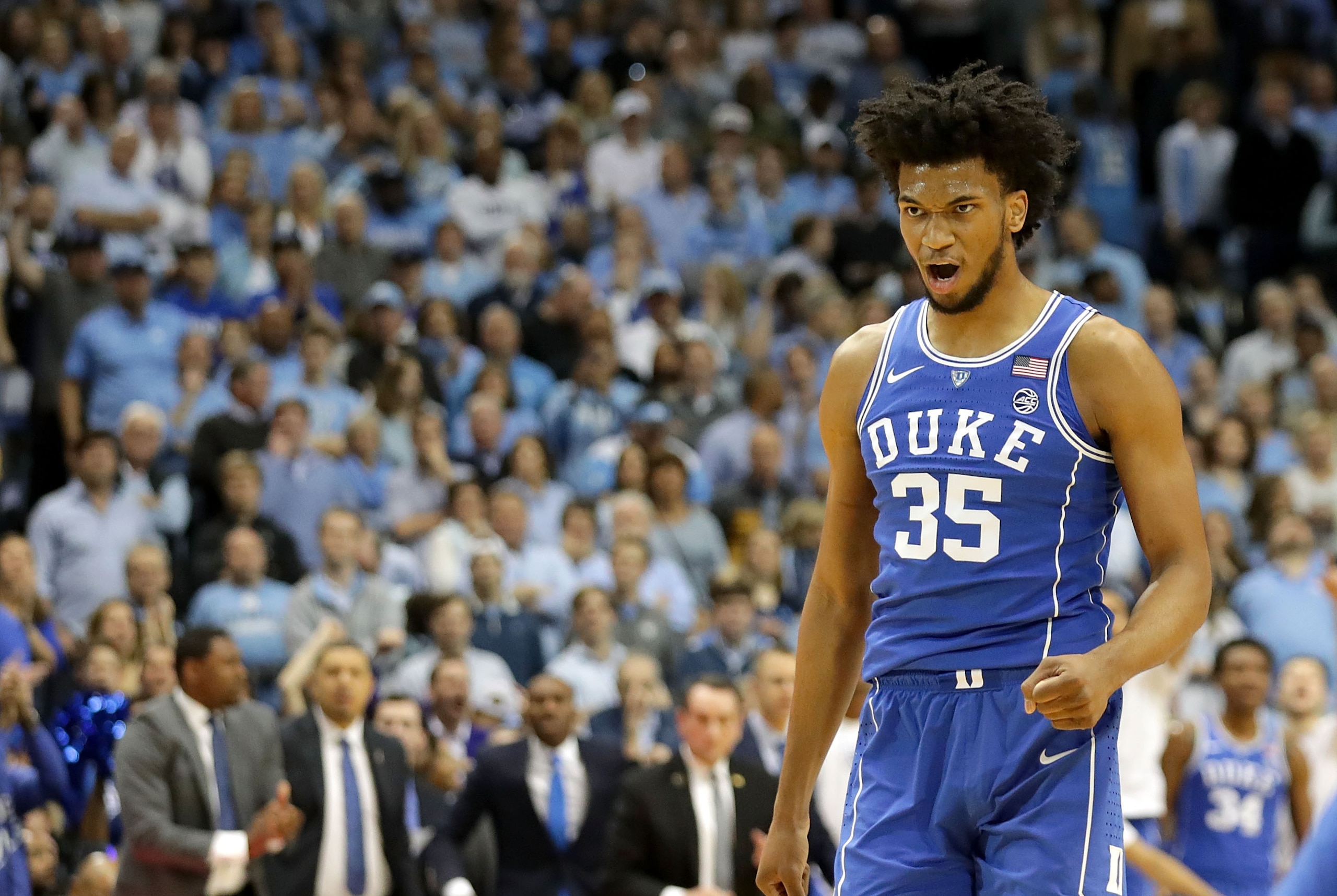
Adjusted Offensive Efficiency Rank: No. 2
Bread and Butter: Duke is usually renowned for its three-point shooting, but this year, it's all about working the glass. The Blue Devils lead the nation in offensive rebounding percentage, getting back more than 40 percent of their own misses—not that they miss all that often, though; they're 13th in effective field-goal percentage.
Table-Setter: When Trevon Duval is playing well—creating for others, limiting turnovers and defending the perimeter—he's the final piece of Duke's championship puzzle. But when he's struggling, Duke's play falls somewhere between "not great" and "downright awful," and he hasn't been playing well at all lately. Over his last six games, Duval has 43 points on 49 shots, a 1.4 assist-to-turnover ratio and a grand total of four steals.
Bucket-Getter: Though Gary Trent Jr. is giving him one heck of a run in recent weeks, Marvin Bagley III remains Duke's go-to phenom. The potential No. 1 pick in the 2018 NBA draft has scored at least a dozen points in all but one game, and the one exception was due to an eye injury. In ACC play, he's averaging 20.9 points and 12.5 rebounds per contest.
X-Factor: Nearly 90 percent of Duke's scoring in ACC play has come from its five starters, but Alex O'Connell is carving out a legitimate bench role. The 52.8 percent three-point shooting guard scored 11 points in Thursday's game against North Carolina. He has logged at least 14 minutes in five of the last nine games.
Achilles' Heel: Defense is the issue that everyone talks about, but what's up with Duke's free-throw shooting? The Blue Devils rank outside the top 250 in the nation in free-throw percentage as Bagley (62.0), Duval (61.1) and Wendell Carter Jr. (69.4) each shoots worse than 70 percent from the stripe.
2. Purdue Boilermakers
9 of 10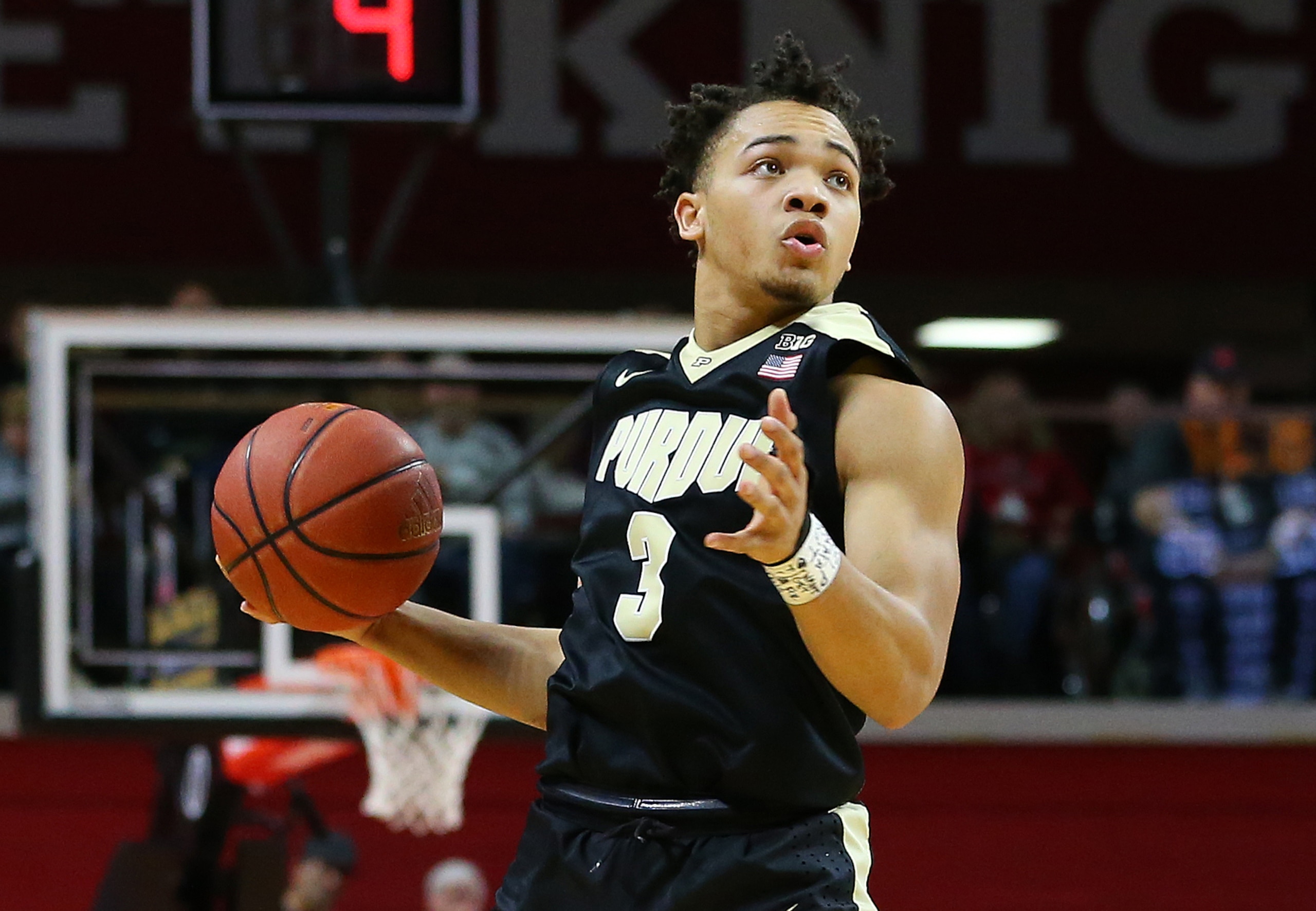
Adjusted Offensive Efficiency Rank: No. 3
Bread and Butter: It's unbelievable how good Purdue is from three-point range. Five different Boilermakers average at least three attempts per game, and they each shoot at least 39.9 percent. They rank second in the nation in team three-point percentage at 42.4. If any team is going to simply shoot its way to the Final Four, this is the most likely culprit.
Table-Setter: As with the long ball, Purdue has a bunch of guys responsible for one of the best assist rates in the country. Those same five shooters all average at least 1.9 assists per game, too, but the clear leader in the clubhouse is Dakota Mathias at 4.5. The senior has accounted for better than three assists per turnover. And when he decides not to pass, he's a 46.4 percent three-point shooter.
Bucket-Getter: Last year, Wisconsin started four seniors and one sophomore (Ethan Happ) who was the star of the show. Same goes for 2017-18 Purdue, except its sensational sophomore is Carsen Edwards (16.9 PPG). He struggled to find his groove last year, but he's shooting 46.1 percent from beyond the arc in his last 14 games. He has also shown improvement as both a driver and a passer, making him one of the most dangerous guards in the country.
X-Factor: Matt Haarms primarily serves as a shot-blocker when he replaces Isaac Haas on the floor, but he does make 66.7 percent of his two-pointers. And he can swing the momentum of a game will one bucket and subsequent celebration.
Achilles' Heel: Despite always having either a 7'2" (Haas) or 7'3" (Haarms) center on the floor, Purdue's one area of slight weakness is offensive rebounding. And it's getting worse rather than better. Over the last seven games, Purdue has grabbed just 52 out of a possible 237 offensive rebounds. That's 21.9 percent, which would rank in the bottom 25 nationally if it were their season average.
1. Villanova Wildcats
10 of 10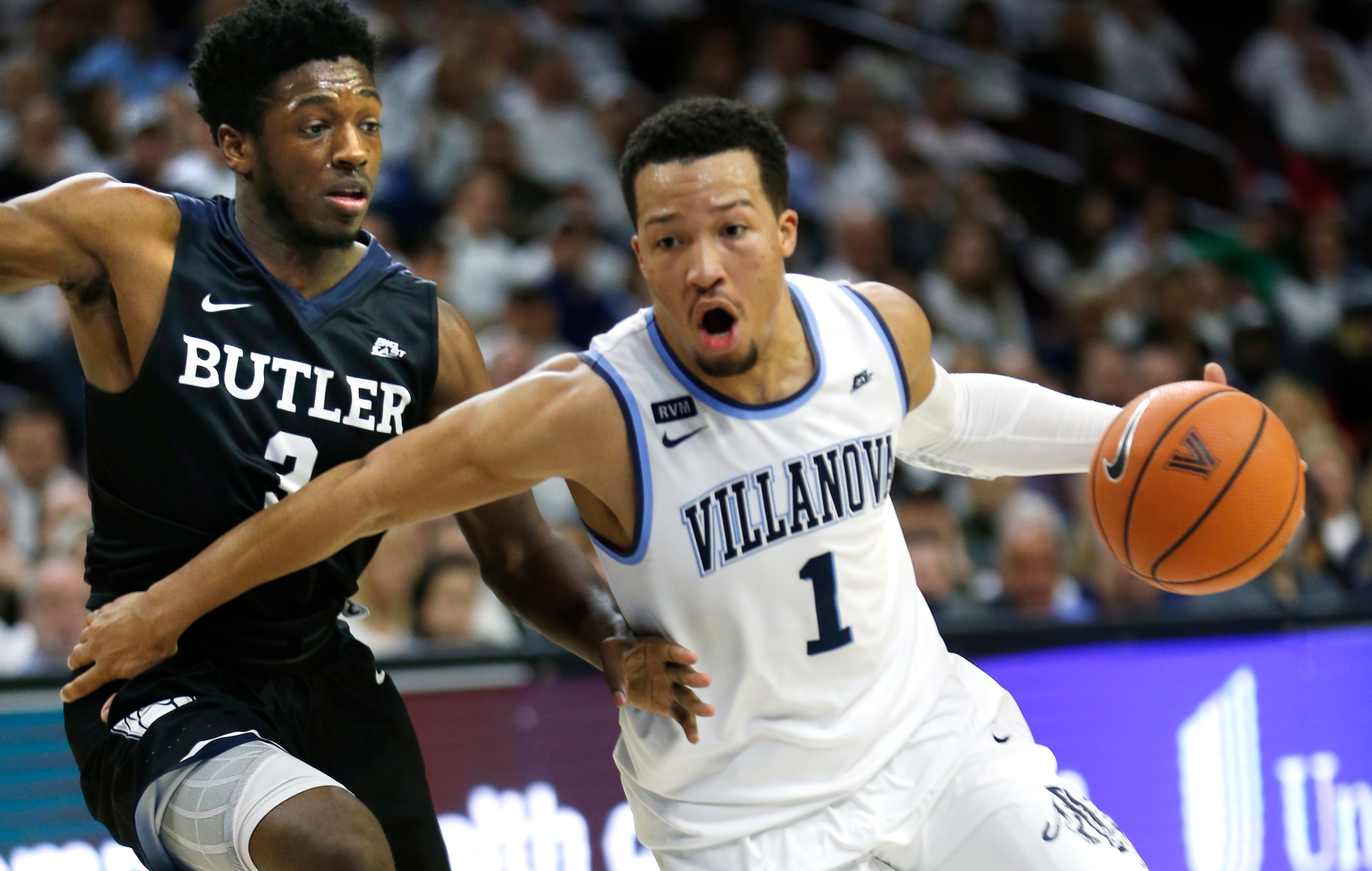
Adjusted Offensive Efficiency Rank: No. 1
Bread and Butter: Six Wildcats shoot better than 40 percent from three-point range, and seven average 2.5 or more attempts per game. They take more than 45 percent of their field-goal attempts from downtown, but it's hard to blame them when they make 40.8 percent of them. That's a long-winded way to say that this team loves the long ball.
Table-Setter: Jalen Brunson is rapidly closing the gap on Trae Young for the Wooden Award, and it's not just because Oklahoma is struggling in Big 12 play. In 12 Big East games, Brunson has averaged 21.8 points and 4.5 assists per game. He may be 6'3", but he's one of the best interior scorers in the nation. And it's largely because of his ability to both score and distribute from the paint that this team is so lethal from the perimeter.
Bucket-Getter: Brunson is the leading scorer, but Donte DiVincenzo has become a serious weapon for Villanova. The redshirt sophomore has scored in double figures in 16 consecutive games, including a career-high 30 points in Saturday's win over Butler. Mikal Bridges has taken a bit of a step back after an incredible first two months, but this offense is still in great hands.
X-Factor: Will Villanova be at full strength heading into the NCAA tournament? Phil Booth has missed the last five games with a hand injury, and Eric Paschall has missed the last two due to a concussion. The Wildcats were also without Collin Gillespie for eight games and Jermaine Samuels for 10 games earlier this season. This isn't a particularly deep rotation, and it has been put to the test by the injury bug.
Achilles' Heel: Because everyone on the roster is 6'9" or shorter and so much of the offense is generated on the perimeter, Villanova isn't a great offensive rebounding team. In the losses to Butler and St. John's, the Wildcats got just 19 of 75 possible offensive rebounds (25.3 percent), and four of them were dead-ball rebounds. But that's nitpicking at the most efficient and most unstoppable offense in the nation.
All statistics current through the start of play on Sunday. Unless otherwise noted, advanced statistics courtesy of KenPom.com.
Kerry Miller covers men's college basketball for Bleacher Report. You can follow him on Twitter @kerrancejames.

.jpg?w=2560 "Steelers Saints Football")

.jpg?w=2560 "Packers Safety Slams Refs 🤬")
.jpg?w=2560 "🚨 Week 8 AP Top 25 Poll")