


Trae Young is running away with all of the player of the year and freshman of the year honors, but does his game remind you more of Stephen Curry or "Pistol" Pete Maravich?
Or what about Marvin Bagley III? If you squint just a little bit at both his name and his game, you might see Michael Beasley.
This isn't a conventional ranking of the nation's top 10 freshmen. In fact, it's not a ranking at all. The following 10 first-year phenoms are merely listed in alphabetical order. But rather than talking them up and comparing them to other current players, we went digging through stat sheets and highlight reels to come up with comparisons to former college basketball greats.
For the most part, these are statistical comparisons more so than stylistic ones, and we are comparing against one specific collegiate season from the former stars. Moreover, the comparisons don't necessarily mean we're projecting the freshmen to follow similar career arcs in the NBA.
That said, enjoy this trip down memory lane, and let us know if you think there's a better comparison to be made for any of these players.
Deandre Ayton, Arizona
1 of 10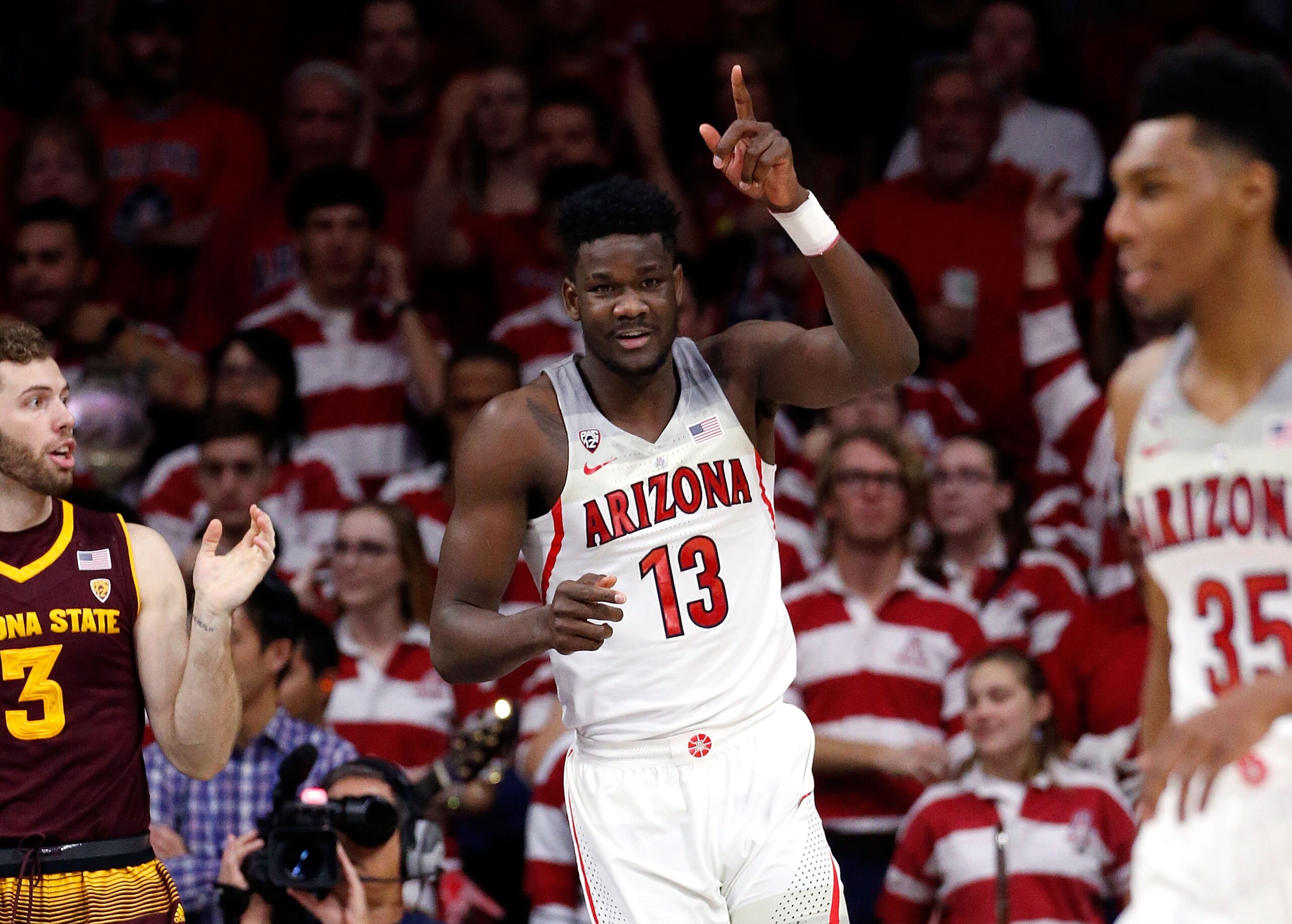
MVP Performance: 23 points, 19 rebounds, three blocks, three assists vs. Arizona State
2017-18 Stats: 19.7 PPG, 11.1 RPG, 1.8 BPG, 1.6 APG, 32.0% 3PT
The Comp: 1992-93 Chris Webber (19.2 PPG, 10.1 RPG, 2.5 BPG, 2.5 APG, 33.8% 3PT)
Comparing anyone to Chris Webber is high praise. (Unless it's for calling a timeout when your team doesn't have any remaining.) Webber was the crown jewel of Michigan's Fab Five, leading the Wolverines to back-to-back national championship games. Though he only played two seasons, there's a strong case to be made that he's one of the 50 greatest college basketball players of all time.
And yet, he was the obvious choice for a comparison for Deandre Ayton.
Ayton does have a couple of inches on Webber and isn't quite as fluid in the open court. He also doesn't throw down as many reverse dunks as Webber did. Aside from that, the similarities are rather uncanny.
Like Webber, Ayton has the size, strength and footwork to get anywhere he pleases on the court. And he has the full arsenal of post moves at his disposal. Some of them are a bit less polished than others, but Ayton can hit an opponent with a drop step, an up-and-under or a baseline fade. Any time he doesn't get a touch in the post feels like a wasted possession.
The big man also has three-point range, he blocks some shots, and he has the vision and the unselfishness to get the occasional assist. He isn't quite the well-rounded defender that Webber was, but he makes up for it by not being a liability at the free-throw line. (Ayton shoots 71.6 percent; Webber shot 53.0 in his two seasons with Michigan.)
And on the 25-year anniversary of Webber's going No. 1 in the 1993 draft, Ayton may do the same.
Marvin Bagley III, Duke
2 of 10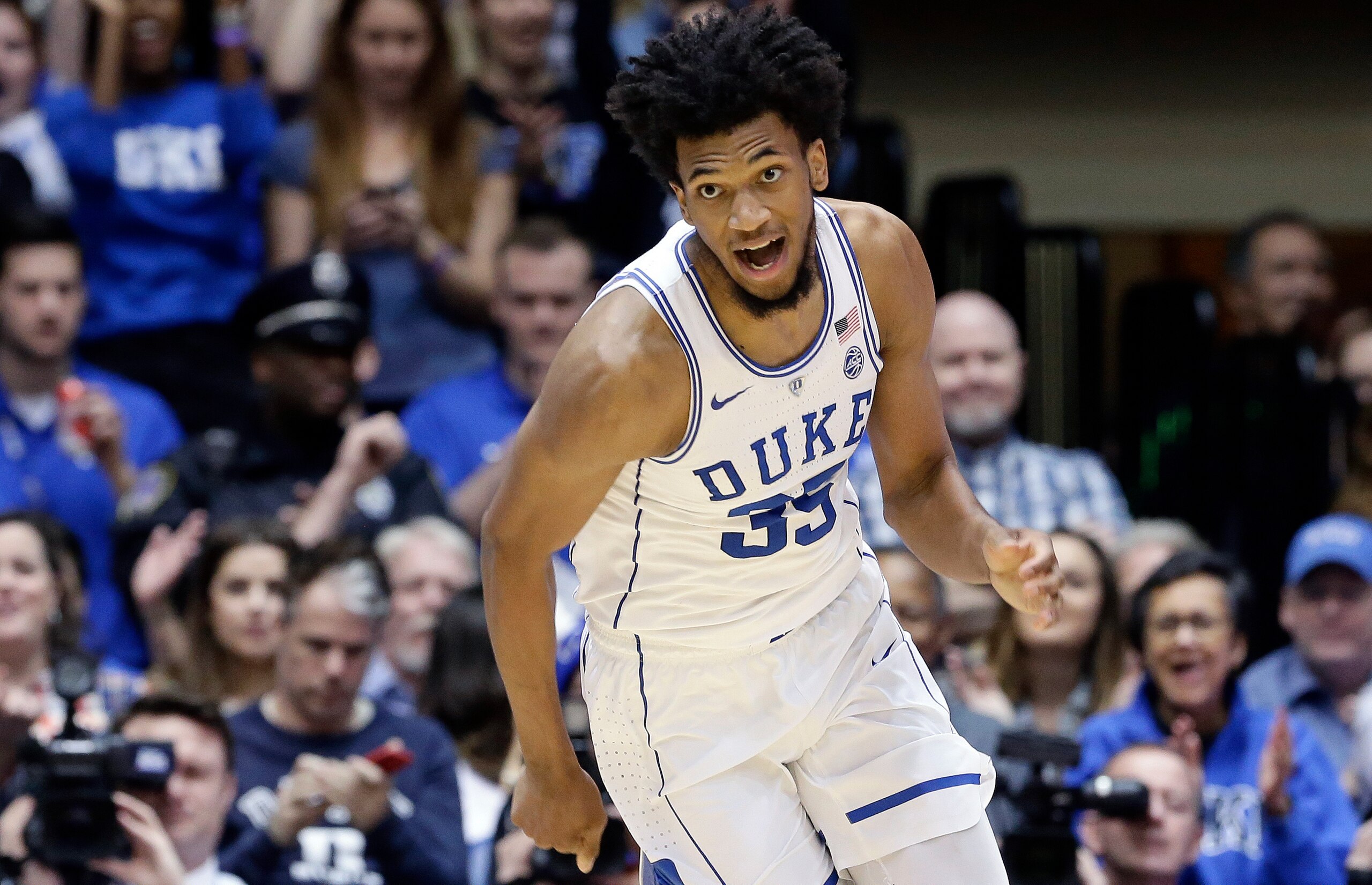
MVP Performance: 30 points, 11 rebounds, four steals, three blocks, three assists vs. Wake Forest
2017-18 Stats: 21.6 PPG, 11.5 RPG, 1.6 APG, 1.1 BPG, 31.6% 3PT
The Comp: 2007-08 Michael Beasley (26.2 PPG, 12.4 RPG, 1.2 APG, 1.6 BPG, 37.9% 3PT)
Here's something you might find amusing or ironic: One of the best comparisons for Marvin Bagley III is the father of one of his teammates.
Gary Trent Jr. is a three-point assassin of a guard, but his dad was a 6'8" wrecking ball of a power forward who averaged 25.4 points and 11.4 rebounds per game as a sophomore at Ohio. He also had 2.0 assists and 1.6 blocks while shooting 27.3 percent from three-point range.
But we're going to aim even a little higher than that and go with what Michael Beasley did during his one season with Kansas State.
The tough part of the comparison is the divide in both efficiency and volume.
Bagley shoots 60.7 percent from the field and averages 13.6 field-goal attempts per game. Beasley's numbers were 53.2 and 17.5, respectively. Because he was on the short list of viable scoring options on that team, Frank Martin just let Beasley shoot it as often as he pleased. Were Bagley in a similar situation, he would likely have similar numbers, increasing his volume of shots by roughly 25 percent with a trade-off in efficiency.
In terms of immediate dominance as a freshman power forward, though, Bagley and Beasley are practically twins. With their combination of versatility and strength, it's almost laughable that they were in high school a few months prior to making college seniors look like rag dolls on a nightly basis.
Mohamed Bamba, Texas
3 of 10
MVP Performance: 22 points, 15 rebounds, eight blocks vs. Kansas
2017-18 Stats: 12.4 PPG, 10.7 RPG, 4.3 BPG
The Comp: 2000-01 Eddie Griffin (17.8 PPG, 10.8 RPG, 4.4 BPG)
One thing you have to love about Mo Bamba is his consistency.
Some guys put up impressive averages by mixing monster games with total duds. But Mamba is like a metronome, accounting for at least nine points, nine rebounds and four blocks in 12 of 19 games this season. From a "you know what you're going to get from him every night" perspective, maybe Perry Ellis would be a good comparison for him.
However, Bamba has already blocked more shots in half a season (82) than Ellis did in his entire career (72). Rather, the only proper comparison for Bamba is a shot-blocking phenom who grabbed a lot of rebounds and never dominated on offense as much as he should have.
Anthony Davis—14.2 PPG, 10.4 RPG, 4.7 BPG—is a decent comp, especially since he attempted the occasional three-pointer. (Bamba averages two three-point attempts per game.) But "The Brow" was also a good passer and on-ball defender who rarely committed turnovers. He was unique in many ways.
Hasheem Thabeet—13.6 PPG, 10.8 RPG, 4.2 BPG in 2008-09—was also a tempting choice, but he didn't attempt a single three-pointer in his three-year college career.
It's not perfect, but Seton Hall's Eddie Griffin is about the closest we can find to a precursor for Bamba. The big man shot threes more than twice as often as Bamba did and was decidedly more assertive on offense—16.0 field-goal attempts per game compared to 9.2 for Bamba—but he was the shot-blocking, three-point-shooting unicorn before Kristaps Porzingis was even in grade school.
We'll see if Bamba ever develops the killer instinct to be a go-to scorer, but with that wingspan and nose for blocks, he has the potential to be special for years to come.

.jpg?w=2560 "Rams Raiders Football")
Wendell Carter Jr., Duke
4 of 10
MVP Performance: 21 points, eight rebounds, three blocks, two steals, two assists vs. Pittsburgh
2017-18 Stats: 14.4 PPG, 9.2 RPG, 1.9 APG, 2.0 BPG, 48.0% 3PT
The Comp: 2007-08 Kevin Love (17.5 PPG, 10.6 RPG, 1.9 APG, 1.4 BPG, 35.4% 3PT)
Wendell Carter Jr. often gets overlooked because he is playing alongside Marvin Bagley III, but he was one of the toughest freshmen for whom to find a suitable comparison. Frankly, there aren't many big men who can shoot, rebound, pass and block shots, all at an above-average level.
The original pick was Lamar Odom's one year with Rhode Island, but Odom averaged twice as many assists as Carter since he was a point forward. Carter is instead a big man who isn't afraid to find open teammates from time to time.
Plan B was Chris Webber, but he makes more sense for Deandre Ayton.
At long last, Kevin Love made the most sense here.
Physically, their measurables are almost identical. Love was listed at 6'10" and 260 pounds during his one season at UCLA. Duke lists Carter at 6'10" and 259 pounds. One more fast-food trip for Carter on weigh-in day and it's a perfect match.
Stylistically, they are also two peas in a pod. Both guys are ferocious on the glass—even though Carter has to share rebounds with Bagley—and they both have legitimate three-point range. Love shot more often from distance (2.1 per game) than Carter does (1.3 per game), but Carter has been shooting more in the past five weeks than he did early in the season.
One remaining step to complete the comparison: Carter needs to learn how to defend without fouling. Duke's big man is averaging 4.4 fouls per 40 minutes, which is drastically higher than Love's rate was (2.5). If he can get that under control and stay on the court, Carter should be the anchor of a Final Four run, just like Love was for the Bruins.
RJ Cole, Howard
5 of 10
MVP Performance: 42 points, six rebounds, four assists, four steals vs. UNC-Wilmington
2017-18 Stats: 23.4 PPG, 6.0 APG, 3.5 RPG, 1.6 SPG, 37.0% 3PT
The Comp: 2013-14 Billy Baron (24.1 PPG, 5.3 APG, 4.9 RPG, 1.6 SPG, 42.1% 3PT)
Most of you probably don't know about Howard's RJ Cole. That's OK, because a lot of people didn't pay any mind to Billy Baron at Canisius either.
Such is life when you play for a small school in an off-the-radar conference and fail to appear in the NCAA tournament.
At least Baron played for a team that won 20-plus games in both his junior and senior season. Cole plays for a 5-17 team that hasn't finished above .500 since 2002. Even if you wanted to watch him play, best of luck finding it on television.
All the same, this dude is putting up ridiculous numbers. Excluding Trae Young, the only other player in the past eight seasons to average at least 23 points and six assists per game was Oakland's Kay Felder two years ago. But Felder is a bit too lofty of a comparison since he averaged 9.3 assists that season.
(Maybe Cole would be at that mark if he had more than one teammate who can score reliably, but 6.0 is the number we need to use.)
Baron, though, fits like a glove.
Like Cole (37.9 minutes per game), he rarely left the floor and made contributions all over it. As a senior, he averaged 39.0 minutes per game, ranking third in the nation in percentage of minutes played that season. He shot a ton of three-pointers, but it's hard to complain when they go in so often.
Of all the players on this list, Cole is least likely to jump to the NBA this summer. It should be fun to see what he can do as a sophomore.
Trevon Duval, Duke
6 of 10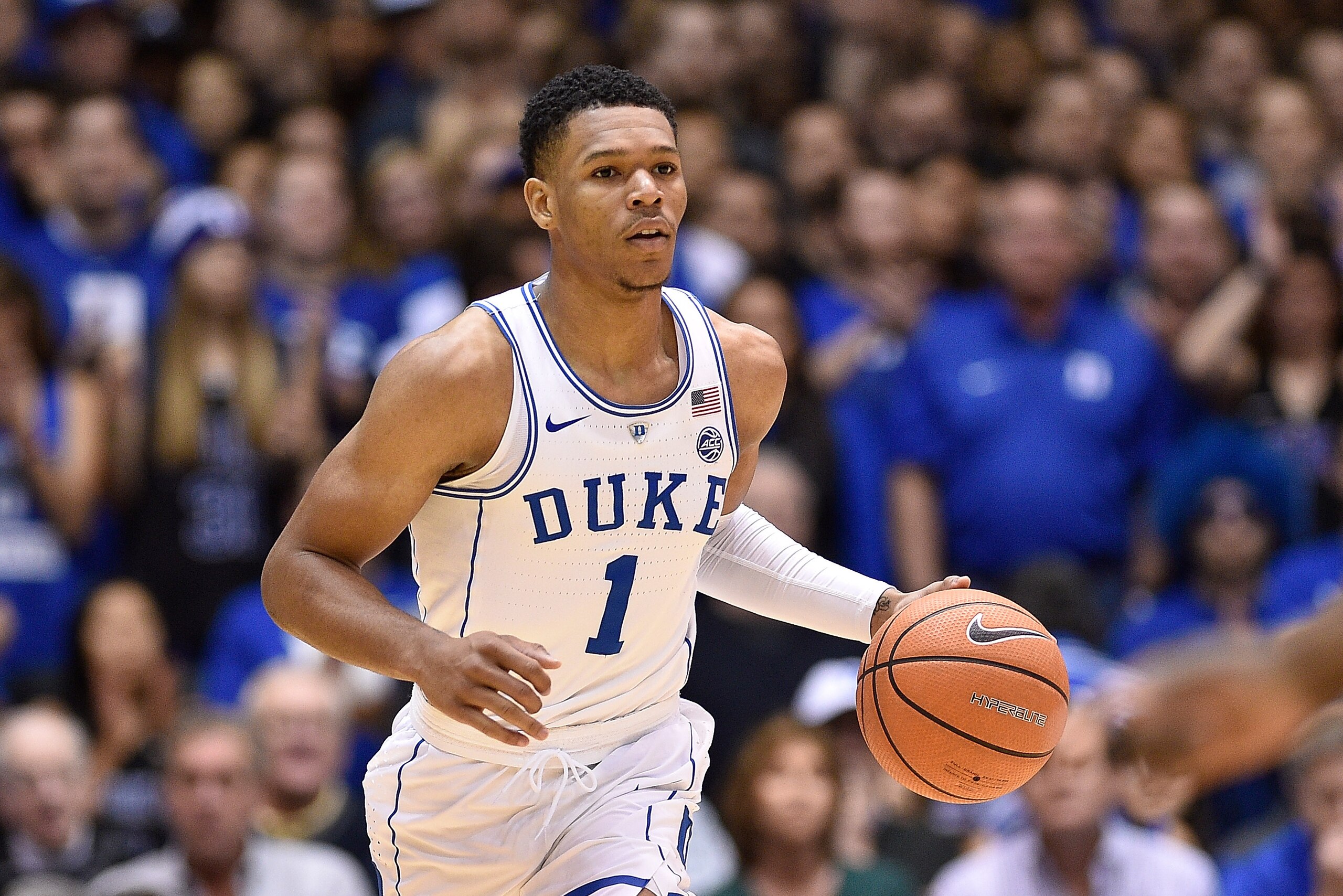
MVP Performance: 17 points, 10 assists, six steals vs. Michigan State
2017-18 Stats: 11.5 PPG, 6.0 APG, 2.1 RPG, 1.6 SPG, 25.9% 3PT
The Comp: 1998-99 Mateen Cleaves (11.7 PPG, 7.2 APG, 1.6 RPG, 1.8 SPG, 29.2% 3PT)
Trevon Duval has taken more flak from national media than any other freshman this season. So much flak, in fact, that I fully expect the folks who clamor for players who were snubbed from this list to complain that Duval doesn't belong in the top 10.
The biggest complaint is the ugly-looking jump shot (though Duval was 7-of-10 from three-point range in his four games prior to Tuesday night's dud against Wake Forest). There are also occasional turnover woes and the fact he is the first line of defense for a team that has struggled to play defense. One perhaps subconscious concern is that Duke's other three 5-star freshmen have been as good as advertised or better, so we over-exaggerate Duval's faults when discussing Duke's weaknesses.
Nevertheless, he is the point guard running the show for a team that may well go 29-4 and earn a No. 1 seed before reaching the Final Four—putting him in good company with what Mateen Cleaves did as a junior at Michigan State.
Like Duval, Cleaves went through stretches where he couldn't hit the broad side of a barn with his jumper. He did shoot relatively well as a senior, but in addition to shooting 29.2 percent from deep as a junior, he was a 23.7 percent three-point shooter as a freshman.
Bricks aside, he was Tom Izzo's rock, doling out more than 800 assists in his career and becoming the player you cannot possibly imagine late-1990s Michigan State without.
Maybe Duval isn't quite there in your eyes, but I've been arguing since the moment he signed with Duke that he's the player the Blue Devils could least afford to lose for any length of time. This team is at its best when he's taking what the defense is giving him rather than forcing shots and ill-advised passes.
Jaren Jackson Jr., Michigan State
7 of 10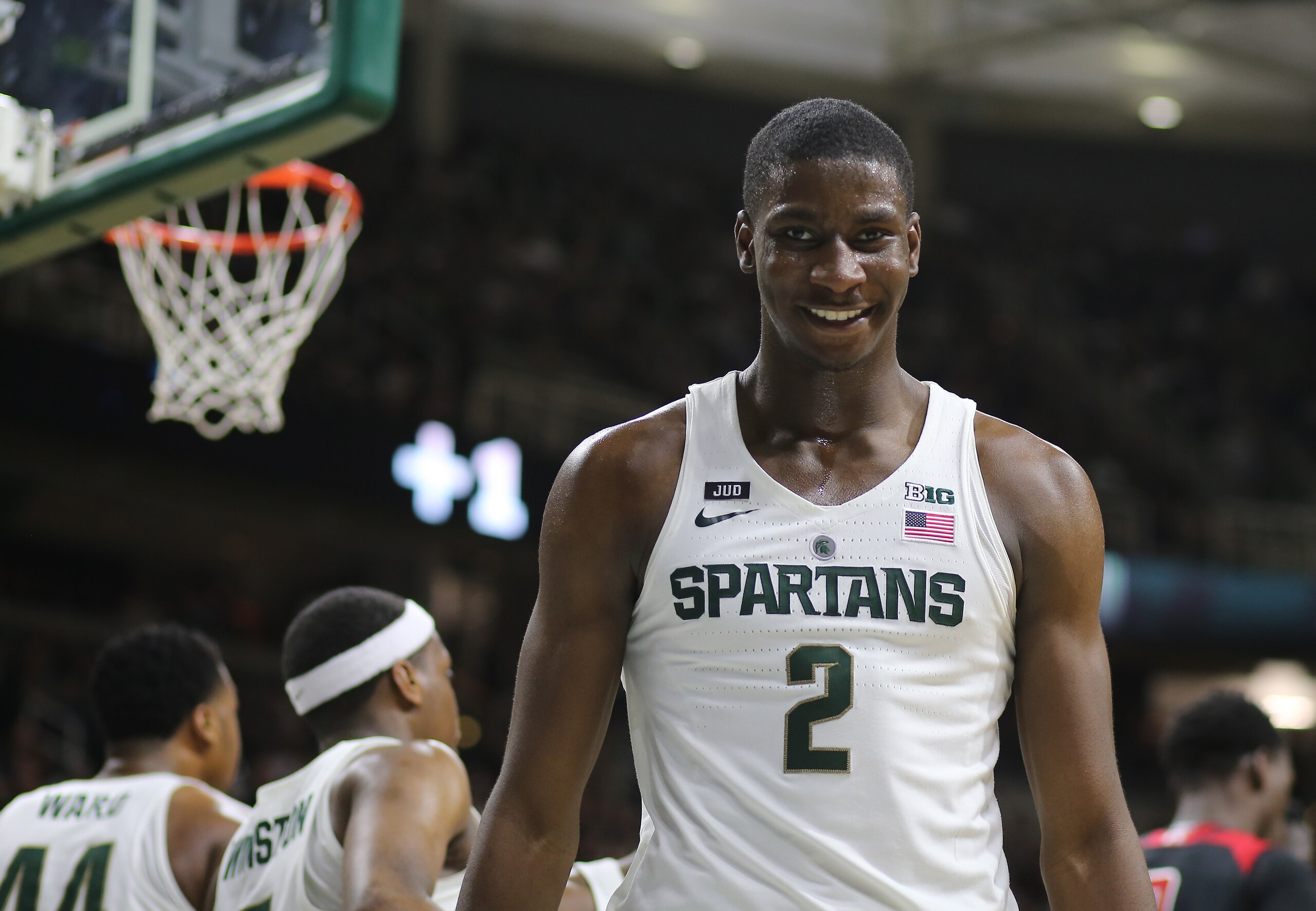
MVP Performance: 21 points, 11 rebounds, six blocks vs. Illinois
2017-18 Stats: 11.9 PPG, 6.4 RPG, 3.3 BPG, 44.6% 3PT
The Comp: 2014-15 Myles Turner (10.1 PPG, 6.5 RPG, 2.6 BPG, 27.4% 3PT)
Jaren Jackson Jr. takes the cake for most difficulty in coming up with a suitable comparison.
Not only is he a rare blend of blocked shots and three-point accuracy, but he only plays 23.2 minutes per game. On a per-40 minutes basis, he averages 20.4 points, 11.1 rebounds, 5.7 blocks and 4.6 three-point attempts, which is just plain silly.
Per Sports Reference, Jackson has a block percentage of 14.5 as well as the 44.6 three-point percentage listed above. Also per Sports Reference, the only players in the past eight seasons with a block percentage of at least 11 and a three-point percentage of at least 35 are Memphis' D.J. Stephens in 2012-13 and Bowling Green's Richaun Holmes in 2014-15—neither a former star that average college basketball fans know.
But if we drop the three-point percentage requirement and just look for guys who attempted at least one triple per game with a block percentage of at least 11, two interesting Big 12 names come to the surface: Myles Turner of Texas and Isaiah Austin of Baylor. Factor in the points and rebounds—as well as a similar rate of 22.2 minutes per game—and Turner is the winner.
Like Turner, it seems as though NBA fans are more enamored with Jackson than the college fans are, probably because the per-game numbers aren't indicative of his value added. Even some of the national experts don't seem to realize how great Jackson has been, as he has yet to make an appearance in Matt Norlander's weekly top-10 freshman of the year rankings for CBS Sports.
But the draft experts love Jackson, who is all but guaranteed to be a lottery pick, just like Turner was three years ago.
Brandon McCoy, UNLV
8 of 10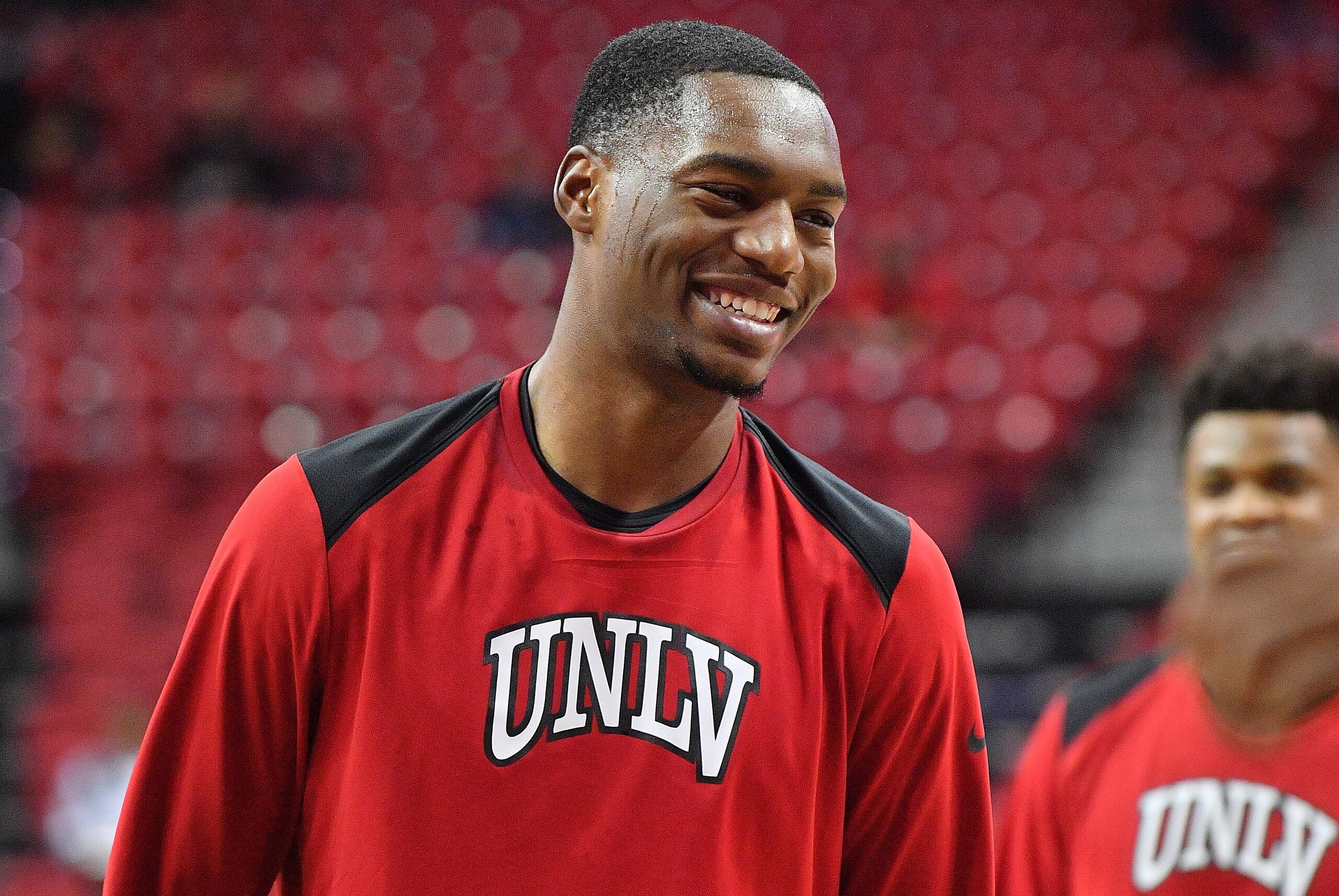
MVP Performance: 25 points, 18 rebounds, three assists, two blocks vs. Florida A&M
2017-18 Stats: 17.4 PPG, 9.9 RPG, 1.5 BPG
The Comp: 1996-97 Raef LaFrentz (18.5 PPG, 9.3 RPG, 1.3 BPG)
It's fitting that we had to go back more than two decades to find a suitable comparison for Brandon McCoy, because he is a blast-from-the-past big man.
There's nothing flashy about McCoy's game. While most modern-day centers are expected to block shots, shoot threes or at least make some contributions as a post passer, he doesn't really do any of those things.
McCoy does block the occasional shot—I'd imagine it's hard not to when you're 7'1" and you have arms—but he's no world-class rim-protector. He has attempted just two three-pointers this season, one of which was a meaningless desperation attempt with one second remaining in a four-point game. And once he gets the ball, it's not going anywhere else. McCoy has just 10 assists in 20 games.
By all accounts, that's a lot like what Raef LaFrentz used to do for Kansas, including the part where he plays fewer than 30 minutes per game despite providing more value per minute played than any of his teammates.
One difference between the two is turnovers. LaFrentz was rather sure-handed during his time with the Jayhawks, while McCoy just recently snapped a 16-game streak of multiple turnovers. However, McCoy doesn't have a Paul Pierce or a Jacque Vaughn in his supporting cast, so it's a bit easier for opponents to double him without fear of getting beaten elsewhere.
Hopefully McCoy can get back to this level of excellence. Prior to a double-double in Tuesday's game against Fresno State, he had been held below 10 points in three straight games, averaging just 7.0 rebounds in those contests.
Tremont Waters, LSU
9 of 10
MVP Performance: 39 points, five steals, four assists vs. Marquette
2017-18 Stats: 15.7 PPG, 6.0 APG, 3.7 RPG, 2.5 SPG, 38.4% 3PT
The Comp: 2003-04 Chris Paul (14.8 PPG, 5.9 APG, 3.3 RPG, 2.7 SPG, 46.5% 3PT)
Not-so-bold prediction: This is the comparison that will receive the most backlash.
Tremont Waters wasn't a 5-star recruit. He plays for a team that probably isn't going to make the NCAA tournament. And in SEC play, his numbers aren't even that great. How are you supposed to believe this guy is the second coming of Chris Paul?
Fair points all around. I'll counter by noting LSU is drastically better than anyone expected, and all of Waters' teammates have improved on offense because of his presence.
There are five Tigers who have played at least 200 minutes this season who also played at least 500 minutes last season: Aaron Epps, Brandon Sampson, Duop Reath, Skylar Mays and Wayde Sims. Based on O-rating data from Sports Reference, four of the five have improved by at least 11 points from last season. Epps has skyrocketed from 104.2 to 134.3. And even the fifth player (Sims) has shown a modest improvement (110.7 to 112.1).
Granted, it doesn't take much to make LSU look better than last season, but Waters is a star who was clearly undersold as a borderline top-50 recruit in the 2017 class.
Statistically, he is right on par with what CP3 did as a freshman at Wake Forest. The only noteworthy difference is three-point percentage, but Waters was hitting 43.7 percent of his attempts prior to a five-game slump in the past two weeks. If he can get back on track, there's still a chance the Tigers get an invite to the Big Dance.
Trae Young, Oklahoma
10 of 10
MVP Performance: 43 points, 11 rebounds, seven assists vs. TCU
2017-18 Stats: 30.3 PPG, 9.6 APG, 4.2 RPG, 2.0 SPG, 40.0% 3PT
The Comp: 2008-09 Stephen Curry (28.6 PPG, 5.6 APG, 4.4 RPG, 2.5 SPG, 38.7% 3PT)
Though we're officially going with Stephen Curry—solely because everyone has been making that comparison for months—the closest thing to a player like Trae Young that we have seen in decades is Kay Felder during his junior year at Oakland.
The 5'9" star didn't shoot three-pointers (6.1 attempts per game) quite as often as Young does (10.5), scoring fewer points per game (24.4) as a result. But pick any other facet of the game and they're mirror images. Felder averaged 9.3 assists, 4.3 rebounds and 2.0 steals while shooting 35.5 percent from three. Like Young, Felder got to the free-throw line a ton and converted at a high percentage.
But it's almost unfair to Young to compare him to just one former CBB great.
On one possession, he'll look like Jimmer Fredette or Marshall Henderson, pulling up from five feet beyond the arc without a conscious and frequently splashing it through the net. On the next possession, he'll look like Jason Kidd or Bobby Hurley, forgoing his own look at the rim with a gorgeous pass to an open teammate on the other side of the court.
Heck, he can change what he's going to be from one night to the next and still be a dominant force.
In Tuesday night's game against Kansas, Young attempted just nine shots. He spent the bulk of the night blanketed by Devonte' Graham and used that attention to repeatedly create opportunities for teammates. And he still finished with 26 points in the win. This came three days after he took 39 shots and scored 48 points in an overtime loss to Oklahoma State. He was named the KenPom.com MVP of both games, despite a complete transformation in approach.
Just make sure to enjoy this ride while it lasts, because we're going to spend the next 20 years trying to compare players to Young.
Kerry Miller covers men's college basketball for Bleacher Report. You can follow him on Twitter @kerrancejames.


.jpg?w=2560 "Rodgers Iced Out on Plane 💎")


.jpg?w=2560 "🚨 Week 8 AP Top 25 Poll")