Martin Odegaard at 19. Progress Report on the Norwegian Prodigy
Real Madrid wonderkid Martin Odegaard’s career already boasts more twists and turns than many a seasoned, veteran professional’s would over the course of a 20-year stint in the game.
His projected path from hot prospect to bona fide superstar is still in its extreme infancy and has been as rocky as they come, his name sparking intrigue among football fans not necessarily because he’s living up to his potential, but because of the fact he’s been at risk of squandering it for several years now.
He joined Los Blancos aged 17 after a tour of Europe’s top teams, already a full Norway international, but just shy of two years on, he’s celebrating his 19th birthday while on loan at SC Heerenveen in the Eredivisie. He was sent there to kick-start his stalling development, and next month he’ll cap 12 months at the club, with six more on the horizon before he returns to the Bernabeu for re-assessment.
TOP NEWS
Highlights and Viral Moments 🍿

Final Men's Ballon d'Or Rankings 📊

Carrick Replacement Options 📝
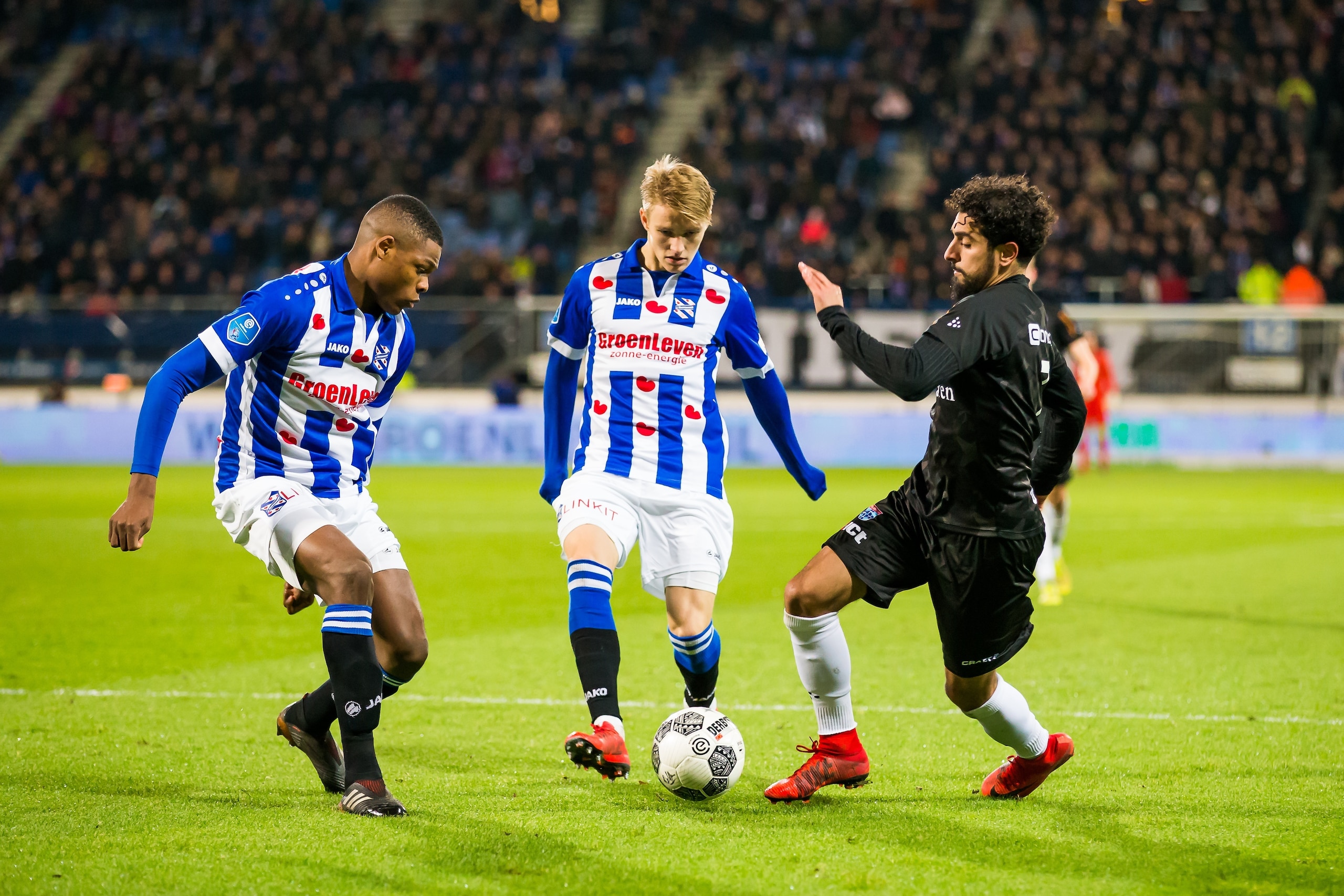
We checked in on Odegaard in Heerenveen in May; the results were a little alarming. He enjoyed a run in the team but didn’t really see an awful lot of the ball, skating the periphery of too many games, and a team-level drop in form—plus the loss of midfield general Stijn Schaars to injury—saw manager Jurgen Streppel panic a little, shore up the side and push the Norwegian out of the XI.
By the end of the season, with Odegaard limited to one- and two-minute cameo appearances off the bench, It looked very much as though his time with the club might turn out to be a waste, another blotch on the parchment of his career path.
But this season shoots of recovery are in evidence. Heerenveen’s form has been steady; they’re far more comfortable in the table, closer to the Europa League playoff places than the relegation mire, and Streppel has reinstated the youth now the crosshairs have moved aside.
Nineteen-year-old Odegaard, 17-year-old centre-back Kik Pierie and 21-year-old right-back Denzel Dumfries have been three of Heerenveen’s better, more promising performers, and they’ve all started at least 13 Eredivisie games this term.

Odegaard’s stationed out on the right flank, just as he was in 2016-17, but functions as a wide No. 10 or playmaker rather than a winger. He’s not particularly fast—beating markers on the touchline simply isn’t his game—and he’s allowed to come inside, pick passes and instigate play.
That’s where he shines.

There are games where he creates three or four clear-cut chances for team-mates and is clearly the most technically adept player on the pitch. He’s particularly excellent at spotting reverse passes into the box—the old David Silva trick, if you like—and will make those darting runs himself, getting into dangerous areas.
You wouldn’t be able to tell any of this by his stats sheet. One lonely goal sits adjacent to one equally lonely assist. It certainly betrays how effective he has been at times - blame his colleagues’ lack of finesse in front of goal for the assist tally being so low—but does tap into an issue Odegaard still faces at the club: at times, the gameplan makes him a casualty.
Heerenveen’s average of 53 percent possession per league game is the fourth-highest in the Eredivisie, but their go-to attacking move isn’t to connect passes and work the ball forward, it’s to play longer, more hopeful balls into the channels for striker Reza Ghoochannejhad to chase.

Ghoochannejhad isn’t uber-fast or uber-strong—in fact he’s quite limited—and the strategy is far more miss than hit. It bypasses the whole midfield, leaving the likes of Odegaard’s head whipping from left to right and watching the ball sail past him.
The Norwegian makes the best of what he gets, quite often impacting a surprising amount given how infrequently he’s brought into play at times, and that’s a big positive. He doesn’t get visibly frustrated when he’s marginalised, either; he focuses his energies on retrieving the ball for himself, taking tracking and marking responsibilities seriously, and never stops moving.
But his level of involvement (on the ball) in some games should cause worry, both for Odegaard and Real Madrid. There are games where he looks the clear best player on the pitch, splitting defences open at will, like against PEC Zwolle in November; but there are games where he’s anonymous, drifting through sans touches or influence, like against Vitesse Arnhem the month before.
These past five months with De Superfriezen have represented something of a double-edged sword: a significant improvement on the first half of the year, but still not without problems. The question for Real Madrid in January is whether they feel Odegaard’s development is being best served in this way, or whether a change in scenery could bring the minutes and involvement desired.
All statistics via WhoScored.com

.jpg?w=2560 "Steelers Saints Football")
.jpg?w=2560 "Raiders Could Start Mendoza")
.jpg?w=2560 "🚨 Week 8 AP Top 25 Poll")
.jpg?w=2560 "Mahomes Told Teammate to Leave Meeting")
.jpg?w=2560 "Lamar Being Out Shocked Ravens")

.jpg?w=2560 "Packers Safety Slams Refs 🤬")