
Ranking the Streakiest Shooters in College Basketball in the 2017-18 Season
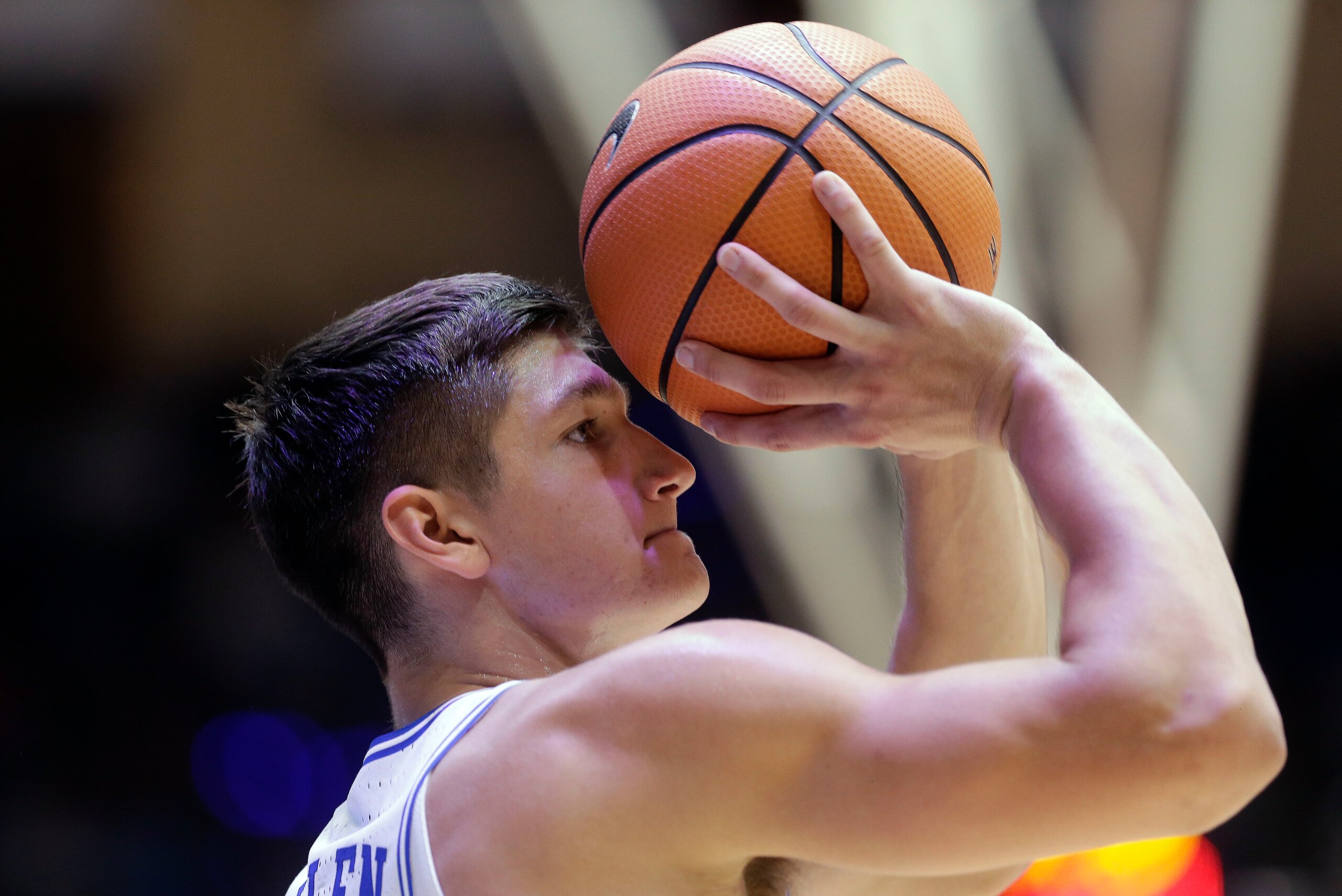
Duke's Grayson Allen isn't the streakiest shooter in college basketball, but he's near the top of our list following a hot, cold and back again junior year.
Before we dive in, it's important to note the distinction between a streaky shooter and a good shooter who catches fire. For example, Marquette's Markus Howard made nine threes in one game last February against Xavier, but he shot 54.7 percent from beyond the arc on the year. He was a good shooter who also happened to be feeling it that night. That's not a streaky shooter.
What we're looking for are the Marshall Henderson types of shooters. Most of these players won't even approach the volume of shots Henderson took in his two seasons with Ole Miss (771 three-point attempts from 2012 to '14), but there's no telling what you'll get out of them from one game to the next. Case in point: Henderson's collegiate career ended on a 2-of-16 shooting performance from three, and it wasn't a surprise to anyone.
To find those guys, we started out by reducing the pool of candidates to players who made at least seven three-pointers in a game last season yet finished the season shooting worse than 40 percent from the perimeter. From there, it was a matter of picking out the ones who oscillated the most between hot and cold.
Honorable Mentions
1 of 9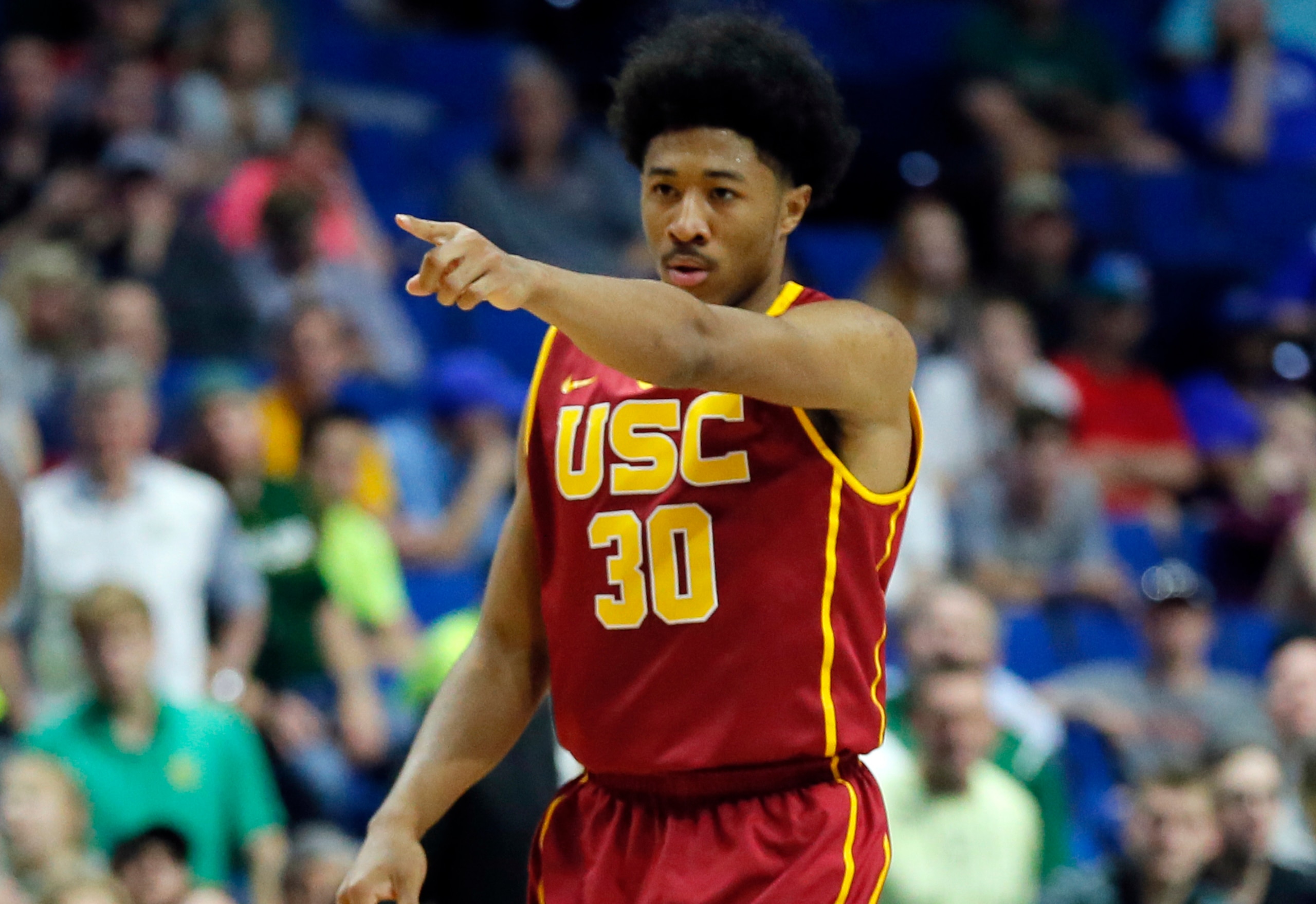
Elijah Stewart, USC
The starting shooting guard for the Trojans scored at least 20 points seven times, but he was also held to five points or fewer seven times, including getting shut out in USC's NCAA tournament opener against Providence. Two days later, he shot 6-of-13 from three-point range against SMU. There's no telling which version of this guy will show up from one game to the next—which is the scariest part of talking up USC as a Final Four candidate.
Matthew Butler, Tennessee-Martin
Butler made just seven triples in each of his first two seasons with Rhode Island, but he made seven threes in his first game with UT-Martin. He also scored 35 and 31 later in the season, but he primarily coasted in the 10- to 12-point range for most of the year.
Josh McFolley, Detroit
There was a two-game stretch in mid-January in which McFolley shot 14-of-22 from three-point range. But in the four games prior and five games after, he was just 14-of-56 (25.0 percent). Usually, he would make two or fewer three-pointers. When he went over, though, it was often by a ridiculous amount.
Matthew Fisher-Davis, Vanderbilt
Fisher-Davis shot better than 40 percent from three in each of his first two seasons, but he became more of a volume shooter as a junior. When he shot 24-of-54 from deep during a six-game run early in the season, that was great. When he went 11-of-41 in the final seven games of the year, not so much.
Jon Elmore, Marshall
Speaking of volume scorers, Elmore scored at least 10 points in every game last season and averaged 19.7. He has shot 7-of-12 from distance three times in the past two years, but he has made zero or one in 22 of 60 games in his career.
Antonio Green, Middle Tennessee
Green won't be eligible to play this season, as he'll be required to sit out after transferring from UT Rio Grande Valley. But we would be remiss if we didn't point out the guy who made at least seven three-pointers five different times last year, including a 10-of-14 performance in November. Even though he also missed at least seven three-point shots 12 times last year, watch out for Green in 2018-19, after MTSU has to replace its current three-point assassin, Giddy Potts.
8. Chris Clemons, Campbell
2 of 9
This list would feel incomplete without the guy who is probably going to lead the nation in scoring.
Chris Clemons shot between 30 and 50 percent from three-point range in nearly two-thirds of his games played last season, and he scored at least 16 points in all but three contests. He sank multiple threes in 31 of 36 games and ended up at sixth in the country in made three-pointers (118).
However, he had the worst percentage (35.4) among the players in the top 15 on that list, as he was much more of a volume scorer than an efficient one. Clemons averaged 9.3 three-point attempts per game and had a tendency to keep shooting whether they were falling or not. He never made nine three-pointers in a game, but he did miss at least nine on six separate occasions.
Given what he can do when he does heat up, though, his coaches would be silly to not let him try to shoot his way through slumps. In the quarterfinals of the Big South tournament, Clemons shot 8-of-14 from downtown and scored 51 of Campbell's 81 points in an upset of UNC-Asheville. In the process, he tied South Dakota State's Mike Daum for the highest point total in a game in more than four years.
In seven postseason games between the conference tournament and the CIT, Clemons shot 41.9 percent from three-point range and averaged 33.4 points per contest.
Did we mention he should lead the nation in scoring this year?
7. Deandre Burnett, Ole Miss
3 of 9
Between what Manu Lecomte did for Baylor and what Deandre Burnett did for Ole Miss, it was hard not to wonder what Miami might have looked like if those guards hadn't transferred out of the program after the 2014-15 season.
In Burnett's third game of the year, he shot 9-of-12 from three-point range, torching Oral Roberts for 41 points. It was the start of his somewhat unexpected journey to become the leading scorer for the Rebels at 16.5 points per game.
But he was a hot-and-cold shooter, particularly toward the end of the season.
Beginning in mid-February, Burnett made at least four three-pointers in five of his final nine games. In those contests, he shot a combined 23-of-36 (63.9 percent). Dispersed throughout that stretch, though, were four other games where he was 3-of-25 (12.0 percent), including shooting 1-of-9 from downtown and 2-of-15 overall in the season-ending loss to Georgia Tech.
Despite shooting 50 percent or better in 11 of 33 games, Burnett finished the year as a 37.6 percent three-point shooter. He clearly has the stroke to be one of the most efficient scorers in the SEC, but will it show up on a more regular basis in 2017-18?

.jpg?w=2560)
6. Matt Morgan, Cornell
4 of 9
Matt Morgan made at least one triple in 27 of 28 contests last season and averaged 18.1 points per game.
The unknown was how many shots it would take him to get those buckets.
While most of these shooters were streaky because they'd be on fire one game and couldn't buy a bucket the next, Morgan had more of a biweekly to monthly heat index.
He made at least five three-pointers seven times, including a pair of games with seven made triples. But it took him two weeks to heat up in the first place, and then once he started to cool off, his jumper vanished for nearly a month.
In a six-game stretch between Thanksgiving and Christmas, Morgan shot 30-of-69 (43.5 percent) from three-point range. And in the final four games of the season, he was 18-of-36 (50.0 percent). The rest of the year, though, he shot 22.6 percent for a Cornell team that didn't have much else in the way of perimeter weapons.
The previous year, he was much less predictable from one night to the next. Late in his freshman season, there was a 10-game stretch in which he shot better than 33 percent in all the odd-numbered games (20-of-45 overall) and worse than 29 percent in each of the even-numbered games (4-of-29 overall).
5. Trevon Bluiett, Xavier
5 of 9
For the most part, Trevon Bluiett isn't that streaky. He attempted between five and eight three-pointers 23 times and either made two or three in 19 of those games. It makes sense that he finished the year averaging 2.5 made triples per game while shooting 37.1 percent, since that's about what he did on most nights.
But every once in a while, Bluiett would start sizzling, and it was a sight to behold.
He made six three-pointers in back-to-back December road games against Baylor and Colorado. The rest of Xavier's offense was nowhere to be found in either of those losses, but Bluiett did what he could to carry the team. Same goes for the late-January game against Cincinnati, in which he scored 40 points and drained 9-of-11 from distance while the rest of the Musketeers combined for just 38 points in a losing effort.
In Xavier's first three games of the NCAA tournament, Bluiett averaged 25.0 points and shot 47.8 percent from downtown. As a change of pace, several teammates also performed admirably to propel the Musketeers to the Elite Eight as a No. 11 seed.
Of course, to be a streaky shooter, one must also have some disappointing performances, and Bluiett seemed to have at least one of those for every lights-out game. The worst of the bunch was the time he shot 0-of-10 from the field in a much-closer-than-it-should-have-been win over Georgetown. Bluiett was also on the long list of players who struggled to get anything going in the loss to Gonzaga that ended Xavier's NCAA tournament run.
4. Garrison Mathews, Lipscomb
6 of 9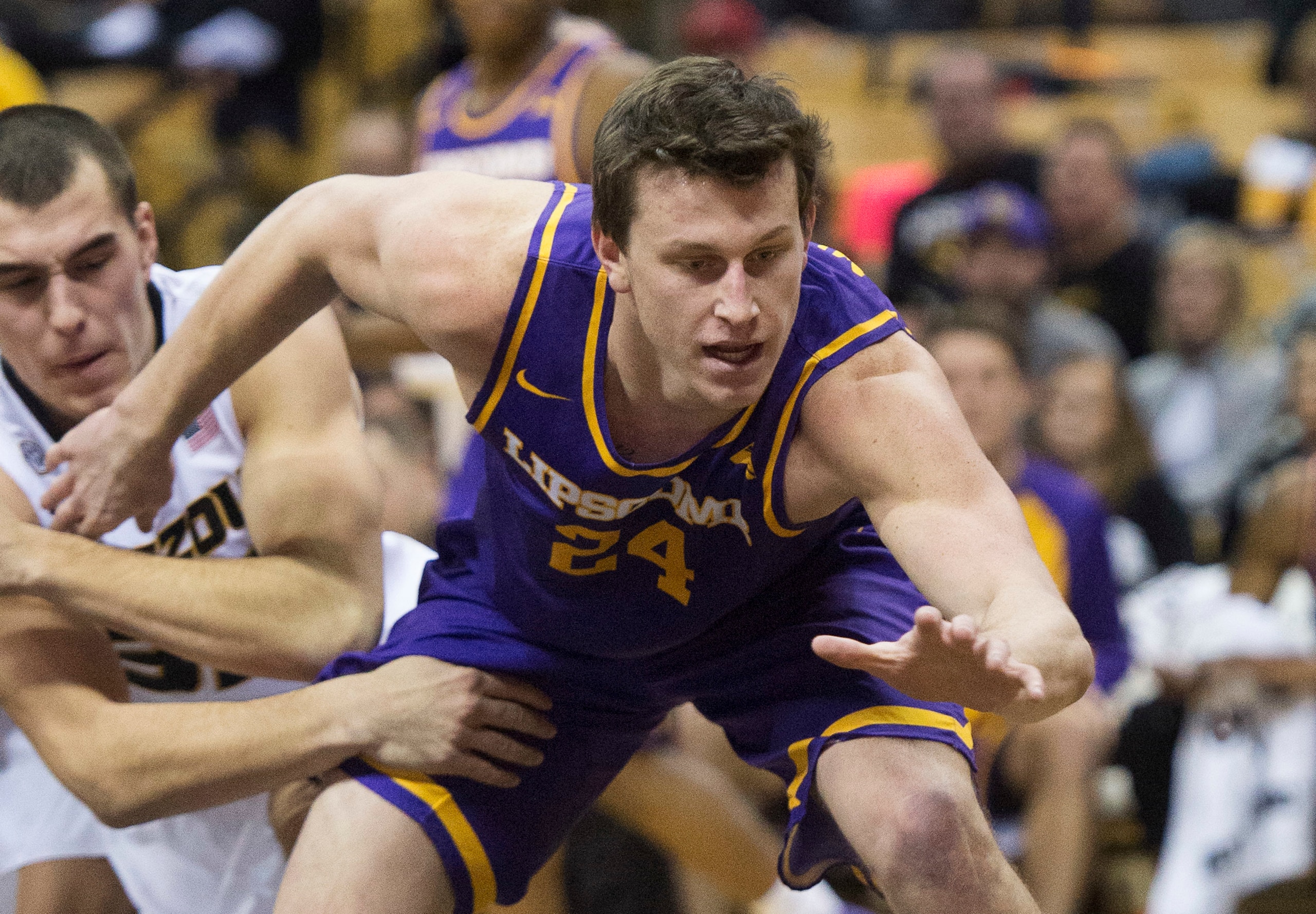
At 20.4 points per game, Garrison Mathews ranked third in the Atlantic Sun in scoring and is the highest-scoring returning player in the conference. To reach that mark, he did most of his shooting from the perimeter while averaging 7.9 three-point attempts per game. On 11 occasions, he hoisted up at least 10 shots from downtown.
More often than not, Mathews wasn't particularly accurate. In fact, he shot 22.2 percent or worse in nearly half of games played (14 of 32). In January, he was just 23.8 percent from three, shooting worse than 31 percent in all eight games.
Yet, he managed to shoot better than 35 percent for the season by occasionally setting the nets ablaze. Mathews shot 8-of-10 from three in a December win over Morehead State and had a 7-of-13 performance later in the season against Jacksonville.
3. Grayson Allen, Duke
7 of 9
No player in the nation had a more up-and-down season than Grayson Allen, and it showed in his three-point shooting.
Allen had an awkward fall in the first half of the Champions Classic game against Kansas. Between that night and the next two games, he shot 2-of-18 from distance. He was solid in the three games after that (12-of-25), but he suffered a toe injury against Appalachian State and didn't look right for most of December and January. (The tripping incident and subsequent social media backlash in late December didn't help matters one bit.)
There was a four-game stretch in the middle of ACC play in which he finally looked like the guy so many people picked as preseason National Player of the Year. He shot 20-of-41 from three-point range and averaged 21.5 points, punctuated by a 25-point, seven-triple performance in a win over North Carolina. Then he tapered off again before missing one game with an ankle injury and having a good-not-great showing in March.
When Allen is feeling it, though, few current college basketball players are better. Amid all the turbulence, he ended up scoring at least 20 points 10 times. He also shot 50 percent or better from three-point range 10 times. He shouldn't need to be a volume scorer with so many other options on this roster, but count on at least a few nights where he pops off for a half dozen threes.
2. Damiyne Durham, Cal State Bakersfield
8 of 9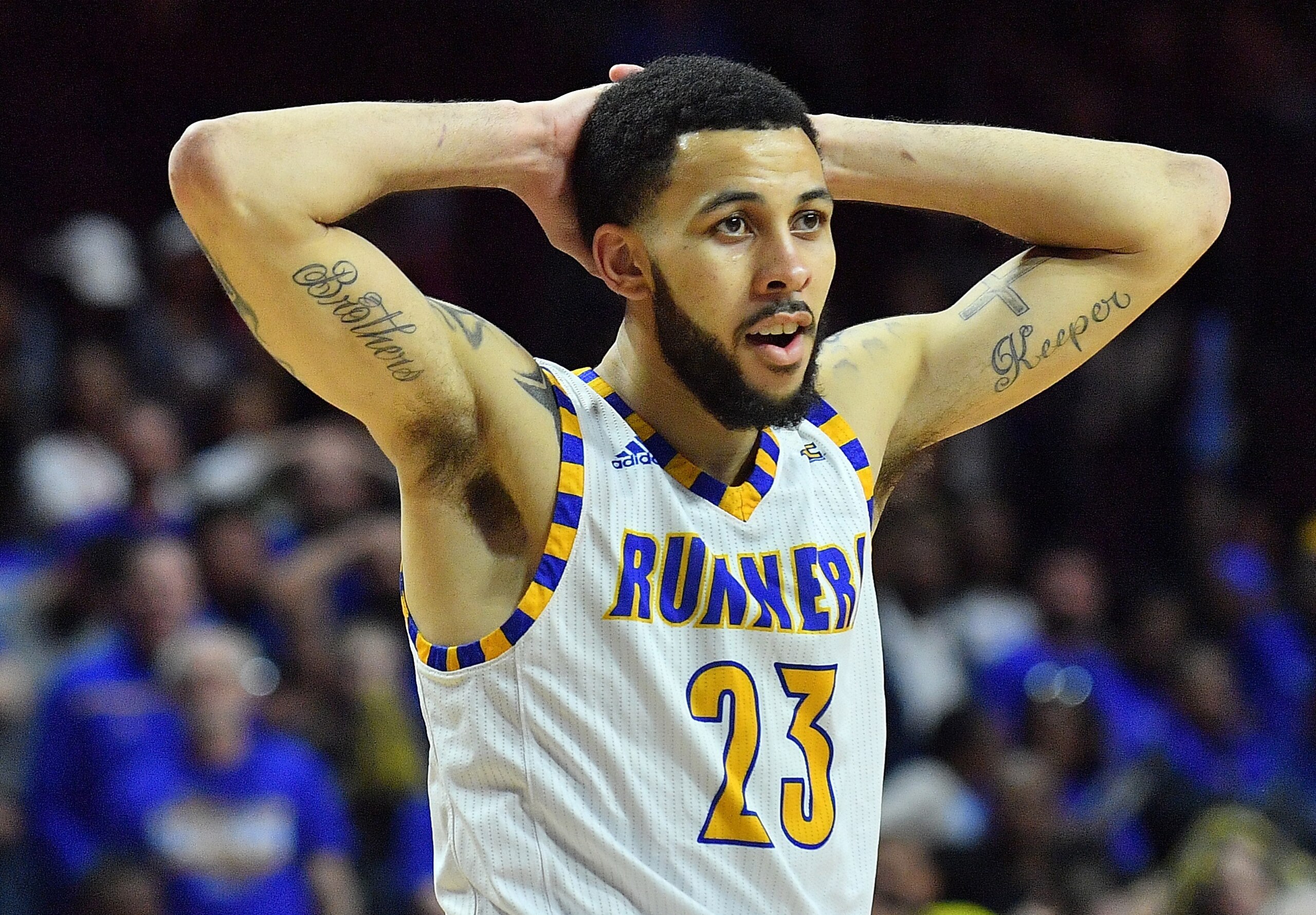
It only took three games for Damiyne Durham to demonstrate that trying to predict what he would accomplish in any given contest was a fool's errand.
Durham came off the bench for just 14 minutes of action in the season opener, but he shot 6-of-10 from downtown in the process. A few nights later, he was 1-of-6 from deep in a loss to Arizona. And a few nights after that, he jacked up 19 three-point attempts in 25 minutes, sinking eight en route to a career-high 30 points.
By December 15, Durham already had games with zero made three-pointers, eight made three-pointers and every number in between. In those 12 contests, he was 49-of-121 (40.5 percent). Yes, he averaged more than 10 attempts per game for more than a month—without starting a single game.
But he made more three-pointers in those first 12 games than he did in the final 23. Durham shot 48-of-165 (29.1 percent) the rest of the way. He had several "Ofers," including missing all 12 of his attempts in back-to-back games in mid-February.
When the Roadrunners needed him the most, though, he shot 13-of-23 (56.5 percent) to lead them to the NIT semifinals—where he shot 1-of-10 from distance and 4-of-17 from the field in a loss.
Here's some fun information that might help convince you to pay attention to this dude:
Durham's two-year career: 34.7% 3PT, 14.8 attempts per 40 minutes
Marshall Henderson's two seasons with Ole Miss: 34.6% 3PT, 14.9 attempts per 40 minutes
1. Ryan Andino, Maryland Eastern Shore
9 of 9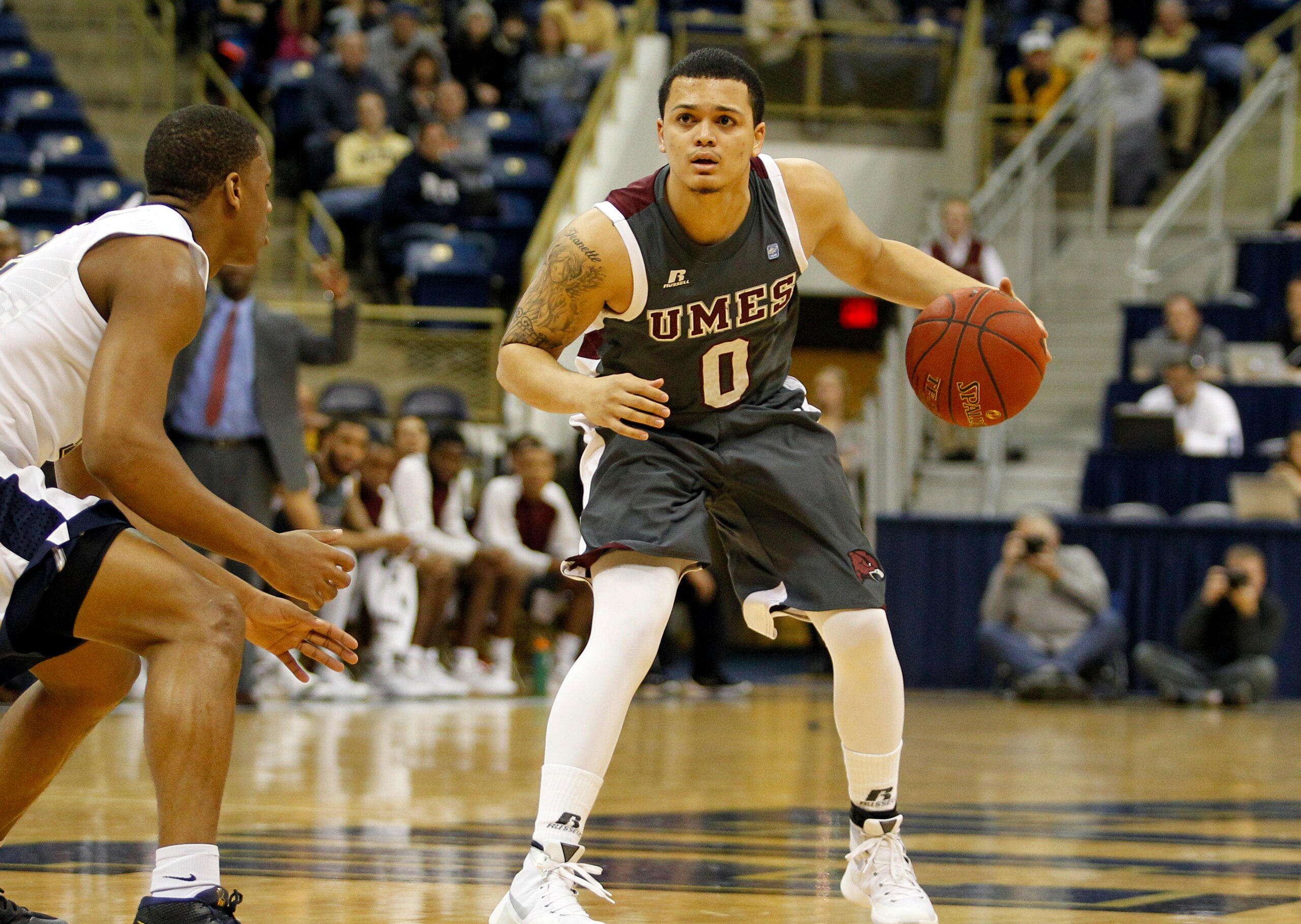
A streaky shooter is someone who will be on fire one night and will look like he's shooting blindfolded the next.
Ryan Andino was one of the streakiest shooters in the 2016-17 season, and there's no good reason to believe that will change.
In each of the first four months of the campaign, Andino had one game in which he made at least seven three-pointers and at least one game in which he shot below 23 percent from downtown. He shot 8-of-10 early in the year against Wichita State, but that game came right after he went 2-of-9 against Boston College. In February, Andino made eight threes against Coppin State and followed it up with a 3-of-15 outing against Norfolk State.
However, the best example of his streakiness came at the turn of the calendar year. In back-to-back games at the beginning of January, he shot a combined 15-of-28 (53.6 percent) from three-point range, averaging 27.0 points in those two contests. But in the three games surrounding that—one before, two after—he shot 3-of-21 (14.3 percent) and averaged six points.
The best part is Andino is almost exclusively a three-point shooter. He actually made more threes (121) than his combined total of two-point and free-throw attempts (113). Thus, he scored at least 20 points in each of his seven games with at least six made triples, but he was also held below 10 points in 38.2 percent of his games played—coincidentally almost identical to his 38.1 percent three-point accuracy.
And when he isn't scoring, he isn't providing value. Andino averaged 2.0 rebounds and 1.0 assists per game and had the worst defensive metrics among the 11 most frequently used UMES players. The three-point line is an all-or-nothing proposition for Andino, which cemented him atop this list.
Kerry Miller covers college basketball and college football for Bleacher Report. Follow him on Twitter: @kerrancejames.
Recruiting information courtesy of Scout. Advanced stats courtesy of Sports Reference.


.jpg?w=2560 "2 NFL Officials Suspended")


.jpg?w=2560 "Viral Rams Coach Vid 🖕")