

Liverpool's Greatest Scouser XI of Last 50 Years vs Greatest Other Englishman XI
While the Premier League is a global game these days, the emergence of Trent Alexander-Arnold at Liverpool last season showed how local talent can still make it to the top.
The teenager, who was born in West Derby, Liverpool, has been in the Reds' system since he was six years old. This offseason, he signed a new long-term deal, a clear commitment to not just the player but also the academy coaches who nurtured his talent from a young age.
"The club have made it clear to all our young players that as they grow and improve so will our commitment to them. This is an example of that. We offer opportunity—that’s key to what we believe in—but we also offer a culture where progress is rewarded. Trent has earned this new deal," manager Jurgen Klopp said, per Chris Beesley of the Liverpool Echo.

Liverpool has a proud tradition of developing their own, too. Steven Gerrard's departure in 2015 left the squad lacking a Scouse heartbeat, with the team missing a player the fans could truly call one of their own.
Gerrard would obviously make it into an all-time Scouser XI, so Bleacher Report decided to have some fun by putting together a team of local-born players who have represented the Reds in the last 50 years.
Up against them is an Englishman XI made up of those who played for Liverpool during the same period, giving us a wonderful head-to-head between some of the greatest names to wear the famous red shirt.
To avoid any confusion over formations, both sides will start in a 4-4-2 system. As ever, this is only a matter of opinion. Feel free to share your thoughts via the comments section.
Goalkeepers
Merseyside has produced some fabulous footballers over the last half-century—but not many of them happened to play in goal.
When it comes to looking for a homegrown option, you start and finish the search at Tony Warner, who was forever the bridesmaid but never the bride. He spent more time on the bench than that bloke down your local gym who is desperate to become bigger than the Mountain from Game of Thrones.
Still, while Liverpool haven't sourced well locally, they do have a more storied history when it comes to signing English goalkeepers.
All recruited at a young age, Scott Carson, David James and Chris Kirkland failed to quite fulfil their obvious potential while at Anfield. Mike Hooper, meanwhile, served as a solid understudy to Bruce Grobbelaar.
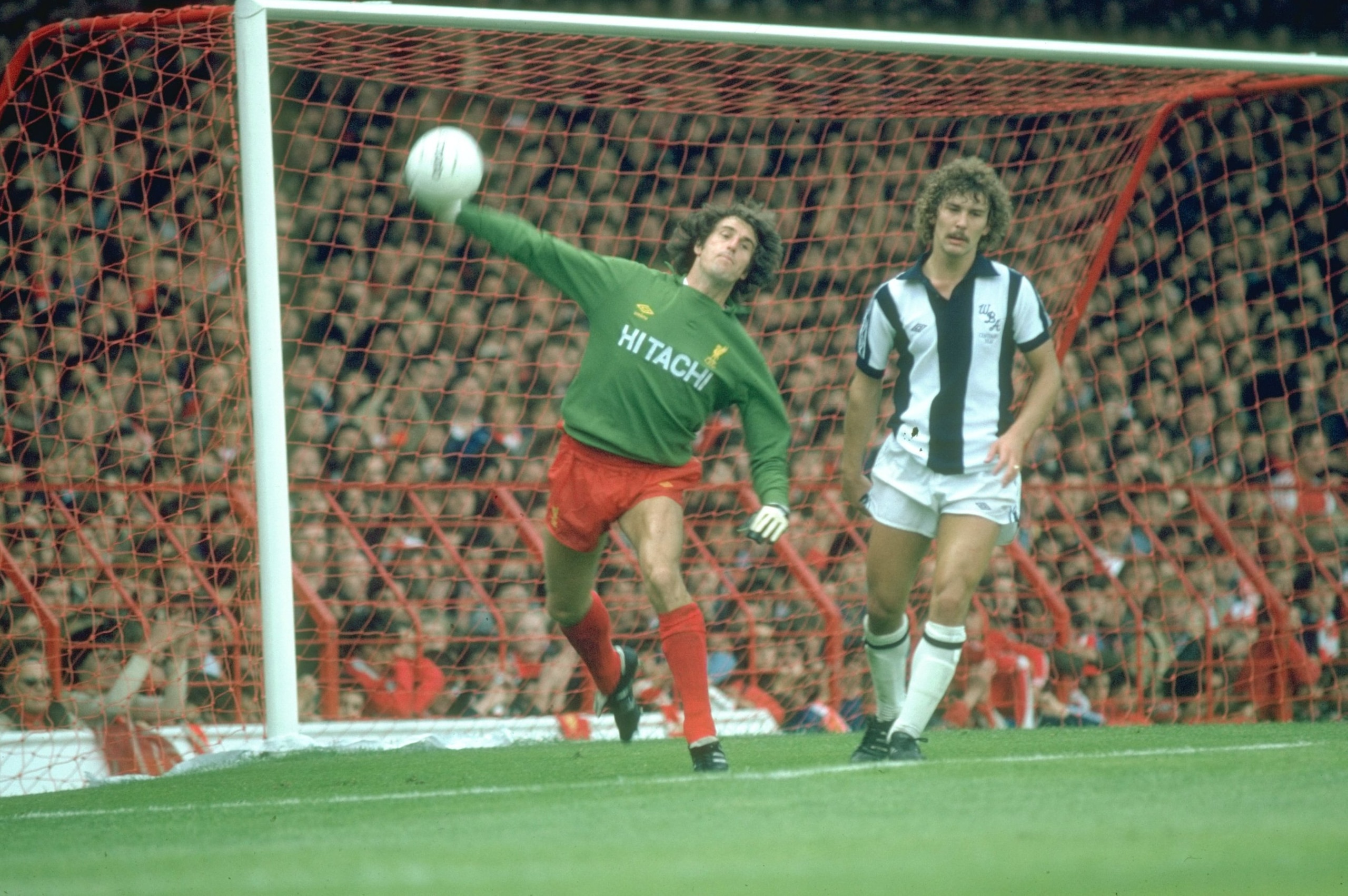
However, there is one obvious candidate to play between the posts: Ray Clemence.
A member of the club's Hall of Fame who cost £18,000 from Scunthorpe United, "Clem" made 665 appearances for the Reds, during which time he won 12 trophies.
Full-backs

On the right for the Scousers is Chris Lawler, a defender who demonstrated an eye for goal. Having signed for the club in 1959, he scored 61 times in 549 games for the Reds before eventually leaving in 1975.
Jamie Carragher could have slotted in at left-back. While more at home in the centre of defence, "Carra" was happy to play wherever both his club and country needed him.
"I played one season there and didn't do too badly," he said in 2007, per Tim Rich of the Telegraph. That one season saw the Reds win the FA, League and UEFA Cup. That's not too bad at all, Jamie.
However, Gerry Byrne—ahead of Gary Ablett—takes up the role.
Byrne will forever be remembered for playing on in an FA Cup final against Leeds United in 1965 with a broken collarbone. The following year, the one-club man was a member of Sir Alf Ramsey's England squad at the 1966 World Cup.
As for the Englishman XI, Phil Neal was an easy choice for right-back. The first signing of the Bob Paisley era, he went on to win the league eight times and lift the European Cup on four occasions.
Like Neal, Alan Kennedy also had the happy knack of scoring on the big stage.
The left-back struck the only goal in the 1981 European Cup final against Real Madrid, then held his nerve three years later to knock in the winning penalty against AS Roma in the same competition.
How Klopp could do with adding any of the four full-backs chosen here to his first-team squad now. If Kyle Walker just cost Manchester City £50 million, what price would Neal or Lawler fetch in the current market?
Centre-backs
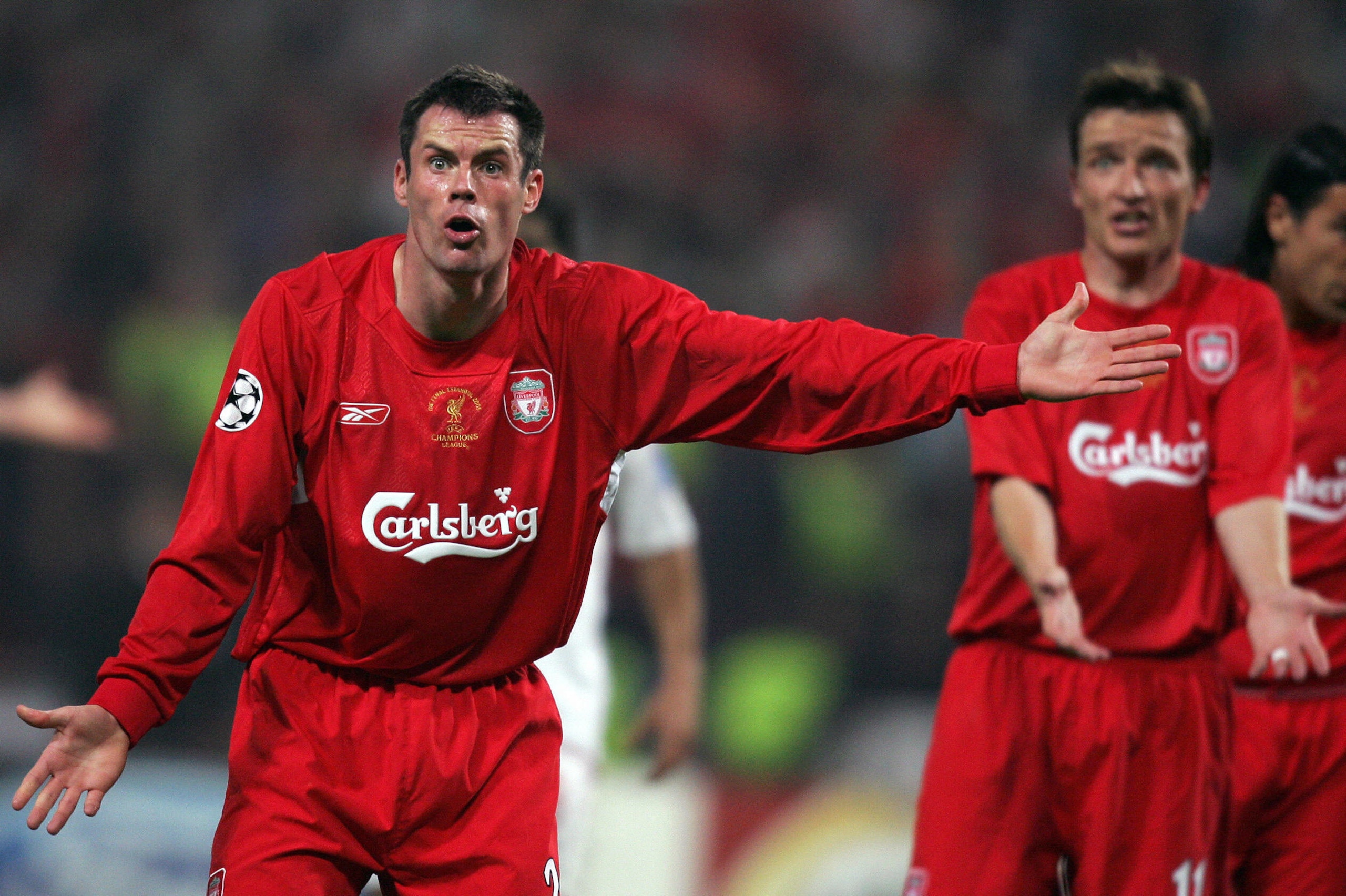
Having avoided being shunted out wide, Carragher is named in his more familiar position of centre-back, partnering Phil Thompson (now a fellow pundit on Sky Sports) at the heart of the Scouser's defence.
That pairing means no place for Tommy Smith, the no-nonsense hard man about who Bill Shankly once said: "Tommy Smith wasn't born, he was quarried."
Still, the combination of Carragher and Thompson would be ideal. While the former seemed to relish the art of defending, the latter is a ball-playing centre-half who allowed his teams to build from the back.
Emlyn Hughes was a stick-on selection somewhere in the rest-of-England lineup. The player affectionately known as "Crazy Horse" spent 12 years at Anfield, playing both in defence and midfield after arriving for £65,000 from Blackpool (a sizeable fee back in 1967).
He formed an outstanding partnership alongside Thompson as the Reds triumphed at home and abroad, with the pair helping Liverpool win the European Cup in 1977—and then retain it the following season.
Hughes' ally in defence is Mark Wright. A towering presence, Wright became the most expensive defender in Britain when Graeme Souness forked out £2.2 million to Derby County in 1991.
Sadly, though, injuries hampered his time at Liverpool. He did enjoy a late renaissance under Roy Evans before a back problem forced him into retirement in 1998. Wright remains one of those if-only signings, someone who arrived past his peak but still managed to turn in some notable performances.
Central Midfielders
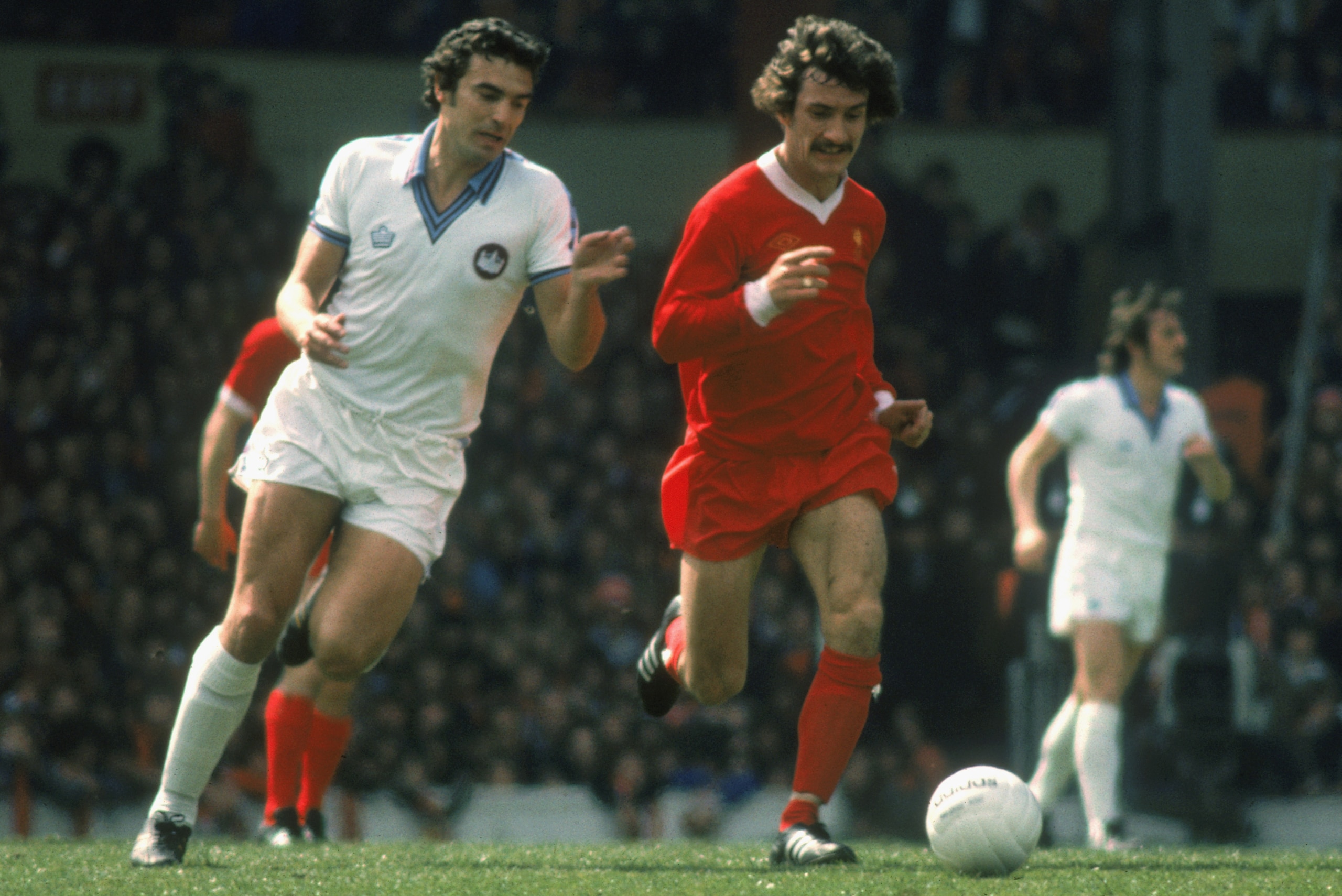
Midfield? It was more like a minefield when it came to selecting the duo to start in the engine room for the Scousers XI. There was, however, one candidate who still stood head and shoulders above the rest, despite the high standard of competition.
Gerrard is clearly going to make it. He's a no-brainer for the team, someone who would have fitted serenely into any of Liverpool's great sides from yesteryear.
The Telegraph's Chris Bascombe named "Stevie G" as the Reds' best player of all time in 2015: "A contentious choice ahead of Dalglish, but the context in which Gerrard won his trophies—in consistently reshaped teams and alongside many average players—edges him into top spot."
But who plays alongside Gerrard? Jimmy Case and Sammy Lee were strongly considered, along with Steve McMahon (a player who turned out for both the red and blue half of Merseyside).
However, Terry McDermott gets our vote. Like Gerrard, the Kirkby-born midfielder had the ability to produce something spectacular. He scored 81 goals in 329 games and did the impressive double of scooping both the Football Writers' and PFA's Player of the Year awards in 1980.

The Englishman XI didn't have quite the same quality to pick from. If the Scousers had runners comparable to a Gold Cup field at Cheltenham, their opponents' options felt more like a donkey derby on Blackpool beach.
That is perhaps a little harsh. Jordan Henderson's Liverpool career remains a work in progress, James Milner hasn't played enough games in the middle to be considered there and Nigel Spackman didn't play enough games for the Reds full stop.
Jamie Redknapp missed plenty of minutes through injury, yet the son of Birmingham City manager Harry Redknapp still made 308 appearances following his arrival from Bournemouth in 1991. That's enough to see him get a midfield berth.
Alongside Redknapp is Paul Ince. While he never quite hit the heights during his spell at Liverpool, Ince was an outstanding player for England at his peak. With a lack of alternatives, and in light of his performances for the national team, Ince is in.
Wingers

A little flexibility was needed when it came to choosing the wide men.
Ian Callaghan made his Liverpool debut in April 1960. Just under 18 years later, he played in his 857th—and final—game for the club. During that time, he saw the Reds rise from Division Two to become champions of Europe (twice), plus he was part of England's World Cup-winning squad in 1966.
With a talisman from Toxteth on the right, a boy from Bootle lines up on the opposite flank.
Steve McManaman had tremendous success once he left Liverpool to join Real Madrid. However, his achievements away from Anfield shouldn't overshadow just how good he was for his hometown club. Like Gerrard, there were times when he had to put the team on his back.
As for the Englishman XI, there was an abundance of left-wingers to pick from—but not a whole lot for the right.
Signed by Shankly, Ray Kennedy was converted to a midfield role by Bob Paisley, having joined from Arsenal as a striker. Able to pop up with crucial goals from out wide, he won five league titles and two European Cups during his time with Liverpool.
Yet for all he contributed, Kennedy still misses out. Instead, John Barnes—the England international who was born in Kingston, Jamaica—gets the nod for the left.
Pacy and powerful, the two-time Football Writers’ Player of the Year was a trailblazer who starred in Liverpool's last title-winning side. Injuries pushed him infield later in his career, but at his peak he was a flying winger who terrorised opposing full-backs. A peak Barnes was a joy to behold.
Oh, and then there was his rapping skills:
The right-wing berth was a little more complicated, though. Raheem Sterling—who, like Barnes, was born in Jamaica—would surely have been the choice if he hadn't left in such acrimonious fashion.
So, while he played the majority of his career for Liverpool on the left, the right-footed Peter Thompson, who amassed 416 appearances before leaving for Bolton Wanderers in 1972, is drafted in.
Strikers
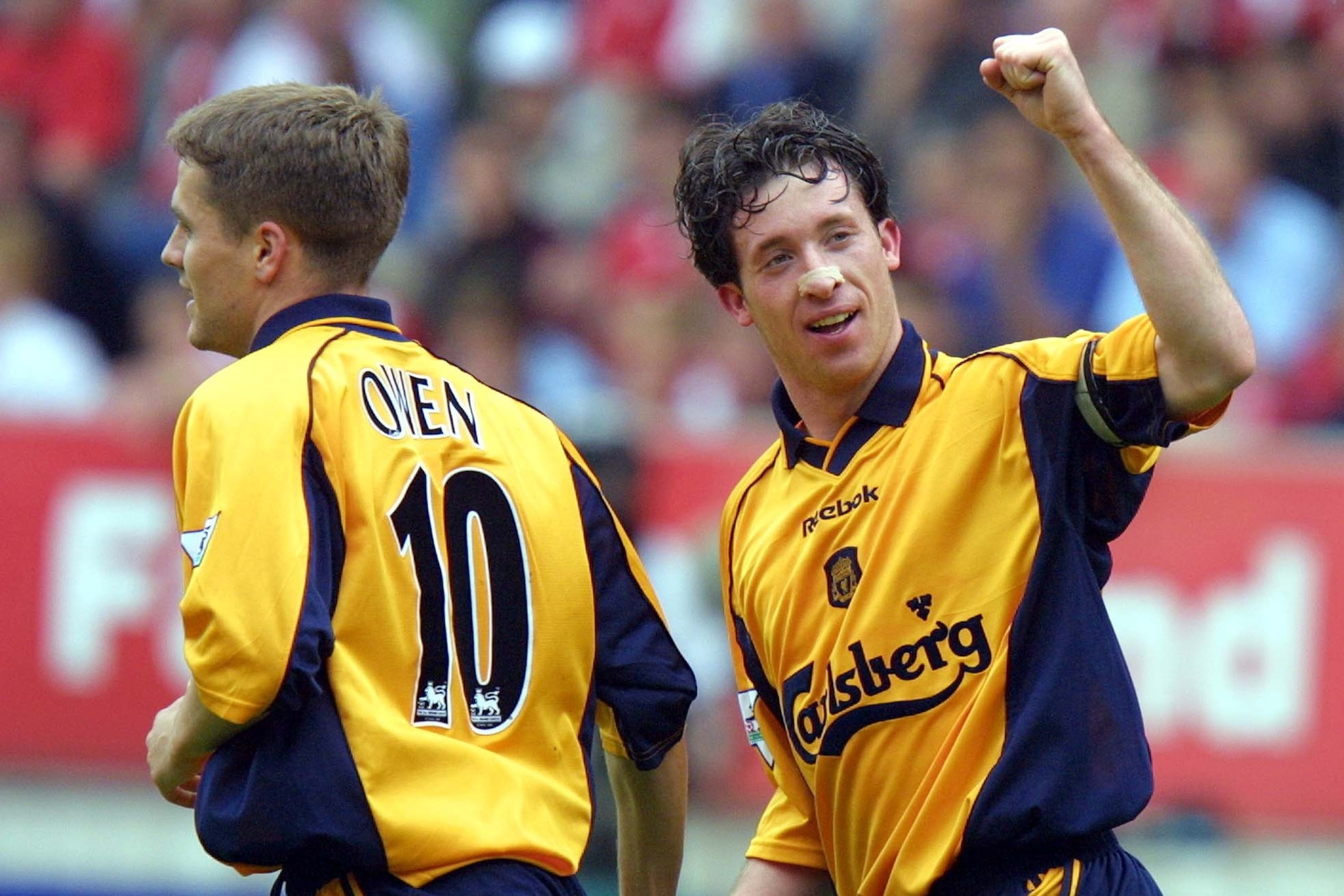
Now we get to the really fun part.
The first forward picked for the Scousers is often referred to as "God" by the red half of the city (we cannot print what Evertonians think of a prolific scorer who supported the Toffees as a child).
Robbie Fowler—also known as the "Toxteth Terror"—was a pure finisher. He scored 183 goals during two spells with Liverpool—and that number would surely have been considerably higher were it not for injuries.
Alongside him is John Aldridge, the Liverpudlian who represented the Republic of Ireland. While his time at Anfield was relatively short—the forward stayed for two-and-a-half years—"Aldo" proved a more than adequate replacement for the departed Ian Rush (and not just because of the moustache).
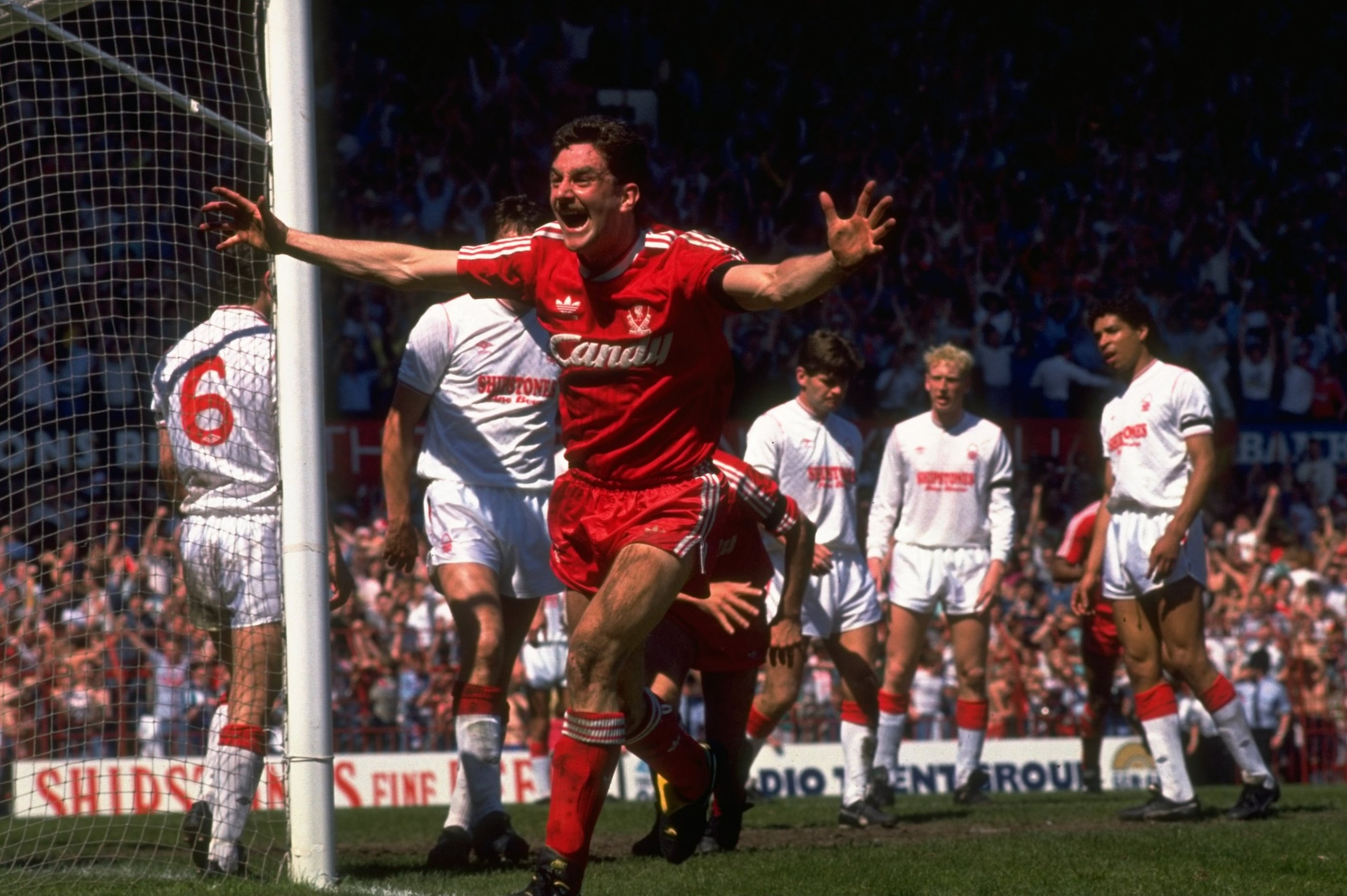
Sadly there was no space for David Johnson (who also had two spells at Everton) nor David Fairclough, albeit the latter's legendary status as a super-sub would make sure of a seat on the Scousers' bench.
The competition for places in the English lineup was even tougher. So tough, in fact, that both Peter Beardsley and Michael Owen failed to make it.
Roger Hunt only just qualifies in terms of years—he left Liverpool in 1969—but the World Cup winner finished with 285 goals at the end of his time with the Reds (only Rush, with 346, has managed more).
Alongside Hunt is Kevin Keegan, the forward who, thankfully, was much better at football than he was singing. Few wore a perm better than Keegan in the '70s—but he was about substance as much as style.
He hit a century of goals for Liverpool in six memorable seasons, helping them win the European Cup in 1977 before heading to Hamburg in Germany.
So, after much deliberation and several edits, we have our final teams:
Scouser XI: Warner; Lawler, Carragher, Phil Thompson, Byrne; Callaghan, Gerrard, McDermott, McManaman; Fowler, Aldridge.
Englishman XI: Clemence; Neal, Hughes, Wright, A. Kennedy; Peter Thompson, Ince, Redknapp, Barnes; Hunt, Keegan.
Who wins?

A tricky question to answer, considering the undoubted quality running through both lineups and how tough it is to compare individuals from different eras.
The battle for midfield dominance would be fascinating to watch, though, and despite the presence of big names in each of the back fours, it's hard to see how there wouldn't be goals in the game.
The presence of Clemence in goal gives the Englishman XI a clear advantage, and their full-back-winger combinations on both the right and left would make them difficult to cope with down the flanks.
However, just take a look at that engine room for the Scouser XI. With Gerrard and McDermott pulling the strings, plus Callaghan and McManaman providing the ammo from the wings, two predatory finishers like Aldridge and Fowler could have a field day.
The local lads get the nod—and we're not even sure it would be that close.
Rob Lancaster is a Featured Columnist for Bleacher Report. All statistics, plus players' places of birth, are from LFC History unless otherwise stated.

.jpg?w=2560 "Commanders OL HEATED After Tie ▶️")
.jpg?w=2560 "49ers LB Suspended for Headbutt")
.jpg?w=2560 "DAL Hiring New Defensive Coach")