
2017 NFL Draft: Most Memorable Moments in NFL Draft History
With the 2017 NFL draft approaching, it's only natural to look back at the memorable, weird and straight-up hilarious moments in draft history.
From the first NFL draft in 1936 to 2016, we cover everything from a missed pick to the greatest pick of all time.
We never really know what to expect come draft time.
This especially applies to the selections themselves—hindsight is 20/20, and we're usually all so incredibly wrong.
Here are some of the most memorable moments from our favorite sport's draft history.
Honorable Mentions
1 of 12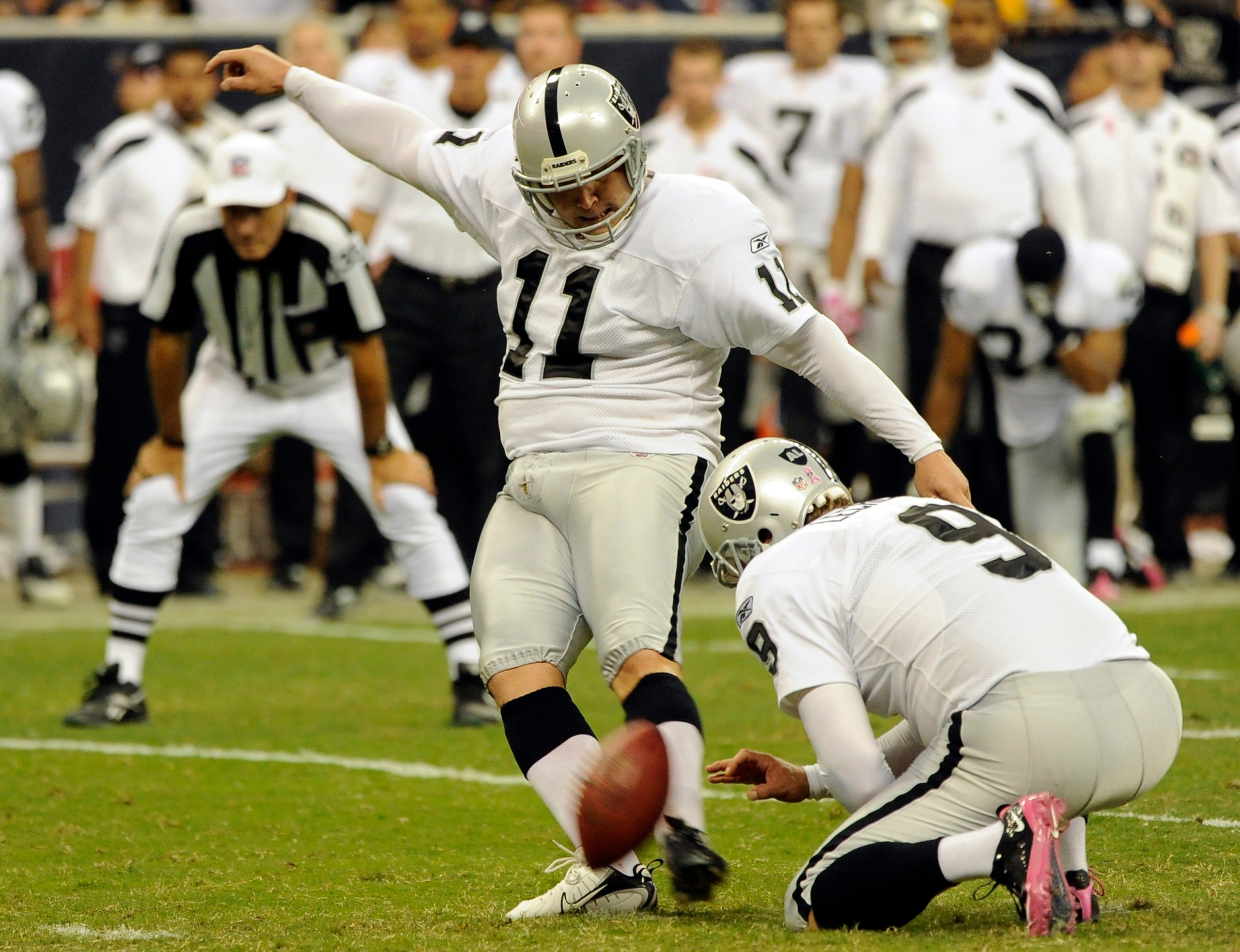
Oakland Raiders Draft K Sebastian Janikowski in 1st Round
Back in 2000, the Raiders drafted Sebastian Janikowski—yes, a kicker—in the first round with the 17th overall pick. The untraditional move shocked pretty much everyone.
Since this, we've seen guys like Roberto Aguayo taken in the second round (2016), but a top-20 pick isn't likely to happen ever again.
(Also, say what you want about him, but Janikowski is the only first-rounder from the 2000 draft who's still in the league.)
Pittsburgh Steelers Win Rights to Terry Bradshaw Due to Coin Toss
While picks for teams now are decided by a coin flip if their record and their opponents' winning percentage are identical, there's never been someone like Terry Bradshaw, the No. 1 pick in the 1970 draft, on the line.
At the conclusion of the season prior to the draft, the Steelers and Chicago Bears both had 1-13 records. However, the Bears actually beat the Steelers earlier in the season at Wrigley Field, which ultimately led to the coin toss.
See? Tanking isn't so bad—it could be the difference between having a future Hall of Famer and, well, not having a future Hall of Famer.
Raiders Draft Eli Herring, Who Did Not Want to Play Due to Religion
Prior to the 1995 draft, former BYU offensive lineman Eli Herring wrote a letter to each team and told them he did not want to play professional football because it meant he would have to work on Sundays, which conflicted with his religious beliefs.
You'd think teams would accept that and move on, but nope, not the Raiders.
That's right, in the sixth round of the 1995 draft, the Raiders selected Herring at 190th overall. Leave it to Al Davis to think he can woo a player with a sizable contract.
A sixth-round pick can prove to be valuable (remember that Tom Brady guy?), so to use it on a player who has stated his intent to not play professional football is funny, confusing and, frankly, stupid.
Baltimore Colts Trade John Elway After He Refused to Play for Them
In 1983, John Elway refused to play for the Colts after being selected No. 1 overall. The reason? Simply because he didn't feel the Colts were a good enough team to help him be successful.
He was then traded to the Denver Broncos in a deal in which the Colts got back a 1984 first-rounder, the rights to the Broncos' fourth overall pick (offensive lineman Chris Hinton) and quarterback Mark Hermann. Elway went down as one of the best quarterbacks ever, ultimately landing in the Hall of Fame. (Hinton had a solid career, but not on the level of Elway.)
What's more, this wasn't the last time we'd see a high-profile quarterback outright refuse to play for a team that drafted him.
Imagine if a quarterback demanded a trade in today's NFL? Social media would eat him alive.
Statistics courtesy of Pro Football Focus.
Oakland Raiders Draft QB JaMarcus Russell Ahead of WR Calvin Johnson
2 of 12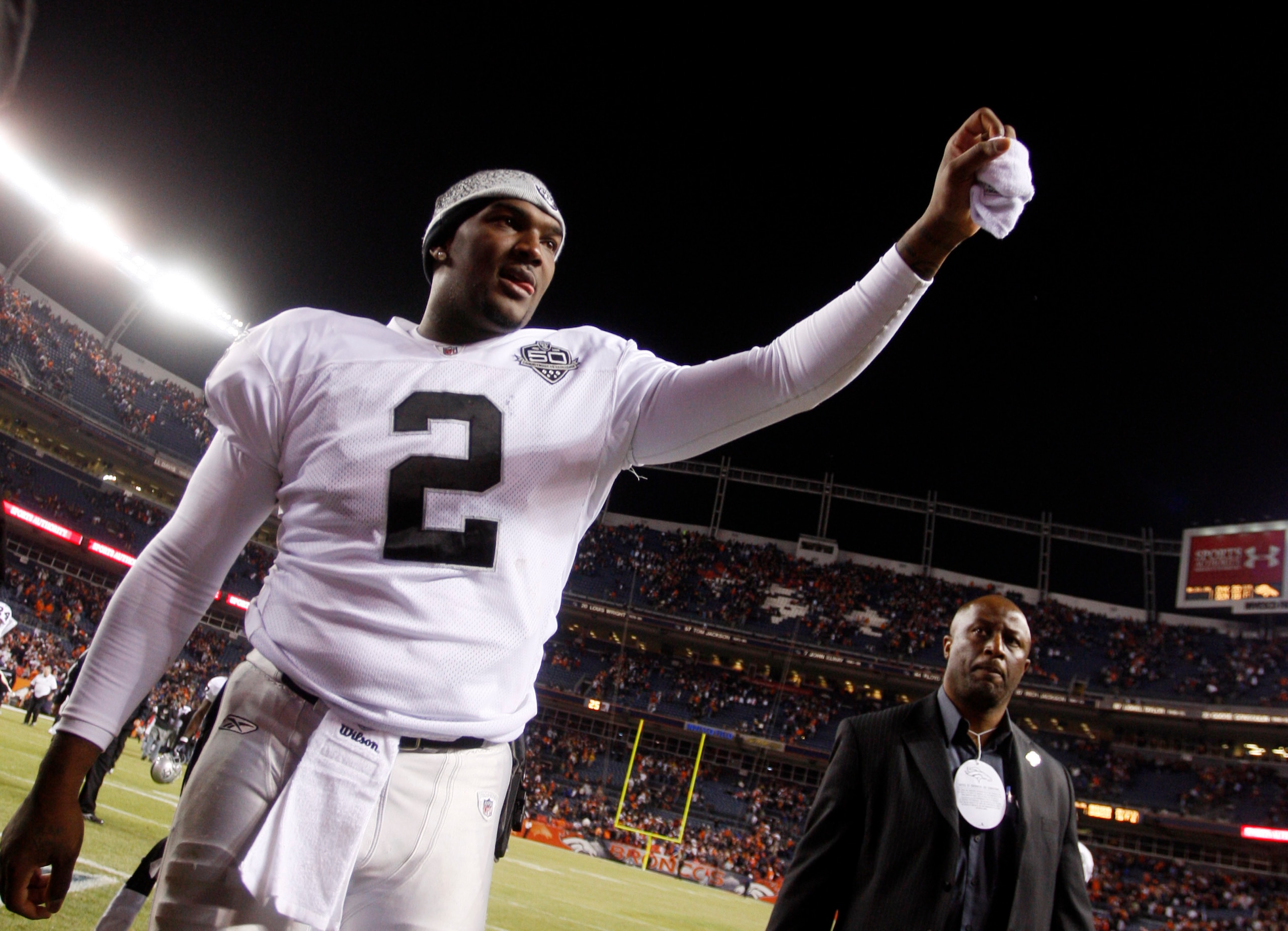
Equipped with a huge arm, imposing physique and a stellar college career, the Oakland Raiders opted to take former LSU quarterback JaMarcus Russell with the No. 1 overall pick in the 2007 draft.
And with the No. 2 selection, the Detroit Lions chose wide receiver Calvin Johnson.
Fast-forward 10 years, and Russell has gone down as perhaps the biggest bust in NFL history.
In 31 career games (25 starts), Russell won just seven of those starts and had a career 52.1 completion percentage. He would never eclipse 2,500 passing yards in a single season and totaled 19 touchdowns (18 passing, one rushing) to 23 interceptions.
His career would last just three seasons.
The Raiders released Russell in May 2010. Just two months later, he was arrested for possession of codeine syrup without a prescription. He later tried out for the Washington Redskins and Miami Dolphins in November 2010 but did not catch on with either team. Later, Russell announced comeback attempts in 2013 and 2016—even stating that he'd play for free.
It's not too often we see a monumental draft bust taken ahead of a future Hall of Famer like Johnson.
Minnesota Vikings' Botched 2003 Selection
3 of 12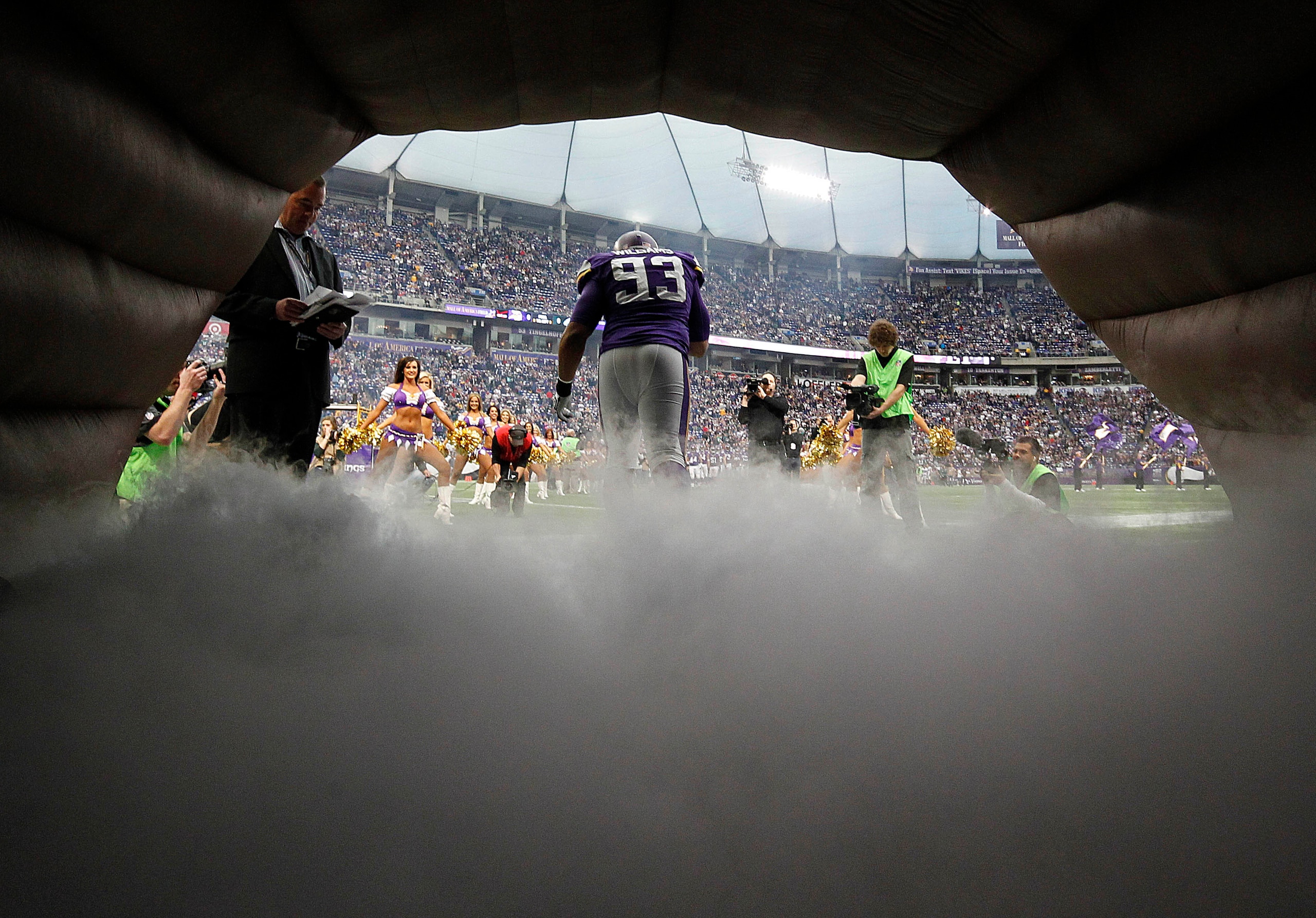
"With the seventh pick in the 2003 NFL draft, the Minnesota Vikings select..."
Well, wait a minute. That never happened.
In 2002, the Vikings also botched their first-round selection, but 2003 was a bit more, well, peculiar.
Minnesota originally held the seventh overall pick, but after it failed to complete a trade with the Baltimore Ravens in time, the Vikings' selection was skipped, allowing the Jacksonville Jaguars to pick.
However, Minnesota's pick was skipped not once, but twice.
The Jaguars rushed to the podium to choose Marshall quarterback Byron Leftwich. The Carolina Panthers then hastily selected Utah offensive tackle Jordan Gross.
Then finally the Vikings got their pick: Oklahoma State defensive tackle Kevin Williams.
While Williams turned out to be an anchor for the Vikings defense for over a decade, the blunder still goes down as one of the most head-scratching moments in draft history.

.jpg?w=2560 "Cardinals Giants Football")
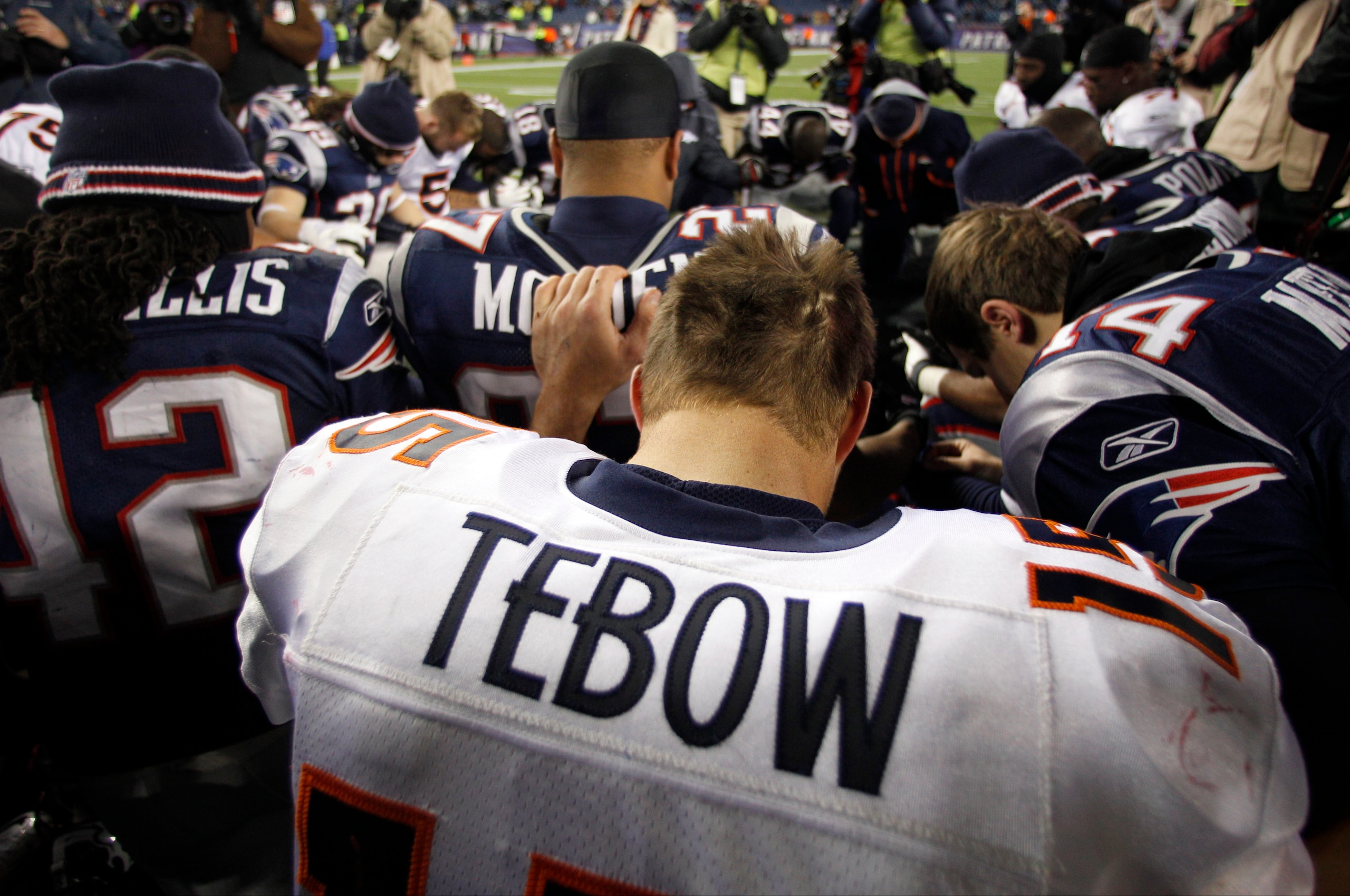
Denver Broncos Trade Up for Tim Tebow
4 of 12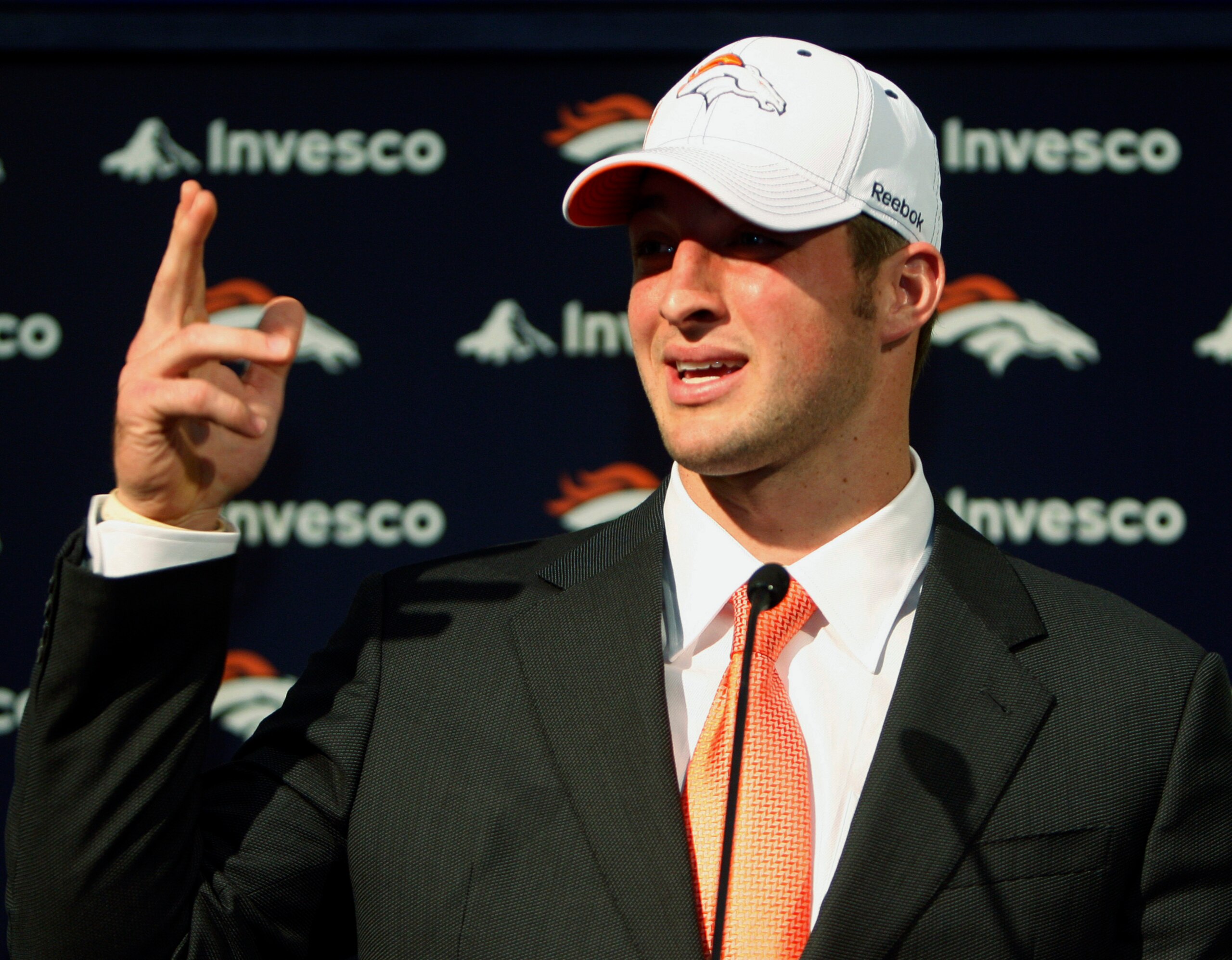
Since 2010, there has not been a more polarizing figure in the NFL than former quarterback Tim Tebow.
Everyone knew his name after the things he did at the University of Florida. He was a proven winner who was known for his game speeches and regarded as a high-character athlete.
However, it was pretty apparent that, although Tebow was a great person on and off the field and did plenty of winning in college, he wasn't exactly first-round material. He had plenty of flaws in his game, including footwork, accuracy and a wacky release.
Even still, prominent draft analysts like Mike Mayock of NFL Network ranked Tebow as the third-best QB.
The point is that Tebow was a project and had plenty of kinks to work out his game. While quarterbacks like this are drafted in the first-round, Tebow was multiple years away—he wasn't one of these guys that just needed a year to learn the NFL; he needed lots of work.
Well, the Broncos didn't think that way. Led by former head coach Josh McDaniels, the Broncos selected Tebow in the first round with the 25th overall pick. They also traded up to get him.
In a swap with the Baltimore Ravens, the Broncos sent their 43rd, 70th and 114th overall selections. Those picks would later turn into Sergio Kindle, Ed Dickson and Dennis Pitta, respectively.
As everyone soon found out, Tebow's flaws showed up in his NFL game. But he did win a playoff matchup over the Pittsburgh Steelers at the height of Tebowmania and also won a game despite throwing just two passes.
Since the 2010 draft, McDaniels has landed back with the New England Patriots as offensive coordinator, Kindle is out of the league, Dickson and Pitta are still playing, and Tebow? He's an outfielder for the New York Mets' Single-A affiliate Columbia Fireflies.
The Legendary Eli Manning-for-Philip Rivers Trade
5 of 12
For their entire playing careers, Eli Manning and Philip Rivers have played for the New York Giants and San Diego (now Los Angeles) Chargers, respectively.
However, it wasn't originally planned that way.
With the No. 1 pick in the 2004 draft, the San Diego Chargers selected Manning.
The reason Manning never put on a Chargers uniform? He refused to play for the team and even said he would sit out the entire 2004 season if he was picked.
In addition, Manning's dad, Archie, also told the team not to take him, saying he'd be a better fit in New York with the Giants.
Well, the Chargers did it anyways, and it paid off.
With the fourth pick in the same draft, the Giants took Rivers.
Manning wanted to go to New York, and the Chargers still needed a quarterback.
As a result, the Giants shipped Rivers, a 2004 third-round pick and a first- and fifth-round selection in 2005. Those picks turned into Nate Kaeding and Shawne Merriman, and the fifth-round pick in 2005 was traded to the Tampa Bay Buccaneers.
You've got to respect what the Chargers did here since it all worked out, but can you imagine if a trade never happened? Yikes.
Aaron Rodgers Falls to No. 24
6 of 12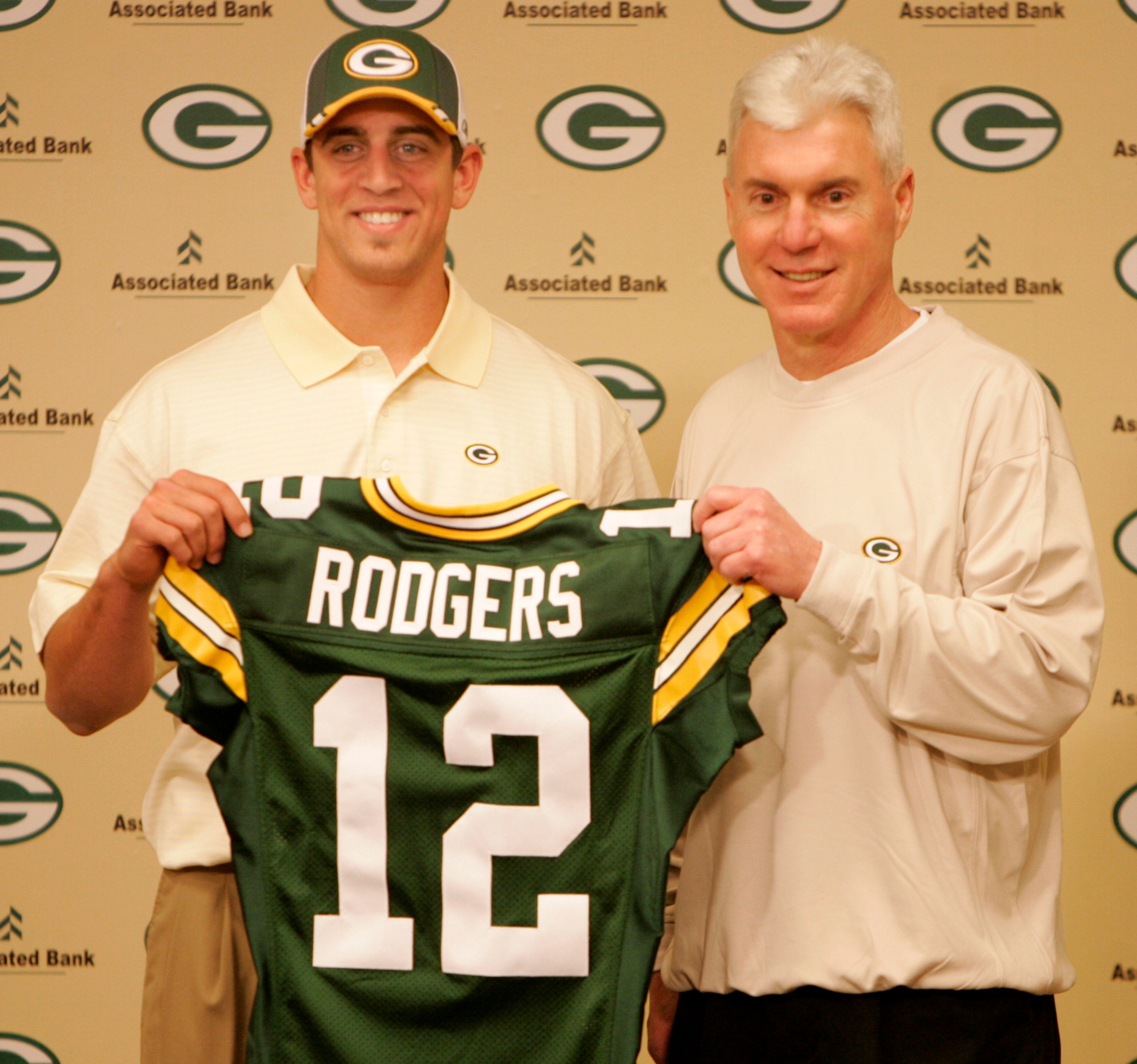
Alex Smith. Aaron Rodgers.
These were the two quarterbacks who headlined the 2005 draft.
As a junior college transfer, Rodgers went on to play for the Cal Golden Bears and professed his desire to play for the San Francisco 49ers, the team with the No. 1 overall pick in the upcoming draft.
Smith, coming out of Utah, was seen by most as the better-suited, more pro-ready quarterback under the tutelage of legendary college football coach Urban Meyer.
The 49ers thought that as well, and with the No. 1 overall selection, the team took Smith, leaving Rodgers on the board thereafter.
The second pick went by. Rodgers was still there.
The 10th pick went by. Nope. Still there.
At the 20th pick, the Dallas Cowboys selected defensive end Marcus Spears.
But, out of nowhere, with Brett Favre still firmly entrenched as the franchise quarterback, the Green Bay Packers took Rodgers with the No. 24 pick.
"We had no idea that he [Rodgers] would be there at 24," said former Packers director of player personnel (and now Oakland Raiders general manager) Reggie McKenzie, according to Joan Niesen of Sports Illustrated. "We were wrapping our minds around who would be there, but we definitely did not see him as a 24th pick in the draft."
We'll never know how Rodgers' career would have turned out if he had been taken No. 1 and forced to start with the 49ers, but it's safe to say everything worked out just fine for him and Green Bay.
New York Jets Pass on Dan Marino
7 of 12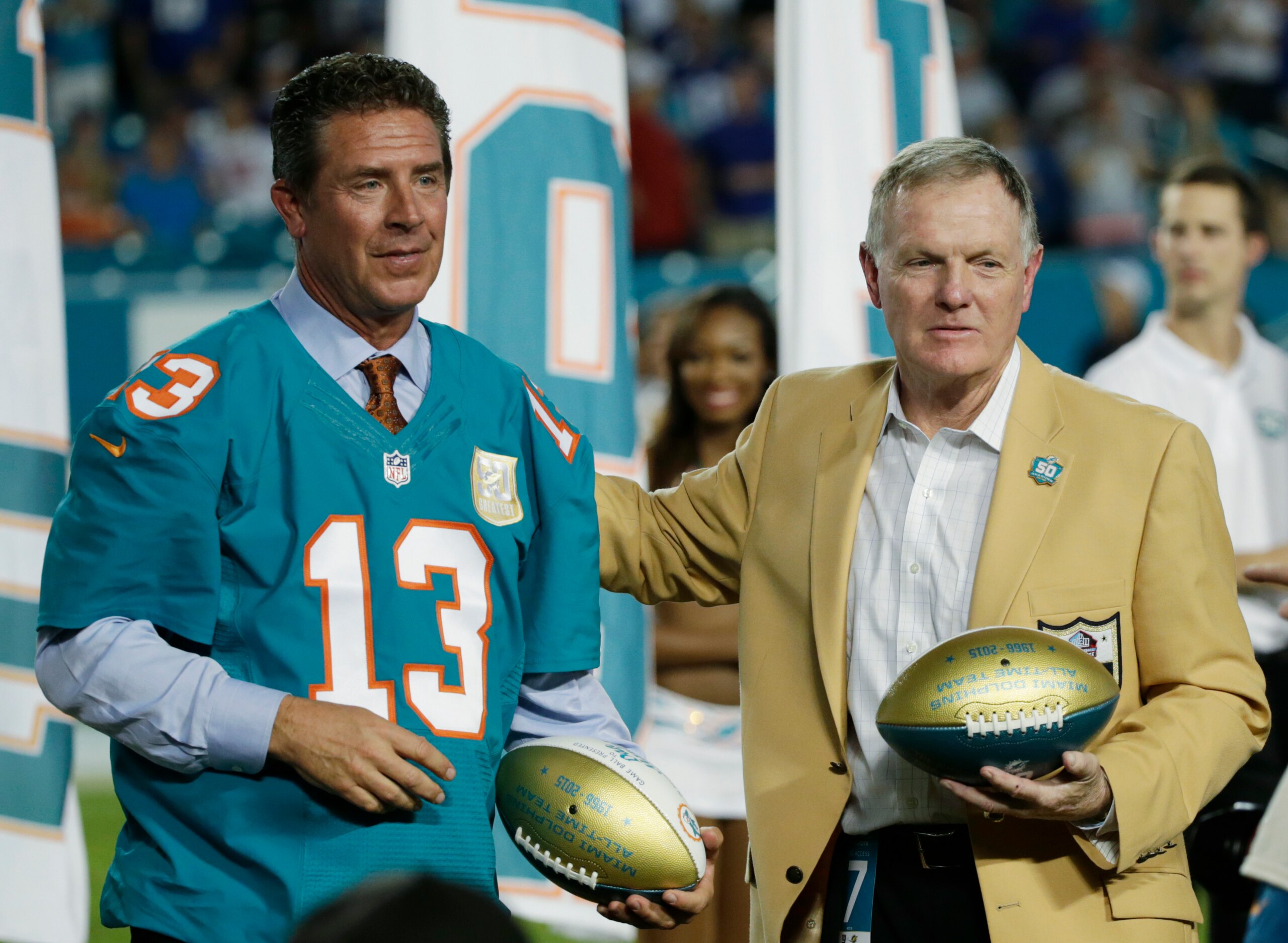
The 1983 draft class featured six first-round picks who would go on to be Hall of Famers. The same first round also saw six quarterbacks come off the board: John Elway, Todd Blackledge, Jim Kelly, Tony Eason, Ken O'Brien and Dan Marino, the subject of this slide.
Looking back at this draft, the New York Jets had a chance to draft a quarterback who would captivate New York like Joe Namath.
His name was Dan Marino.
However, due to a rough senior season at the University of Pittsburgh and rumored drug usage, Marino's stock took a bit of a hit.
When the Jets' 24th overall pick came around, Marino was still on the board.
Instead of Marino, the Jets opted for O'Brien.
O'Brien, the UC Davis product, would go on to have a 10-year NFL career, playing nine years for the Jets and one for the Philadelphia Eagles and amassing over 25,000 yards and 128 touchdowns.
A solid career? Sure. A Hall of Fame career like Marino's? No.
Marino will always go down as perhaps the greatest quarterback in NFL history to never win a ring, but the Jets have never fully figured out their quarterback situation since.
Oh, what could have been.
Laremy Tunsil's Twitter Video
8 of 12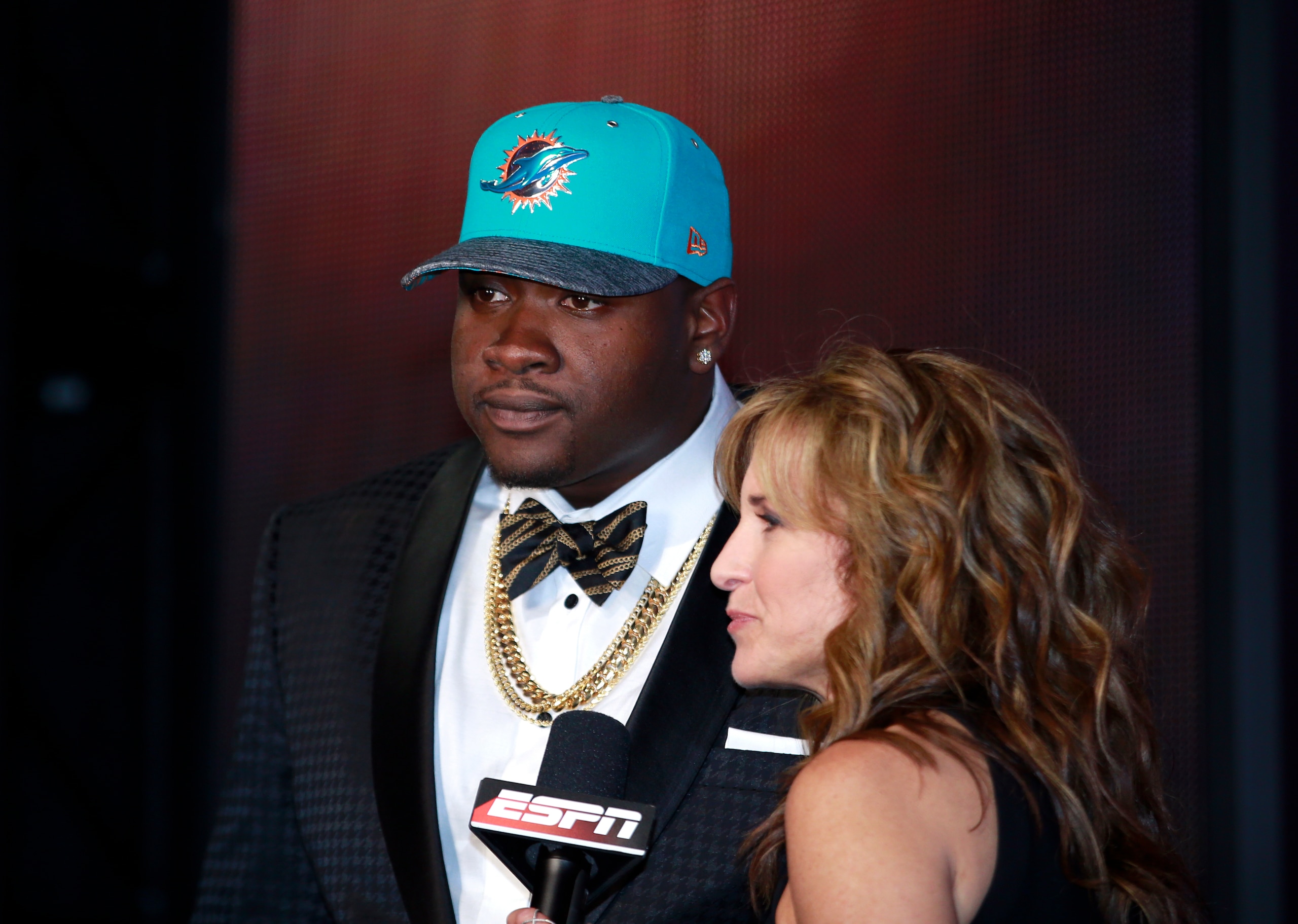
The most recent memory of the bunch brings us to former Ole Miss offensive tackle Laremy Tunsil and the infamous Twitter video.
For those unaware of what occurred here, Tunsil was slated to be, at a minimum, a top-five pick in the 2016 draft.
However, Tunsil fell to the Miami Dolphins with the 13th overall pick.
Because of a Twitter video.
In the video, Tunsil is seen wearing a gas mask with a bong attached and smoking what was assumed to be marijuana.
Let it also be known that this is the first time ever an athlete has claimed he was hacked on social media and the general public believed him.
The most unbelievable part? The video was posted while Tunsil was at the draft.
It was an incredibly confusing event that left teams scrambling and not knowing what to do. Nothing like this had ever happened before. In addition to the video, screenshots of text messages between Tunsil and a member of Ole Miss' football staff regarding financial support for Tunsil's mother were posted on his Instagram account.
Needless to say, this was an unbelievable tragedy for Tunsil, who lost millions of dollars after falling in the draft.
In his first season with the Dolphins, Tunsil was primarily at left guard, but he did play a little bit of left tackle.
According to Pro Football Focus, Tunsil graded out as the 46th overall guard in the league.
If there's one lesson to be learned here, it's to make sure your social media accounts are locked up like Fort Knox.
Atlanta Falcons Draft John Wayne
9 of 12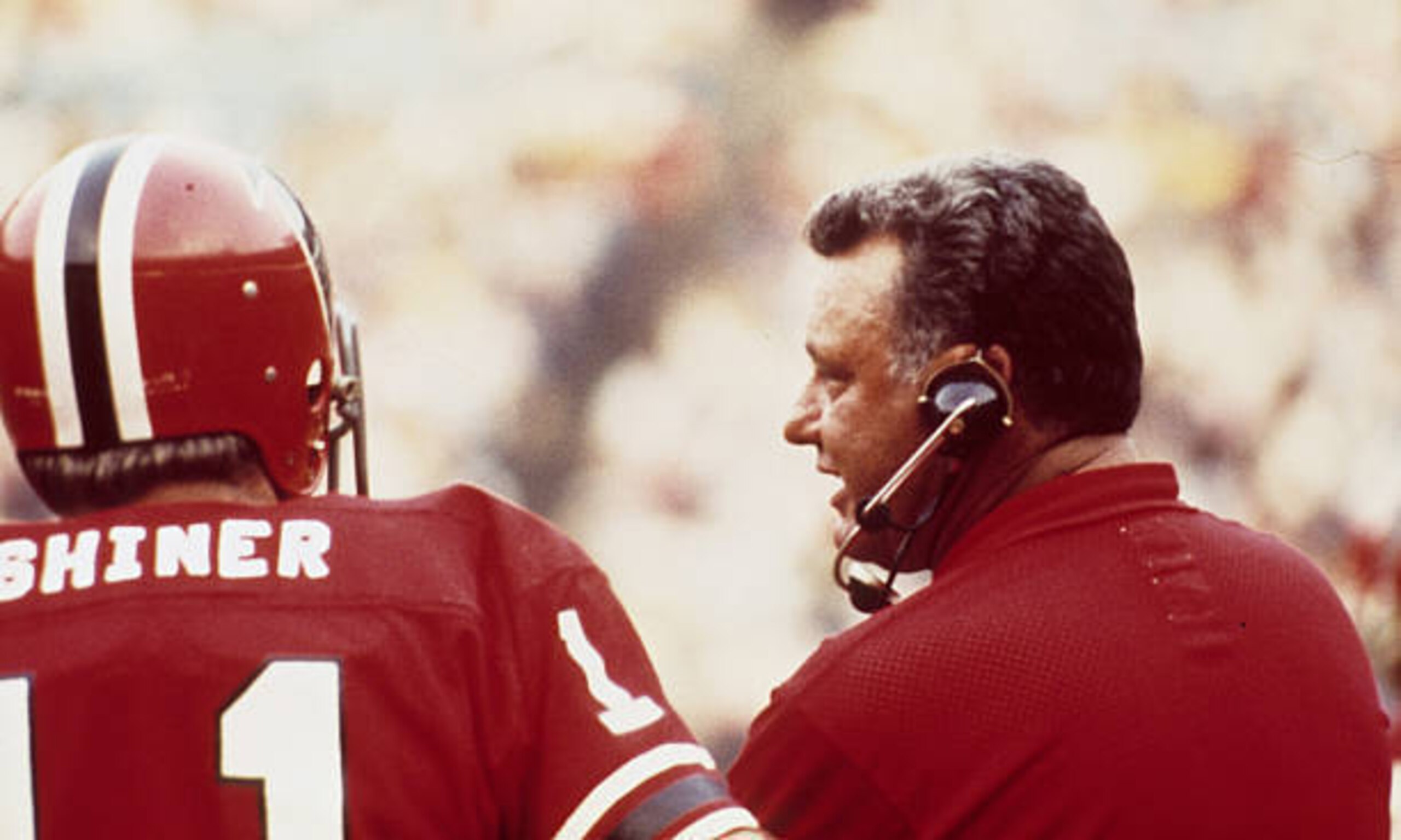
While this may not be necessarily "memorable," this is by far one of the goofiest draft moments in NFL history.
The year was 1972, and the Atlanta Falcons were coached by former Los Angeles Rams and Philadelphia Eagles quarterback Norm Van Brocklin.
Today, we have seven rounds in the draft.
In 1972? There were 17.
That's right: 17 rounds. As we sometimes see in Major League Baseball drafts, teams like to have a little fun in who they select.
Well, when the 17th round rolled around, Van Brocklin has been quoted as saying, "Do we want the roughest, toughest S.O.B. in the draft?!"
Who was Van Brocklin referring to you might ask?
Mr. John Wayne.
Yes, John Wayne, the famous Western actor. The Duke. He was 64 years old at the time, but Van Brocklin was right about him being a tough son of a gun.
Tragically, though, NFL commissioner Pete Rozelle did not allow the selection, and therefore, Mr. Wayne never put on a Falcons uniform.
Wonder what position the 64-year-old would have played? We'll never know.
Sigh.
New Orleans Saints Trade Everything for Ricky Williams
10 of 12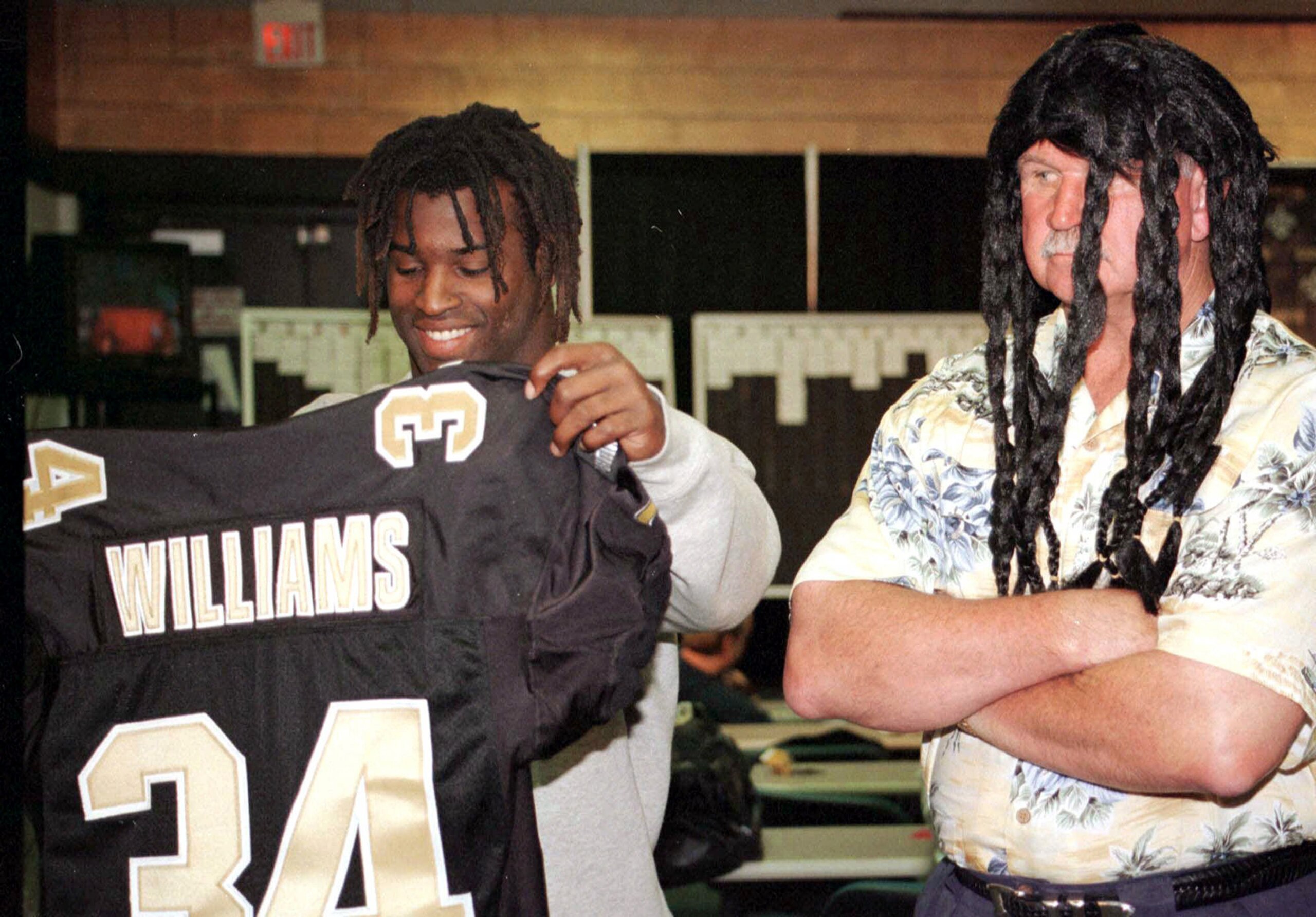
"We threw everything but the kitchen sink at them" is a popular phrase used in sports when saying that a particular team or player did all they could in a certain scenario.
For football, it could be mixing and disguising coverages. For baseball, it could be throwing a weird variety of pitches to throw a hitter off balance. For basketball...
Well, you get the point. You do whatever you can.
The New Orleans Saints did just that under Mike Ditka when they traded literally every single selection they had in the 1999 draft, including a couple of 2000 draft picks.
All in all this is how it shook out:
Saints receive: Ricky Williams, RB, Texas
Washington Redskins receive: 1999 first- (12th overall), third-, fourth-, fifth-, sixth- and seventh-round picks as well as the Saints' 2000 first- (second overall) and third-round selections.
In total, they gave away eight draft picks to move up seven spots in the 1999 draft to take Williams.
Prior to the Saints drafting Williams at No. 5 overall, the Philadelphia Eagles fans that packed the Theatre at Madison Square Garden in New York City were, well, unhappy that the team took Syracuse quarterback Donovan McNabb over Williams.
Now, I get it. Williams was a bona fide stud coming out of the University of Texas, but damn did the Saints pay a king's ransom for him.
The story gets even weirder if you dive into Williams' agent, Master P, and that entire situation surrounding Williams' terrible contract, which was based primarily on incentives.
Williams would play just three seasons with the Saints before they traded him to the Miami Dolphins in 2002. He failed multiple drug tests during his career, before the 2004 season, came back in 2005 and was then suspended for the entire 2006 season.
From the trade to his representation to the failed drug tests, Ricky Williams' story is perhaps one of the most intriguing and polarizing in league history.
FB Norm Michael Drafted by Philadelphia Eagles in 1944; Didn't Know Until 1999
11 of 12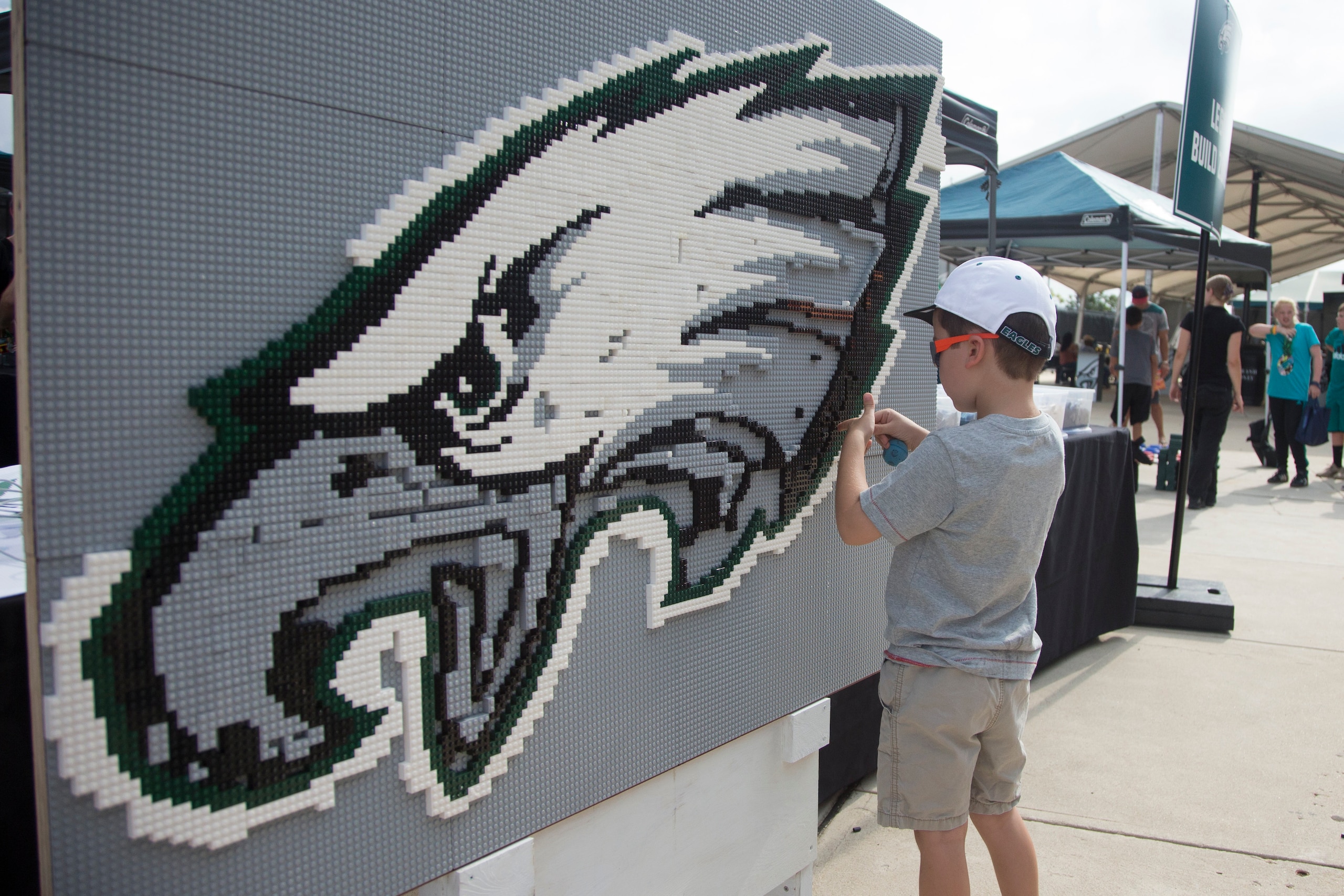
Like the Atlanta Falcons drafting John Wayne, this isn't necessarily a memorable draft moment either, but, like the Wayne draft choice, this story is also quite comical.
Imagine: You're drafted into the NFL out of college. Great, right? Woohoo. You've made it. However, you're never told about the draft selection, and you somehow find out over 50 years later while reading the newspaper.
In 2017, this would never happen. Twitter and other platforms tell us who's being drafted before it actually even happens, but in 1944? It's a bit more believable.
In 1944, there were 32 rounds in the draft because there were just 11 teams.
After 205 draft selections, the Philadelphia Eagles were on the clock again.
With their 20th-round selection, they chose fullback Norm Michael out of Syracuse, but they were unable to reach him because they didn't know Michael had joined the Army.
If only Adam Schefter had existed.
Fast-forward to 1999: Mr. Michael was reading a newspaper that listed all of the Syracuse alum who were drafted into the NFL and he spotted his name.
See? Technology has its flaws, but at least Mr. Michael would have known he had been drafted if it happened nowadays.
199th Overall: The GOAT Is Born
12 of 12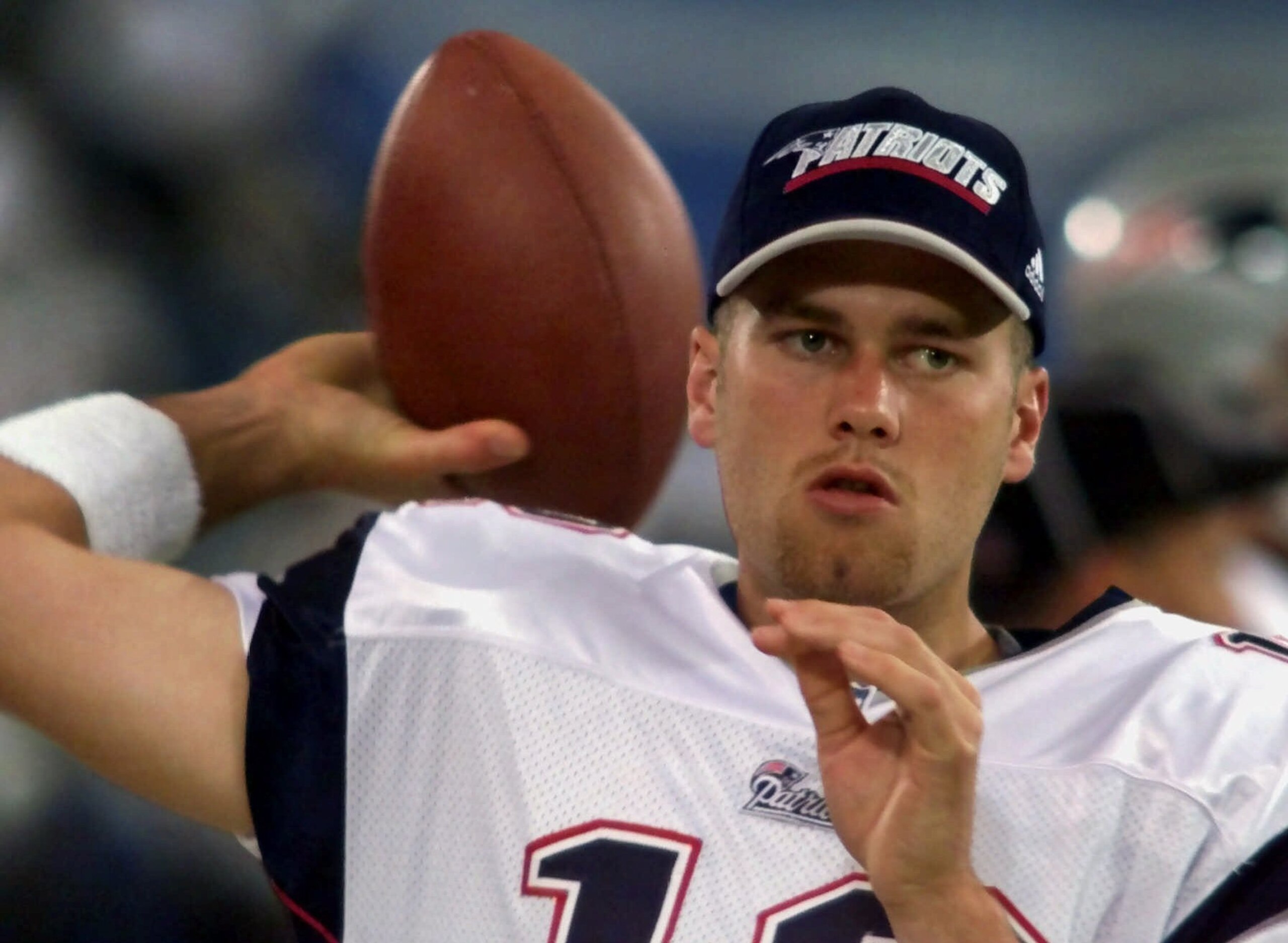
We all know this story by now, but it is by far one of the most memorable moments in draft history.
With a compensatory selection in the sixth round of the 2000 draft, the New England Patriots, at 199th overall, took a quarterback out of Michigan who would go on to be arguably the greatest quarterback in NFL history.
His name? Chad Henne.
Kidding, kidding, kidding—it was Tom Brady.
There were 198 drafted before him, including six quarterbacks, three kickers and even a punter.
Brady would go on to have a decent career, including five Super Bowl titles, multiple MVP awards, an undefeated regular season and way too many records to keep track of.
There's really not a whole lot left to say besides this: It just had to be those damn Patriots.
.jpg?w=2560 "Titans Giants Football")


.jpg?w=2560 "Love's Body Already 'Tired'")
.jpg?w=2560 "Ward Nearly Walks Out of Presser ▶️")
.jpg?w=2560 "Buzz: Tyreek Eyeing November Return")