
The NFL Scouting Combine will provide an initial look at the league's future playmakers at Lucas Oil Stadium in Indianapolis. For the Oakland Raiders, it's an opportunity to find the final links to a Super Bowl team.
After an underwhelming 2013 draft class, general manager Reggie McKenzie recovered with two impactful years, specifically the 2014 draftees. To push this franchise over the hump, the Raiders executive must find players to improve a sputtering defense and some offensive weapons for the future.
At what positions do the Raiders need the most help? Which prospects belong on McKenzie's big board as draft day approaches?
We'll take a look at the top five prospects at each position in need of an immediate starter, depth or a potential upgrade. Should McKenzie consider trading up for a few prospects? Who could be a draft-day sleeper in April?
Linebacker
1 of 6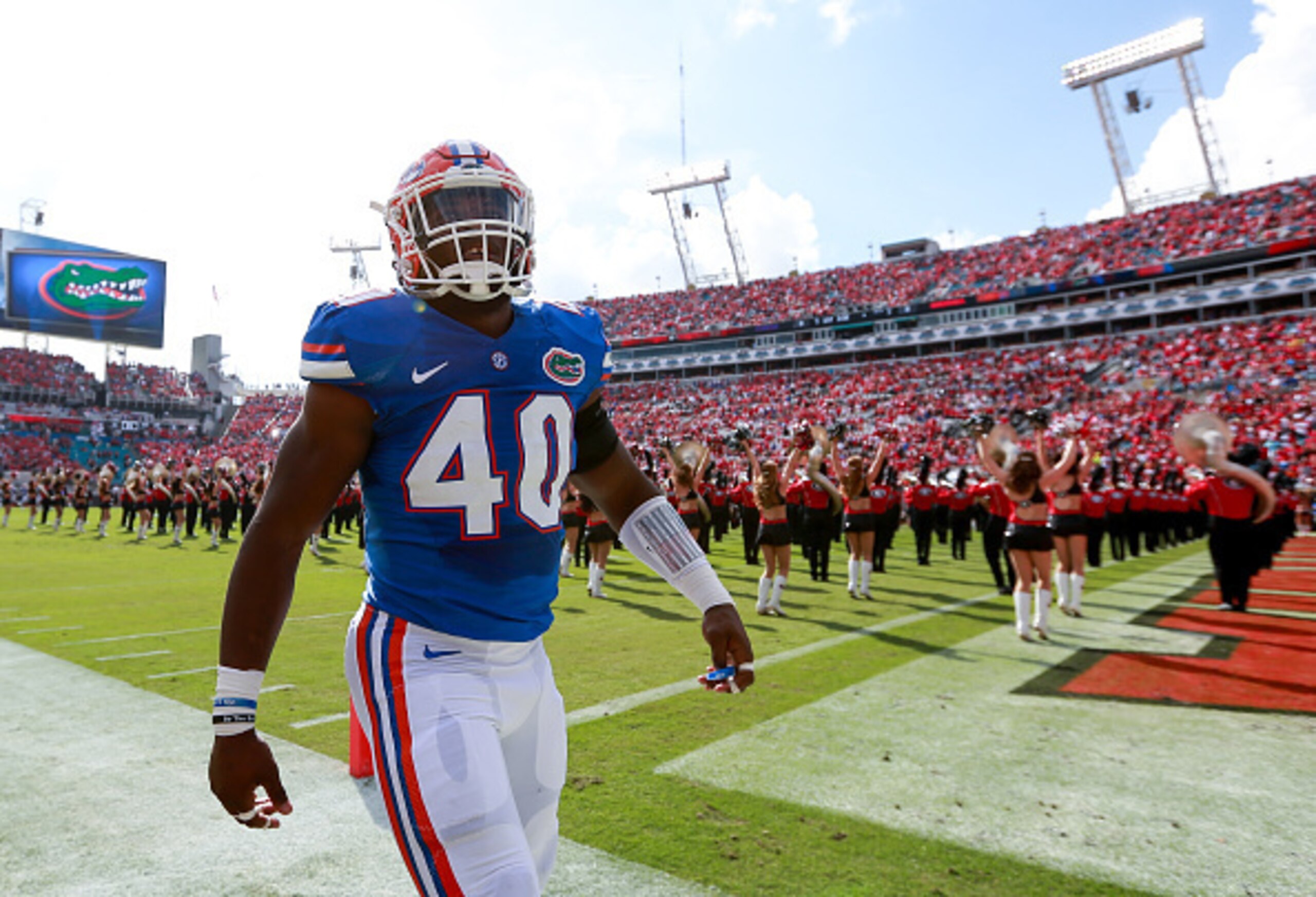
Whether it's through free agency or the draft, the Raiders must address multiple linebacker spots.
Free agents off the scrap heap and mid-to-late-round draft picks won't simultaneously solve immediate and long-term issues. An early-round selection could develop into a rookie starter and a fixture on defense for years to come.
Reuben Foster, Alabama
According to Buffalo News reporter Vic Carucci, there's buzz about the San Francisco 49ers possibly taking Alabama linebacker Reuben Foster with the No. 2 overall pick. With that speculation, Foster could be that good. In fact, Pro Football Focus compared him to Patrick Willis.
Let's say Foster slips past the 49ers at No. 2. Should the Raiders trade up for a game-changer with a high ceiling? As a team coming off a 12-4 season with a big hole in the middle of the defense, the Alabama linebacker is worth the leap if he's available between the No. 5 and No. 10 picks.
Foster will not participate in the combine due to rotator cuff surgery, per ESPN's Adam Caplan. As a result, we could see a slight slip in his draft placement.
Zach Cunningham, Vanderbilt
As the only true outside linebacker on this listing, Vanderbilt product Zach Cunningham offers solid play in space for coverage duties. The Raiders coaching staff has to be sick and tired of watching tight ends dominate the seams and roam free downfield over the years.
Cunningham carries a lanky frame, but he's a good size for the Will spot. He projects as a natural for the role and would be in position to start right away.
Some will point out his missed tackles as a cause for concern, but he didn't play within a defense full of first- and second-round prospects. Cunningham had to execute as the best defender on the field, with that, miscues will pop up on film.
Jarrad Davis, Florida
Linebacker Jarrad Davis will bring leadership qualities where ever he lands in the league, per NFL.com draft analyst Lance Zierlein. McKenzie typically factors in character as a major boost or hit to a prospect's draft stock, which makes sense as he continues to build a new culture in Oakland.
Davis will need to add bulk to play inside. With his current 6'2", 238-pound frame, he would likely take over Malcolm Smith's spot. The main concern surrounding his fit in Oakland would be the "tweener" label. Is he an outside or inside linebacker? The combine will either show his speed and athleticism or lack thereof.
Haason Reddick, Temple
Haason Reddick played defensive end at Temple, but he's going to switch positions at 6'2", 237 pounds in the pros. Due to his background as a safety, he'll likely thrive as a weak-side linebacker. The transition puts him in the project category. Nonetheless, his production on the collegiate level boosts his stock into the second round.
The Raiders shouldn't select him as a first-round pick. However, he carries good value as a second-round choice with a high ceiling. On film, he shows quickness and the ability to track down quarterbacks with ease. He logged 14.5 sacks over the past two seasons as a starting defensive end.
Anthony Walker Jr., Northwestern
Anthony Walker became a tackling machine at Northwestern. Over the past two seasons, he logged 225 tackles, 29 of those for a loss and six sacks as an inside linebacker. The Raiders need someone who can play downfield and potentially supplement blitz schemes.
In coverage, Walker notched four interceptions and 12 passes defensed, which puts him on the Raiders' radar as a linebacker who can cover space in the middle of the field. The Northwestern product may fall into third-round territory, which allows the Raiders to address other needs and still grab a starting-caliber player on Day 3 of the draft.
Defensive Tackle
2 of 6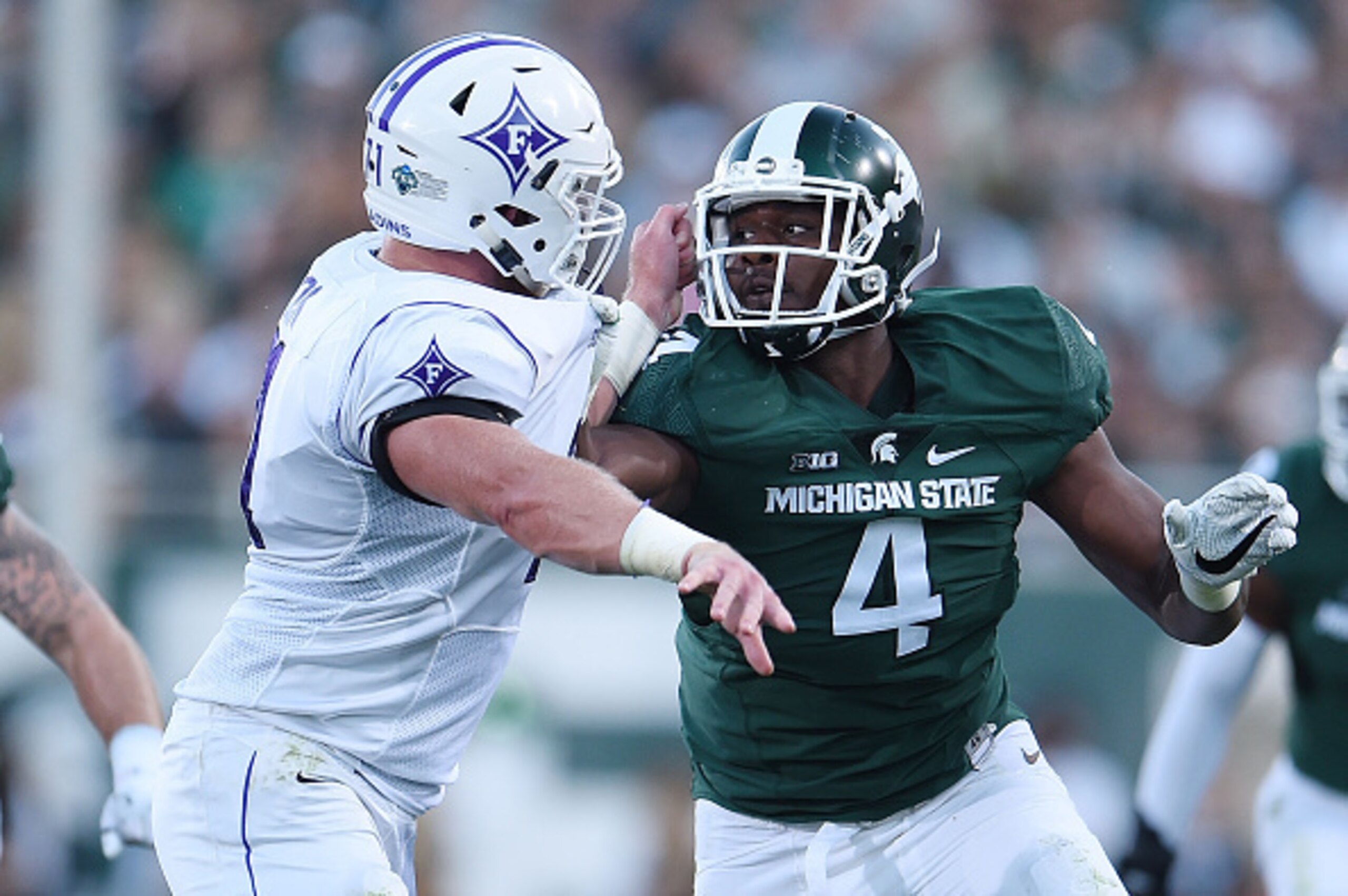
The Raiders have a mixture of one-dimensional veterans and raw assets at defensive tackle or lining up as interior linemen.
It's too early to call 2016 second-round pick Jihad Ward a bust. However, defensive end Mario Edwards has played 16 games but missed the same amount over the past two seasons. The Raiders can't afford to place Ward next to gap-stuffing defensive tackles who can't pressure the pocket.
The five players below should be able to force opposing quarterbacks to squirm in the pocket.
Malik McDowell, Michigan State
Malik McDowell doesn't have the size comparable to NFL defensive tackles. He's 6'6", 276 pounds, which likely raises eyebrows among scouts. His bench-press numbers will significantly help or hurt his draft stock. It's possible a few pounds could boost his profile as a pass-rushing 3-technique defensive tackle—a major need for the Raiders.
Nonetheless, Zierlein points out work ethic and leadership issues during his time at Michigan State. Though, it's worth noting the same talk about fellow Spartan quarterback Connor Cook didn't deter McKenzie. Two years ago, Edwards came into the league with questions about his motor.
On the field, McDowell logged 24.5 tackles for a loss and 7.5 sacks. He must perform well at the combine to hold consideration as a first-round pick.
Carlos Watkins, Clemson
In his fifth year at Clemson, Carlos Watkins broke out for 10.5 sacks. The defensive tackle filled a void that Shaq Lawson and Kevin Dodd left. The Tigers leaned on Watkins to pressure the pocket through the middle, and he delivered for the most part.
The Raiders' desperate need for pressure through the A-gap puts Watkins in the spotlight as a potential second-round pick. He's light on his feet and knows how to switch gears between run defense and pass rushing. The scouts should pay close attention to his three-cone drill and shuttle run time.
Chris Wormley, Michigan
Chris Wormley's numbers won't impress you at first glance, but he flashed as a key component to a hard-nosed defensive line through all four years at Michigan. Based on his 6'5", 297-pound size, he is better suited for a 3-technique defensive tackle assignment. Though, he's also strong enough hold up at the point of attack against the run.
On film, Wormley looks more powerful than athletic. His combine performance can erase descriptions about his stiffness in the trenches. The Michigan product may become a decent gap-stuffer, but the Raiders already have two space-eaters in Dan Williams and Justin Ellis.
Right now, Wormley projects as a late second- or early third-round selection, per CBS Sports rankings.
Larry Ogunjobi, Charlotte
Larry Ogunjobi didn't go to Ohio State or Alabama, so you're not going to hear a lot about his production on the collegiate level or abilities. However, one look at his film shows a player with a high ceiling and the ability to consistently roam into the backfield.
Ogunjobi logged 29 tackles for a loss and 5.5 sacks over the past two years at Charlotte. His sacks numbers look modest, but his shiftiness and ability to fight offensive linemen with his hands should intrigue Raiders scouts. Clunky movements and an average size will bring scrutiny to his draft stock.
Jaleel Johnson, Iowa
Look out for Jaleel Johnson as a third-round choice at this position. After three nondescript seasons at Iowa, he broke out for 10 tackles for a loss and 7.5 sacks as a senior. Zierlein categorizes him as the prototypical pass-rushing defensive tackle with flaws as a run defender.
The Raiders may opt to use Johnson next to Ellis as complementary pieces up front who offset each other's weaknesses. As long as the coaching staff doesn't ask the Iowa product to become a dynamic defensive tackle right away, he could see immediate snaps as a developing interior pass-rusher.
Running Back
3 of 6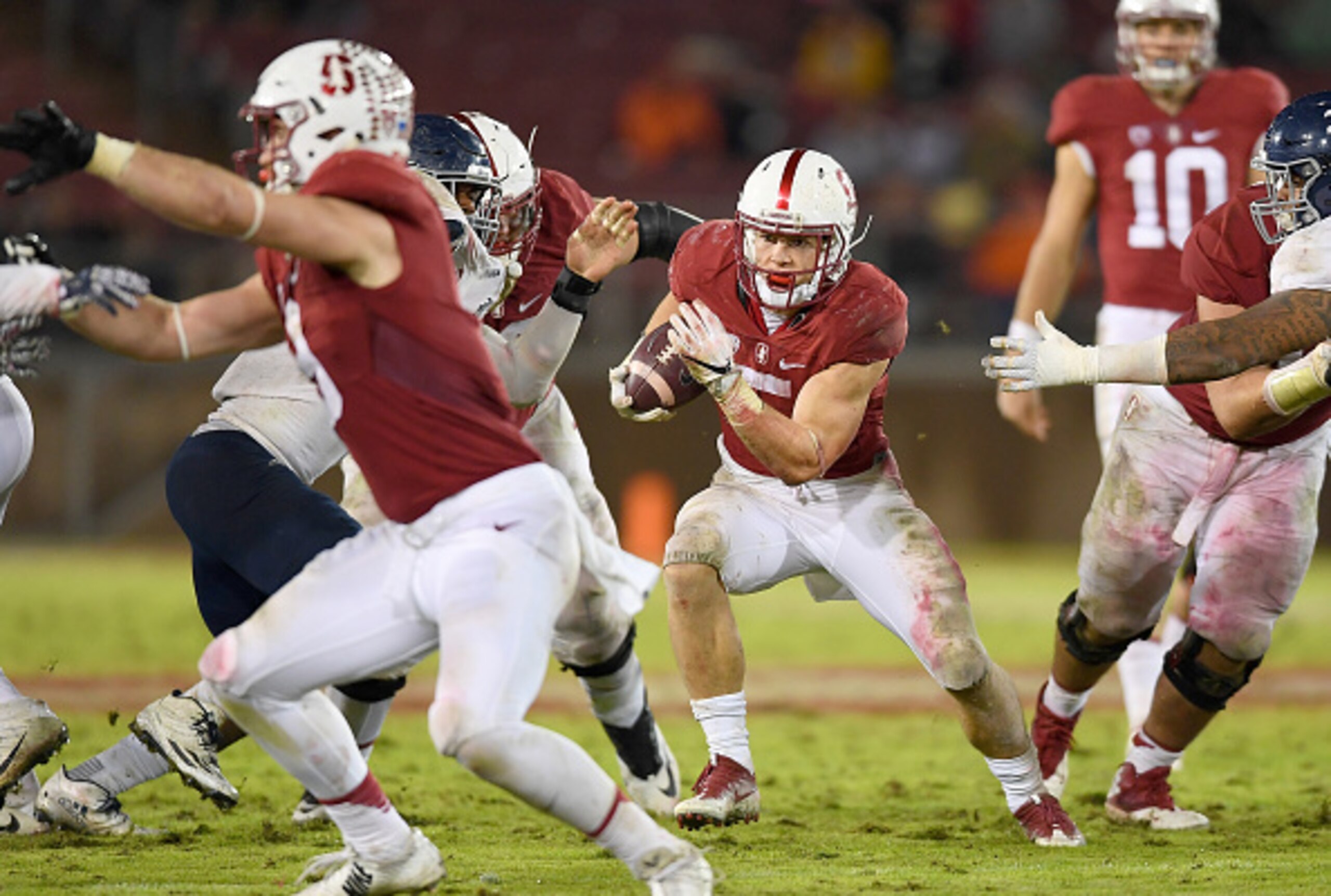
According to ESPN's Josina Anderson, the Raiders will allow running back Latavius Murray to test the market. It doesn't necessarily mean he's done in Oakland.
However, his market value exceeds $6 million per year (via Spotrac), and the Raiders won't pay that type of money for a complementary piece of their rushing offense.
Expect teams to throw their purses at Murray in March. McKenzie could find a cheaper replacement.
Christian McCaffrey, Stanford
Unless the Raiders trade up, which isn't a good idea at this position, running backs Dalvin Cook and Leonard Fournette won't be available.
However, McKenzie could acquire an all-purpose prospect at the position in Christian McCaffrey. The Stanford product finished second in Heisman voting as a sophomore. In that year, he led his team in rushing and receiving yards.
The Raiders don't need to use their first-round pick on a running back. However, McKenzie shouldn't ignore McCaffrey's multi-dimensional skill set as a featured back. As a true playmaker, the Stanford prospect could push Oakland's rushing offense to the top spot. He'd likely fulfill a role as the team's featured ball-carrier, third-best receiver and primary return specialist.
Alvin Kamara, Tennessee
Running back Alvin Kamara only posted 210 carries for 1,294 rushing yards and 16 touchdowns during his two years at Tennessee. However, the Raiders' backfield situation doesn't require a third ball-carrier to handle 15-plus carries per game. Kamara would need to find his rhythm with about eight to 10 carries in most outings.
The Tennessee product's thicker size at 5'10", 215 pounds makes him a viable short-yardage tailback who can rack up touchdowns inside the five-yard line. His senior film shows the willingness and ability to protect the quarterback against oncoming blitzers. Ultimately, he'll likely hear his name called in the third round.
Samaje Perine, Oklahoma
Raiders fans have taken a liking to Oklahoma running back Samaje Perine due to his size. He's 5'10", 235 pounds and doesn't mind smashing head on against defenders as he's churning his legs downfield. He's a contact player who excels between the tackles going north and south on carries.
Perine finished with 1,000-plus yards in all three seasons at Oklahoma, scoring 49 rushing touchdowns in the process. He's a viable choice in the fourth round based on McKenzie's tendency to draft running backs on Day 3.
If the Raiders want to see flashes of running back Tyrone Wheatley during his early years wearing silver and black again, Perine fits the bill.
Jeremy McNichols, Boise State
Boise State running back Jeremy McNichols carries a compact frame and plays with a low pad level, which allows him to break through arm tackles and flatten defensive backs on the third level of a defense. He logged 3,046 rushing yards and 43 touchdowns over the past two seasons.
Early in Murray's career, many criticized his pad level and lack of vision. Neither will be an issue for McNichols, who is a smaller back able to squeeze through narrow holes with a thicker build. He's about 20 pounds lighter than Perine, but he also takes a north-south approach as opposed to trying to juke defenders before hitting the running lanes.
James Conner, Pittsburgh
James Conner ranks as the best pass protector among the five prospects listed at this position. He's a smart player who understands schemes and reacts accordingly. As someone who returned to the field after battling Hodgkin's lymphoma, scouts will buzz about his uplifting character.
Conner dominated the collegiate playing field as a sophomore with 1,765 rushing yards and 26 touchdowns. The Pittsburgh running back returned to the field after his life-changing diagnosis and accumulated 1,092 yards and 16 scores. He also displayed significant improvement as a receiver out of the backfield, catching 21 passes for 302 yards and four touchdown passes.
As a Day 3 selection, he could step play all three downs as the third wheel in the Raiders' backfield.
.jpg?w=2560 "Colts Football")
.jpg?w=2560)
.jpg?w=2560 "Commanders 49ers Football")
Offensive Tackle
4 of 6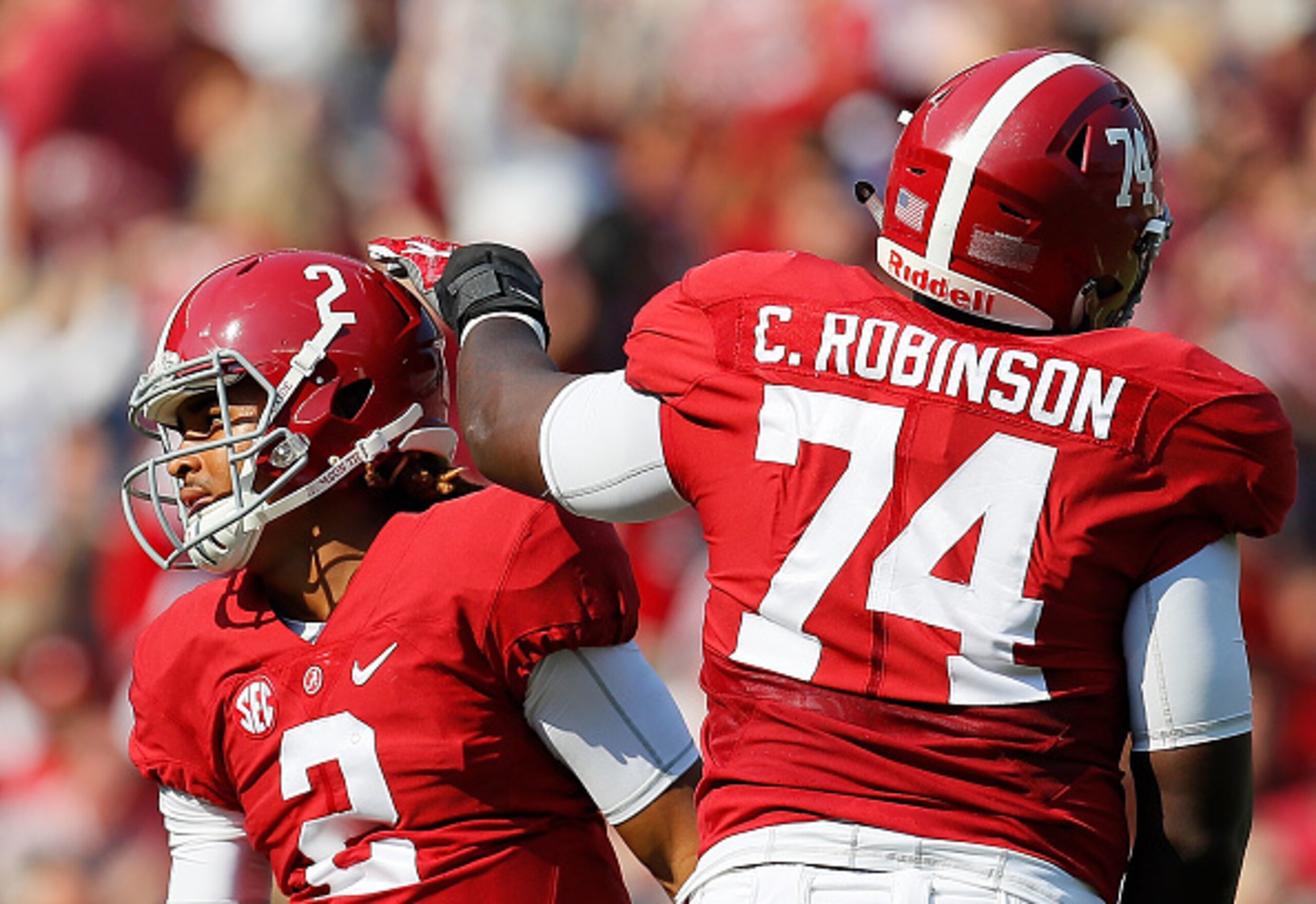
Right tackle Menelik Watson may not return due to injuries and poor performance during the 2016 season.
Austin Howard should slide in as the clear-cut starter, but the Raiders can think long term at this position. Left tackle Donald Penn's contract will expire after the 2017 season.
McKenzie can also bring in competition for Howard, who struggled with injuries throughout the previous campaign.
Cam Robinson, Alabama
Alabama tackle Cam Robinson's draft placement has shifted over the past month. If he's available at No. 24, the Raiders must at least consider drafting him to eventually replace Penn. His college film shows difficulty against quick-twitch pass-rushers, but offensive line coach Mike Tice may be able to correct technical flaws to rectify the issue.
Robinson lined up as a left tackle at Alabama, but his power and size could slot him as a right tackle in the pros. If so, he would immediately push Howard for his starting position. It's a weak class for offensive linemen, but no one should blame the front office for thinking long term about quarterback Derek Carr's pass protection.
Taylor Moton, Western Michigan
Western Michigan offensive lineman Taylor Moton could either push Howard for the starting role at right tackle or eventually replace Gabe Jackson at right guard. Despite entering a contract year, the Raiders haven't talked about an extension for their 2014 third-round pick. An early attempt at restocking Carr's interior protection would be a good idea at this stage.
For the most part, Moton played right tackle, but he also performed well at the right guard position. His versatility should intrigue the Raiders in the second round. Rookie Vadal Alexander filled in behind Watson and Howard during the previous year, but Moton flashes better traits on film.
Roderick Johnson, Florida State
Roderick Johnson has the size (6'7", 311 lbs) and experience to develop into a starting left tackle as a pro. At some point within the next year or two, Penn's play on the blind side will eventually erode. Within the division, Carr must avoid edge-rushers Justin Houston, Von Miller and Joey Bosa. For Oakland, it's urgent to draft offensive linemen with the future in mind.
Fortunately for Johnson, he wouldn't have to play as a rookie. Tice could put him in the room with Penn as a guide to what's in store for years to come.
The Florida State product has the reach and power to keep rival pass-rushers at bay off the edge. The coaching staff could experiment with him at right tackle if Howard's recovery stalls over the summer.
Antonio Garcia, Troy
At 6'6", 293 pounds, scouts will question Antonio Garcia's ability to handle NFL bodies on the edge. His bench-press numbers will be crucial in gauging his initial strength. As a pro, a simple meal plan will allow him to put on pounds. It's a matter of how well he plays with added weight.
Of course, as a sleek prospect at the position, the Troy offensive lineman displays above-average quickness and athleticism in technique. He's able to position himself and use angles to secure blocks.
However, the Raiders have been stocking up on big maulers to protect Carr. Garcia has the skill set to become a starter in the league, but the Raiders would have to break from their profile type of offensive linemen.
Will Holden, Vanderbilt
Similar to Johnson from Florida State, Vanderbilt's Will Holden stands at 6'7" with the ability to add more weight if necessary.
Based on his film, he's not the athletic type, but he's long enough to protect his space on the edge. Pass-rushers will find difficulty in trying to push him around at the point of attack.
Holden enters the league with experience at both tackle positions. He showed some stiffness in his movement, which may cause him to lock into a right tackle spot in the pros. The Raiders will eye him during the shuttle run to see if it's possible to compensate for his poor lateral quickness.
Cornerback
5 of 6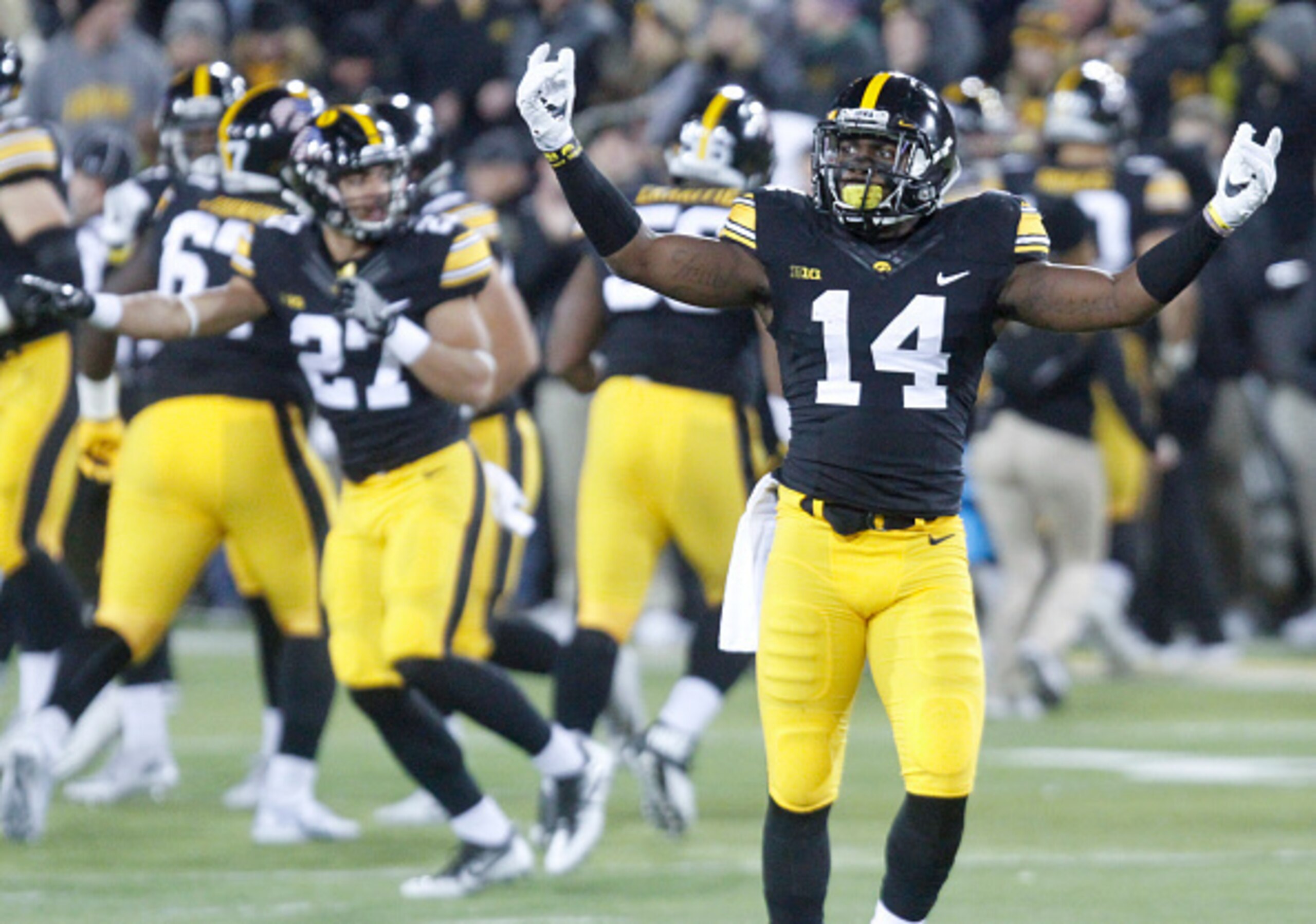
The Raiders' starting cornerbacks showed major flaws in defending the deep ball in 2016.
Cornerback Sean Smith's position may be in jeopardy if he struggles early in the 2017 season, and D.J. Hayden will likely find work elsewhere on the free-agent market. Regardless, the Raiders should consider a slot cornerback to push T.J. Carrie and potentially replace him after the season.
Desmond King, Iowa
The Raiders defense will continue to thrive on turnovers until the coaching staff and personnel adjust to the deep ball. Iowa prospect Desmond King logged 14 interceptions over the past three seasons, which included an outstanding junior year with eight alone.
According to Zierlein, King didn't want to leave the field. He took more than 94 percent of defensive snaps at Iowa and 46 percent of the snaps on special teams. No one can question his durability or love for the game.
Due to King's 5'10", 206-pound stature, he could shift over to safety. The Iowa cornerback plays with enough physicality to move into the slot, but he must refine his tackling technique. Bigger receivers have been successful at breaking through his occasional lackadaisical attempt to wrap up.
Tre'Davious White, LSU
LSU cornerback Tre'Davious White didn't post gaudy interception numbers like King, but he's consistent in his ability to shadow a receiver in man coverage. He capped off a four-year collegiate career with a standout senior year in which he notched 14 passes defensed.
White possesses the closing speed and ball skills to bait opposing quarterbacks into a mirage; the passing window isn’t what it seems when targeting the LSU cornerback. Due to his experience on the outside and inside, the Raiders could start him in the slot and shift him if necessary. White carries a leaner frame, which may cause issues against wideouts who use physicality to gain separation.
Cordrea Tankersley, Clemson
Clemson cornerback Cordrea Tankersley isn't the most fluid in space, but he's exceptional in tracking the football midair. He racked up nine interceptions over the past two seasons. His ability to wrap up tackles and limit yards after the catch will boost his draft stock. As a bigger cornerback, he may rank high on the Raiders' big board.
Closing speed could become an issue for Tankersley as he lines up against the best athletes on the perimeter. If he struggles during his first two pro seasons, don't be surprised about a move to safety.
Nonetheless, good coaching could help the Clemson product with footwork and spacing. Of course, the Raiders would have to hire a defensive backs coach at some point.
Quincy Wilson, Florida
Most scouts will pay close attention to the other Florida cornerback, Teez Tabor, as a potential top-15 pick, but teammate Quincy Wilson isn't a lackluster consolation prize.
CBS Sports rankings projects Wilson as a second-round pick, but his combination of speed and physicality could carve out an immediate role in the slot.
Wilson isn't as refined in coverage as Tabor, but he's able to jam receivers to disrupt timing. As an aggressive perimeter defender on the collegiate level, he may draw flags in the pros. Nonetheless, if he's able to literally and physically knock a dynamic wideout off his game, he's worth a spot in nickel packages at the very least.
Chidobe Awuzie, Colorado
Despite his second- to third-round tag, Colorado's Chidobe Awuzie puts starting cornerback qualities together on his film. He didn't go to a powerhouse program that garners the national spotlight, which hurts his draft stock. If Awuzie blows away spectators at the combine, all 32 teams will re-examine his college tape.
At 6’0”, 205 pounds, Awuzie has the size, quickness and ball skills needed to succeed in the pros. As an added bonus, he can be a menace in the backfield. The Colorado product notched four sacks in each of the past two seasons. His interception total (3) looks disappointing, but he's typically around the football with a chance to break up passes.
Safety
6 of 6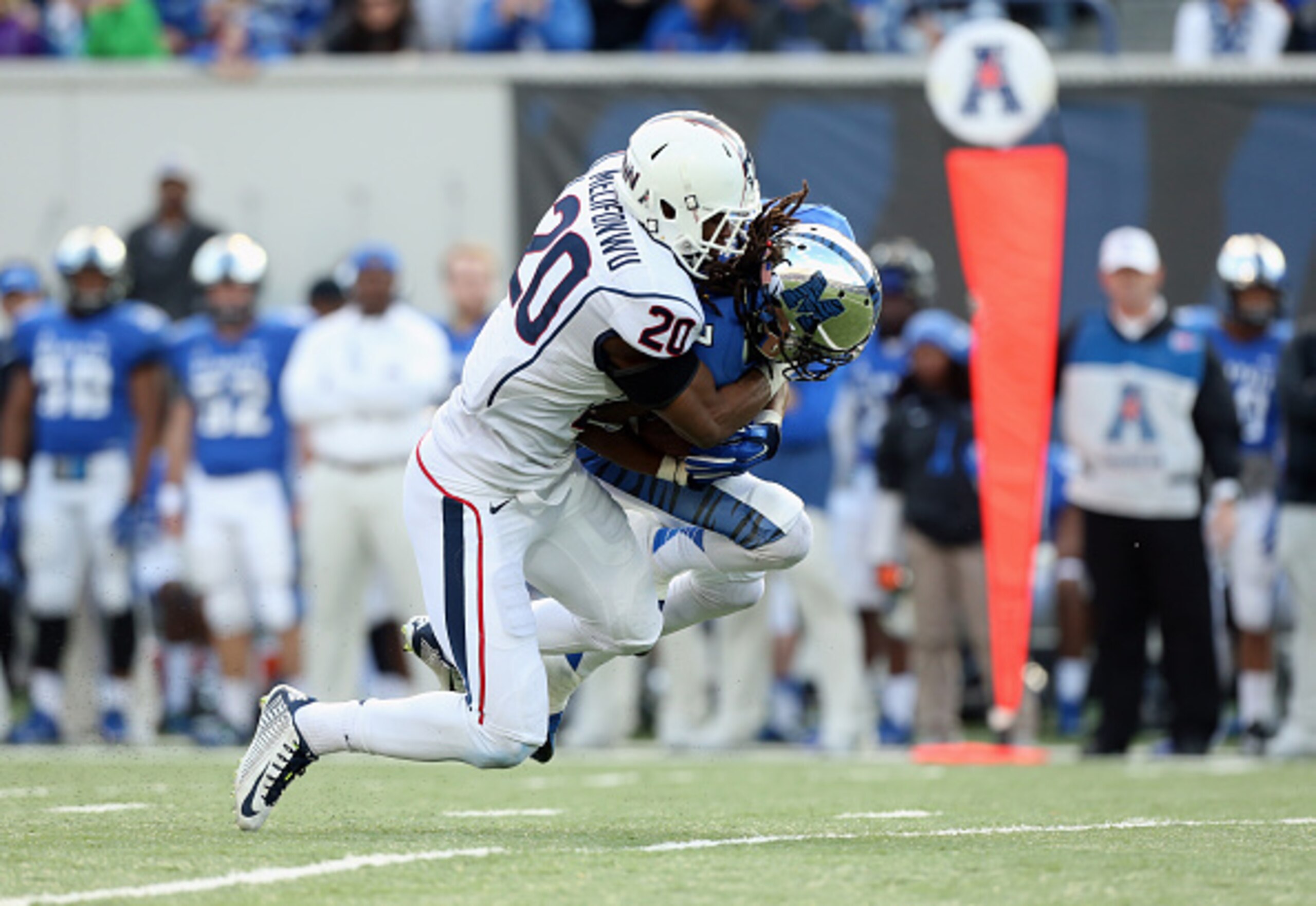
Safety Reggie Nelson's contract expires at the end of the season. He’ll turn 34 in September, which likely means the front office must find his successor at free safety next to Karl Joseph.
An early-round selection at this position seems very likely. The Raiders need athletic cover safeties to help out their cornerbacks, who lack closing speed.
Budda Baker, Washington
The Raiders should be mindful of potentially lining up two undersized safeties together in the secondary. Joseph stands at 5'10", and Washington safety Budda Baker at 5'10" pre-combine. Typically, play style overrides physical measurements, but the Raiders already have issues defending the deep ball.
Despite his willingness to help in run support and play downhill, Baker would fit as a blanket safety over the top, who can read and react to the quarterback's eyes. He's thinner than Joseph, which would prevent him from playing strong safety or interchanging positions within the secondary.
If size truly doesn't matter, the Raiders should have a second-round grade on Baker.
Obi Melifonwu, Connecticut
At 6'4", 219 pounds, Connecticut safety Obi Melifonwu looks like a rare physical specimen on the field. Furthermore, he hits with power and shows coverage ability downfield. As a senior, he became a dynamic safety, accumulating 118 total tackles and four interceptions. His recent film displays his ability to potentially play either safety position if necessary.
Due to Melifonwu's size and skill set, he's the perfect complement to Joseph. The Connecticut product would handle responsibilities near the box and backpedal on passing downs. He is athletically gifted. With more development in coverage, the Raiders could have another complete safety on the roster.
Marcus Williams, Utah
On film, Utah's Marcus Williams looks like the second-best ball hawk behind Ohio State's Malik Hooker. He grabbed 10 interceptions over the past two collegiate seasons. Clearly, his ball anticipation skills rank above average. At times, opposing quarterbacks have taken advantage of his tendency to gamble or force the turnover as oppose to knocking down the pass.
Regardless of his combine performance, Williams will likely project as a second-round prospect. His average tackling and all-or-nothing coverage tendencies could scare teams away in the first round. For the Raiders, the Utah safety could find himself in a starting spot for the 2018 season.
Rayshawn Jenkins, Miami
Miami's Rayshawn Jenkins looks like a Day 3 steal. Currently, CBS Sports ranks him as a fourth- or fifth-round selection. However, it's hard to argue with his resume. He finished his collegiate career with nine interceptions and 15 passes defensed. During his senior season, he flashed as a disruptor in the backfield against the run.
At 6'1", 220 pounds, Jenkins packs a strong punch when doling out hits near the box and over the middle. With the Raiders, he would become the tone-setter as Joseph drifts off toward centerfield.
The Miami prospect doesn't have the coverage skills to interchange between safety spots but shows a clear strength playing downhill.
Josh Jones, North Carolina State
Josh Jones spent his first two years at North Carolina State as a finesse safety who excels in coverage. He patrolled the field sideline to sideline as a junior and racked up 109 tackles, four resulting in a loss. One season won't change everything, but it's a step toward showing versatility in his game.
On film, Jones still looks like a raw prospect. He's susceptible to biting on double moves and misdirection plays. The Raiders coaching staff will have to drill him on eye discipline. Nonetheless, his natural attributes could help him lock down a starting spot when Nelson's contract expires.
Stats provided by Sports-Reference.com and Pro-Football-Reference.com unless otherwise noted.
Player measurements provided by NFL.com.
.jpg?w=2560 "DOLPHINS-AIKMAN")



.png?w=2560 "Week 8 Winners & Losers 📊")