Ranking the Most Unstoppable Offenses in College Basketball
The ability to score a lot of points is not only a means to victory, it is also the most entertaining aspect of college basketball. Fans love watching teams that can fill it up.
In assessing which teams have the most unstoppable offenses, we started with two numbers: the team's scoring average and its offensive efficiency as measured by the Ken Pomeroy metrics. For example, the Citadel is the highest scoring team in the country, but its production is based mainly on its odd style, not on execution, as it ranks only 134th in offensive efficiency. Similarly, Saint Mary's, with its precise offensive execution, ranks 10th in offensive efficiency, but it is 201st in scoring and can be disrupted by athletic teams. Those two don't make the list.
We also considered teams' offensive versatility and scoring balance. Versatility looks at how well a team can score in five ways: on the interior, on the perimeter, off the dribble, in transition and on put-backs. If one method of scoring is shut down, an elite offense can get its points in another way. Balance considers the number of offensive weapons a team has. If one player is shut down or has a bad game, a top offensive team has other scorers who can take up the slack.
Whether a team has a player or two who can create his own offense when things break down is also taken into account.
Obviously, a team also needs to play outstanding defense to be a top team, but that's a topic for another day. Here we count down the 15 most unstoppable offenses in the 2016-17 season so far.
15. Indiana
1 of 15
Points per game (national ranking): 82.0 (24th)
Offensive efficiency ranking: 19th
Double-digit scorers: 3 (excluding OG Anunoby, but including James Blackmon Jr.)
Field-goal percentage (national ranking): 49.1 (14th)
Three-point percentage (national ranking): 38.8 (37th)
We were tempted to put Oregon in this final spot, because the Ducks give viewers the impression they are an elite offensive team with their scoring balance, fast-paced style and athleticism at every position. But the numbers simply do not support that notion. Oregon ranks only 60th nationally in scoring and is 36th in offensive efficiency.
North Carolina-Wilmington, which ranks 10th nationally in scoring, makes 48.6 percent of its shots and hits a lot of three-pointers, also received consideration. But in its four games against its toughest opponents (Clemson, Middle Tennessee and two games against Charleston), the Seahawks were limited to 63, 73, 65 and 66 points.
Instead, the final slot goes to Indiana, and the Hoosiers' inclusion assumes James Blackmon Jr. will return before long. If Blackmon's lower-leg injury keeps him sidelined for most, if not all, of the remainder of the season, the Hoosiers are only slightly better than average offensively.
When forward OG Anunoby and Blackmon were on the court alongside center Thomas Bryant and guard Robert Johnson, the Hoosiers had a lot of offensive bases covered. It enabled Indiana to score 103 points in an overtime win over Kansas in the opener.
The loss of Anunoby and his athleticism to a season-ending injury hurt somewhat on offense but more on defense. However, the loss of Blackmon and his multifaceted offensive repertoire limited the Hoosiers' offensive versatility considerably.
Bryant is a solid low-post presence, who is taking a more active and productive role on offense with the absence of Blackmon. Josh Newkirk has also stepped up his production. But unless Blackmon and his 17.6 points per game return, the Hoosiers may not have the weapons to bother all Big Ten defenses.
The Hoosiers failed to exceed 60 points in two of the three games they played without Blackmon.
Indiana's strong rebounding helps its offensive production, but its 15.2 turnovers per game, which ranks 320th in the nation, cancels that out.
14. Central Michigan
2 of 15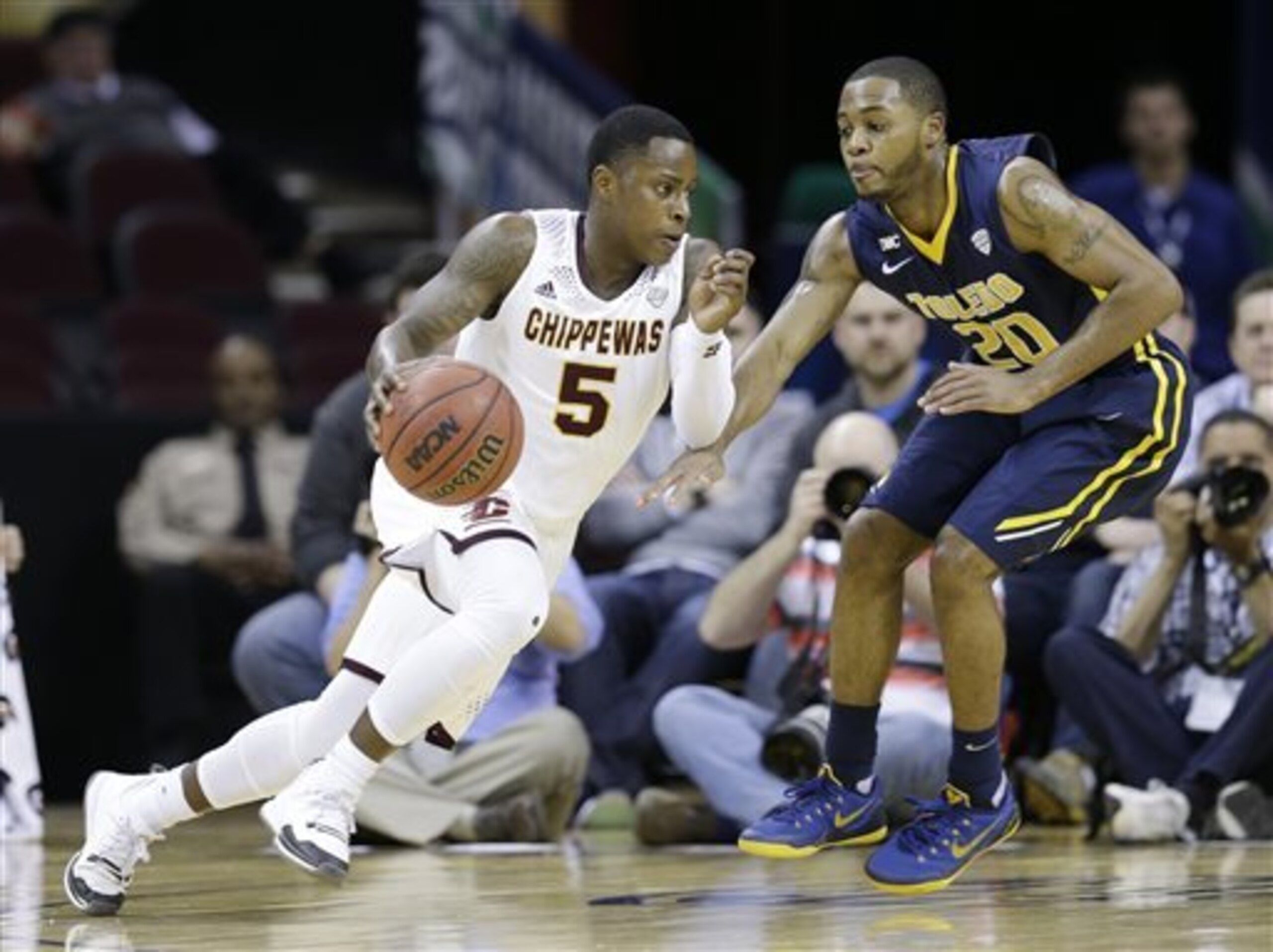
Points per game (national ranking): 89.9 (4th)
Offensive efficiency ranking: 42nd
Double-digit scorers: 2
Field-goal percentage (national ranking): 43.2 (241st)
Three-point percentage (national ranking): 36.6 (111th)
Quick trivia test: What 5'9" Central Michigan player from Texas has scored at least 20 points in each of his last 10 games?
If you answered Marcus Keene you were absolutely...wrong.
Keene is a 5'9" player from Texas, and he leads the nation in scoring with 30.7 points per game after scoring 41 in Tuesday's win over Ohio. However, he has scored better than 20 points in only nine straight games. The answer to our riddle is Braylon Rayson, whose 20.3 points per game have gone virtually unnoticed with the spotlight pointed directly at Keene.
The combined scoring of Keene and Rayon gives the Chippewas a scoring attack few teams can successfully defend. Although they rank only 49th nationally in scoring efficiency, they average 89.9 points and scored over 100 points in wins over Green Bay, Montana State, Miami-Ohio and Kent State.
The logical question, then, is why is this team just 6-5 in the Mid-American Conference? The problem lies at the other end, because Central Michigan ranks 333rd in defensive efficiency. The Chippewas scored 91 points in the Jan. 31 game against Buffalo...and lost by 10 points.
On offense, few teams are better. An excellent free-throw shooting team (78.6 percent) that gets to the line a lot, Central Michigan also takes good care of the ball, committing just 11.1 turnovers per game. And they have two players capable of going for 30 on any given night.
Their field-goal percentage is poor, but they make up for some of that with quantity, averaging 67.1 field-goal attempts per game, third-most in the country.
Now if the Chippewas could just play a little defense...
13. Florida State
3 of 15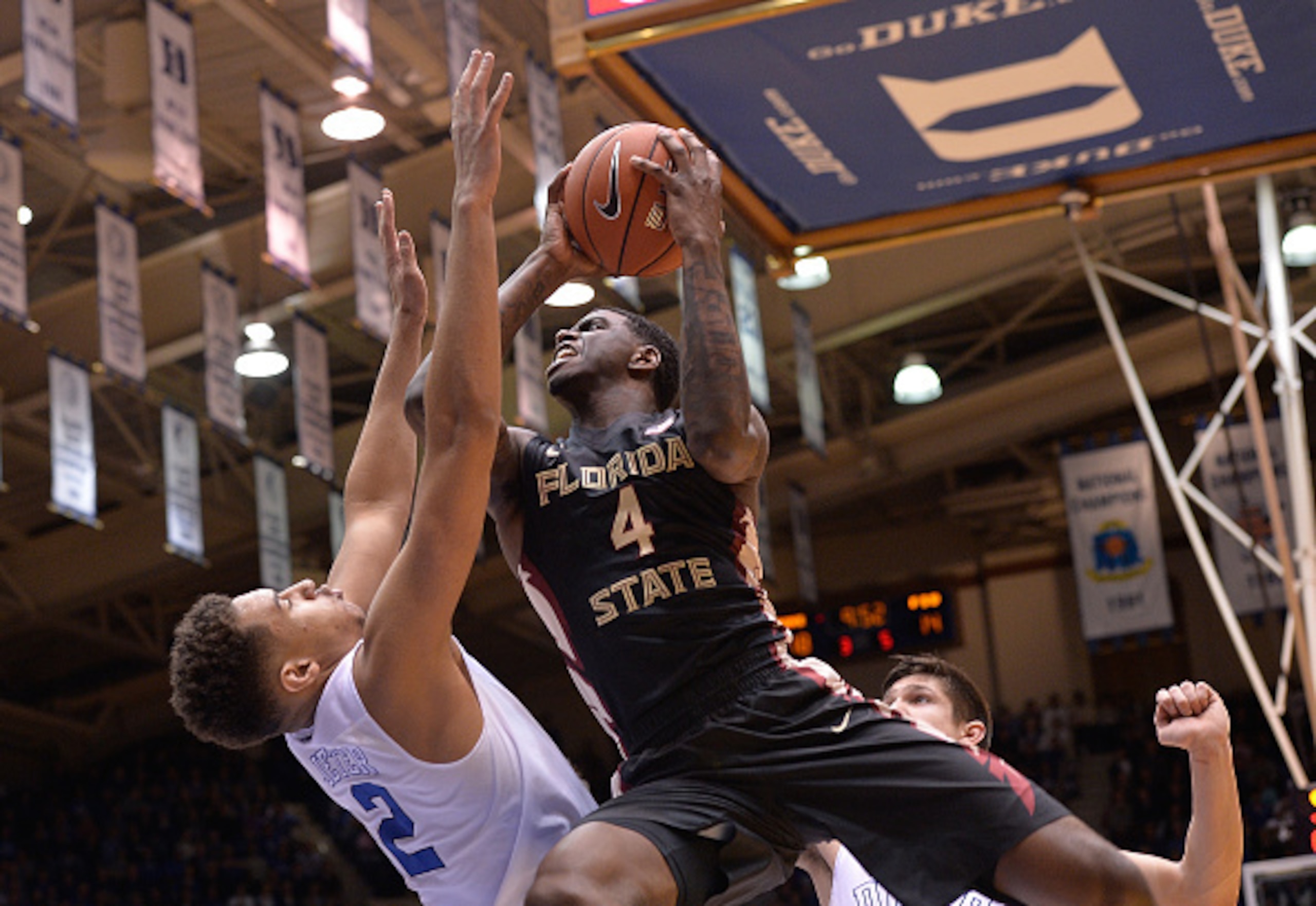
Points per game (national ranking): 88.4 (15th)
Offensive efficiency ranking: 18th
Double-digit scorers: 3
Field-goal percentage (national ranking): 49.0 (16th)
Three-point percentage (national ranking): 37.4 (76th)
Florida State's high field-goal percentage (49.0 percent) along with its multiple scoring weapons make it a difficult team to slow down. The fact that Florida State scored 109 points while shooting 66.1 percent against Clemson and then scored 95 points against North Carolina State in their two most recent games also influenced our choice. In fact, those performances nearly moved the Seminoles a few spots higher in our rankings.
The only downside of the rout of Clemson from an offensive standpoint was the poor game by freshman Johnathan Isaac. He had been steadily increasing his offensive production before scoring just two points on 1-of-4 shooting against the Tigers. He bounced back with 21 points against North Carolina State.
The big gun continues to be Dwayne Bacon, who is averaging better than 17 points a game and has reached double figures in scoring in every game this season. He tied a season high with his 29 points against Clemson, when he hit 10-of-14 shots overall and 6-of-9 three-point attempts. Xavier Rathan-Mayes is the team's distributor, and he had nine assists against the Tigers.
The Seminoles have had only one bad offensive game. That was when they scored just 56 points in a 22-point loss against unranked Georgia Tech. The Seminoles shot just 28.2 percent in that game, and their three offensive stars, Bacon, Isaac and Rathan-Mayes, combined for just 23 points on 9-of-33 shooting (27.3 percent). That Jan. 25 stinker is the reason the Seminoles are not ranked higher.



12. Marquette
4 of 15
Points per game (national ranking): 82.9 (18th)
Offensive efficiency ranking: 9th
Double-digit scorers: 6
Field-goal percentage (national ranking): 48.7 (19th)
Three-point percentage (national ranking): 42.4 (2nd)
Scoring 102 points in its breakthrough victory over Creighton provided a taste of Marquette's firepower, but the game that first demonstrated the strength of the Golden Eagles' offense was a 93-84 loss to Wisconsin. Scoring 84 points against the Badgers' tough defense is like scoring 104 points against most other teams. It is the most points scored against Wisconsin this season, with no other opponent scoring more than 76.
Granted, Wisconsin controlled that game through most of the second half, but 84 points is still 84 points.
Seldom does Marquette have a bad game offensively, and that's because of its remarkable scoring balance. No one on the team averages more that 12.3 points, but six players average more than 10 points. And they can shoot. The Golden Eagles' 42.4 percent accuracy on three-pointers ranks second in the country, and their 10.3 made three-pointers per game ranks ninth.
Markus Howard might be the best shooter in the country, based on his 51.9 percent three-point shooting and 92.9 percent foul shooting. From close range, Marquette relies on 6'11" Luke Fischer, who is averaging 12.1 points on 65.1 percent shooting from the floor.
Marquette's offense was rolling along until it hit a rough spot in its 68-65 home loss to Creighton on Feb. 7. Fischer and Howard were the only two Marquette players to score in double figures.
"We have six guys averaging double figures, so we haven't been in a situation where, looking at the box score, we had two guys in double figures," Marquette coach Steve Wojciechowski said, according to Matt Velaquez of the Milwaukee Journal Sentinel. "That's unusual for us. Again, our defense was good enough to win the game. I think our offense let us down—and our decision-making."
11. Duke
5 of 15
Points per game (national ranking): 82.5 (20th)
Offensive efficiency ranking: 14th
Double-digit scorers: 5
Field-goal percentage (national ranking): 48.2 (31st)
Three-point percentage (national ranking): 38.6 (100th)
The array of offensive talent on this team was impressive even before Luke Kennard showed us he can score more that 30 points in a game, something he has done three times this season.
Grayson Allen is considered to be in a season-long slump, according to a Jan. 24 article by Jason Greer of the Sporting News. But he is still averaging 15.8 points per game. Freshman Jayson Tatum has demonstrated he can score in nearly every way imaginable. With stars Kennard, Allen and Tatum all averaging better than 15 points a game and five players scoring in double figures, Duke has too many weapons for most opponents, especially on the perimeter.
Although Allen, Kennard and Tatum can all penetrate off the dribble, the Blue Devils may be a little light in interior scoring. Amile Jefferson is the team's only post-up threat, although 6'10" freshman Harry Giles could provide needed scoring in the paint if he starts to live up to expectations as the nation's No. 2-rated recruit, according to Scout.
Despite its decent national rankings in both scoring (20th) and offensive efficiency (14th), Duke has a chance to be considerably better offensively down the stretch as the players' skills start to mesh under Mike Krzyzewski's tutelage.
The Blue Devils should improve their three-point shooting, which, at 36.8 percent, would be their worst in eight years. Signs of improvement exist already as Duke has hit 42.2 percent of its three-pointers over the past three games.
By the time the ACC tournament rolls around, Duke might be challenging for the top spot on a list of the most unstoppable offenses.
10. Creighton
6 of 15
Points per game (national ranking): 84.7 (16th)
Offensive efficiency ranking: 17th
Double-digit scorers: 3 (excluding Maurice Watson Jr.)
Field-goal percentage (national ranking): 52.1 (2nd)
Three-point percentage (national ranking): 40.2 (13th)
Creighton might be challenging for the top spot on this list if point guard Maurice Watson Jr. were still available. But without their talented playmaker, the Bluejays fall several notches. Creighton's 76.8 scoring average in the five games since Watson suffered a season-ending knee injury is not bad, but it is well short of the 86.7 points it averaged with Watson orchestrating the attack.
Creighton's 52.1 field-goal percentage and 40.2 three-point percentage require the inclusion of the Bluejays. Their willingness to share the ball (17.6 assists per game, seventh nationally) makes them difficult to defend as well, although those assist numbers figure to decline with Watson sidelined.
The Bluejays might rank a spot or two higher if they weren't such poor free-throw shooters, making just 67.9 percent of their foul shots. Missed free throws down the stretch cost Creighton in its Feb. 4 loss to Xavier.
Although Marcus Foster remains the team's top scorer at 18.0 points per game, the reason Creighton remains one of the top offensive teams is the presence of freshman Justin Patton, an agile, skilled 7-foot center with a knack for scoring.
Patton is shooting better than 70 percent from the field while averaging 13.7 points, and he had scored in double figures in 13 consecutive games before being limited to seven in the loss to Xavier.
Whether Foster, Patton and Creighton will continue to put up impressive offensive numbers without Watson to distribute the ball remains an open question.
9. West Virginia
7 of 15
Points per game (national ranking): 86.0 (11th)
Offensive efficiency ranking: 7th
Double-digit scorers: 3
Field-goal percentage (national ranking): 47.4 (50th)
Three-point percentage (national ranking): 37.1 (84th)
We were reluctant to put West Virginia on this list at all, because so much of its offensive production is based on forcing turnovers it can turn into easy transition baskets. However, if you consider the Mountaineers' propensity for steals to be a component of their offense, then they must be included.
If you look only at the numbers, West Virginia would rank among the elite offensive teams. The Mountaineers rank 11th in the nation in scoring and seventh in offensive efficiency. Both are the product of their pressing defense, but why should that strength count any less in terms of offensive production than, say, three-point field-goal percentage?
West Virginia is only slightly better than average in terms of three-point shooting, rebounding and turnovers. And Jevon Carter, the closest thing West Virginia has to an offensive star, has scored in double figures only once in the past flour games. He is tied for the team lead in scoring at just 11.7 points per game, and none of the three Mountaineer players who average double figures in scoring is making better than 34.5 percent of his three-pointers.
So how can such a team score 89 points against a strong defensive team like Baylor? West Virginia forced the Bears into 29 turnovers. That is the basis of the Mountaineers' offense.
8. Purdue
8 of 15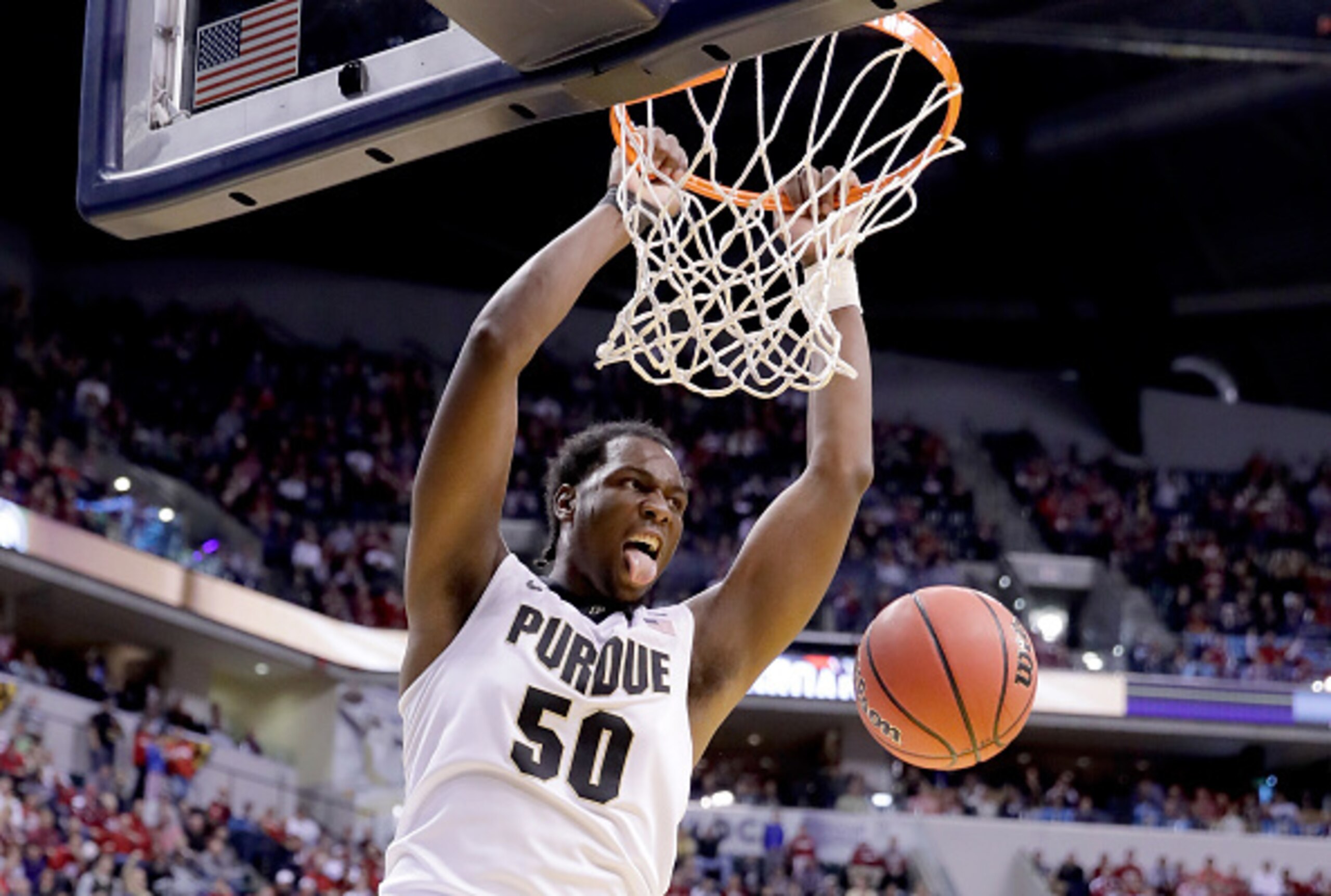
Points per game (national ranking): 82.2 (23rd)
Offensive efficiency ranking: 13th
Double-digit scorers: 5
Field-goal percentage (national ranking): 48.6 (26th)
Three-point percentage (national ranking): 42.3 (4th)
Purdue's strength is clear. With talented power forward Caleb Swanigan, 7'2" center Isaac Haas and nimble small forward Vince Edwards, the Boilermakers may have the most productive frontcourt in the country when those three are on the court together. Those three have combined to average of 43.5 points on 53.1 percent shooting, including 46.9 percent on three-pointers.
Those numbers by themselves might be enough to put the Boilermakers' offense among the top 15 in the country. However, Purdue also gets production from its backcourt. Guards Carsen Edwards and Dakota Mathias both average better than 10 points a game, and Mathias is making 49.5 percent of his three-point attempts.
As a team, the Boilermakers rank fourth in the nation in three-point field-goal percentage, which is an impressive number for a team that has the menacing inside threat provided by Swanigan and Haas. The Boilermakers also make 76.3 percent of their free throws.
The Purdue offense is efficient because it shares the ball, ranking second nationally in assists at 19.2 per game, and has five players who can put up big scoring numbers. Swanigan, Haas, Vince Edwards, Carsen Edwards and Mathias have each scored at least 20 points in a game this season.
Haas has been coming off the bench recently, as coach Matt Painter has added a third guard (P.J. Thompson) to the starting five, but that has not hurt the Boilermakers' offensive production. Thompson was a starter when the Boilermakers shot 52.2 percent from the field in an 11-point win against Wisconsin and the Badgers' stifling defense.
A few things limit their offensive production, however. The Boilermakers rely on their half-court offense, as you would expect, and are not great in transition offense. They are a strong rebounding team overall, but they are not particularly good on the offensive boards. Purdue ranks just 205th in the country with its 10.2 offensive rebounds per game, so the Boilermakers do not get as many easy second-chance points as you would expect.
7. Villanova
9 of 15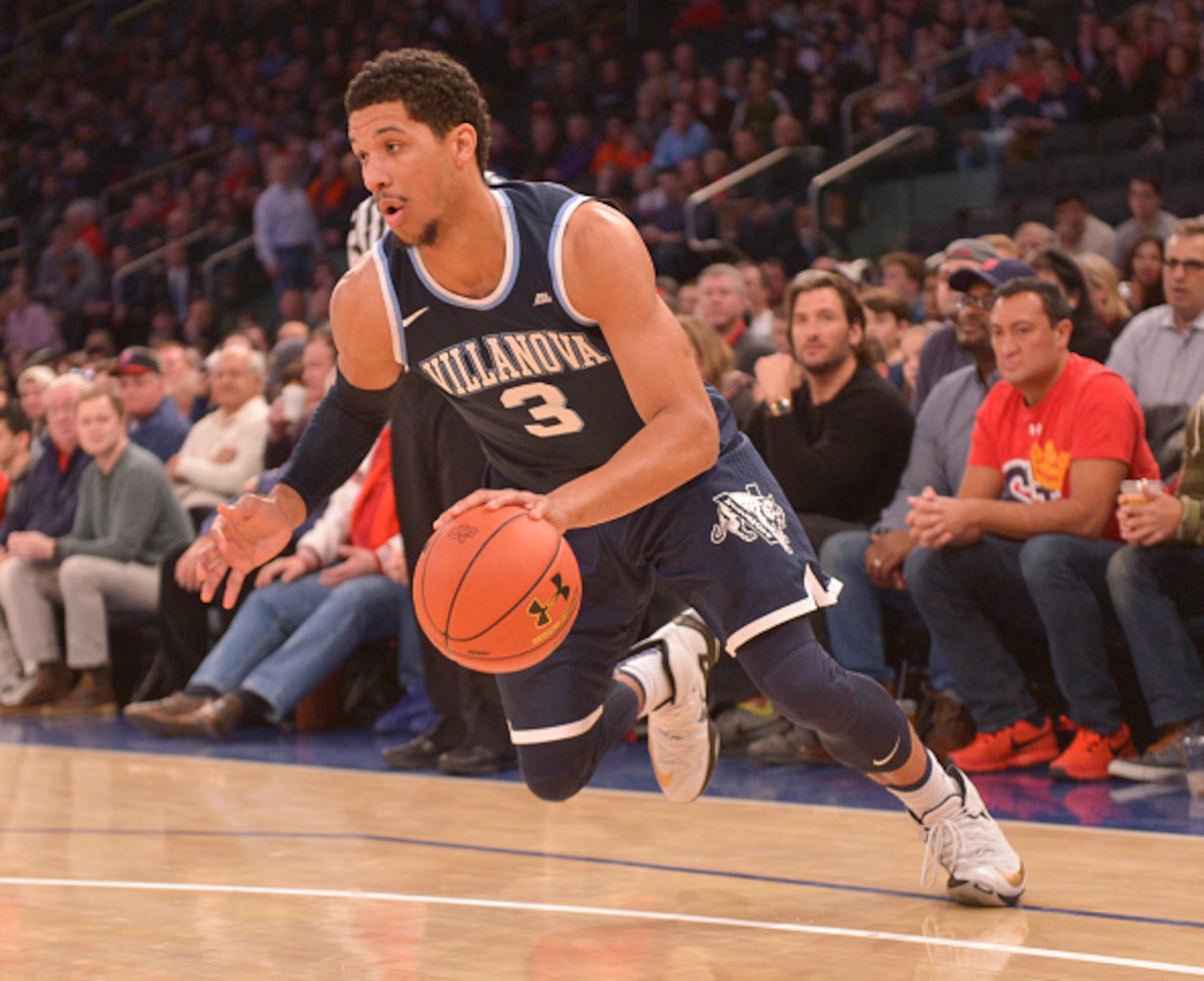
Points per game (national ranking): 77.5 (85th)
Offensive efficiency ranking: 4th
Double-digit scorers: 4
Field-goal percentage (national ranking): 49.3 (12th)
Three-point percentage (national ranking): 37.2 (81st)
Villanova has one obvious shortcoming on offense, and that is the lack of a consistent low-post scorer. Josh Hart can post up smaller defenders, but at 6'6", he is not the kind of big man who can demand the ball on the block and power his way to the basket when other avenues are closed.
On the other hand, Hart's multifaceted game is emblematic of the versatility of the Wildcats' key players. Hart can make three-pointers with regularly but is equally adept at beating a defender off the dribble or taking a smaller defender into the paint.
Jalen Brunson and Kris Jenkins also can score in a variety of ways, although Jenkins' recent shooting slump is reason for concern. The hero of last season's national championship game has made only 11 of 46 shots, including 7 of 33 from three-point range, in the last five games.
The Wildcats are at their best in transition, but they are efficient in the half court as well. Shooting 80.2 percent from the foul line as a team also helps them score consistently, although they average just 8.9 offensive rebounds per game, limiting their number of easy put-backs.
Two surprising numbers are on Villanova's stat sheet: The Wildcats are making just 37.2 percent of their three-pointers despite their array of perimeter threats, and they average just 14.6 assists despite the number of ball-handers on the floor and their penchant for sharing the ball.
6. Oklahoma State
10 of 15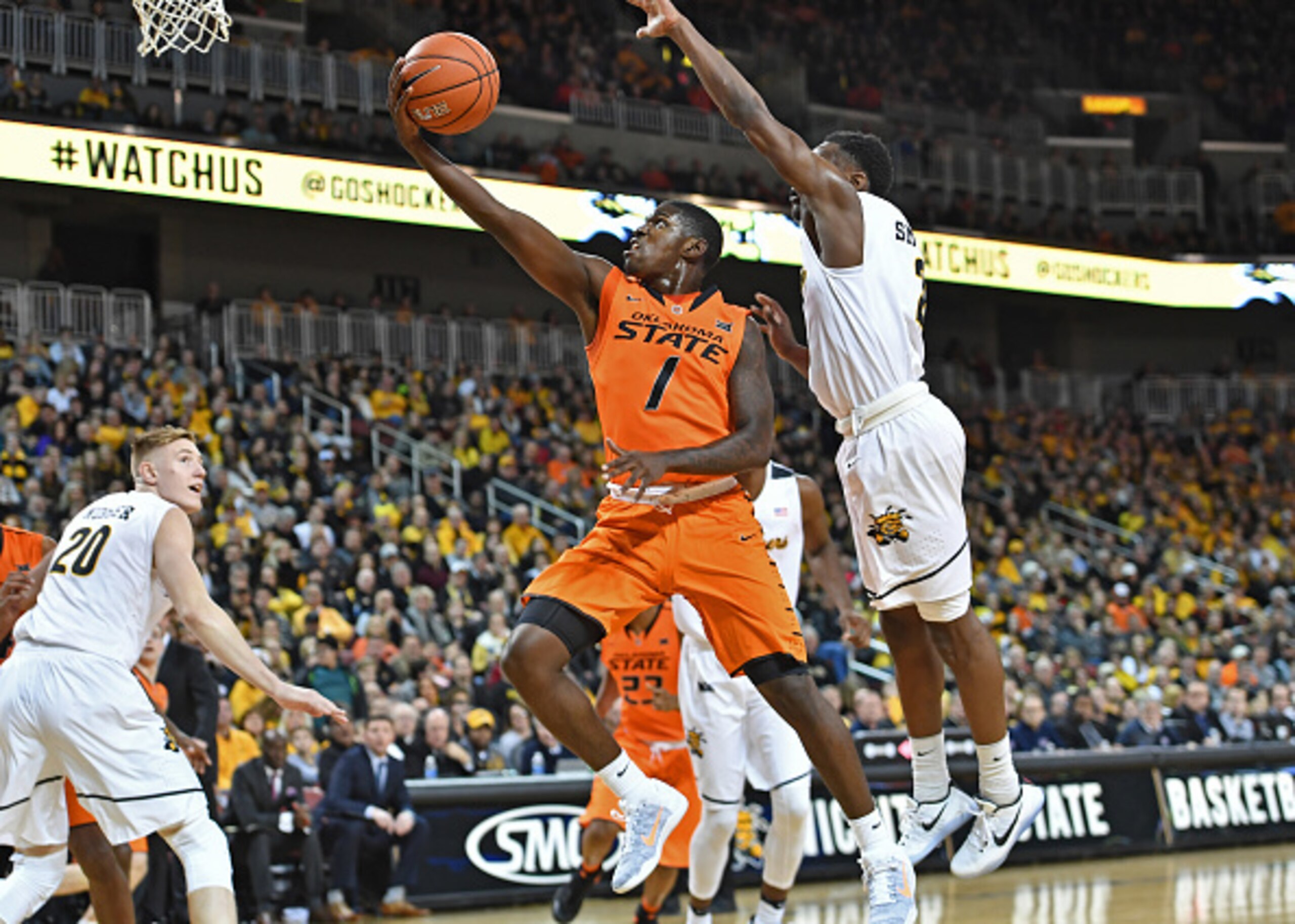
Points per game (national ranking): 86.5 (9th)
Offensive efficiency ranking: 2nd
Double-digit scorers: 3
Field-goal percentage (national ranking): 46.3 (87th)
Three-point percentage (national ranking): 40.1 (15th)
Statistically, Oklahoma State's offense compares favorably with any in the country. A team that ranks ninth in the nation in scoring and second in offensive efficiency is among the country's top offensive teams practically by definition.
However, you need to look at the breakdown of the Cowboys' games to understand why they are not several rungs higher in these rankings. They scored 92 points or more in nine of their first 12 games, but the road game against Wichita State was the only one of those high-scoring games that came against a quality opponent, unless you consider Georgetown and Connecticut quality opponents this season.
In the 11 games since then, which include 10 against Big 12 competition, the Cowboys have scored more than 90 points just once.
Brad Underwood clearly has a potent offensive club in his first season as Oklahoma State's coach. You don't score more than 100 points five times, as the Cowboys have, with a defensive mentality. But that offense is not as overpowering as the statistics suggest.
Perhaps more significant is the fact that the Cowboys have been turning that offensive proficiency into victories lately. They had won five in a row before the three-point loss to Baylor, and that included a 99-71 victory over Arkansas and an 82-75 road victory over then-No. 7 West Virginia.
The Cowboys have two players capable of big scoring games against anyone. Jawun Evans, who leads the team in scoring at 18.2 points per game, has scored 20 points or more nine times this season and 30 or more three times. Backcourt mate Jeffrey Carroll, who averages 17.5 points, has hit the 20-point mark 12 times this season, including eight times in the past 11 games. Both are making better than 42 percent of their three-point shots and a third guard, Phil Forte III, is also an excellent outside shooter.
This team can shoot, as evidenced by its 40.4 percent three-point shooting, which ranks 12th in the country, and its 76.9 foul shooting, which ranks 14th.
Evans has the ability to penetrate off the dribble, and the ever-improving Carroll has shown he can handle himself in the paint. That has helped the Cowboys make frequent trips to the free-throw line.
However, the Cowboys lack a big man in the middle who can post up and get points when the shooters are having an off night. The Cowboys' fast-paced style will lead to more turnovers, but they still commit too many, ranking 262nd in that category with 14.9 turnovers per game.
Evans and Carroll were a combined 6-of-28 against Oklahoma, a big reason the Cowboys scored just 68 points in that game. Getting to the line to attempt 25 free throws despite being on the road enabled the Cowboys to sneak away with a two-point win.
It leaves one question: If the Cowboys are so good on offense, why are they languishing near the bottom of the Big 12 standings with a 4-7 conference record? Simple, their defense is terrible. They rank 296th nationally in scoring defense, 311th in field-goal percentage defense and 123rd in defensive efficiency.
The Cowboys need to outscore their opponents to win, and they have been doing that recently.
5. Gonzaga
11 of 15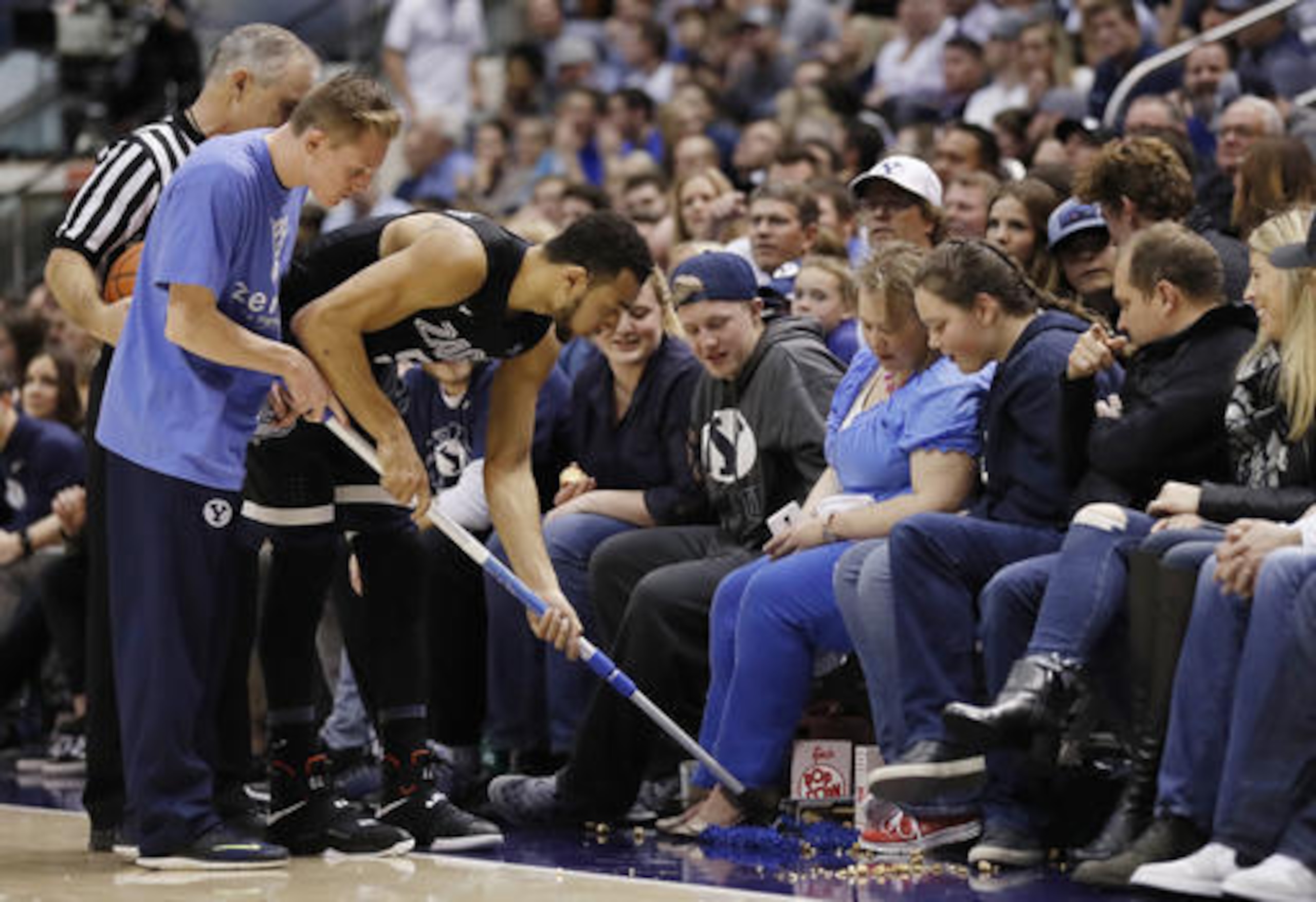
Points per game (national ranking): 85.4 (12th)
Offensive efficiency ranking: 3rd
Double-digit scorers: 4
Field-goal percentage (national ranking): 51.3 (3rd)
Three-point percentage (national ranking): 38.2 (49th)
Gonzaga's strength is its defense, with the Bulldogs ranking second nationally in field-goal percentage defense and ninth in scoring defense. But teams don't get to the second week of February undefeated unless they have a pretty strong offense as well.
Being 12th nationally in scoring, third in offensive efficiency and third in field-goal percentage tells you all you need to know about the Zags' ability to score. But it is the Bulldogs' offensive versatility that puts them among the elite offensive teams.
Przemek Karnowski, Zach Collins and Johnathan Williams are effective inside players, each of whom shoots better than 60 percent from the floor. They complement the excellent perimeter games of Josh Perkins, Jordan Mathews and Nigel Williams-Goss, all of whom are three-point threats. All six average better than nine points a game, and Gonzaga is equally comfortable in transition or in the half court.
Point guard Williams-Goss gives Gonzaga an offensive star who can shoot from long range or create off the dribble, and he can win games by himself if the situation calls for it. As the photo above indicates, Williams-Goss can do it all. However, with Williams-Goss sidelined with an ankle injury in the Feb. 4 game against Santa Clara, the Bulldogs still scored 83 points and made 51.7 percent of their shots.
The Bulldogs' decent numbers in rebounding (22nd nationally with a 6.9 rebounding margin) and turnovers (25th nationally with just 11.1 per game) give the Zags opportunities to score on every possession.
Playing in the West Coast Conference certainly enhances the Bulldogs' offensive statistics, but they scored 77 points and shot 51.7 percent against Florida, one of the best defensive teams in the country.
Gonzaga creates major problems for defenses because it can score in so many ways.
4. Kansas
12 of 15
Points per game (national ranking): 83.6 (17th)
Offensive efficiency ranking: 5th
Double-digit scorers: 4
Field-goal percentage (national ranking): 49.5 (10th)
Three-point percentage (national ranking): 41.7 (7th)
The improving production of freshman Josh Jackson moved the Jayhawks up a few pegs on this list. His 16.0 points per game is impressive enough, but his expanding game and increased scoring over the past two weeks is showing why he was rated the top recruit in the nation by Scout.
Through the first 19 games, Jackson averaged 15.1 points on 48.9 percent shooting, including 24.4 percent shooting from long range. His perimeter game was an obvious weakness. In the five games since then, though, Jackson is averaging 19.6 points while hitting 53.7 percent of his shots overall (36-of-67) and 64.7 percent of his three-pointers (11-of-17). Given Jackson's athleticism, the threat of a three-point shot makes him almost impossible to defend.
Nonetheless, the offensive star of the team is Frank Mason III. His numbers for a 5'11" guard are hard to believe. His 20.4 points per game and 50.6 shooting percentage are impressive but not as breathtaking as his 51.9 percent shooting on three-pointers. Not only is he an outstanding perimeter threat, but he can penetrate and score against tall defenders.
Two other perimeter threats, Devonte' Graham and Sviatoslav Mykhailiuk, help form a mature unit that can score in the half court or in transition while hitting 41.7 percent of their three-pointers.
The Jayhawks are a little light on low-post scoring, but the return of Carlton Bragg following a three-game suspension and the presence of Landen Lucas provide enough of an inside threat to warrant defensive attention.
3. North Carolina
13 of 15
Points per game (national ranking): 87.8 (5th)
Offensive efficiency ranking: 6th
Double-digit scorers: 4
Field-goal percentage (national ranking): 47.3 (55th)
Three-point percentage (national ranking): 37.5 (69th)
The joke regarding the Tar Heels is that their best offense is a missed shot. No team dominates the offensive glass like North Carolina, which gets a lot of its points on those high-percentage put-backs. The Tar Heels lead the nation in rebounding margin and rank second in offensive rebounding at 16.4 offensive boards per game.
Kennedy Meeks averages 3.9 offensive rebounds by himself, and he, Isaiah Hicks and Tony Bradley combine for 8.7 offensive boards per game. That is one reason why those three are making a combined 56 percent of their shots. As a team, the Tar Heels have 174 more offensive rebounds than their opponents this season. That's a lot of easy opportunities.
There is more to their offense than that, though. Swingman Justin Jackson, who averages 18.6 points per game, is a big-time scorer whose elite athleticism and shooting skills enable him to score from the perimeter, off the dribble and in transition. Point guard Joel Berry II enables the Tar Heels to run an effective break, and he can also score off the dribble or from the perimeter (42.1 percent three-point shooting).
The Tar Heels share the ball, as indicated by their 18.5 assists per game, which ranks third in the country, and their strong inside game has helped them to attempt 175 more free throws than their opponents.
North Carolina has had two poor offensive performances this season, and off nights by Berry were at the heart of the problem in both cases. In the 75-63 loss to Georgia Tech, Berry was 3-of-13 from the field and committed six of the Tar Heels' 20 turnovers. In the 77-62 loss to Miami, Berry was 0-of-8 from the floor, including 0-of-6 from three-point range.
Although rebounding provides North Carolina's identity, Berry's performances provide the barometer for its offensive success.
2. Kentucky
14 of 15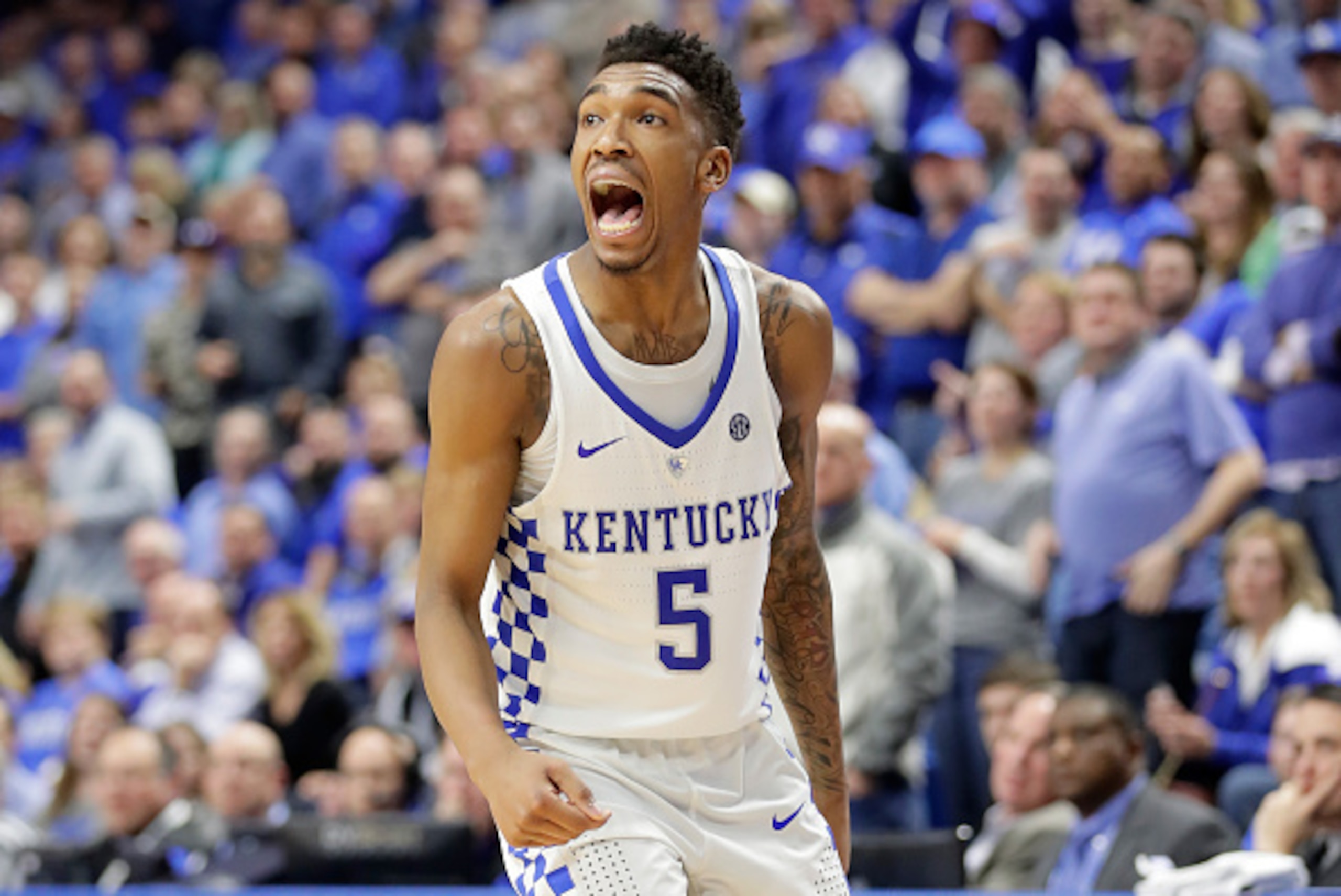
Points per game (national ranking): 90.3 (3rd)
Offensive efficiency ranking: 8th
Double-digit scorers: 4
Field-goal percentage (national ranking): 48.7 (20th)
Three-point percentage (national ranking): 35.7 (155th)
There are times when Kentucky's offense looks ordinary, such as in the 88-66 loss to Florida on Feb. 4, and the Wildcats' attack is less impressive in road games. Both may be products of coach John Calipari's dependence on freshmen, but that inconsistency is the reason Kentucky is well behind the No. 1 team in these rankings. In fact, the Wildcats are a shaky occupant of the No. 2 spot.
However, the scoring potential of this collection of talented players is unsurpassed. Malik Monk may be the best scorer in the country, and his ability to make difficult long-range shots and create his own scoring opportunities set him apart. Point guard De'Aaron Fox can penetrate almost anytime he wants, either to score or create opportunities for others, and his speed makes him almost unstoppable on the break. Isaiah Briscoe is an underrated scorer who can do everything offensively except shoot three-pointers. Bam Adebayo gives Kentucky a strong inside presence who makes better than 60 percent of his shots, and Derek Willis is the epitome of the stretch 4.
The perimeter-shooting limitations of Fox and Briscoe are only minor problems.
The Wildcats have scored 90 points or more 13 times, most notably against UCLA and North Carolina.
Kentucky is only an average rebounding team, with a rebounding margin of plus-4.3, so its second-chance scoring is limited. Its turnover rate of 11.9 is adequate considering the pace at which it plays.
When Kentucky's offense is on a roll, few teams can stop it. The Wildcats' young squad figures to get it rolling more often as March approaches.
1. UCLA
15 of 15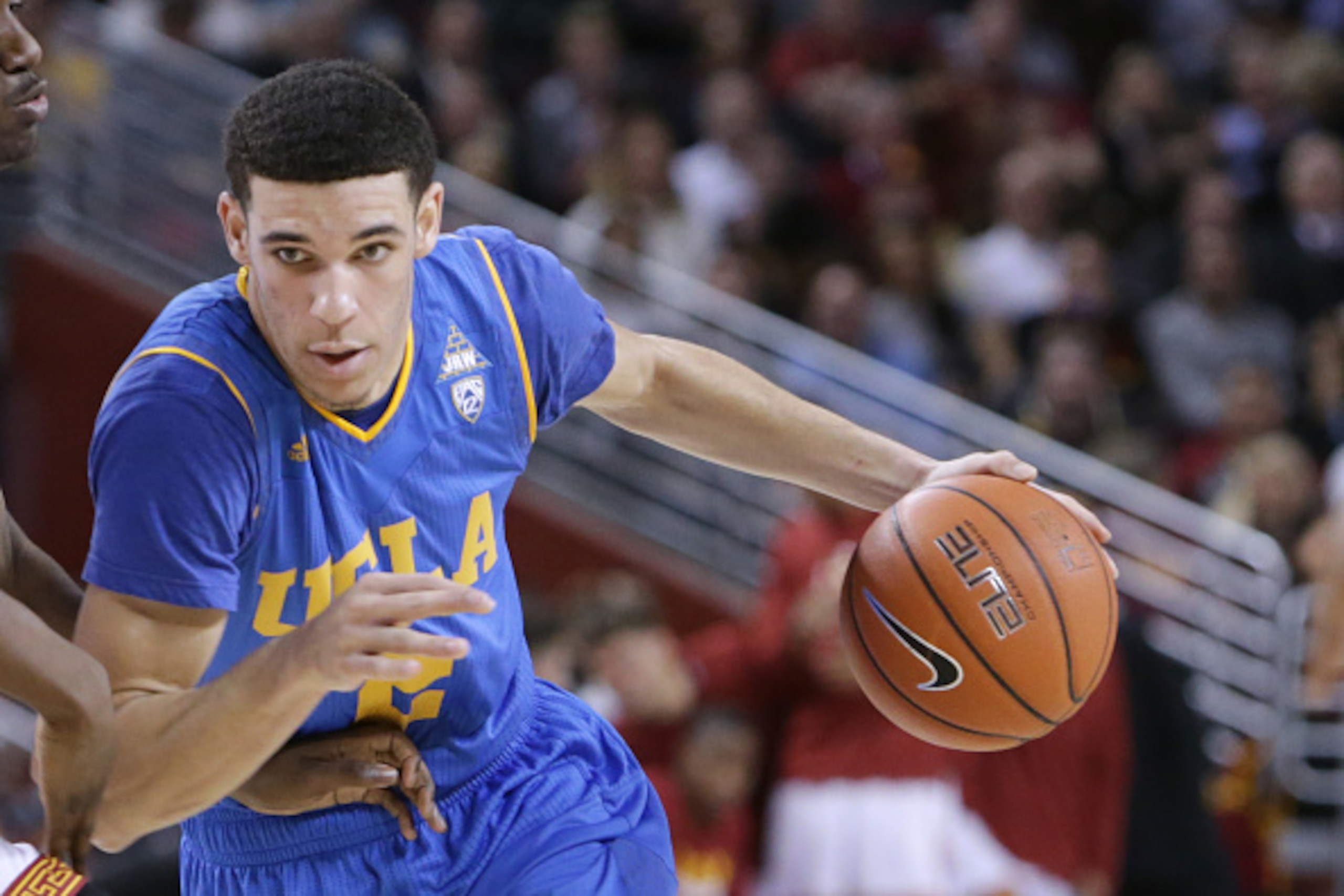
Points per game (national ranking): 92.9 (2nd)
Offensive efficiency ranking: 1st
Double-digit scorers: 6
Field-goal percentage (national ranking): 53.5 (1st)
Three-point percentage (national ranking): 42.4 (3rd)
UCLA is the top offensive club, and it isn't even close.
If you feel the need to nit-pick, you could point out that UCLA does not have much of a low-post game, but that would be quibbling. T.J. Leaf has excellent back-to-the-basket scoring ability when he gets the ball on the block, and 7-foot center Thomas Welsh gives the Bruins size on the interior even if he is more effective 10 to 15 feet from the basket. But, generally speaking, UCLA seldom beats teams by pounding the ball inside.
Aside from that tiny shortcoming, however, the Bruins are an offensive powerhouse with a seemingly endless supply of offensive weapons and a variety of ways to put points on the board.
The Bruins rank second in the country in scoring, just 0.2 of point behind The Citadel and its wacky offensive style. More impressive is that UCLA ranks first nationally in offensive efficiency. UCLA also leads the nation in field-goal percentage at 53.5 percent and assists per game at 22.0 per contest, and it is third in three-point percentage at 42.0 percent. The Bruins don't get an inordinate number of put-back opportunities, but that is partly because they make such a high percentage of shots.
It all starts with freshman Lonzo Ball, whose ball-handling, court vision, instincts and scoring ability make every player on the floor better. The only debate regarding Ball involves deciding which of his statistics is the most impressive. He is second in the nation in assists, and first now that Creighton's Maurice Watson Jr. is sidelined for the season. His 3.08 assist-to-turnover ratio is noteworthy, but so is his 15.1 points per game, achieved on 54.1 percent shooting, including 43 percent on three-pointers. His only weakness is at the foul line, where he is making just 67.1 percent of his attempts through Wednesday.
But Ball is just the starting point, with six players averaging in double figures in scoring. Leaf is overshadowed by Ball, but he is still one of the top freshmen in the country. At 6'10", he can not only post up a defender on the block but also can hit three-pointers (46.7 percent) or take a defender off the dribble while averaging 17.1 points on 63.9 percent shooting.
Add the shooting of Bryce Alford and sixth-man Aaron Holiday, as well as the versatile offensive game of Isaac Hamilton, and you have a team that can beat you any number of ways. The Bruins would prefer a fast-paced game that would allow them to showcase their transition game, but they are adept at running offense in the half court as well.
The 97-92 victory over Kentucky at Rupp Arena early in the season revealed the Bruins' offensive prowess, but two other games solidified UCLA's claim as the team with the most unstoppable offense: a 102-67 victory over Michigan, when UCLA shot 62.7 percent from the floor, and a 107-66 win over Washington, when four Bruins scored 20 points or more even though none played more than 31 minutes.
.png?w=2560)


.jpg?w=2560 "Jonathan Taylor Landing Spots")