
Quarter-Season Grades for Each Houston Rockets Player
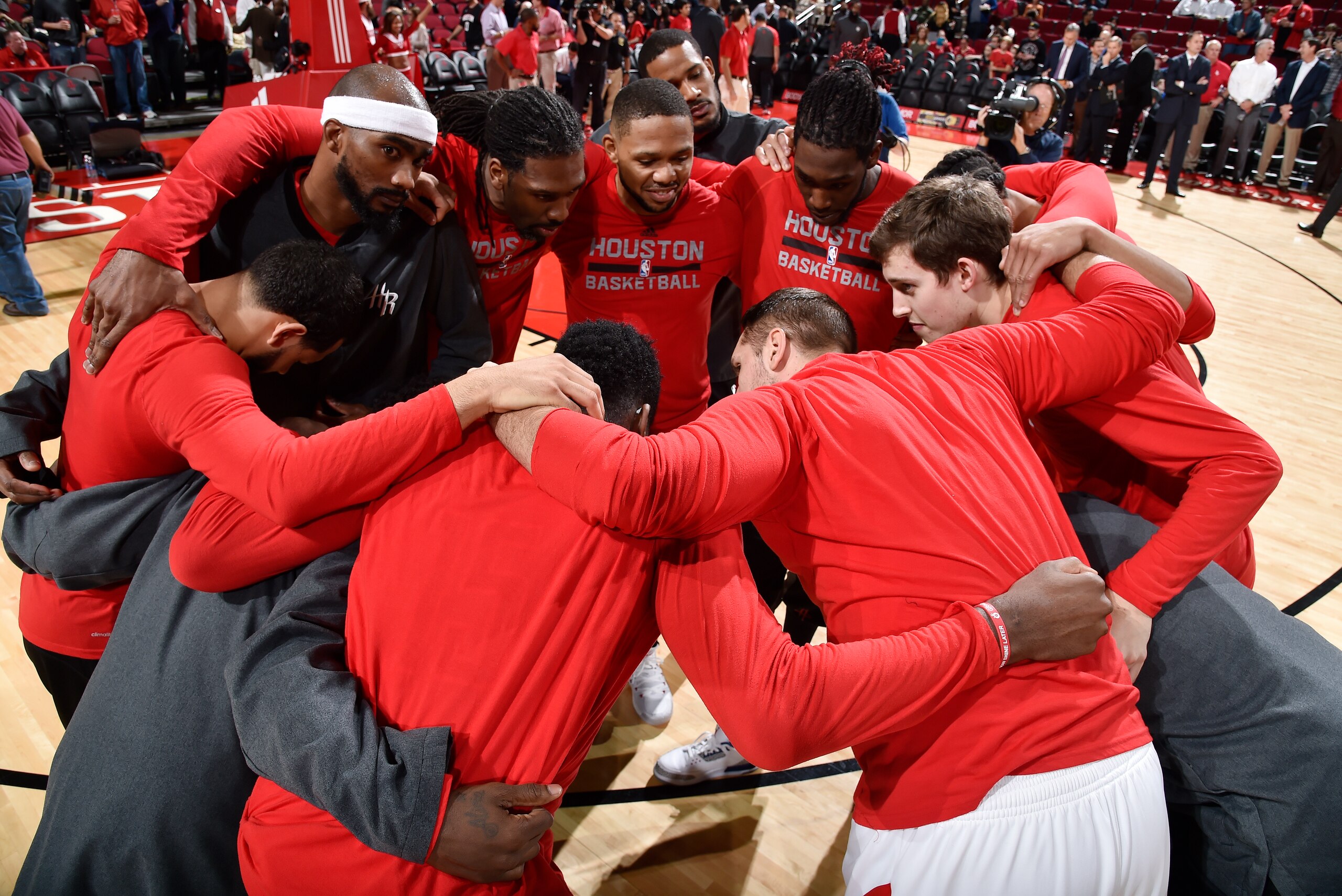
The Houston Rockets are not only surpassing preseason expectations more than a quarter of the way through the 2016-17 campaign, they’re getting stronger in the process.
After a Dec. 14 blowout of the Sacramento Kings, Houston is on an eight-game winning streak and is 13-2 since Patrick Beverley returned Nov. 17. While James Harden’s MVP-caliber performance has certainly had a lot do with the Rockets’ success, it’s not all there is to it. The role players around him have provided plenty of help.
The team's construction and selection of Mike D’Antoni as head coach makes this “whole” greater than the sum of its parts. Daryl Morey probably hasn’t gotten the praise he should for assembling all the pieces, and D’Antoni should be getting some for making them work.
So they both get well-earned A's here.
The bench is split into two slides (top and bottom), with a grade and brief explanation, followed by the starters, who each have their own slide. Players who are no longer on the team (Bobby Brown and Donatas Motiejunas) did not receive grades.
Importance to the team determined the order of the slides, but the grades are “on a curve” based on how players are performing compared to preseason expectations.
End of Bench: 10-13
1 of 7
13. Kyle Wiltjer: F
Kyle Wiltjer was a four-year college player who went undrafted last summer. He shot 42.5 percent from deep between his two years at Kentucky and another two at Gonzaga, which appears to be the attraction. He’s logged just 16 minutes on the season but flashed a smooth shooting stroke during more extended preseason action.
In 10 games for Houston’s D-League affiliate, the Rio Grande Valley Vipers, he averaged 19.7 points, 38.7 percent from deep, 6.5 rebounds and 1.7 assists in 35.5 minutes, according to NBADLeague.com. On Dec. 14, the Rockets’ Twitter account announced the team recalled him to the mother ship.
Grade: Incomplete
12. Tyler Ennis: PG
The Rockets traded Michael Beasley to the Milwaukee Bucks for Tyler Ennis before the season started. He was used (but wasn’t that useful) before Beverley returned. Since then, he’s appeared in only five games, mostly during garbage time.
Which, to be honest, seems appropriate. He was largely ineffective when spelling Eric Gordon during the pre-Bev games. He couldn’t penetrate, finish or shoot. He wasn’t a “horrible” passer (6.6 assists per 36 minutes, per Basketball-Reference.com), but it wasn’t enough to make up for his lack of scoring, so it wasn’t worth having him on the court.
Grade: D
11. K.J. McDaniels: SG/SF
I thought K.J. McDaniels was going to be a real breakout candidate this year. So far, that hasn’t happened.
Through the first 10 games, he was respectable, averaging 5.2 points 1.6 rebounds, 0.2 assists, 0.4 steals and 0.6 blocks in just 14.3 minutes. However, he has dropped out of the rotation since Beverley returned to the lineup.
It’s not that he was brilliant by any stretch, but he was outplaying Corey Brewer, who remains ahead of him. McDaniels is a poor shooter, but Brewer is hardly the next Steph Curry, and McDaniels is a superior and more versatile defender. Brewer is making more money, and sometimes it’s salary more than performance that goes into such decisions.
Grade: C
10. Corey Brewer: SG/SF
Brewer is just a bad NBA player at this point in his career. When he is the primary defender in the half court, according to SynergySportsTech.com, he gives up 1.057 points per possession (ppp). That places him in the bottom 10 percent. On offense, he’s averaging 0.866 ppp, which puts him in the 37th percentile.
There are only six players who have logged 100 or more possessions on both sides of the court who are also worse than Brewer. The man should not be in the rotation.
Grade: F
Top of the Bench: 6-9
2 of 7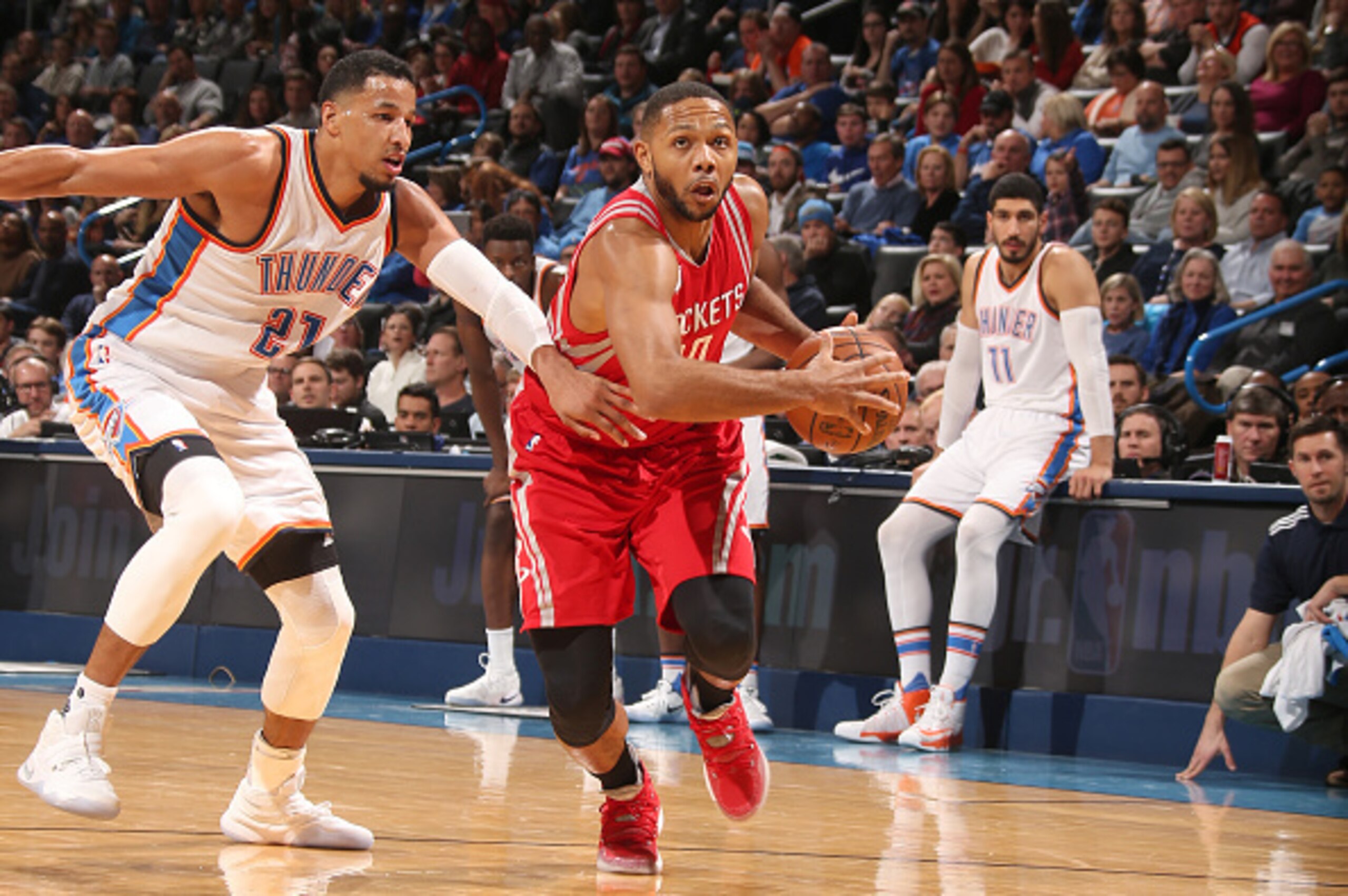
9. Montrezl Harrell: PF
It’s easy to like Montrezl Harrell. He plays with intensity, and that impacts the game. D’Antoni seems to feel the same way, based on an interview with Greg Rajan of the Houston Chronicle:
"He's been great. His energy, that's what makes him stay in the league and that will make him important in the league, just his attitude and how he can come in the game and change the game with his energy and defensive, running the floor, getting better offensively. I mean, there's a lot of good things he's doing.
"
Harrell has mental lapses that can lead to miscues here and there on offense or blown assignments on defense, but his hustle usually makes up for it. He reminds me of a poor man's Kenneth Faried.
Grade: B
8. Sam Dekker: SF/PF
Sam Dekker is one of Houston's brightest spots so far. He’s a nice fit alongside Patrick Beverley and Eric Gordon when the bench unit is out there; that particular trio gives the Rockets’ net rating a lofty plus-12.5, according to NBA.com.
Dekker is shooting 53.1 percent from the field and 39.7 percent from three on the season, making 0.9 threes per game in only 18.7 minutes. He’s also shooting 67.6 percent at the rim, with the bulk of his points coming from there.
He packed on some pounds during the offseason, and thus, he’s gone from being a tweener forward (where he didn’t seem quite able to play either position) to being a combo forward (where he can play both).
He too has mental lapses, particularly on the defensive end where he loses track of his assignment. But considering this is a virtual rookie year for him, you can’t fault him too much for that.
Morey has a history of getting bargains in the draft. Add Dekker, taken with the No. 18 pick of the 2015 draft, to the list.
Grade: B+
7. Nene: C
Nene has been what Houston needs him to be. Particularly when Clint Capela is getting pushed around, the Rockets can bring in the bigger, stronger Nene to help out.
He’s averaging 15.7 points and 7.7 boards per 36 minutes while scoring at an efficient 56.9 percent clip. His real plus-minus at ESPN.com is plus-0.14, which means he’s having a neutral effect on the floor. Given that he’s on a $2.9 million contract, that's solid.
Grade: C+
6. Eric Gordon: SG
Eric Gordon as the sixth man—when paired with Beverley—is the missing link the Rockets have needed for the last three years. Their record since the whole roster was united isn’t just an aberration; it’s the result of the team being able to play the way it was designed to.
Gordon is thriving with Beverley, especially when they're hammering opposing benches. They have found instant harmony on both ends of the court, playing seamlessly together.
According to NBAWowy.com, when he and Beverley are on the court without Harden, the Rockets have a 117.6 offensive rating, a 98.7 defensive rating and a plus-18.9 net rating. The resulting value of allowing Harden more rest cannot be measured.
Gordon’s effective field-goal percentage is 65.2 in those situations, and he averages 33.5 points per 36 minutes. He’s also just six made-threes behind Curry for the league lead. He should be the front-runner for Sixth Man of the Year.
Grade: A
5. Ryan Anderson: PF
3 of 7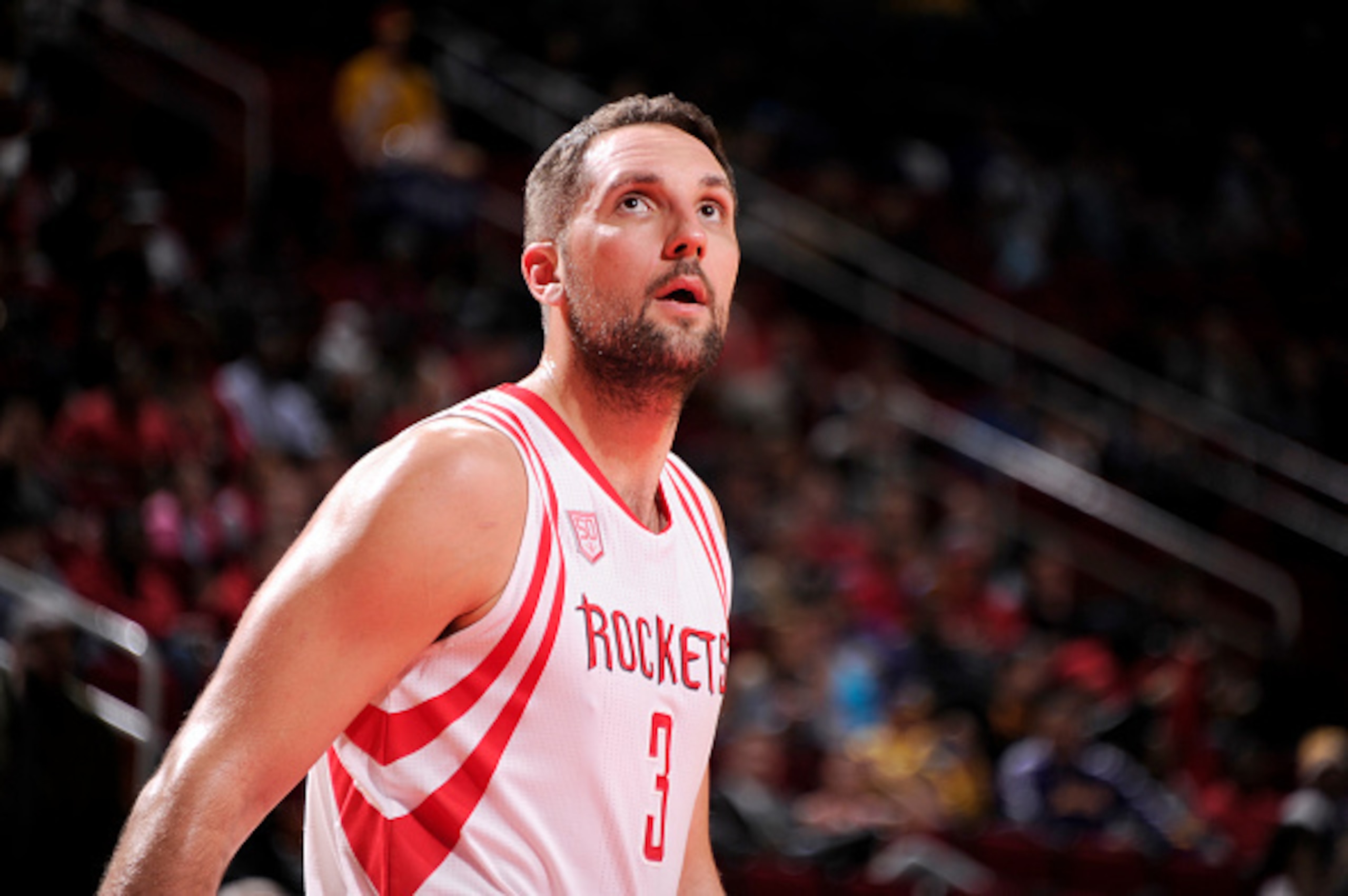
Ryan Anderson has been helpful, even if he has been streaky this season. His fit has been better than his play; his impact, accordingly, is greater than his numbers suggest.
Anderson's averaging 13.2 points and 5.6 rebounds per game. Those numbers aren’t awful, but it’s hard to justify his four-year, $80 million contract with them, particularly since his defense is shoddy. His DRPM is minus-0.51, which ranks No. 84 out of 93 power forwards.
However, his plus-0.91 ORPM, which ranks 12th, tells the other side of the story: His 40.4 percent three-point shooting opens up the court for Harden.
He’s not just hitting corner threes like a basic stretch 4. He’s knocking them down from above the break, and often well above the line, as you can see by his hex map (and the corresponding videos). That thins out the defense, making driving lanes wider and shooters more open.
That all makes things easier for Harden, whose effective field-goal percentage leaps from 46.9 percent to 53.6 percent when he’s on the court with Anderson. His assist ratio goes from 23.0 to 31.0.
While Ryno isn’t giving the numbers you’d hope, he’s still having a positive impact. The one caveat is that, hopefully, he can at least do more on the glass, where he frankly doesn’t seem to try that hard at times.
Grade: C+



4. Trevor Ariza: SF
4 of 7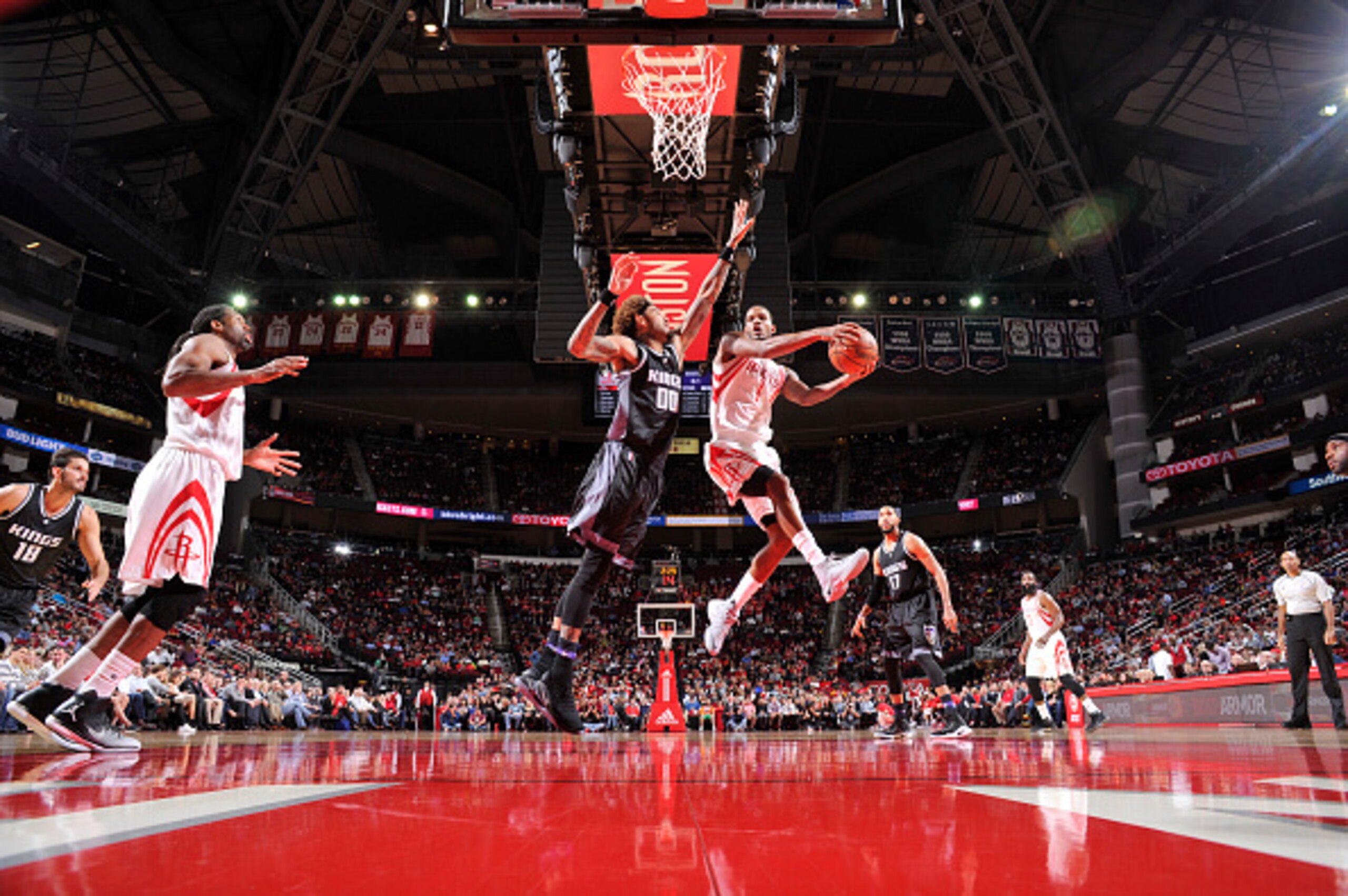
Trevor Ariza has had a quietly resurgent season. His player efficiency rating has bounced from 12.9 to 15.2. He’s getting 12.5 points per game compared to last year’s 12.7, but he’s using one fewer true shooting attempt to get them.
He’s shooting 38.5 percent from three and 59.7 percent from two. His 1.105 ppp overall ranks in the 95th percentile. His rebounding is up, too, from 4.5 to 5.0 despite playing two fewer minutes per game.
His RPM is plus-3.75, 20th among all NBA players and sixth among small forwards.
He does all this without ever seeming to have a major impact on the game. It’s more structural, like the supporting wall of a building. His steadiness is more important than his highlights.
Such things are hard to measure, but you can see his impact when he hits a big three that ends a run by the other team or races back for a chase-down block on a would-be dunker. Those plays don’t determine games, but they change the flow of them.
Ariza's not an All-Star, but he’s a great glue guy.
Grade: B
3. Clint Capela: C
5 of 7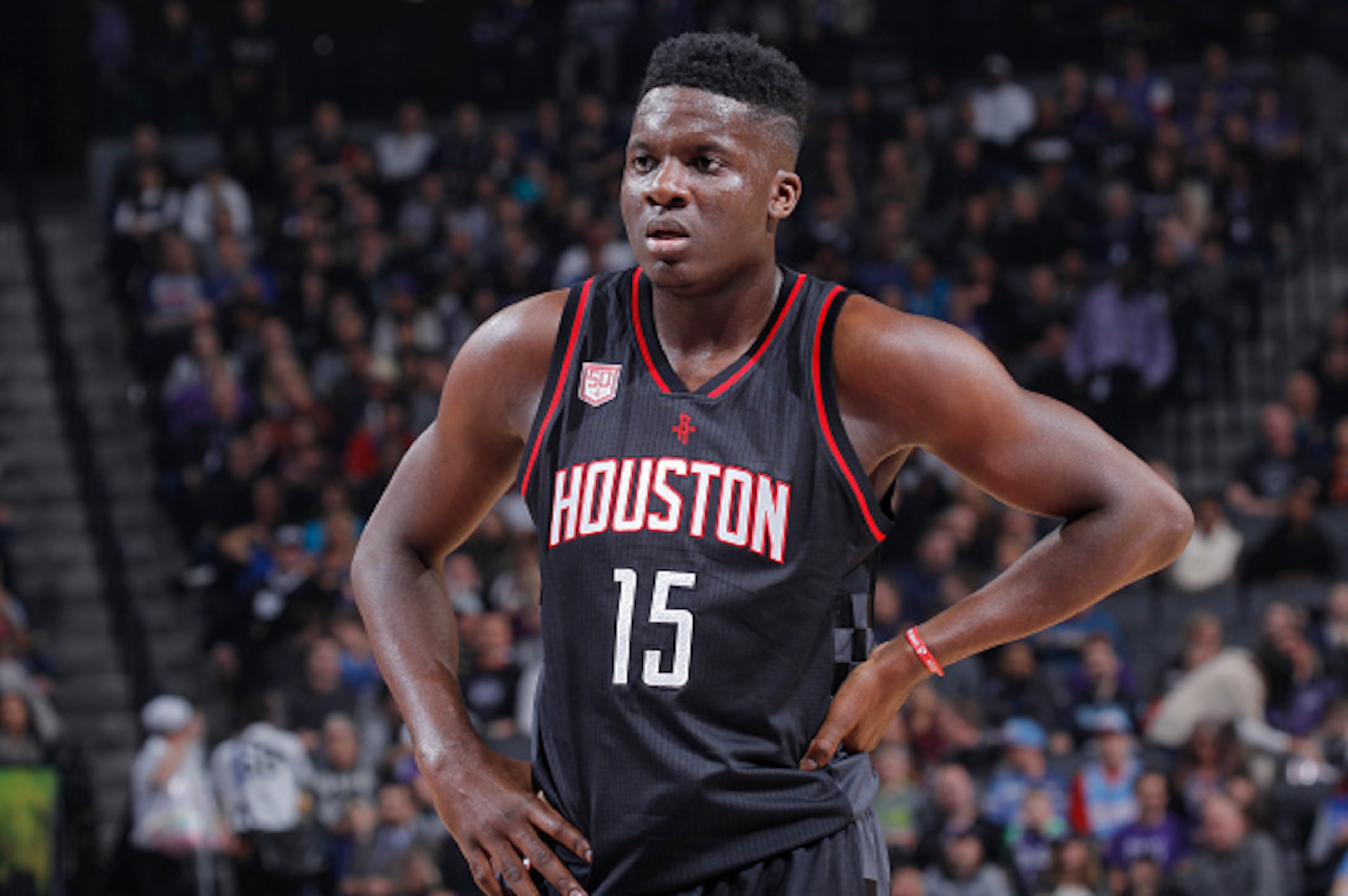
Capela has continued his growth into a starting center, which is remarkable for a man who had never played basketball in America until two years ago.
While he doesn’t offer tremendous volume on offense, he’s very efficient (1.094 ppp, 94th percentile). However, he’s more of an example of working within the offense than making the offense work well.
His athleticism fits the Rockets’ open offense, with most of his play coming in cuts (34.3 percent of his possessions), offensive rebounds (14 percent) or transition (11.2 percent).
He does have 26.2 percent of his plays as the roll man in the pick-and-roll, but those are typically Harden's majestic passing floating easy lobs for vicious finishes. Or wrap-around bounce passes, which Capela pounds for uncontested dunks. Capela has good hands, but it’s hard to see him expanding into more opportunities without developing more half-court skills. He only has 10 post-up points this season.
Defensively, he’s also still a work in progress, but one with a high ceiling. Capela's athleticism helps him on switches. When he’s guarding the ball handler in the pick-and-roll—which accounts for 49.2 percent of his defensive possessions—his opponents just score .613 ppp. That places him in the 89th percentile among “big defenders.”
Because of his quick hands and feet, he’s very good at guarding the bucket. Around the basket, when he’s not guarding post-ups (essentially a rim protection measure of help defense), opponents shoot just 37.5 percent against him, and he ranks in the 89th percentile.
He still could add bulk. Opponents have more success posting him up, where he’s just average. But in the grand scheme of things, the Rockets have to be pleased with Capela's progress.
Grade A-
2. Patrick Beverley: SG (Offense)/PG (Defense)
6 of 7
Patrick Beverley is a great story. According to his Wikipedia entry, after his college years in Arkansas, he played a year in the Ukrainian Second Division. The following summer, he was the 42nd pick in the 2009 NBA draft.
Without a real NBA opportunity, he played in Europe until 2011-12. During that spell, he spent a brief amount of time with the Miami Heat, who cut him during October of 2010. The Rockets brought him over in 2013.
He played into a starting role and an All-Defensive Team selection.
He earned a four-year, $23 million deal during the summer of 2015. Now he is arguably the second-most important Rocket.
Beverley's blanketing defensive persistence is annoying—let’s not ignore the value of annoying—and effective. His 0.739 points per defensive possession ranks in the 91st percentile. This allows Harden to guard the lesser of the two wings for most of the game, with Ariza handling the other.
But Beverley is no longer just a defensive specialist: He has a growing offensive game. He’s developed into a credible pick-and-roll threat. He can get to and finish at the rim (58.8 percent). He can hit the three from above the break (42.2 percent). He’s nailing an effective field-goal percentage of 63.2 percent on catch-and-shoots.
He’s the perfect complement to Harden as a three-and-D 1-guard. Guys like that are hard to find, and increasingly precious in a league where the offense doesn’t necessarily run through a “pure” point guard anymore.
Grade: A
1. James Harden: PG (Offense)/SG (Defense)
7 of 7
It is a tragedy that there are still people in this world who judge Harden based on a three-year-old viral video of his defense and completely ignore what he is doing now.
In the present, he’s having one of the most impressive seasons in NBA history.
Harden is averaging 27.6 points, 11.8 boards and 7.8 rebounds, numbers which are impressive enough. Some would argue, though, that Russell Westbrook’s (30.5, 10.6 and 10.5) are better.
But efficiency separates the two.
Harden has scored or assisted on 1,435 points this year. Westbrook has contributed to 1,408. Factoring in assist attempts, Harden has used 1,280 possessions compared to Westbrook’s 1,401.
Harden has accounted for 27 more points in 121 fewer possessions.
The massiveness of those numbers is staggering. (For a visual of just how staggering, click here.) Harden is on track to be the second player—since we have been able to track possessions—to average 30 points, 10 rebounds and 10 assists per 100 possessions with a 60 percent true shooting percentage. LeBron James was the first in 2012-13.
Harden has an almost rhythmic quality to his game, snake-charming his victims into falling back to protect the drive, only to suddenly step back and drain the three. When they step up to defend the jump shot, he either barrels into them, drawing the foul, or glides past with that weird optical-illusion effect he has of making you feel he’s moving slower than he really is.
And when you think you’ve got all that covered, he’s picking apart defenses with his masterful court vision, hitting Capela underneath on a wrap-around bounce pass or an alley-oop. Or he's hitting a wide-open Ariza or Dekker with a skip pass for a corner three.
Harden's combination of talent, skill, intelligence and savvy make him arguably the greatest offensive threat in the game today. He should be the leading candidate for MVP.
Grade: A+
All stats for this article were obtained from ESPN.com, Basketball-Reference.com, NBA.com or SynergySportsTech.com unless otherwise stated. All stats are accurate as of December 15.

.jpg?w=2560 "NFL investigating 2 referees for separate viral exchanges")

.jpg?w=2560 "Report: Chiefs Contact Hill's Agent")
.jpg?w=2560 "OBJ Calls Out Giants 😳")
.jpg?w=2560 "Tyreek makes another cryptic post amid Chiefs rumors")