

SEC Football Q&A: Has SEC Coaching Regressed as Nick Saban Has Rolled?
Alabama is carrying the SEC flag from Tuscaloosa to the Georgia Dome in Atlanta on New Year's Eve as the top-ranked team in the College Football Playoff.
The rest of the conference, though, is a hot mess.
Alabama is the only team with fewer than four losses, eight-win teams Texas A&M and Tennessee are led by coaches in Kevin Sumlin and Butch Jones, respectively, who are on the hot seat, and nobody seemed to want to get a firm hold on the Sugar Bowl down the stretch.
TOP NEWS

Unranked CFB teams cause chaos in Week 8

More top teams upset and more takeaways from CFB Week 8

Arch Outduels Chambliss 😈
Is coaching the issue? That question and more are answered in this edition of SEC Q&A.
I'm hesitant to say that the SEC has a coaching problem outside of Tuscaloosa, because I think the issues are much bigger than that.
Coaching is a problem, don't get me wrong. Jones' Vols looked like a team that felt entitled all year long, and having a "T" on their helmets gave them some sort of reason to act like world-beaters from the moment they took the field against Appalachian State in the season opener.
Jones also mismanaged that roster to a point where star running back Jalen Hurd left in the middle of the season in the middle of the SEC East title race.
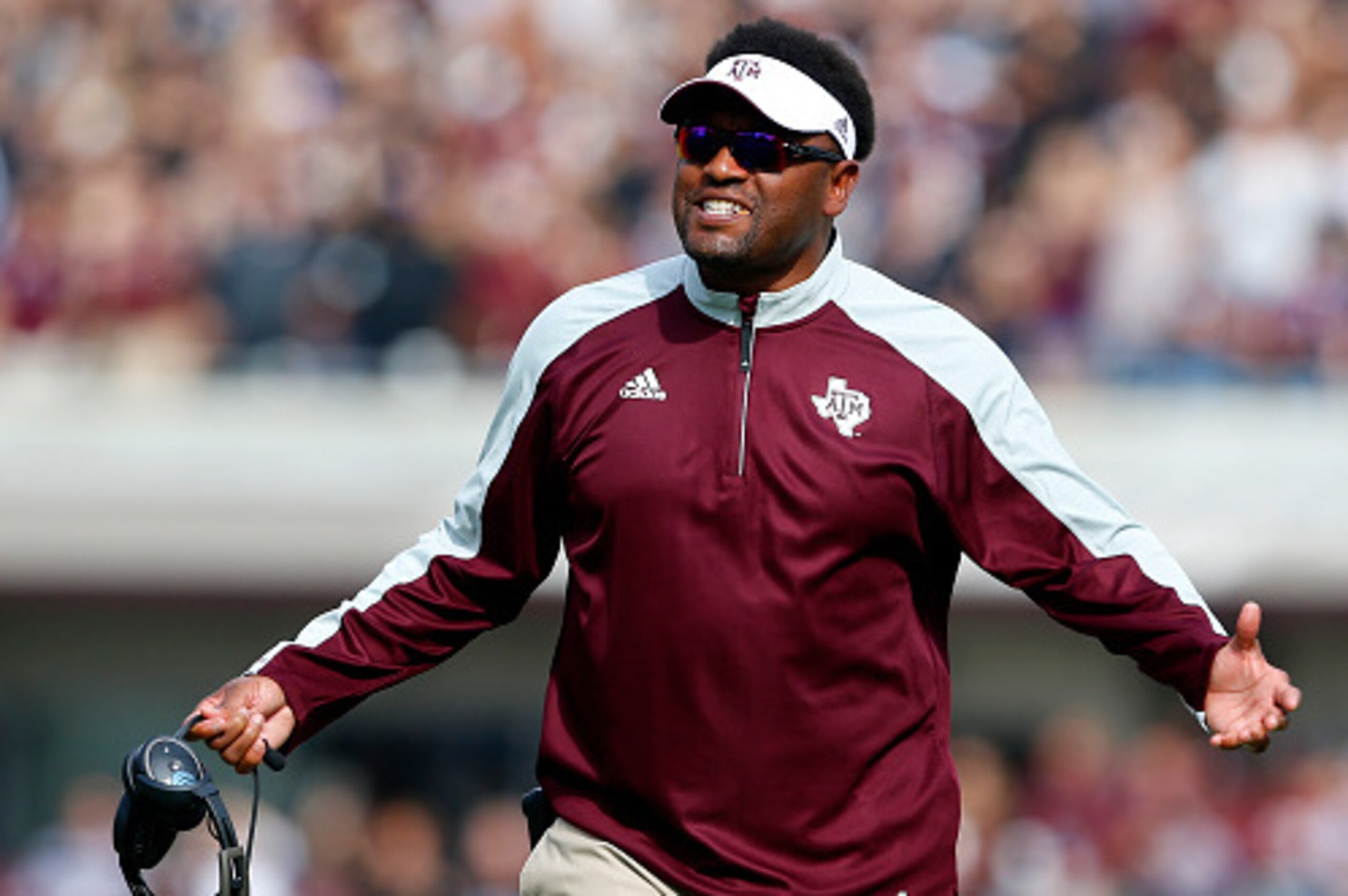
Sumlin's offense sputtered at times as well even before the injury bug hit—specifically to quarterback Trevor Knight in early November. The Aggies regressed from 545.8 yards per game in September to 451.8 in October to 406.8 in November according to CFBStats.
But injuries have played a part as well.
Knight's injury in College Station was compounded by a temporary absence of wide receiver Ricky Seals-Jones. Jones had to deal with an injury to Hurd, fellow running back Alvin Kamara and several offensive linemen.
The Sugar Bowl-bound Auburn Tigers lost quarterback Sean White and running back Kamryn Pettway in November. That only came after the bizarre revolving door of quarterbacks that head coach Gus Malzahn employed early in the season that played a big part in the season-opening loss to Clemson.
Florida head coach Jim McElwain struggled again to find consistency on offense, lost starting quarterback Luke Del Rio to injury on two separate occasions and couldn't take pressure off the running game.
There are coaching issues in the conference, sure. Alabama head coach Nick Saban has set the bar ultra-high, and the pressure for other head coaches to live up to that standard is part of the problem.
But this year, I'm not convinced that the coaching was the problem. It was just part of the problem.
I've heard the angle that the "SEC is struggling to keep up with Saban" in a lot of places, and I'll be honest: I don't get it.
Like, not even a little bit.
Yes, Alabama is a monster. A behemoth. A multidimensional force that is difficult to beat.
But head coaches around the conference (and in others) are proud, confident and sometimes a little egotistical to a point where stubbornness takes hold. For the most part, the coachspeak you hear publicly like, "We're going to get better every day," "Be 1-0 today," "Focus on the process" and all of the other press conference favorites are really how football programs operate.
They focus on themselves and their specific opponent for the following week.
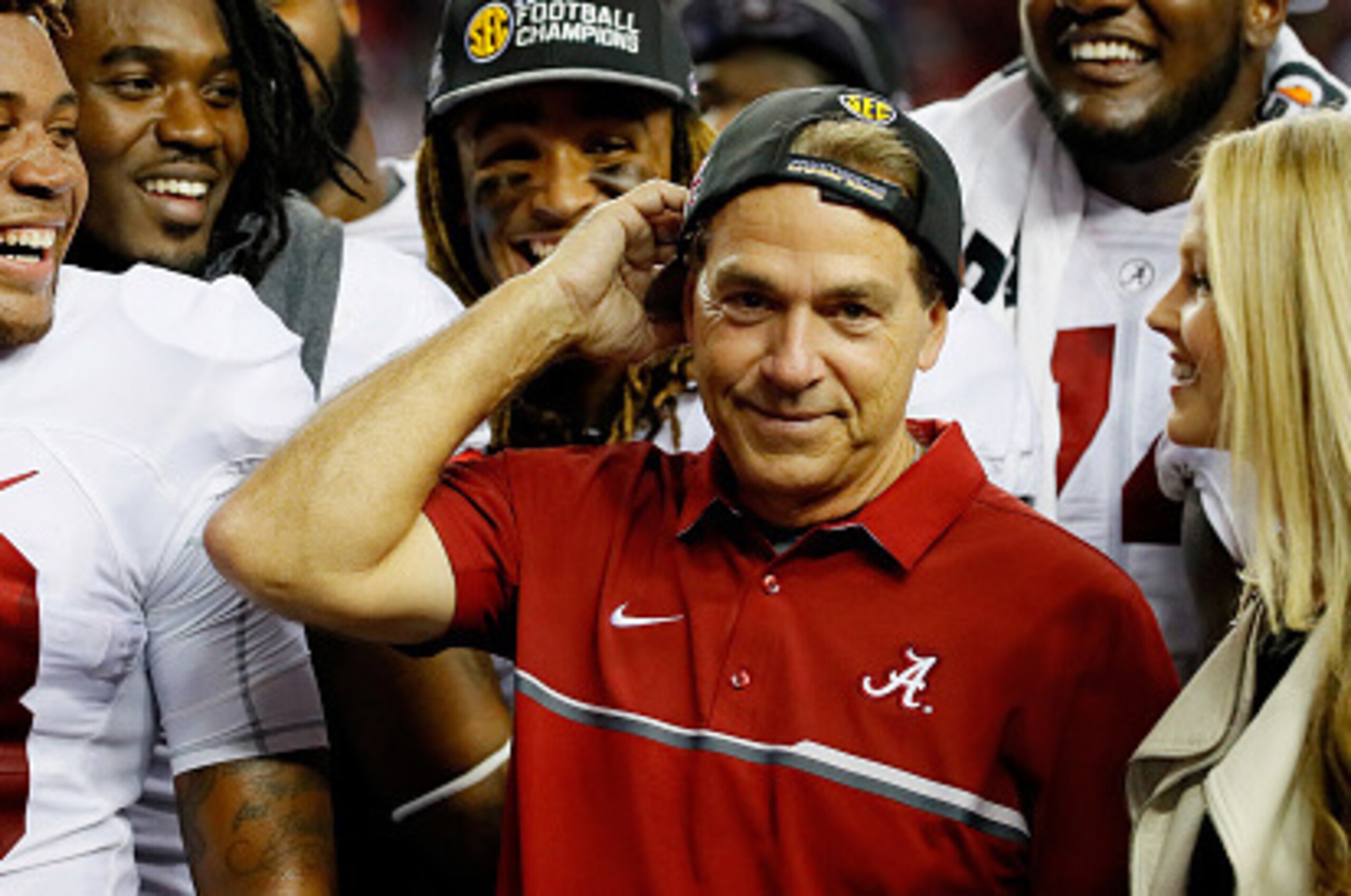
The Saban shadow exists from an outsider's perspective. There's no doubt about that. It appears that every team in the conference is spinning its wheels in the effort to chase down the Crimson Tide. Reality, though, is that those teams are just spinning their wheels in an effort to get going in the direction their respective head coaches want them to.
Like I said above, I'm not sure the regression is anything more than a product of some bad circumstances this year.
Coaching played a part in it, along with quarterback injuries and ineptitude.
I'm a firm believer that the those quarterback issues stemmed from inexperience at the position around the conference and a down year up front along the offensive line for many teams around the conference. Combine that with one of the best defensive line seasons in SEC history that featured Texas A&M's Myles Garrett, Tennessee's Derek Barnett, Auburn's Carl Lawson, Alabama's Jonathan Allen, Florida's Caleb Brantley, LSU's tremendous front that featured the hybrid end/linebacker Arden Key, Missouri's Charles Harris and South Carolina's Darius English, and you have a recipe for quarterback inconsistency.
That had way more to do with the SEC's regression in 2016 than Saban. He's just really good at what he does and doesn't have much of an impact on the struggles of everybody else, other than when those teams play the Crimson Tide.
"@BarrettSallee Is Gus back on the hot seat if he can't win with an elite QB?
— #Hire(Insert Name) (@cfb_poindexter) December 11, 2016"
That elite quarterback you're referring to is recent Auburn commit and former Baylor signal-caller Jarrett Stidham—a 5-star prospect in the Class of 2015. As a true freshman that year for the Bears, he stepped in for an injured Seth Russell in a pinch and threw 1,265 yards, 12 touchdowns, only two picks and rushed for two scores before an injury ended his season in November.
Malzahn proved his ability to produce an offense with more of a pocket passer when starting quarterback Sean White was healthy, and Stidham would be a huge upgrade from White.
He stands tall in the pocket, can make the tough throws across the field as well as over the middle of the field and has a ton of talent to work with around him, including running backs Kamryn Pettway and Kerryon Johnson, as well as receivers Darius Slayton, Kyle Davis, Eli Stove and Nate Craig-Myers.
| Aug./Sept. | 438.8 | 5.48 |
| Oct. | 576.5 | 7.66 |
| Nov. | 332.5 | 5.54 |
Auburn was in contention this year in November before injuries to White and Pettway led to a November swoon. But with Stidham in the house, Georgia and Alabama both coming to Auburn in 2017 and essentially every offensive weapon returning, Auburn should improve upon its eight-win regular season and contend for the SEC West through the end of November.
If it doesn't, yes, there will be pressure on Malzahn.
How much depends heavily on how the season actually plays out, what injuries occur that impact the roster, which teams Auburn loses to and whether the program regresses or simply gets stuck in neutral.
If the Tigers are around an eight- or nine-win team, Malzhan should be fine. If they regress in a year in which the offense should be much more consistent and make up for whatever defensive regression occurs due to the absence of tackle Montravius Adams and end Carl Lawson, then he could get back into some trouble.

Yes, 2017 is shaping up to be a pretty solid year in Starkville thanks to the foundation head coach Dan Mullen laid in this, the reset year in the post-Dak Prescott era.
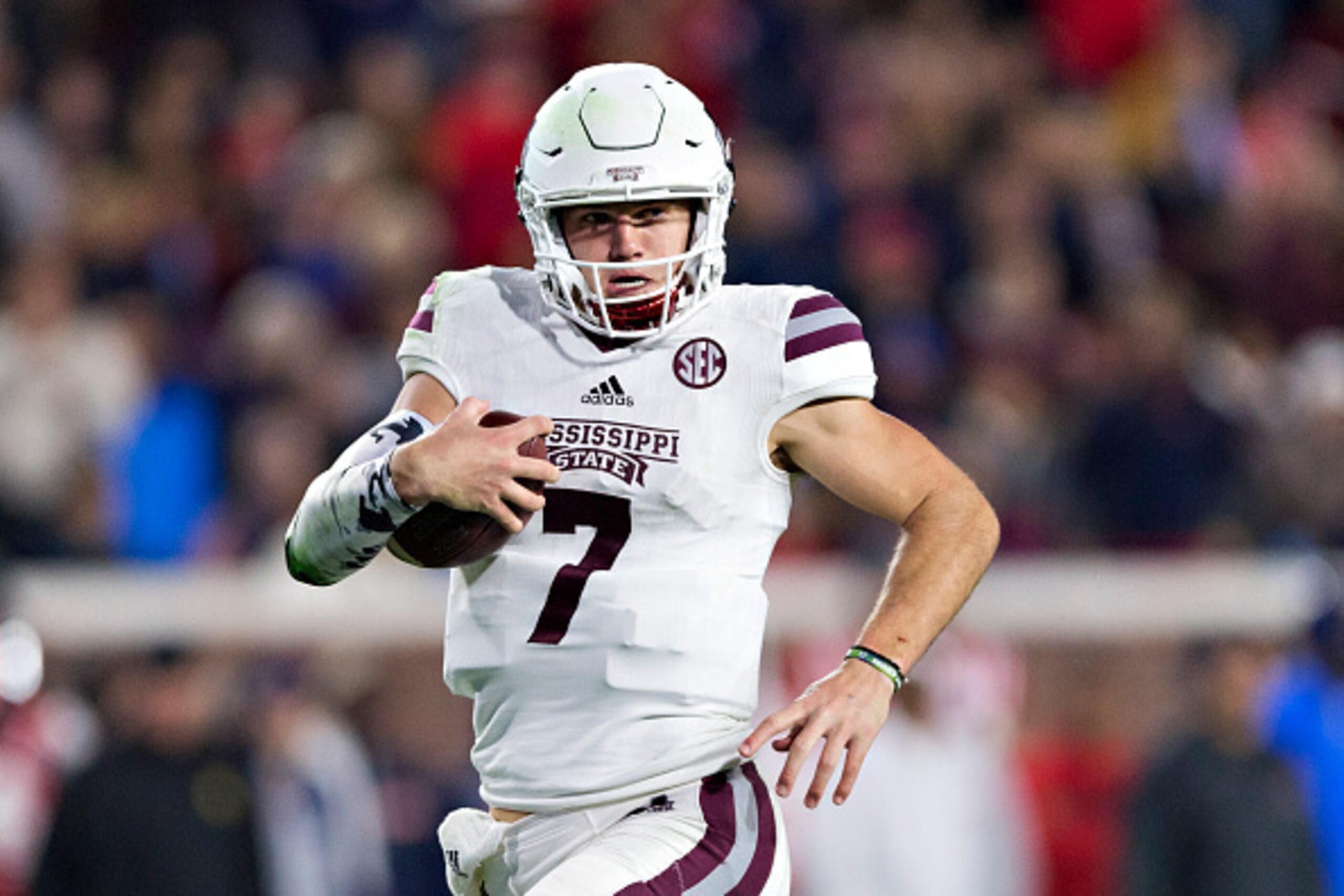
Quarterback Nick Fitzgerald was awesome down the stretch for the Bulldogs after an up-and-down first month. He finished his sophomore season, his first year as the starting quarterback, with 2,287 yards, 21 touchdowns, 10 interceptions and rushed for 1,243 yards and 14 more scores. Contrast that to Prescott's first season as the starter in 2013, when he took over for Tyler Russell and threw for 1,940 yards, 10 touchdowns, seven picks and rushed for 829 yards and 13 scores.
That's right: Fitzgerald was significantly better than Prescott in his first year taking the snaps.
On top of that, the Bulldogs have a running back in Aeris Williams who rushed for 656 yards and four touchdowns as a sophomore in 2016, an established big-play receiver in Donald Gray (17.72 yards per catch) and a more stable defense led by linebacker Leo Lewis that should be more consistent without having complete staff turnover like it had last offseason.
If Mississippi State football was a stock, I'd buy.
I'll be able to sell high next year when the Bulldogs jump back in the SEC West conversation.
Quotes obtained firsthand unless otherwise noted. Statistics courtesy of CFBStats unless otherwise noted.



.jpg?w=2560 "Jonathan Taylor Landing Spots 📍")


